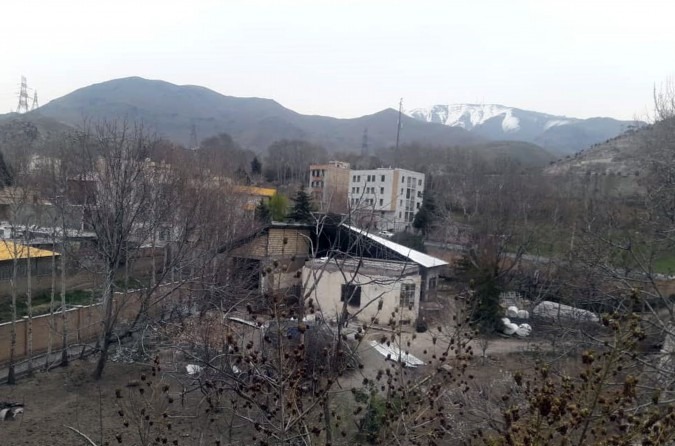
At first sight we faced a ruin — as if an earthquake had struck and only the roof, a few perimeter walls and the basement had survived. Two serious challenges confronted us. First: given the critical, derelict state of the project, should we even accept it at all? It was clear to us that none of the stages — from survey through design to the drawings — would follow the usual order. From there we entered the second challenge: what, in this project, can we actually do?
Facing this challenge, instead of erasing the question by refusing the commission, we chose to try and answer it. In fact we looked at this problem in the wider sense that targets the architectural community itself, and we knew that conventional, academic architecture does not have a fitting answer to such situations: the architect has to step into the arena and try to find an architectural answer for these conditions.
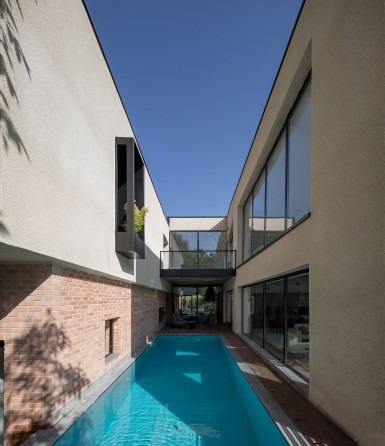
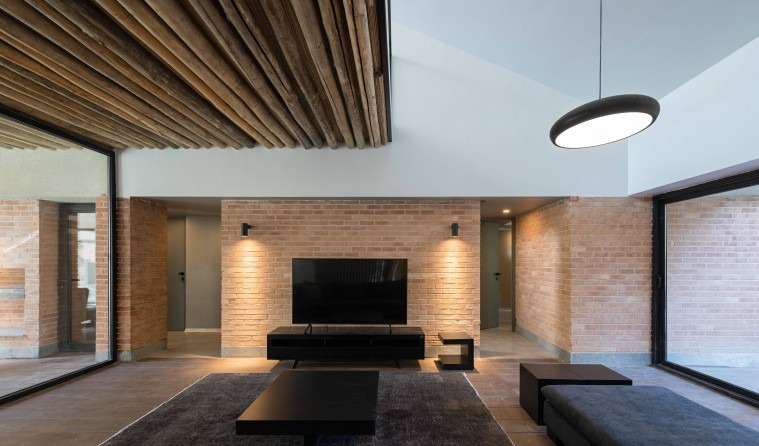
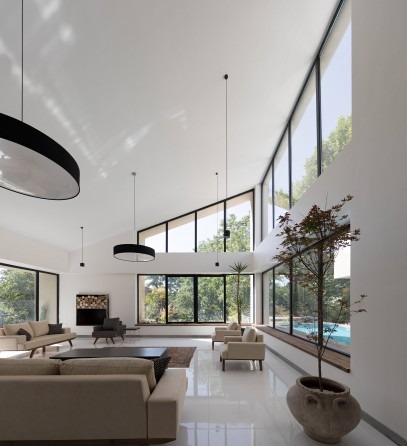
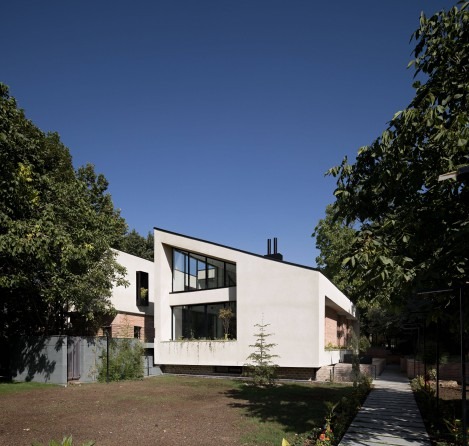
Because the perimeter walls had to be kept, we made them the basis of the design and used them in their existing load-bearing form. Then, by defining a decisive axis through the inside of the building, we shaped the connection to the garden — and by placing the swimming pool and the lounge along this space, and by raising a new roof on the wooden beams left over from the previous building, we made this axis functional and alive. With the help of this axis we designed the interior spaces, and given the need for additional area and the existing headroom, we added a bedroom, a terrace, a library and a small kitchen on the upper level.
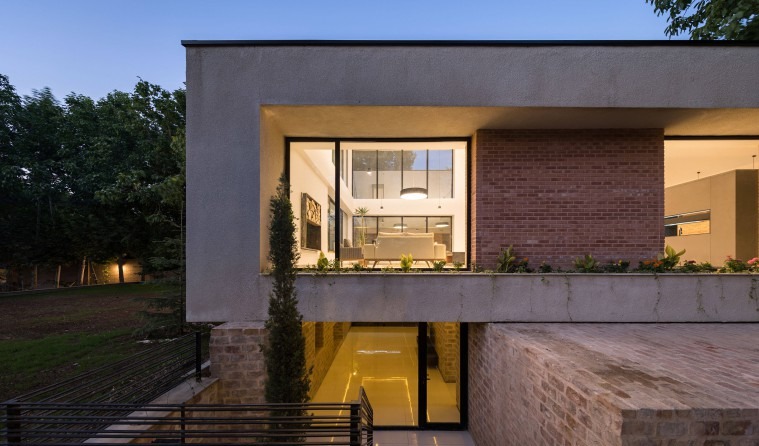
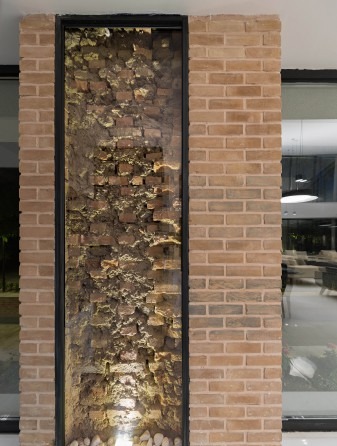
Because we had been so particular about the perimeter walls in the design, it was hard for us to give one of those walls over to the kitchen. So we followed the idea of an independent kitchen and arrived at a space that was fully separate — and through its placement we defined the entry vestibule, and through the right adjacency we delivered the necessary function in tandem with the salon. Given the age of the building, the basement was restored in its old form and we tried to use the building's own old materials in that part as well; through this process an independent suite took shape, and by adding planting and a water feature at its entry we lifted it from its closed, storeroom quality.
Because the condition under which we took the project on was to address the gap between architecture and reality, far more than in our other projects the responsibility of the architect within the existing situation came to the fore for us — and we learned that our architecture, above all, has need of small but accountable works, and of avoiding the issues rooted in imported architecture.