Architect: Sir Norman Foster and Partners
Location: Frankfurt, Germany
Completed: 1997
Height: 185 m (300 m including mechanical systems and antenna)
Structure: Composite steel and concrete, Vierendeel trusses
Structural Engineer: Ove Arup and Partners
Foundation: 111 concrete piles to 45.5 m depth
Original source: Mary Pepchinski, Architectural Record, January 1998
The Commerzbank Tower in Frankfurt, designed by Sir Norman Foster and Partners, has provoked varied reactions in Germany. Some have called it a “billboard column,” while others have named it “Frankfurt’s only true skyscraper.” Germans are not particularly fond of tall buildings, as these structures both waste energy and serve as symbols of the economic elite’s dominance over the entire city. Yet this new building is also an example of environmentally friendly technology—some even call it an “environmental tower.”
The tower is a product of the political and economic climate of the early 1990s. A coalition of Social Democrats and Greens governed Frankfurt, but this coalition did not wish to alienate the economic powers. City authorities, under considerable pressure, issued a permit for the construction of this tower in a neighborhood near the main railway station and the historic city center. Banking operations in this skyscraper would be facilitated, but the public’s demand was that the tower harmonize with the overall character of the city. When Commerzbank decided to build a new tower, Green Party politicians insisted that this skyscraper be exemplary. The bank agreed, and in 1991 held a competition for an environmentally conscious building that would conserve energy while maintaining economic functionality.
Design Concept
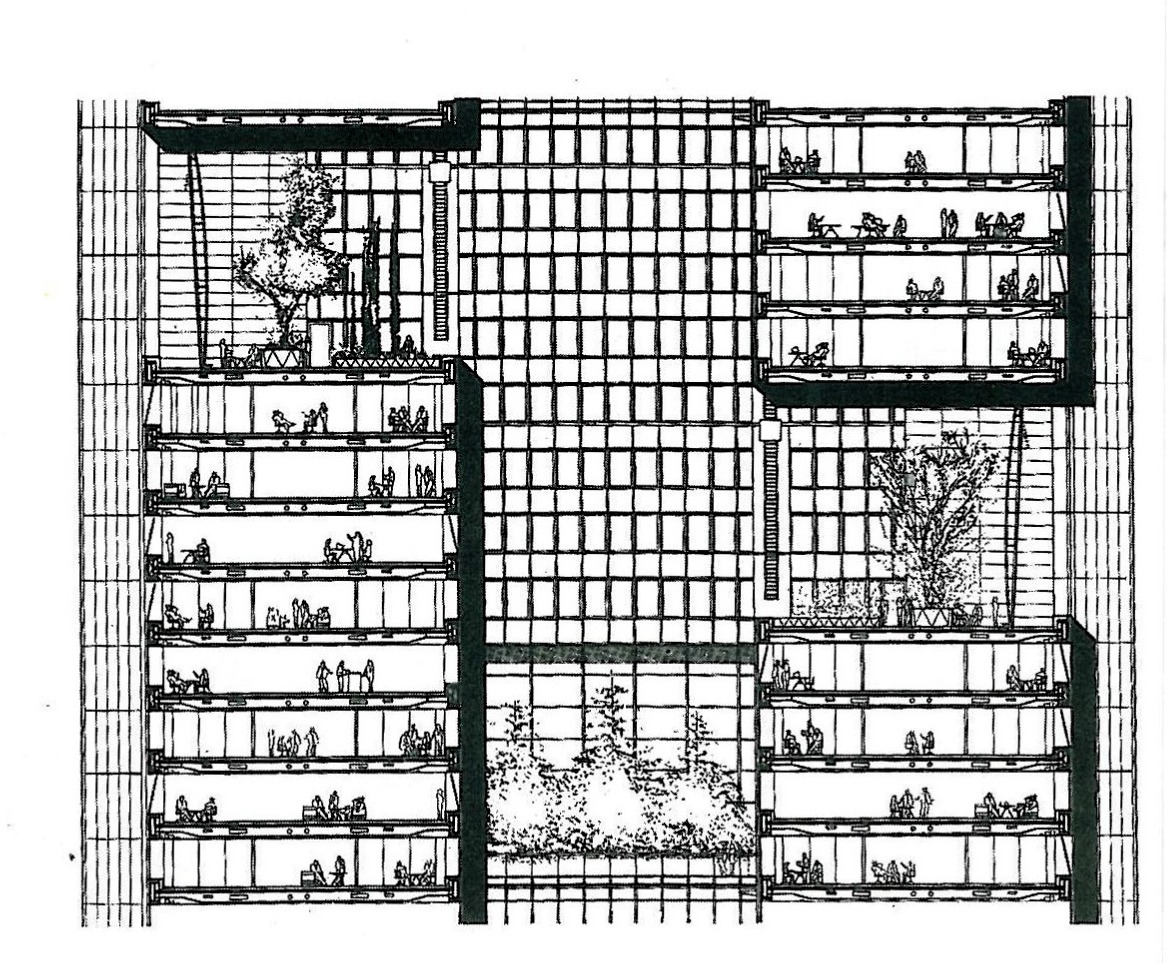
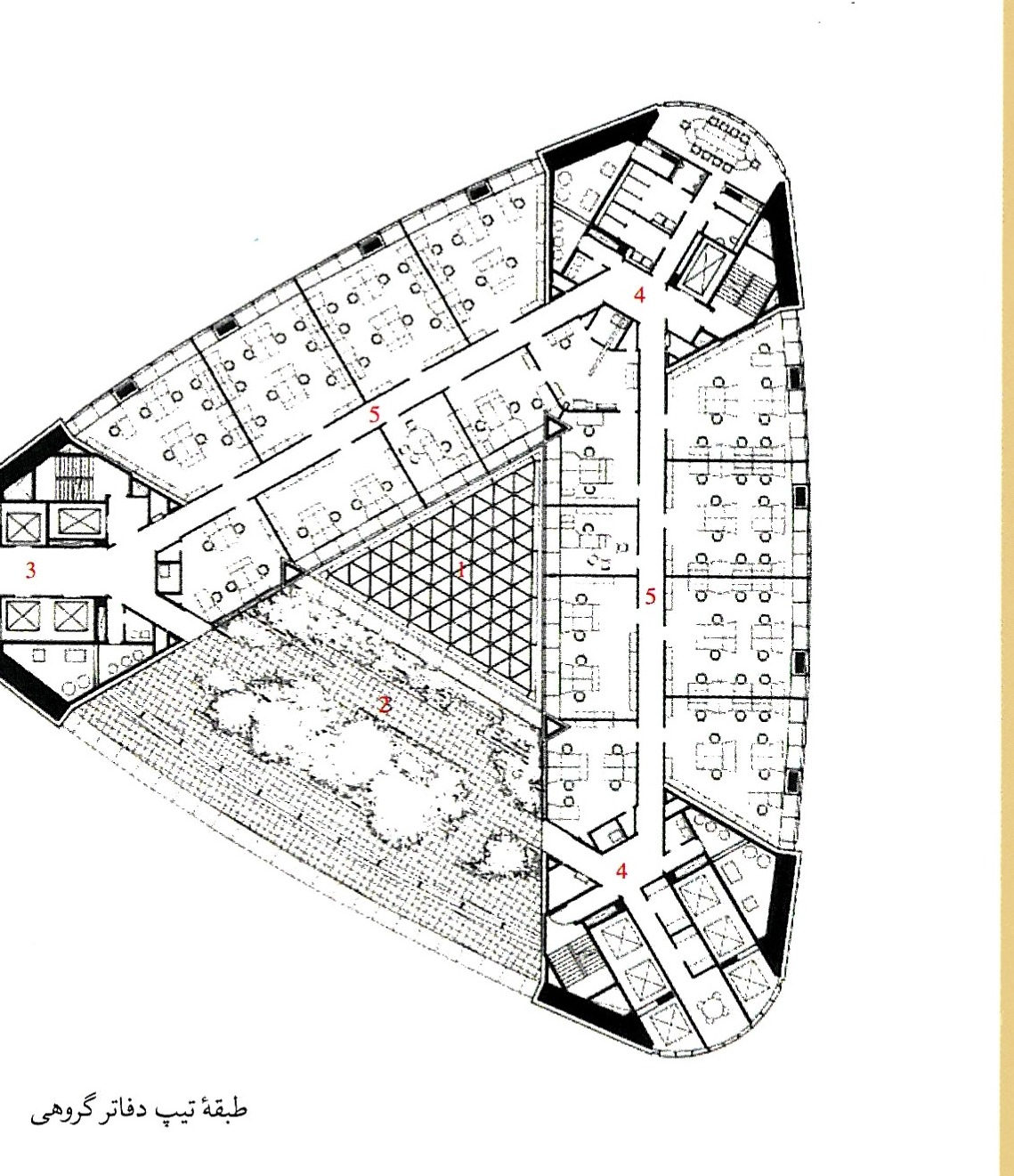
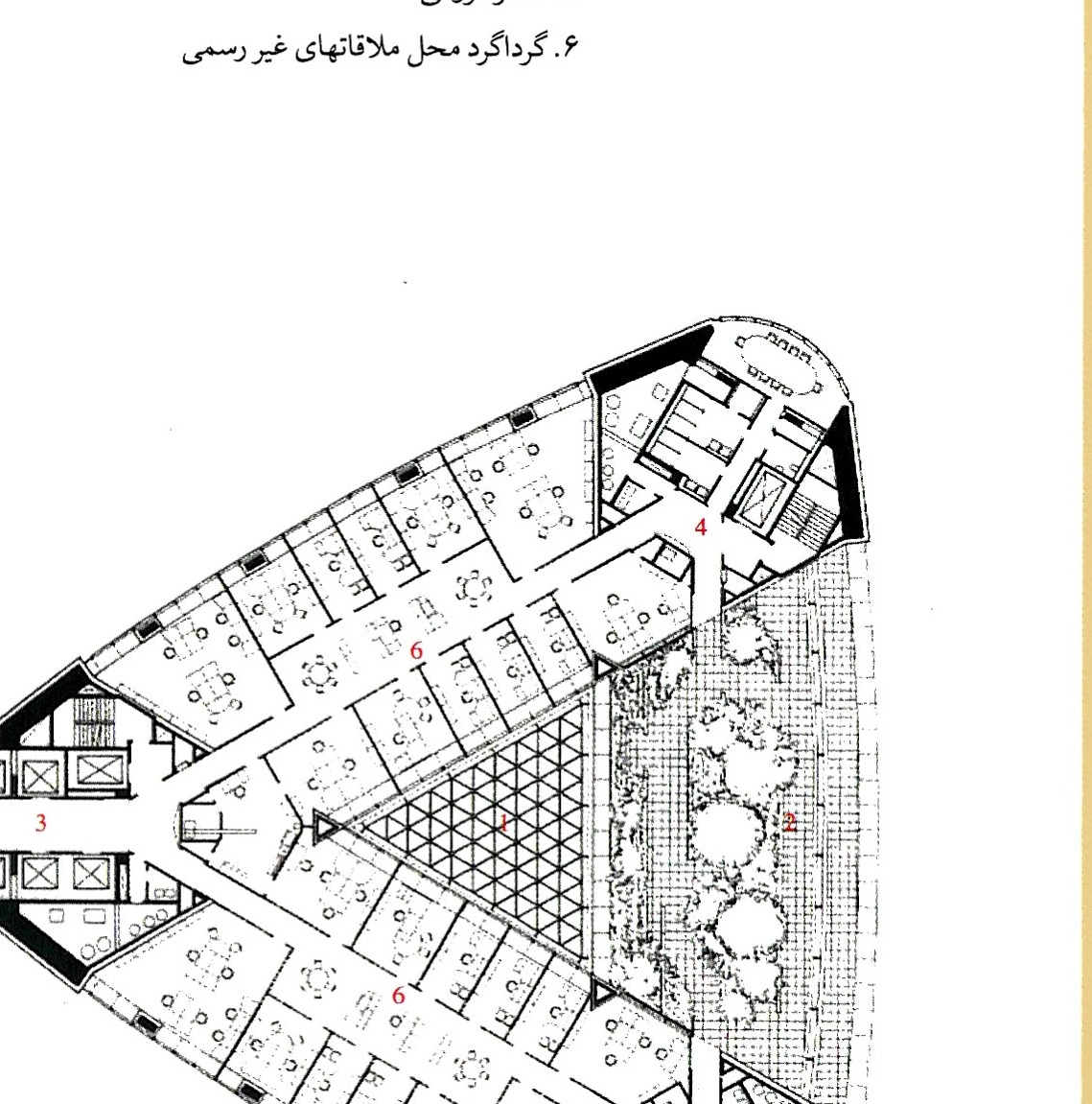
The winning team was Foster and Partners. They proposed a triangular plan with elevator and escalator cores, and envisioned a ventilation shaft at the heart of the tower. Maximum views and minimum shadow cast on neighboring buildings were taken into account. Breaking with conventions for tall buildings, Foster designed thirteen four-story-high gardens spiraling around the central atrium. The atrium and gardens added to the building’s volume, but they made possible natural ventilation and the entry of light into both the interior and exterior offices.
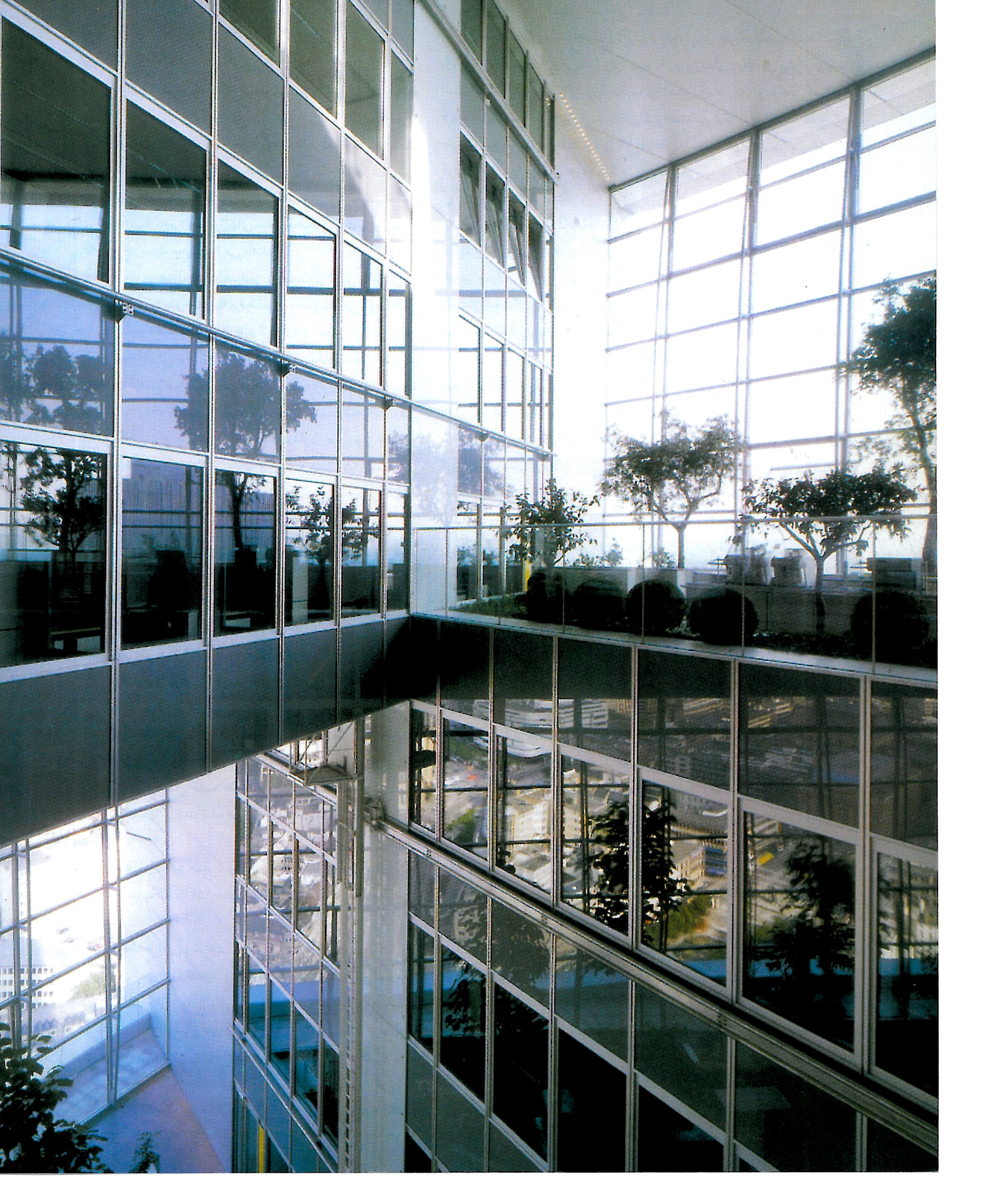
A fresh concept of the office is also evident in this building. The triangular form divides each floor into three relatively large sections. Private offices face the non-administrative interior spaces, fostering a less hierarchical office culture. The gardens, too, can serve as venues for informal meetings or chance encounters. Psychological barriers between people have also diminished, since it is possible to see individuals on other floors.
The romantic appeal of the gardens and the central atrium, and the comfort and ease that everyone quickly feels, meant that pressures to cut costs during design and construction were lessened.
Refinements and Adjustments
Extensive design revisions and refinements were carried out on this tower. One of the most important changes was the division of the atrium into three vertical sections, because detailed analyses—including wind-tunnel tests and computational fluid dynamics simulations—showed that airflow was extremely strong and difficult to control. Furthermore, at the insistence of city planning authorities, the tower’s height was reduced to 185 meters and the tower became more slender. As a result, the tower’s floor plan was made smaller and its height on the western side reached 181 meters. Including mechanical systems and the antenna, the total height of the tower reaches 300 meters, and it is currently the tallest building in Europe.
Thirteen gardens, each 14 meters high, spiral around the tower. The exterior facade is clad in mirror-glass panels. Plants have been chosen for the gardens according to their orientation: south-facing gardens feature Mediterranean species, west-facing gardens contain North American plants, and east-facing gardens hold Asian species.
Natural Ventilation
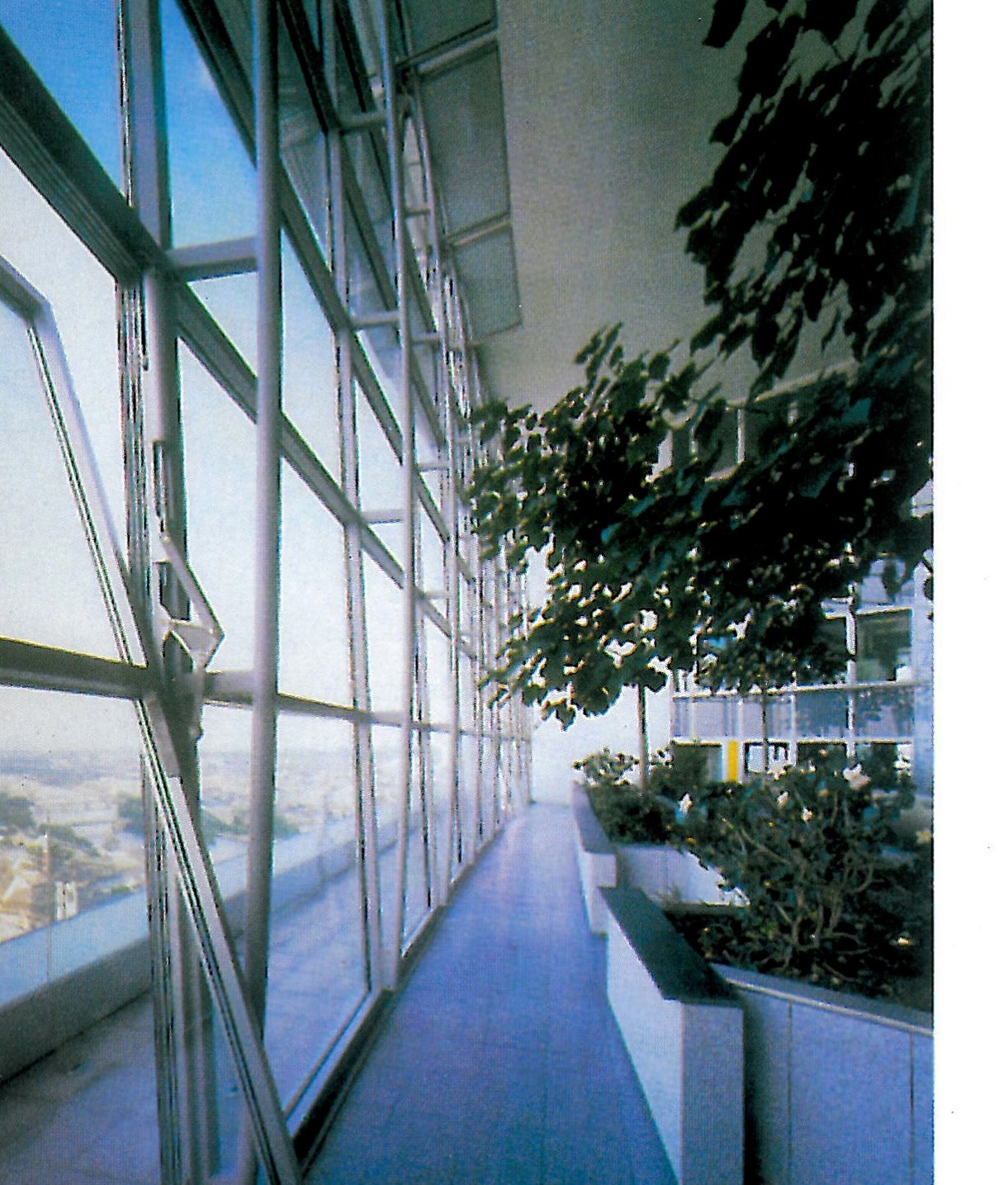
In tall buildings, simply using openable windows throws the mechanical systems off balance. A double-skin facade has been designed for natural ventilation: the outer layer is of light-absorbing glass, the middle cavity is hollow, and the inner layer is of reflective glass. When it is warm, fresh outside air can be received in a controlled manner, or the inner panel can be closed. In winter, too, a portion of the sun’s warmth can be captured. Radiators in the floor slabs supply heat when needed.
The building management system is highly sophisticated, constantly analyzing weather and light conditions. Vertical blinds are automatically controlled, and fresh air is continuously regulated—depending on the presence or absence of occupants. Environmental conditions in the gardens are also monitored. Based on meteorological data, temperature, humidity, and airflow are adjusted through the exterior panels.
To conserve as much energy as possible, restroom sinks provide only cold water, and toilet flushing water comes from the cooling towers. Fire-escape stairwells have been finished with polished granite, which both improves their appearance and encourages their use.
The Experience of the Sky Gardens
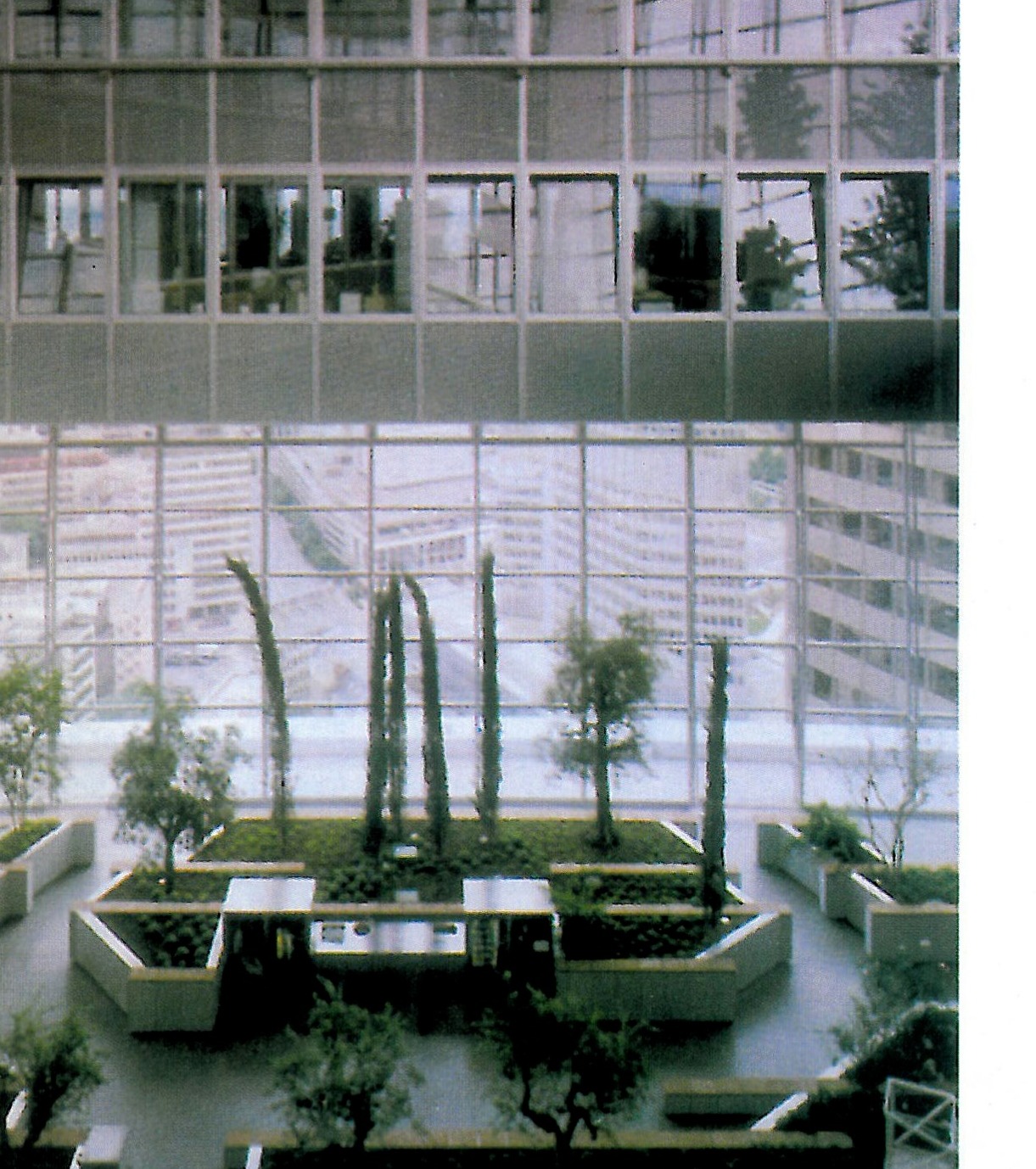
One can stand in one of the gardens and gaze down a twelve-story corridor at two other gardens. The human eye sees only greenery above and below. This reverses the modernist aesthetic: here, nature is within the machine, not the machine within nature. The tower is intimate. Walls and partition screens are all glass, and everyone can see one another.
Of course, this tower has its issues as well. Some employees use the communal spaces as personal areas, while others store their shelving there. On the thirty-fifth floor, where a cafeteria occupies the garden, the smell of food wafts through the adjacent corridors at lunchtime. The sound of conversations in the garden fills the main corridor with a constant murmur. The furniture and fittings—which, incidentally, were not designed or selected by Foster and Partners—though attractive and reasonable, do not harmonize with the architectural aesthetic of the building.
The ground floor consists of the main compound and the waiting hall, situated one level above street level. It is fully exposed to the view of passersby and functions more as a barrier to city life than as a continuation of it. The grand entrance staircase is located in one wing of the building and is little used.
Assessment
The German media have praised this tower, but opponents of skyscrapers have not remained silent either. Critics find it excessively massive and domineering. The facade does not possess the crystalline quality and transparency that had been envisioned, and the gardens and everything else are the exclusive preserve of a privileged segment of society. In any case, this “workplace of the future” differs from conventional American skyscrapers and claims to be a model for the next generation of high-rises. Already, its double-skin natural ventilation walls are being used in many other projects. If this skyscraper proves successful in saving energy, it could serve as a paradigm for tall buildings. At present, energy consumption in this tower is 25 to 30 percent below German standards. However, some experts say that a true assessment should only be made after several years. The tower’s builders maintain that beyond the question of energy consumption, the most important thing is that employees do not feel fatigued when they return home from work. That alone increases productivity. This matters more than the architecture of the sky gardens.
Technology
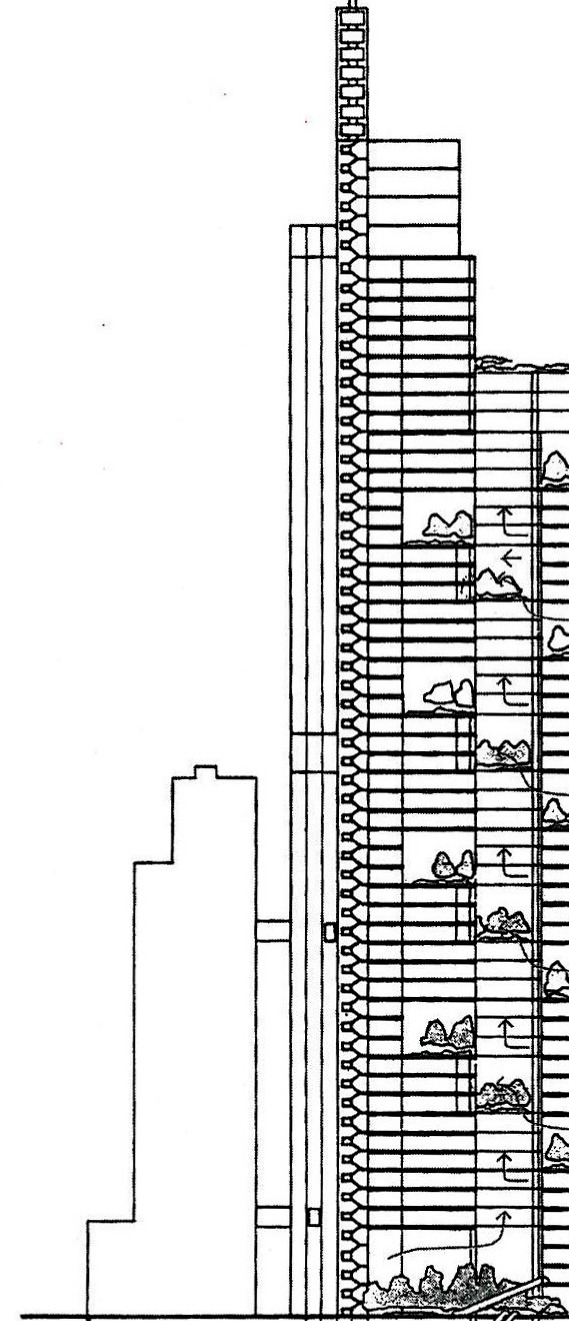
The unique geometry of the Commerzbank Tower demanded a unique structural solution. To achieve column-free floors, eliminate the central core, and accommodate sky gardens that periodically cut through the building’s perimeter, the use of conventional structural systems had to be abandoned. The structural engineers, Ove Arup and Partners, placed massive Vierendeel trusses at the floor level of each garden. The depth of these trusses is 3.4 meters. On either side, they bear on three pairs of enormous composite steel-and-concrete columns at the corners of the building. In Germany, a combination of steel and reinforced concrete is standard practice, yielding both financial savings and the benefits of proven construction methods. As a result, the floors are column-free not only across the spans between the three corners, but also between the interior and exterior of the building. The floors are made of steel encased in concrete, with openings created by beams passing through them.
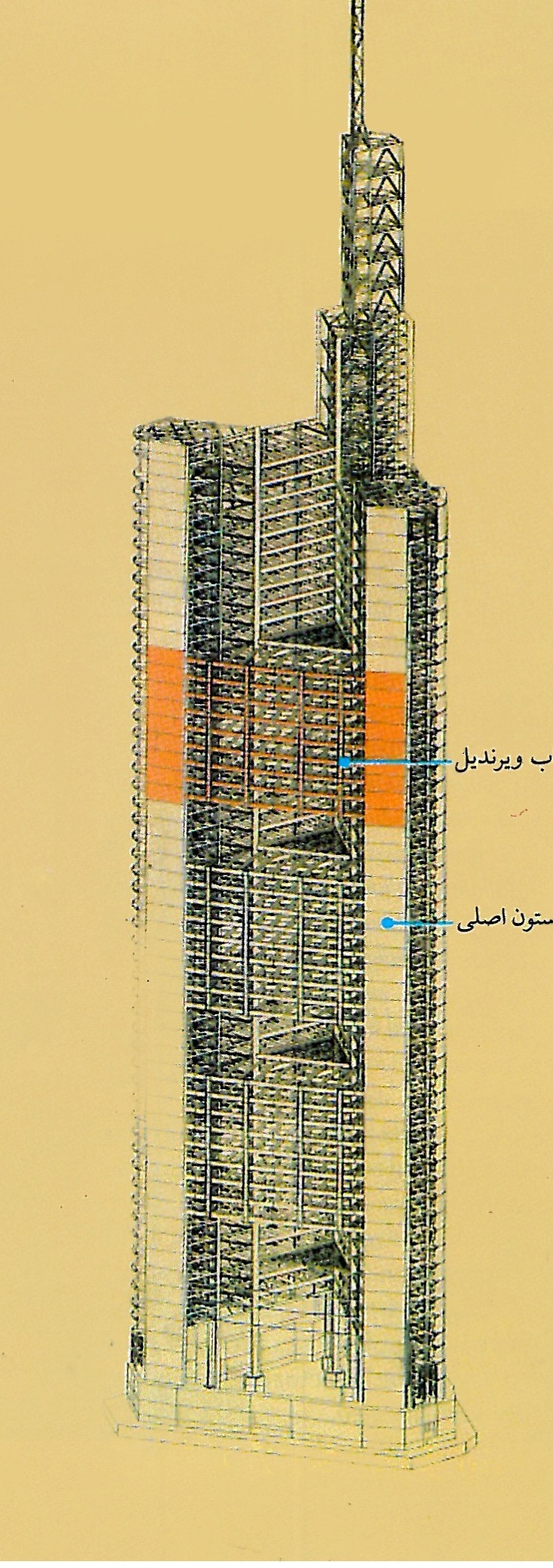
The placement of the columns, together with specialized horizontal frames connected to the elevator cores, horizontally restrains the Vierendeel trusses. Wind loads, assumed on the basis of meteorological data, were tested in a wind tunnel. However, local regulations did not permit a design based purely on those test results, and so the frame sizing was derived from what the design team—following Ove Arup’s initial proposals—had calculated. Special software was employed to optimize the structural configuration as much as possible. The combined gravity-and-wind load analysis showed that a uniform stress acts on all Vierendeel trusses, and therefore the same cross-section could be used for all of them—a considerable saving.
The enormous concentrated loads on the three corner columns, along with the proximity of the existing Commerzbank tower, themselves attest to the extraordinary effort required at the foundation level. Working on soft soil, the Frankfurt firm of Franke, Katzenbach, and Rekowitsch drove 111 concrete piles to a depth of 45.5 meters into layers of sand and dolomite to support the massive corner columns on a bed of rock.
Originally published as: Mary Pepchinski, “Commerzbank,” Architectural Record, January 1998. Translated into Farsi by Reza Rezaei for Memar Magazine.



