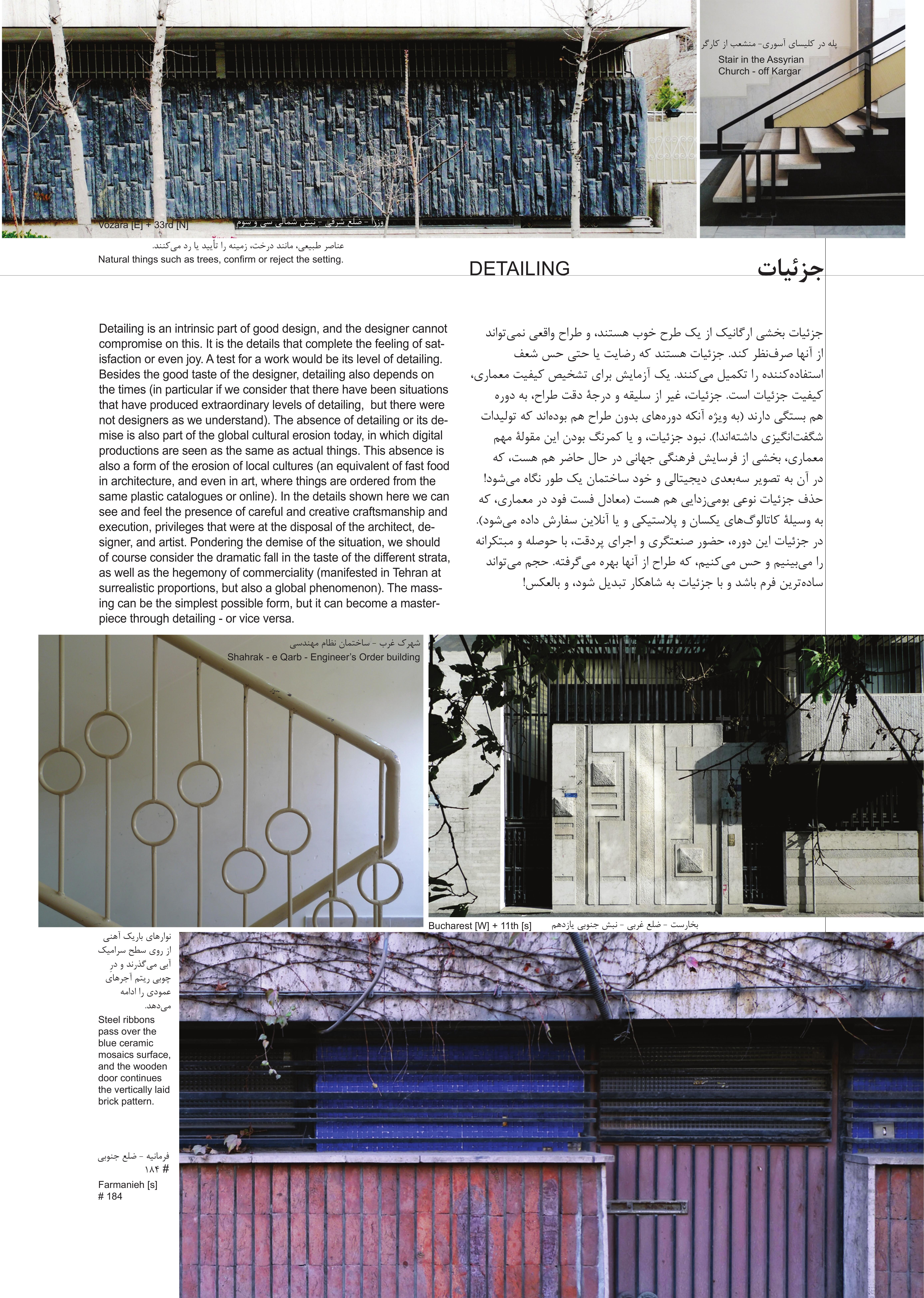
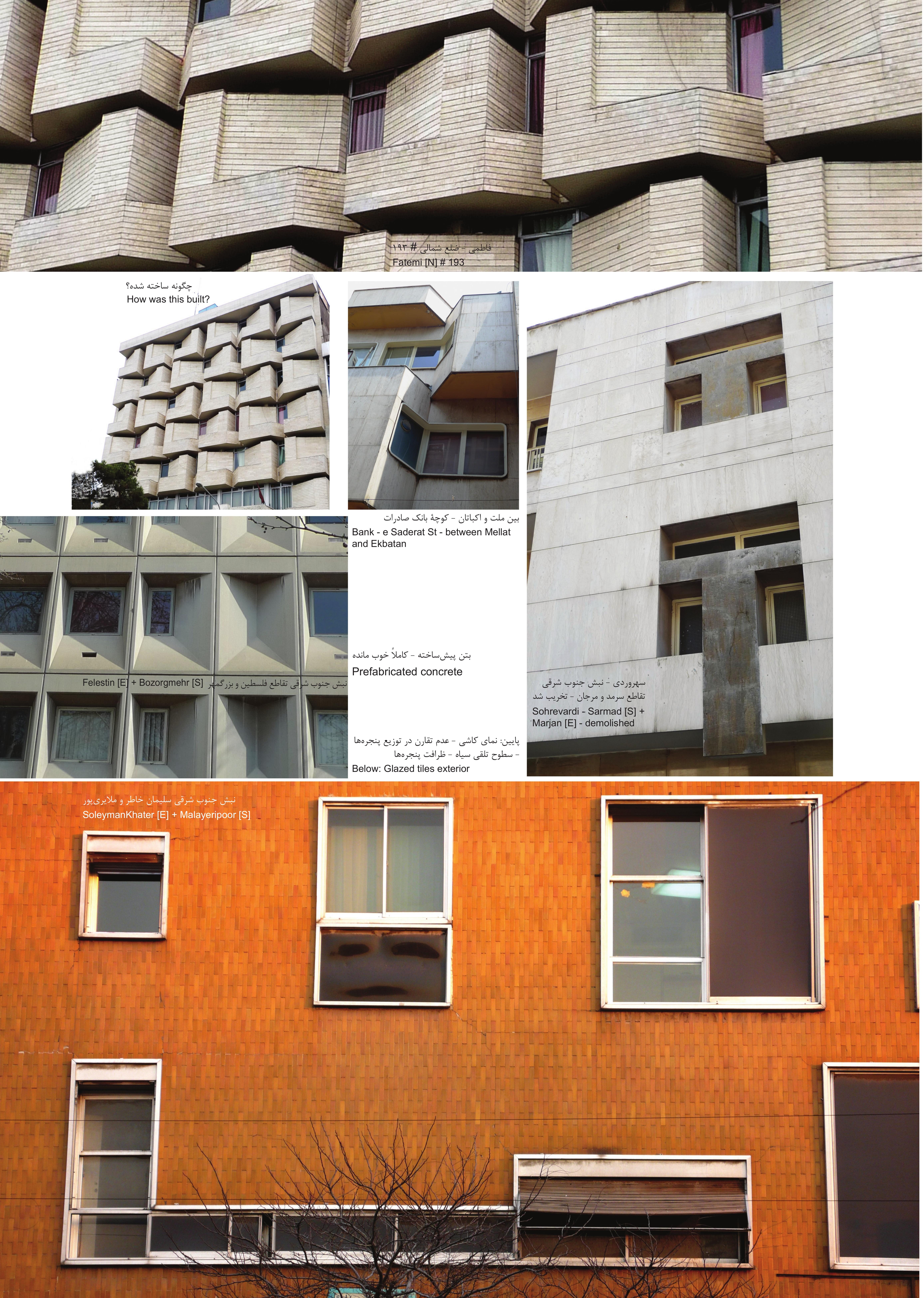
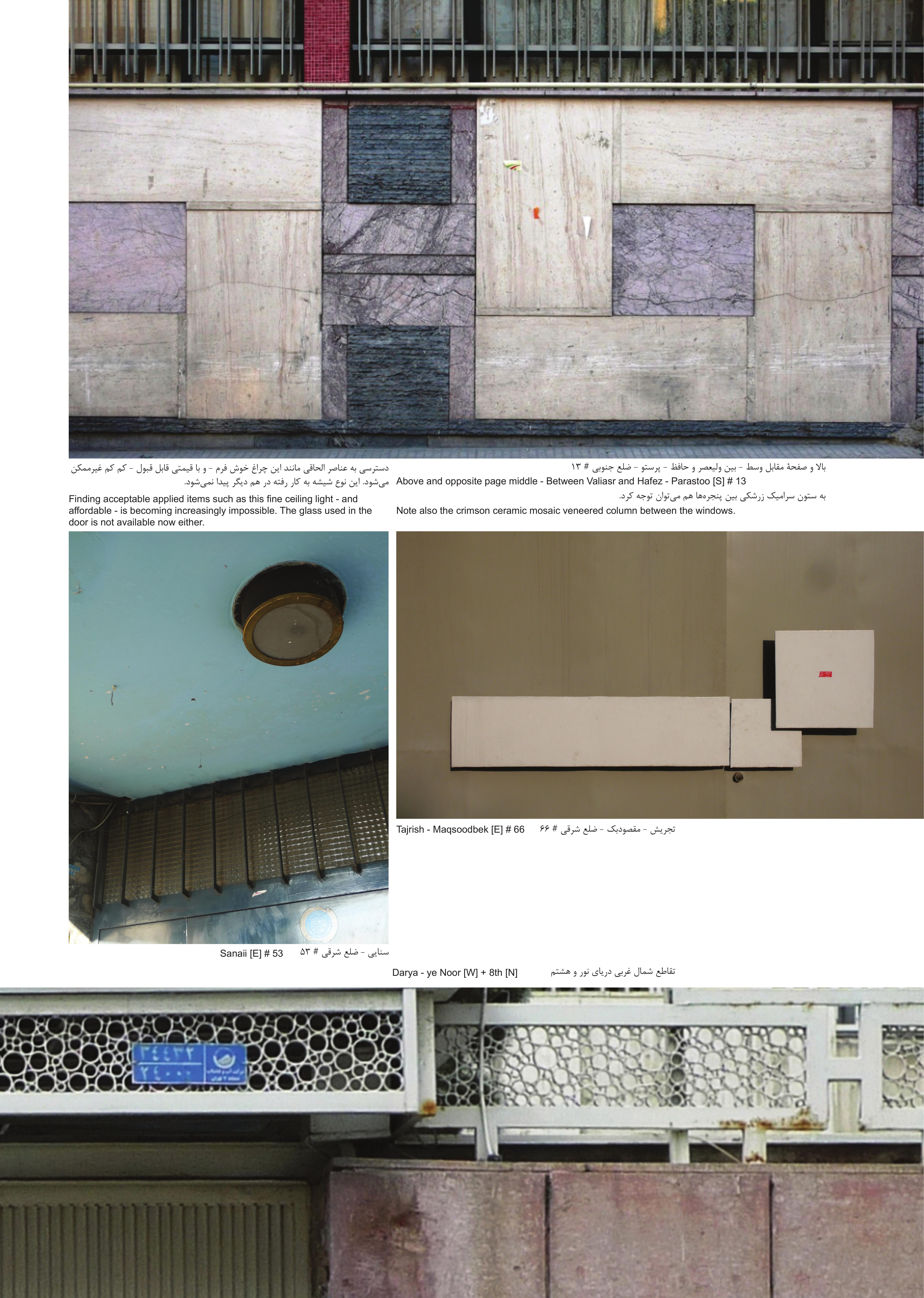
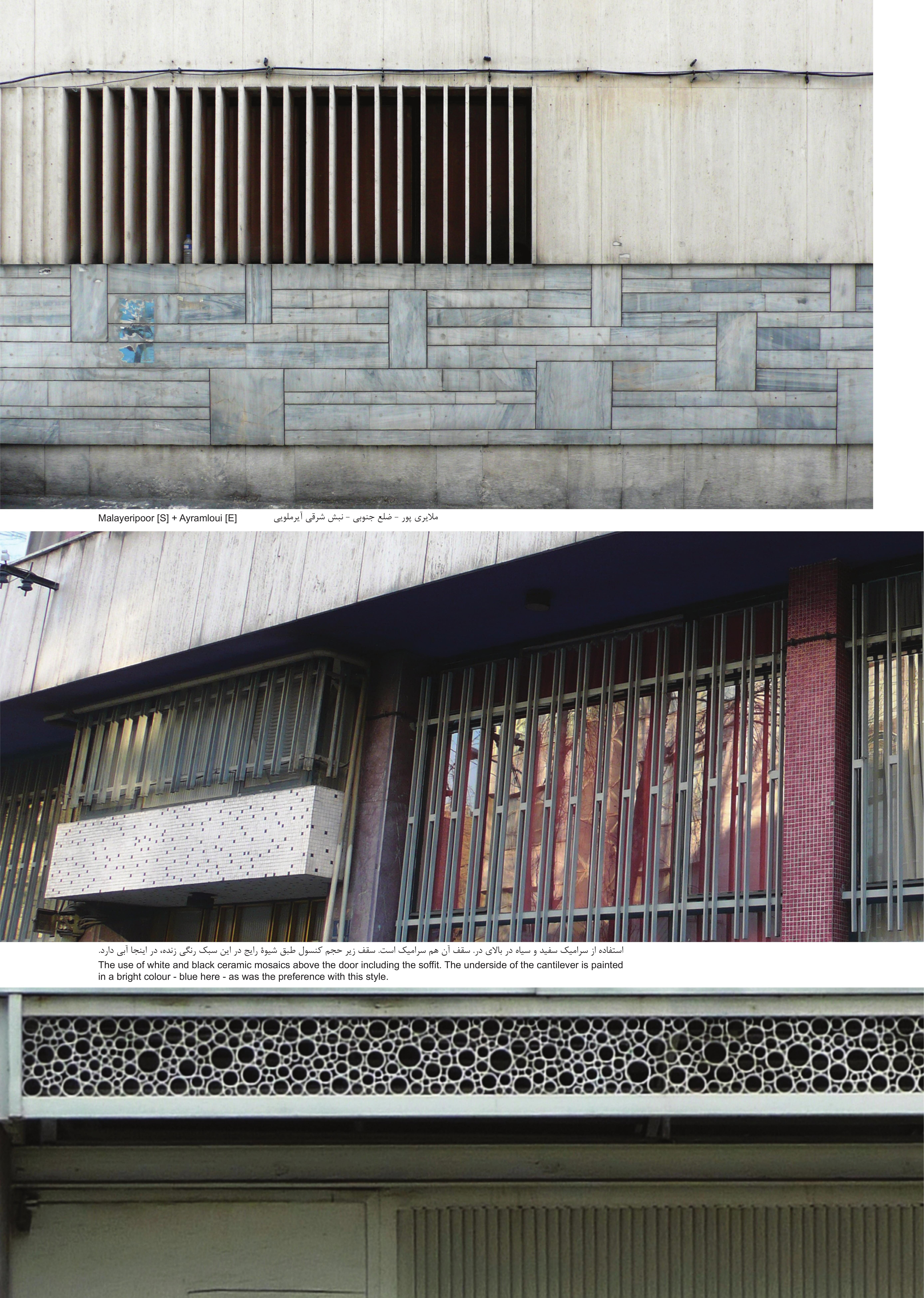
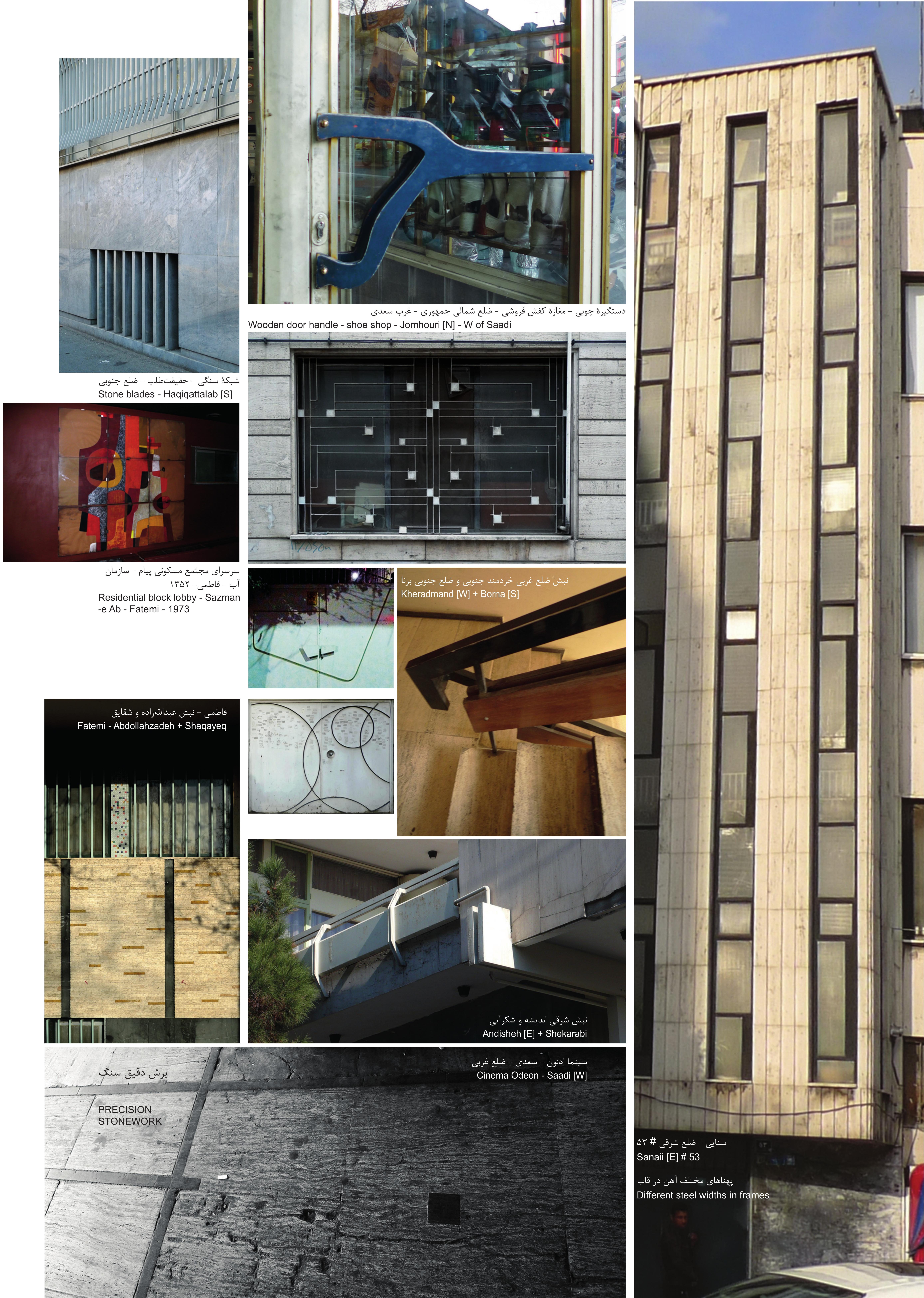
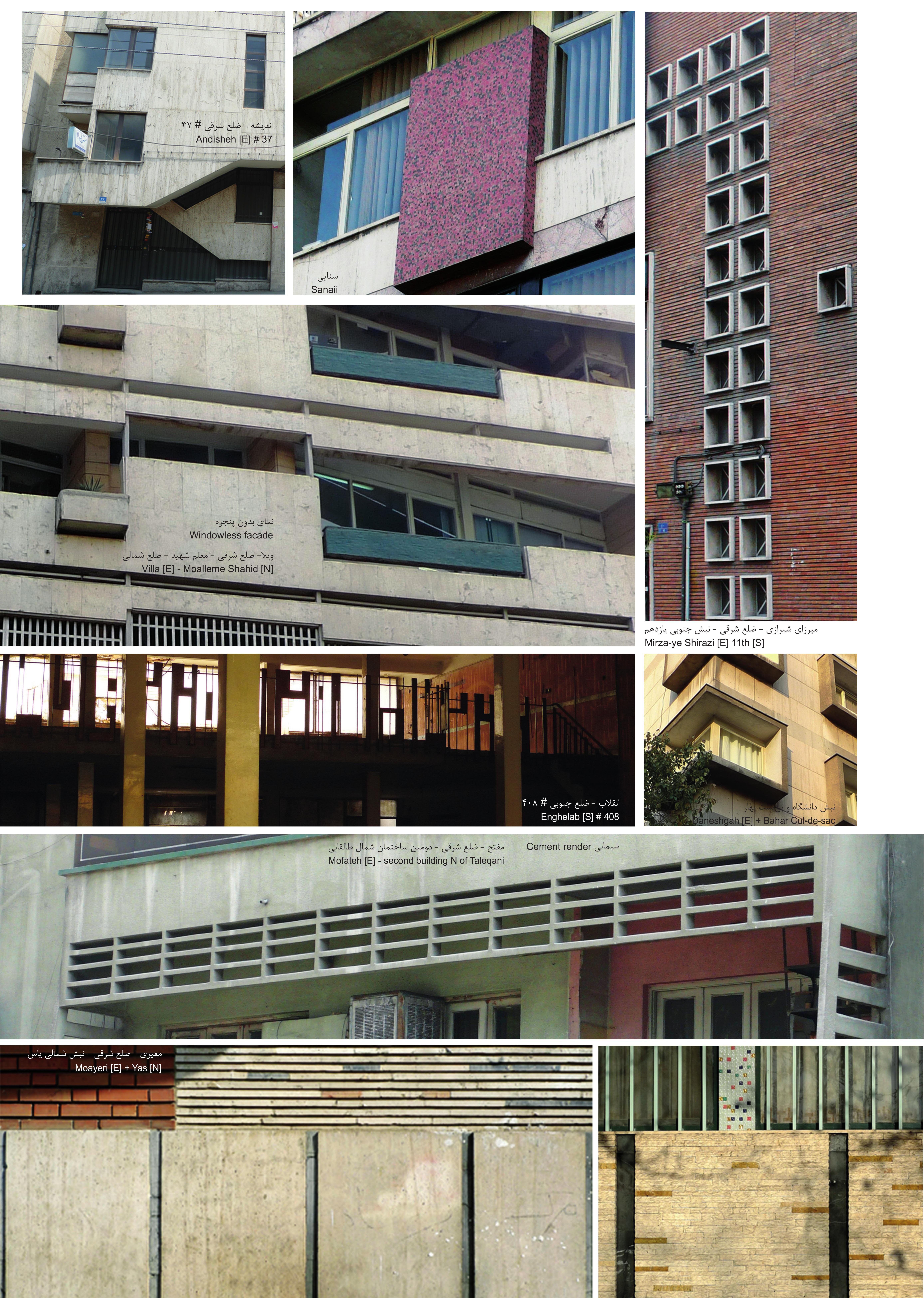
Detailing is an intrinsic part of good design, and the designer cannot compromise on this. It is the details that complete the feeling of sat- isfaction or even joy. A test for a work would be its level of detailing. Besides the good taste of the designer, detailing also depends on the times (in particular if we consider that there have been situations that have produced extraordinary levels of detailing, but there were not designers as we understand). The absence of detailing or its de- mise is also part of the global cultural erosion today, in which digital productions are seen as the same as actual things. This absence is also a form of the erosion of local cultures (an equivalent of fast food in architecture, and even in art, where things are ordered from the same plastic catalogues or online). In the details shown here we can see and feel the presence of careful and creative craftsmanship and execution, privileges that were at the disposal of the architect, de- signer, and artist. Pondering the demise of the situation, we should of course consider the dramatic fall in the taste of the different strata, as well as the hegemony of commerciality (manifested in Tehran at surrealistic proportions, but also a global phenomenon). The mass- ing can be the simplest possible form, but it can become a master- piece through detailing - or vice versa.
Vozara [E] + 33rd [N]. Stair in the Assyrian Church – off Kargar. Shahrak-e Qarb – Engineer’s Order building. Natural things such as trees, confirm or reject the setting.How was this built? Fatemi [N] # 193. Sohrevardi – Sarmad [S] + Marjan [E] – demolished. Prefabricated concrete. Bank-e Saderat St – between Mellat and Ekbatan. Felestin [E] + Bozorgmehr [S] – Below: Glazed tiles exterior. SoleymanKhater [E] + Malayeripoor [S]. Steel ribbons pass over the blue ceramic mosaics surface, and the wooden door continues the vertically laid brick pattern.Above and opposite page middle – Between Valiasr and Hafez – Parastoo [S] # 13. Sanaii [E] # 53. Tajrish – Maqsoodbek [E] # 66. Darya-ye Noor [W] + 8th [N]. Note also the crimson ceramic mosaic veneered column between the windows. Finding acceptable applied items such as this fine ceiling light – and affordable – is becoming increasingly impossible. The glass used in the door is not available now either.Malayeripoor [S] + Ayramloui [E]. The use of white and black ceramic mosaics above the door including the soffit. The underside of the cantilever is painted in a bright colour – blue here – as was the preference with this style.Wooden door handle – shoe shop – Jomhouri [N] – W of Saadi. Stone blades – Haqiqattalab [S]. Residential block lobby – Sazman-e Ab – Fatemi – 1973. Fatemi – Abdollahzadeh + Shaqayeq. Andisheh [E] + Shakaraki. Cinema Odeon – Saadi [W]. Precision stonework. Sanaii [E] # 53 – Different steel widths in frames.Andisheh [E] # 37. Sanaii. Mirza-ye Shirazi [S] – 11th [S]. Villa [E] – Moalleme Shahid [N]. Enghelab [S] # 408. Mofateh [E] – second building N of Taleqani. Moalyeri [E] + Yas [N]. Cement render. Daneshgah [E] + Bahar Cul-de-sac.