DIPLOMATIC SPACES
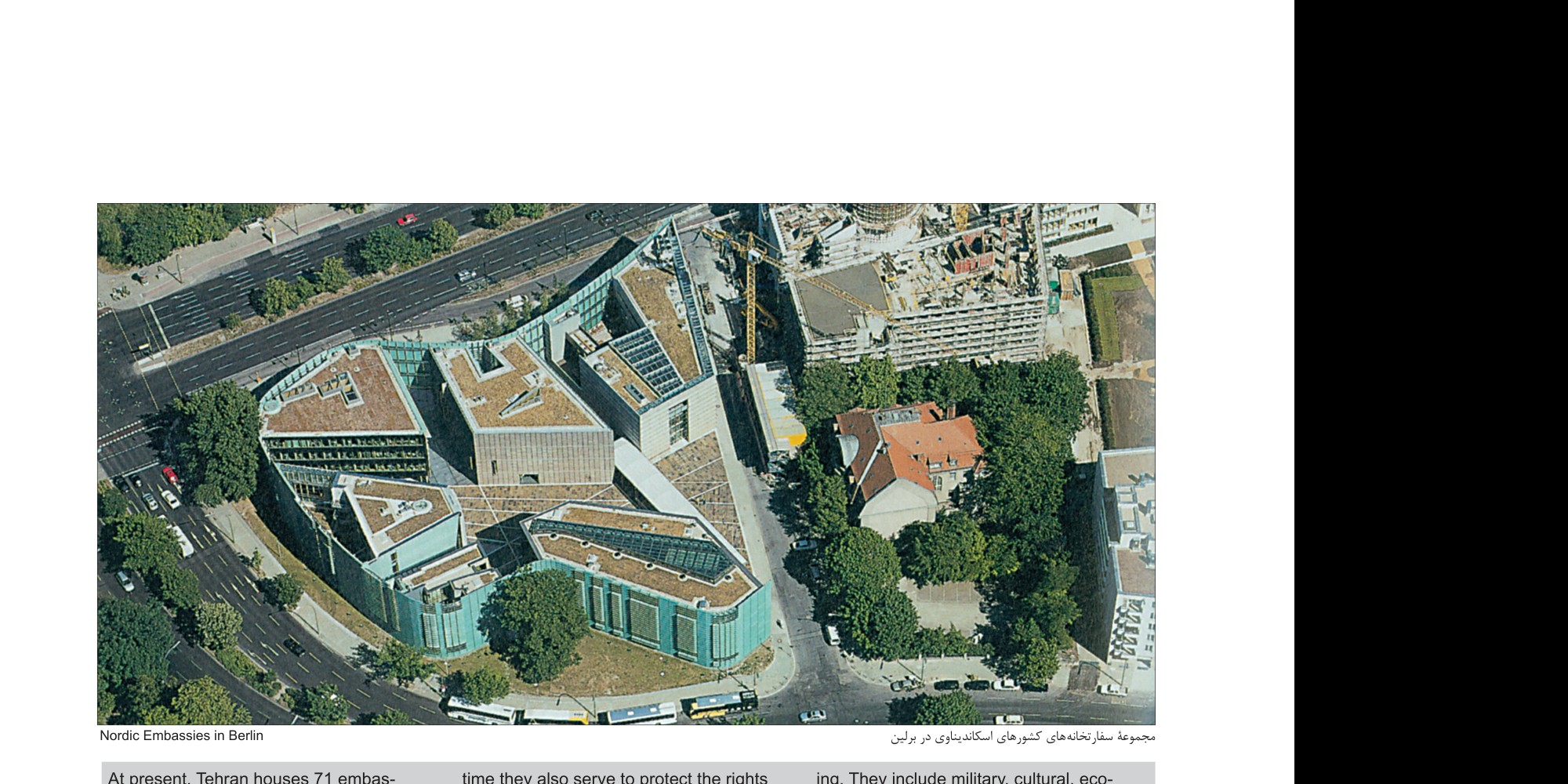
Nordic Embassies complex in Berlin
Architecture has always been connected with power, and the representation of power through buildings is as old as civilization itself. Among the most visible manifestations of this relationship are embassy buildings, which serve simultaneously as diplomatic outposts, symbols of national identity, and architectural statements. In Tehran alone, there are 71 embassies, to which one must add a number of consulates and other diplomatic buildings.
In many cases the embassies are located in important historic sites and buildings or benefit from prominent urban locations. In recent years many nations have appointed well-known architects to design their new embassies to emphasize their country's cultural strength.
A Glance at the History of Diplomacy and the Formation of Embassies
In effect, the system of permanent diplomatic representation has its roots in the practices developed by city-states of the Italian Renaissance during the fifteenth century. Before this period, diplomacy was conducted through special envoys sent for specific missions. The gradual evolution toward permanent embassies reflected the growing complexity of international relations and the need for continuous channels of communication between sovereign states.
Today, embassy architecture must respond to a complex set of requirements: security concerns, which have escalated dramatically since the 1990s; the need to project national identity and cultural values; functional requirements for visa processing and consular services; and the imperative to create dignified spaces for diplomatic representation. These often contradictory demands make embassy design one of the most challenging typologies in contemporary architecture.
At present, Tehran houses 71 embassies, to which one must add a number of consulates and other diplomatic buildings. In many cases the embassies are located in important historic sites and buildings or benefit from prominent urban locations. In recent years many nations have appointed well-known architects to design their new embassies to emphasize that country's cultural strength.