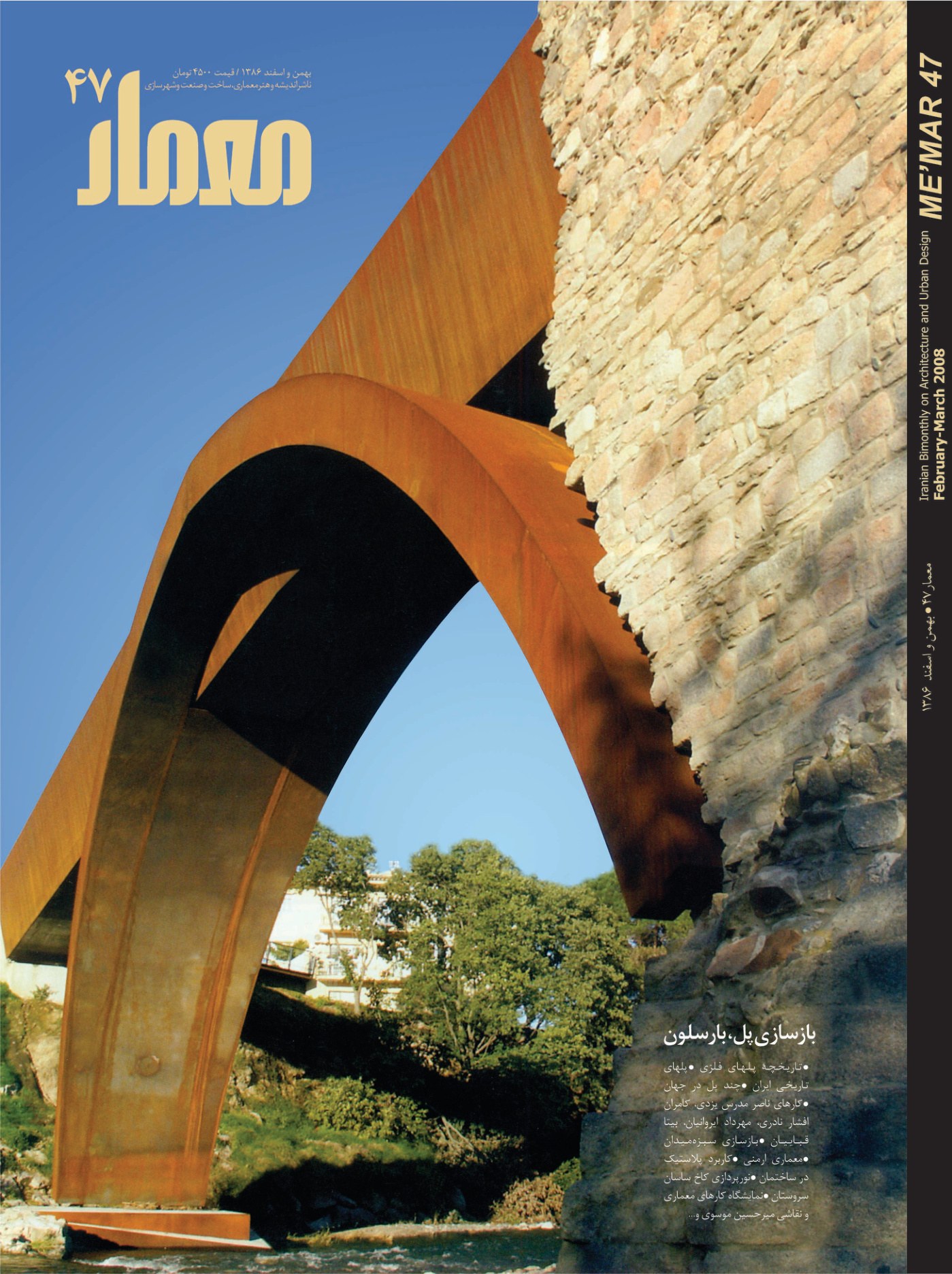
BRIDGES AND BRIDGE ARCHITECTURE
Engineering and architecture have never been separated in bridge construction since the formation of human societies till the European Industrial Revolution in the eighteenth century. The intellect and creativity of mankind accompanied by his experiences resulted in creation of engineering and architecture masterpieces both in public and private buildings and especially in bridge construction. Alongside the aesthetic flair of the architects, their creativity in combining small pieces and natural materials such as clay and stone while building huge pieces and objects, has always been amazing. The best and most beautiful old bridges in the world are the outcome of this creativity. Persians, Romans, and Chinese were the best bridge constructors in ancient world.
Bridge Classification
The "Si-o-se-pol" (Thirty-three spans) and "Khajoo" bridges in Isfahan are amongst the monumental masterpieces in the world which date back to 400 years ago. These two bridges owe to the beauty of the scenery (the surrounding landscape visible from the arches of the bridges and the view of the bridges themselves, seen from a distance), the form of the arches, subtle structure and their reflections in the river, and are amongst the most beautiful historical monuments in Iran.
Bridge Economy
Bridges can be classified into several categories based on their structural form and the materials used in their construction. The primary types include arch bridges, beam bridges, cantilever bridges, suspension bridges, and cable-stayed bridges. Each type has particular advantages in terms of span length, load-bearing capacity, and aesthetic qualities.
Bridge Architecture
The architecture of bridges throughout history has reflected the cultural values and technological capabilities of their builders. Iranian bridges, from the ancient Sassanid era through the Safavid period, demonstrate a sophisticated understanding of both structural engineering and urban design. These bridges served not merely as transportation links but as social spaces, commercial centers, and architectural landmarks.
Bridge Materials
The use of natural and synthetic materials in bridge construction has evolved significantly over the centuries. Traditional Iranian bridges employed stone, brick, and lime mortar, while modern construction utilizes reinforced concrete, prestressed concrete, and steel. The choice of material directly affects both the structural performance and the aesthetic character of the bridge.
Discovery of steam power using coal, as well as development of oil and gas industries in the last century were the main pillars of industrial development in the west. Western nations launched an industrial revolution while countries in the Middle East lived through energy poverty. After the nationalization of the oil industry in Iran and other oil-producing nations, new economic opportunities opened up and an enormous supply of cheap energy was at our disposal. Consequently, our lifestyle changed overnight, turning us from a highly energy-conscious society to a wasteful nation. Modern architecture of the past 60 years in Iran reflects this wastefulness.



