Construction Detail (Or: How to Keep the Devil Out by Ignoring Construction Detail)
While paying scrupulous attention to detail has always been part and parcel of architecture, the morphology, method of building, proportions, and the entire place of a design are determined by the precise style and principles of the time, varying for different buildings. Such artistic drive dealt with precision. Each of the elements of ornaments have first unaltered form and specified relations gradually evolving in their timely context.
The cultural integrity of premodern societies guaranteed coordination between architects and craftsmen, in a way the former activated the methods of details to express ideas and construct buildings. Nowadays in Iran, very ordinary buildings execute a painfully clear exhibition of masonry, stone, aluminum, and similar technologies. Paying little attention to standards handbooks on building technology, you will find that the practice common here is more often than not alien to those standards. Generally, the detail method in Iran is confined to making an acceptable appearance, economizing in costs, doing without skilled workers, executing grossly inadequate plans, seeking rapid resolution, and concealing structural faults.
The Gap Between Design and Execution
In very few projects does the monograph exist as the right choice. Moreover, planning the detail is directly connected with the technologies of building and manufacturing the relevant materials. Many a supplier of building material does not have enough precise information about what they produce. When you consult a maker or trader of glass about the specifications of the company he represents, you will find that beyond the dimensions of the glass he has no other vital data.
A lack of information has tormented our designers into making do with the little information available. In extreme cases, where the architects did not demand technical specifications, suppliers hardly bother to pay attention to the standards of qualitative assessment of their merchandise. While in the developed countries designers enjoy the technical support of the supplier, their Iranian counterparts have to do with scanty technical specifications, and that only in certain cases. The burgeoning of specialized contractors for facades, partitions, false ceilings, floors, and similar elements in recent years seems to have solved the problem to some extent.
The Foundation of Construction Detail
One more stumbling block is the lack of competent consultants. Rarely is the supplier able to equip the designer with a full list of the stock it is supposed to have readily available for use. More often than not certain molds or colors are not available, while the available ones are short of adequate quality, making choices among them difficult. On the other hand, handbooks of components and ready-made construction materials, easily available in the developed countries, are not readily available in Iran.
The building codes add to the confusion as the municipality regulations governing the way life is organized do not necessarily correspond to the technical standards and design goals. The municipality requirements may run contrary to the designer intentions, imposing constraints that lead to superficial, cliche-ridden solutions.
International Exemplars of Detail
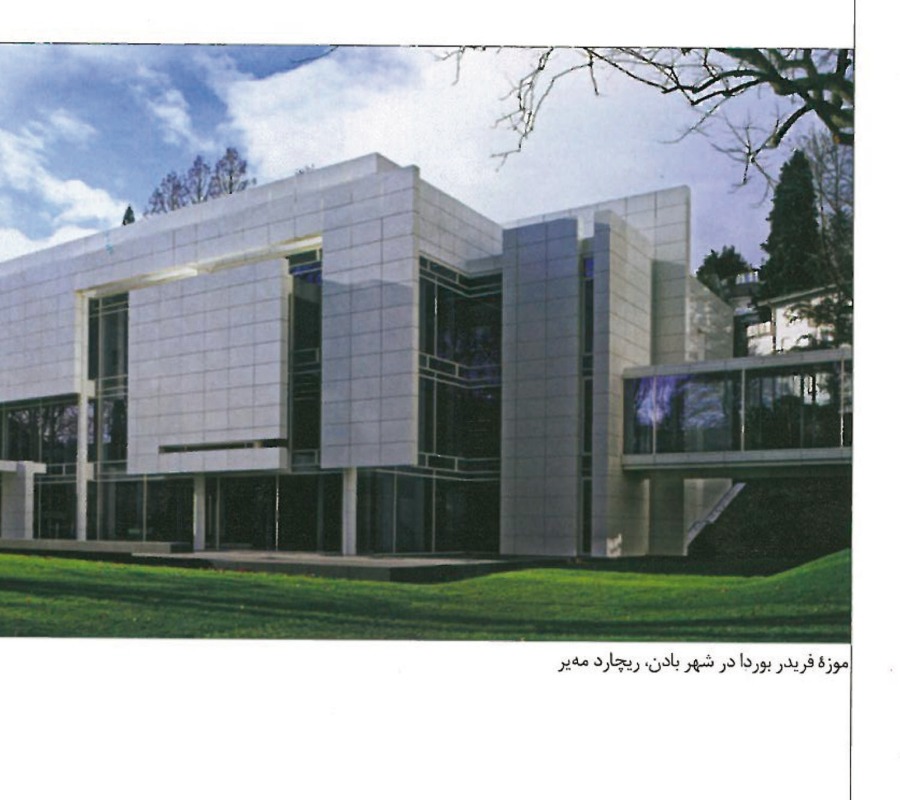
The article presents several international examples of exemplary construction detailing, including works by Richard Meier (Frieder Burda Museum, Baden-Baden), Masato Endo and Masahiro Inaba (private building, Tokyo), and the Landes Museum in Stuttgart by Architekten Gruppe. These buildings demonstrate how attention to construction detail elevates architecture from mere building to art.
Similarly, examples from different contexts are presented: sandbag shelter prototypes from Iran, Mexico, India and Thailand by Nader Khalili; the Serpentine Gallery pavilion in London by Alvaro Siza and Souto De Moura; and Biennale installations in Venice, all illustrating how detail serves both function and expression.
The Path Forward for Iranian Construction
The article argues that Iranian architecture must develop a more rigorous culture of construction detailing. This requires investment in technical education, better coordination between designers and manufacturers, development of local technical literature, and a professional environment that values precision and quality of execution alongside design ambition. Without this cultural shift, Iranian buildings will continue to suffer from the gap between design intent and built reality.