Standards of Office Space Design
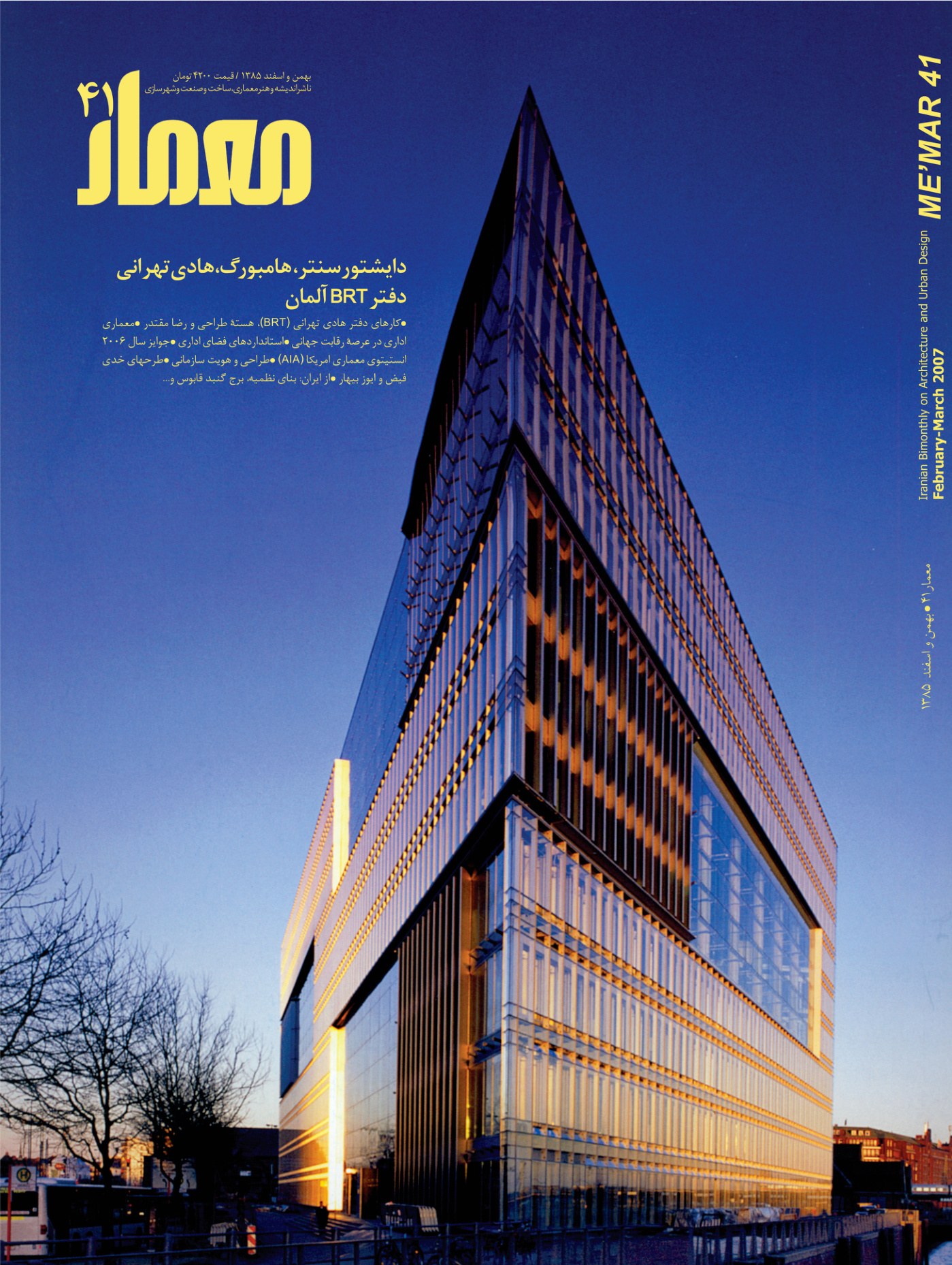
Many articles of this issue of Memar address the different aspects of office buildings in Iran. Instead of a foreword, we have presented in this issue some global standards of office design so as to make a comparison possible between such standards and the quality of the existing office buildings in Iran.
Space Allocation and Planning
The design of office spaces begins with understanding the relationship between usable area and the number of occupants. International standards suggest allocating between 8 to 12 square meters per person for general office work. The concept of time sharing has gained prominence as organizations seek to optimize their real estate investments.
Environmental Quality and Comfort
Office design must address: visual comfort through appropriate lighting, thermal comfort through effective HVAC systems, acoustic privacy through sound insulation, and air quality through proper ventilation. Research shows that investment in environmental quality correlates directly with employee productivity.
Changes in Office Environment Over Time
The office building has evolved from cellular offices to open-plan layouts, then cubicle systems, and now activity-based working. These changes reflect evolving attitudes toward collaboration, privacy, and workplace efficiency.
Key Design Standards
Standards include: natural lighting within 6-7 meters of windows, ceiling heights of 2.7-3.0 meters, appropriate acoustic separation, and integration of building services without compromising usable area. The article provides comparison tables across international frameworks as a reference for Iranian architects.



