Movement along the path of development, in most countries, is accompanied by the inclination of governments and rulers to consolidate and preserve the identity of society. After passing through the stage of consolidating the security and economy of society, attention to the importance of the heritage of civilization and culture, in the preservation of national identity, becomes unavoidable. In most developed countries, institutions such as a national museum, a national library, a national theatre, or a national orchestra — which most often have a singular existence — become symbols of the national culture of that people.
In the early years of the 1350s SH (1970s) in Iran, as a result of huge oil revenues and economic growth, we witnessed an accelerating pace in shaping the substrate of culture and reproducing symbols according to the ideas of that era. Compressing time — so as to provide the pillars and structures of culture by relying on hefty budgets, while injecting culture-and-art animating factors modelled on the developed countries — was among the aims of that programme. In the course of this movement, the idea of establishing a national library in the country was raised; and following it, a working-group project of specialists in the fields of archiving and librarianship was set up for the initial studies and planning. In 1356 (1977), a competition for the selection of the executor of the executive planning, and then of the design of the National Library of Iran, was held. Among the invited jurors, the Italian teacher and architect Giancarlo De Carlo¹ — together with other members of the jury panel — judged the projects in a fifteen-day marathon. In an interview at that same time in the magazine Domus², he expressed interesting opinions concerning the works submitted to this competition. From his view, the projects could be classified into three groups: exaggerated monumentalism, technological perfectionism, and finally an excess of common sense.
The first group consisted of projects whose architects had been excited by the supposition that the oil dollars would enable them to carry out the most bizarre irregularities in architecture. The pretext for these unconventional ideas was, naturally, native tradition; and of course what had been taken as Iranian tradition was that portion of Islamic monumentalism which no longer bears any connection to the real culture and to the economic, social, and political context of today's Iran.
The second group consisted of projects whose architects had also been excited by the supposition of a wealth that they assumed existed in a Middle-Eastern land — and consequently, by the idea that, with ideas drawn from the most far-fetched aspects of the worship of technology, they could respond to it. They had not paid attention to the reality that today's Iran may have a great deal of money to spend, but without doubt it does not possess the technical capability to manage such advanced technology. For this reason, the ultra-modern technological solutions proposed will generally have catastrophic results.
The projects of the third group belonged to architects who, owing to a certain innate humility — or perhaps inability — had used more neutral and unremarkable ideas. The issue is that the greater part of the jury panel, somewhat owing to a justified dread of the unconventionality of the first group's designs, and also to the unsuitability of the second group's designs, turned their attention to the mediocrities of the third group.
As a result, by 1357 (1978) the project of building the National Library of Iran did not reach completion, and after the Revolution the matter of having a great library on a national scale — titled the National Library of Iran — was forgotten. In the late 1360s (1980s), the need for a large library titled the National Library of Iran, with the practical aims of an institution responsible for collecting, preserving, and safeguarding the country's written heritage and what is produced in this domain, was raised again, and its programme came onto the desks of officials in 1370 (1991). In this regard, the review of the existing past programme was assigned to Pir-Raz Consulting Engineers as a firm with the specialised capability required to meet the client's needs; then, in 1373 (1994), with the client's review of the earlier decision, a closed competition between five first-rank consulting-engineer firms was held as the method of selecting the chosen consultant. The final result of this competition, by the unanimous vote of the jurors, was the re-selection of Pir-Raz Consulting Engineers as the planner and designer of the project.
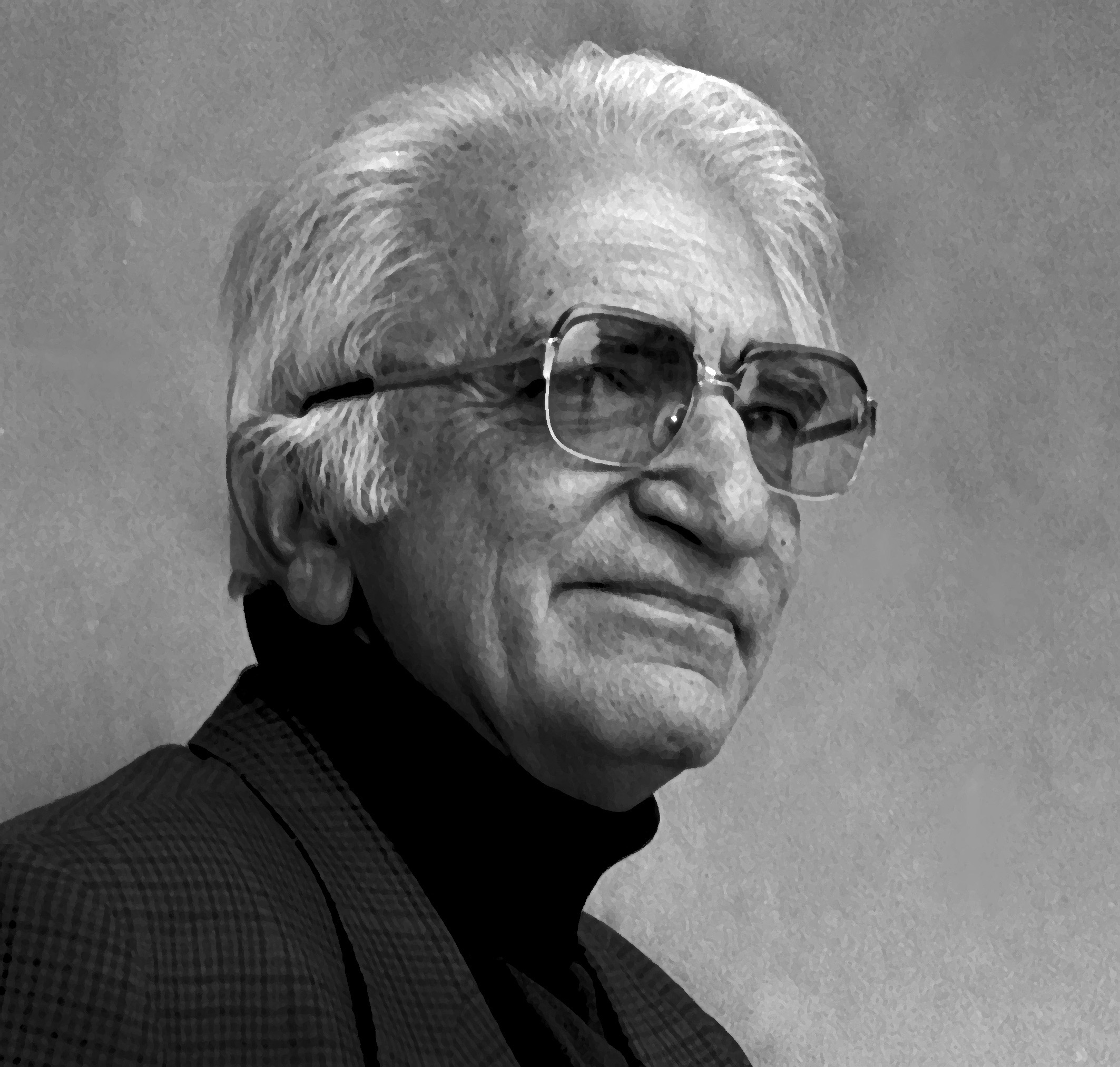
The subject of this issue of Memar magazine is Yousef Shariatzadeh — the principal architect of the National Library of Iran at Pir-Raz Consulting Engineers — and the examination of a manner of architecture that, at the present day, has remained to a considerable extent far from the focus of the action and attention of the architecture in circulation; and the construction of such large-scale projects, with specialised functions, is in practice beyond the capacity of the Iranian actors.
In our belief, Yousef Shariatzadeh and his place in the contemporary architecture of the country have not been dealt with to the degree they should have been. Much has been written about his projects — such as the Rivoli Cinema and the National Library — but not so much about the architect himself and his architecture.
Yousef Shariatzadeh was not a man of speaking and writing. His preference was the expression of his ideas and thoughts in the architecture he had carried out and reflected in his work. In other words, he was not a man of expressive architecture; he devoted his life and time to designing and building rather than to talking and going onto the stage. But it would seem that this statement does not entirely correspond to the reality. "Shariatzadeh is not a man of speaking and writing about himself (with emphasis)." He was present at no opportunity for being seen or attracting notice. Perhaps for this same reason he is not remembered as much as he should be — and of course his early death is not without effect either. He was well acquainted with writing his thoughts, and from time to time, with extensive knowledge of his profession and a timely understanding of its state, he subjected the architecture in circulation in this country to critique — his articles bear witness to this. For fuller awareness of his pen and his thought, it would not be without merit to study a piece by him in issue 5 of the magazine Elm va Zendegi, in 1338 (1959), in reply to the critical article by Jalal Al-Ahmad concerning the architecture of the new mosque in Qom in that same publication.
On the other hand, in the field of his architecture, Shariatzadeh is not a man of formalities and exaggeration. He designs a building for that very thing which it must be and that thing which it must do. The very important and valuable point in his architecture is that he had social concerns in his profession and considered himself responsible for the work he carried out — and, in the words of Mohsen Mirheydar (his longstanding friend and colleague at Banyan and Pir-Raz): "He does architecture in such a way that its result will serve the society."
In practice, Shariatzadeh's architecture does not rely on mere formalism; he believes that the formation of the form of a design arises from the correct and efficient architectural solutions. He shuns playing with forms as an aim of architecture. For him, forms must be meaningful and necessary; and for this reason, we do not see their detached and performative presence in any of his works.
Over the course of four decades, Shariatzadeh and his colleagues at Banyan and Pir-Raz carried out a broad spectrum of architectural projects — from buildings of industrial complexes to medical projects, from universities to headquarters buildings and ministries, from residential houses and apartments to a banknote-printing house — and in all these projects the importance of the correct functioning of the architectural components is evident. This is certainly the result of his correct understanding of the profession and the work he carried out, alongside his endless study and his extensive knowledge of the substrate effective in his profession, which is plainly evident in the elevation of the quality of architecture in different forms and in the great variety of his projects. For Shariatzadeh, architecture does not end with construction. The follow-up of function and the reflection of his architectonic solutions in the projects he had built are of great importance, and in the repetition of designs of similar function over time, he applies their results.
In studying Shariatzadeh's works, we find him — in the process of the formation and the completion of a project — as a path-paving architect. The desirable fusion of his abilities with the colleagues of the team that comprised the Banyan office and then Pir-Raz Consulting Engineers has always presented them as the finishers or the assemblers of large and sensitive projects, such as the National Library, the Heads of State Summit Building, and the banknote-printing house of the Central Bank. Without doubt, the predominance in numbers of Shariatzadeh and his colleagues' built works against the projects which he designed but which were not built is a testimony to this claim.
Yousef Shariatzadeh is a great architect, but for us he is also a respected architect — perhaps because, rather than talking copiously about architecture, he has left a good architecture as a legacy.
Footnotes:
1. Giancarlo De Carlo, a graduate of the Polytechnic of Milan in civil engineering and a holder of a doctorate in architecture, has taught at universities in Italy, at MIT, and at Yale University in America.
2. "Interview with Giancarlo De Carlo," Domus, issue 585, 1978, translated by Soheila Beski, published in Abadi magazine, issue 17, 1374 (1995).



