Contemporary Architecture

Mian Residential Building, Mashhad

Pi Architects, Mohammad Ebrahimzadeh·Photos: Diman Studio (Mostafa Delbarian)·Memar 154 — 25th Memar Award
Mian Residential Building, Mashhad
Location: Kalantari Highway, Mashhad · Client: Khamooshi, Ebrahimzadeh · Design team: Mahshid Gooya, Nooshin Attarzadeh · Construction: Mohammad Ebrahimzadeh, Mahshid Gooya, Vahid Kamel · Supervision: Mohammad Ebrahimzadeh · Structure: Behzad Nezamdoost · Electrical: Mahdi Hajizadeh · Mechanical: Mahdi Pezeshki Rad · Graphic: Mahshid Gooya · Photo: Diman Studio (Mostafa Delbarian) · Total built area: 3,400 m² · Area: 510 m²

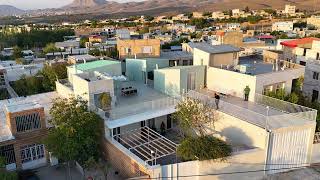
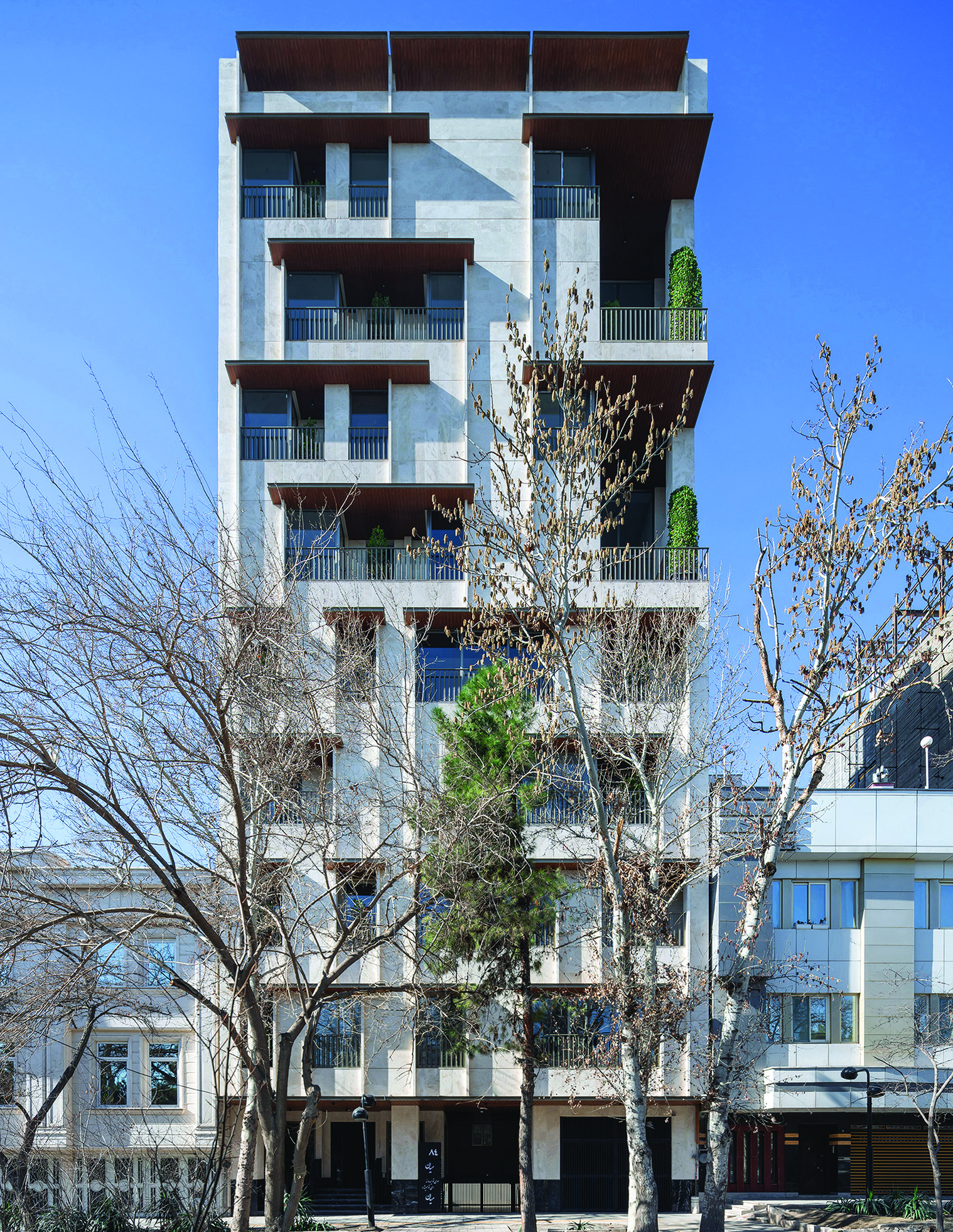
The “Miyan” residential project offers a fresh perspective on urban housing and, in its departure from prevailing clichés, proposes a distinctly different structure in the form of a nine-unit building. Erected along one of Mashhad’s principal axes, the building is composed of five distinct plan types, each presenting its own particular spatial quality. This diversity of plans, while preserving overall coherence, affords residents the opportunity to choose spaces with differing organisational arrangements — a choice that transcends mere area, grounded instead in the experience of space and individual living.
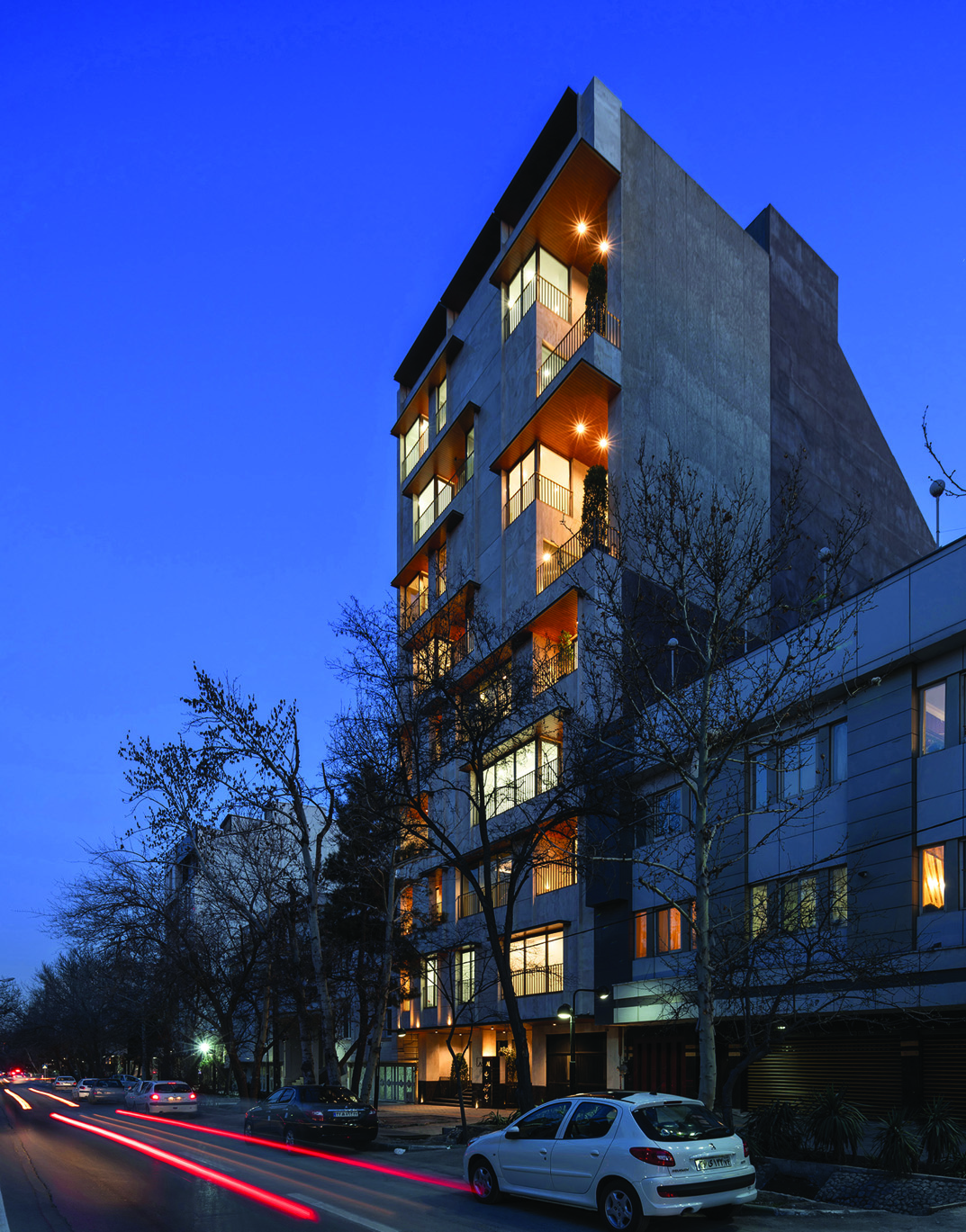
Miyan Residential Building at dusk, warm light glowing from staggered terraces and windows, car light trails on the street below
The building at dusk — warm light spilling from the staggered volumes onto Kalantari Highway

One of the project’s defining features is the fracture of form, volume, and structure at the building’s midsection, which has enabled a richer formation of interior spaces: units with varied configurations — two duplexes, one triplex, and three split-level units.
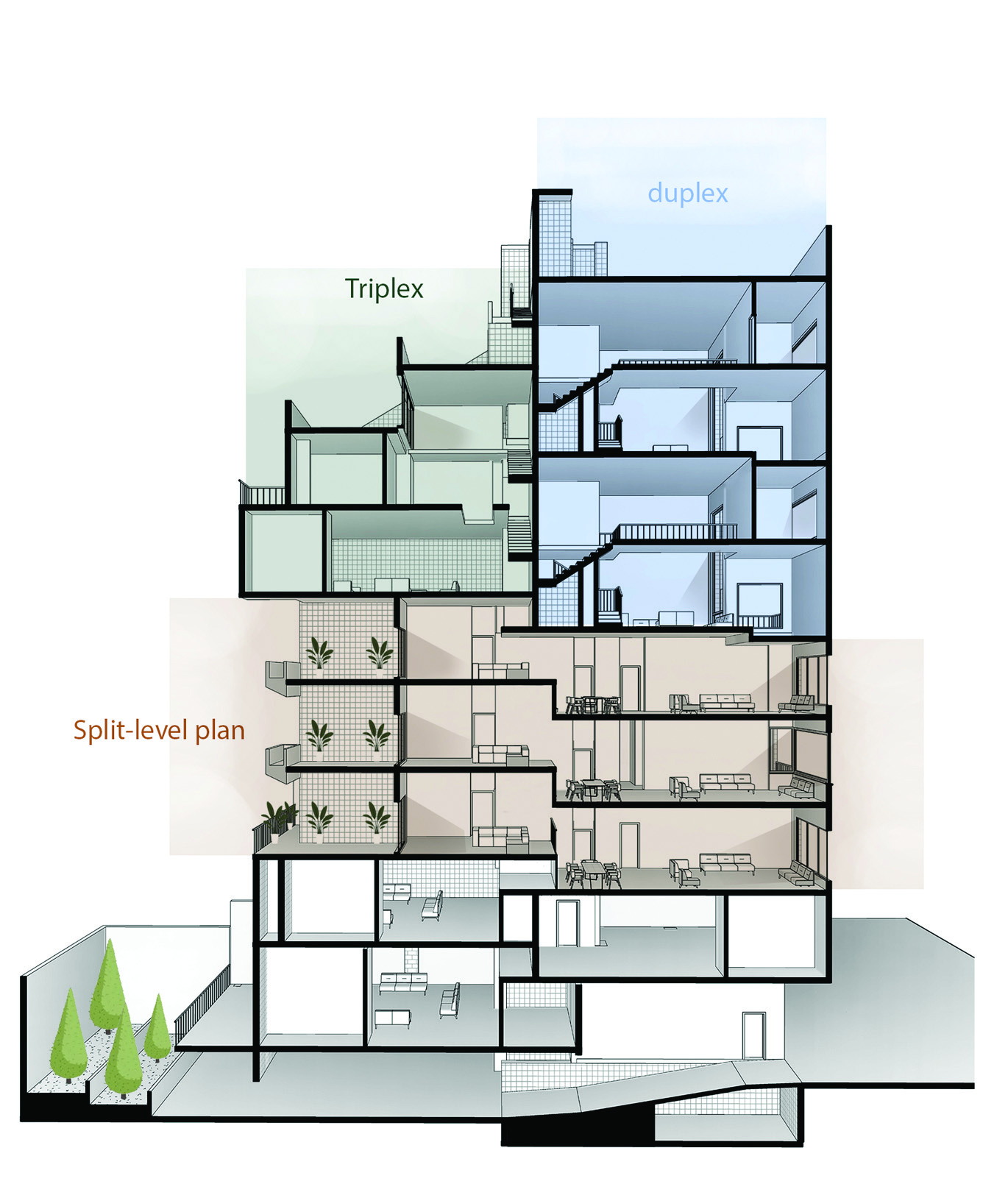
Sectional diagram of Miyan Residential Building showing three unit types colour-coded: split-level plan in beige, triplex in green, and duplex in blue, with trees at ground level
Building section — the three unit types: split-level (beige), triplex (green), and duplex (blue)
♦ ♦ ♦

Interior Spaces

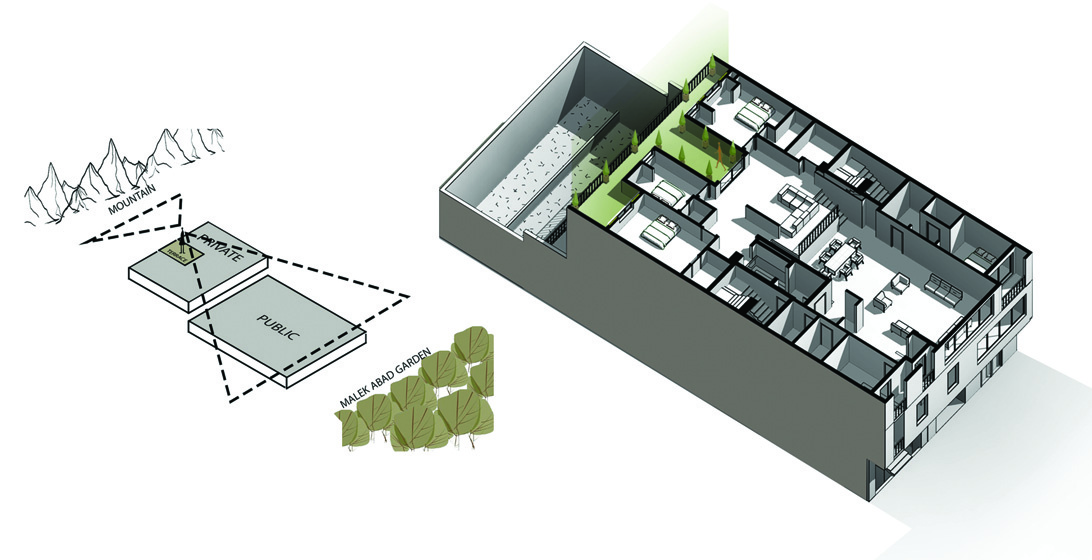
On the southern side, terraces have been designed that, through their depth, simultaneously maintain privacy and provide horizontal views toward the southern mountains and Malek Abad Garden of Mashhad to the north. As semi-open spaces, the terraces respond to the growing contemporary need for connection with the outdoors, natural ventilation, and a more liveable experience within urban density. The fracture in the building’s form and volume has also achieved an effective separation of public and private spaces.
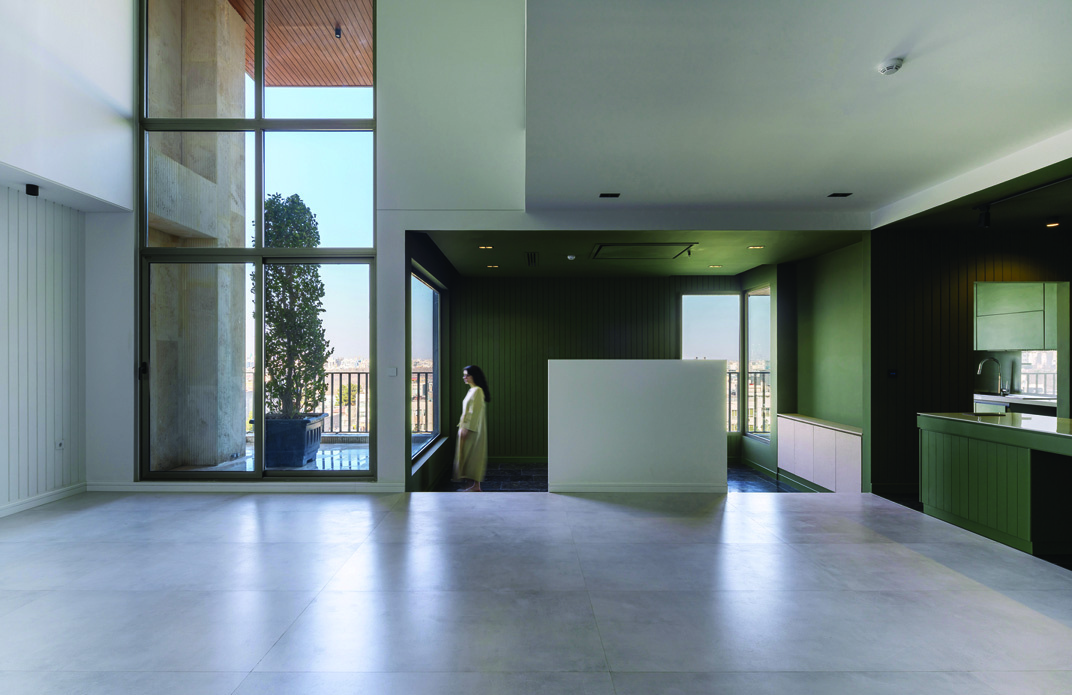
Double-height interior space with floor-to-ceiling windows opening onto a terrace, green panelled kitchen zone beyond a white counter, a woman standing near the glass
The double-height living space — floor-to-ceiling glass opens onto the deep terrace with panoramic views
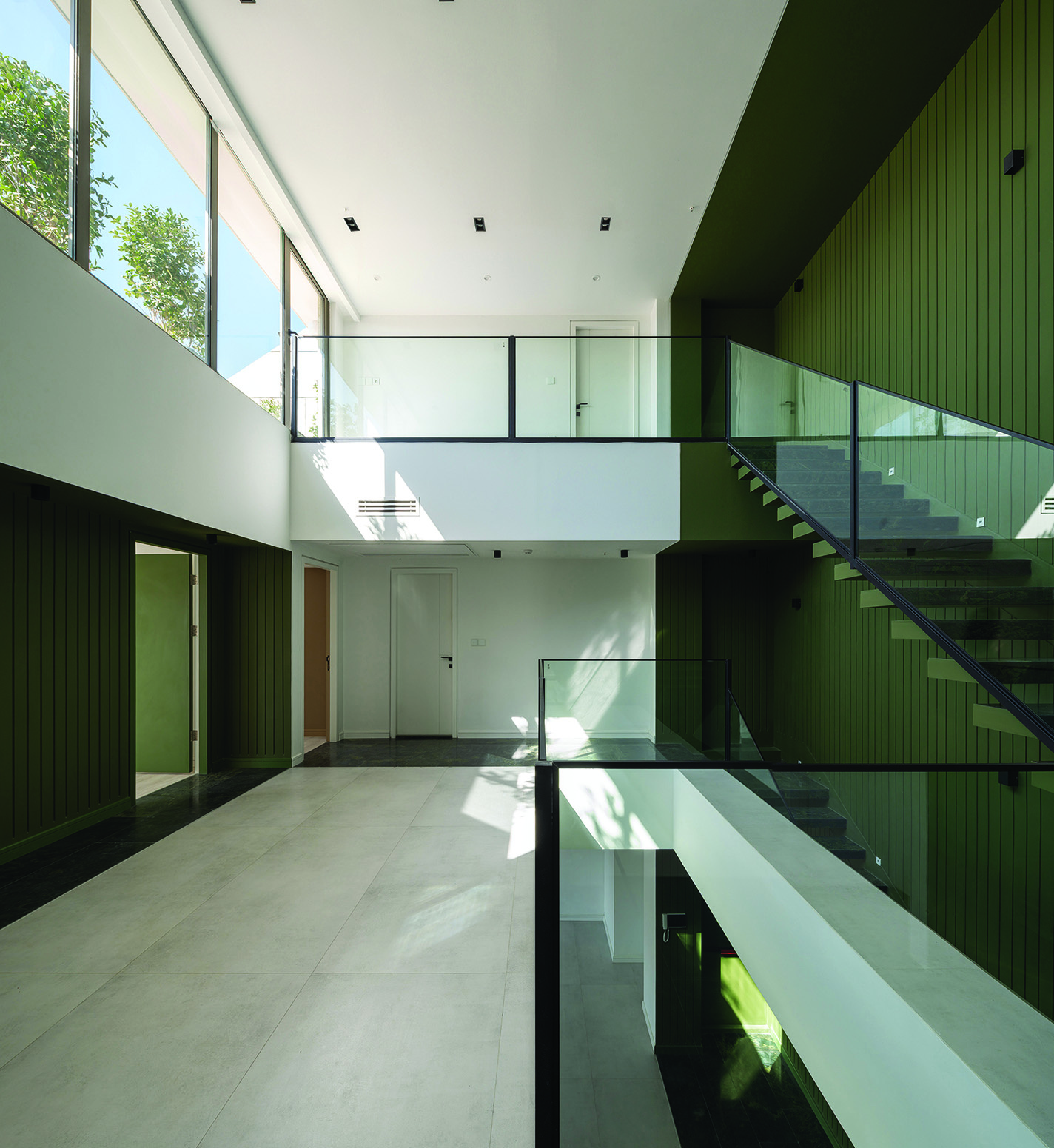
Multi-level interior with green-panelled walls, glass railings, floating staircase connecting upper and lower levels, natural light flooding from high windows
The multi-level interior — green-panelled walls, glass railings, and a floating staircase linking the floors
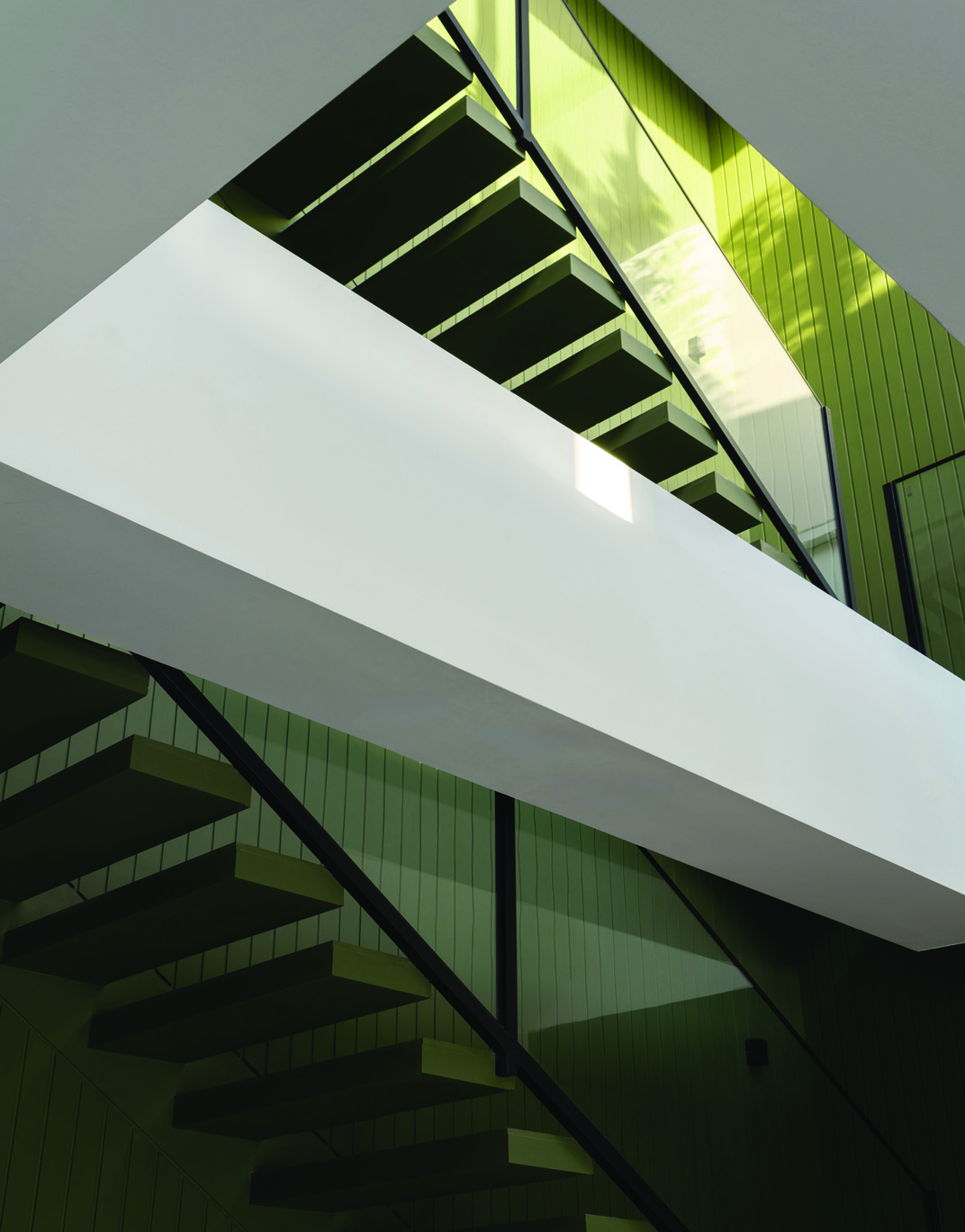
Angular view looking up through two flights of floating stairs against green-panelled walls, geometric composition of treads and glass balustrades
Staircase detail — floating treads against green-panelled walls
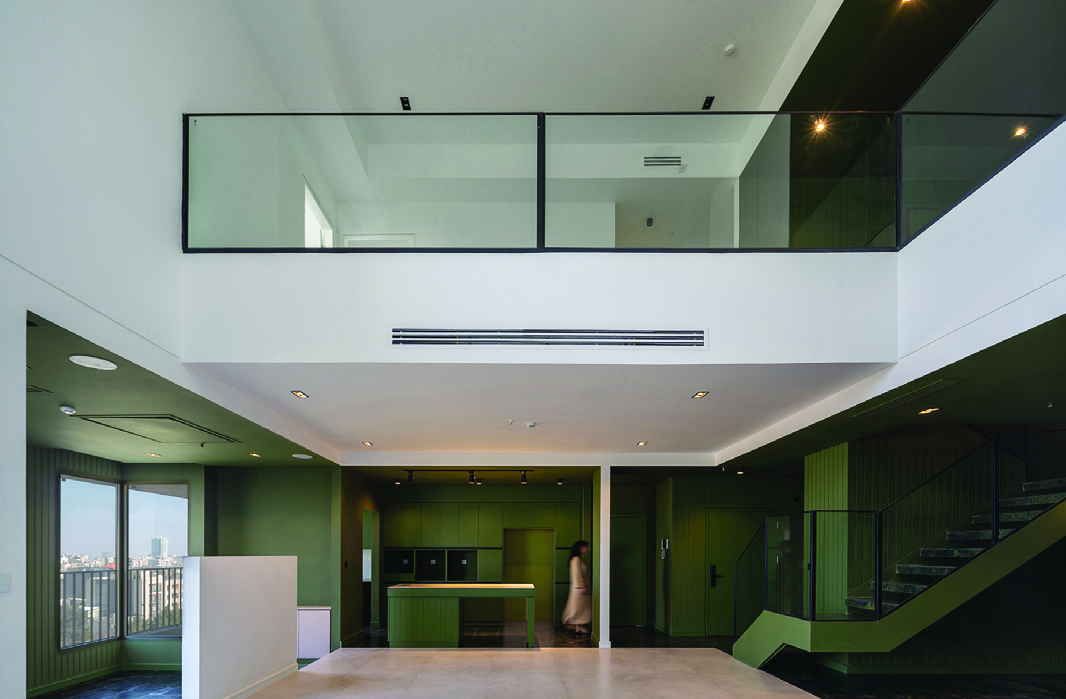
Double-height space with glass mezzanine railing above, green kitchen with island below, staircase to the right, city views through left windows
Double-height space with kitchen below and mezzanine above

Residents can live in tranquillity within the private zone, and only when necessary join their guests in the public space. This design attends not only to the comfort and privacy of residents but also to energy conservation, preventing its waste in unnecessary spaces.
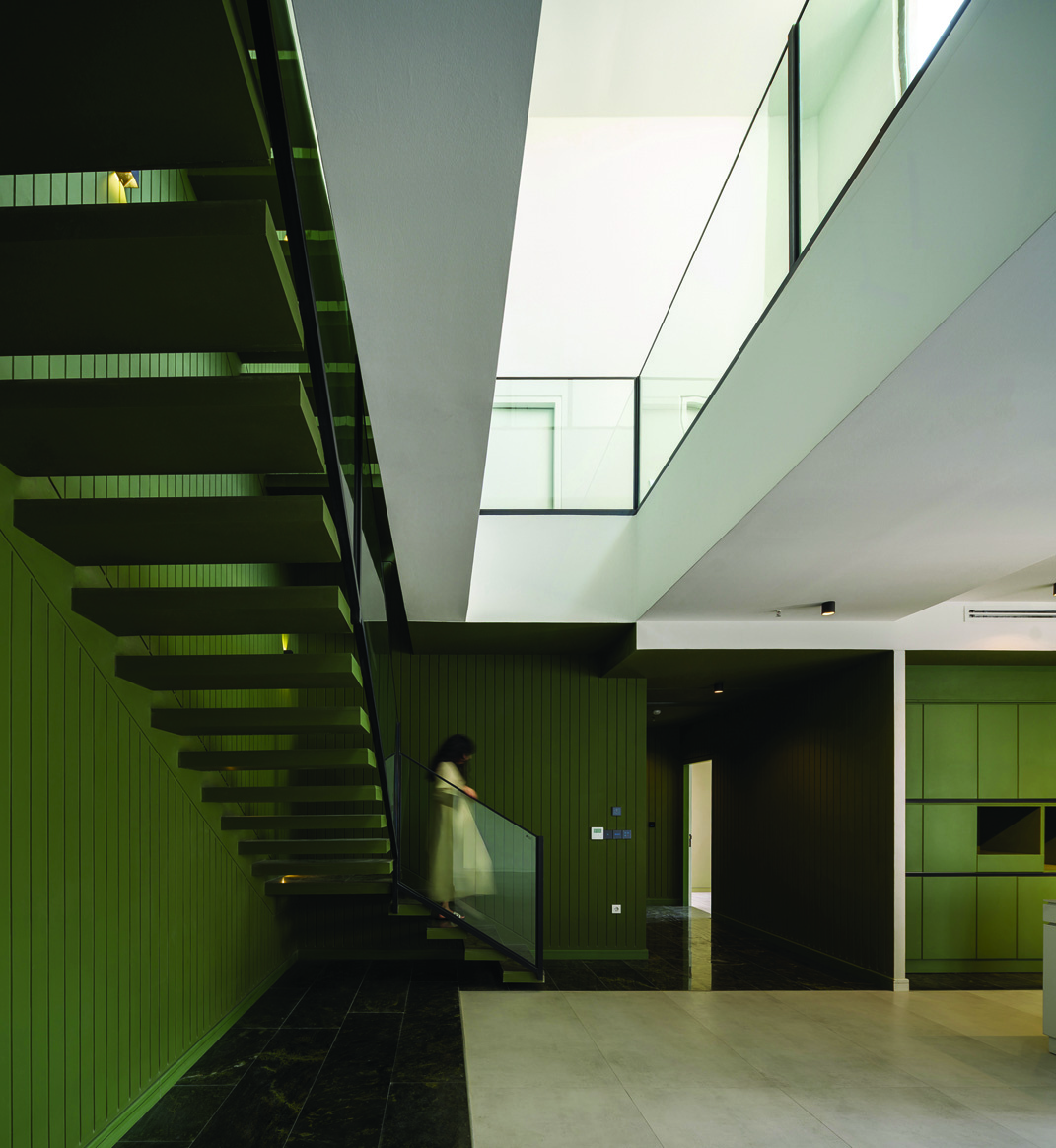
A woman descending the floating staircase, green-panelled walls surrounding the void, glass balustrades, double-height space with natural light from above
A resident descends the floating staircase through the green-panelled void
♦ ♦ ♦

Kitchen and Living

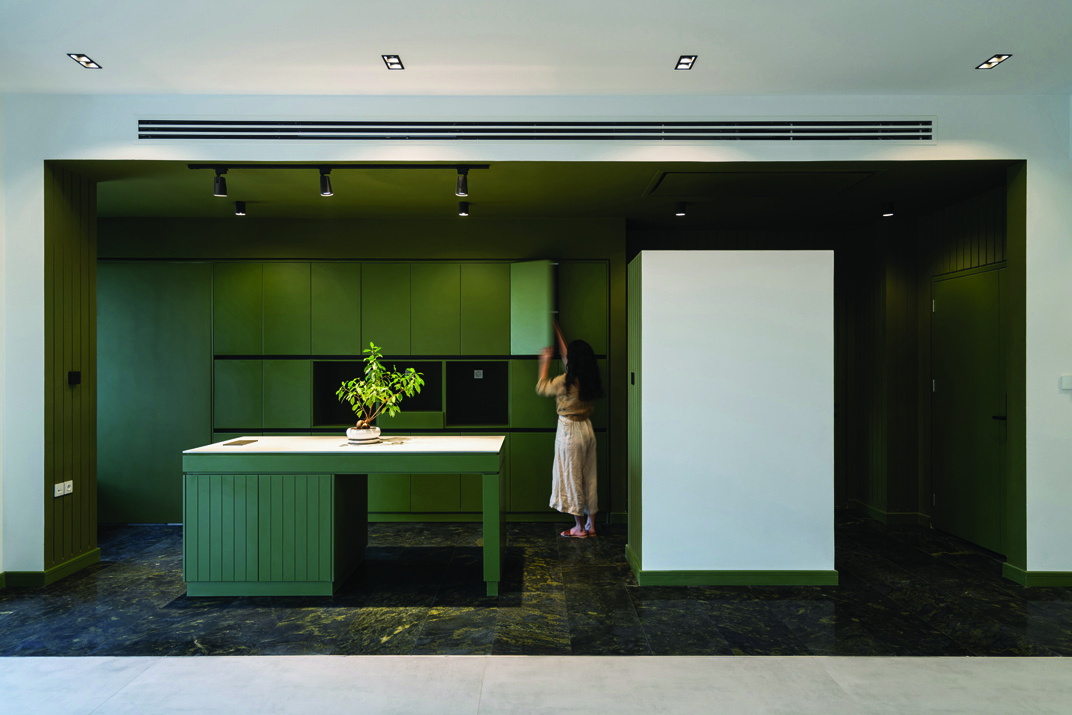
Green kitchen with island counter topped in white stone, track lighting, built-in appliances in green cabinetry, a woman reaching for a high cabinet, dark marble floor
The green kitchen — island counter in white stone, integrated cabinetry, and dark marble flooring
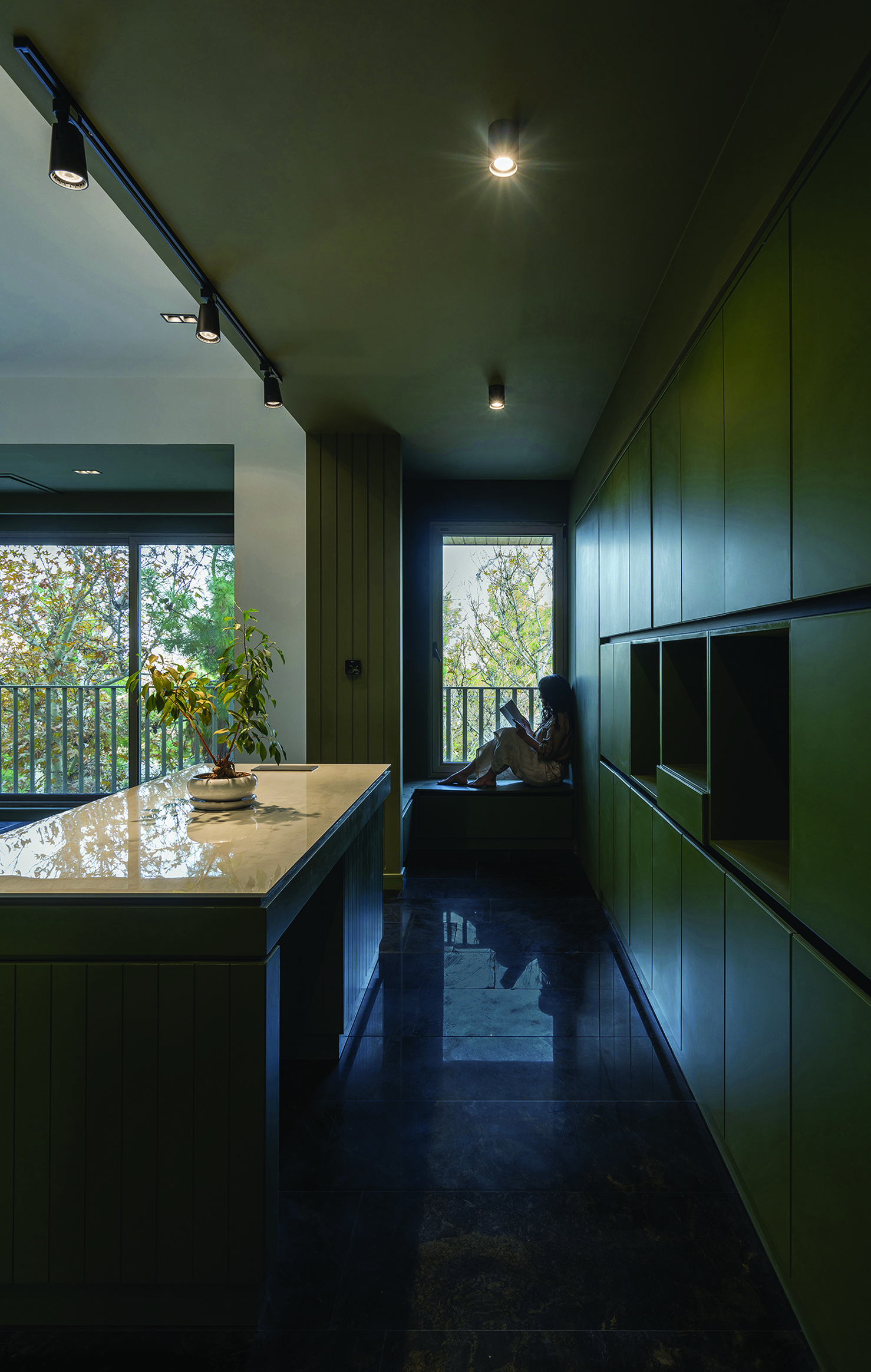
Dark green kitchen corridor with counter, track lighting, a person sitting in a window nook reading, trees visible through the window
Kitchen corridor with a reading nook by the window
View from kitchen across the dark marble floor toward the living area, a woman ascending the dark stone staircase, green cabinetry on the left
From the kitchen toward the staircase and living area
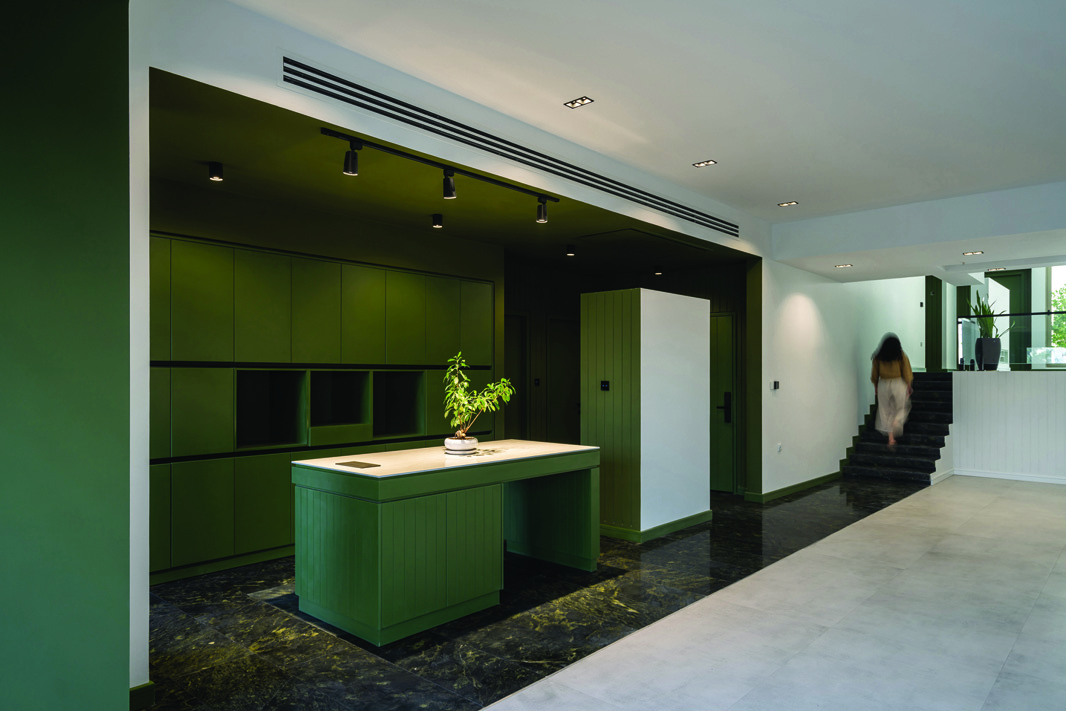
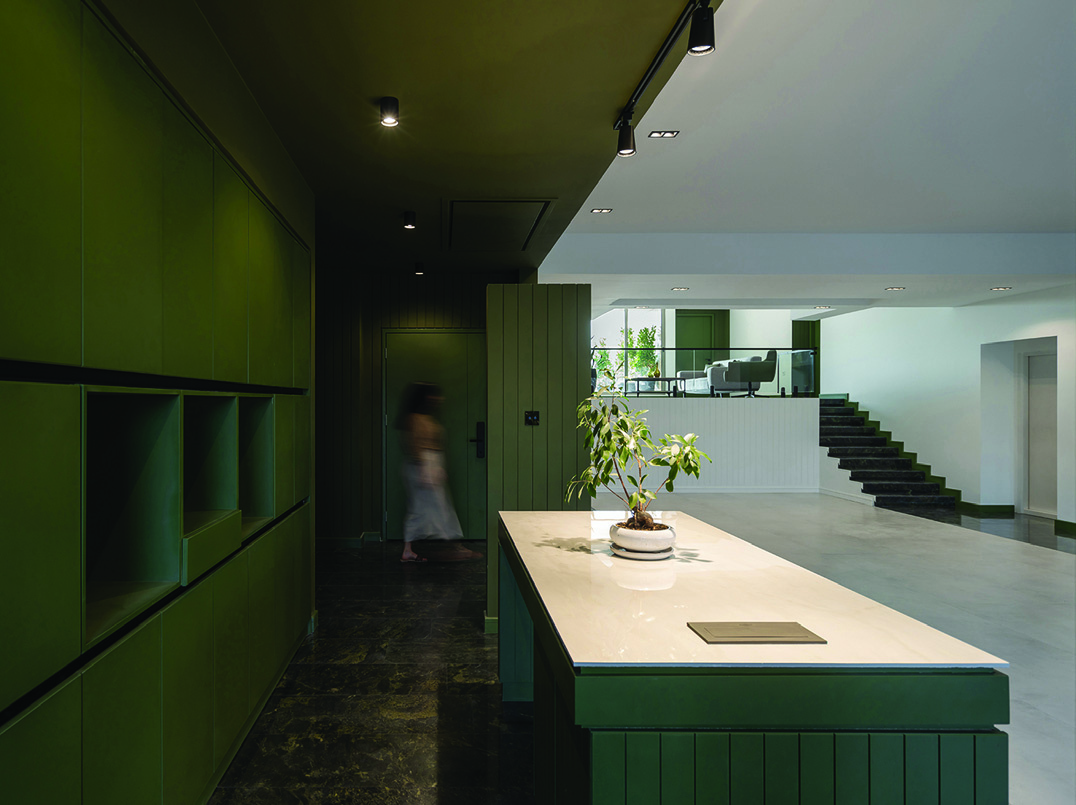
Green kitchen island with white stone counter and potted plant, looking toward the living room with staircase and glass railings visible beyond
The kitchen island frames a view through to the split-level living spaces

In the building’s facade, attention to the third dimension has given rise to a boundary distinguishing the duplex and triplex units from the others; this differentiation is expressed three-dimensionally, lifting the volume away from flat surfaces.
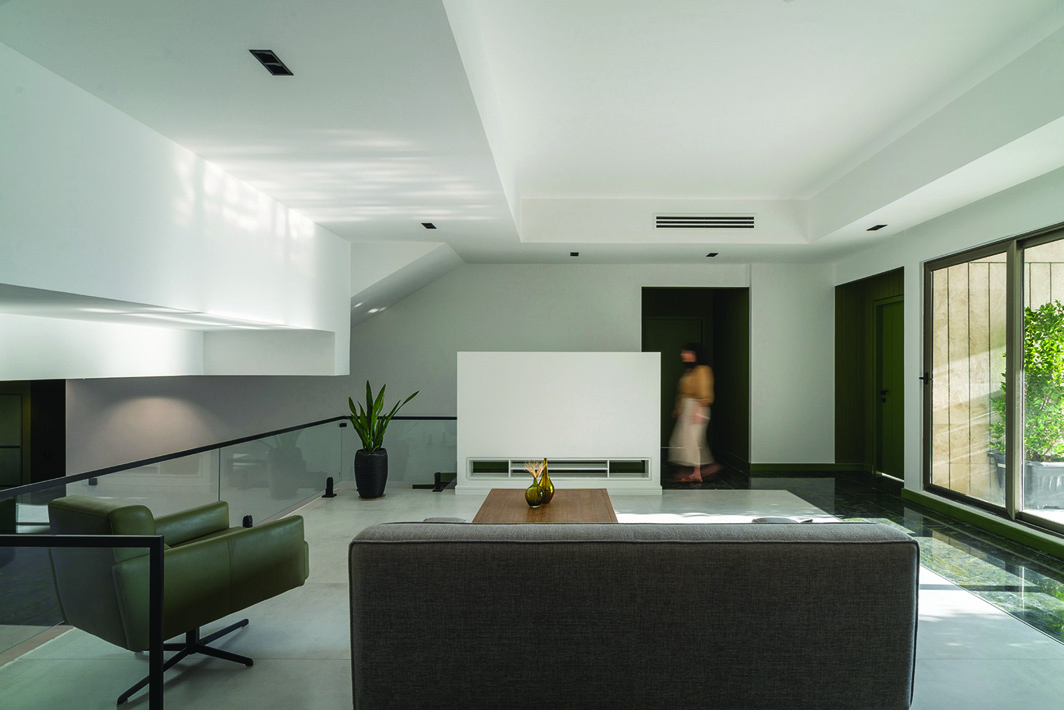
Upper-level living room with grey sofa, green armchair, wooden coffee table, glass railing overlooking lower level, sliding glass door to a terrace with greenery
The upper living room — terrace access and views over the lower level
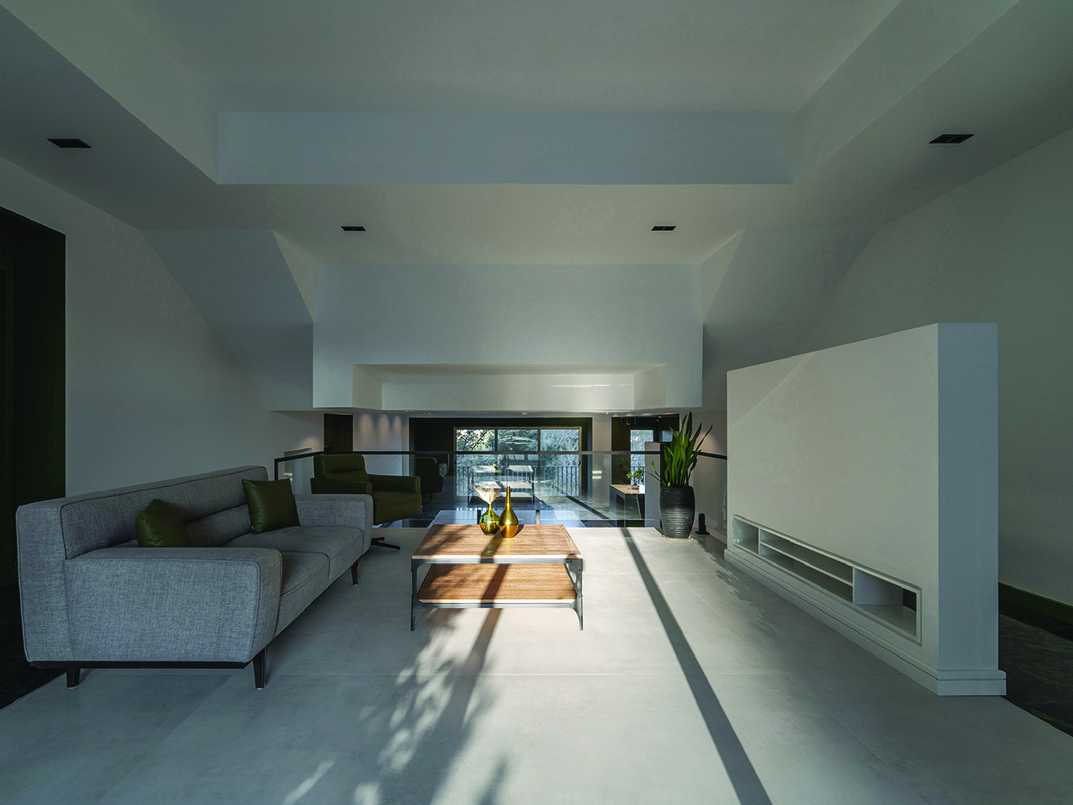
Long perspective view of the living room with grey sofa, wooden coffee table, media wall, sunlight streaming across the floor, double-height void visible beyond
Living room in afternoon light — the double-height void visible beyond
Isometric diagram showing public and private zones of a unit, with Malek Abad Garden to the north and mountains to the south, interior layout with bedrooms, kitchen, and living spaces
Isometric diagram — public and private zones oriented between the mountains and Malek Abad Garden

Related in Architecture Database