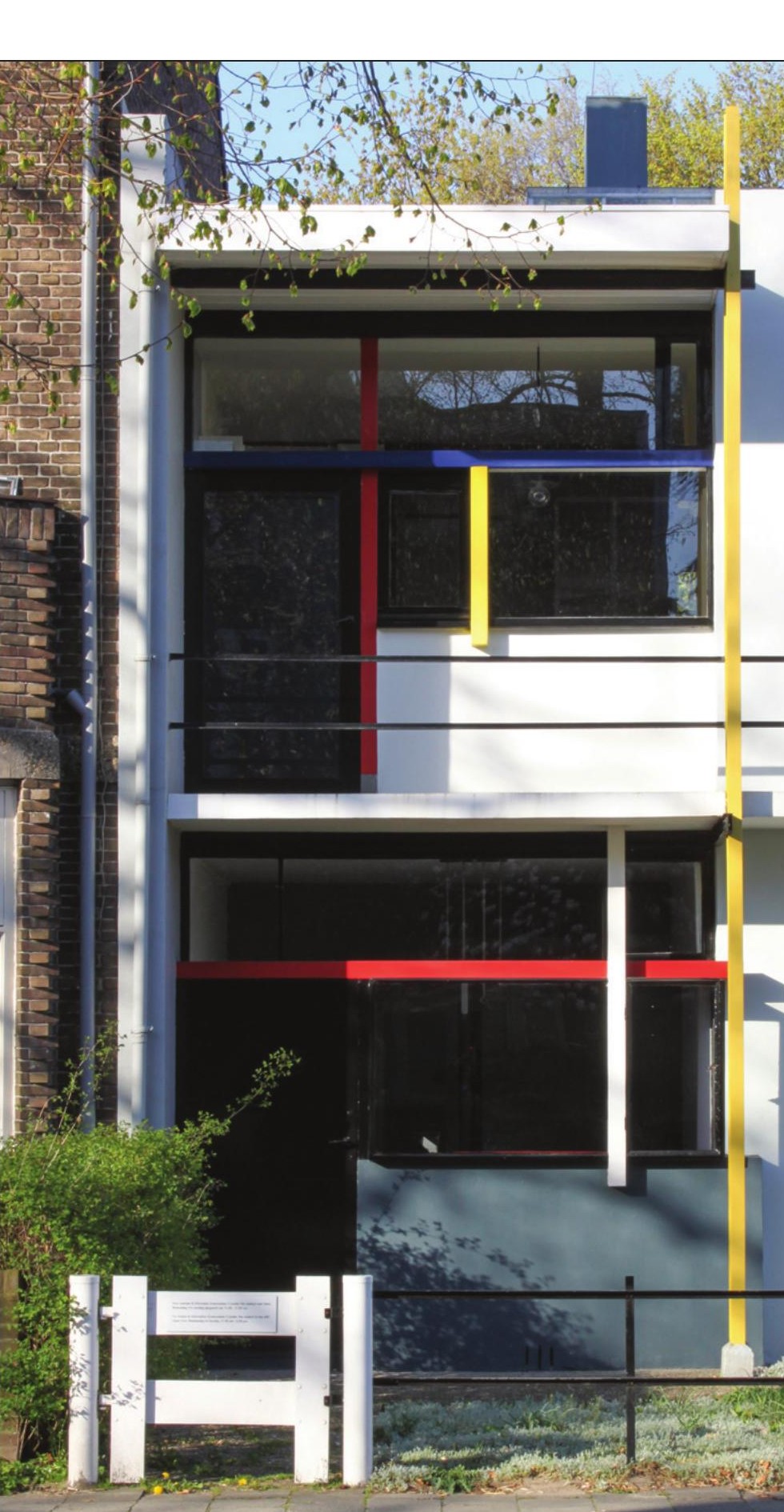
Among the artists of the twentieth century, none influenced architecture as much as Piet Mondrian (1872–1944). In the view of many critics of art and architecture, the Schroder House1 in the Netherlands, by Gerrit Rietveld — one of the most distinguished modern buildings (1923–4) — is the first three-dimensional embodiment of Mondrian's paintings (along, of course, with Rietveld's famous chair). The architecture of the Schroder House was not shaped by Mondrian's paintings alone; in a wider picture it had absorbed the ideas of the De Stijl2 school, founded by Mondrian together with a circle of Dutch-speaking artists — including the architect J.J. Oud — in the middle of the First World War. Another influence came from across the Atlantic: Wright's organic architecture. In 1910 an exhibition of Frank Lloyd Wright's work was held in Berlin, and Wright's ideas, like a fire across a meadow, swept through European architecture. (There is, of course, a difference between this work and Wright's own. In the Schroder House, Rietveld, unlike Wright, knowingly refrains from drawing on natural and local materials — perhaps an emphasis on the international character he was after; this has been a contested matter in architecture ever since.3)
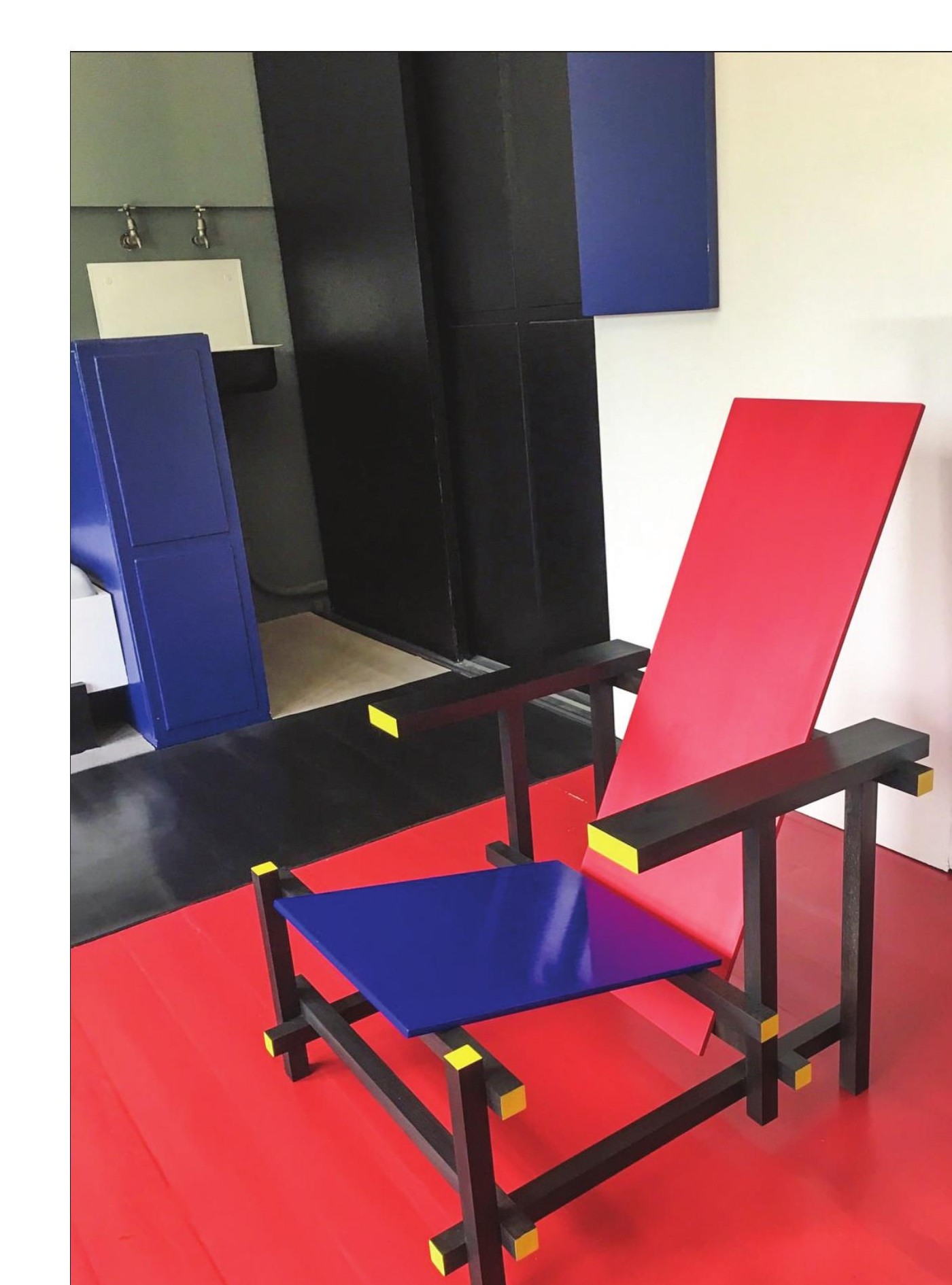
Mondrian was a painter of ideas; to grasp his later works one must turn to the journal of the De Stijl group. The journal celebrated geometric simplicity. It called for images to be reduced to vertical and horizontal lines, to the achromatic values of black, white and gray, and to the primary colors red, yellow and blue.
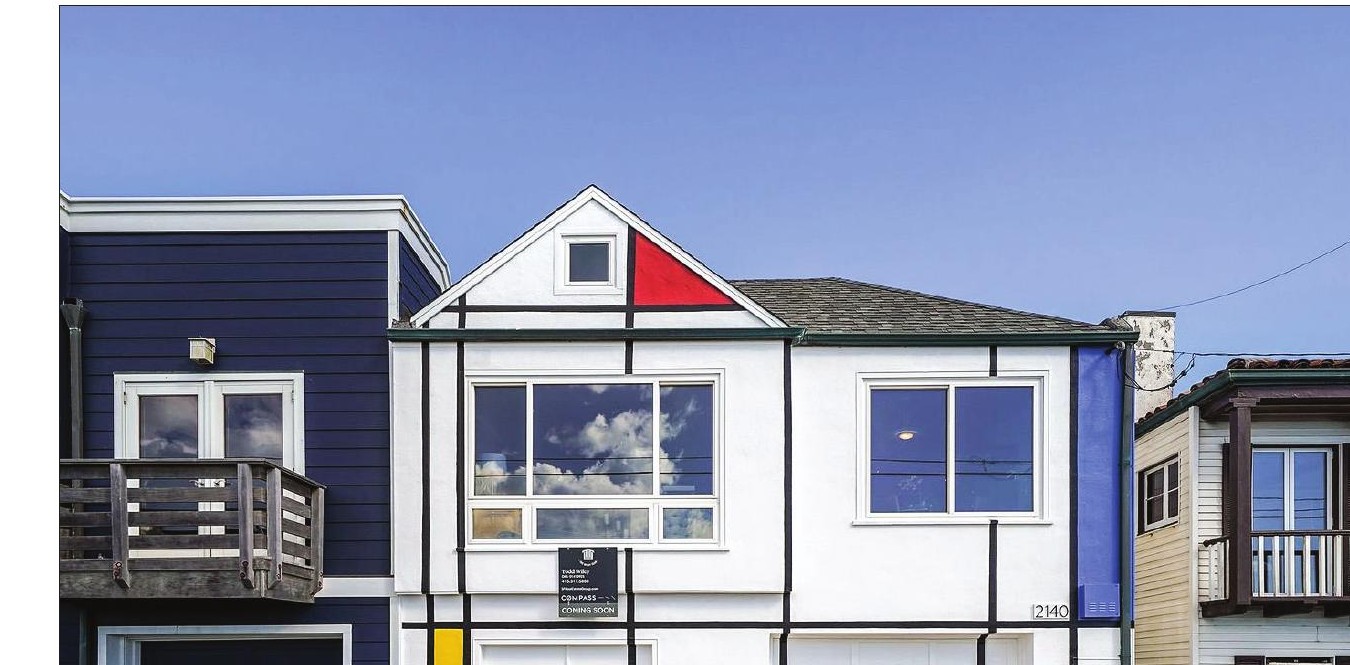
Some critics, referring to the colored elements bounded by the horizontal and vertical lines of Mondrian's paintings, speak of «colored planes»; this is perhaps one of the main reasons architects took notice of Mondrian's compositions — for architecture, after all, has a great deal to do with the composition of planes.
De Stijl's gaze did not stop at painting; it embraced sculpture, architecture, the design of every kind of ornament, furniture, and the appliances and clothing of daily life. Mondrian was De Stijl's most influential theorist.
Like every great artist, Mondrian moved through different intellectual phases whose echoes we hear in his paintings. He tried late modernist painting, post-impressionism, and cubism; the painting Red Tree is among the famous works of his post-impressionist period.
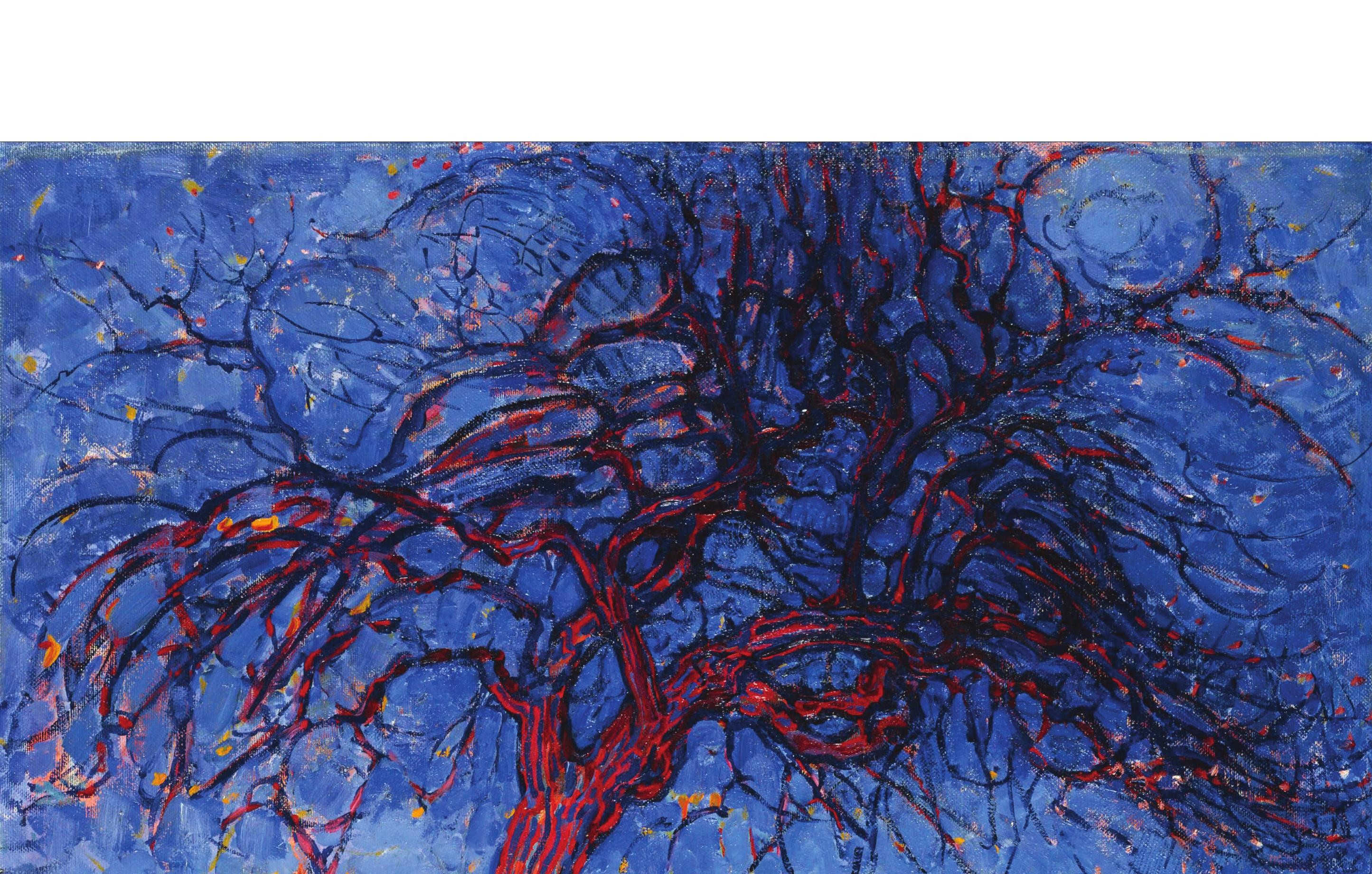
Mondrian was deeply influenced by Van Gogh, but he rejected distance and wanted his paintings to be divided into colored elements whose motion bound them together.
On his trip to Paris (1910) he was profoundly taken by cubism, yet he held that cubism «had not accepted the consequences of its own discoveries.» The painting «Composition with Line and Color»4, from his Paris years, seems to be a mental image of a building in Paris whose front had been demolished, exposing its interior.
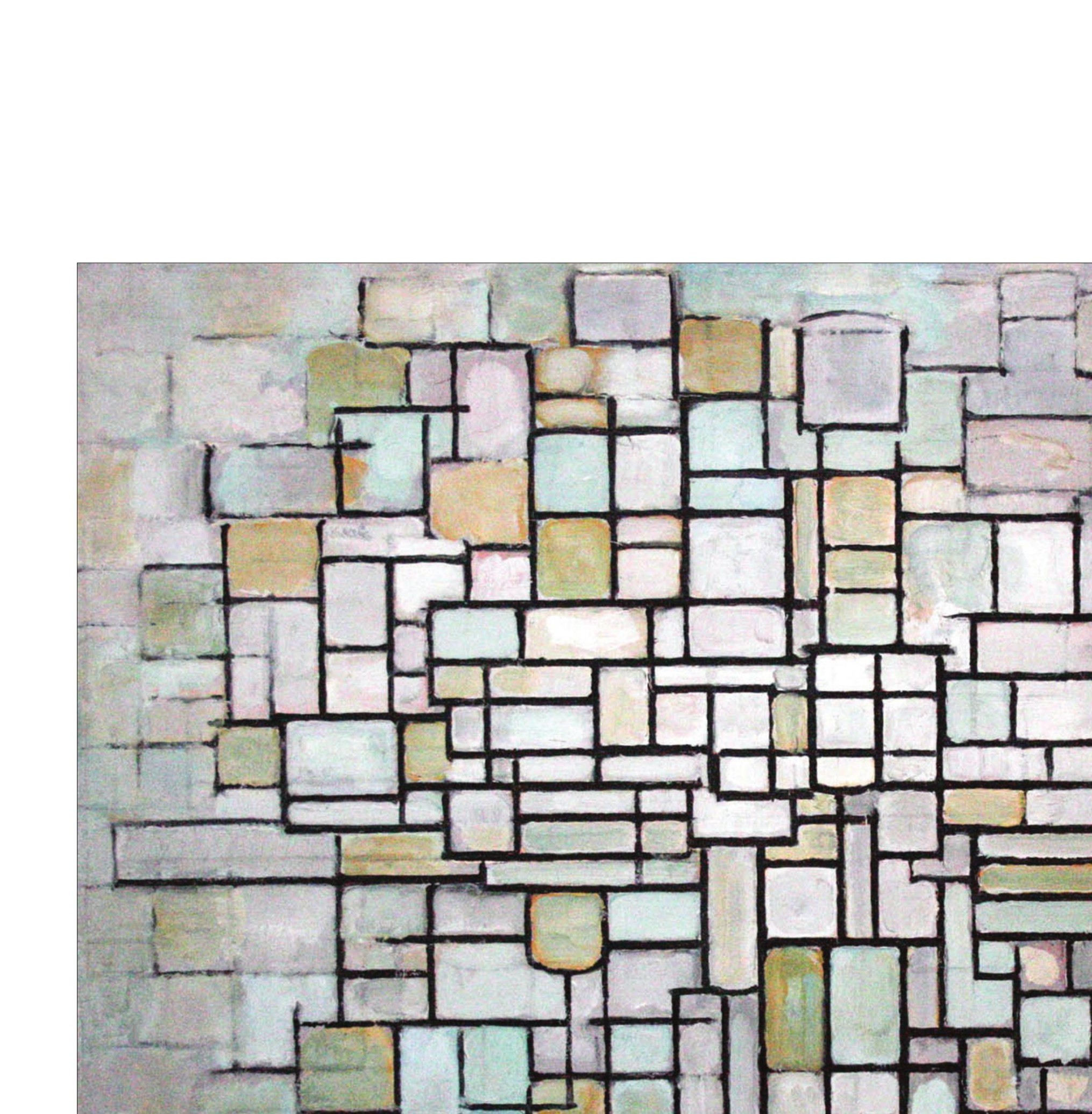
None of the colored planes in this painting resembles another; each is a singular element caught in tension and reaction with the others, like the scene of the city or of the house. He sought a dynamic expression — and so motion became an important subject in his compositions, binding line and color (or the colored planes) together.
Speaking of motion on a painting's canvas is, of course, problematic. We may set aside the theatre stage, where the actors' motion is seen directly and immediately, «naturally»; even in cinema, motion is induced by technical trickery — what we have, in the end, are still frames. In painting and sculpture, and in architecture too, when a person encounters the built work the matter becomes much more complex; yet somehow we feel motion, or rather the inherent rhythm of motion, within them. In the past, motion in such works was attributed to artistic wonder or magic. Le Corbusier reportedly told Einstein in a meeting that he designed architecture on the basis of relativity theory — which was not as off-base a remark as it might sound. He of course knew nothing about relativity theory itself, but he «knew» that the architecture of buildings and cities can carry a kind of temporal acceleration or rhythm. At the start of the twenty-first century we know something about the mechanism of this phenomenon. The neural circuits of the brain that process physical motion become active when faced with certain compositions in painting or architecture — in fact, they simulate physical motion and shape the sense of movement.5
This fascination with motion (even amid simple colored planes) belongs to passionate artists; and Mondrian lived, painted and theorized his entire life with passion. He was, of course, a Dutch citizen, and naturally drew from Dutch culture — a culture long known for its devotion to balance (and, in the social sphere, to justice).
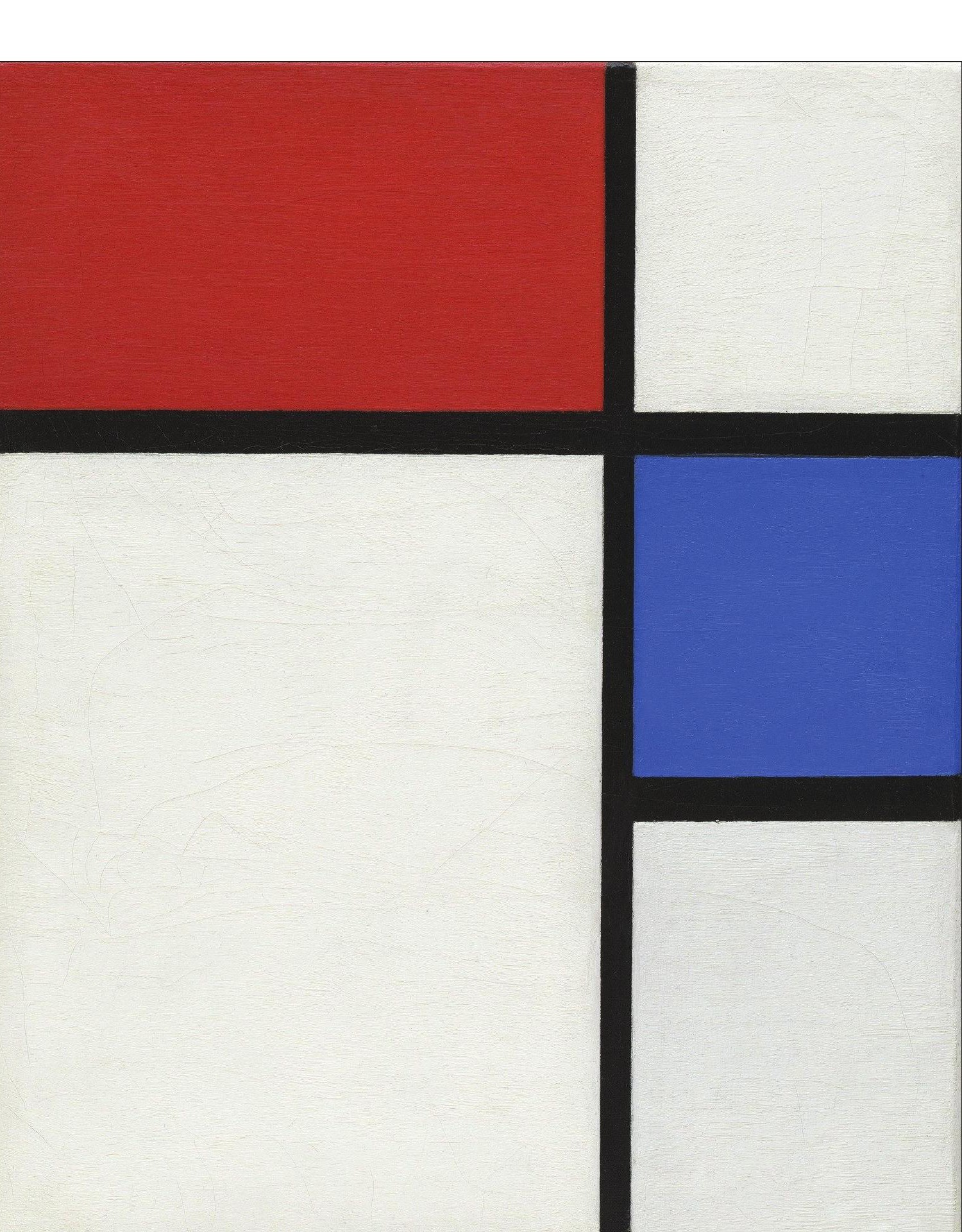
As a Dutchman, his works convey not only passion and motion but also a kind of dignity and composure that speaks of balance. He wrote: «...reality can be expressed only through equilibrium among the dynamic movements of form and color.» Composition (Komposition, 1925)6 conveys both a hidden passion and a poised dignity.
In the later phase of his geometric composition, Mondrian's tendency is the echo of his search for the comprehensive and universal — a subject revived in the thought of Aldo van Eyck as «the elementary.» In fact this is a recognition of which common elements remain — beyond temporal, spatial and cultural boundaries and modes of production — among human beings as we know them today, elements that form the foundation of humanity.
If Mondrian were alive today and heard from Arata Isozaki in the book Japan-ness in Architecture — in reference to the geometric compositions of the Katsura Palace, built some two centuries before his birth — the phrase «Mondrianesque compositions,» he would surely have been delighted.
Notes
- 1 See Memar 120, «Schroder House, Utrecht, Netherlands, 1923–4,» by Pallasmaa and McCarter.
- 2 De Stijl
- 3 See @memarnashr (the Memar magazine channel), a film comparing the Schroder House with Wright's Fallingwater.
- 4 composition with line and color
- 5 For further reading see Mind in Architecture, Sarah Robinson and Juhani Pallasmaa, translated by Reza Amirrahimi, Memarnashr Institute, 1396 SH, especially Chapter 8.
- 6 composition



