



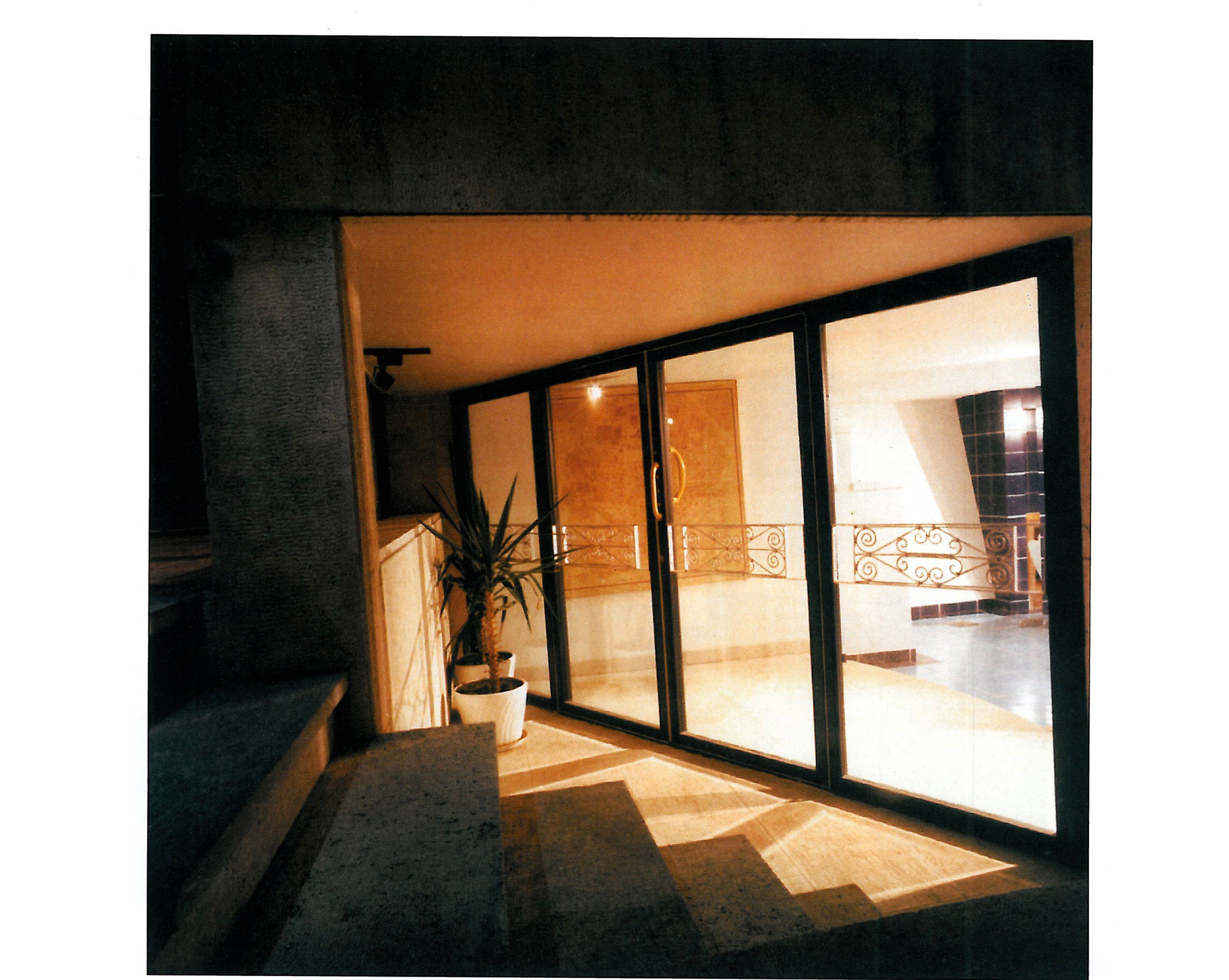
Kambiz Nazer Amou, by the successful work of his own interior design, has managed to turn the basement storeroom of an ordinary residential building into a beautiful and well-equipped architecture office: a storeroom of about 130 m² in the basement of a two-storey building in Sa'adatabad, with only 50 cm of skylight opening onto the southern courtyard.
By drawing the entrance of the new office back from the body of the building and creating a small fore-space between the courtyard and the office, the designer has gradually attenuated the sense of stepping down into a basement, and by turning the relatively large glazed entrance door into a full-height façade — placing the entire interior floor-to-ceiling height in line with the open space outside — he has lifted that sense of basement-ness altogether. The materials of the floor and the walls of the two fore-spaces, exterior and interior, have been chosen in fitting harmony with the materials of the existing building's façade.
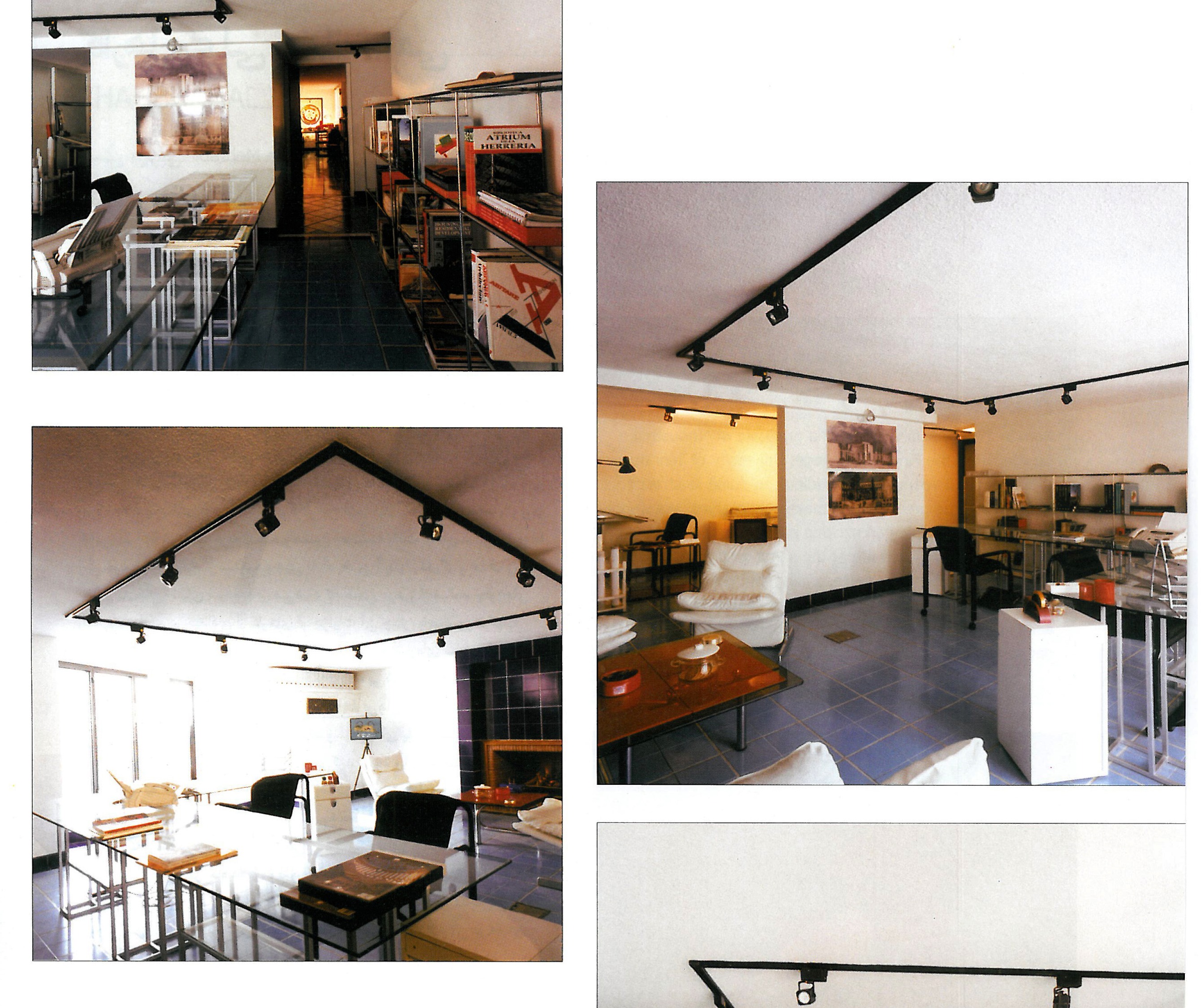
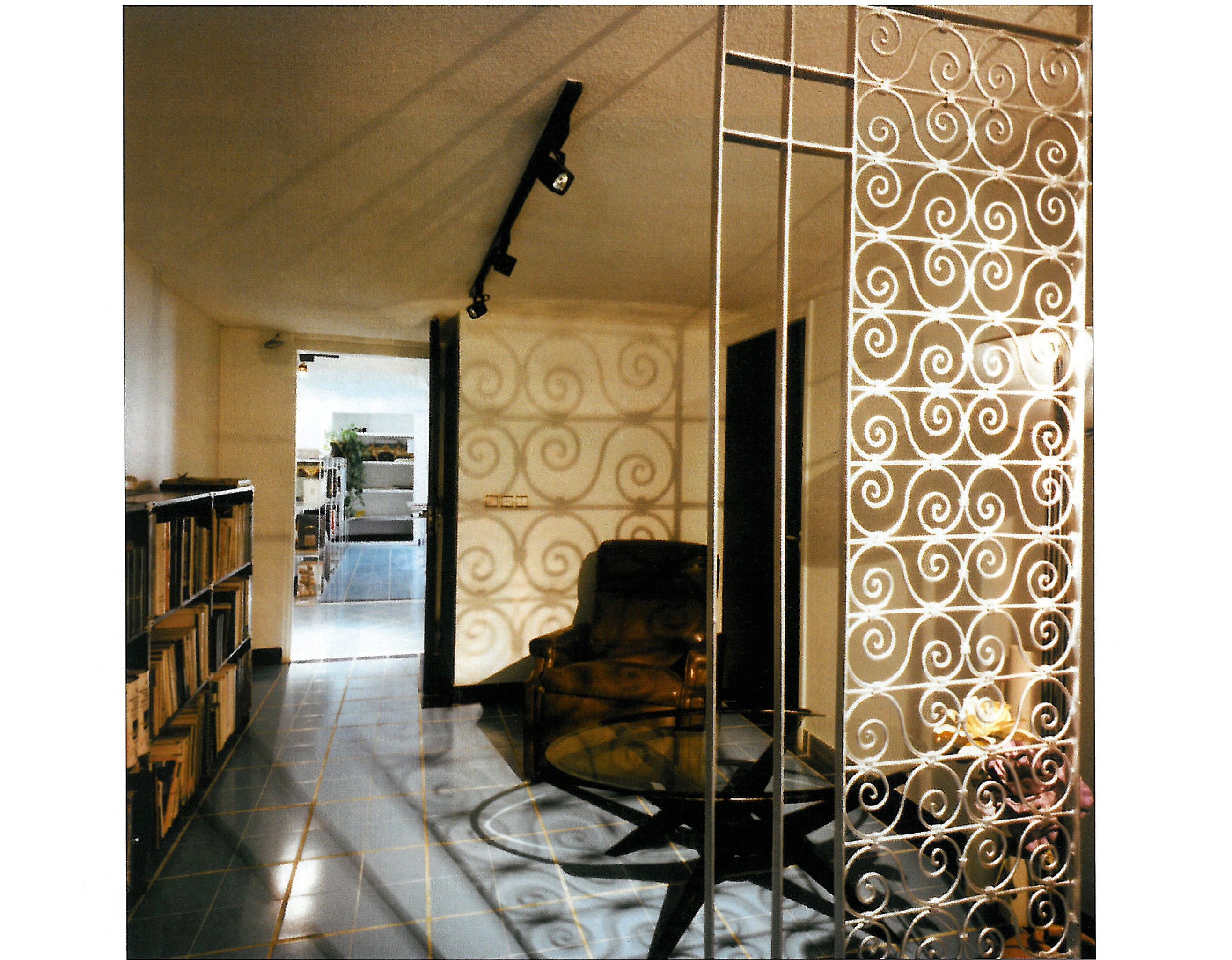
The most important quality of the interior design of Nazer Amou's architecture office is the well-judged way in which the small spaces of the old storeroom have been allotted to the various activities of an architecture office: private and shared work spaces, a meeting room, a rest area, a library and archive, the lavatories, and so on. The spatial effect achieved — both through the variety of the small spaces and through the dressing of each with particular furniture and items, prepared or designed and built down to the smallest detail with a great deal of time — far exceeds the capacity of such a basement space.
The furniture and items used (some pre-existing, many of them — especially the work tables and the bookshelves — designed and made by the designer himself) are not uniform either in the style and taste of their different periods or in their plainness and refinement; and the designer, especially in the rebuilding of floor and walls and in general lighting, has used current and ordinary materials available in the market.
And yet, not only does no discordance strike the eye in the whole assembly, but the agreeable combination of the many and varied spatial parts has lent a particular presence to each of the spaces and to the whole — these spaces nearly all opening onto and entering one another.
Photographs by: Ataollah Omidvar.