REHABILITATION OF LALEHZAR IN HISTORIC CENTER OF TEHRAN
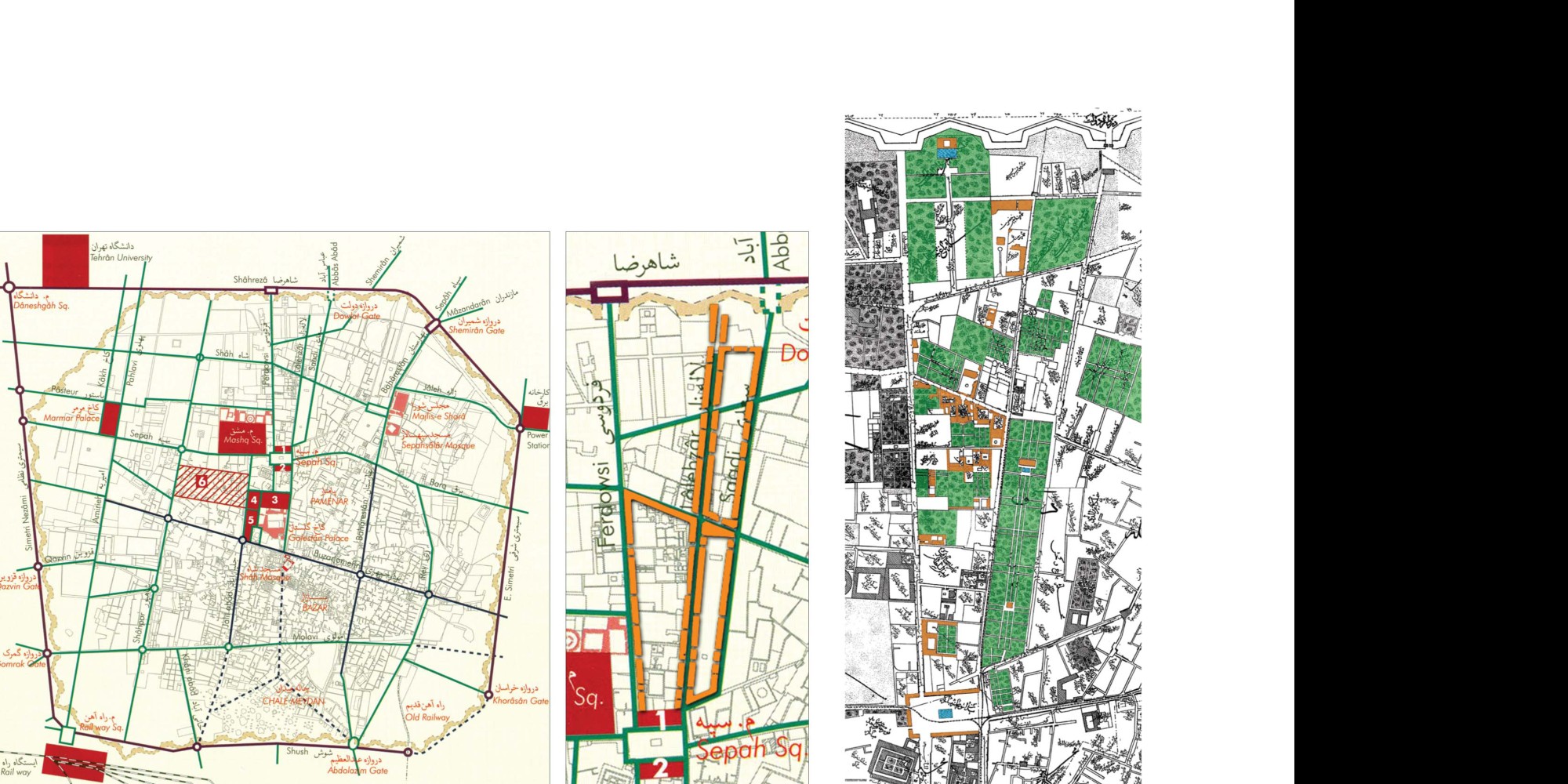
Lalehzar in Tehran (1857), formation of city scapes; Lalehzar in the future perspective of the historical center; Lalehzar in Naseri era with garden-courts
Lalehzar in the Future Perspective of the Historical Center
The preparation of master and detailed plans for Tehran (2001-2006) provided the opportunity for the renewal of the structure of the historical center and the revival and restoration of its fundamental centers of the capital and its valuable nodes and areas. In collaboration with the creators of the master plan, the charter for the revival and renewal of the historical center of the capital (the Naseri Tehran) as the theoretical source for development, improvement, and restoration guidelines (the detailed plan) for this area of Tehran was compiled.
In this section of the new master plan of Tehran (2006), the valuable locations and historical areas of Tehran have been identified as the birth-right of the city. The historical area (Tehran of the Shah Tamasbid and Nassered-Din Shah's period) has been regarded as part of the identity of this metropolis, and the framework for the required actions for organizing its valuable nodes, including Lalehzar, have been regulated as follows:
- Establishment of cultural, artistic, touristic and leisure facilities in order to transform these areas into public attraction
- Establishing appropriate and well-suited activities in the construction and buildings within, or on the periphery of historical areas for the conservation of the built bodies and facades
- Enforcing special construction regulations inside these areas
- Improving the quality of passageways inside these areas for easy access and safe traffic
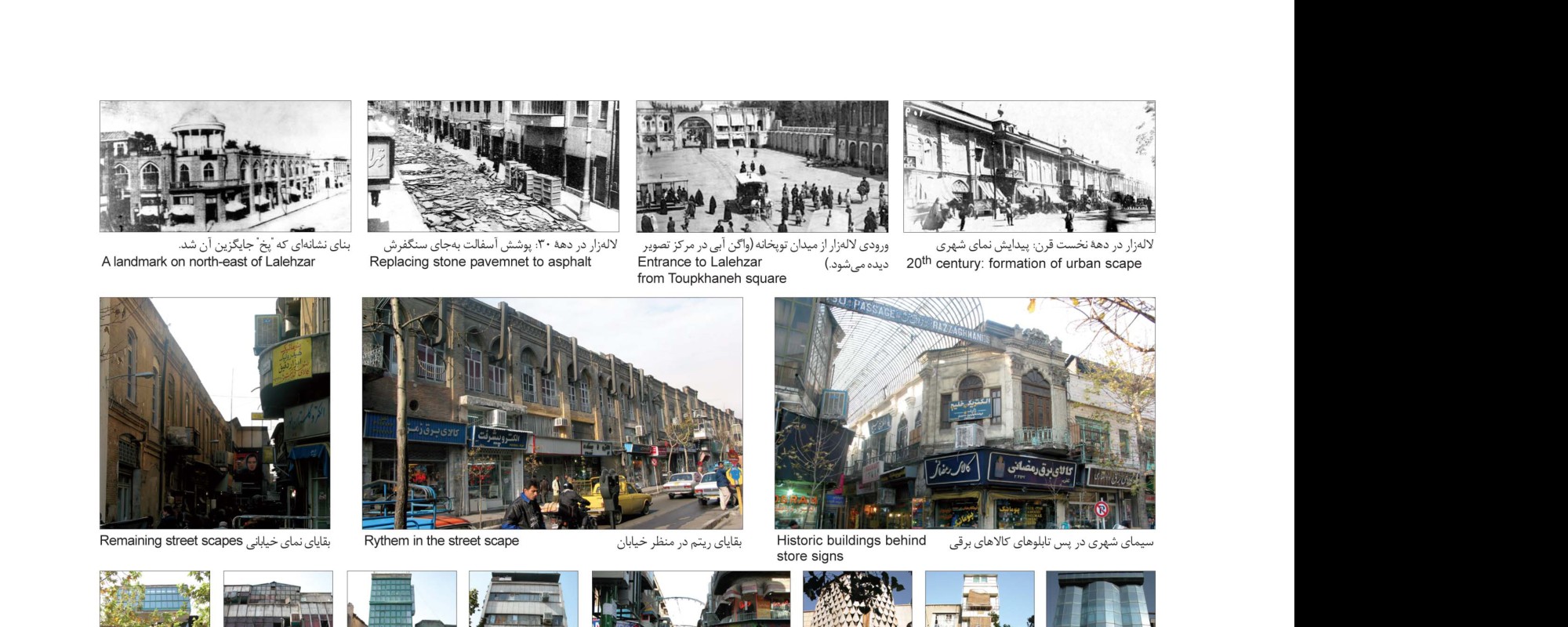
Lalehzar from 1930 to Present
The first comprehensive plan prepared for Tehran by the French military consultant Brezin in 1856 paved the way for considerable changes in the face of the capital. With the opening of Lalehzar as one of the main axes of this new city, the district underwent rapid development, becoming the cultural and commercial heart of modern Tehran. Cinemas, theaters, restaurants, hotels, and European-style shops lined the street, transforming it into what was often called the Champs-Elysees of Tehran.
Conservation of the Historical Identity
The historical heritage of Lalehzar street can be traced through its streets, paths, and the relationships between its urban blocks. Despite years of neglect and unsympathetic alterations, the fundamental urban structure remains readable. The restoration and rehabilitation of this heritage requires a careful balance between preserving historical character and accommodating contemporary urban needs. The document proposes a phased approach: first stabilizing and protecting what remains, then gradually restoring the architectural quality of individual buildings, and finally revitalizing the street as a cultural destination within Tehran's urban fabric.



