Contemporary Architecture

Sahra Residential Building, Kerman

Mahmood Ebrahimi, Ali Bahmanyar·Photos: Mahmood Ebrahimi·Memar 142 — 23rd Memar Award
Sahra Residential Building, Kerman

The Sahra Building is situated in the Khaju Square district of Kerman. On one hand, the culture, history, and way of life in this neighborhood, and on the other, the need for open spaces in each unit — aimed at minimizing the sense of enclosure and the feeling of apartment living — heightened the design sensitivity of this building.

To this end, large terraces were envisioned on the southern side of the building, facing the finest view in the area. These terraces, while admitting natural light, also provide an acceptable degree of privacy for the spaces adjoining them.
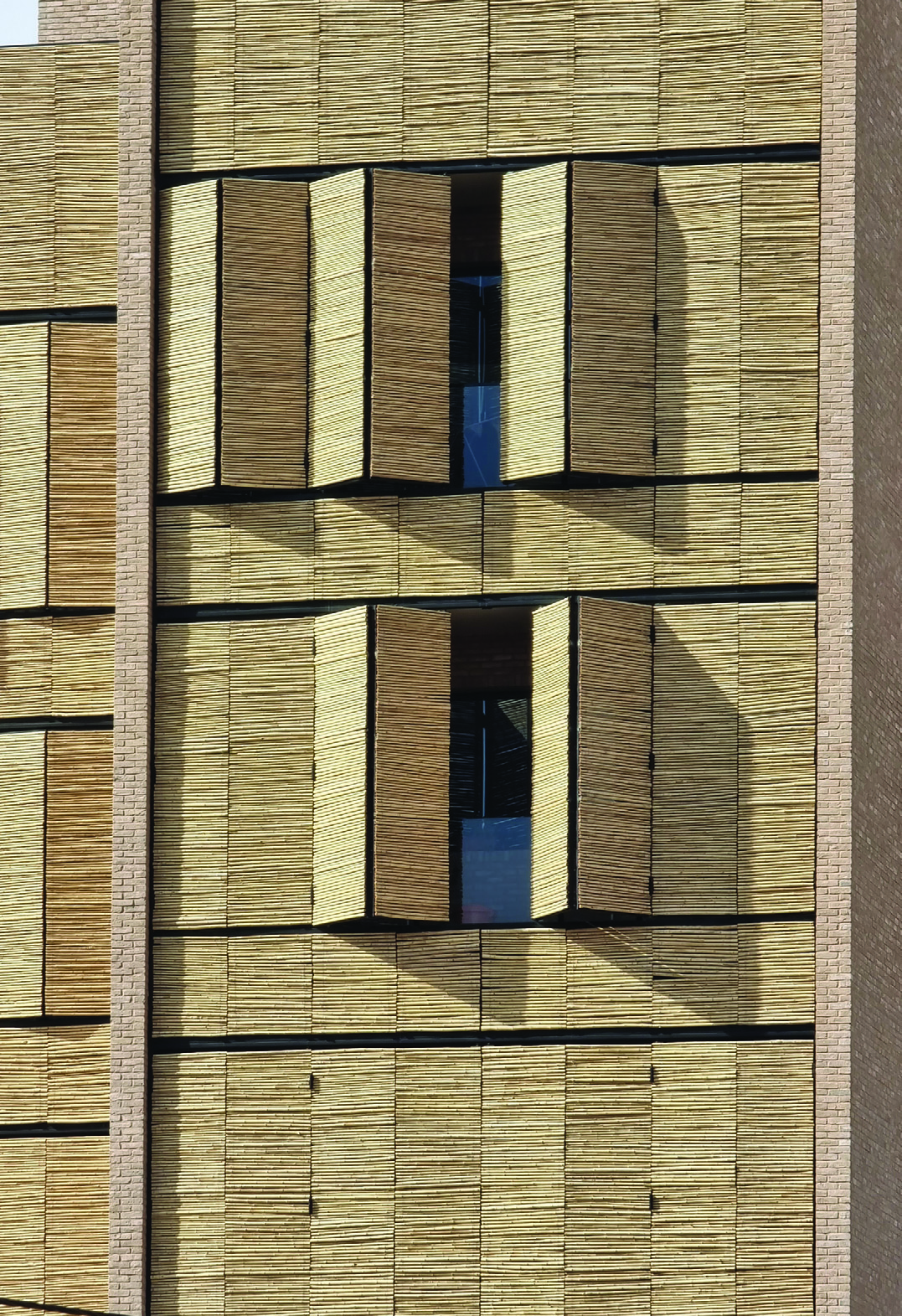
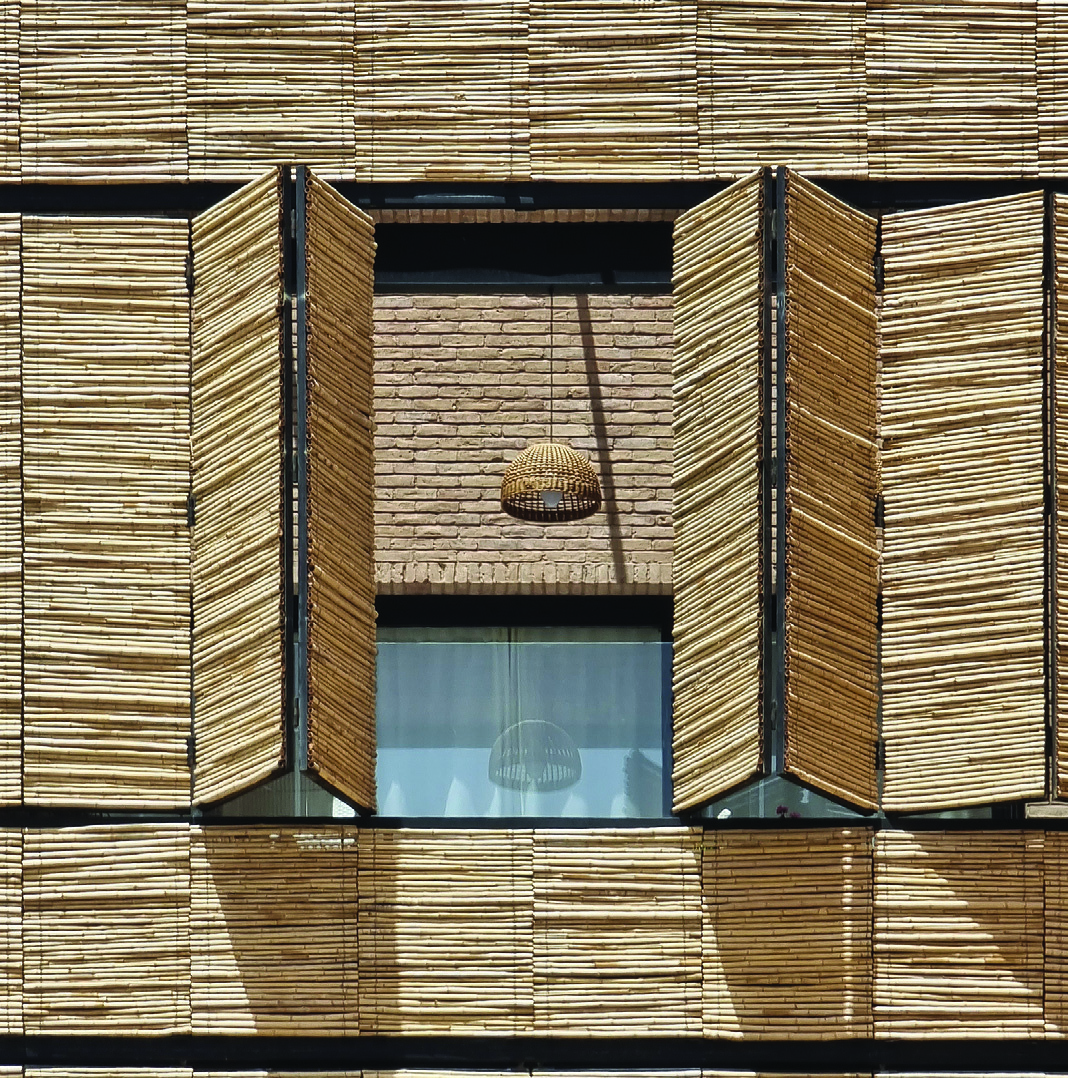
Close-up of the reed panels on the facade of Sahra Building, showing the interplay of golden reed textures and deep shadows between the movable screens
Reed panels in close-up — the woven texture and shifting shadows give the facade a living, tactile quality

Furthermore, latticed screens were installed on the outer edge of the terraces so that under varying weather, light, and other conditions, by adjusting the degree to which this skin opens, the light, temperature, and privacy of the terraces can be regulated.

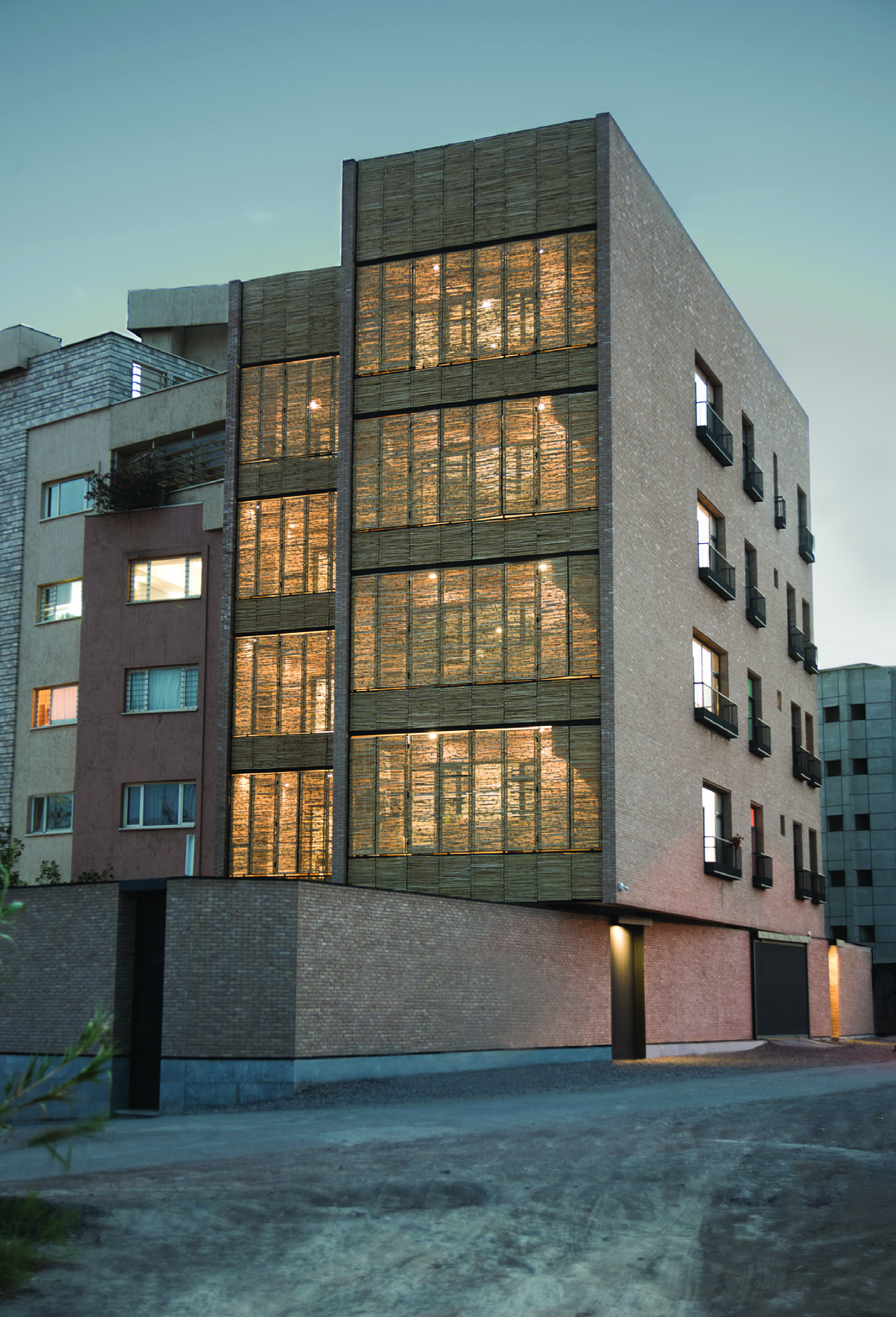
This skin is made of reed, which — besides its visual beauty from both inside and outside the building — serves as a suitable alternative to thermo-wood and similar materials that are incompatible with the region's climate. The facade body is also constructed of locally produced Kerman brick.
◆ ◆ ◆
Design Concept
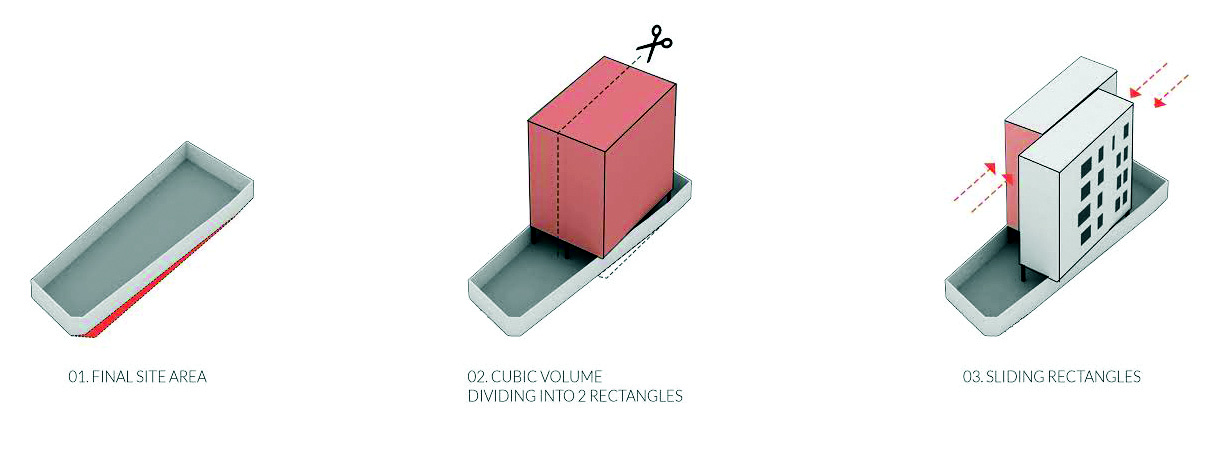
Design concept diagram showing three steps: 01 Final Site Area, 02 Cubic Volume Dividing into 2 Rectangles, 03 Sliding Rectangles
Design concept: from site footprint to cubic volume, divided and slid into two interlocking rectangles
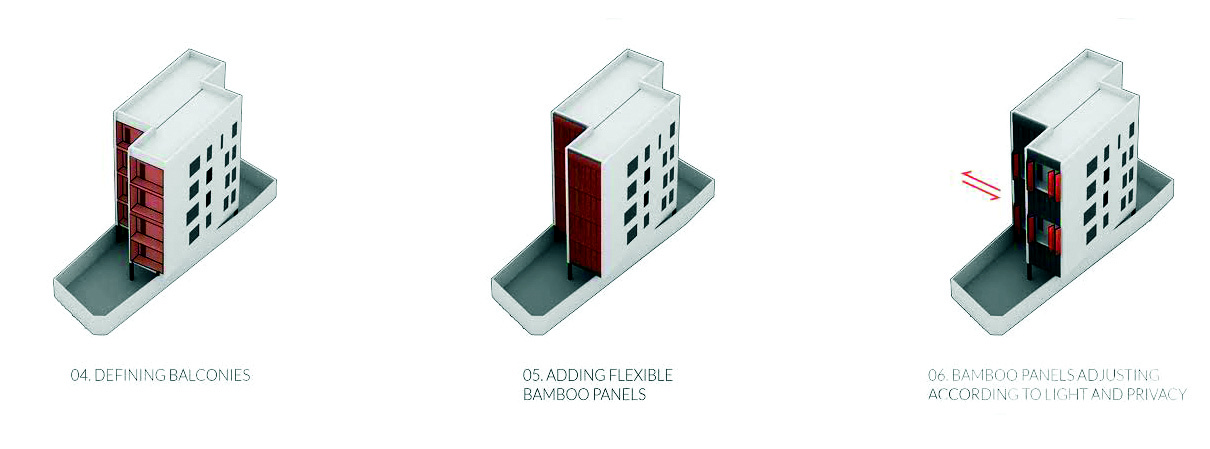
Design concept diagram showing three steps: 04 Defining Balconies, 05 Adding Flexible Bamboo Panels, 06 Bamboo Panels Adjusting According to Light and Privacy
Defining the balconies and adding flexible reed panels that adjust according to light and privacy needs
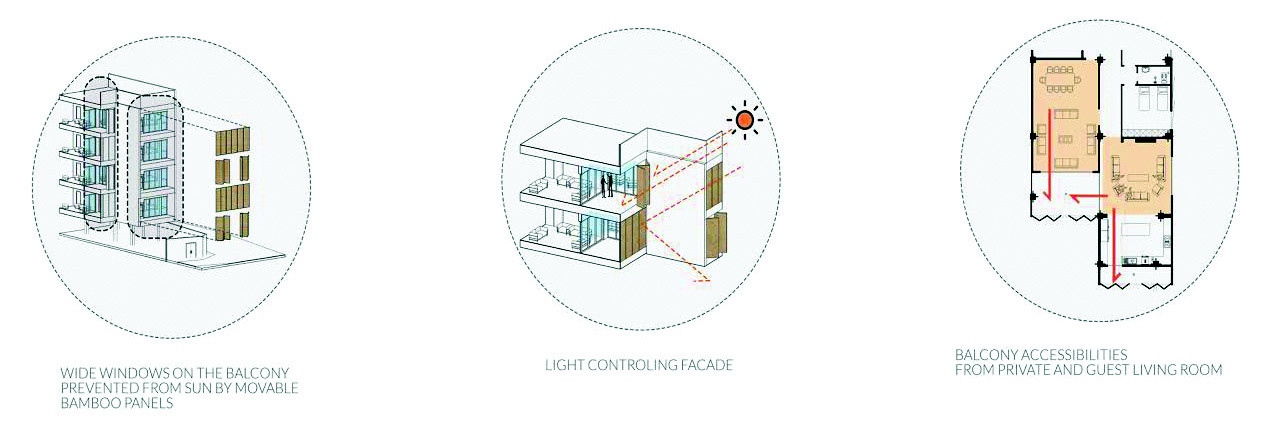
Three circular diagrams showing: wide windows on the balcony prevented from sun by movable bamboo panels, light-controlling facade, and balcony access from private and guest living room
Key design strategies: sun-screening with movable panels, light-controlling facade, and dual balcony access from private and guest spaces
◆ ◆ ◆
Brick and Reed
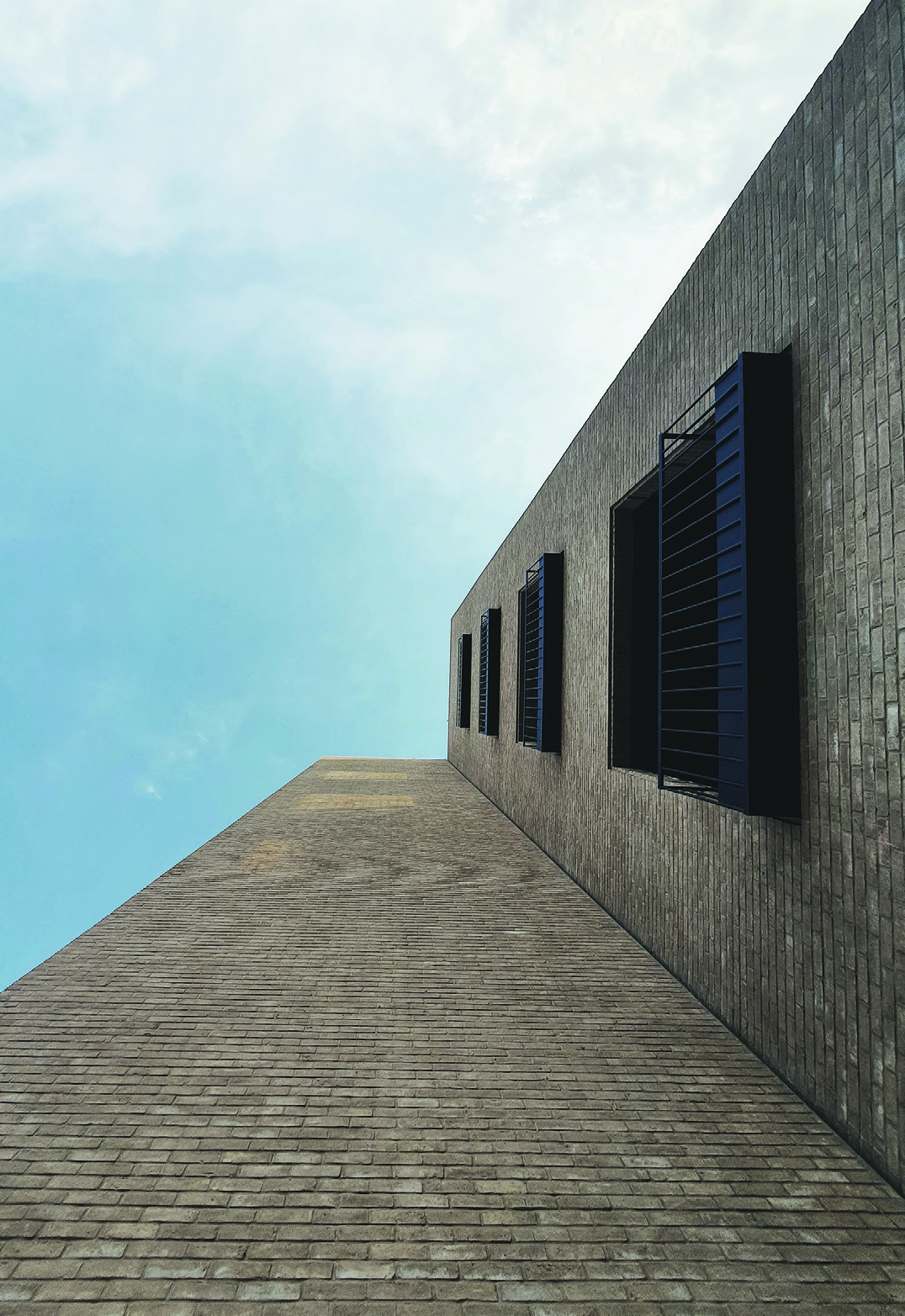
Low-angle view looking up along the brick side wall of the Sahra Building, showing dark metal window frames against the Kerman sky
The brick side facade rising against the sky
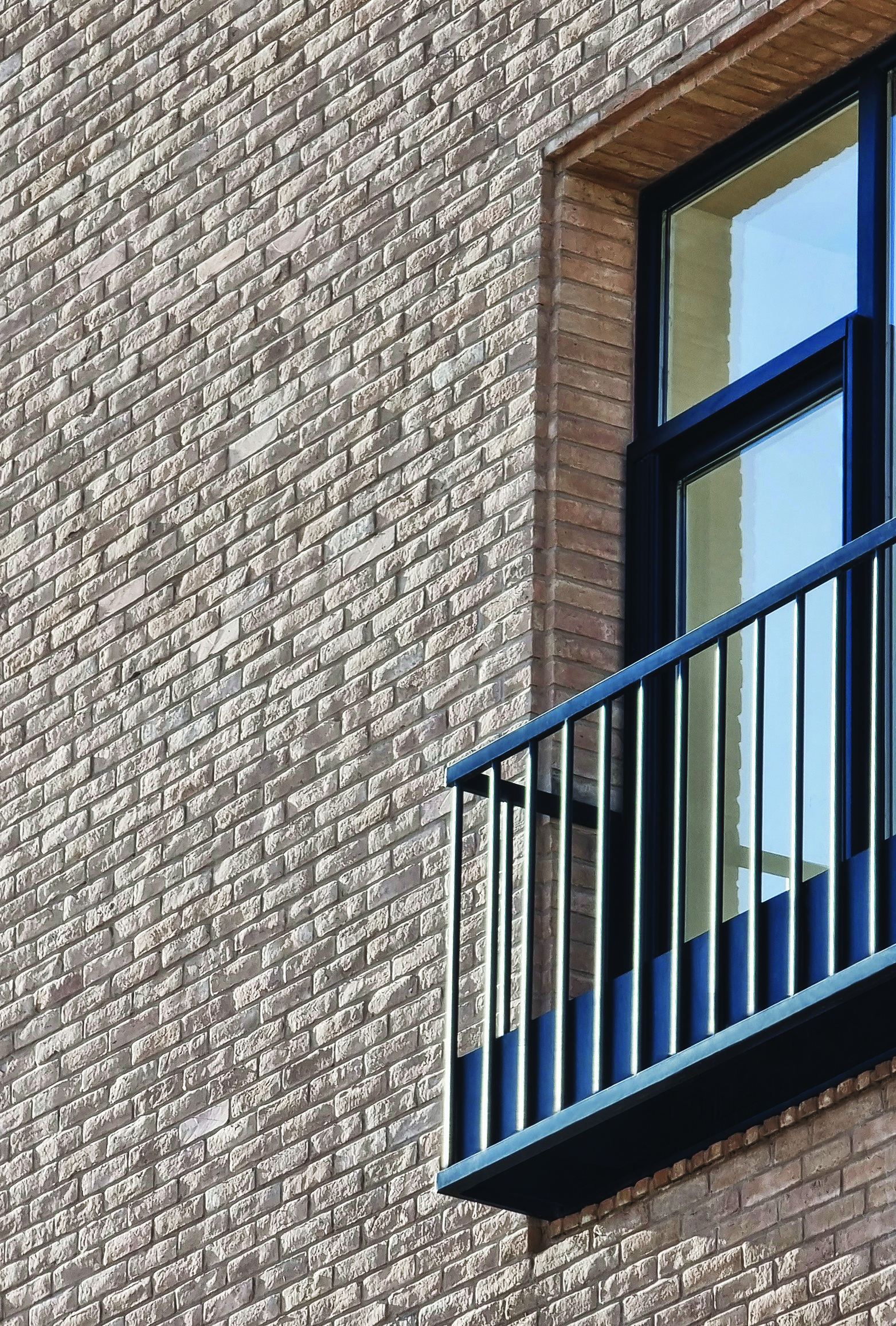
Close-up of the brick facade showing a window with dark metal balcony railing and the texture of locally produced Kerman brick
Window detail — Kerman brick and metal railing
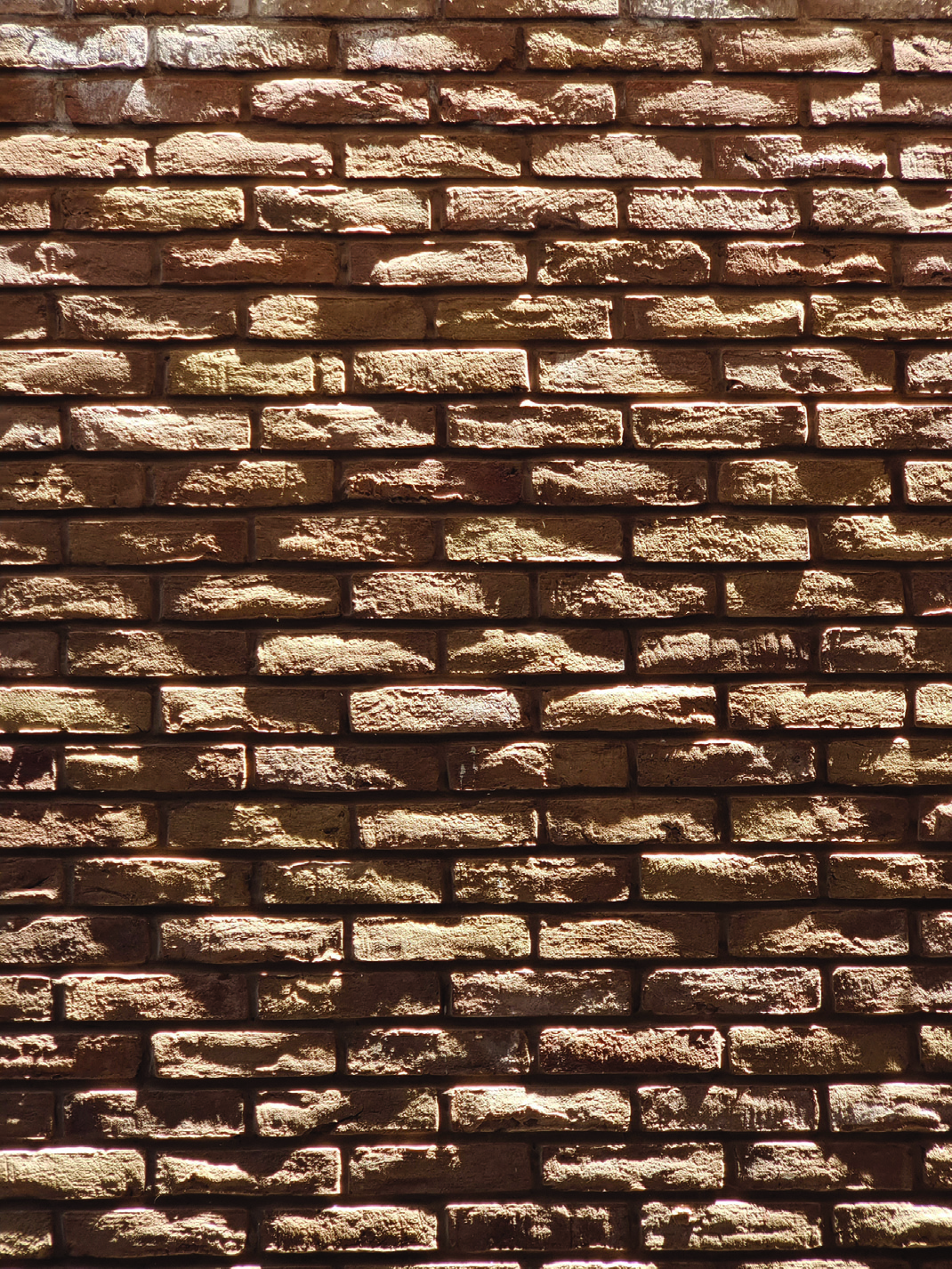
Close-up of the rough, hand-laid brick texture of the Sahra Building facade, showing the warm tones and irregular surface of Kerman brick
The warm, rough texture of locally produced Kerman brick
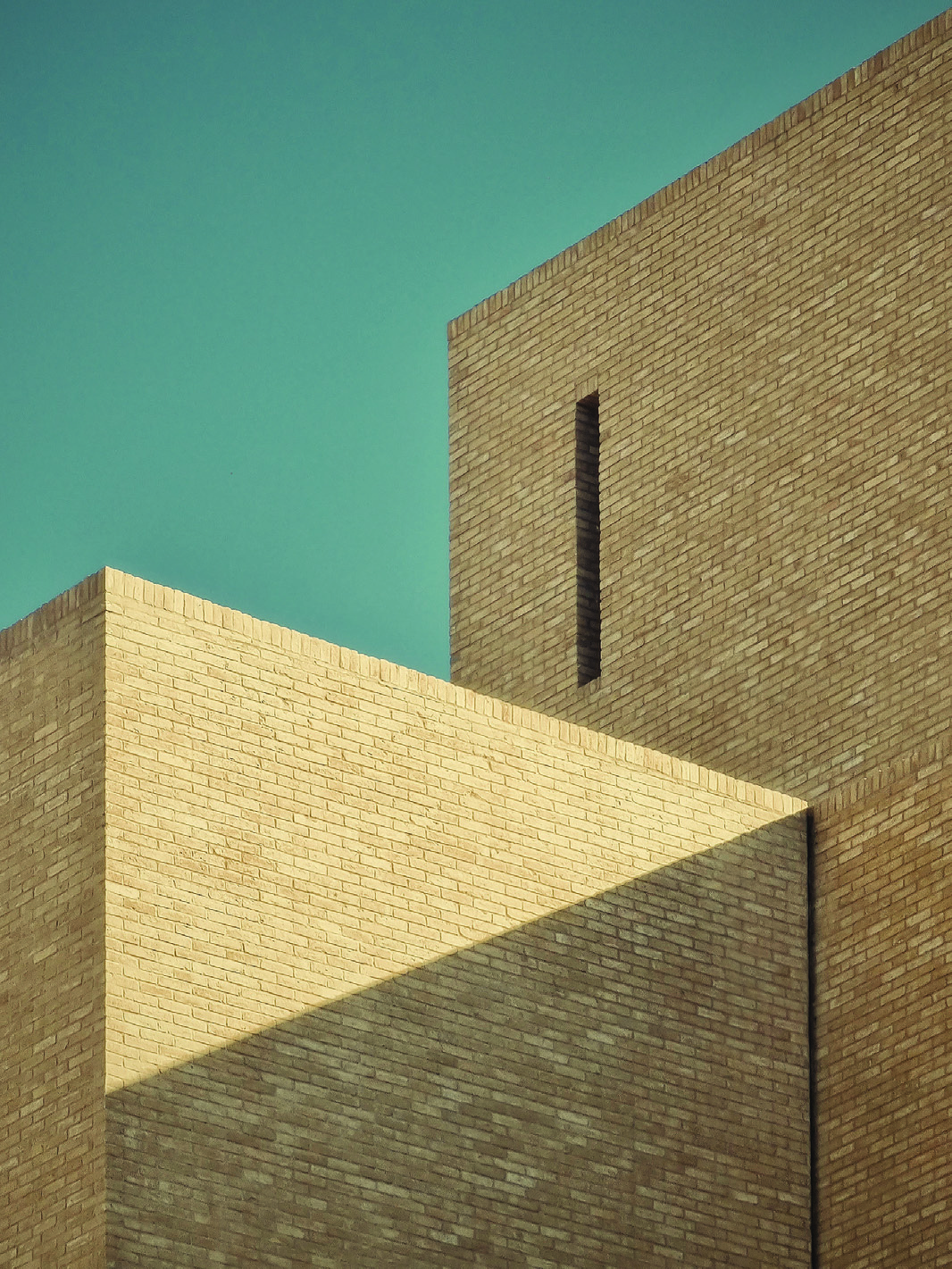
Abstract composition of brick volumes and geometric shadows against a turquoise sky, showing the interplay of mass and void on the upper floors
Brick volumes and geometric shadows against the Kerman sky
◆ ◆ ◆
Terraces and Reed Screens
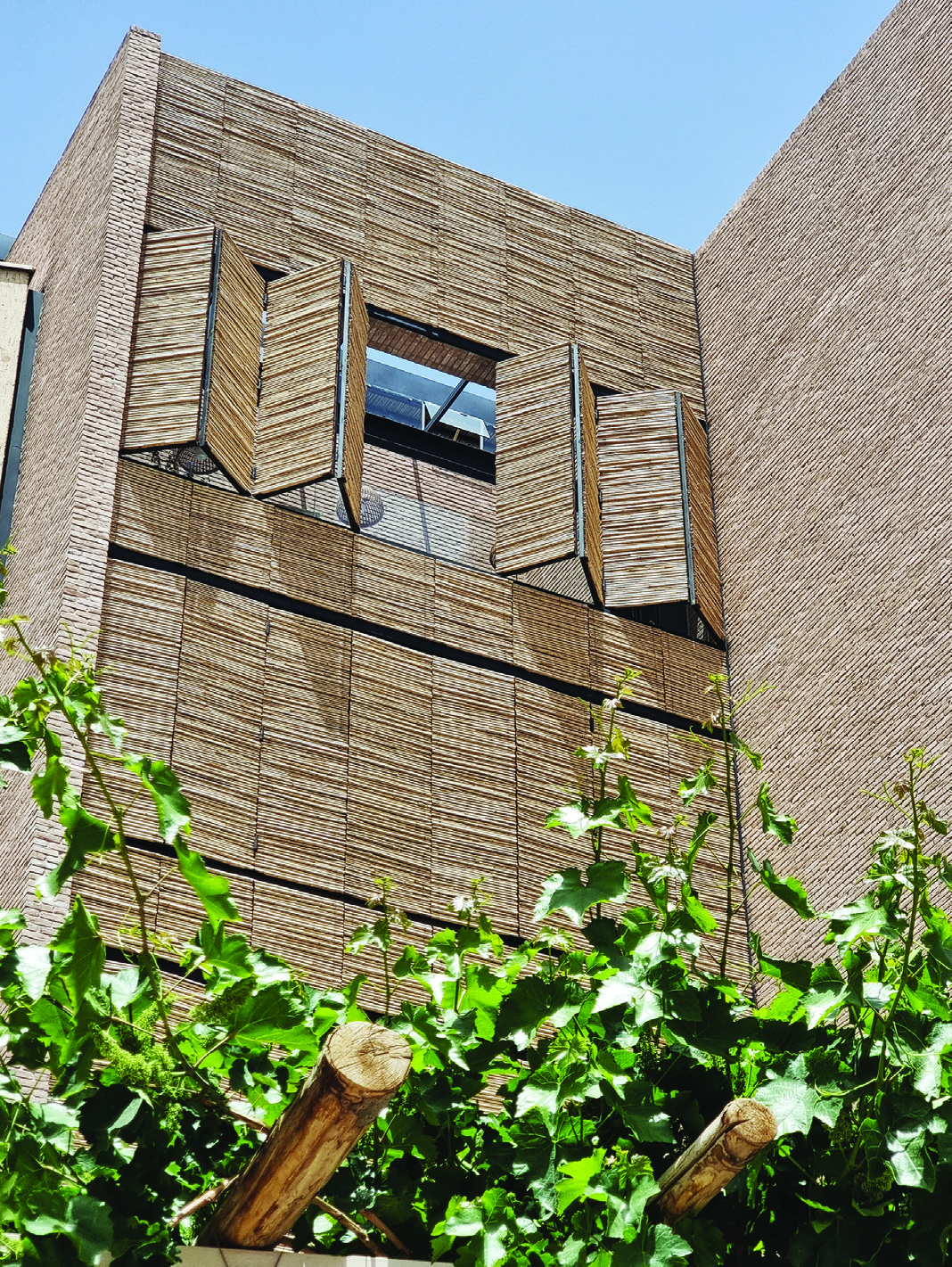
View from the courtyard looking up at the reed-panel facade with climbing vines growing along the building
Reed panels seen from the courtyard, with climbing vines softening the boundary between architecture and nature
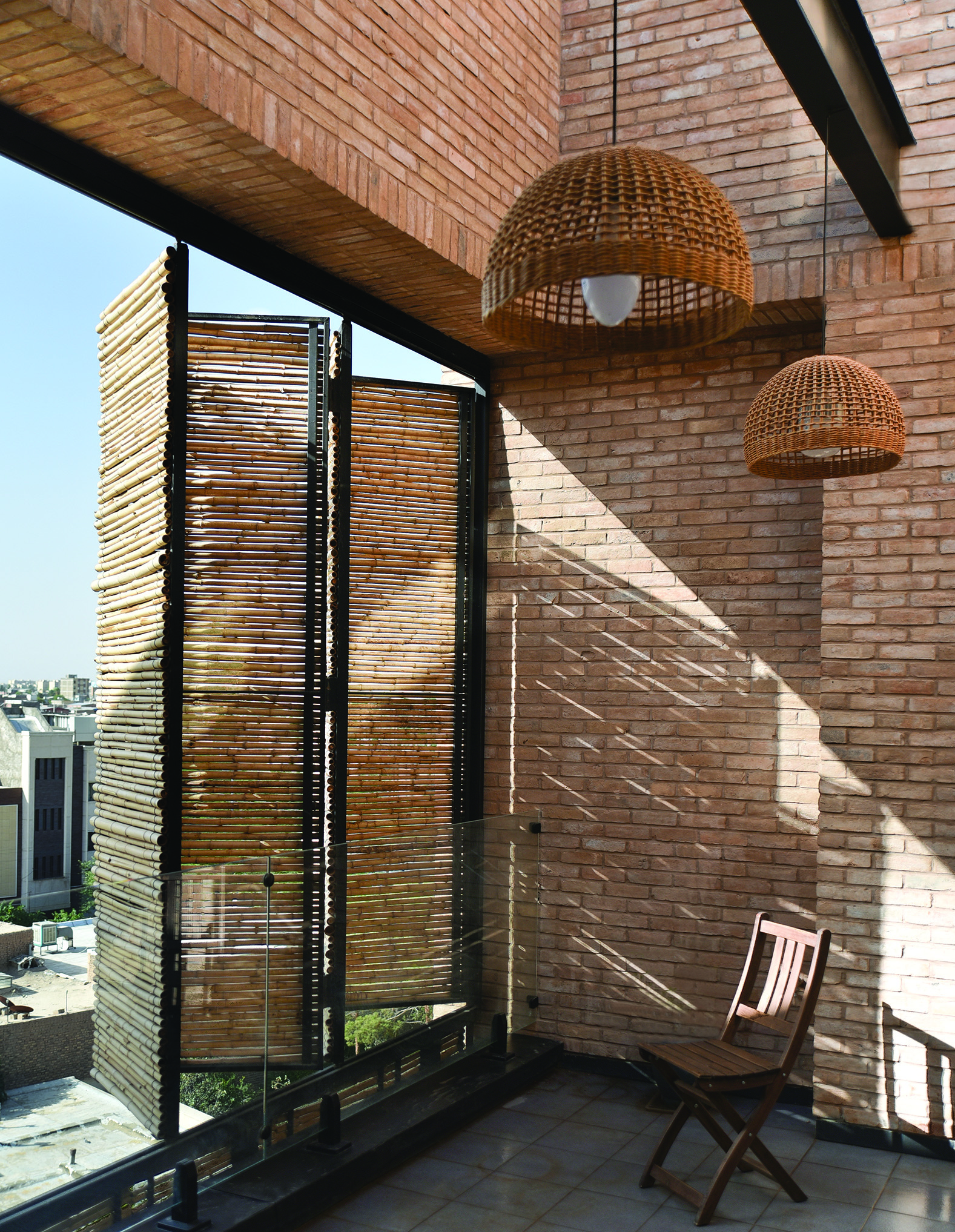
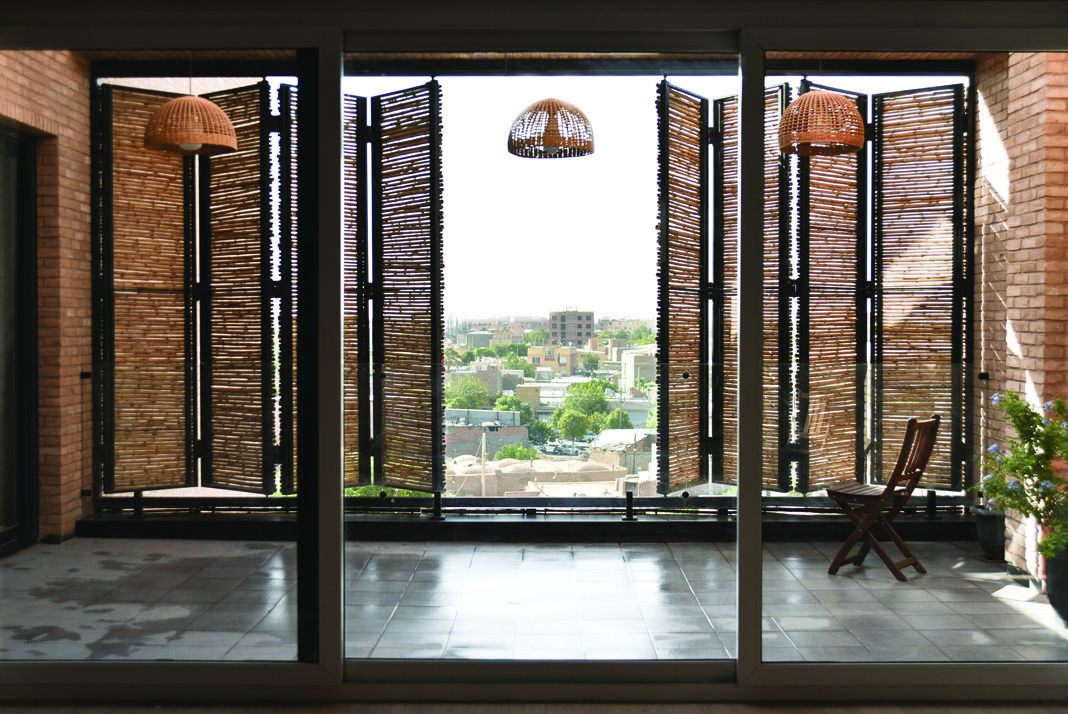
A terrace with open reed panels revealing the city view beyond, wicker pendant lamps hanging from the ceiling, brick walls, and a wooden folding chair
A terrace with reed panels swung open — wicker pendant lamps, brick walls, and the city beyond
Close-up of the facade showing reed panels partially open, revealing a wicker pendant lamp and the brick interior of the balcony
Reed screens partially open, framing a wicker lamp — the facade becomes a composition of light and enclosure
Interior view looking out through floor-to-ceiling glass doors onto the terrace, with open reed panels and wicker pendant lamps, the Kerman cityscape visible beyond
From the living room outward — glass doors, open reed screens, wicker lamps, and the Kerman cityscape beyond
◆ ◆ ◆
Interior and Circulation
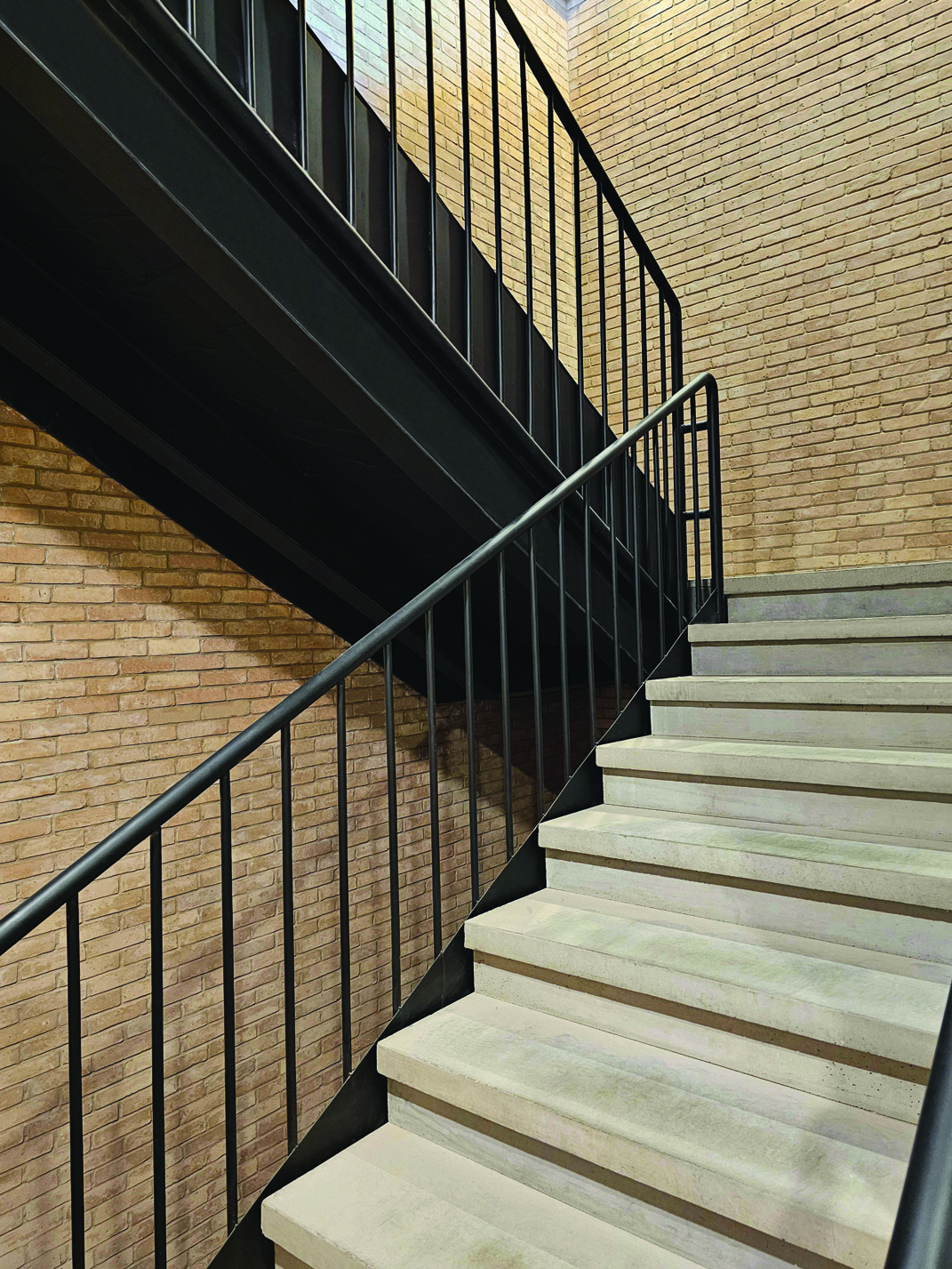
Interior staircase with concrete treads, dark metal railings, and exposed brick walls illuminated by natural light from above
The central staircase — concrete treads, metal railings, and exposed brick walls bathed in natural light
◆ ◆ ◆
Drawings
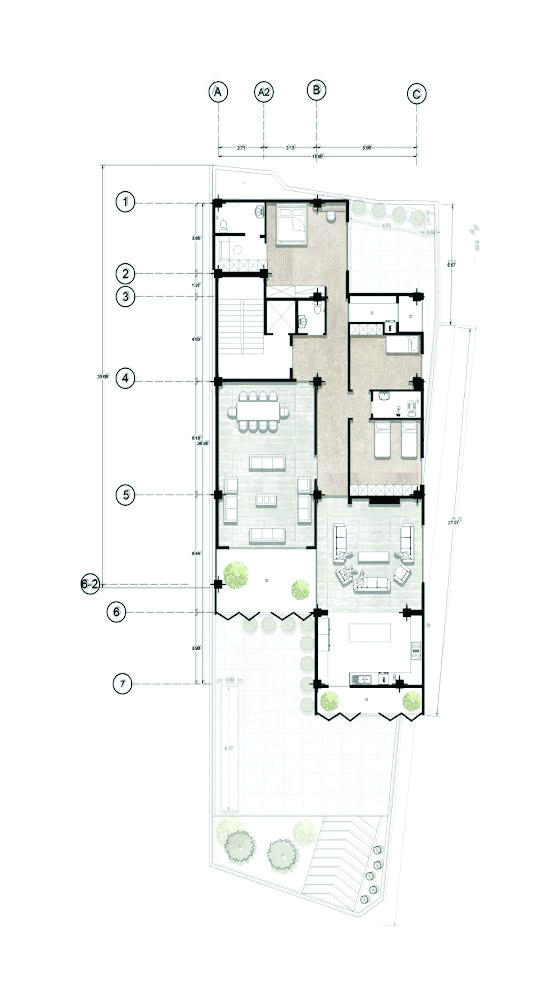
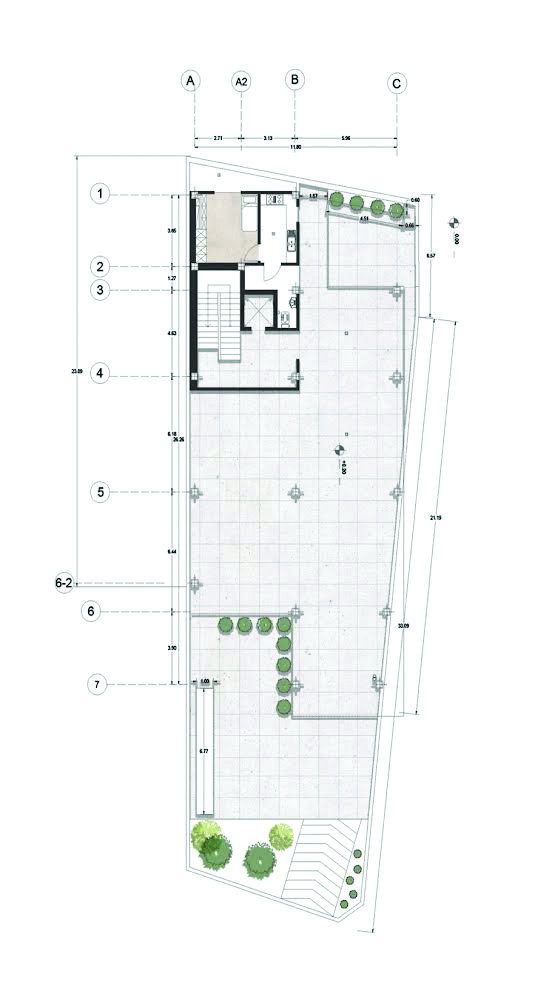
Ground floor plan of the Sahra Building showing parking, entrance, and stairwell layout
Ground floor plan
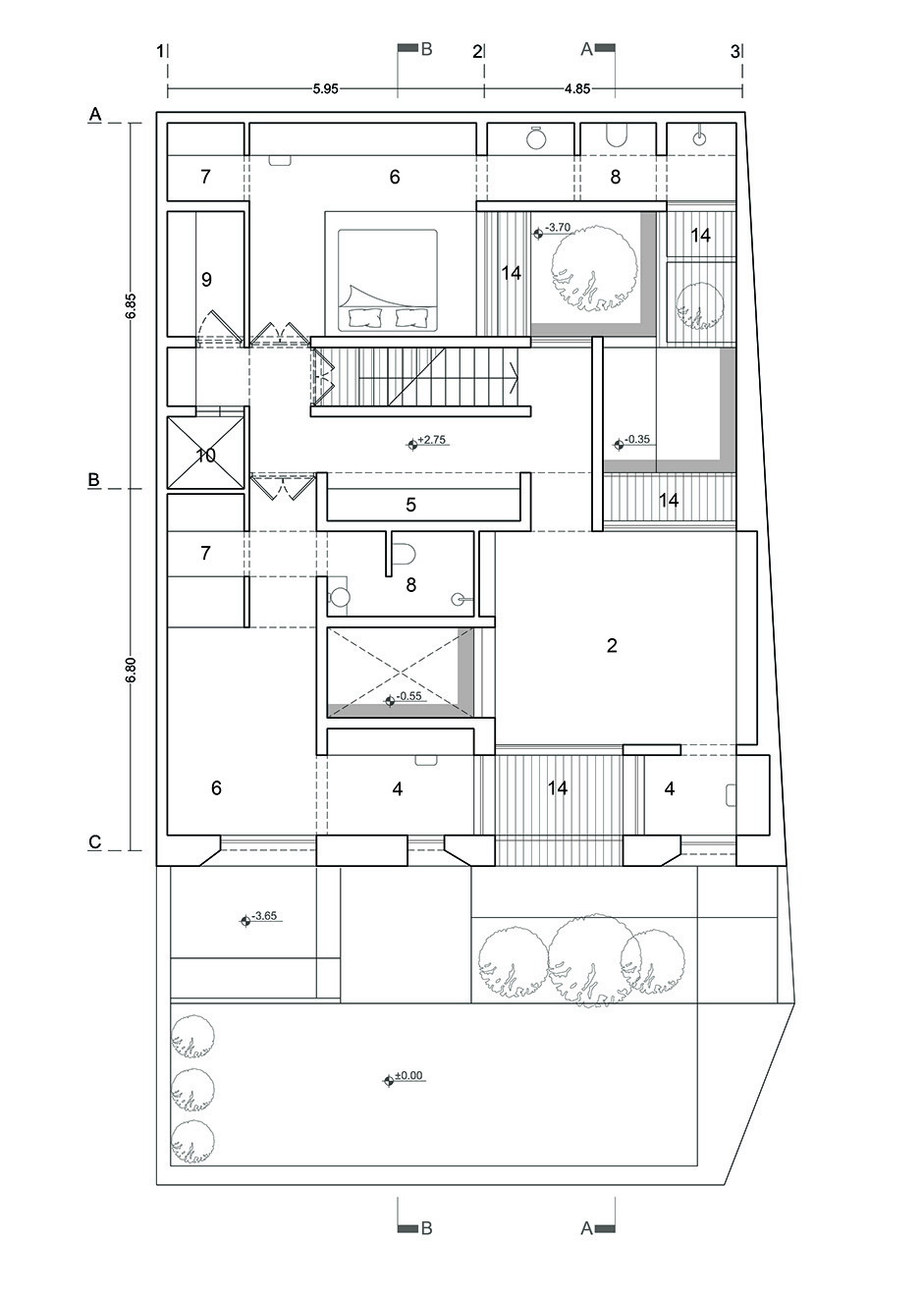
Typical residential floor plan showing rooms, terraces, living areas, and southern balconies with landscaping
Typical floor plan
Roof plan showing the rooftop terrace, stairwell access, and planted areas
Roof plan
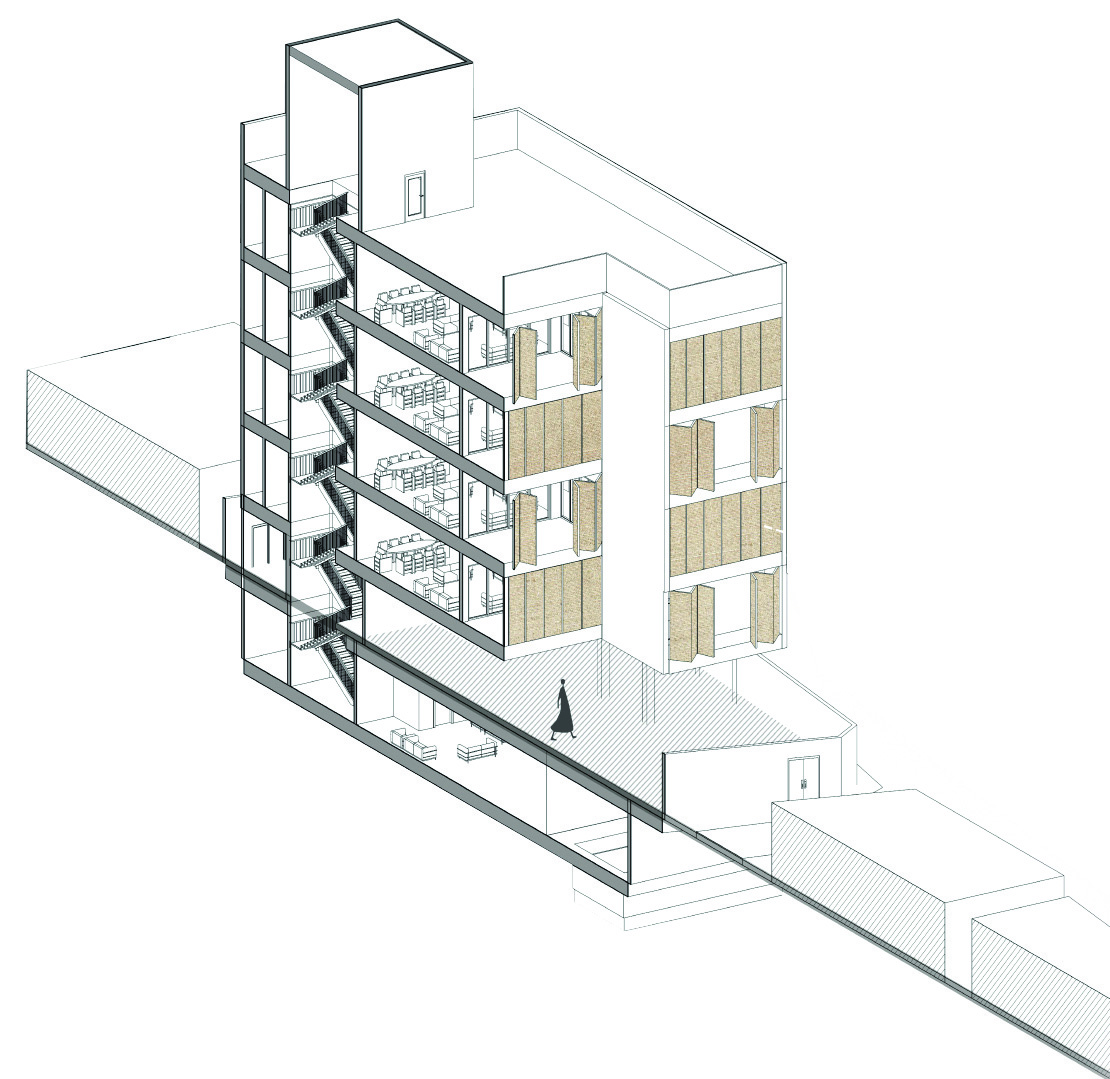
Isometric section drawing showing the internal layout of all floors, staircases, balconies, and reed panel facade
Isometric section — revealing the internal organization, staircases, and facade layers
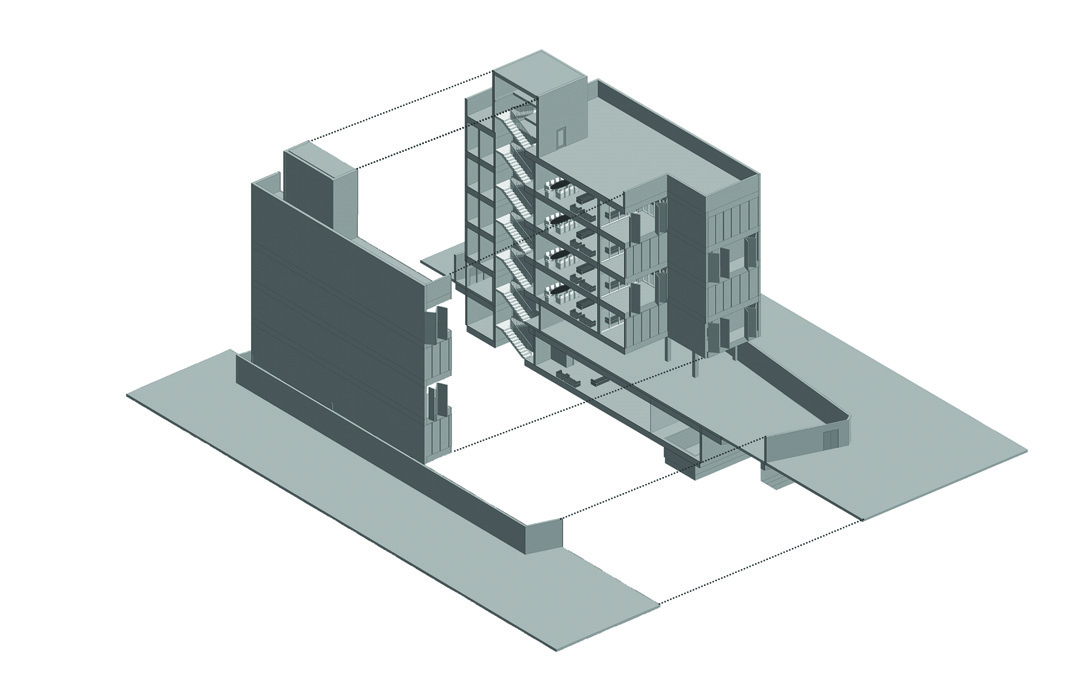
Exploded axonometric 3D model showing the building's structural layers, facade skin, and interior divisions
Exploded axonometric view — the building dissected into its structural and spatial layers
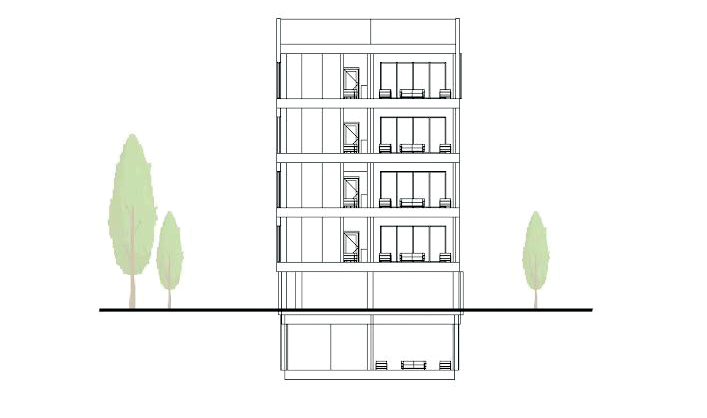
Front elevation section drawing showing the building's five levels, balconies, and facade reed panels
Front elevation
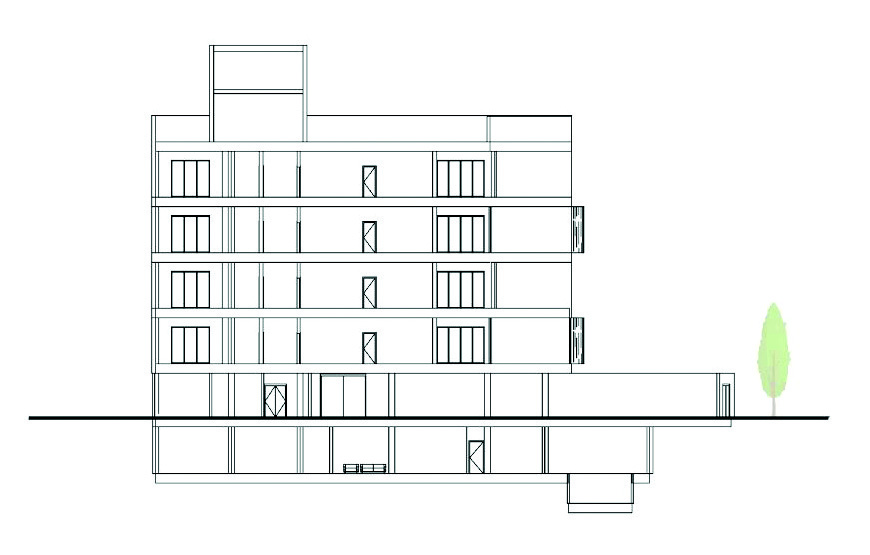
Side elevation section drawing showing the building profile with basement, ground floor, and residential levels
Side elevation
◆ ◆ ◆

Project Details

Location: Piroozi Boulevard, Alley 21, Kerman

Client: Abbas Ebrahimi

Design Team: Mahmood Ebrahimi, Ali Bahmanyar, Gholamali Aghili

Construction: Ali Mohammad Vazirzadeh, Hossein Mehrabi

Supervision: MA Office, Mahmood Ebrahimi, Ali Bahmanyar

Structure: Alireza Esfahani

Electrical: Gholamali Keyvan Ebrahimi

Mechanical: Yousef Vakilzadeh

Graphic Design: Gholamali Aghili

Photography: Mahmood Ebrahimi

Total Built Area: 2,000 m²

Site Area: 475 m²

Memar Magazine
Iranian Bimonthly on Architecture and Urban Design · Issue 142 · December 2023 – January 2024

Related in Architecture Database

Sahra Residential Building, Kerman