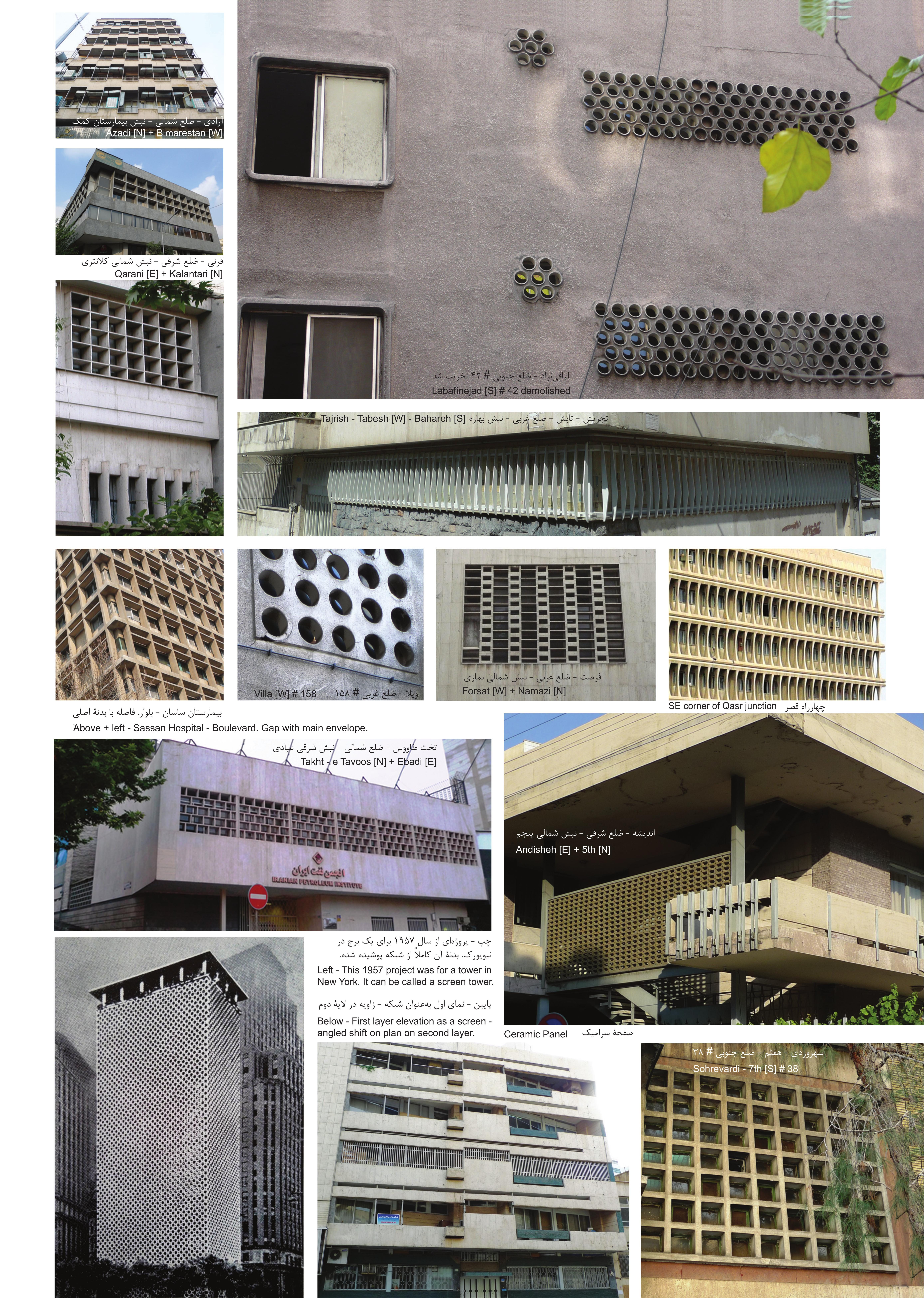
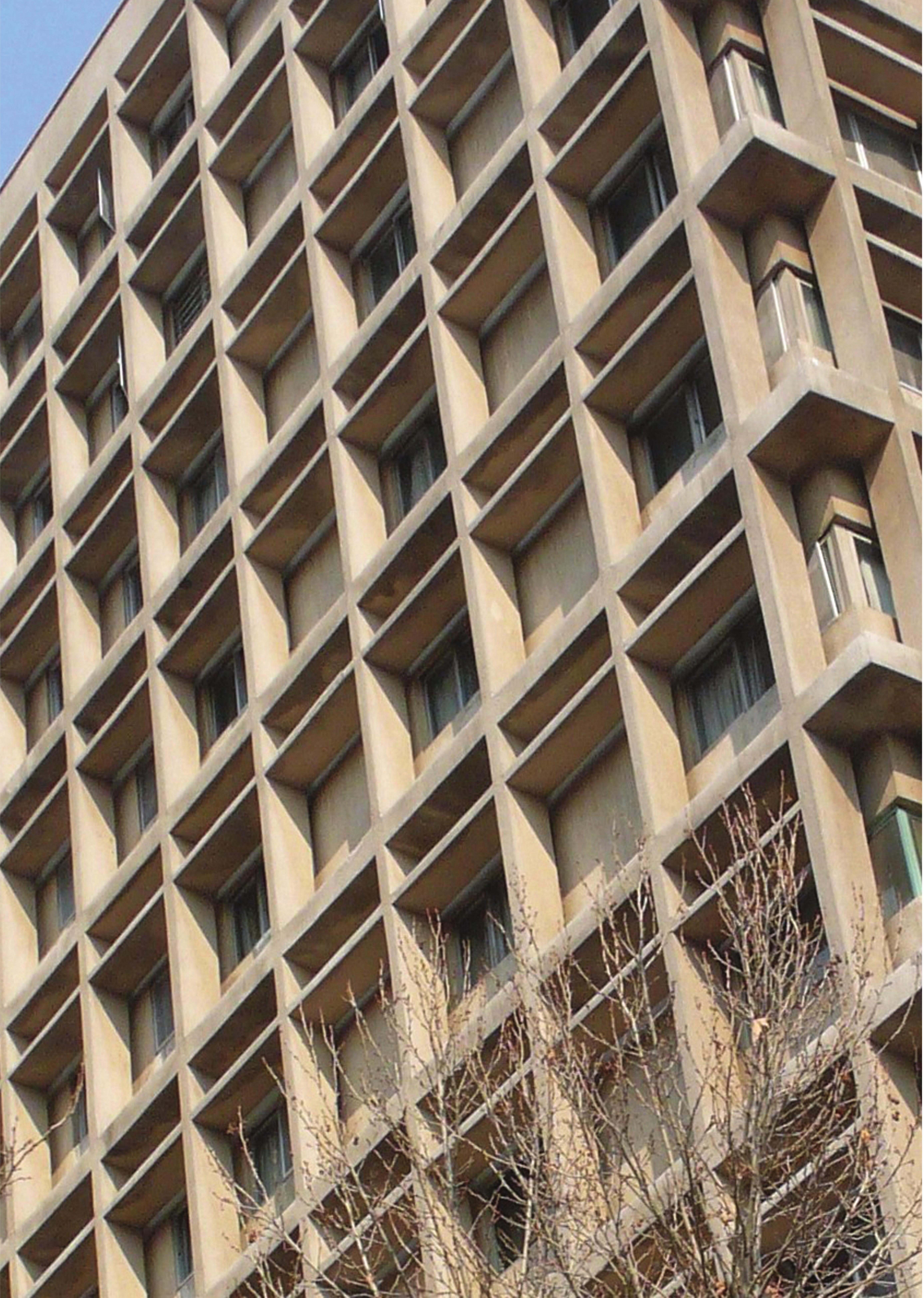
The screens used in this period served as protection, at ground floor, brise soleils, or devices for controlling exposure and over- looking. They would be made of stone, cement, factory made perforated units, brick, ironwork, and special ceramic units in various colours, especially white, brown, mustard, green, and turquoise. The resulting surfaces helped the architecture a great deal, in particular because of their eastern origins. The variedly diffracted light that passed through would transform the other surfaces that it fell on. In the summer, a cool ambience would be created in the interiors, as well as a feeling of cosi- ness and separation from the outside world. Screens can be useful architecturally in the future, especially when we consider how ugly windows have become.
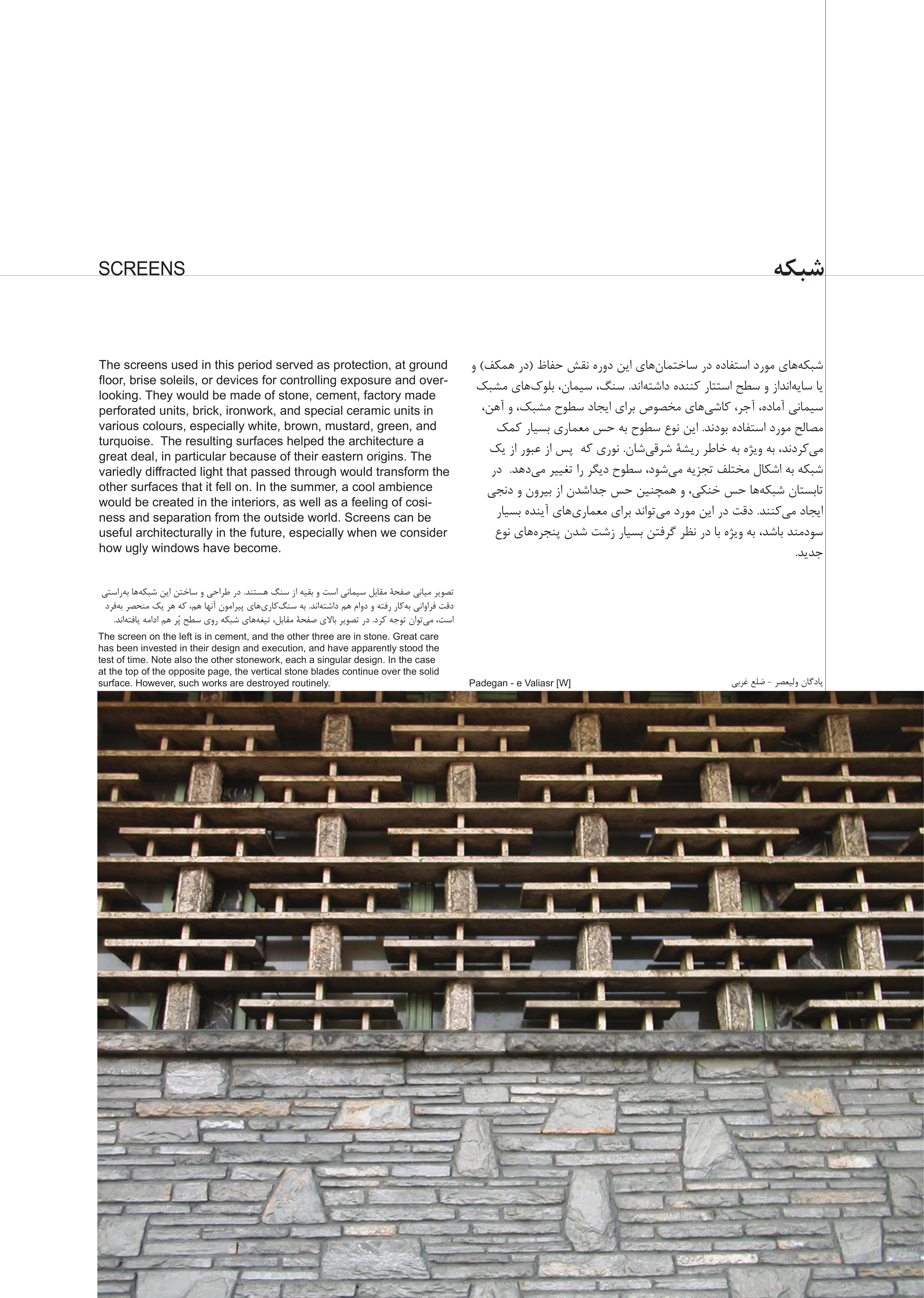
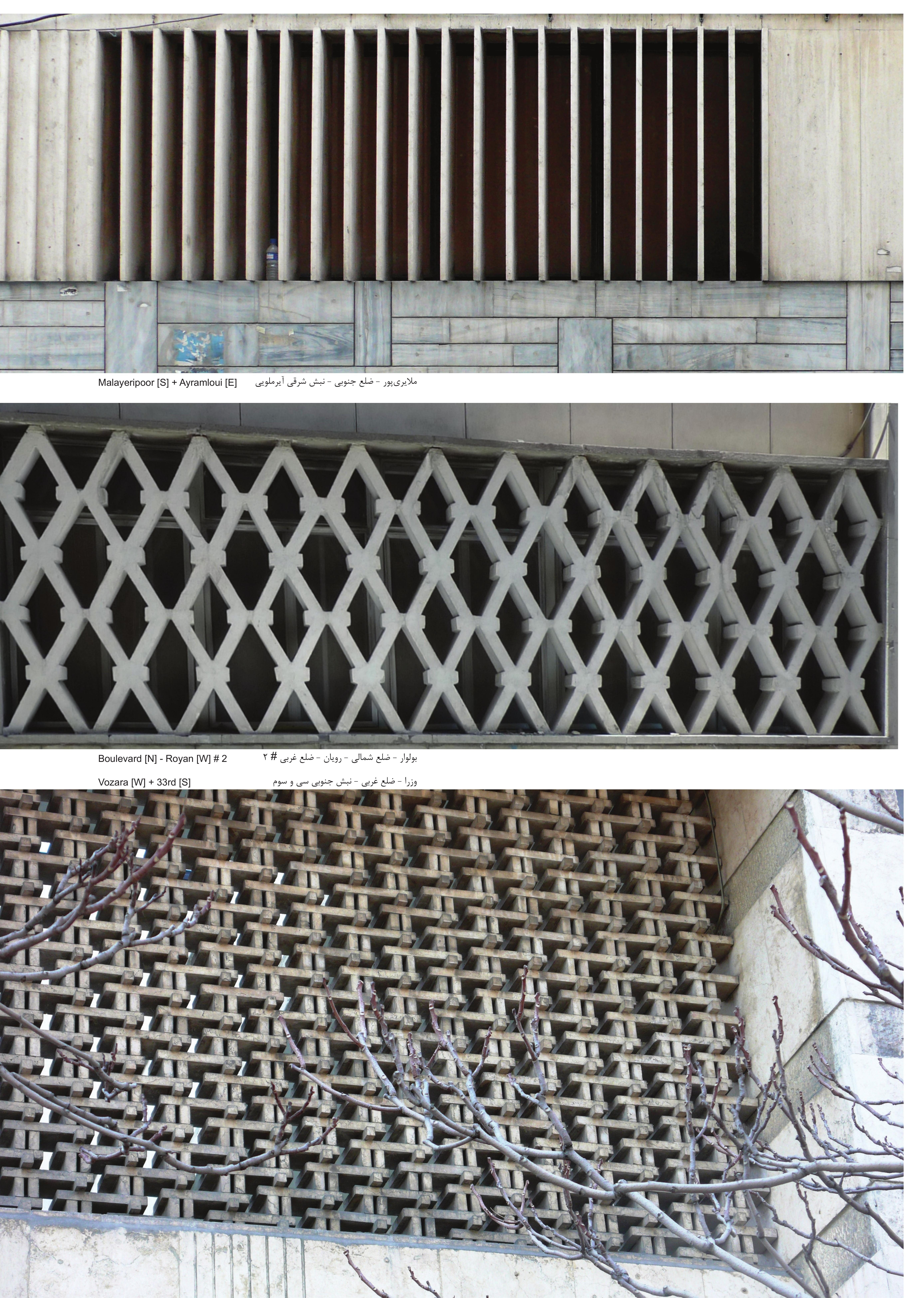
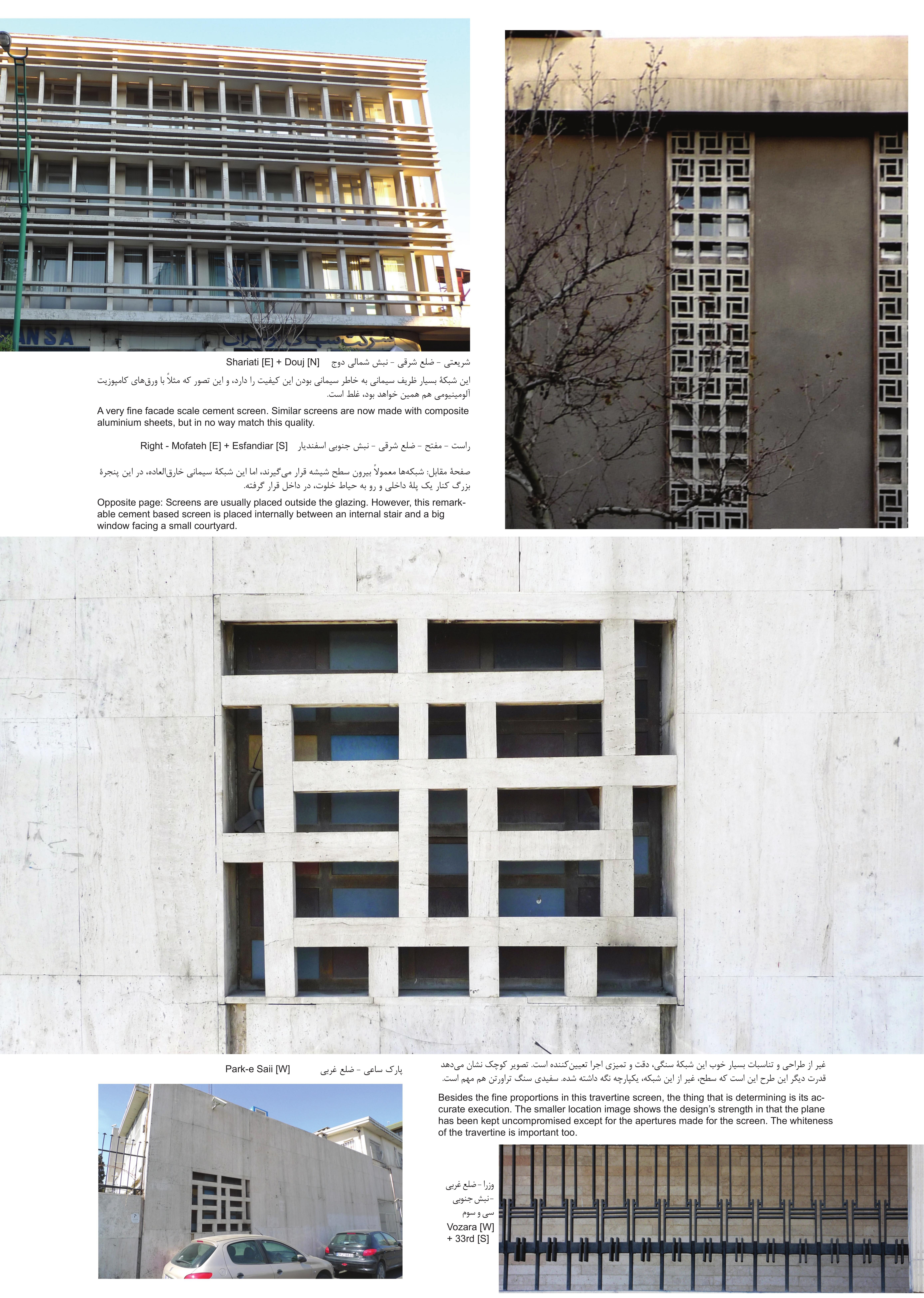
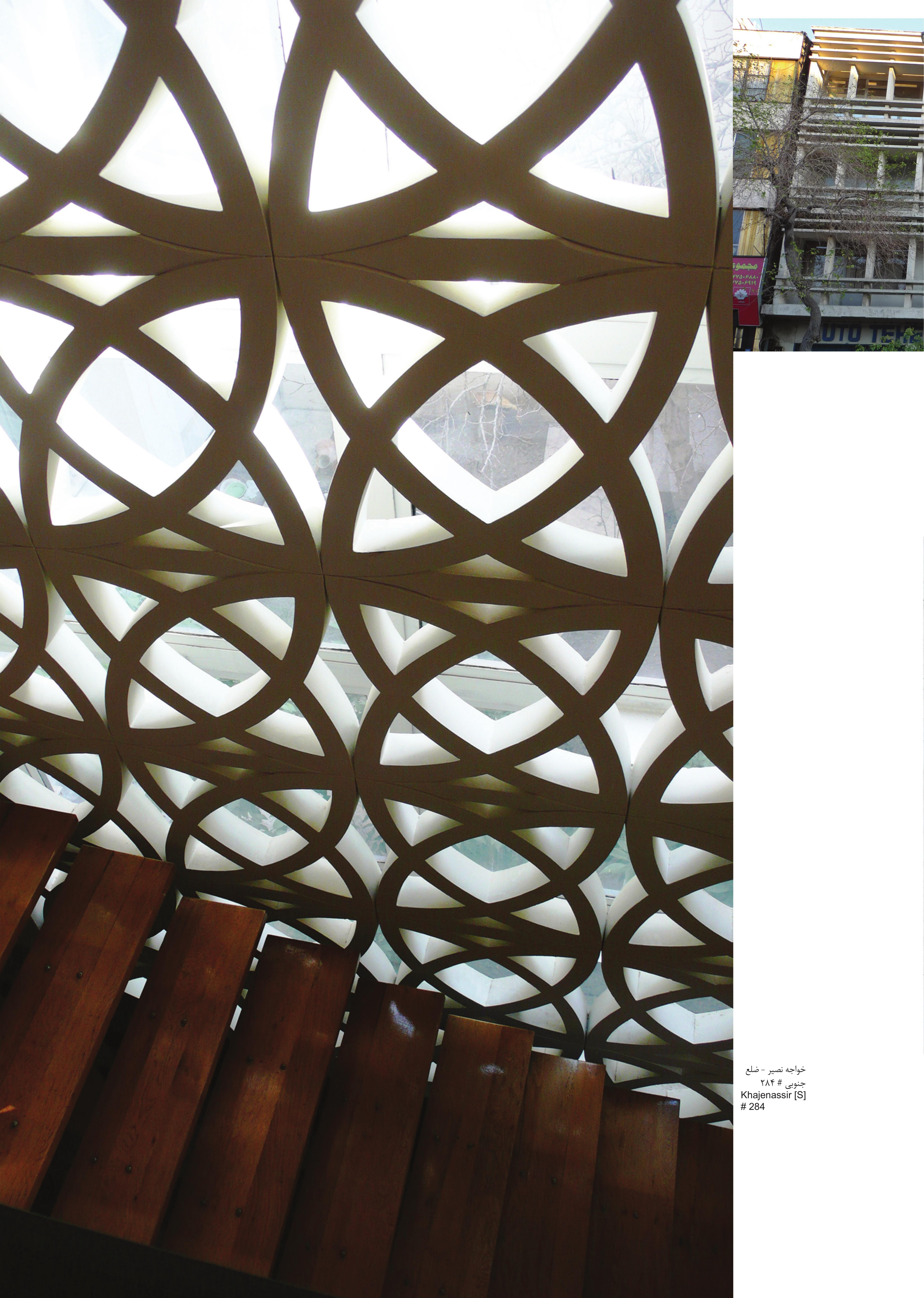
Padegan – e Valiasr [W]. The screen on the left is in cement, and the other three are in stone. Great care has been invested in their design and execution, and have apparently stood the test of time. Note also the other stonework, each a singular design. In the case at the top of the opposite page, the vertical stone blades continue over the solid surface. However, such works are destroyed routinely.Malayeripoor [S] + Ayramloui [E]. Boulevard [N] – Royan [W] # 2. Vozara [W] + 33rd [S].Right – Shariati [E] – Doq [N]. Opposite page – Mobarah [E] + Esfandiar [S]. Park-e Saii [W]. Besides the fine proportions in this travertine screen, the thing that is determining is its accurate execution. The smaller location image shows the design’s strength in that the plane has been kept uncompromised except for the apertures made for the screen. The whiteness of the travertine is important too.Khajenasser [S] # 284. Opposite page: Screens are usually placed outside the glazing. However, this remark- able cement based screen is placed internally between an internal stair and a big window facing a small courtyard.Above + left — Sasaan Hospital — Boulevard. Gap with main envelope. Tashti-e Tavoos [N] + Etesali [E]. Andisheh [E] + 5th [N]. Villa [Sq] # 158 — corner of Qasr junction. Ferdosi # 154. Labafinejad [S] # 42 — demolished. Left – This 1957 project was for a tower in New York. It can be called a screen tower. Below – First layer elevation as a screen – angled shift on plan on second layer. Ceramic Panel.A deep cube-shading grid on a Tehran high-rise facade — the screen as the whole envelope.