Underground cities are dense and intricate structures hand dug deep in the ground as labyrinths of passages and interconnected spaces. Generally the main reason behind the creation of such cities is to provide a safe haven to perform religious rituals or to take refuge from desert invaders. Nooshabad is a historic town in the Isfahan Province and is located 9 kilometres from Kashan on the south western border of the central desert or kavir of Iran. This town has a warm and dry climate and very little rainfall during the year. The underground city of Nooshabad is built approximately 3 to 16 metres deep and under the main city itself. This city consists of 3 levels of various spaces including passageways, rooms, toilets, qanats, wells and vertical ducts. The entrances to the complex are mostly concealed and are dug in places such as the interior of homes and qanats or in water wells located in the mosques, locations that allowed the inhabitants quick and easy access to the underground city at times of danger. The various spaces of the underground city were linked vertically through a network of wells and vertical shafts. In other words, the different levels of the complex were connected through a labyrinth of vertical and horizontal shafts; wells around 3 to 5 metres deep and 70 to 80 centimetres in diameter with limited access. The entrance to each well was shielded by a large heavy stone, not unlike a millstone, which was used to seal the entrance to the well after one fled to other levels. Other defensive means designed within this complex include a lack of light, numerous turns and bends, pits and potholes and fake passageways which lead nowhere, all designed to protect the lives and property of the inhabitants familiar with these pas- sages. The presence of such structures proves that the main purpose for the construction of the city is to defend and protect the inhabit- ants, particularly as according to old documents Kashan and its surrounding towns were historically considered unsafe and often were attacked and invaded by various tribes.
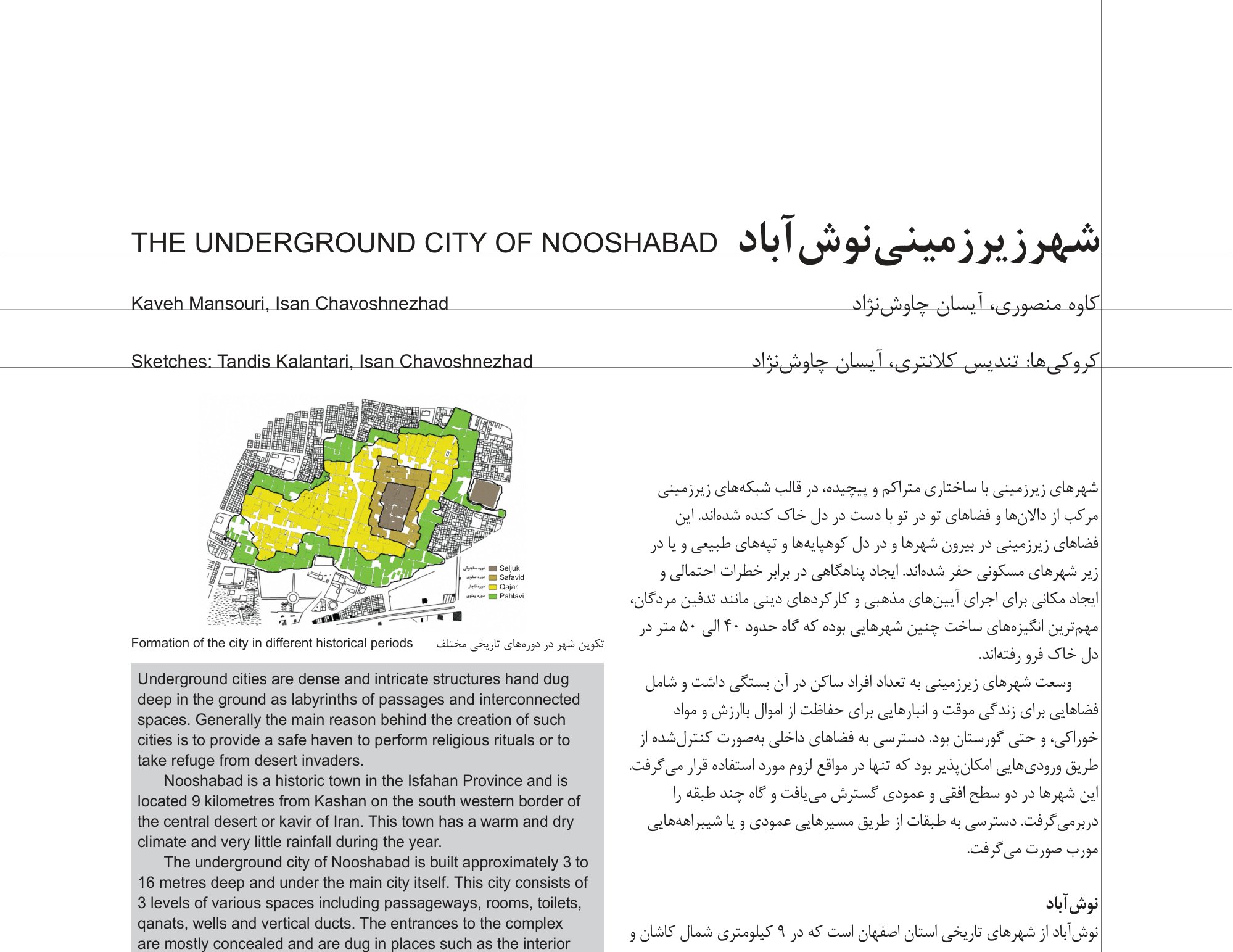
تكوين شهر در دوره هاي تاريخي مختلفFormation of the city in different historical periods
Jame mosque, Seljuk minaret (دسترسي هاي سرپوشيده، دربريگ )ميدان وقفه 3D view of Bala deh neighborhood Vaulted accesses in Darberig
City’s longitudinal section and the underground city
مسجد جامع و منارة سلجوقي آنJame mosque and Seljuk minaret
Center of Tuy-e deh quarter and it’s water reservoir as entrance of the underground city
1- Main underpass 2- Minor underpass 3- Cell 4- Wells (connection between the floors) 5- Lavatory



