دشتيل در ابتدا نام يك مجله در هلند بود و سپس يك جنبش مهم هنرى اوايل قرن بيستم، شامل موندريان و ريتولد را مشخص كرد. تصاوير زير در تاريخ هاى عنوان شده در اين مجله چاپ شده اند. اين كارها به نظر مى آيد كه نكات مشتركى با كارهاى بعدى گچى كازيمير مالويچ در روسيه دارند. اما تفاوت هاى مهمى هم بين آنها هست كه غناى اهداف و پيچيدگى درونى آنها را مى رساند. دشتيلDE STIJL The Dutch De Stijl magazine’s name subsequently became the label for one of the most important early 20th century movements that included Mondrian and Rietveld. These images were included in De Stijl issues of the dates indicated. They seem to have similarities with the later plaster Architekton works of Malevich. However, there are also important differences, and each piece is also distinctly different, indicating the richness of the aims and the internal complexities of each work. 1919 ،ونتونگرلو، مجسمهG. Vantongerloo, sculpture, 1919 1918 ،ون دويسبرگ، طرح براى مسابقه طراحى يادمان در ميدان ايستگاه لين واردن Theo van Doesburg, competition for a monument on the Leenwarden station square, 1918
1918 ،ونت هوف، ستون پله در كارخانه بروينزيلR. van’ t Hoff, stair column at the Bruynzeel factory, 1918
يك سرى كار حجمى1920 مالويچ، نقاش و بانى سوپرماتيزم، در اواسط دهه گچى با عنوان اصلى آركيتكتون ها توليد كرد كه معمارى اى قوى را نشان را در آن - به صورت تجريدى و يوتوپيايى- مى دهند و توجه او به معمارى مقطع منعكس مى كنند، هر چند در نقاشى هاى هندسى او هم حس معمارى مشهود است. در اين حجم هاى پر اتفاق مكعب مستطيلى، عمدتاً بر ارتفاع تأكيد شده. كازيمير مالويچKAZIMIR MALEVICH Malevich produced a series of plaster sculptures - Architektons - in the mid-1920s that present a powerful architectural sense, and demonstrate his interest in architecture – in the abstract and utopian sense – in that period, although architecture can also be sensed in his geometrical paintings. In these multi-faceted cubic forms, the vertical dimension is generally accentuated. 1927 ،تزئين سوپرماتيستSuprematist Ornamentation, 1927 1920 آركيتكتون، گوتا، دهه- صفحه مقابلOpposite page - Architekton: Gota, 1920s
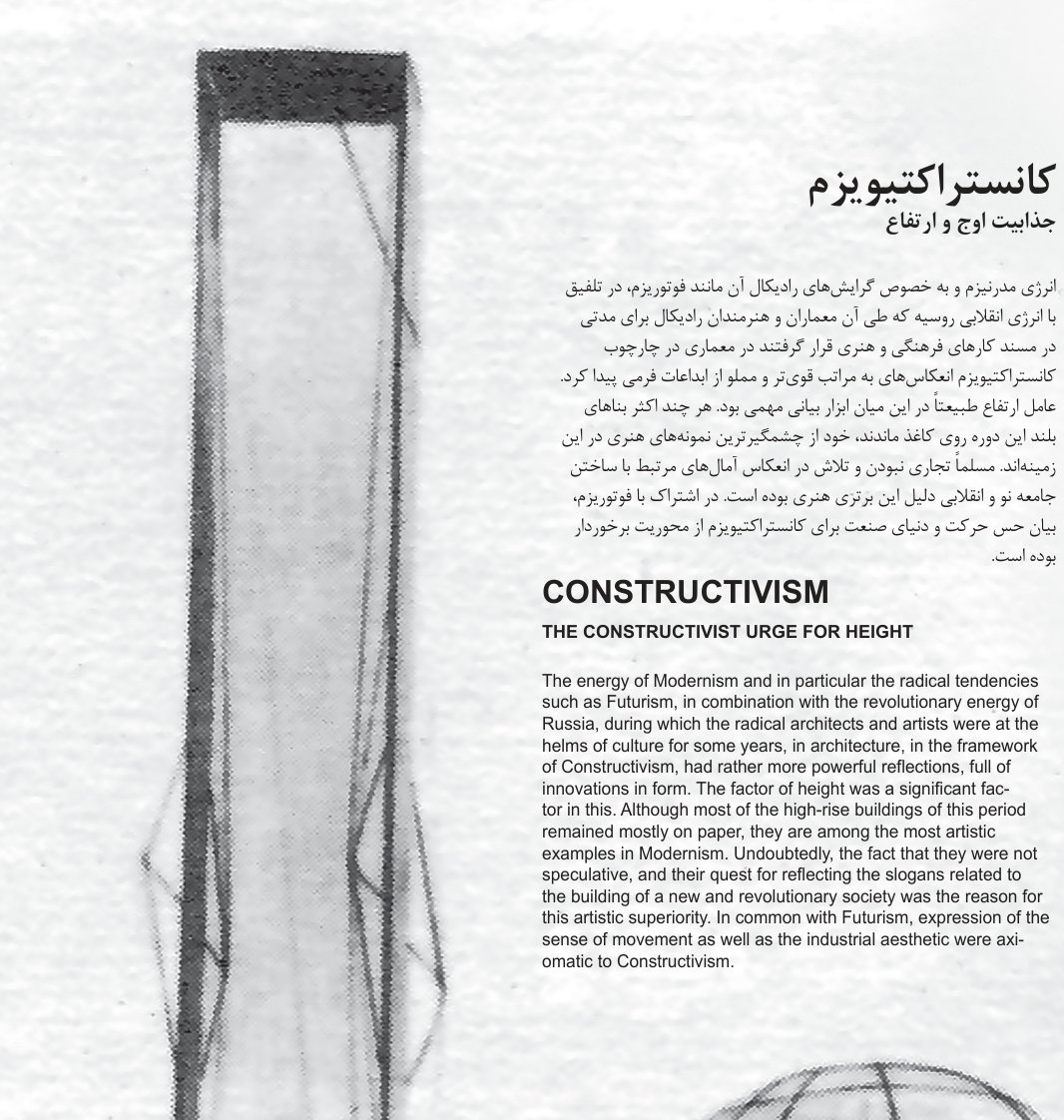
انرژى مدرنيزم و به خصوص گرايش هاى راديكال آن مانند فوتوريزم، در تلفيق با انرژى انقلبى روسيه كه طى آن معماران و هنرمندان راديكال براى مدتى در مسند كارهاى فرهنگى و هنرى قرار گرفتند در معمارى در چارچوب كانستراكتيويزم انعكاس هاى به مراتب قوى تر و مملو از ابداعات فرمى پيدا كرد. عامل ارتفاع طبيعتاً در اين ميان ابزار بيانى مهمى بود. هر چند اكثر بناهاى بلند اين دوره روى كاغذ ماندند، خود از چشمگيرترين نمونه هاى هنرى در اين زمينه اند. مسلماً تجارى نبودن و تلش در انعكاس آمال هاى مرتبط با ساختن جامعه نو و انقلبى دليل اين برترى هنرى بوده است. در اشتراك با فوتوريزم، بيان حس حركت و دنياى صنعت براى كانستراكتيويزم از محوريت برخوردار بوده است. كانستراكتيويزم CONSTRUCTIVISM The energy of Modernism and in particular the radical tendencies such as Futurism, in combination with the revolutionary energy of Russia, during which the radical architects and artists were at the helms of culture for some years, in architecture, in the framework of Constructivism, had rather more powerful reflections, full of innovations in form. The factor of height was a significant fac- tor in this. Although most of the high-rise buildings of this period remained mostly on paper, they are among the most artistic examples in Modernism. Undoubtedly, the fact that they were not speculative, and their quest for reflecting the slogans related to the building of a new and revolutionary society was the reason for this artistic superiority. In common with Futurism, expression of the sense of movement as well as the industrial aesthetic were axi- omatic to Constructivism. جذابيت اوج و ارتفاع THE CONSTRUCTIVIST URGE FOR HEIGHT
1927 ، پروژه انستيتوى لنين مسكو- ليزيتسكى- راست و بال Right and above - Lissitzky, project for Moscow Lenin Institute, 1927 به كارگيرى شكل بال هواپيما در طراحى انتهاى ساختمان- ليونيدوف Leonidov - inspiration from the aeroplane wing in the design of the tower



