



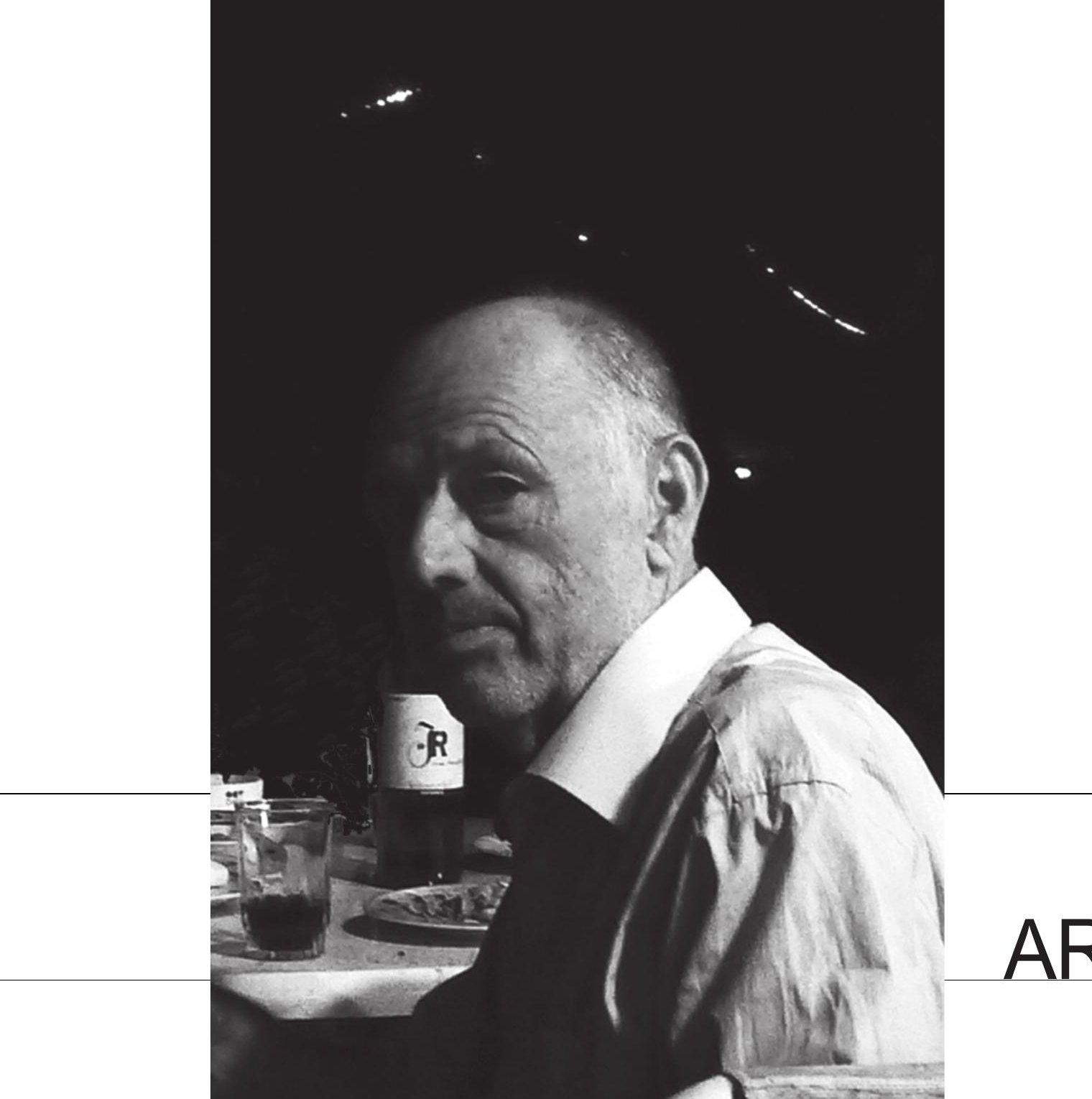
Stefano Boeri. Kaleidoscopic Tehran. In India, Asia, Eastern Europe, and South America, modernist architecture developed in various forms, finding a particularly fertile epicenter in Tehran between the mid-1920s and the early 1970s. The hallmark of this "modernist laboratory" was the rich, individual experimentation with form, color, and materials — the masterful use of metal, wood, stone, and pigment that transmitted a powerful energy throughout the entire city. A positive energy that is difficult to find at the same strength and breadth in Europe! In truth, the vibrancy of modernism in Tehran stems from its departure from a Eurocentric perspective, and its adaptation and interpretation into local forms and styles. Something similar to what occurred in the early 1960s in Europe, when Team 10, by emphasizing the importance of regional elements, distanced itself from CIAM. * Stefano Boeri, Milanese architect and cultural adviser to the city of Milan. Founder of the international research network Multiplicity, and former editor-in-chief of Domus and Abitare magazines. His Milan office is committed to research and practice in contemporary architecture and urbanism. He visited Tehran in December 2006.
A sculptural grave marker in metal, in the Gregorian Armenian cemetery. The dates are 1900-1959. An apparently important grave in the Catholic Armenian cemetery. Note the different stone surface textures: rough on the left, smooth on the right. Such railing can be seen in the buildings of this period. A small laboratory for architectural experiments inside a big "modernist laboratory": It seems that in the Doulab Christian cemeteries in east Tehran — a group of five — the design of graves gave the opportunity to the Christian architects and artisans of Tehran, whose role was central in the constructions of this period, to innovate because of the relative speed and freedom of the process. The architectural forms and details within the city are reflected here.
Jake Morton. (Some) Sources of Influence upon the Inclusion of Modernist Architecture in Tehran. I was recently informed, to my surprise — and delight — of the existence of a work by Gio Ponti (November 18, 1891, Milan – September 16, 1979, Milan) in Tehran. My surprise stems from the fact that although Tehran has very interesting examples of architecture influenced by early-century modernism, this patronage of prominent Mediterranean architectural figures has not been reflected in any architectural archive. Ponti was undoubtedly the defining and central figure of architecture in twentieth-century Italy — and remains so. His dynamic presence in Milan — a true Milanese all his life — was not solely due to his architectural design, which he began with his first neoclassical design for a country house, then — alongside Giovanni Muzio — quickly assumed a role akin to the Rationalist movement, which marked the onset of Italian international architectural brilliance in the twentieth century. With the founding of Domus (1928), he began promoting an aesthetics of theory and practice that championed the brilliant figures of the mid-twentieth century (from the 1940s onward) — Albini, Mollino, Gardella, and others — whose work, like Ponti's own, emphasized comprehensive design as a singular manifestation of a far broader and more inclusive concept of the design profession, encompassing the design of a range of applied art objects and materials: furniture, lamps, ceramics, bathroom fixtures, crystal — in short, the complete panoply of cultural necessities. This holistic conception of the role of the artist-designer — for many of these figures, and certainly Ponti himself — as a profession embracing the fine arts, was a Mediterranean response to the innovations of the Bauhaus. But while the Bauhaus collapsed as a result of World War II, the Italian milieu, during and after the tragedies of war, did not lose its vitality and bred a second and third generation of highly capable designers. This sustained energy was embodied in every respect in Ponti's work, stimulated and empowered — and his magazines, Stile and then Domus, published initially from the Nissen huts in his garden by him and his colleagues in their spare time from building design practice, always emphasized comprehensiveness (the fact that this magazine still exists is perhaps its greatest accolade). The house Ponti designed in Tehran during the 1950s and 60s was a practical realization of his universal theory, in which every detail — furniture and decorations, floor and wall tiles whose designs were based on his watercolor paintings, paintings and bookshelves innovatively placed in front of windows, tables, chairs, Murano crystal, ceramic objects, cutlery, floor lamps, wall lamps, and shades, down to the gardens surrounding the house — was specifically designed for the site. This house belongs to the period in the 1960s when, having established his global stature with the iconic and ever-pure Pirelli Tower — one of only two towers in Milan (1950-56) — projects in Caracas, Venezuela (Villa Planchart), Baghdad, Hong Kong, Eindhoven, and the Denver Museum (1971) were commissioned from him. That a client in Tehran had the discernment and taste to commission him speaks to the refined Iranian taste of that era.
And it was through this source of international awareness that other examples of modernist influences appeared in the city, including European Rationalist influences originating from Bauhaus doctrines, often filtered after the emigration of formative figures such as Gropius and his student Breuer — as well as the earlier generations of the Viennese Secessionists: Loos, Hoffmann, Wagner, Olbrich, and others — manifested in California following Schindler's arrival in America in 1914 and his friendship with Lloyd Wright. Schindler's use of wood and his low-profile, Japanese tea-house designs for the California climate and landscape spawned an abundance of architectural refinement in this genre that perhaps led to the early works of the now-celebrated Gehry. But while the architects of this period, in today's climate of obsession with grandeur, excess, baroque, and fashion, are largely forgotten, they were far more civilized and polished in house design. Figures such as Quincy Jones, Craig Ellwood, Richard Neutra, and Raphael Soriano played a role in advancing and refining this genre and in the emergence of the Case Study Houses program (1945-1966), unique in the study of mid-century housing design and still the principal model of modernist residential design today. That such influences fed the modernist innovations in Tehran considerably dispels the alleged misconceptions about a lack of empathy or prejudice toward Western values and ideals. The same power of judgment and exacting taste of Iran's national architectural heritage, which is fully recognized and admired throughout the world, is reflected in the adoption of some of the finest genres of twentieth-century Western architectural design. Footnotes: * Jake Morton, London-based designer and artist, currently collaborating with Kaveh Mehrabani on a future book and design ideas. 1- Libera, Pollini, Figini, Terragni. 2- Pirelli. 3- Eindhoven. 4- Secessionist. 5- Loos. 6- Hoffmann. 7- Wagner. 8- Olbrich. 9- Quincy Jones. 10- Craig Ellwood. 11- Richard Neutra. 12- Raphael Soriano. 13- Case Study Houses.
Leo Kandl. Shahab Katouzian. Architecture in Tehran. Pekinese Dog. What I saw: places of dynamic urban life and the city's great density — buildings of impressive, admirable quality seen at various points of the metropolis, and a diversity of architectures with imaginative architectural elements and surfaces of great aesthetic value, and arcades that beckoned people inside like gateways. A city as a hidden treasure of modern architecture! Kaveh Mehrabani accompanied me on my tour of the city and conveyed to me the information and feeling — how to see and how to look at it. Footnote: 1- Referring to the early arcades of central Tehran on Jomhouri, Sa'di, and Manouchehri streets. Places visited: Lalezar, Jomhouri, Taleghani, Tajrish, Abbas Abad, Sana'i... K.M. * Leo Kandl, renowned Viennese photographer, graduate of the Academy of Fine Arts in Vienna (1963-1968). He has held numerous exhibitions and visited Tehran in 2012. A few years ago, to digitize some of my projects, I went to one of my young friends and colleagues. The work was to be done at his office. What caught my attention during those busy weeks was a Pekinese dog that, wherever it was in the office — a long, elongated north-south space — would immediately rush to the northern side and look out the window. When I looked more carefully, I noticed that across the street, they had constructed a building in the style of Chinese pagodas. The mystery was solved: the little creature was constantly homesick! This humorous observation, then as now, makes me wonder how, in a city where there is constant talk of identity in architecture — where no seminar, roundtable, or conference passes without participants discussing the subject — not only are more "pagodas" appearing, but also buildings whose roots lie in nothing but cultural poverty. In recent years, some in the construction industry have made ludicrous use of ancient architectural elements, marketing them as Achaemenid-Sasanian style — not to mention the postmodernist disaster of two decades ago, or the prevalent cookie-cutter neoclassicism that at best belongs to the worst chapters of Western architecture. On the other hand, our past — a vast portion of the bazaar and its surrounding neighborhoods, the unparalleled buildings and arcades on both sides of streets like Lalezar, Jomhouri, and Enghelab — is crumbling to dust. Let us not forget that a city's history is formed by layers accumulated over different times, and that Tehran, beyond its Tahmasbi and Naseri heritage, was one of the most modern cities in the Middle East during the 1930s to 1950s. If there is no resistance to the onslaught of capital, speculation, and the display of luxury devoid of any aesthetic principles by the nouveau riche, Tehran will lose its last connections to its own past. * Shahab Katouzian, architect and urban planner, has taught at the universities of Tehran and Rome, and has designed and supervised residential and public buildings in Iran and Italy. His works and writings have been published in domestic and international journals.
