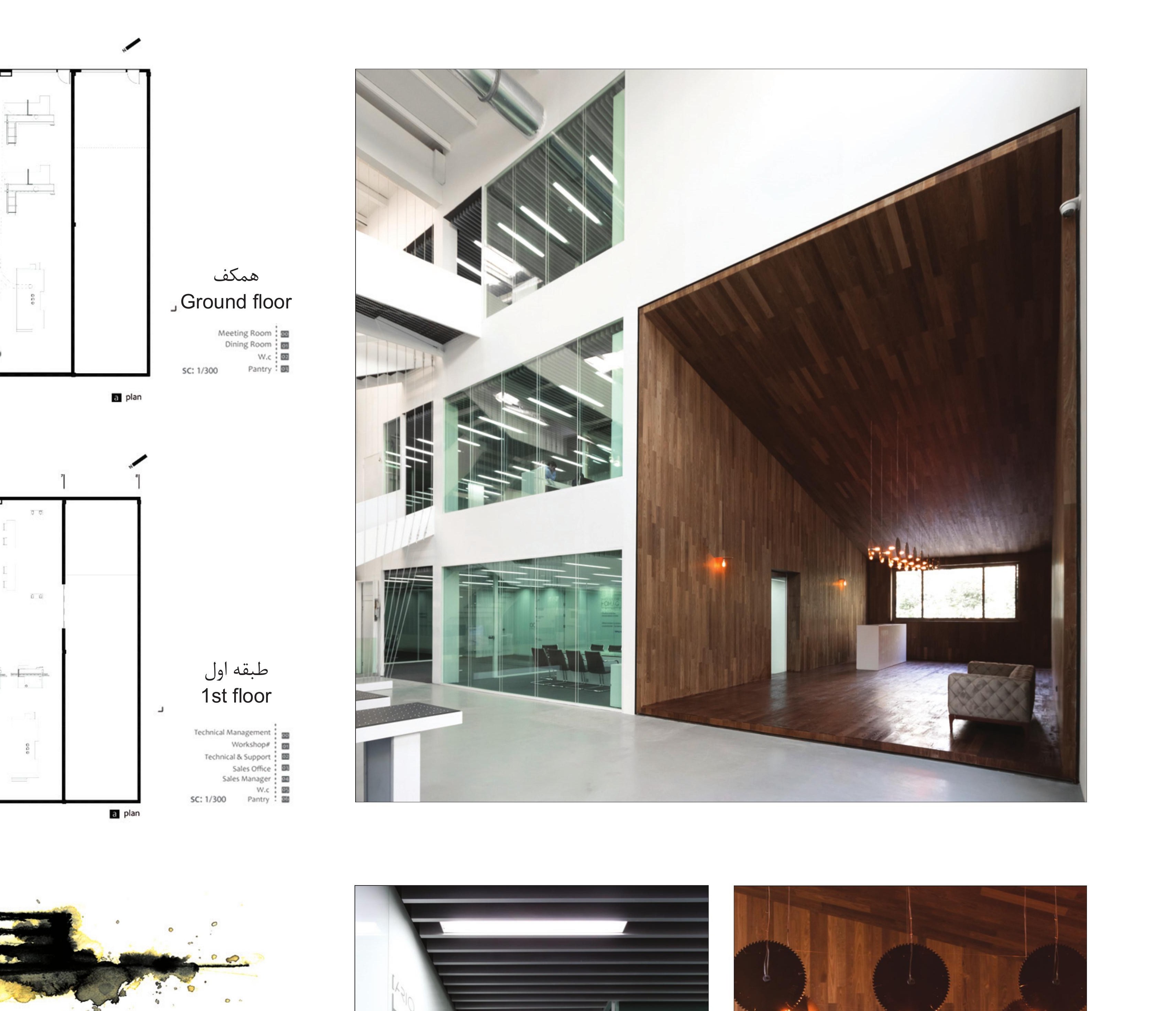
“Ario Choob” Showroom, Tehran
Location: Ahmadabad Mostofi, Behsazi Choob Industrial Town, Block 16B
Client: Ariochoob
Architects: Nextoffice — Alireza Taghaboni
Design team: Alireza Taghaboni with Majid Jahangiri, Maryam Golbarg, Shahab din Ramezani
Supervision: Ebrahim Rostaee Construction: Mohsen Shamshiri
Structural consultant: Imen Saze Fadak Co.
Cable structure: Diba Co.
Office partitions: Padiran Co.
Graphic: Asal Karami (+Environmental Graphic), Fatemeh Tabatabaeian, Marzieh Nozari
Model: Shima Mohammadi
Photo: Parham Taghioff
Total built area: 2,070 m²
The Ario Choob showroom — to display imported woodworking machinery — sits in the Behsazi Sanaye Choob (Iran Wood Industries Improvement) industrial town. This industrial town, singular of its kind, has precast-concrete buildings in which each block is divided into four 12-metre-high parts. Although most of the wood-industry players have factory or showroom premises here, the place — in contrast to its industrial spirit — feels like garden alleys: the streets were laid with care so that the trees would not be damaged.

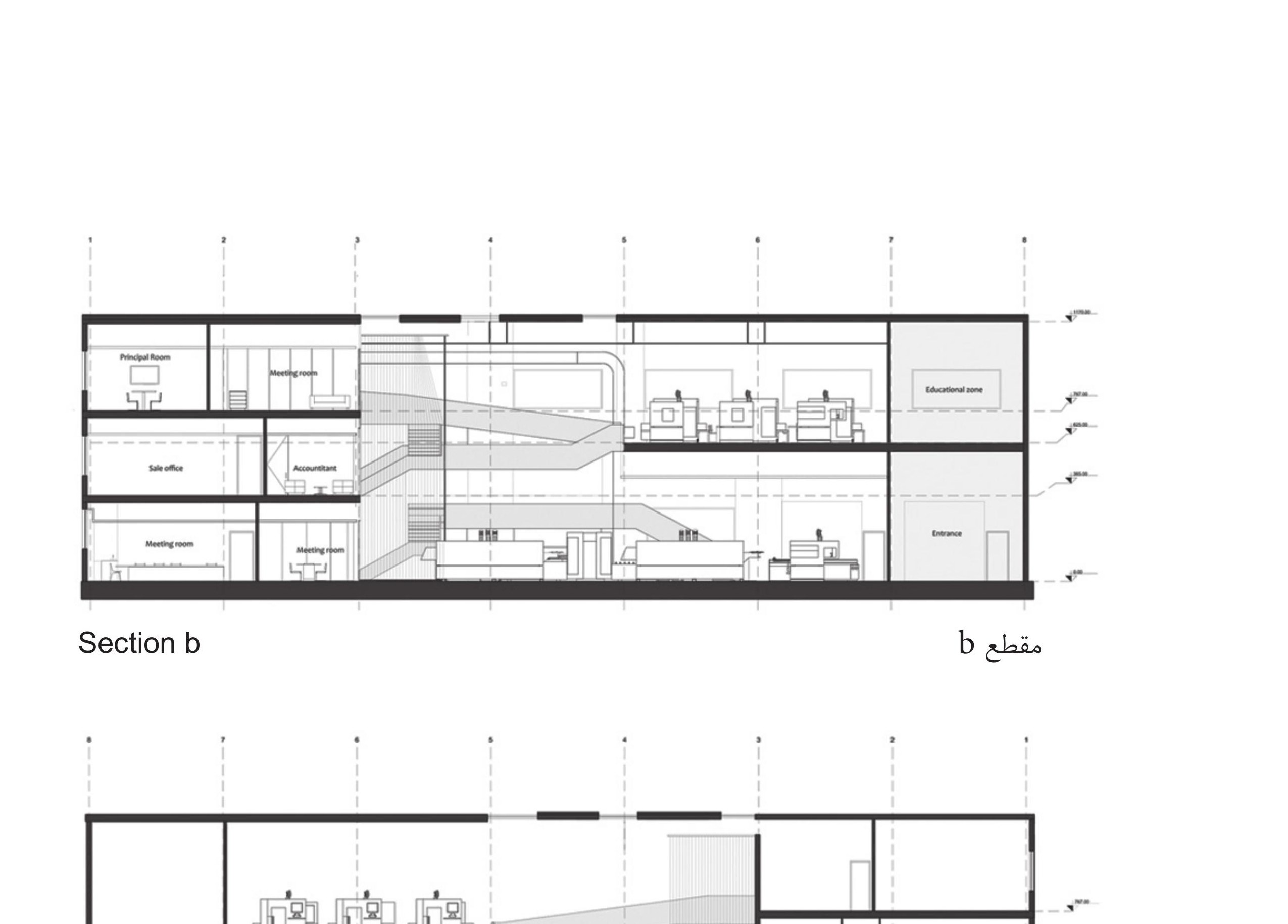
The project was handed over to us during construction, the whole building having been built to a typological pattern of two storeys. By talking to the client and grasping the project's needs we changed this typology — moving floors and relocating the office spaces.
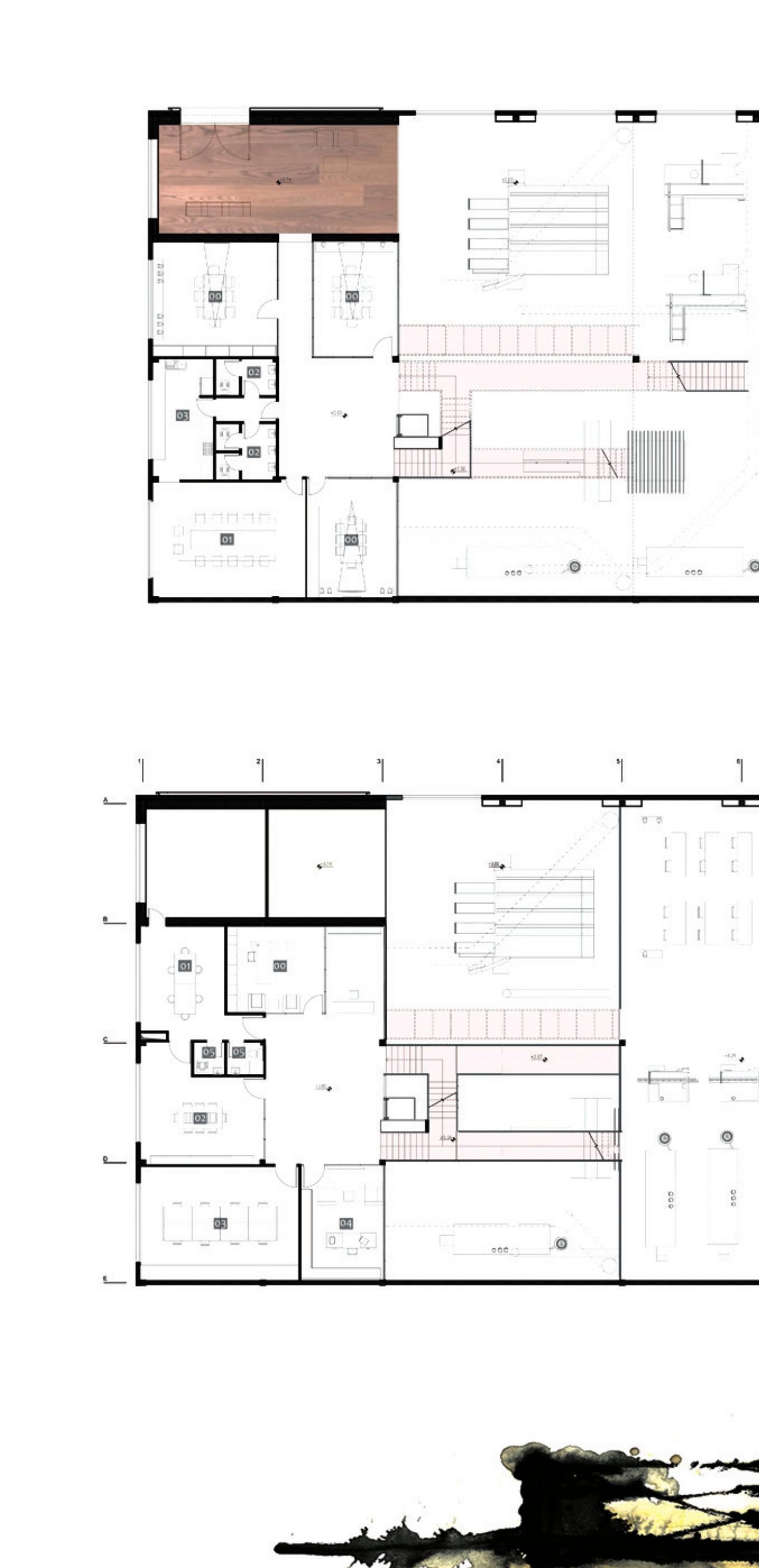
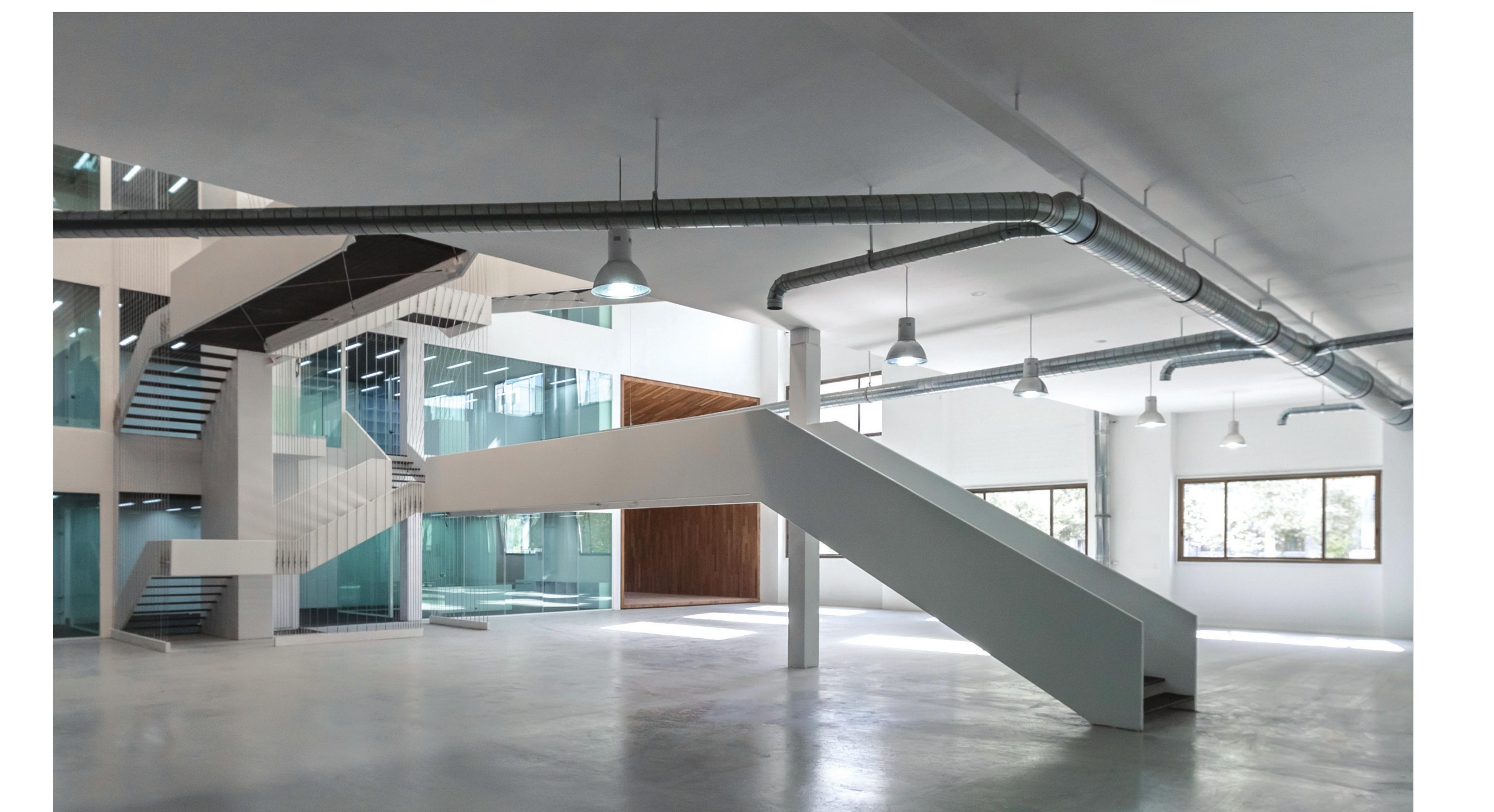
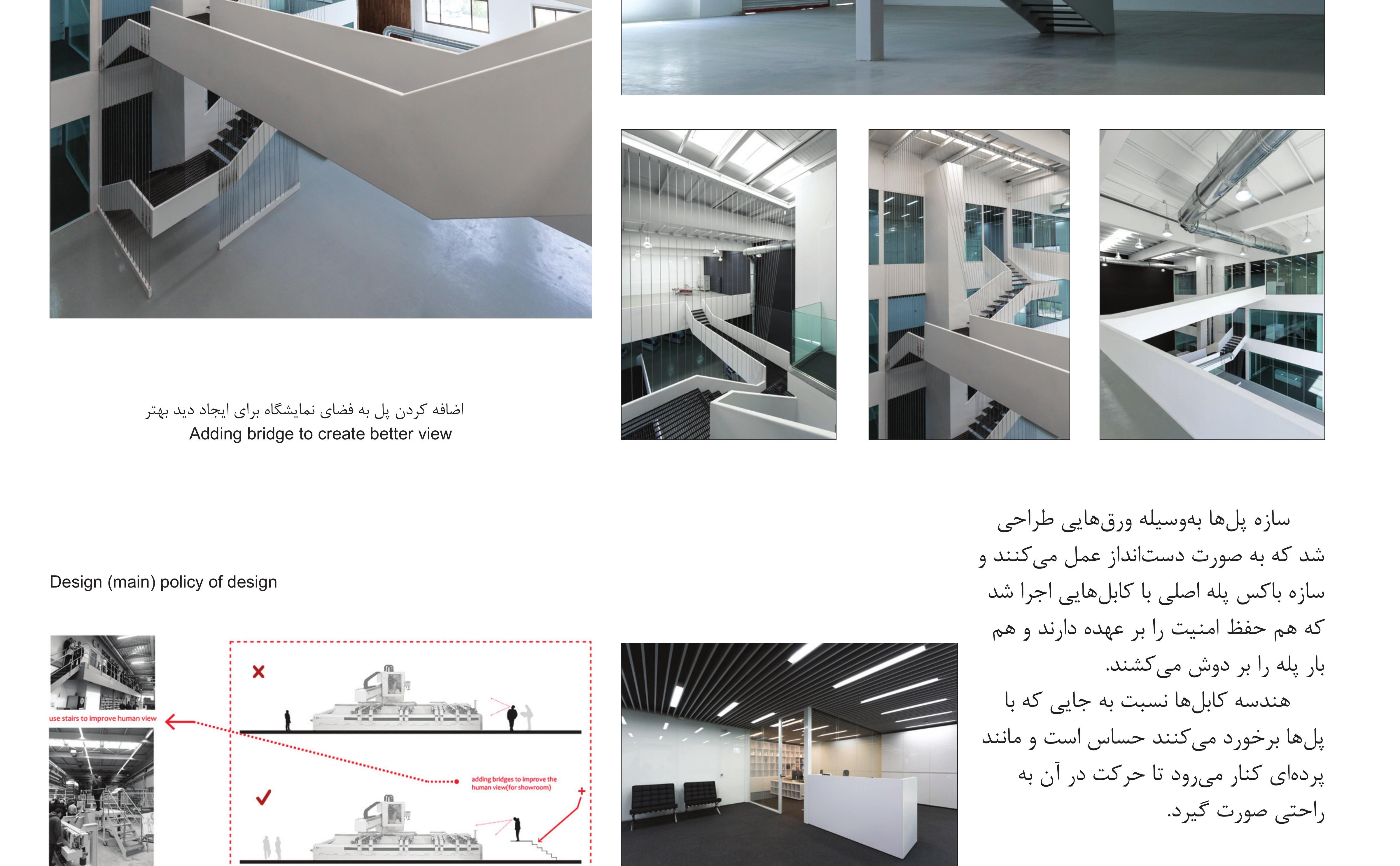
The present project is a re-organisation of a concrete box so that the entry, office and showroom zones sit beside one another, and customers can move between the three and see the whole space — and choose the machines they need.
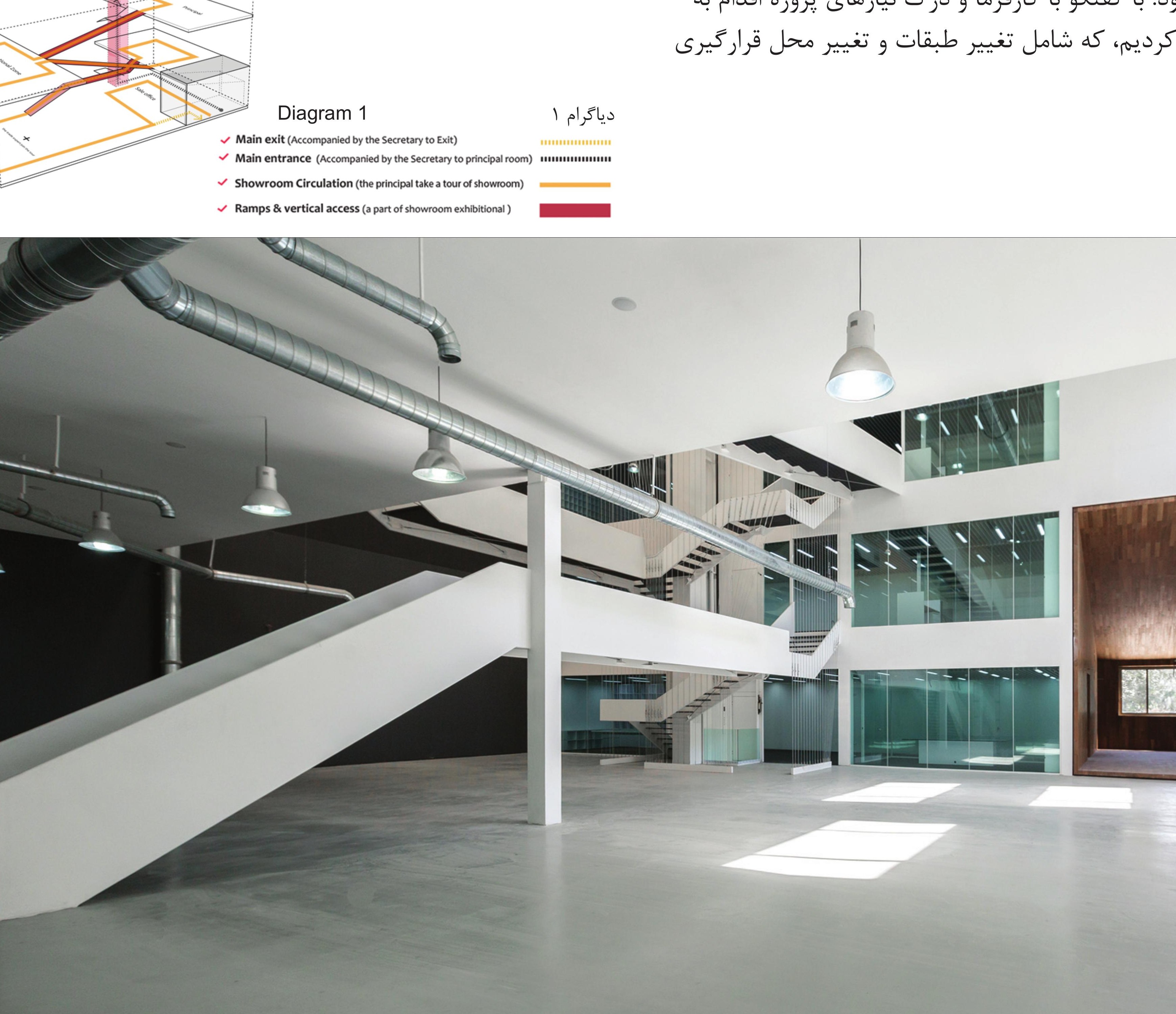
The project was composed of two principal parts because the woodworking machines, when being inspected for purchase, must be viewed from a greater height. A movement starts from the manager's space on the third floor and, via a series of bridges, creates a complete three-dimensional circulation to the different floors, ending in the sale rooms on the ground floor (Diagram 1).
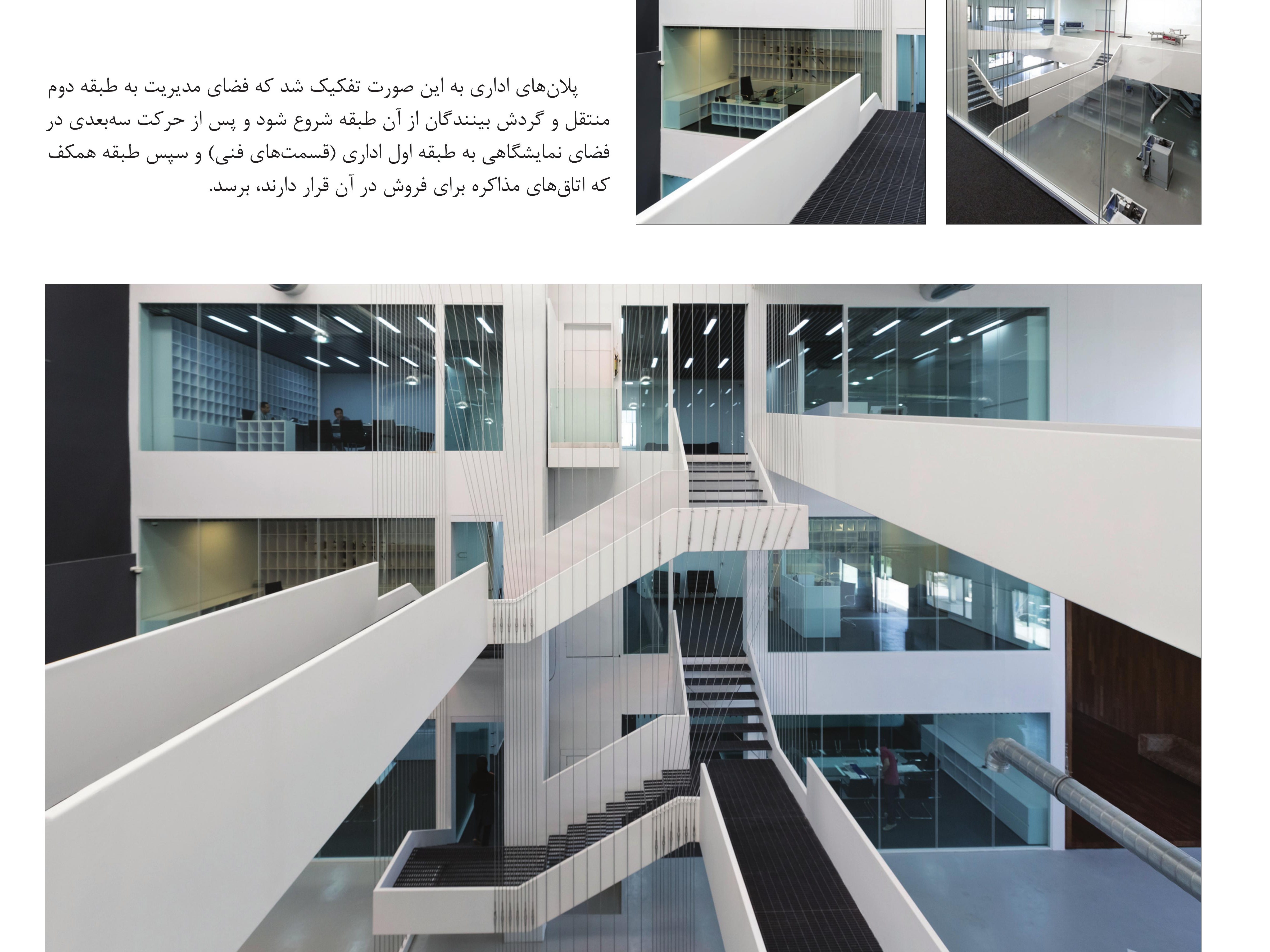
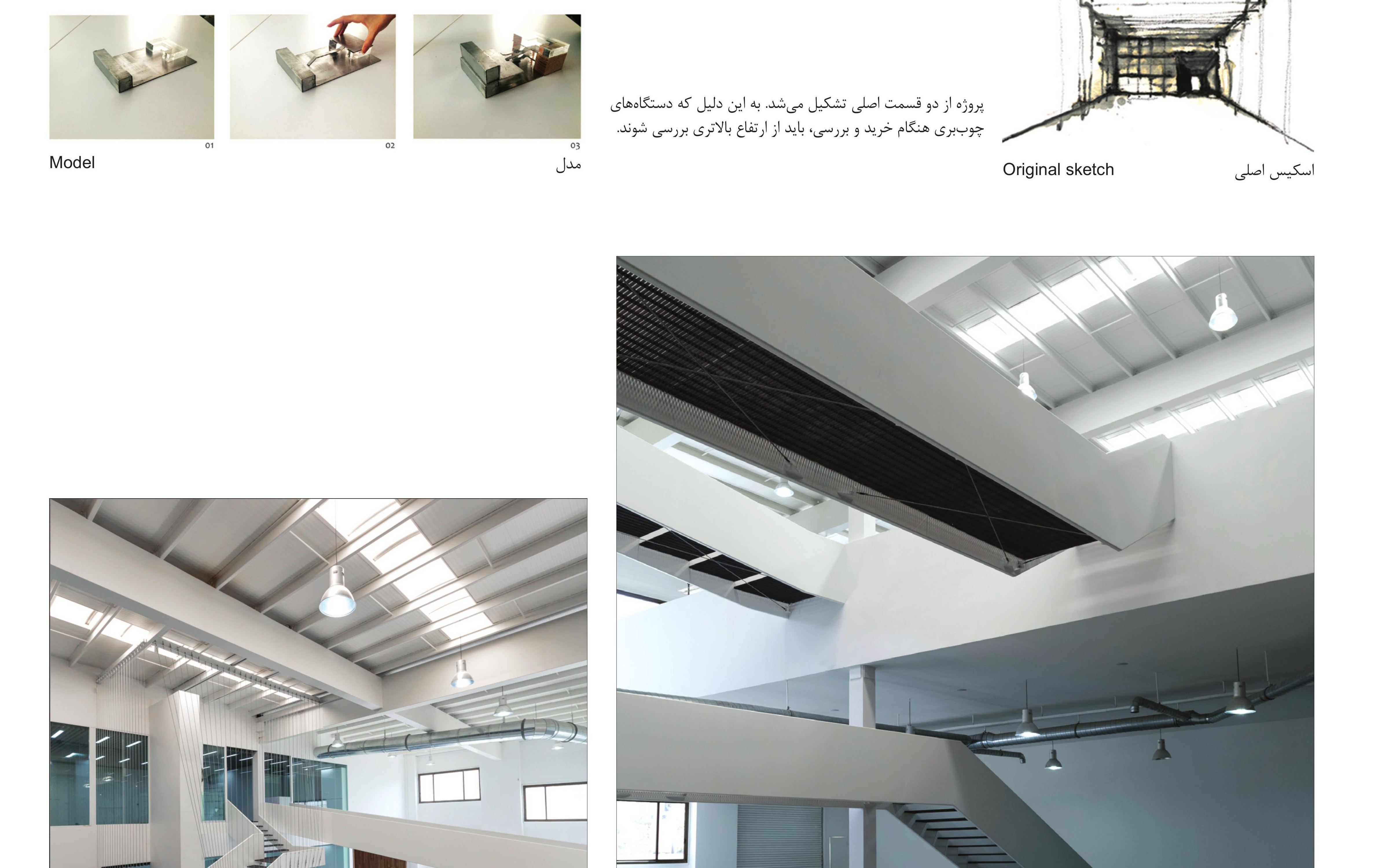
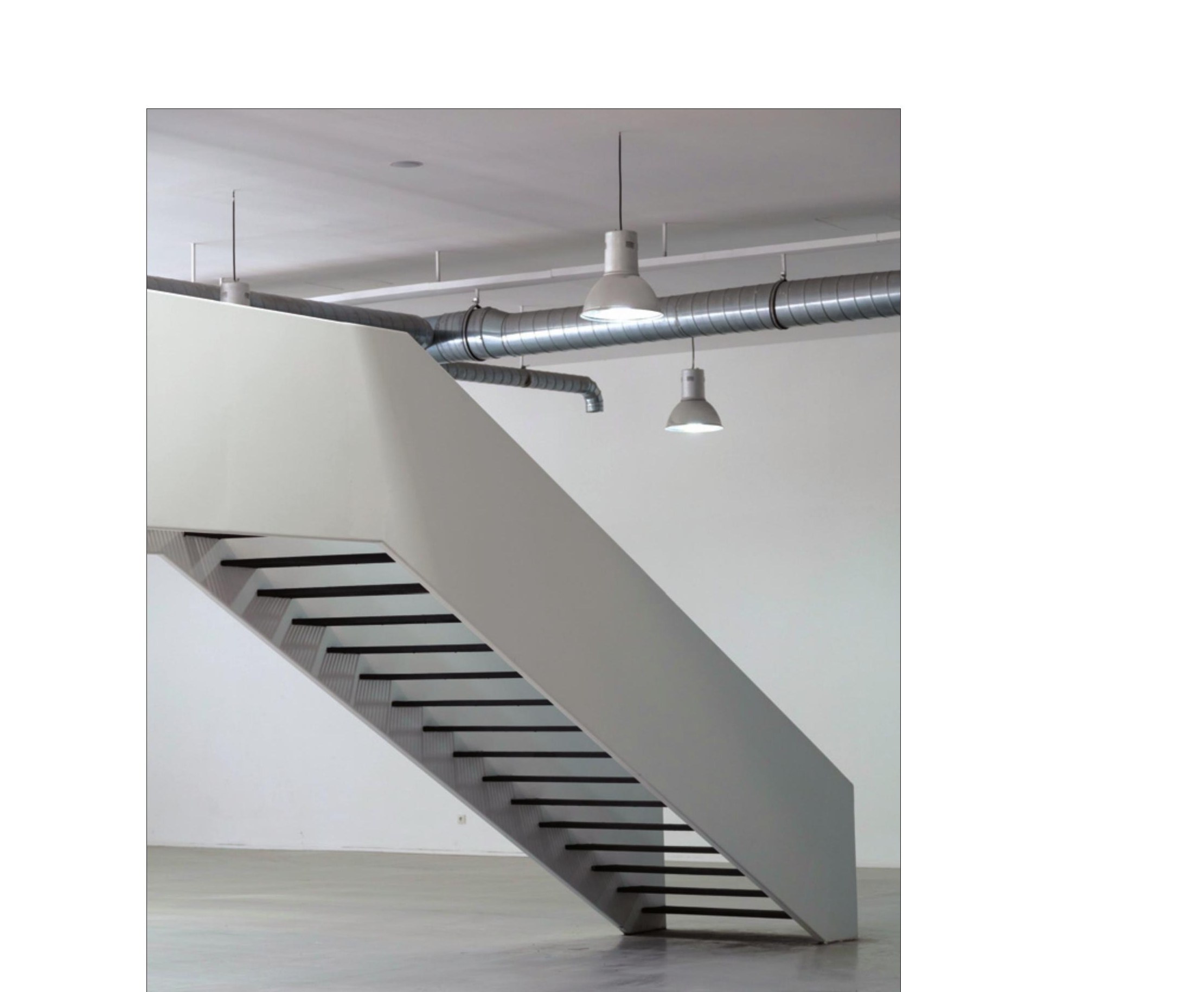
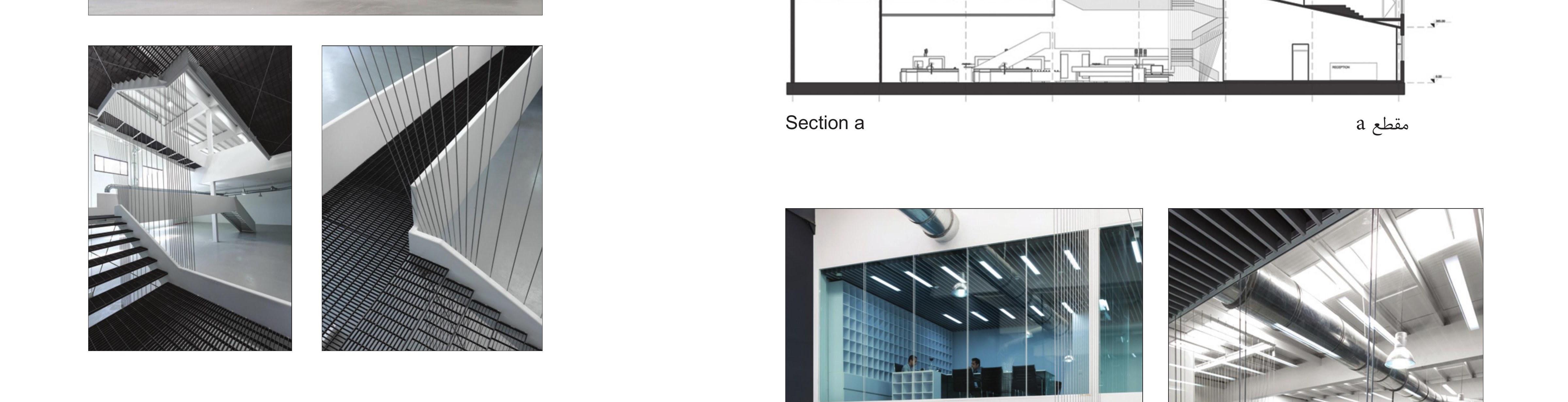
The bridge structure was designed by means of steel plates that act as guard-rails, and the stair box was built with cables — they both ensure safety and carry the stair. The geometry of the cables is sensitive in relation to the bridges and behaves like a curtain set aside, so movement through it happens easily.