LALEHZAR BUILDINGS
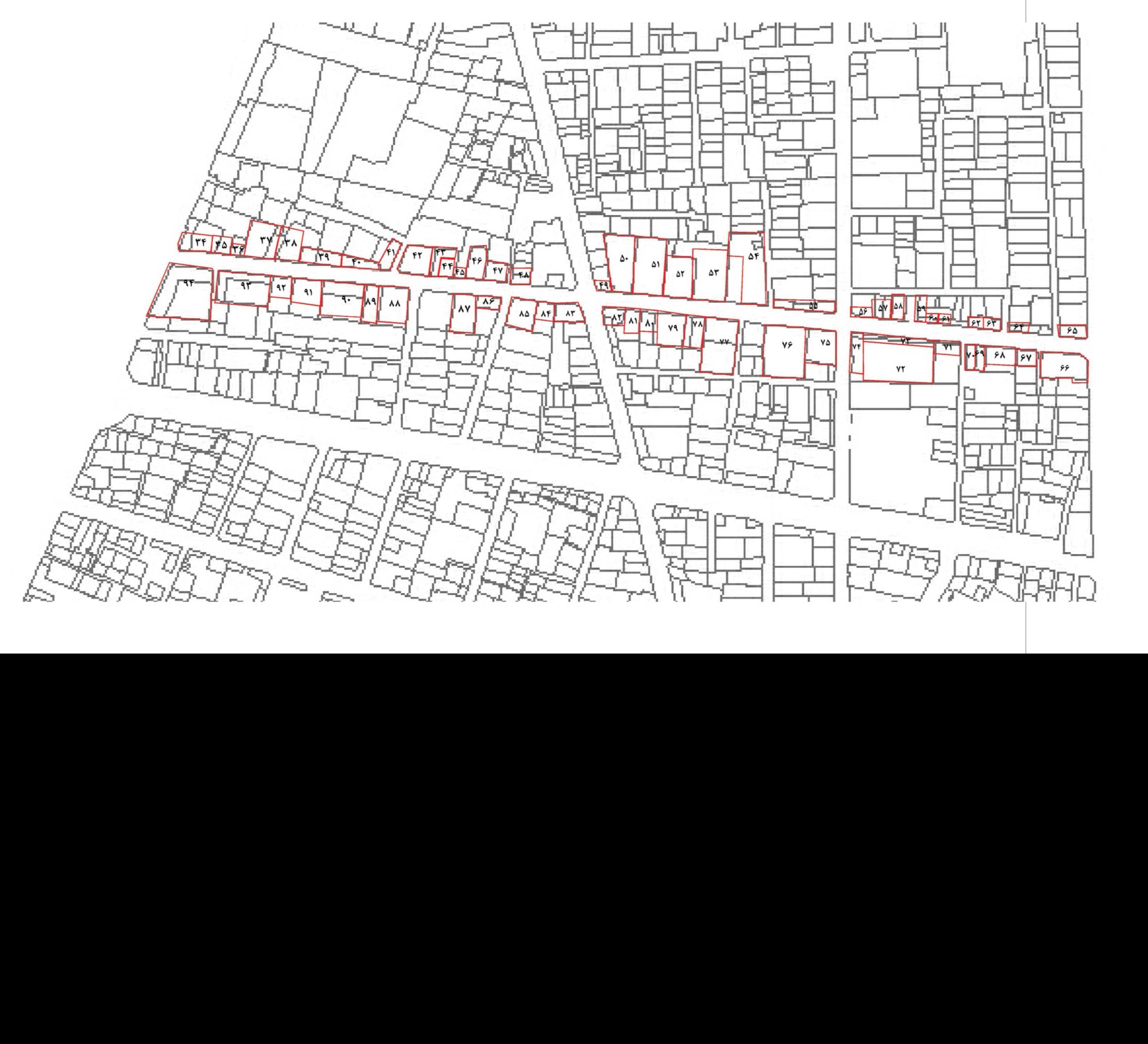
Map of Lalehzar Street showing architecturally significant buildings
In studying the existing condition of Lalehzar's buildings, three factors were taken into consideration. First the building's name, since some of them have become known with a certain name.
Second, the building's construction date, partly establishing their historical significance, and therefore determining the value of many of these buildings which have been transfigured and buried under a mass of shop signs and display windows. Although, it is important to note that only a few buildings remain from the early periods of the formation of this street without having received different additions.
Third, there is the building's restoration value. Although determining the value of heritage buildings for preservation and protection needs more precise studies, the author has attempted to evaluate the buildings by considering the following factors: the building's age, architectural value (whether interior architecture has specific characteristics or if only the facade is valuable), exterior decoration, the amount of intrusion and revision, and the building's monumental value.
Hence, the buildings were divided into three categories: worthy of restoration, worthy of facade restoration, and unworthy of restoration. Overall, considering the results of this table and the attached plan, it is clear that first, the number of valuable buildings on this street is more than initially expected. This is due to the fact that they are concealed by quite large and inadequate display windows and shop signs on the ground floors, or by inappropriate infrastructure and additions.
The south section of the street contains many Qajar and first Pahlavi era buildings which, if restored, can at least bring back the visual impression of the early years of the street. However, the north section of Lalehzar can be even more valuable despite its newer buildings. This is because Lalehzar is the only street in Tehran which still has the most complete and valuable collection of buildings from the first Pahlavi period, coexistent with the entrance of modern architecture to Iran, including buildings by artist architects like Vartan and other pioneers of this movement.



