The design of the Charsou Bazaar project began with two key questions:
1 — How to incorporate cultural functions, and particularly urban public space, within the physical program of a commercial center with specific economic objectives.
2 — How to relate to the surrounding environment given the building's high density and the large site area relative to its context.
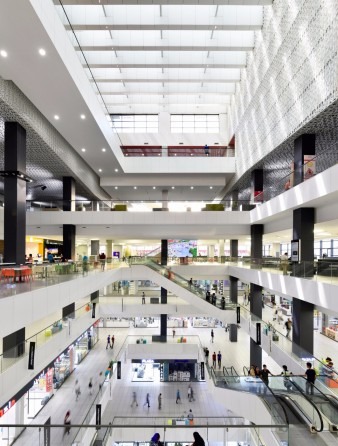
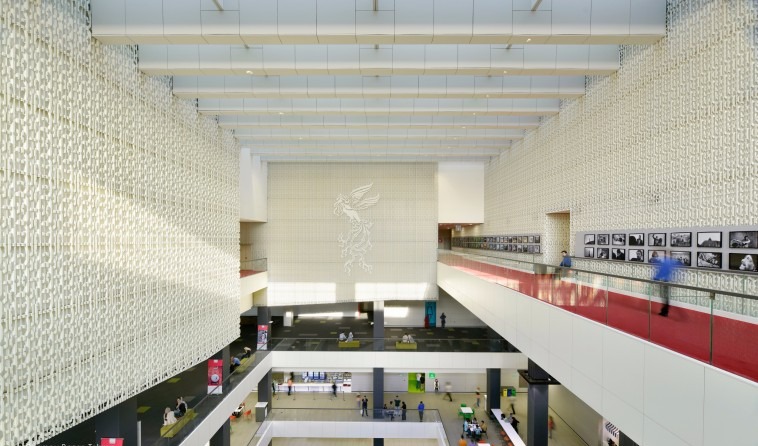
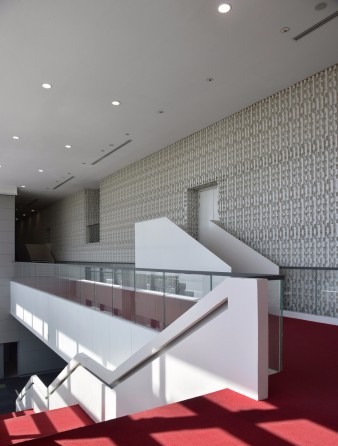
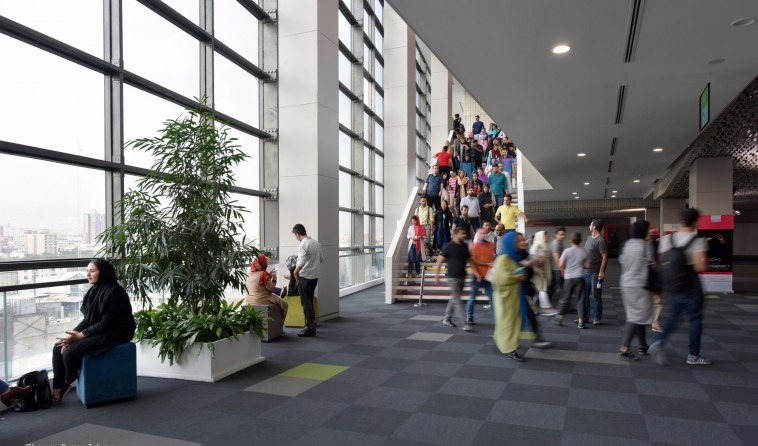
In response to the first question, the project's internal spatial organization was shaped so that the creation of a large central void and the staggering of escalators across floors would motivate visitors — driven by curiosity — to move toward the upper levels and discover the cultural and urban functions. The most significant decision at this stage was allocating the sixth floor to a space with virtually no predetermined function (a flexible space whose function changes according to the public's wishes, conditions, and current events), making it possible for some of the project's capacities to take shape after occupation, based on the project's ongoing needs.
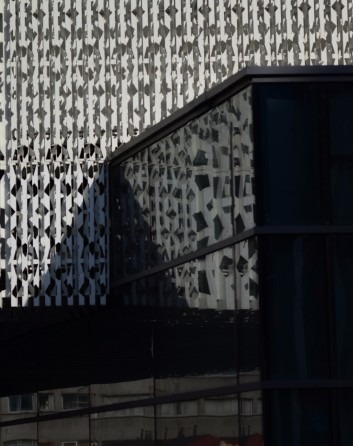
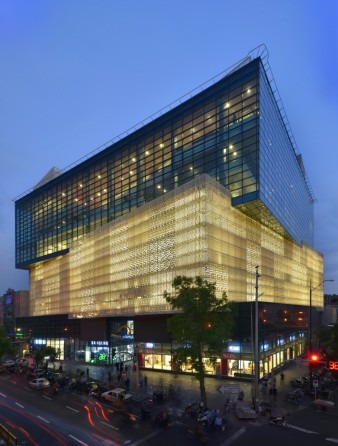
In response to the second question, three functional layers were envisioned for the project: the lowest layer, responding to its adjacency to the Jomhouri-Hafez intersection, rotates to transform the entrance into a space where pedestrians can pause; the middle layer, alongside the Hafez Bridge, rotates to establish a connection with the Hafez pedestrian overpass; and the upper layer, in dialogue with the surrounding urban scale, becomes transparent, providing views from inside the project toward the city.