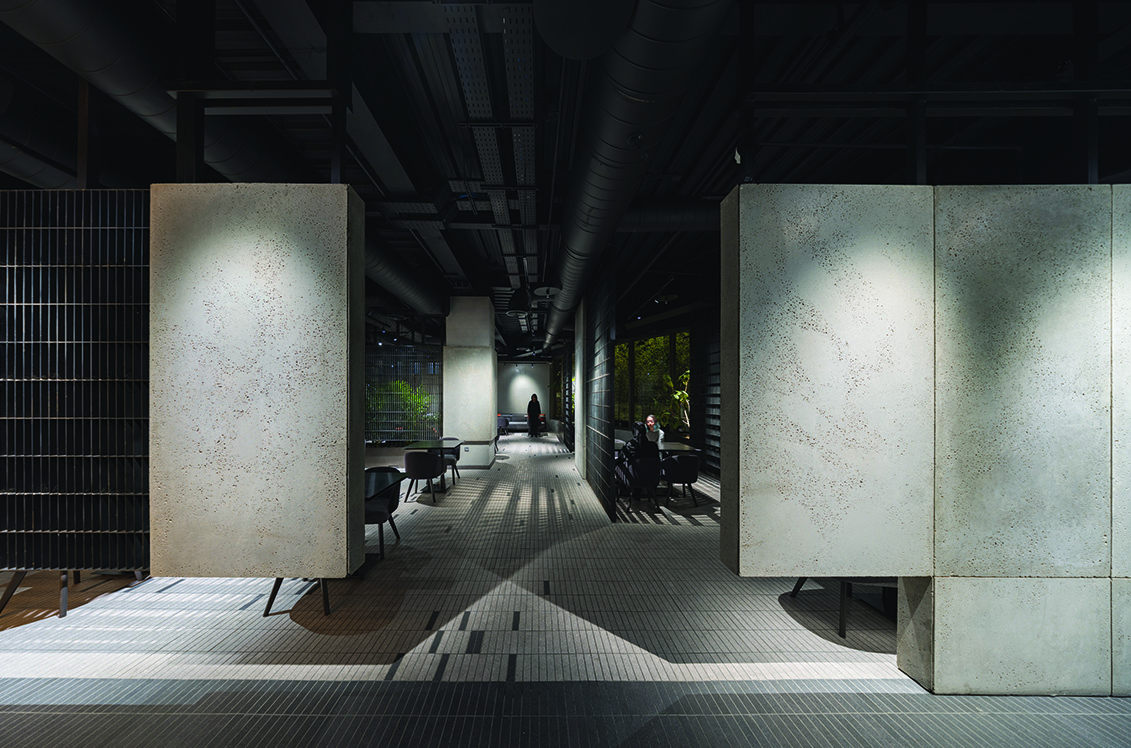
In architecture, as Frank Lloyd Wright said, building becomes architecture only when the human mind consciously accepts it and strives with all its resources to make it beautiful, to be in harmony with nature, to sympathise with it and to fit all of this into it. Then you will have architecture. This sentence rightly shows that architecture is something beyond construction; it is an inner process closely bound up with the human mind and spirit. For me, architecture depends not only on the hand and the pen; it is an experience that begins in the world of the mind and, as it expands and unfolds, turns into a beautiful, meaningful and perceptible space.
I am an architect; but not only with my hands, not only with pen and software. Architecture for me is living on the border of imagination and reality. Seeing form in sound and hearing rhythm in a wall. Years ago, with the diagnosis of epilepsy, a feeling of defeat arose within me. But today I have realised that that very brokenness became a gateway to a different world; a place where my mind is not only a tool but a creative world.
Epilepsy opens the mind. Just before a seizure, my mind roared like a stormy sea; full of unclear images, vague sounds and unknown forms. At first there was fear, but gradually I came to trust this different mind. I understood that my mind is a ceaseless architecture workshop; sometimes in silence, sometimes in turmoil, but always building.
In this period I noticed that awareness and attention differ from one another in this process. Awareness is a wide field, whereas attention is focused; both must be cultivated. Awareness helped me see my mind from every angle, and attention reminded me that I must focus precisely on what matters. Awareness lets us see pictures larger than reality, whereas attention, like a lens, perceives its finer details.
I begin every project with a question: what feeling is this space meant to awaken in people? The answer comes from a mind that has experienced suffering but has reached the depth of meaning. The illness made clear to me the border between the two hemispheres of the brain: the left with order and logic, the right with imagination and feeling. And what is architecture but the joining of these two?
The structure of the brain, with its grooves and intertwined layers, is not unlike an architectural plan. Neurons are connected like the users of a space, and signals, like movement in a building, pass along designed paths. If we take the brain to be a city, the mind is the life in it. A good architect, like a creative neuron, builds a bridge between mind and matter.
Architecture is not only building walls; it is about the perception of space. I have learned that the first space is the mind. Before a wall goes up or a stair is drawn, our mind has experienced it. Sometimes an idea passes through the mind like lightning - a moment that the architect turns into a meaningful design, volume or window. Architecture must be both seen with the eye and felt with the mind. I understood this when I began designing a cultural space, a place that provides each visitor with a different experience of space. Just as the human mind benefits from differences, architecture too must use contrasts to arouse a particular feeling.
At the height of one of the crises, I began designing a small church. I had a troubled mind, but an awakened spirit. My idea came out of a night-time seizure; a deep silence amid the clamour. This very contrast became the main pillar of the design: light against darkness, narrowness and opening, sound and silence. The project won a prize, but more important than that, it brought me to a new understanding: architecture is the translation of the mind.
Between the brain and architecture there is a deep bond. The brain without the mind is dark, architecture without spirit is lifeless. What makes a space special is neither materials nor scale, but the mental experience it creates - and this is where the architect's mind is decisive.
But how do we make use of our minds in architecture? First through knowing: let us know our own mind, even if it is troubled. Suffering, anxiety, imagination and joy are all materials of design. This knowledge can help the architect establish a deeper connection with each of their mental states and make it part of the design process. This is exactly what binds awareness and attention together.
Second, through practising seeing: the more we converse with our own mind, the better we can design spaces that speak with people. In fact, seeing does not mean only physical observation; seeing means perceiving the spirit of a space, feeling it from within. Architecture in this respect has a role beyond building a place; it turns it into a language of communication with its audience.
And third, through trust: each of our minds is unique, so our designs too must be so. A design that has come from the mind, like outstanding works of art, shows the architect's character. It is this self-confidence that gives every idea the chance to flourish.
I have learned not to censor my mind. Even if the images inside it are strange, I must turn them into form, colour, light and texture. Architecture is in the end a language; a language that begins with the mind and ends with the senses of the audience. A storm sweeps away rotten trees. A stormy mind is a mind that is alive, creative, in search of expression.
In the storm of the creative mind, forms are born, spaces breathe, and architecture turns into poetry. Just as a poet makes a world with their words, the architect too, with their forms, creates a space that captivates the mind.
Stand in the heart of the storm, and from the heart of every lightning bolt create a building. This building is the product of the meeting of the creative mind and feeling. In the end, architecture is like creation; it is both of the eye and of feeling. The creative mind makes something new out of broken things and doubts, and on this path attention and awareness are two complementary forces that must be engaged together, unified and balanced. It is the power of the mind that can turn architectural space from a mere physical place into a mental and spiritual experience.
Architecture is like an inner world that, with every design, is being rebuilt and taking shape again. The architect's world is a world of image, imagination and also rationality. With every line and form they depict new thoughts, and on this path they must accept that they are always evolving.