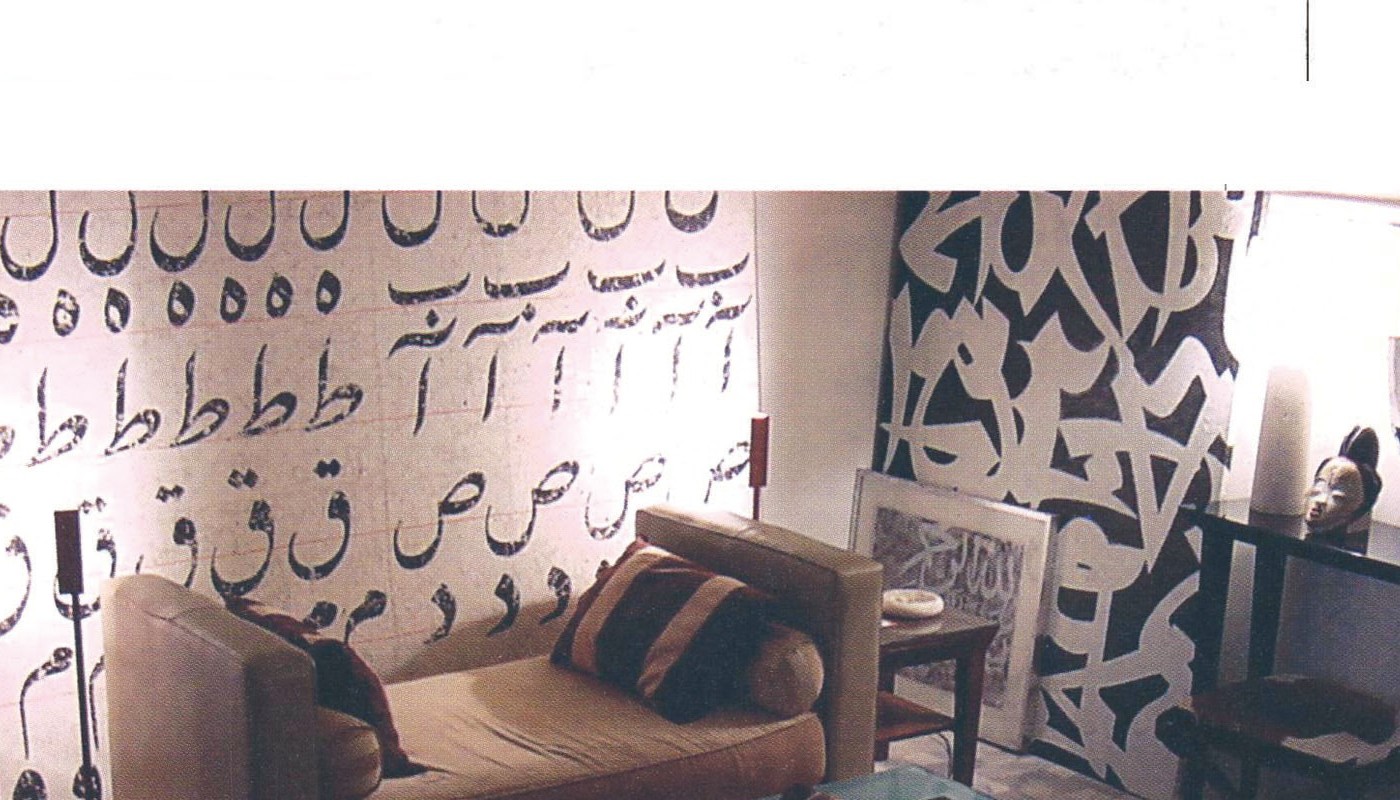
Memar Nashr Institute, in cooperation with the Iran Cultural Heritage Organization's Pardisan project, has announced a competition for the interior design of restored and rehabilitated buildings — covering their furniture, interior facilities and landscape. We have asked Fereydoun Ave — Iranian interior designer, painter and virtuoso — for his view on the matter. His response, accompanied by photographs of his own works, follows.
A general problem before discussing the brief
Before getting into the specific question, let me touch on a general problem in our country, which in the case of interior design is even more acute: we do not pay attention to the importance and the role of specialisation and the specialist. Everywhere, when the talk turns to building, an entire team should begin work together — architect, engineers, interior designer, landscape designer, and so on. It is not the case that one person should give the architectural plan, another build, and then the client's relative — to her own taste — furnish it, while a gardener tends the planting. Unfortunately at present in this country the situation is exactly that: especially in interior design, no one thinks that someone with the relevant expertise should be brought in for the work. We do not even have a school of interior design. So no serious thought goes into the totality of the building.
I had an experience in this very field. I was invited to furnish the building of a well-known architect. Later that very architect complained: "Why didn't you consult me before you started?" I told him that the client never consulted me, so I worked the way I myself thought best. The right method is to work plan by plan, all together, from the beginning. Even the interior designer must know the structural state of the building, so that he doesn't pull down a wall and have the ceiling fall in; he must know the electrical and mechanical systems, so that he can plan lighting and other matters correctly. From very long ago, this is how important buildings have been done. In the Palace of Versailles, built in the seventeenth and eighteenth centuries, the names and works of all designers — architects, landscape designers, interior decorators — are recorded. Important contemporary buildings still call on a complete team.
Restored buildings — the Italian example
Now, leaving the general matter aside and turning to the interior design of restored buildings: one must remember that the interior design of these buildings is different, since their architecture pre-exists. The best experience here, provided that no great alterations have been imposed on the building, is what the Italians have done. They have prepared the most beautiful old buildings — with the smallest interventions — for use in the twenty-first century. They did not apologise or excuse themselves, did not say "this building is from such-and-such a century but, since it is so beautiful, we will use it." They went straight to the heart of the matter, and let the gap between the seventeenth century and the twenty-first show itself. Sometimes the new repairs are made so visibly that one can clearly see what was old and what is new. They did not act like Saddam Hussein, who is said to have ordered some ancient sites to be rebuilt exactly as they had been. The Italians, with the smallest amount of meddling, prepared all of these buildings — by repairing and furnishing them — for new life and new use. They accepted that the people of today are people of the twenty-first century and that there is no need for us to copy or rebuild a fourth- or fifth-century chair for these people. We need not even mention that in those days there was no computer and no desk for this or that task; building a fourth-century-style computer desk makes no sense.
In their old buildings the Italians placed the most modern furniture, chairs and lamps, in such a way that the gap between the centuries was made plain. At times the work resembles a collage — like when something is placed atop something else, with each showing itself. One thing is good for one purpose, the other for another, and each carries its own beauty.
Three things to consider for the competition
So, in my view, whatever criteria you have set for this competition, it would be well to give serious attention to these important points:
First, the work should be simple. True, we Iranians, like the Russians, have an appetite for elaborate fare. We are not minimalist; we cannot deliver elaborate pieces well in execution, since our carpenters do not have that capacity. We have no tradition of building tables and chairs and cupboards and the like; consequently the related skill does not exist either. So we must propose simple designs that are buildable.
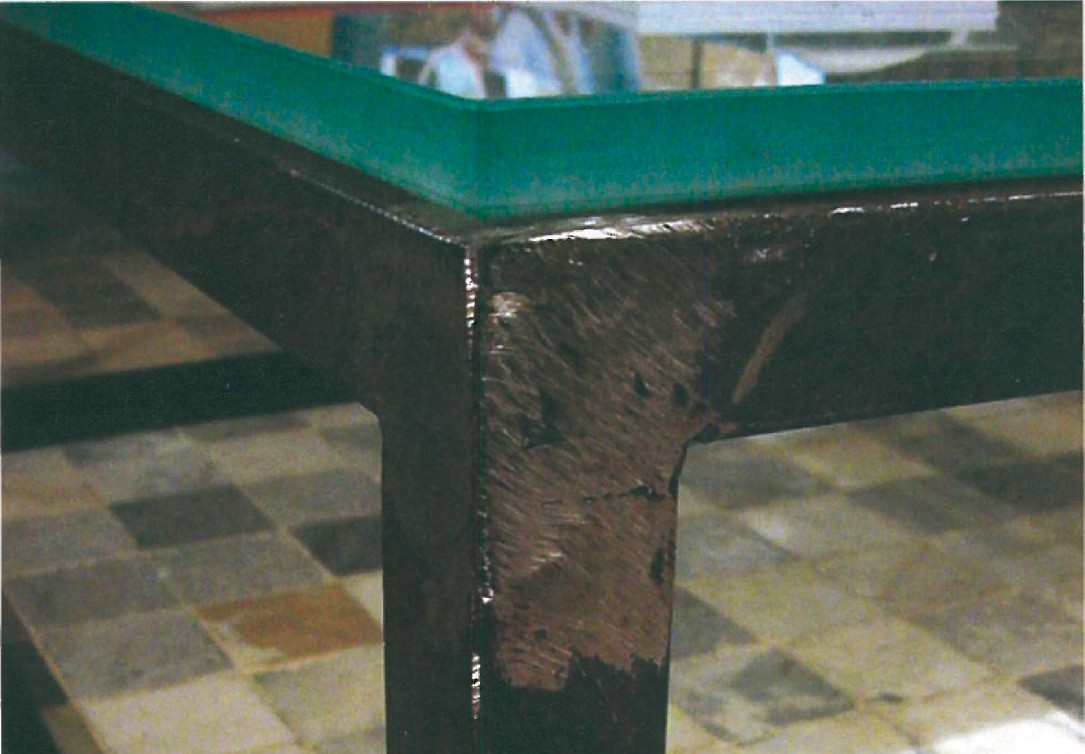
Second, copying or "re-creating" things believed to have been there in the past is not the right approach — for the simple reason that those things mostly never existed. In Iran we had no upholstered furniture in the modern sense. In the Qajar period some pieces were imported from Russia, with carpenters coming with them; the Iranian carpenters made bad copies. In the Reza Shah period, things were imported from the Germans; after they left, Iranian carpenters again copied this furniture, with no good result. In the Mohammad Reza Shah period, everything — good and bad — was imported from everywhere in the world. So trying to "Iranise" upholstered furniture is a futile effort. In Iran we had only carpets and cushions; we had neither sofas, nor even beds. Only for the kings did "the throne" mean the same as a bench: where the king sat was the throne, and a corresponding place in the house was called the shāh-neshin. Later the day-bed (takht) became more common in courtyards, used in the afternoons and evenings when the household sat outdoors so that no creature would crawl up to them. So, fortunately, we Iranians have no tradition of upholstered furniture from which now to copy in furnishing, say, a hotel or a caravanserai. The pieces used today in the so-called "traditional restaurants" are very poor — they are not Iranian.
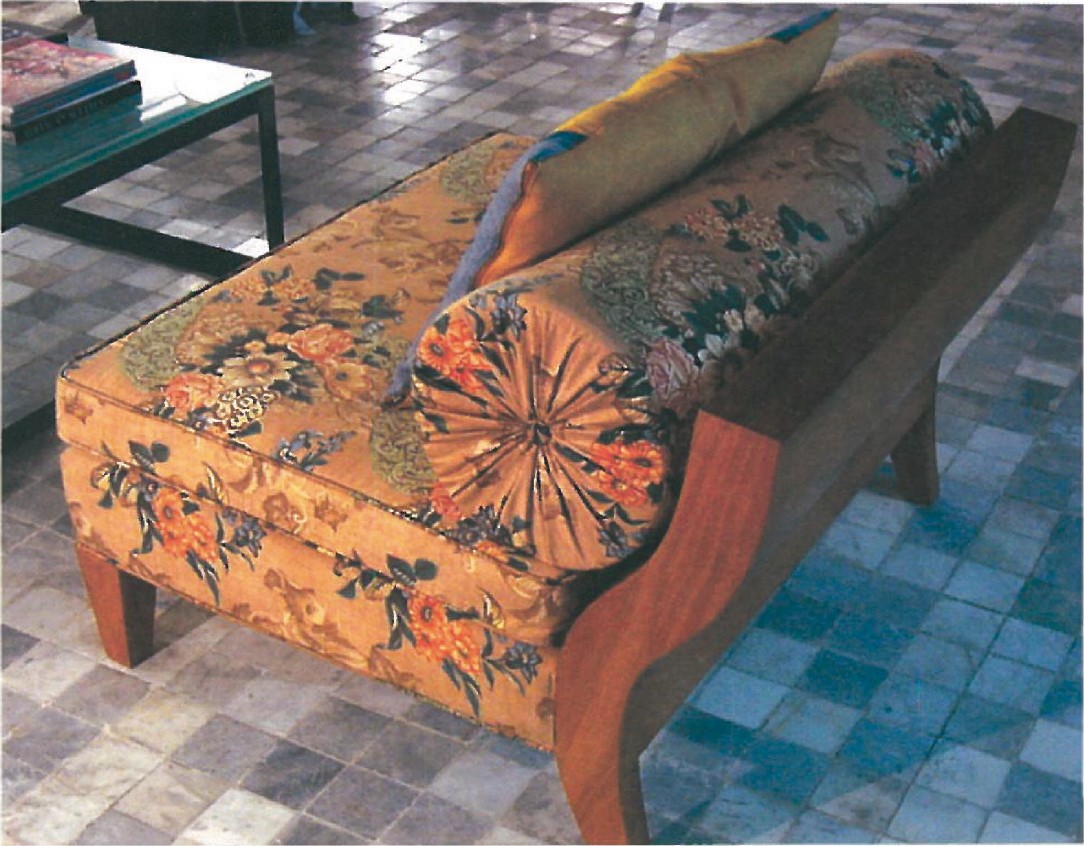
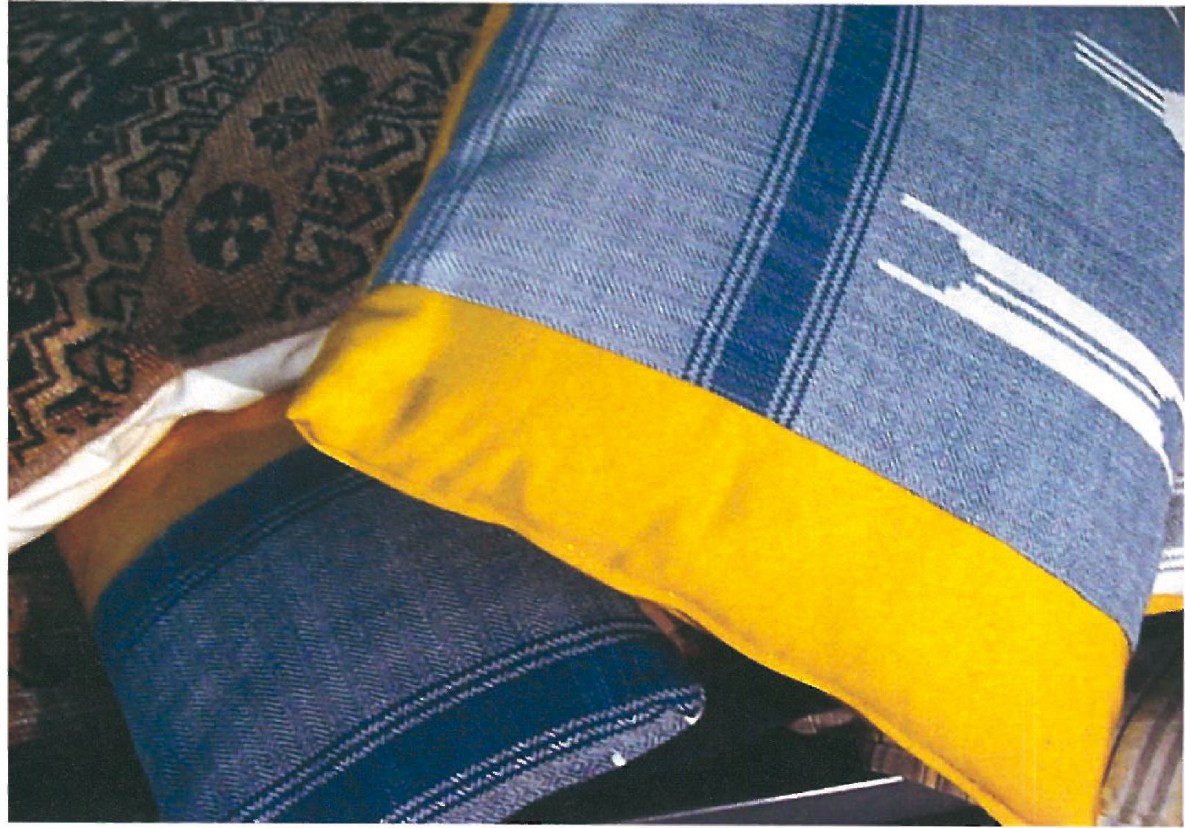
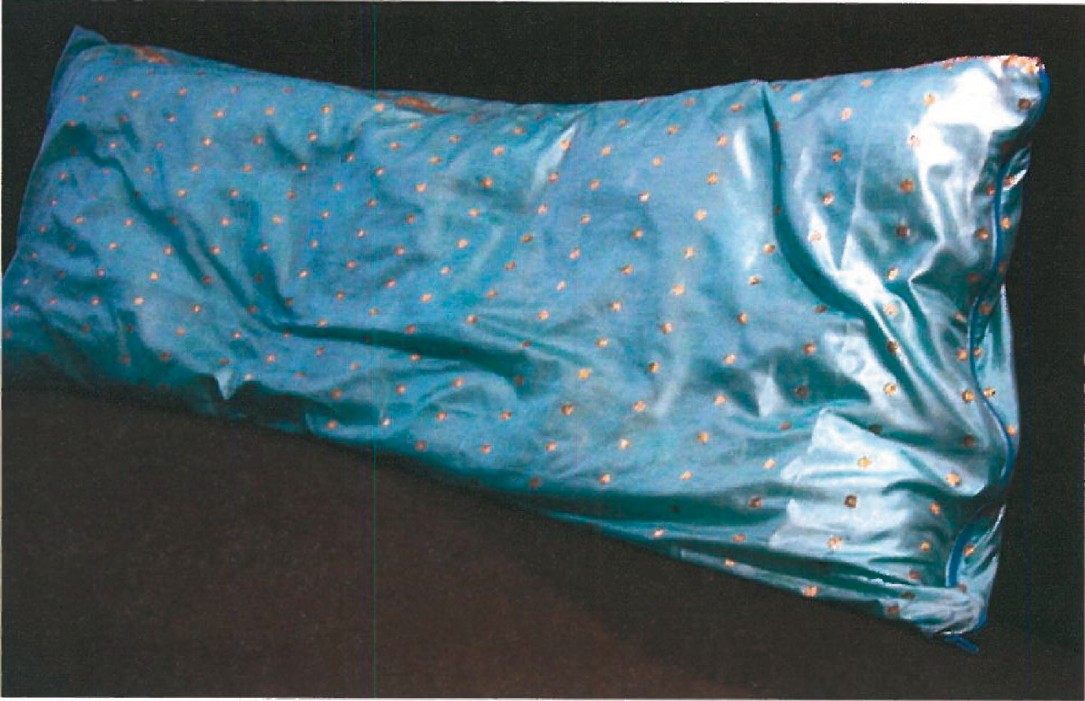
In any case I agree with the Italian way and the showing of that gap. We are people of the twenty-first century: we have very deep roots in history, and at the same time we need a sofa, a chair, a computer-desk; we need wiring and bath plumbing. These are not things for which we have a "traditional" version. Even with regard to fabrics or table-cloths, we do not need to have a so-called traditional model. For instance, I do not myself like printed qalamkar, but in Esfahan I took one of its motifs and designed a fresh, simpler fabric — much simpler than qalamkar — that suited the simple sofa. We covered the walls with the same fabric, since the client wanted an "Iranian" model. In the middle of the room we placed a low platform on which a mattress lay, four lamps at the four corners of the platform and two small tables. They are Iranian: even the design of an armless sofa can be a reading of the Iranian takht, on which one used to recline.
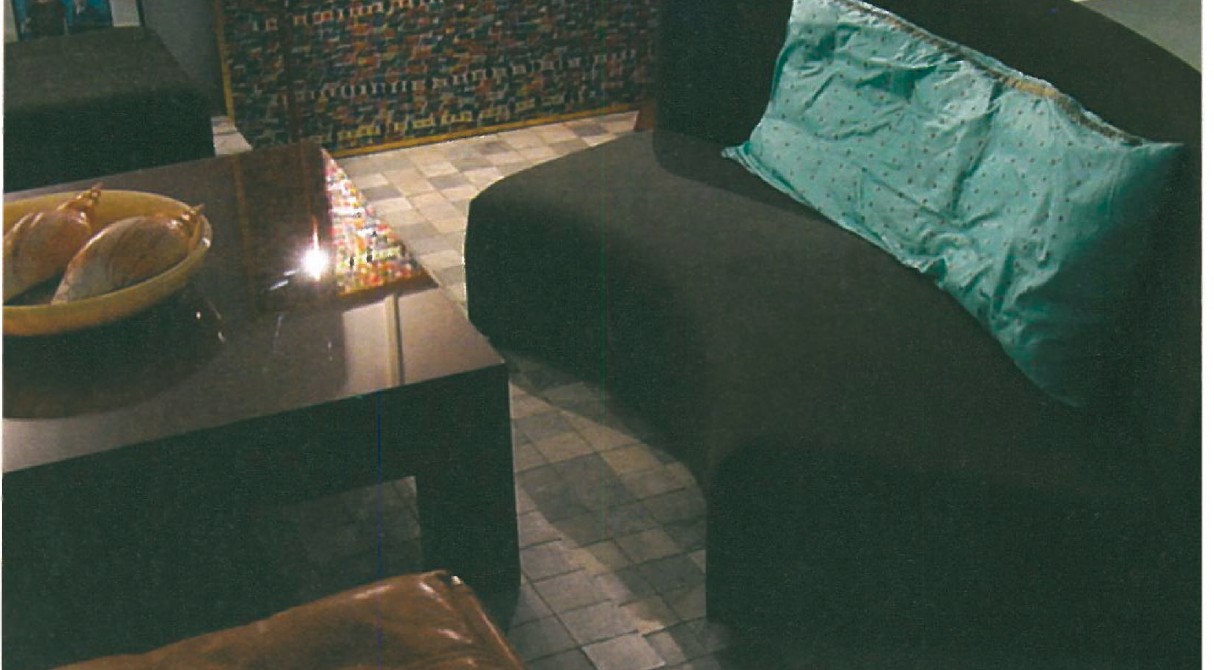
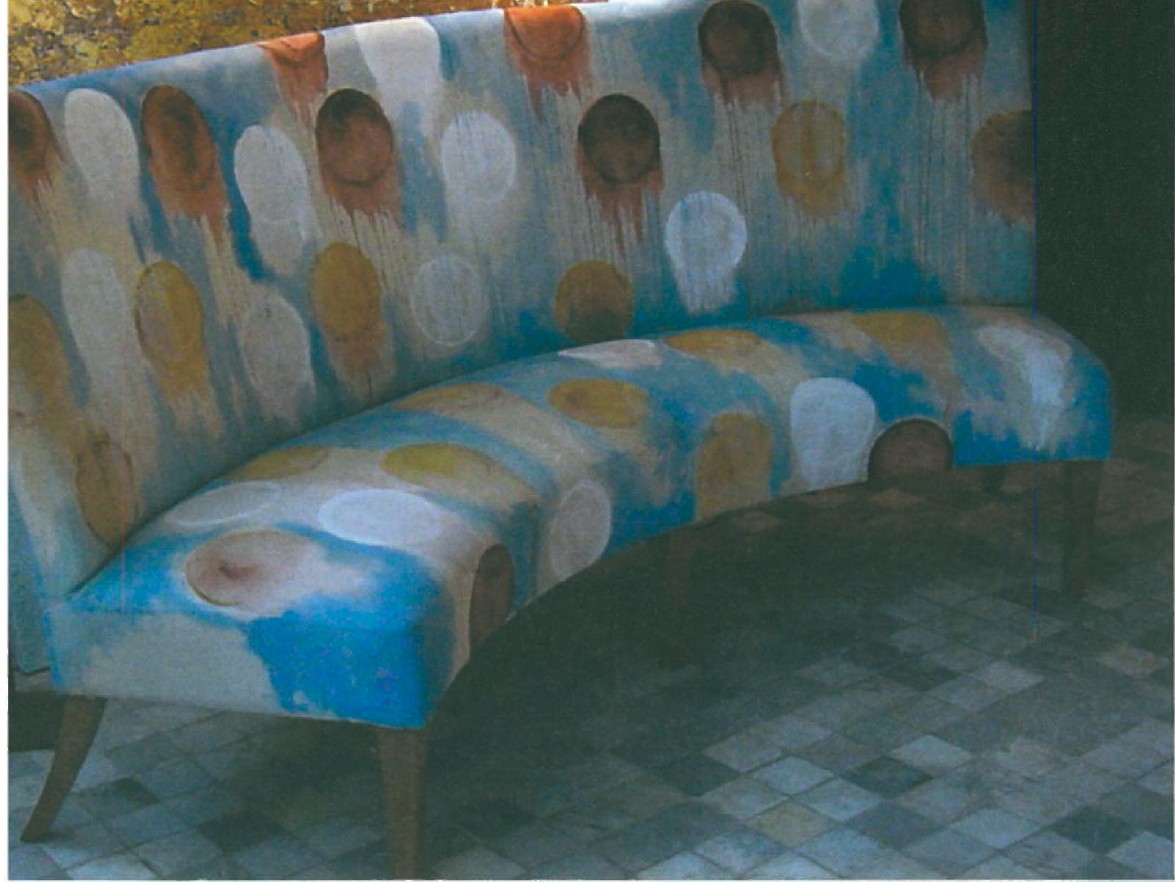
Third, the furniture should be functional and comfortable, not decorative. The day-beds placed in so-called "traditional restaurants" are not at all comfortable; in the old days such pieces were like a room — one took off one's shoes, the cloth or tray was placed on top, the meal eaten, and then one slept on it. You cannot ask a tourist or a contemporary Iranian to do that. For that reason these day-beds are very uncomfortable.
In Japan, of course, there are hotels and restaurants where the tourist precisely wants to sit on the floor and eat in the old Japanese style. But these are very particular places. Even the clothing and shoes are exchanged at the entry. These are exceptions, and they show that whatever measure we set is not absolute and there is always an exception. But in principle, in designing and choosing furniture for a public place we must take comfort into account.
Modesty and the local star
A further principle is, in my view, modesty. The interior design here plays a second or even third role, since the landscape design of these buildings should reinforce the building, and be modest enough that the building can show itself. The "star" here is the old building. The lighting and the design of objects must be done so that the star comes through. Of course, for us — who are usually rather self-displaying — this is not an easy task.
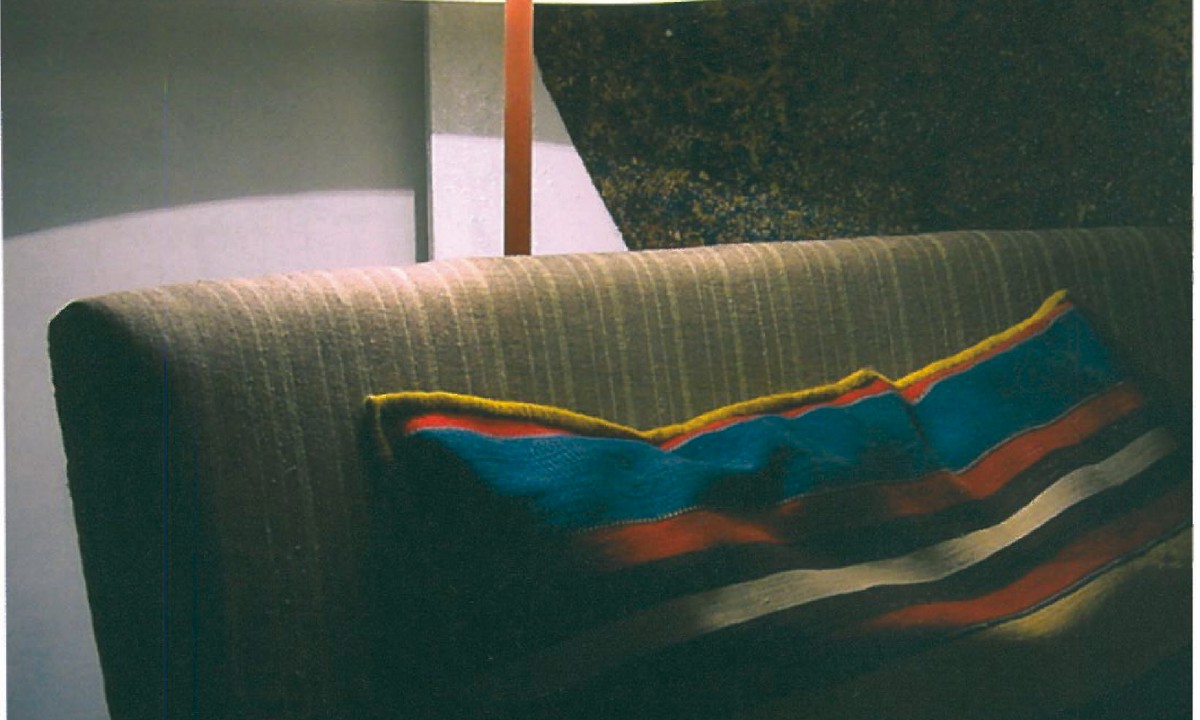
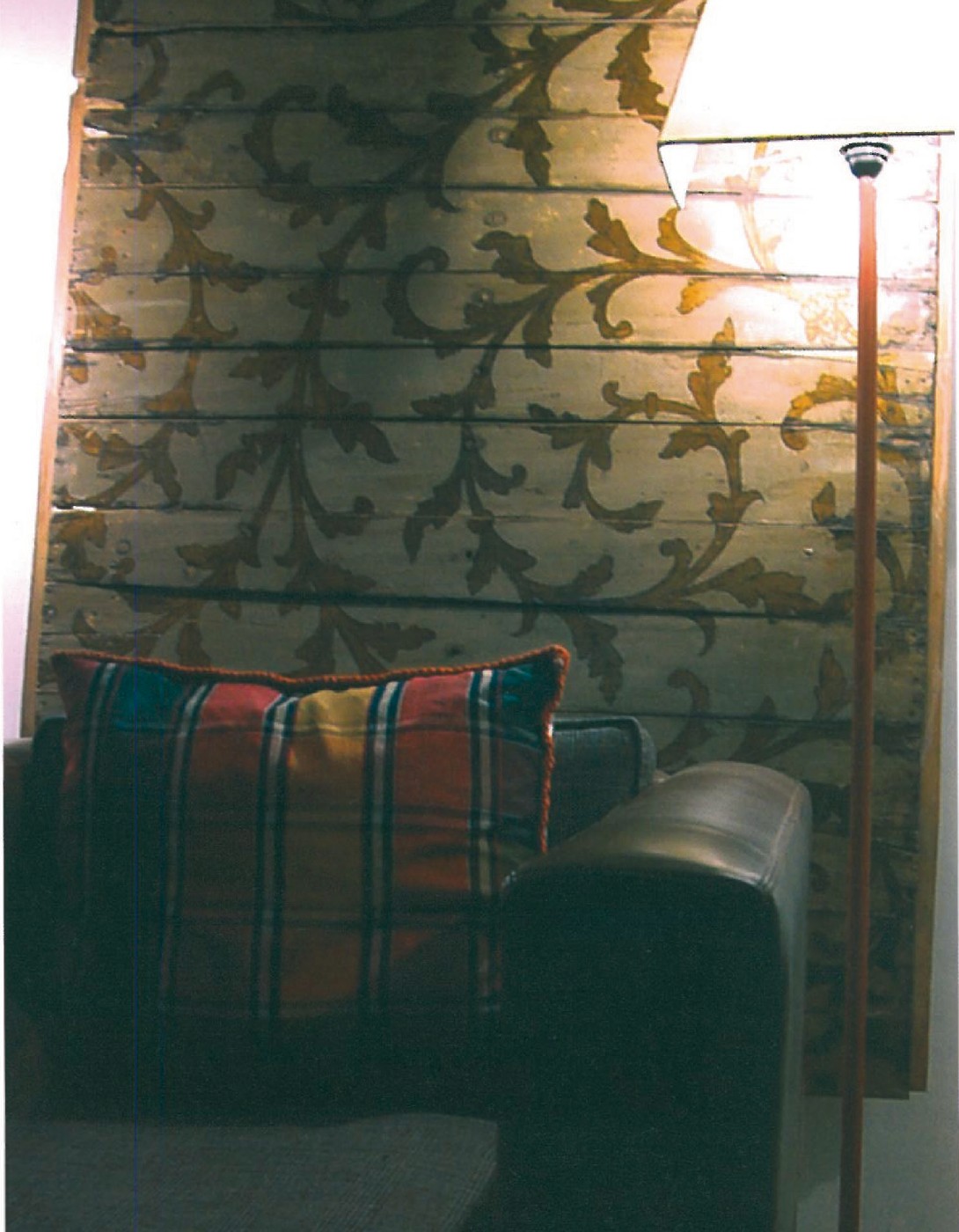
Finally, more important than all of these: I think that in the interior design of these buildings the eye must not be a tourist's eye. It must be honest and truthful. Instead of thinking what the tourist would like, we must turn to the deep, honest sense of familiarity and nostalgia, and form a fresh view from these. The reconstruction of an image whose origin we don't even know — something we say is "Iranian" — is not a good thing. Even if it is Iranian, we must remember that we no longer share that spirit, that need, that user. For that very reason our "traditional restaurants" are very ugly: there is no truth or correctness in them. They are not in keeping with today's needs either. They have brought together a host of unrelated objects under the name "tradition", and the result is bad.
Printed English summary panel (PDF 101)
Memar Nashr institute in cooperation with Iran Cultural Heritage Organization Pardissan project has held a competition for the interior design of restored and rehabilitated buildings, especially concerning their furniture and internal facilities and their landscape design. Fereydoon Ave, the Iranian interior designer, painter and virtuoso, has participated in an interview concerning this subject.
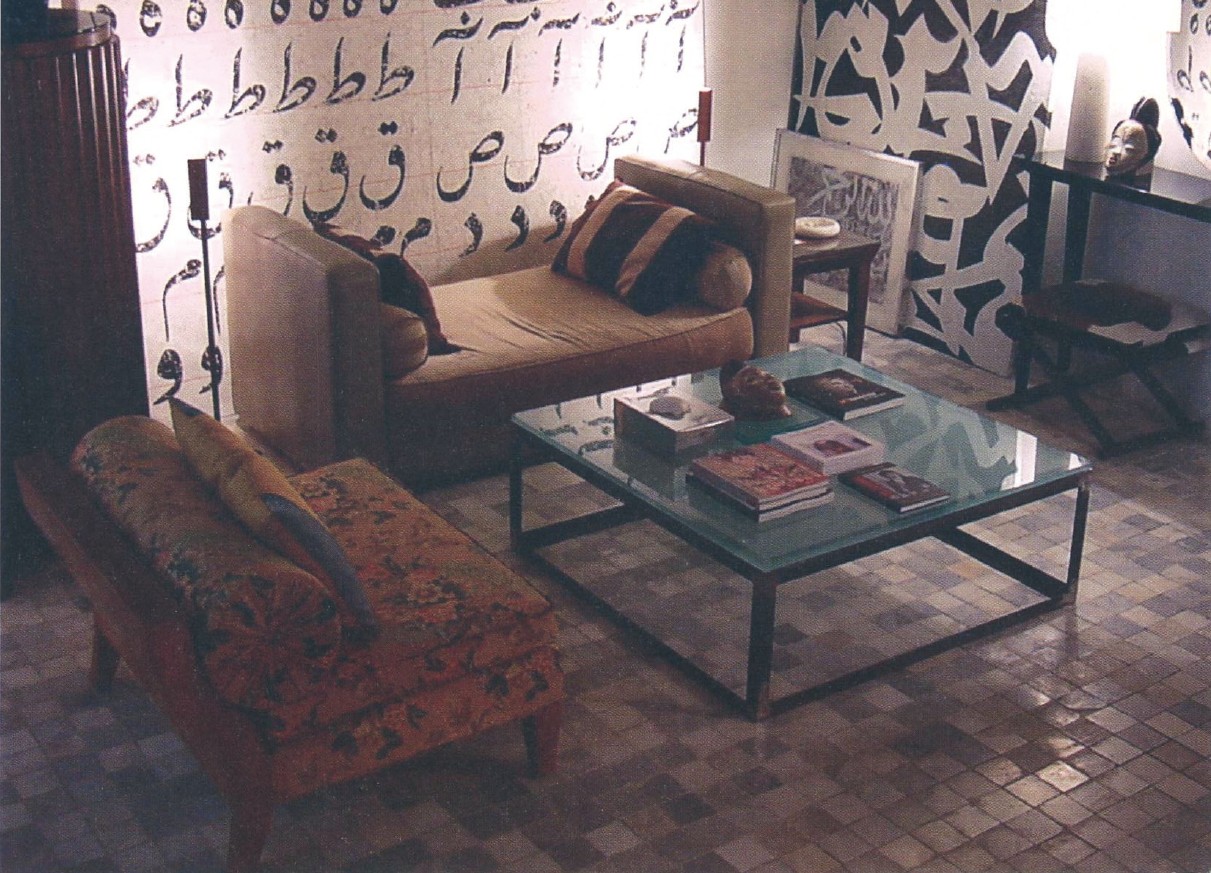
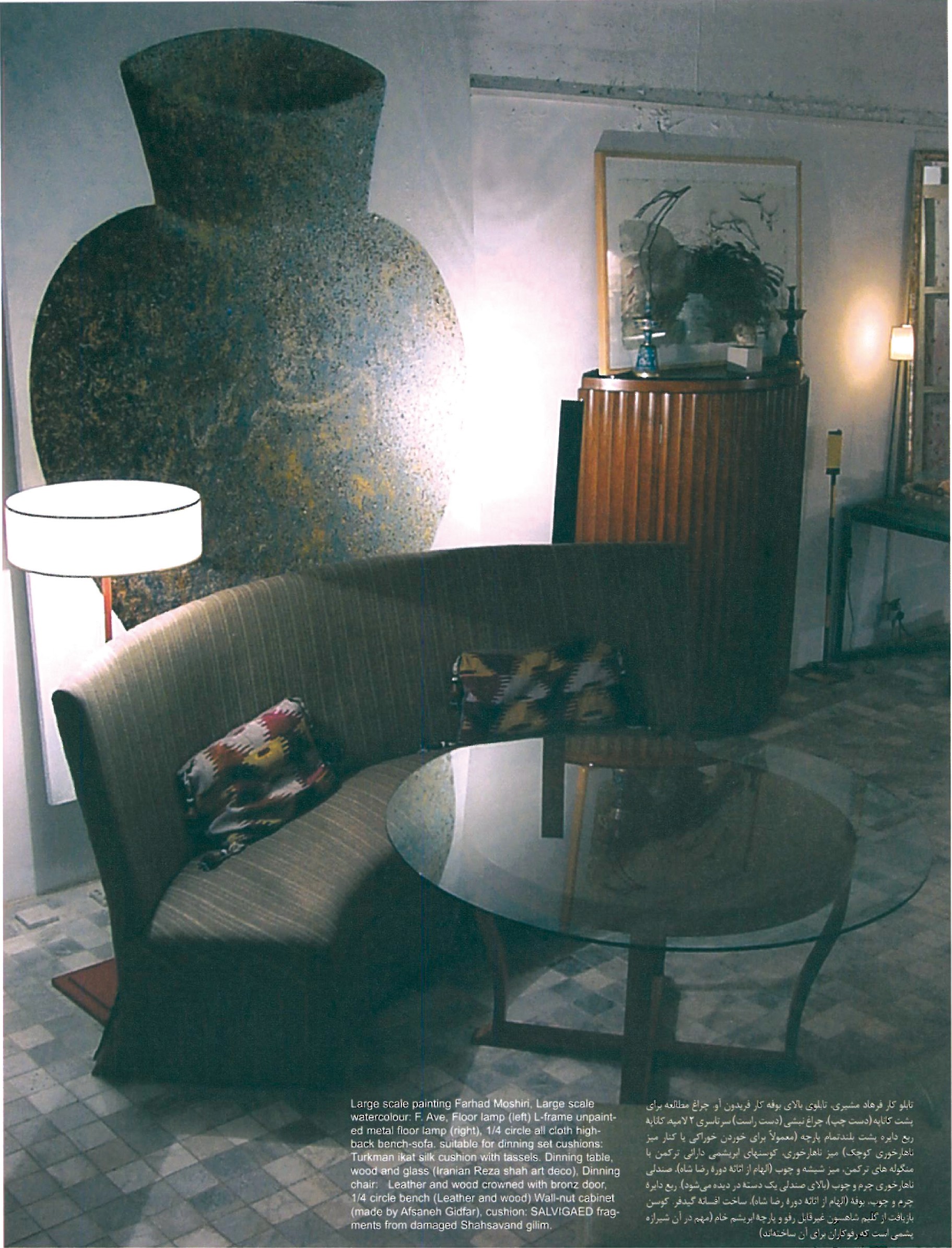
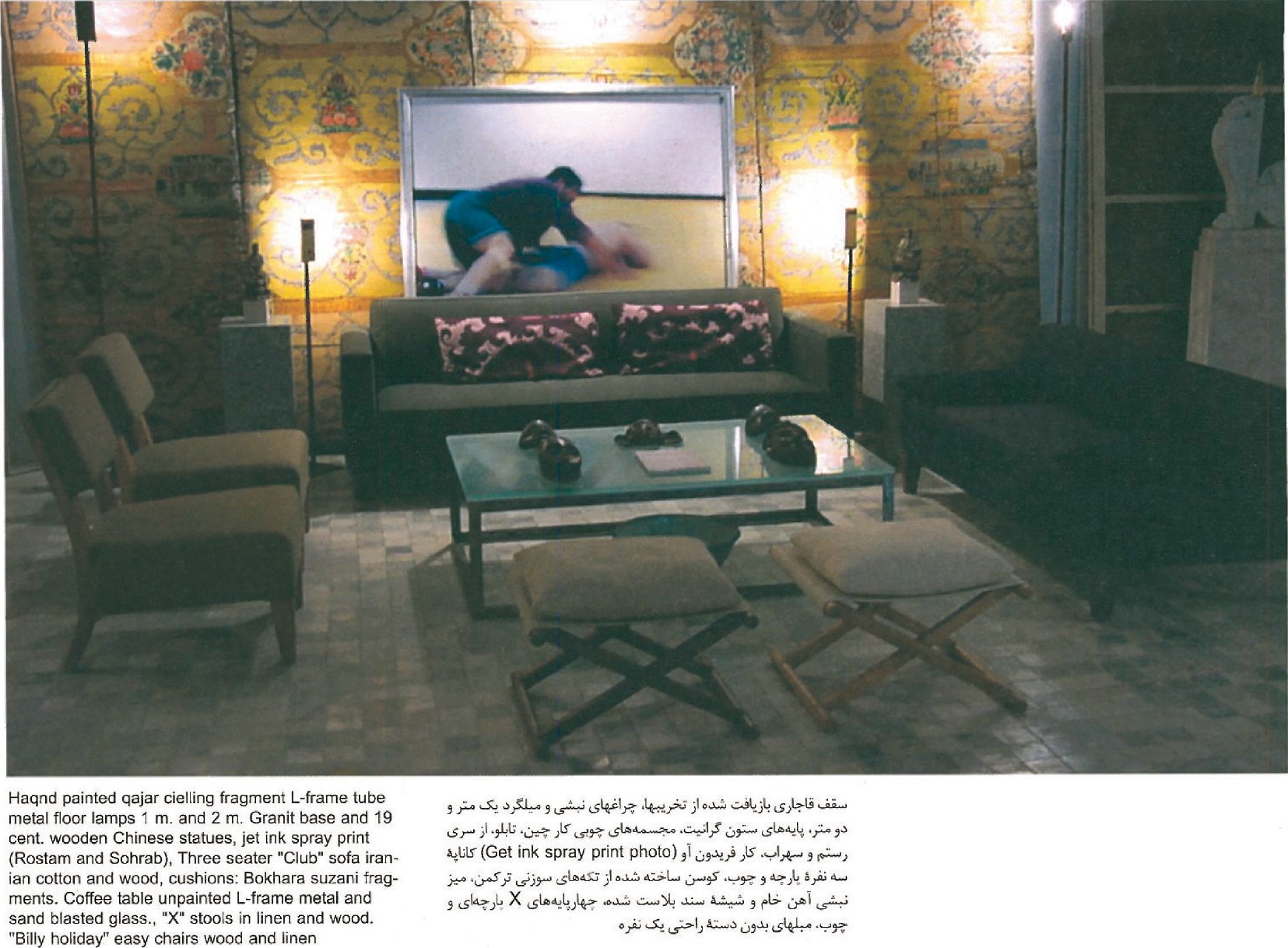
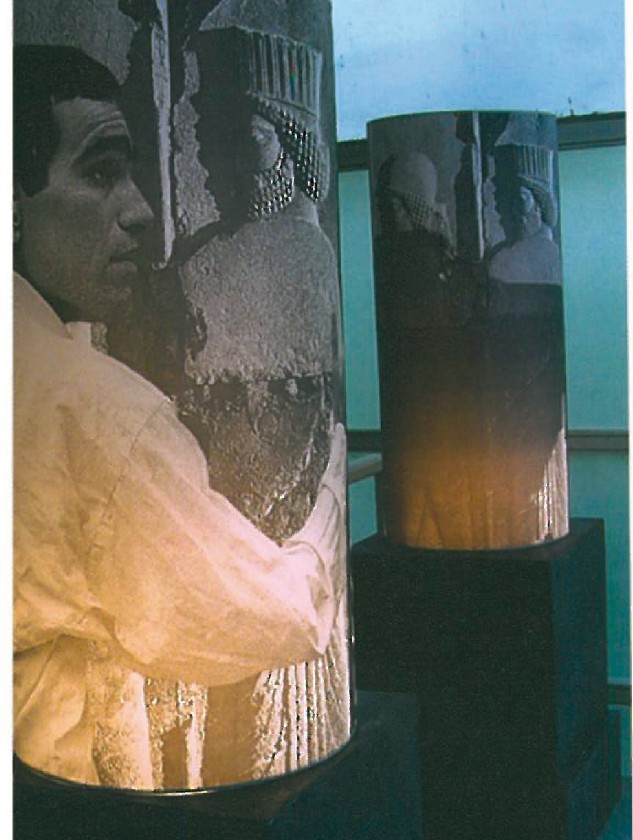
Captions of the photographs on the spread (Habibeh Majdabadi, photographer): large-scale paintings by Farhad Moshiri; large-scale watercolour by F. Ave; Zenderoudi small work on paper; leather-and-velvet day-bed (two-tone) and suede cushions by Mamak Khonsari; walnut drinks cabinet, F. Ave design, made by Afsaneh Gidfar; unpainted L-frame metal table with sand-blasted glass top; oriental-empire-inspired two-sitter sofa (wood and cloth); raw-pipe and L-frame floor lamp; round bevelled mirror on black-laquered side-table; African mask on side-table and coffee-table; cushions made of recuperated Yazdi zilu fragments and unrepairable kilim fragments; quarter-circle high-back bench-sofa with Turkmen ikat-silk-tasselled cushions; Reza Shah-period art-deco wood-and-glass dining table; leather-and-wood dining chairs crowned with bronze door; Bokhara suzani fragment cushions; "X" stools in linen and wood; "Billy Holiday" easy chairs in wood and linen; hand-painted Qajar ceiling fragment; floor lamps with half-shade; Yazdi silk-cushioned club chair in leather and linen; column lamps by Sadegh Tirafkan and F. Ave (jet-ink spray print on tracing paper on raw-metal base); high-back raw-canvas sofa hand-painted by F. Ave; floor lamps in steel tube and L-frame metal; large painting on canvas (Zenderoudi, 1977); photo-works by Malekeh Nayini; all-cloth quarter-circle TV sofa with cloth-of-gold and silk large-scaled cushion; square ox-blood lacquered table; Egypto-Japanese-inspired leather "X" stool.



