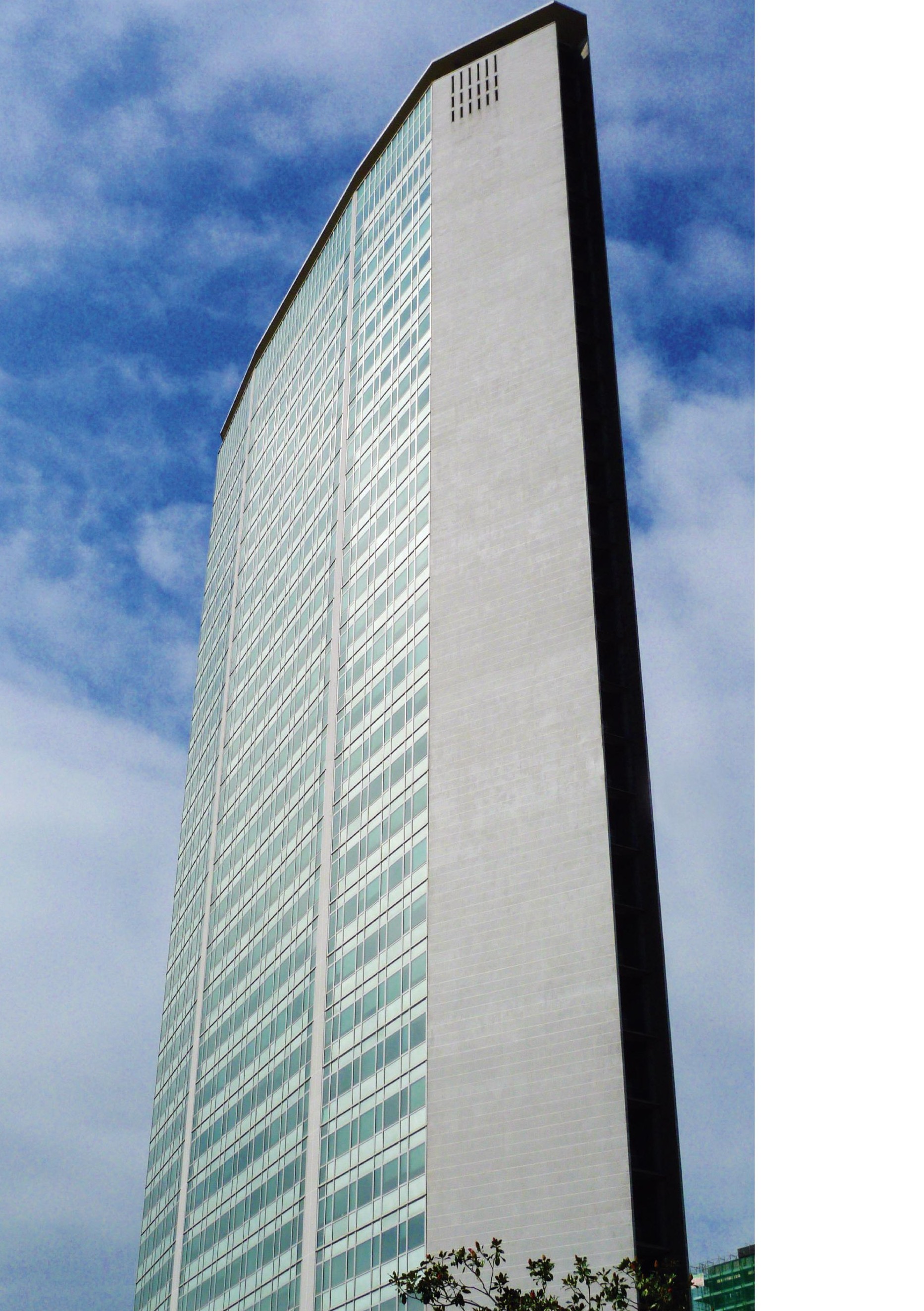
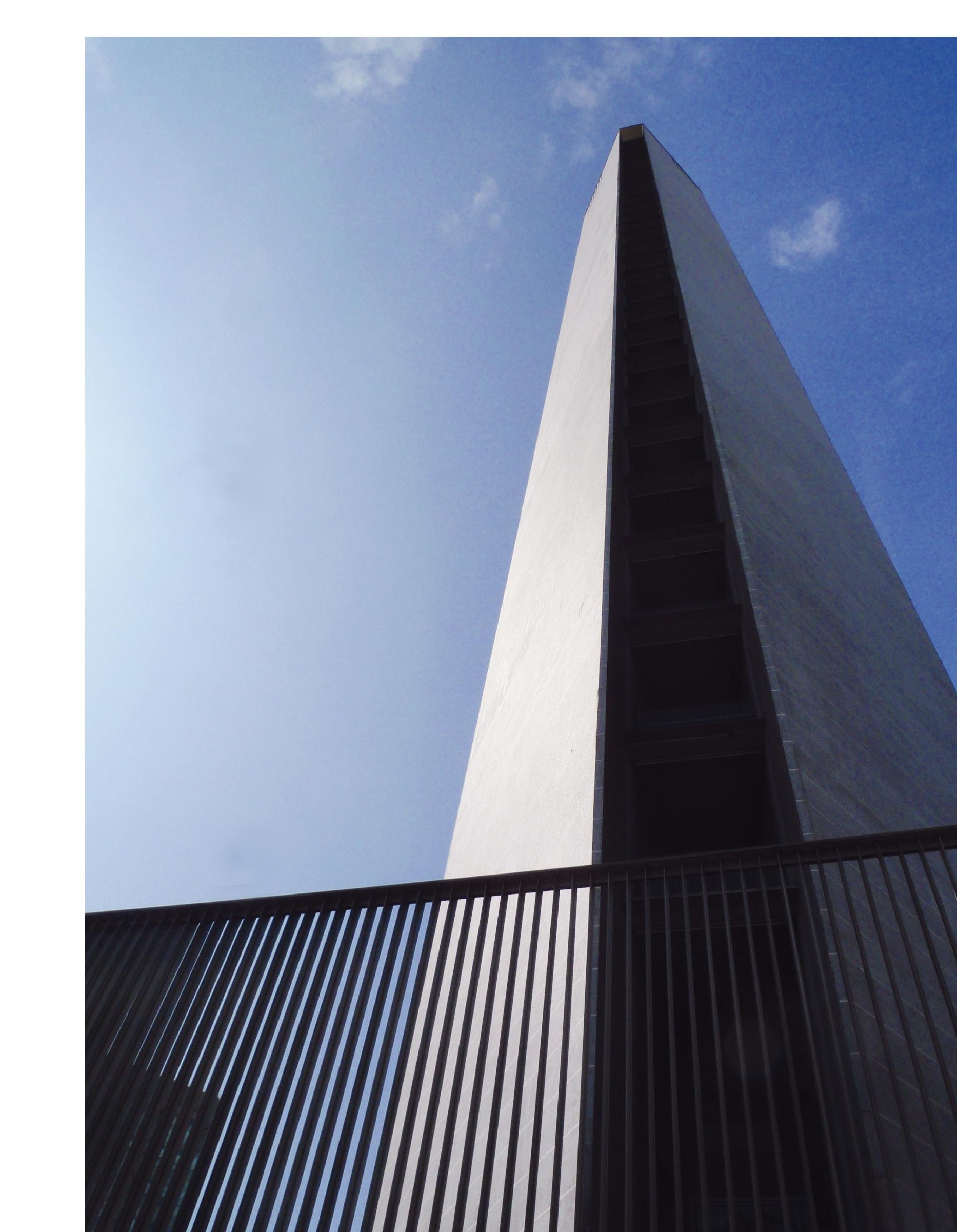
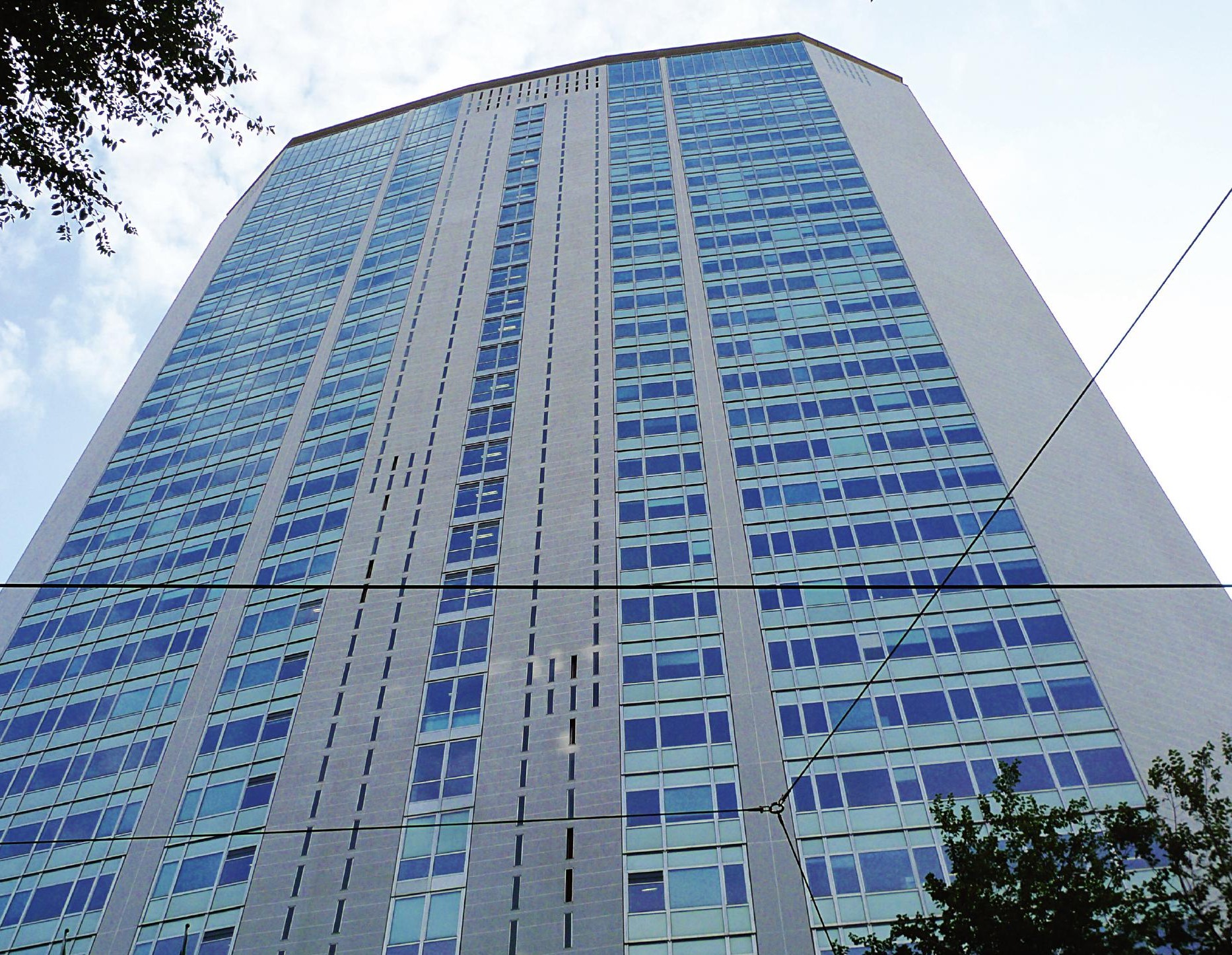
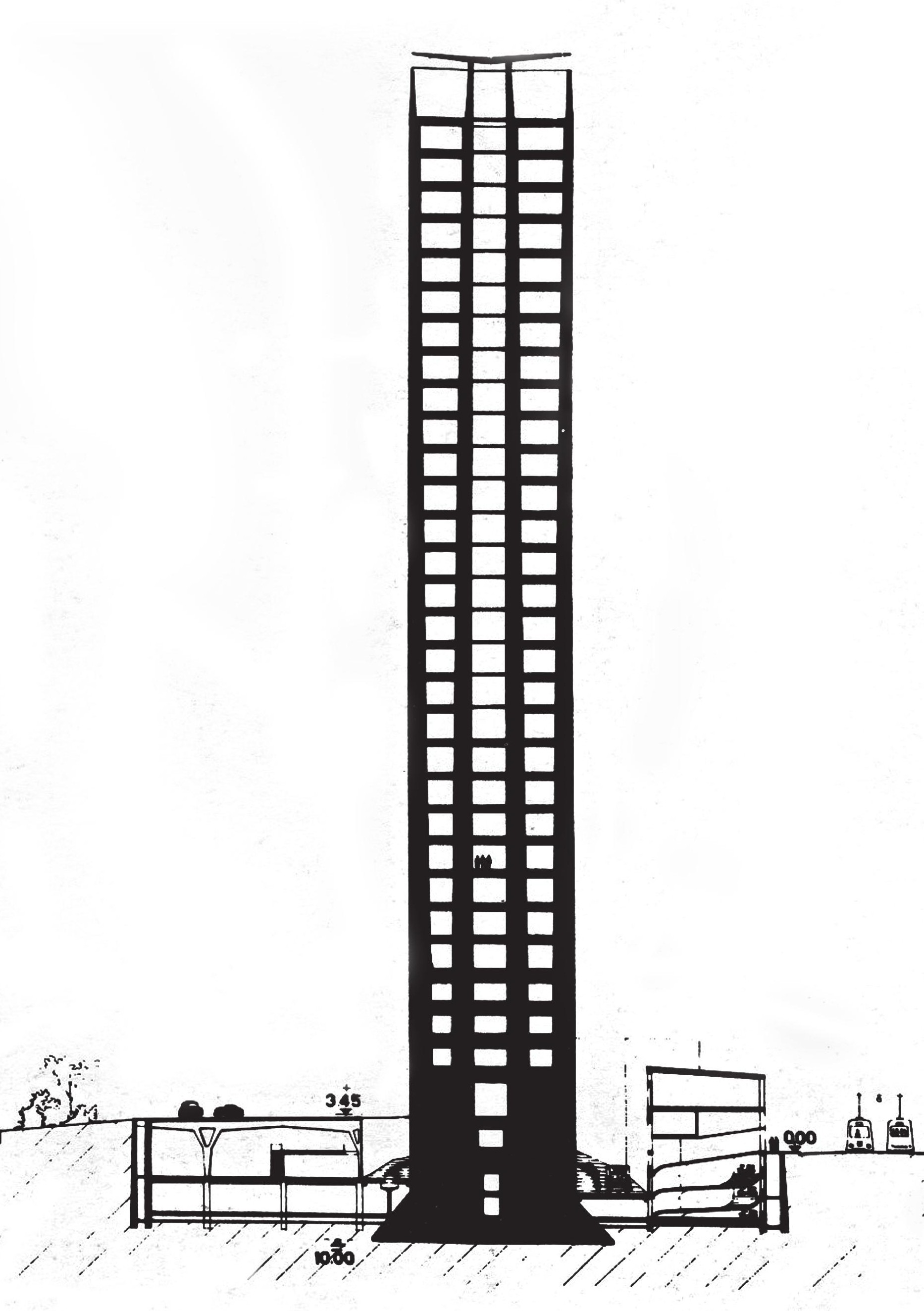
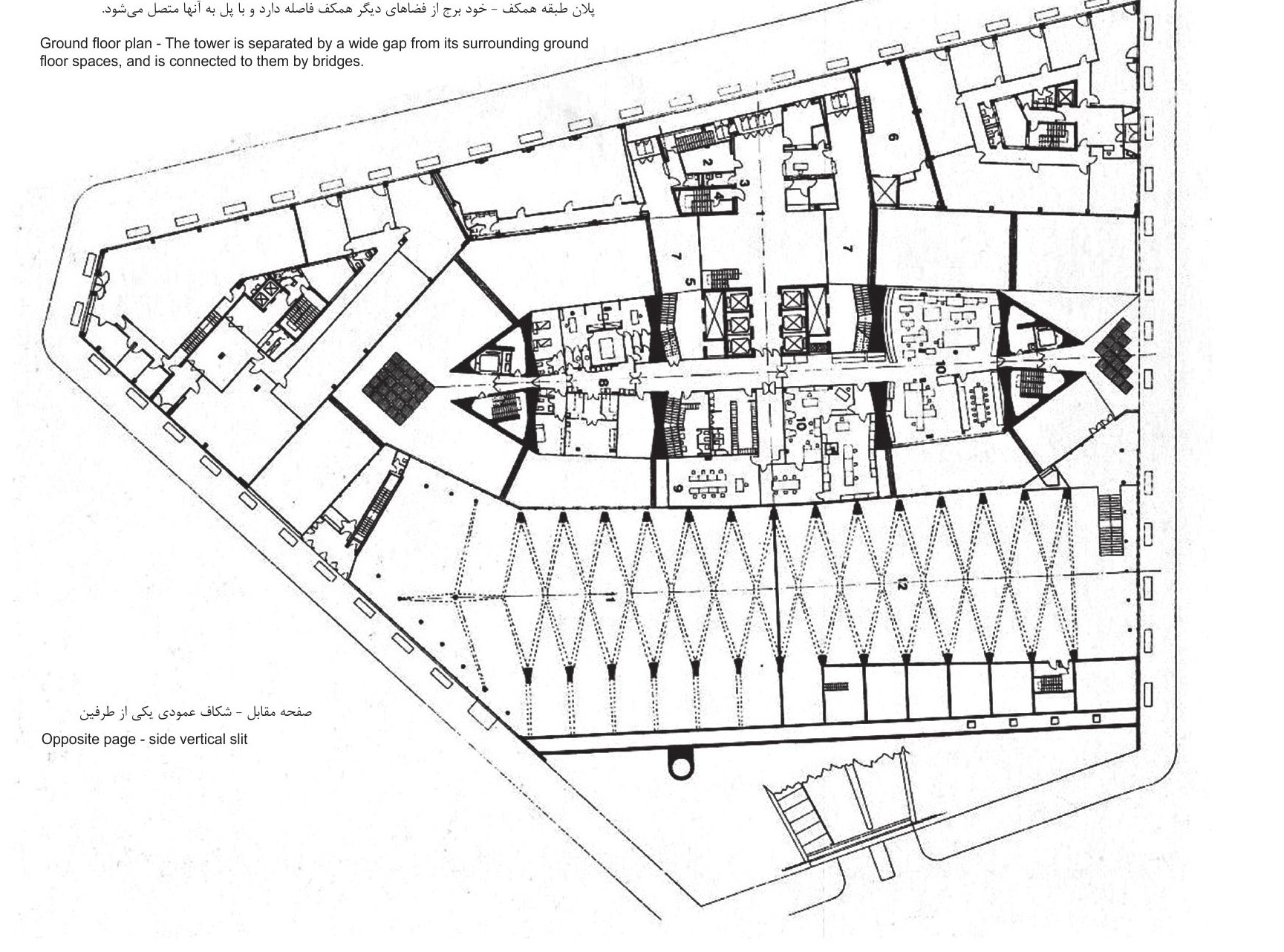
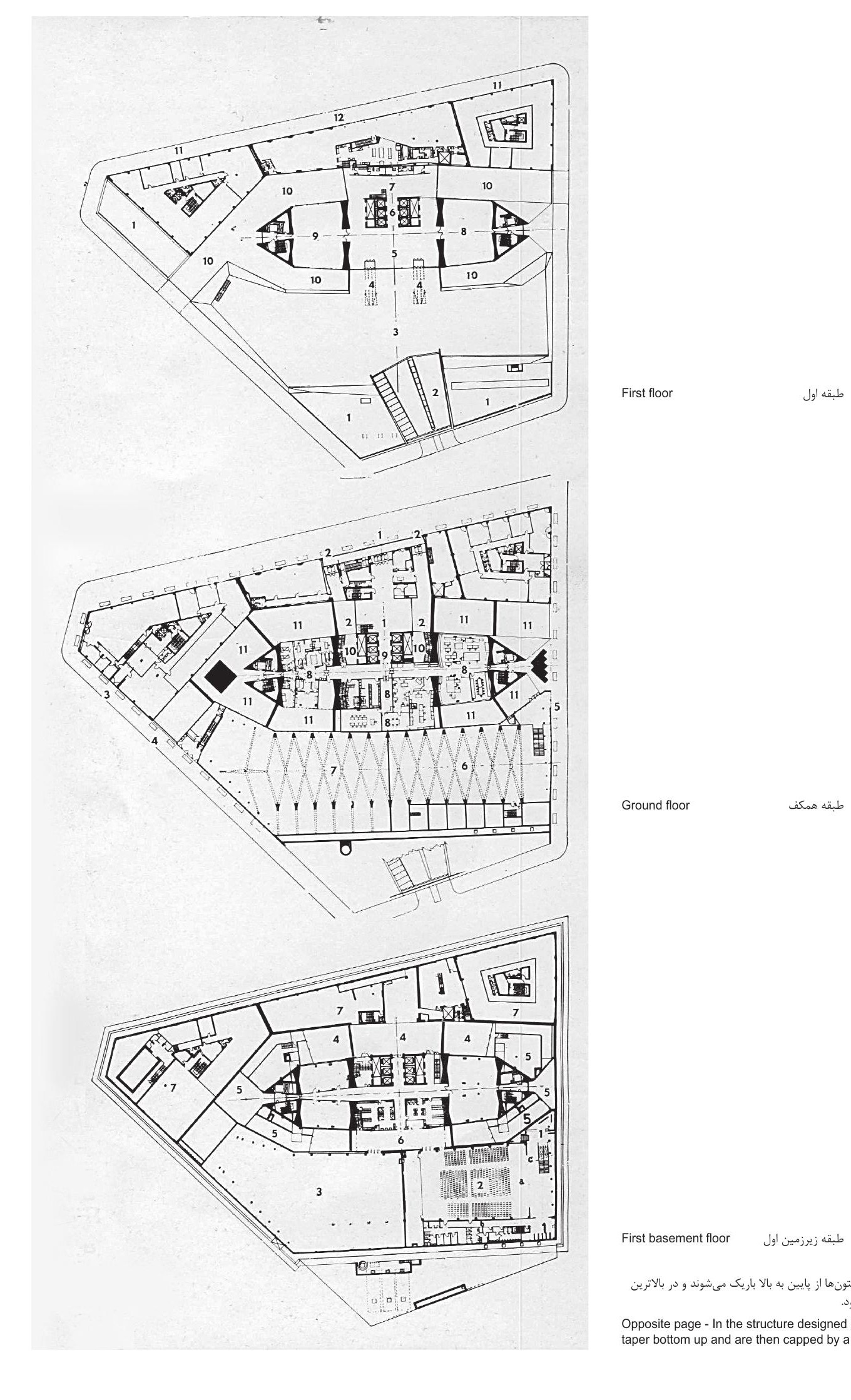
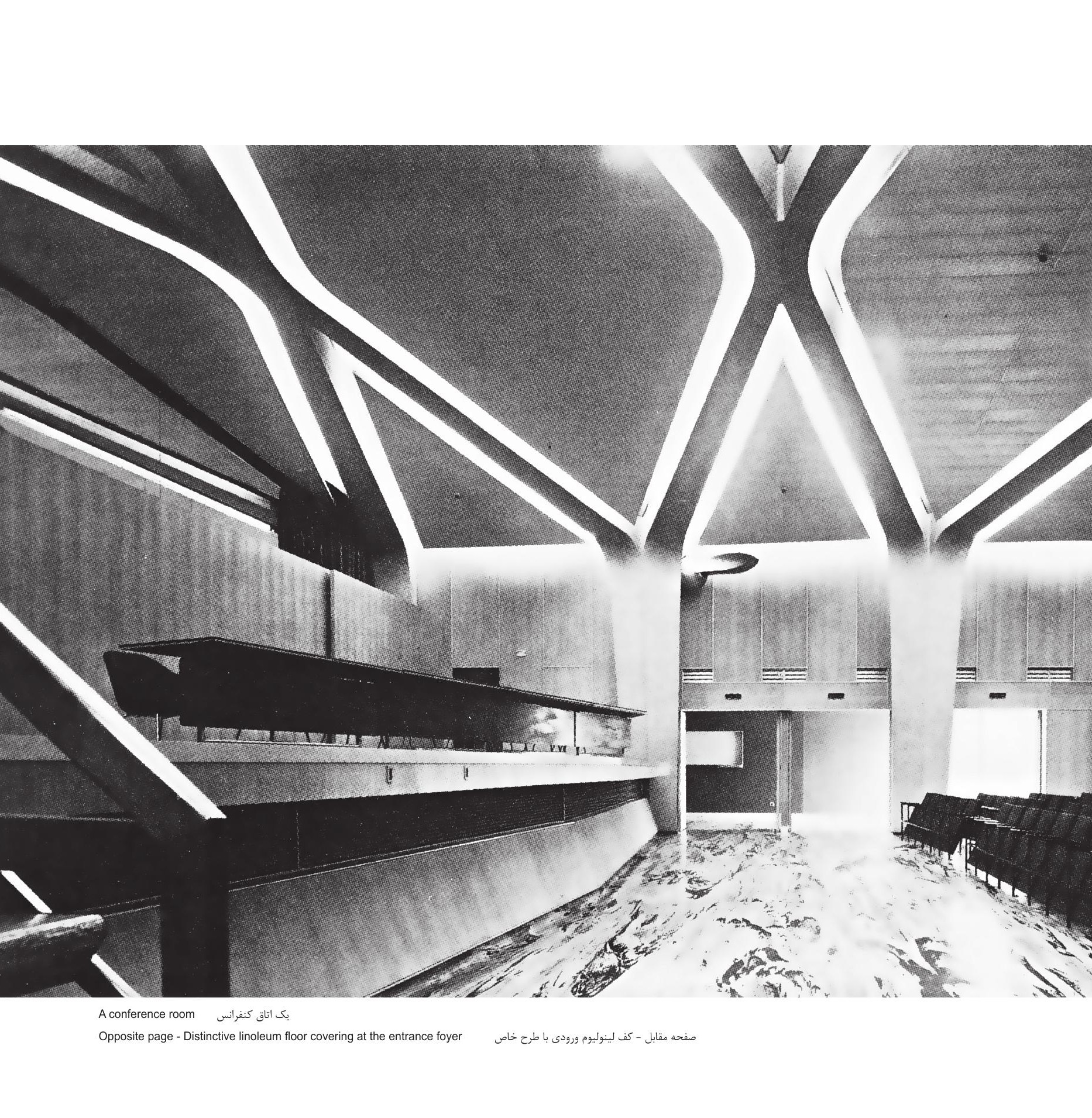
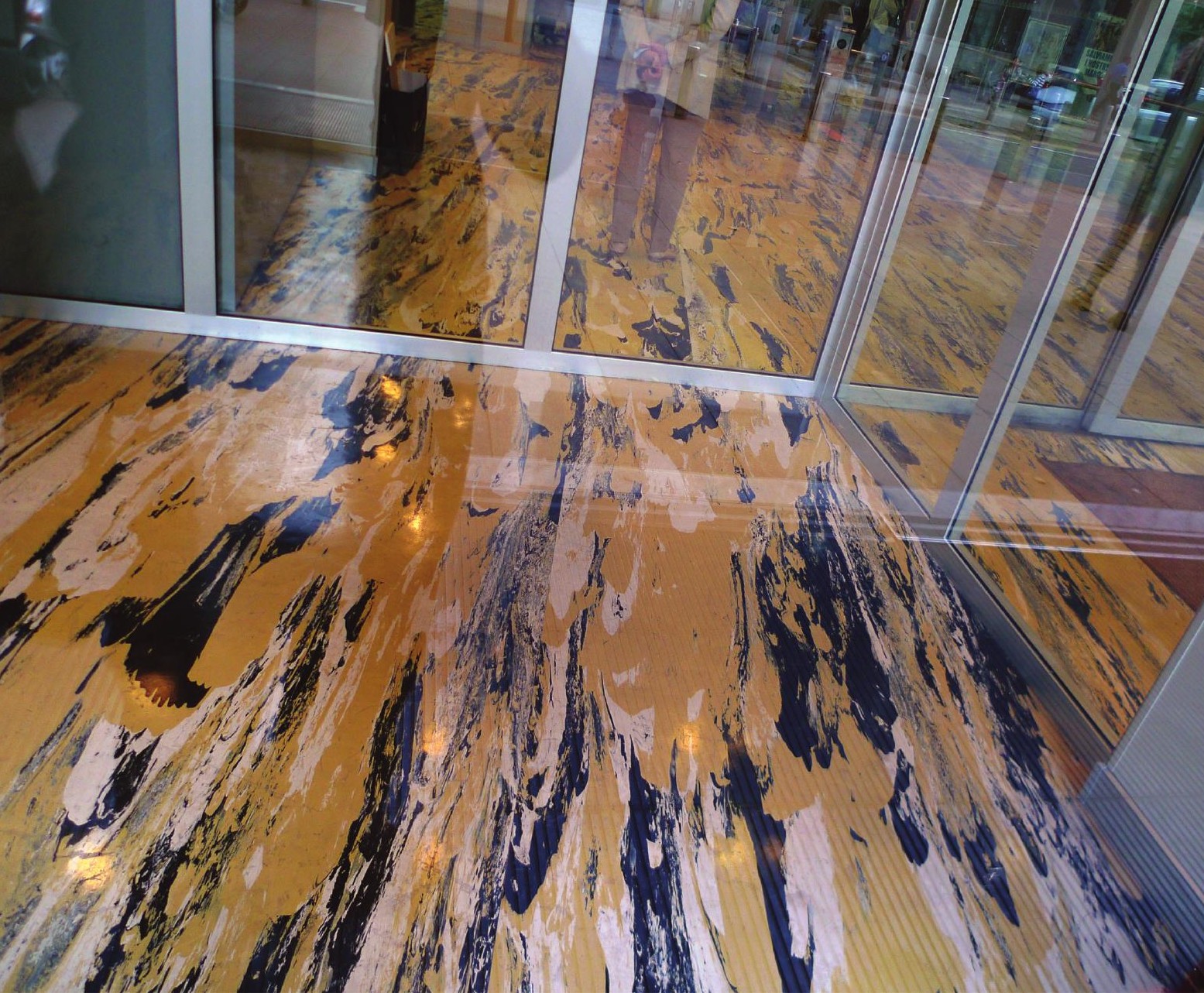
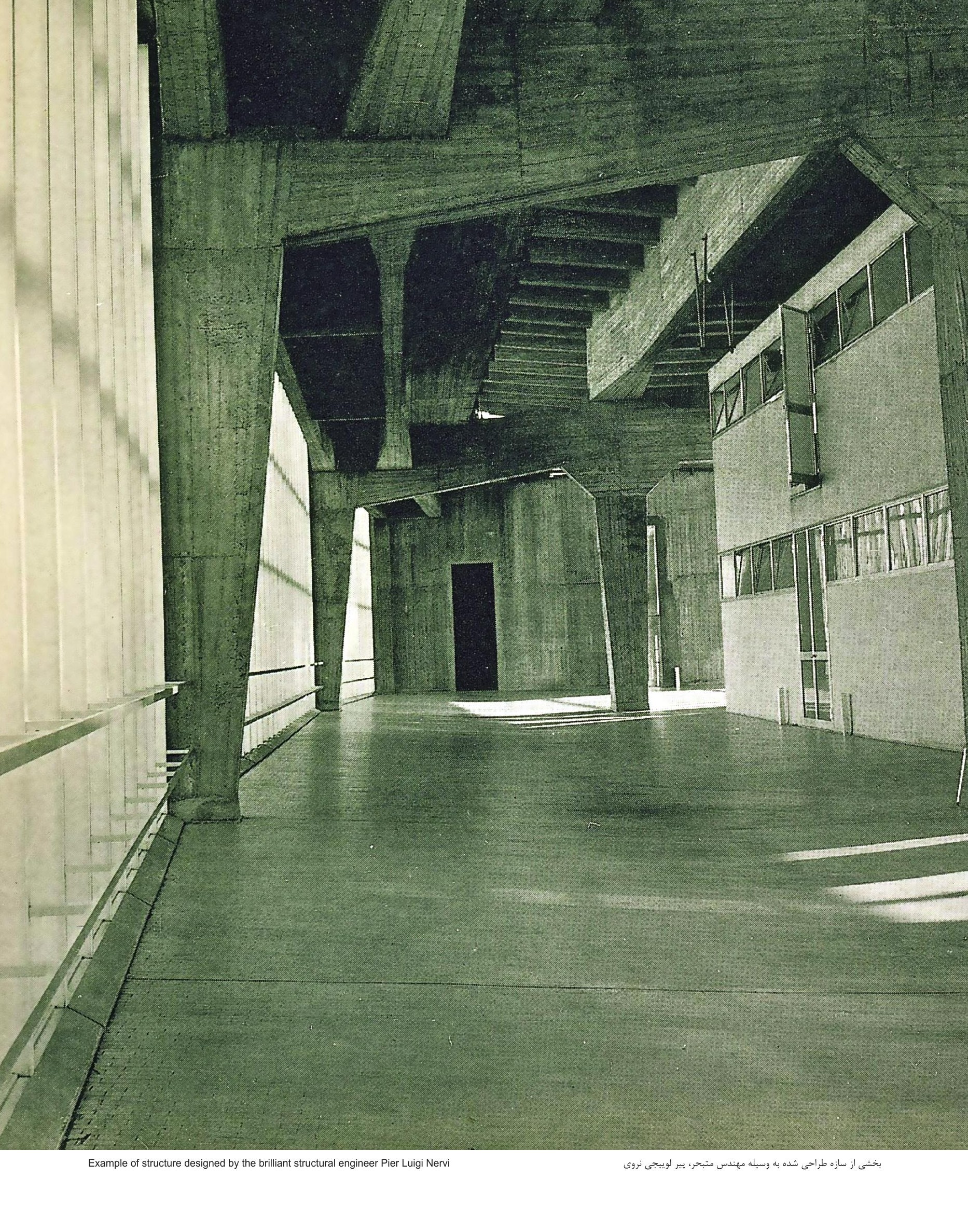
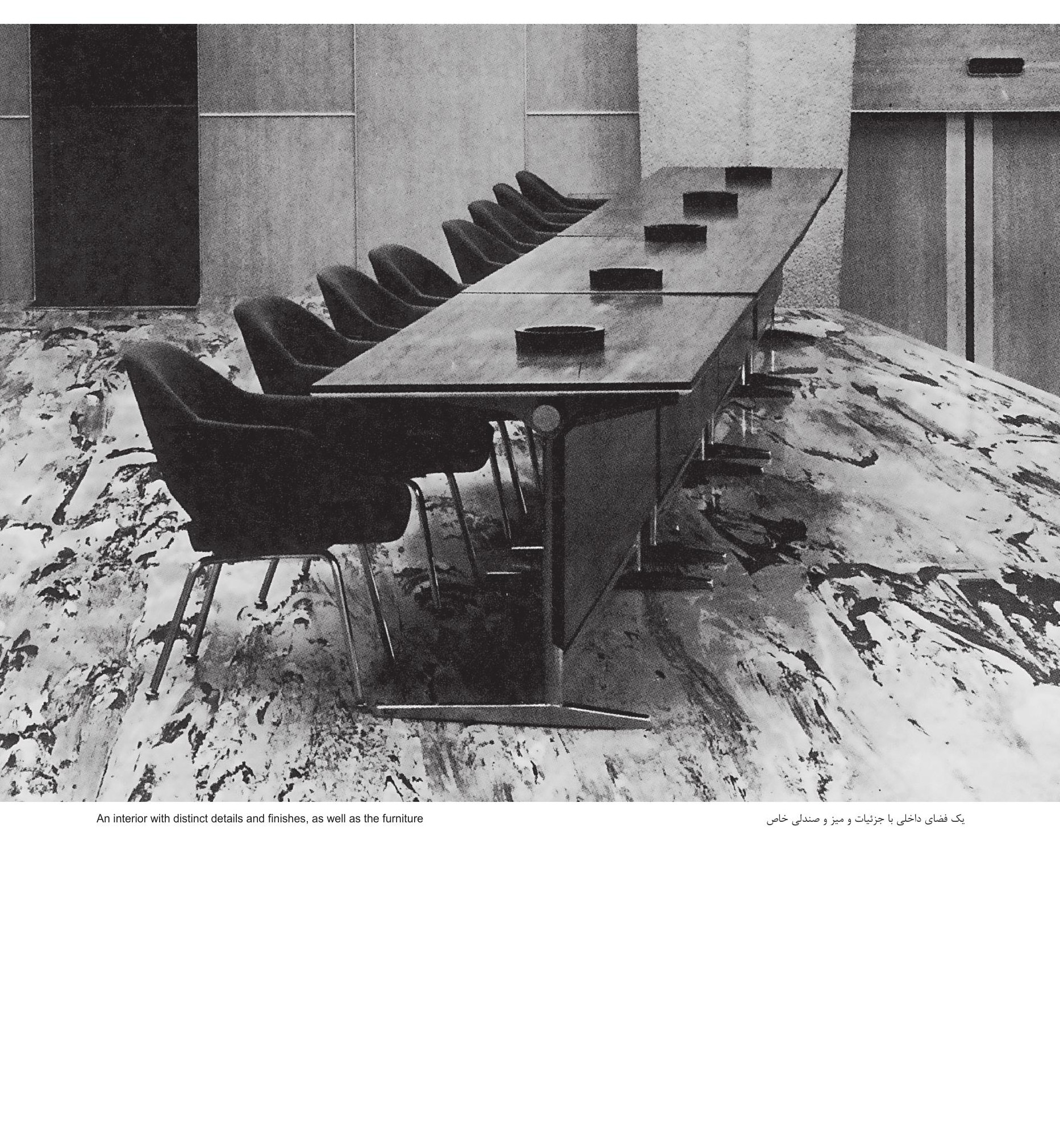
The Pirelli Tower in Milan could be the finest example of a tall building in terms of form, integration of the form and masterly structural design, the elegance of the lines and the geometry, and in the various interior designs and furniture of the interior. Ponti’s preference for tapering forms is reflected in the structure, the wedges that form the vertical side slits, and in the geometries employed in the interior. His aim seems to have been to arrive at a particular elegance that is evident in the lines and the thicknesses, and in this case in the vertical slits at the sides as well as the floating plane that caps the tower. On the two pages after this Pirelli section, two of Ponti’s unbuilt designs are shown.
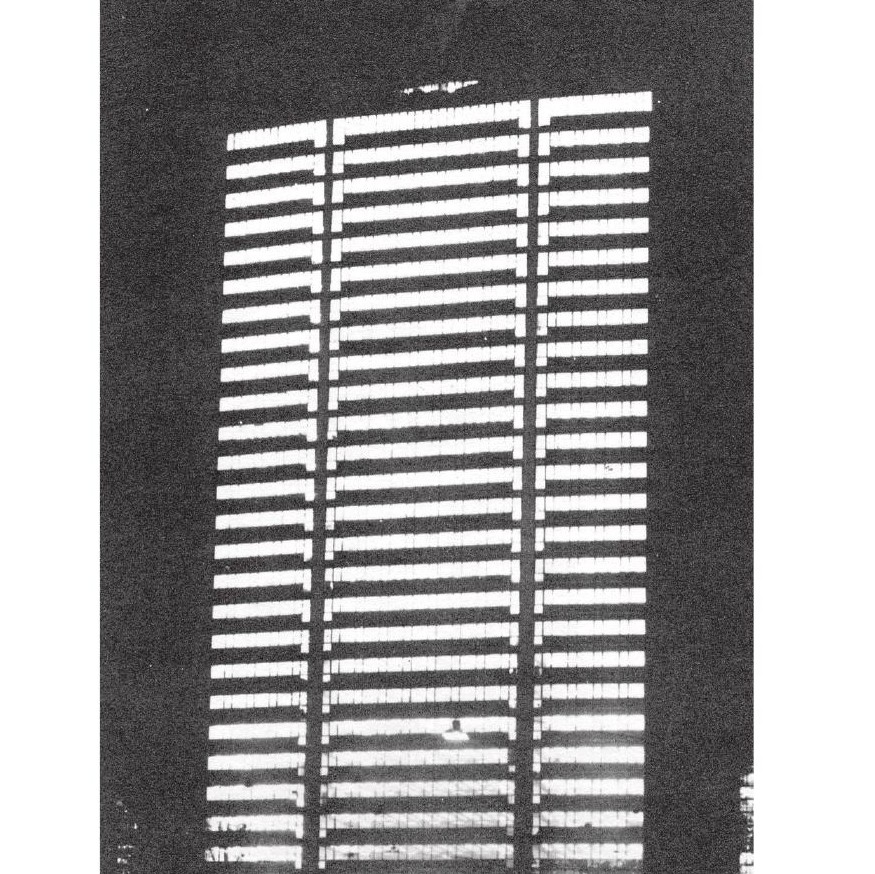
Side vertical slitSubtle breaking of symmetry in the middle of the vertical stripsNight viewThe vertical side slits were among the key aims in the projectGround floor plan — the tower is separated by a wide gap from its surrounding ground floor spaces, and is connected to them by bridgesFirst floor, ground floor, and first basement plans. In the structure designed by Nervi the columns taper from bottom to top and are capped by a floating slabA conference roomDistinctive linoleum floor covering at the entrance foyerThe patterned entrance-foyer floor seen through the glazed façadeExample of structure designed by the brilliant structural engineer Pier Luigi NerviAn interior with distinct details and finishes, as well as the furniture