



Glass Hunts, Saman
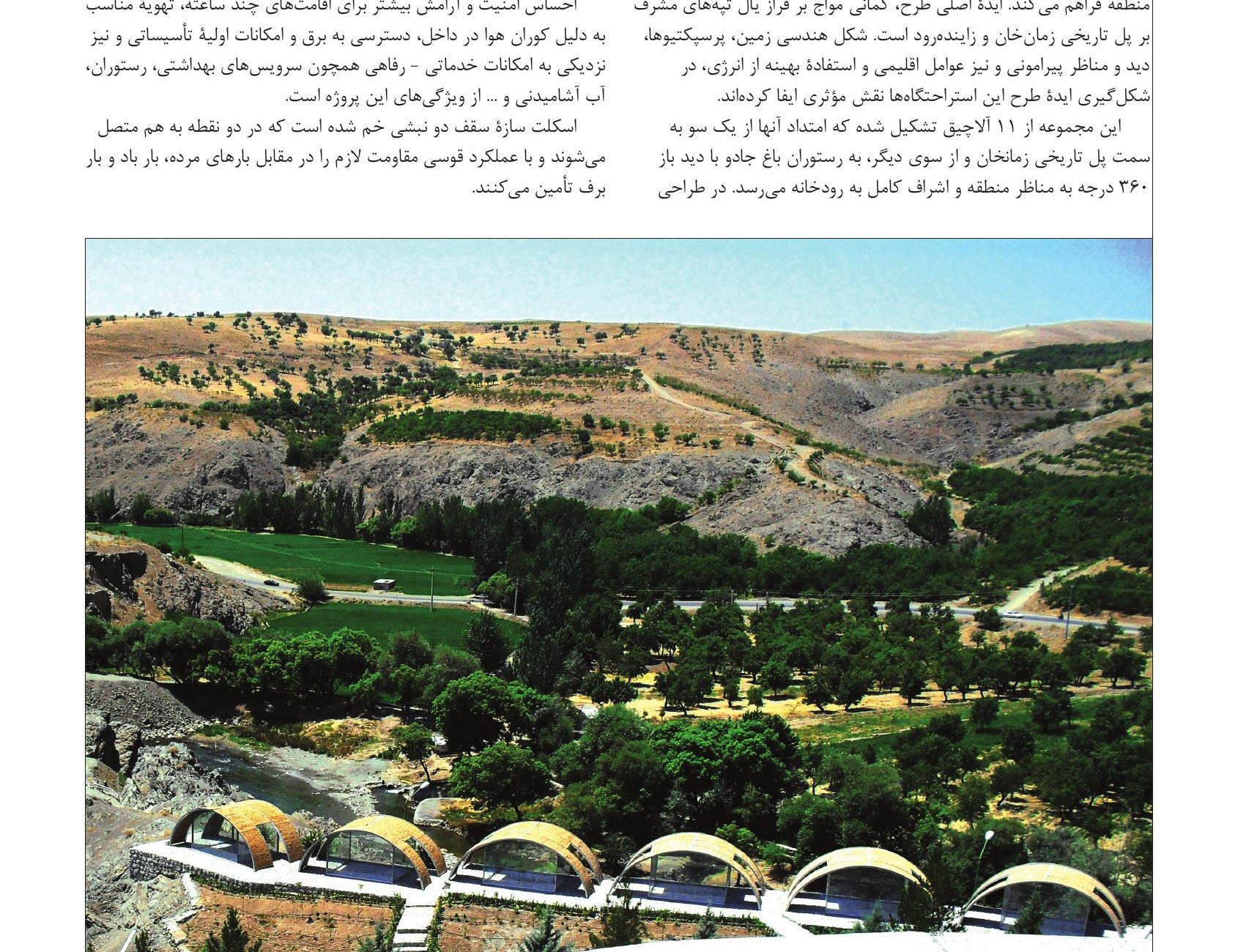
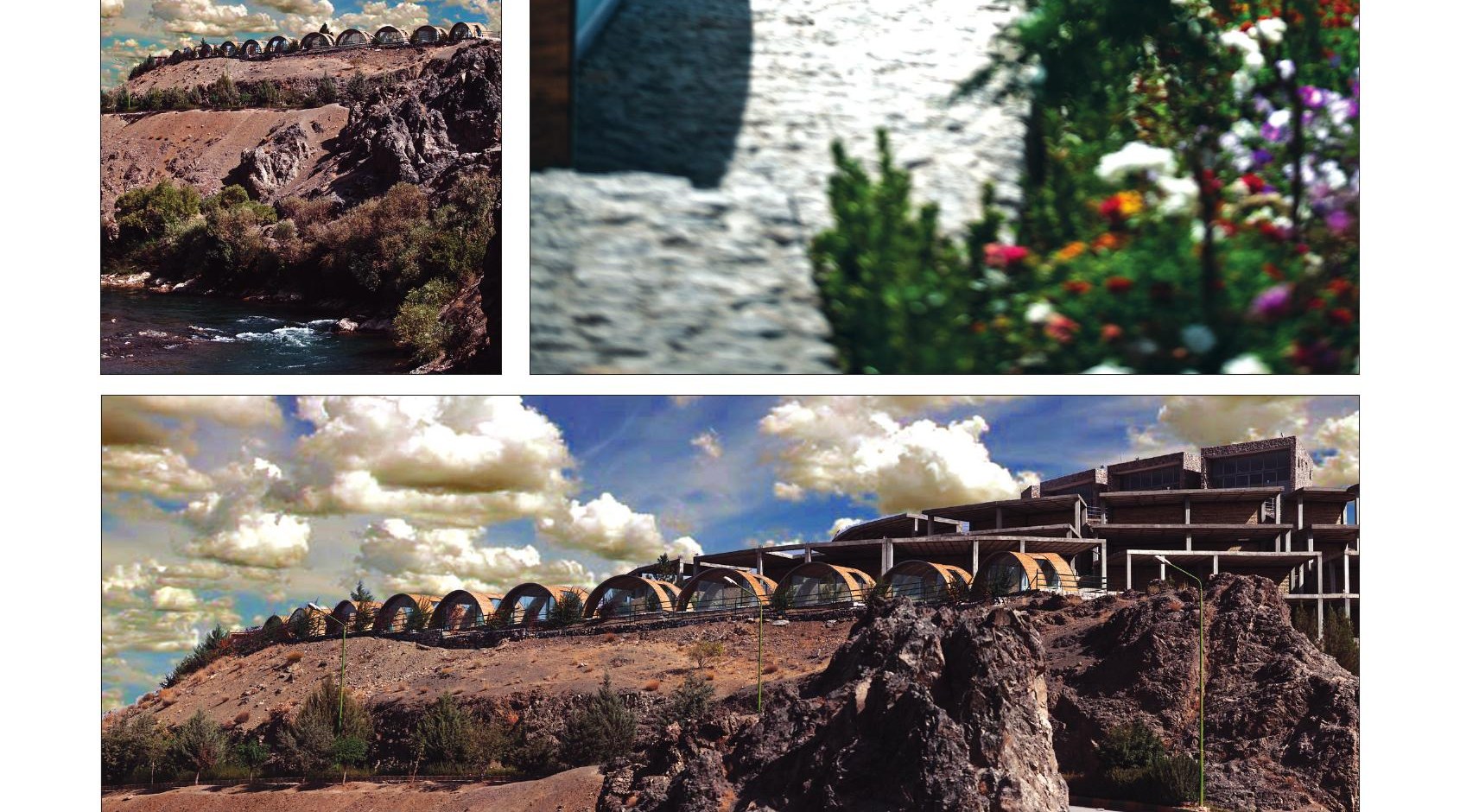
The Glass Hunts were designed to create a space for short stays, protected from adverse weather and harmful insects, providing suitable shelter for tourists in the region. The main design idea is an undulating arc atop the ridges of hills overlooking the historic Zamankhan Bridge and Zayandehrood River.
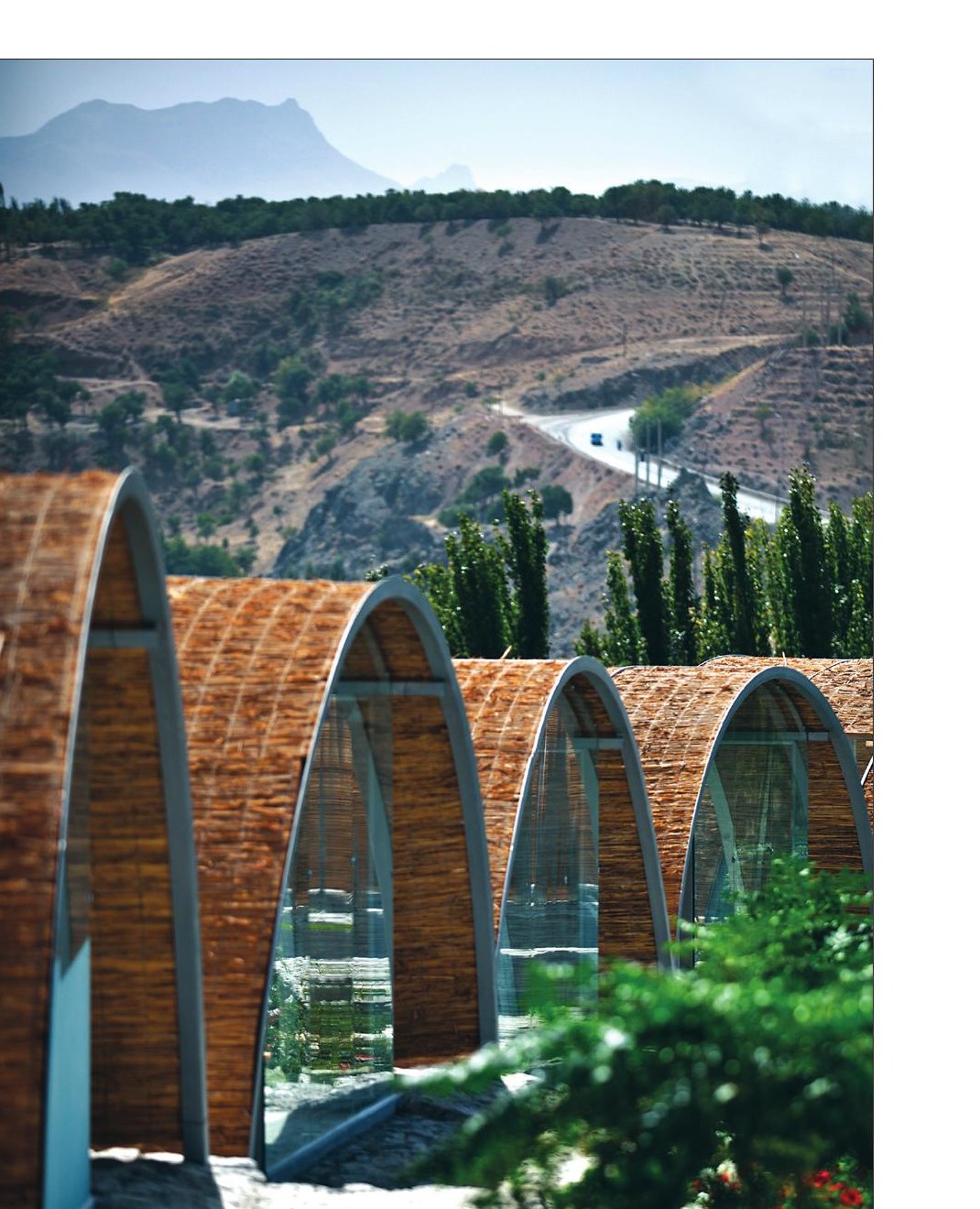
The complex consists of 11 pavilions whose extension leads on one side toward the historic Zamankhan Bridge and on the other to the Bagh-e Jado restaurant, with a 360-degree panoramic view of the surrounding landscape and full oversight of the river. The roof design also employs bamboo to maintain a stronger connection with the natural environment.
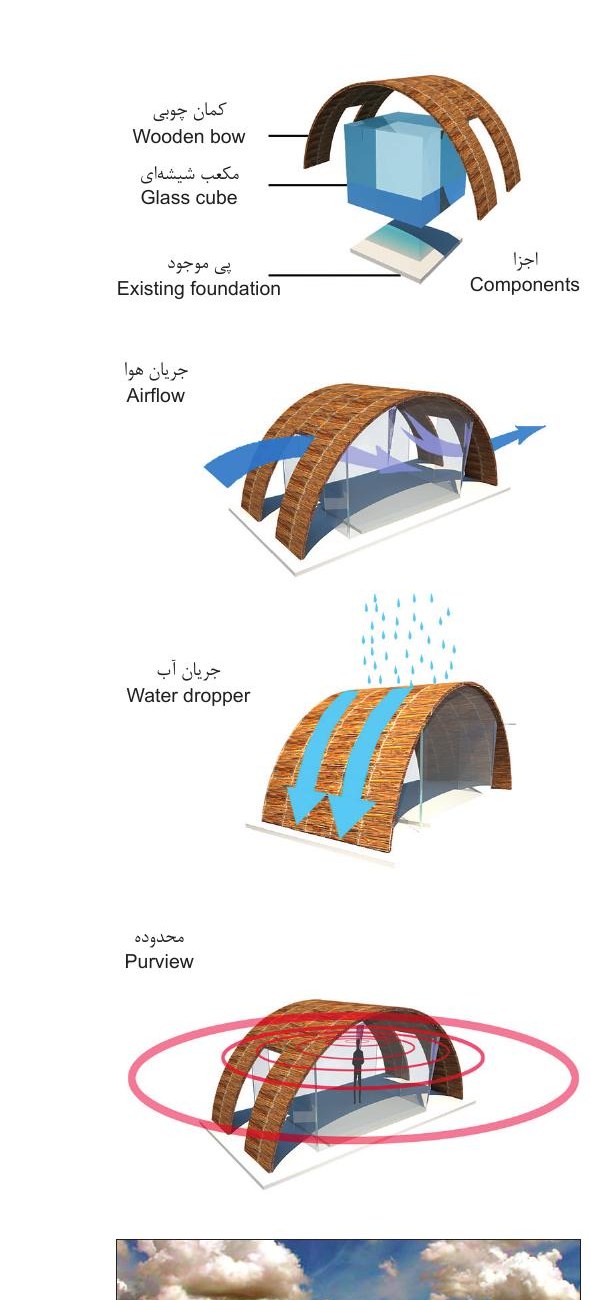
Security and comfort for multi-hour stays, proper ventilation due to natural air currents inside, access to electricity and basic utilities, and proximity to amenities such as restrooms, restaurant, and drinking water are among the features of this project. The roof structure skeleton is a bent double-angle that connects at two points and, with its arch function, provides the necessary resistance against dead loads, wind loads, and snow loads.
Naz Tourism Complex, Qeshm Island
At kilometer 22 of the Qeshm–Souza road, on the left side, three small and beautiful islands stand in the waters of the Persian Gulf, turning into small peninsulas at low tide. By walking approximately two kilometers or driving on a narrow strip of land that appears with the receding water and connects the islands to the southern coast of Qeshm, one can step onto the sands and corals.
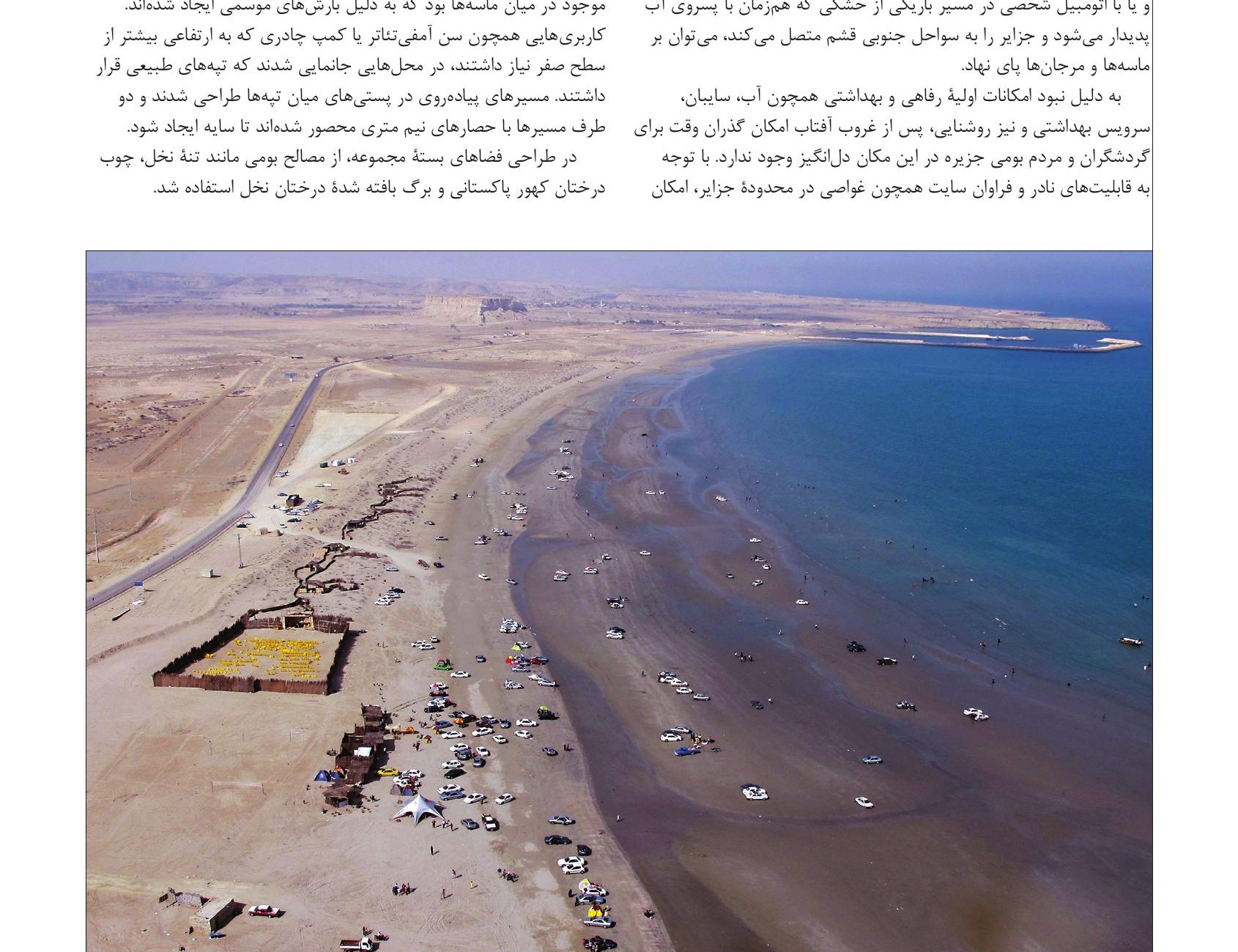
Due to the lack of basic amenities such as water, shade, restrooms, and lighting, spending time at this enchanting location after sunset was impossible for tourists and local residents. The main design idea was inspired by the topography of the coastal hills and the existing waterways among the sands created by seasonal rains.
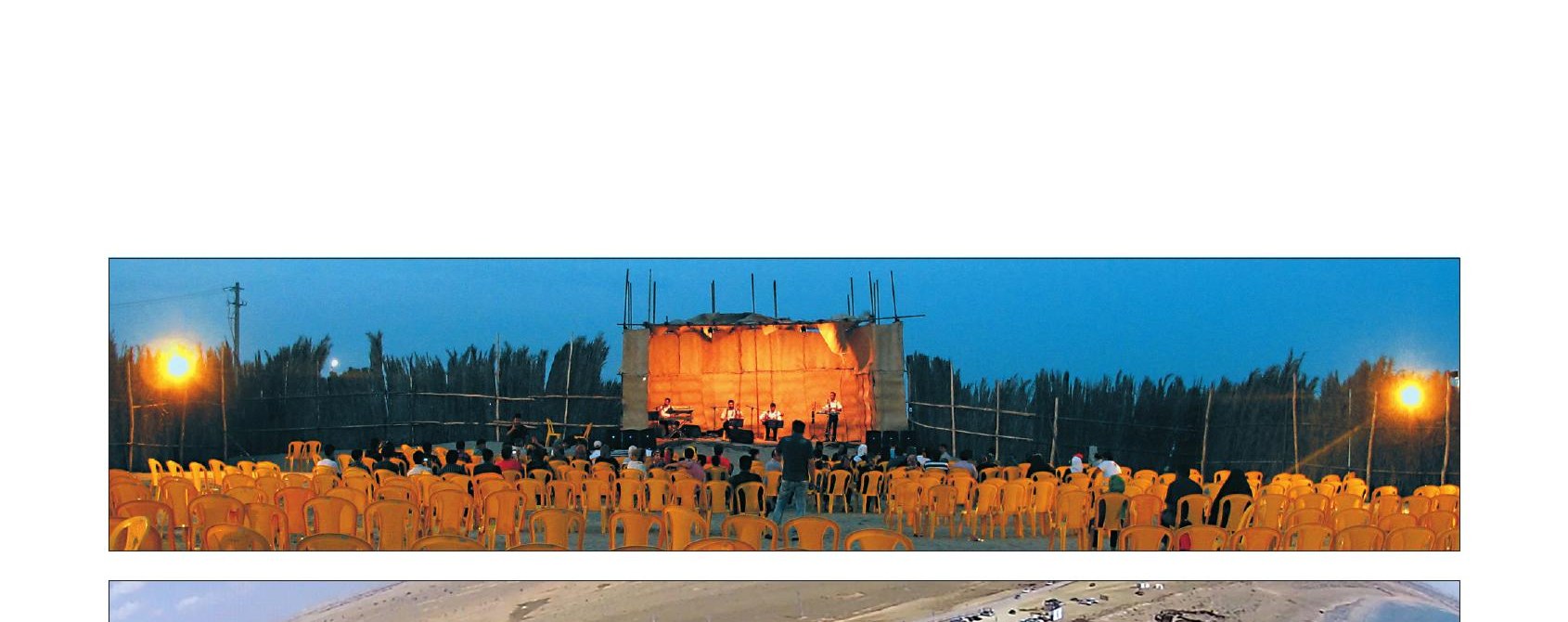
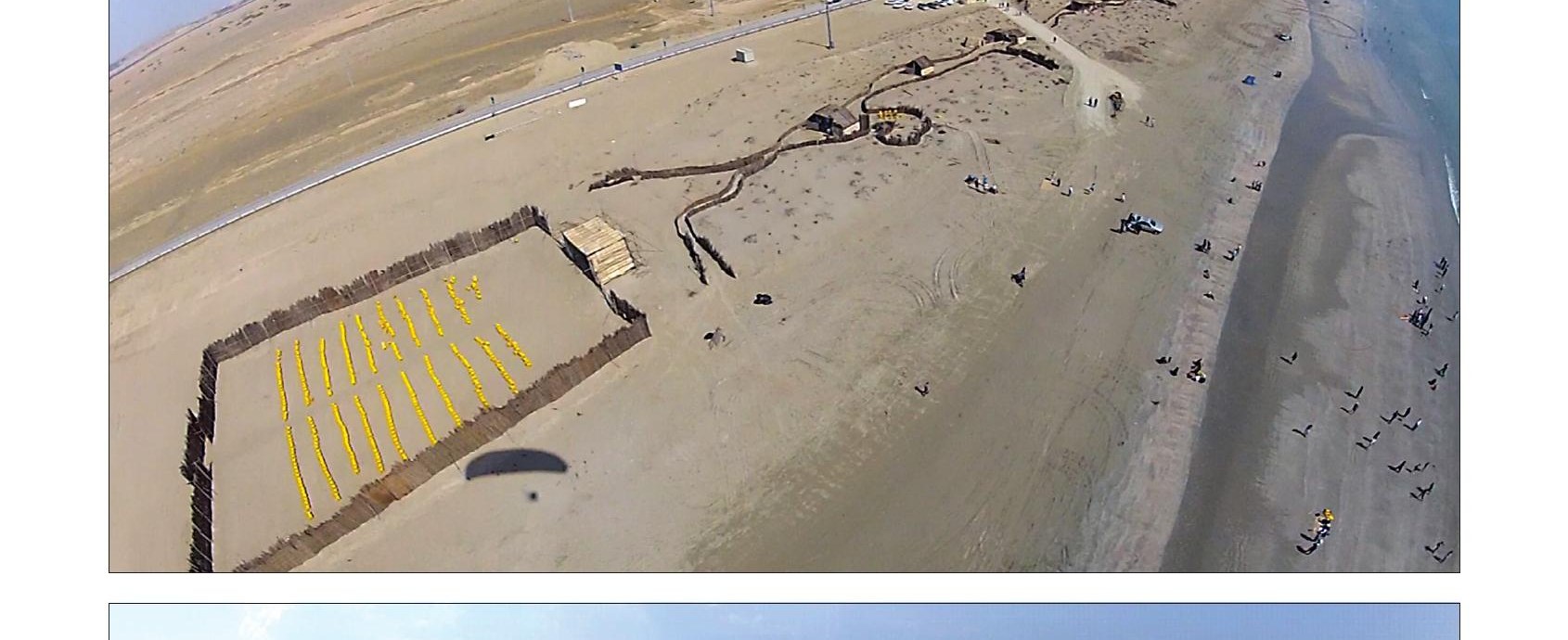
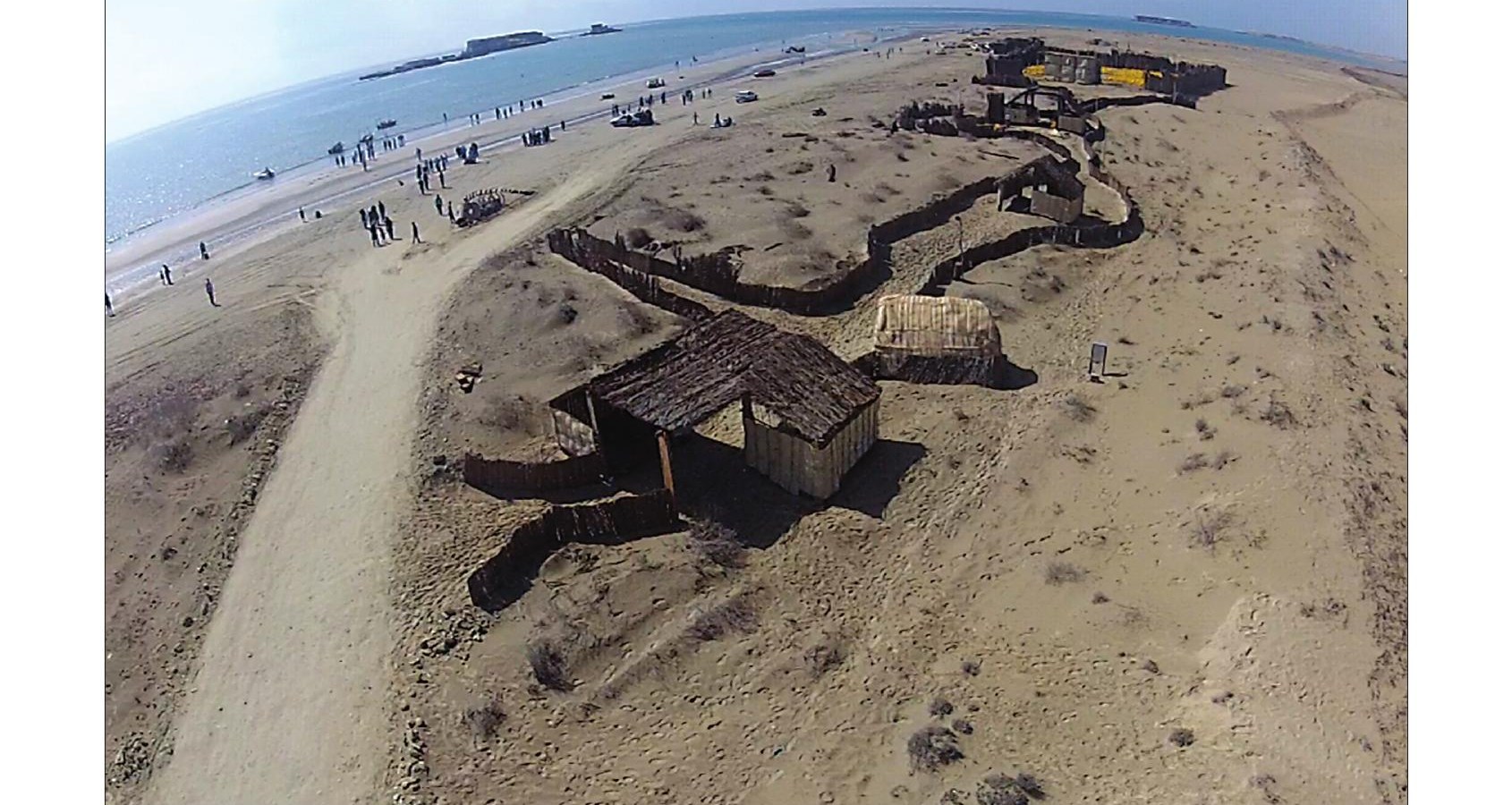
In designing the enclosed spaces of the complex, local materials such as palm tree trunks, Pakistani mesquite wood, and woven palm leaves were used. Functions like the amphitheater and tent camp that needed greater height than ground level were placed at locations where natural hills existed. Walking paths were designed in the depressions between hills, with half-meter barriers on both sides to create shade.
Glass Hunts — Architects: Polsheer Consulting Engineers, Ashkan Ghaneie, Milad Bahrami Samani
Client: Zendehrood Co.
Structure: Mohammadjavad Azari
Mechanical & Electrical: Iman Moshiri
Construction: Masoud Rezvani, Amiraskhan Attar
Modeling: Reza Amini
Photos: Farshid Nasrabadi
Area: 3,000 m²
Naz Tourism Complex — Architects: Mah Architectural Studio
Client: Aftab Omid Farda Co.
Design Associates: Ashkan Ghaneie, Milad Bahrami, Mohammadjavad Azari
Structure: Mohammadjavad Azari
Construction: Mah Architectural Studio
Mechanical & Electrical: Farid Zamani
Modeling: Alireza Najafian
Graphic: Amin Beigi
Photos: Masoud Rahimi
Area: 25,000 m²