Building No. 1, Qazvin
This project is the renovation of a residential house over 30 years old. Previous occupants had made modifications to it, but due to the building's deterioration and the inhabitants' inability to renovate, it had been abandoned and left uninhabited.
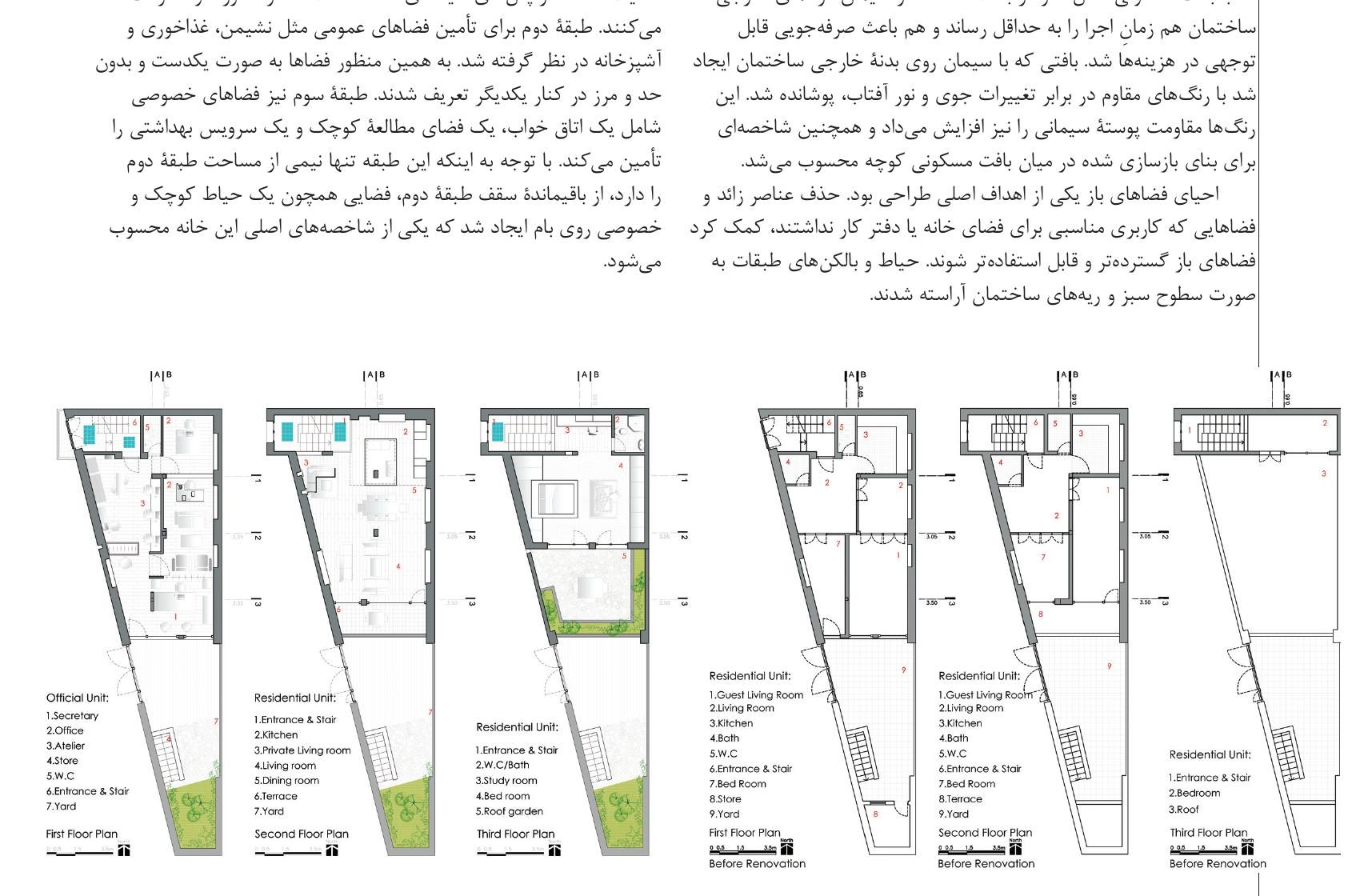
The main objective was to renovate the building at minimum cost and revive it as a home and office for a couple. At the same time, minimal exterior changes were to be made, and materials compatible with the residential fabric of the neighborhood were to be used. The use of cement on the exterior reduced both construction time and costs significantly. The texture created with cement on the building's exterior was covered with weather-resistant and UV-resistant paints. These paints also increased the resistance of the cement skin and served as a distinguishing marker for the renovated building within the residential fabric of the alley.
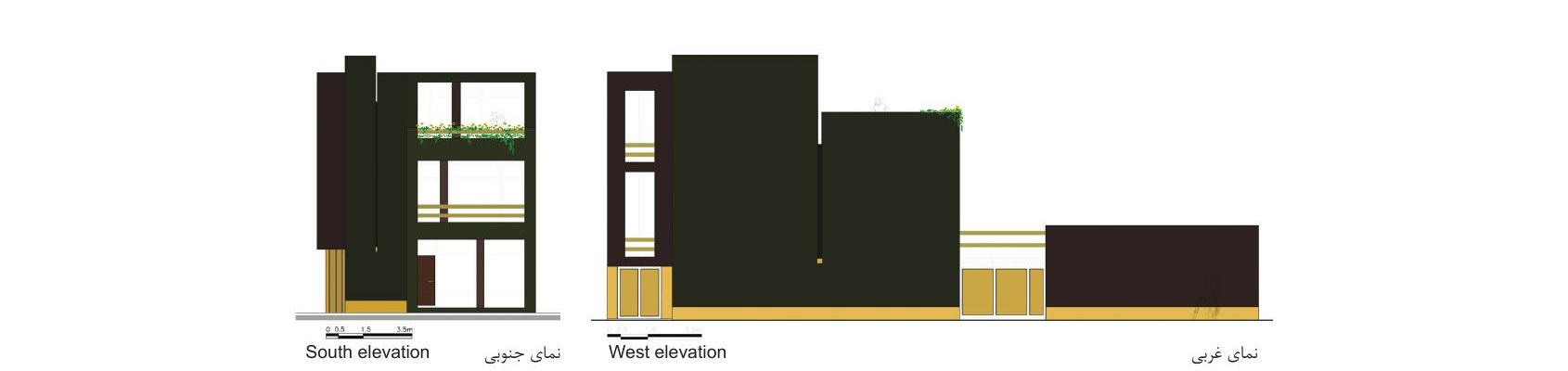
Reviving open spaces was one of the main design objectives. Removing redundant elements and spaces that served no suitable function for the home or office helped expand and improve the usability of open spaces. The courtyard and floor balconies were adorned as green surfaces and the building's lungs.
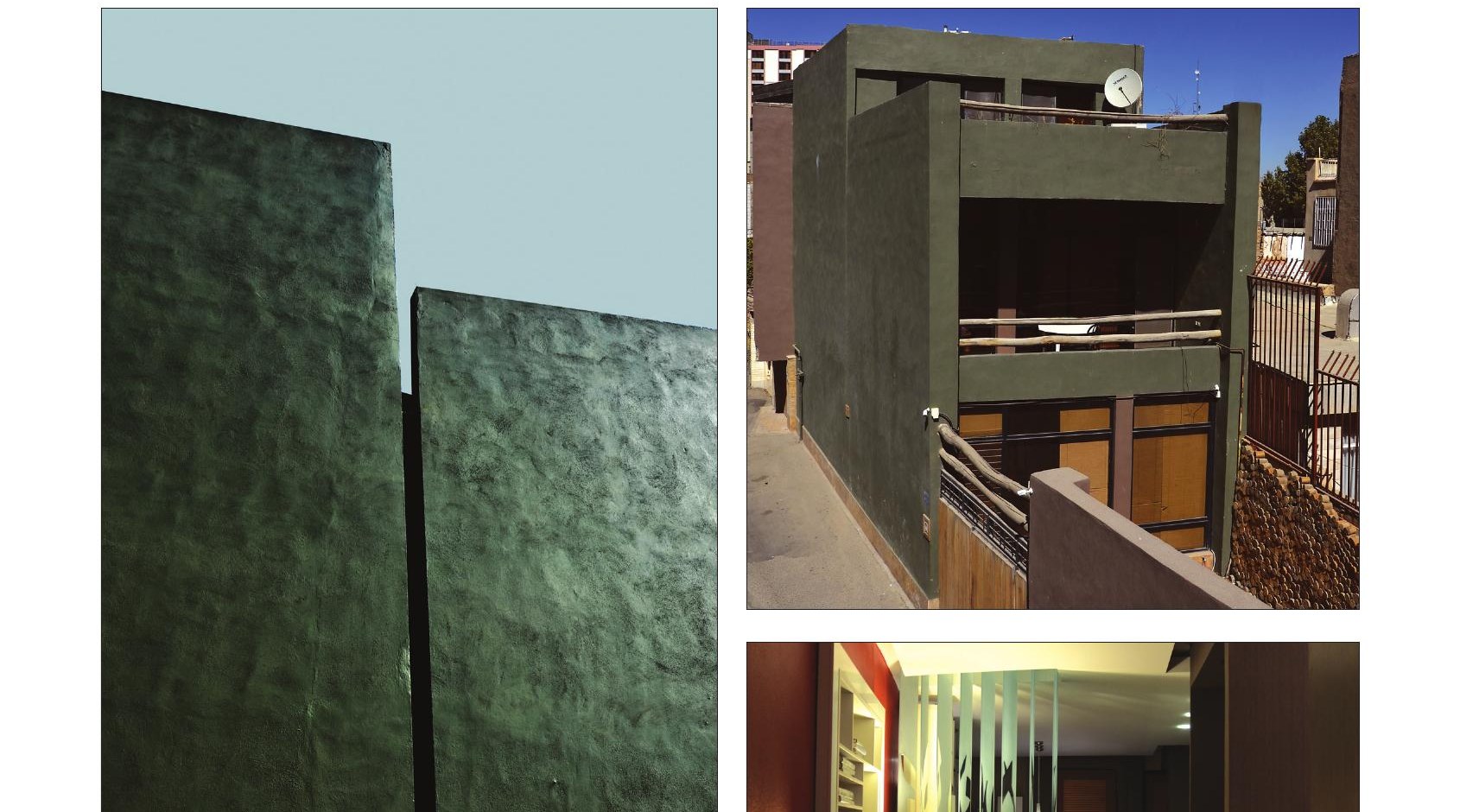
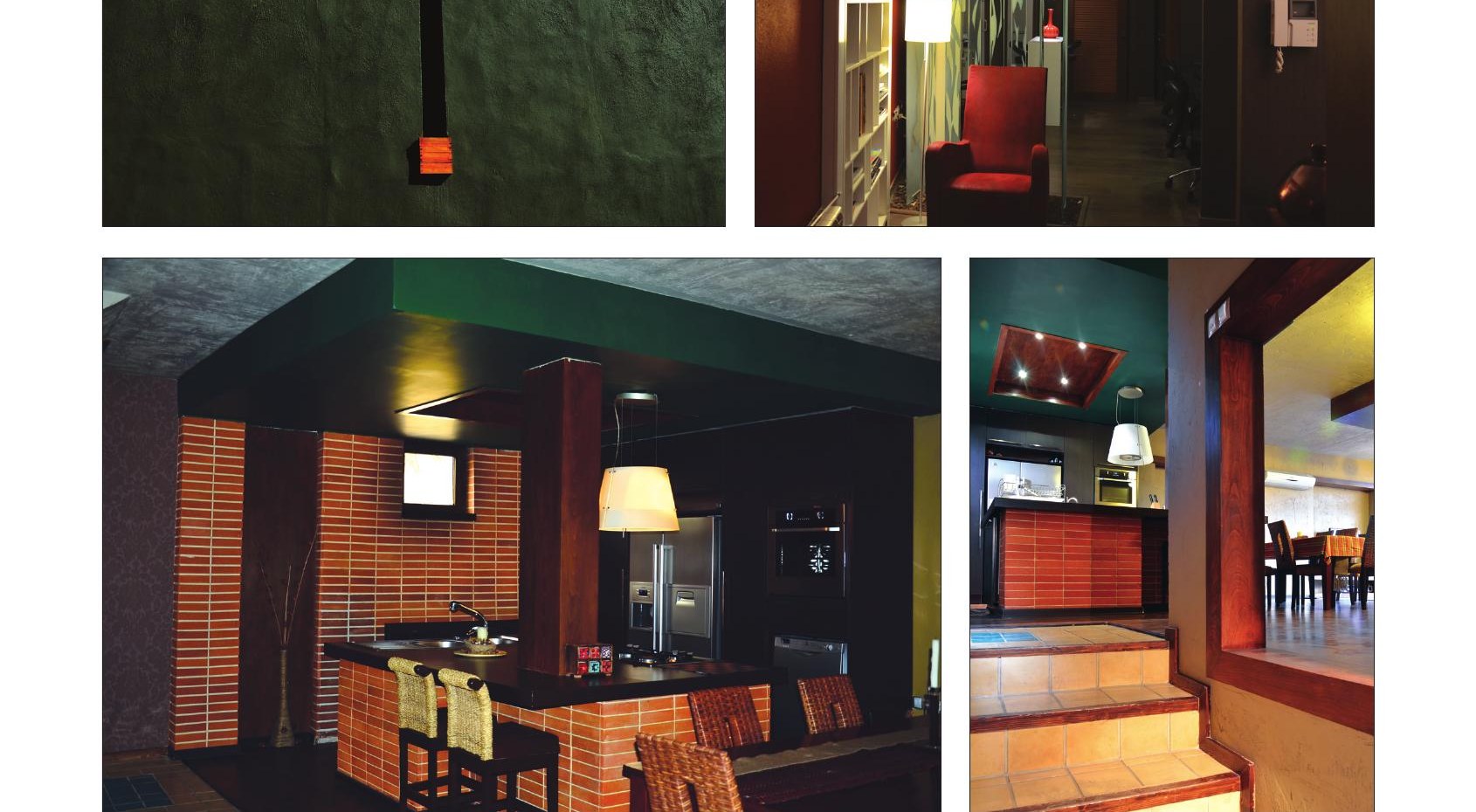
The renovation plan involved removing partitions and walls that had divided the enclosed space. On the first floor, designated as a small office within the residential unit, glass panels that rotate on their axis were used to separate spaces. The second floor was designed for common areas like the living room, dining room, and kitchen, with spaces defined seamlessly and without boundaries alongside each other. The third floor provides private spaces including a bedroom, a small study space, and a bathroom. Since this floor has only half the area of the second floor, a space resembling a small private courtyard was created on the remaining roof of the second floor — one of the main distinguishing features of this house.
Location: 4th Palestine, Ferdowsi Avenue (Daghana), Shahid Mojaberi Alley, Building No. 1, Qazvin
Architects: Rira Neshan, Samira Fadakari, Mehdi Karimi
Client: Rahmani
Design Associate: Mojtaba Mirza Mohammadkha
Construction: Mehdi Karimi
Construction Associates: Ali Karimi, Hossein Yousefi, Kourosh Parhizkari, Mehdi Asheri



