
In the crisis-ridden landscape of the contemporary world, where the boundaries between action, representation and resistance are deeply intertwined, architecture is no longer merely a technical profession serving the reproduction of established orders. Rather, it emerges as a ground for critical thinking and theoretical action. In such a context, architecture is not an instrument of execution but a kind of purposeful activity (praxis); a material and intellectual action with the capacity to summon subaltern histories, recover repressed memories and intervene in the logic of domination.1 Form, in this sense, is no longer the end product of a linear design process, but the outcome of genealogical, social and phenomenological layers; a conceptual construct that turns architecture into a language of critique, formulation and the re-questioning of problems.2
In contexts caught in structural exclusion, institutional oblivion and the collapse of social bonds, architecture cannot be reduced to the classical position of neutral design. In such settings, architecture must go beyond its disciplinary boundaries and enter fields such as the sociology of space, critical geography and bio-spatial politics.
The city of Ilam, as a border ecology, faces an epistemological question: how, in the gap between centre and periphery, in the limbo between visibility and erasure, can space be turned into a conceptual instrument of resistance and redefinition? This city, not merely as a geographical location but as a tragic scene of the intersection of repression and possibility, calls us to a fundamental reflection on the production of spatial knowledge and placedness. In this field, architecture is no longer a response to needs; rather, it itself becomes a problem. A problem concerning the possibility of living, building and participating in a condition in which social solidarities and physical liveability are held in suspension.
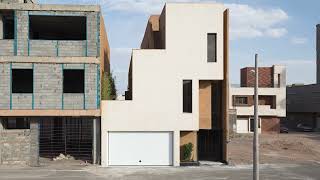
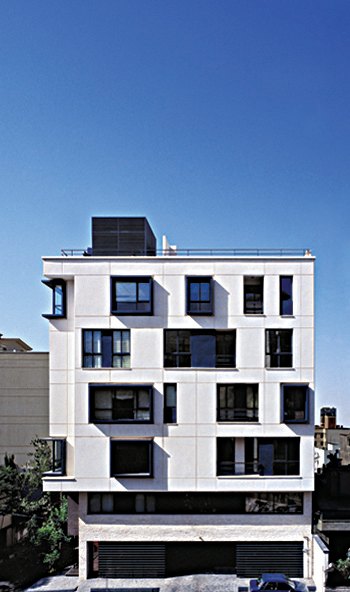
Within this framework, two projects, Hambud and Bonlad, appear not as examples of successful design but as theoretical-spatial products; attempts to translate crisis into the language of architecture. In different contexts, these projects provide possibilities for a critical examination of existing conditions and for situated action in the field of architecture. What links these two experiences is not a technical or formal commonality, but a shared horizon for understanding architecture as situational action; a local and multilayered reaction to crises that are structural and self-reproducing. These projects act not as the final solution to the problem, but as a ground for a theoretical encounter with crises; an encounter that places architecture, in relation to concepts such as home, belonging, meaning and participation, on a conceptual and political plane.
Finally, this text is not a heroic technical or process-driven representation of the projects, but an effort to draw out the theoretical layers and conceptual capacities these experiences put forward; an attempt to redefine architecture as an instrument for thinking and resistance, which, at the intersection of body, memory and politics, raises the potential for rethinking what architecture is.
Architecture, Context and the Possibility of Agency
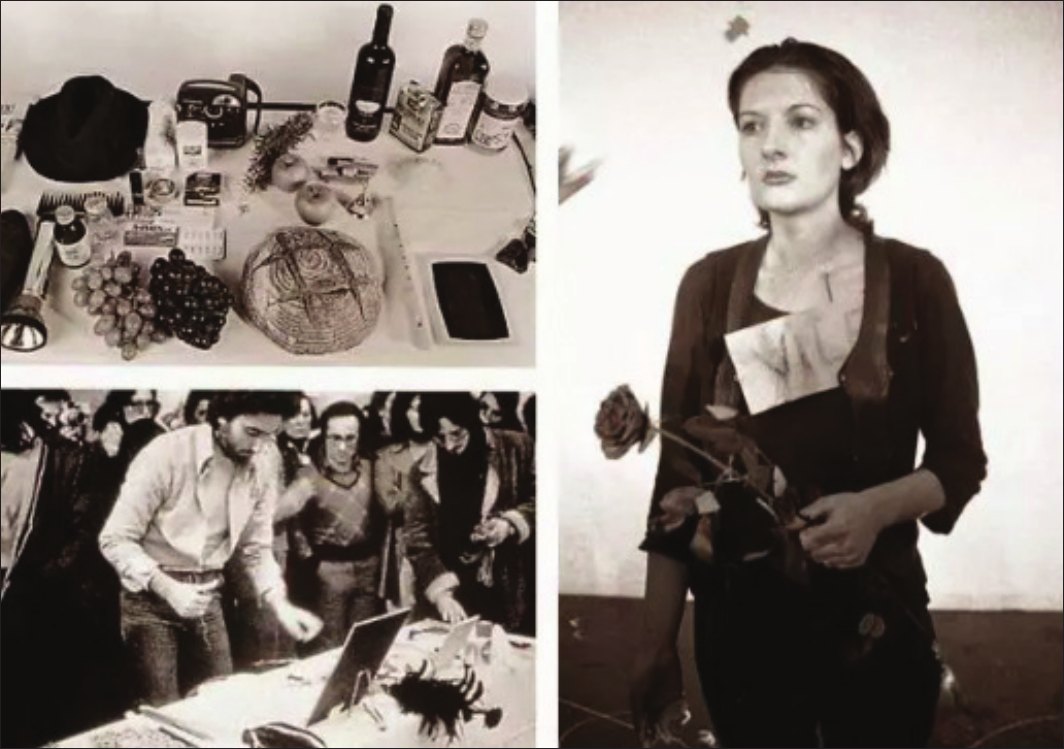
In one of the most radical performances of contemporary art, Marina Abramović, removing her own agency, placed herself as a silent "object" before the audience. For six hours, without any reaction, she was exposed to the actions of spectators who could act on her body with a variety of objects, from a flower to a gun. What at first resembled something passive and cautious gradually turned into a field of violence; as if the removal of the subject opened an arena for the eruption of the force of domination.3 This performance laid bare the invisible line between inaction and participation, between neutrality and complicity. At the end of the performance, when Abramović became an active subject again, the spectators who minutes before had been abusing her fled from meeting her gaze. This reaction revealed a truth: no agent in a social context is "neutral"; silence too is a hidden form of agency - and sometimes complicity. When this fundamental question enters the field of architecture, it gains greater depth and complexity. For architecture does not only act as a reflection of context; it is itself an agent in making and reproducing that context.
No project, not even the most abstract of them, is intelligible outside its context. "Context" - whether physical, historical or social - is not only the ground on which a work takes shape, but a hidden agent that determines meaning, reading and effect. The architect, consciously or unconsciously, is always facing these contexts, and there is no escape from them. From this perspective, social responsibility in architecture is not an add-on or a transcendent choice, but something inherent and inescapable. Every work, in the process of its production and consumption, takes its place within power relations and leaves effects on social and psychological structures. The fundamental question is whether the architect is aware of these effects or indifferent to them. Participatory, or acting in the continuation of existing structures? In architecture, as in the other arts, representation can become an instrument of domination. Projects that approach the subaltern classes with a just-seeming appearance, if they strip them of agency in the process of design and decision-making, will be nothing but the reproduction of an aesthetics of subjugation. In such projects, poverty and marginality become visual elements for the consumption of festivals and prizes - not spaces in need of agency and structural repair. An architecture that merely represents hardship, without providing spaces for participation, expression and change, will in the end play a stabilizing role; for it puts agency in the hands of the narrator instead of the people.
If we accept that architecture acts as an action within power, then the main question will no longer be whether the architect should be an agent or not, but how, and in which direction, they act. Architectural form is only one of the levels of this action; its deeper layers lie in the way of approaching the design process, in the distribution of agency, and in how one responds to social contexts. The architect's agency can be manifested in how participation is organized, in spatial language, in shifting the boundaries of ownership and in redefining the orders of dwelling. Responsibility in architecture means awareness of these invisible networks - networks that turn the architectural work from a passive object into a living action in the social fabric. The architect, willingly or not, stands in the middle of the field of political and social actions. They are either the constructor of spaces that make action, expression and living possible, or they unwittingly become a stabilizer of structures that silence the voices of the margins. No building, no architectural space or form, is untouched by power relations. Architecture therefore always acts between two poles: either in the service of resistance, or on the path of complicity. And this is a fundamental choice for every architect: for whose benefit do they design? In which language? Along which history?
Ilam: A City on the Edge of Crisis
A Reading of Suspension, Refusal and Spatial Closure in the Context of a Chronic Crisis
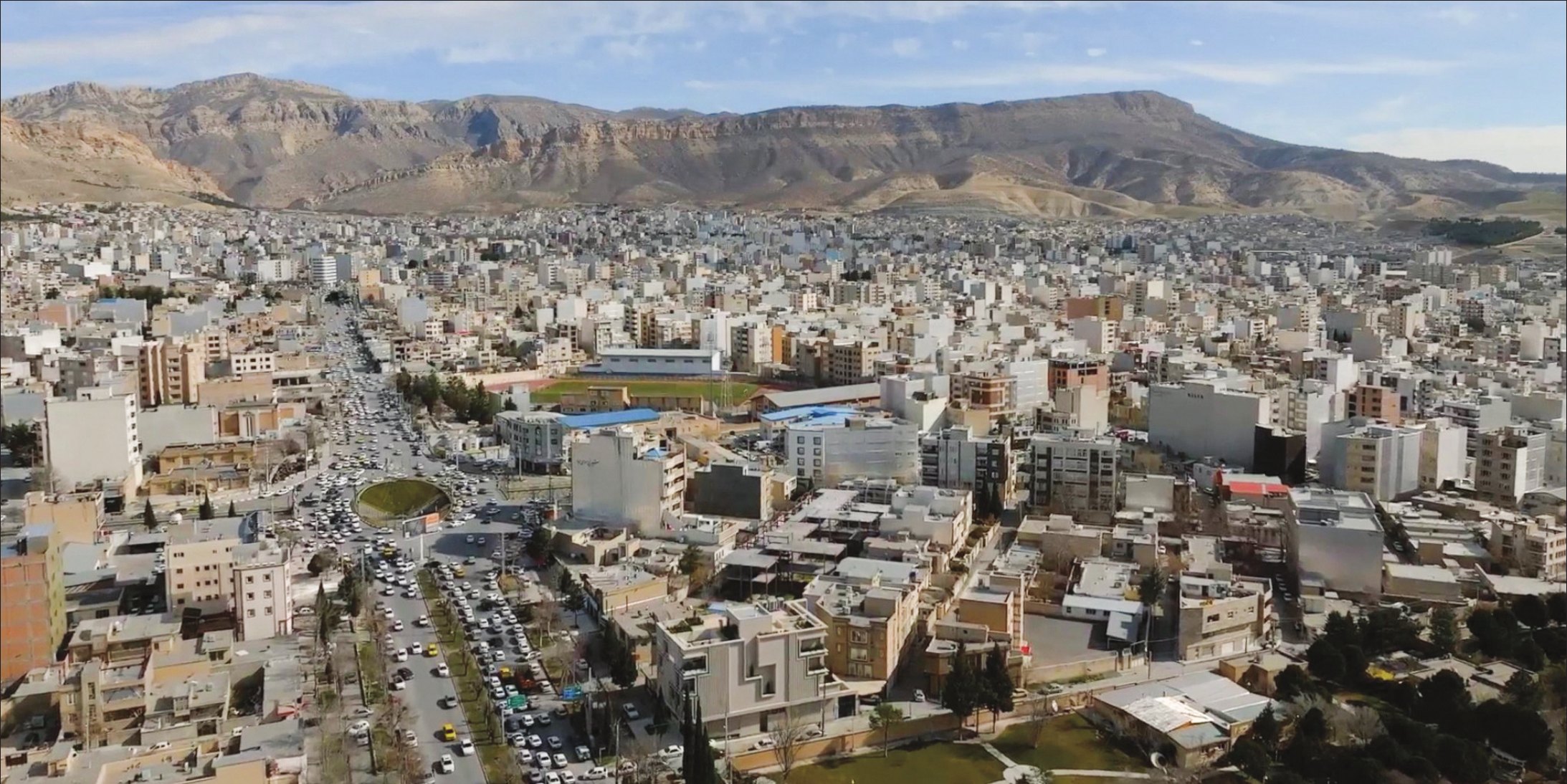
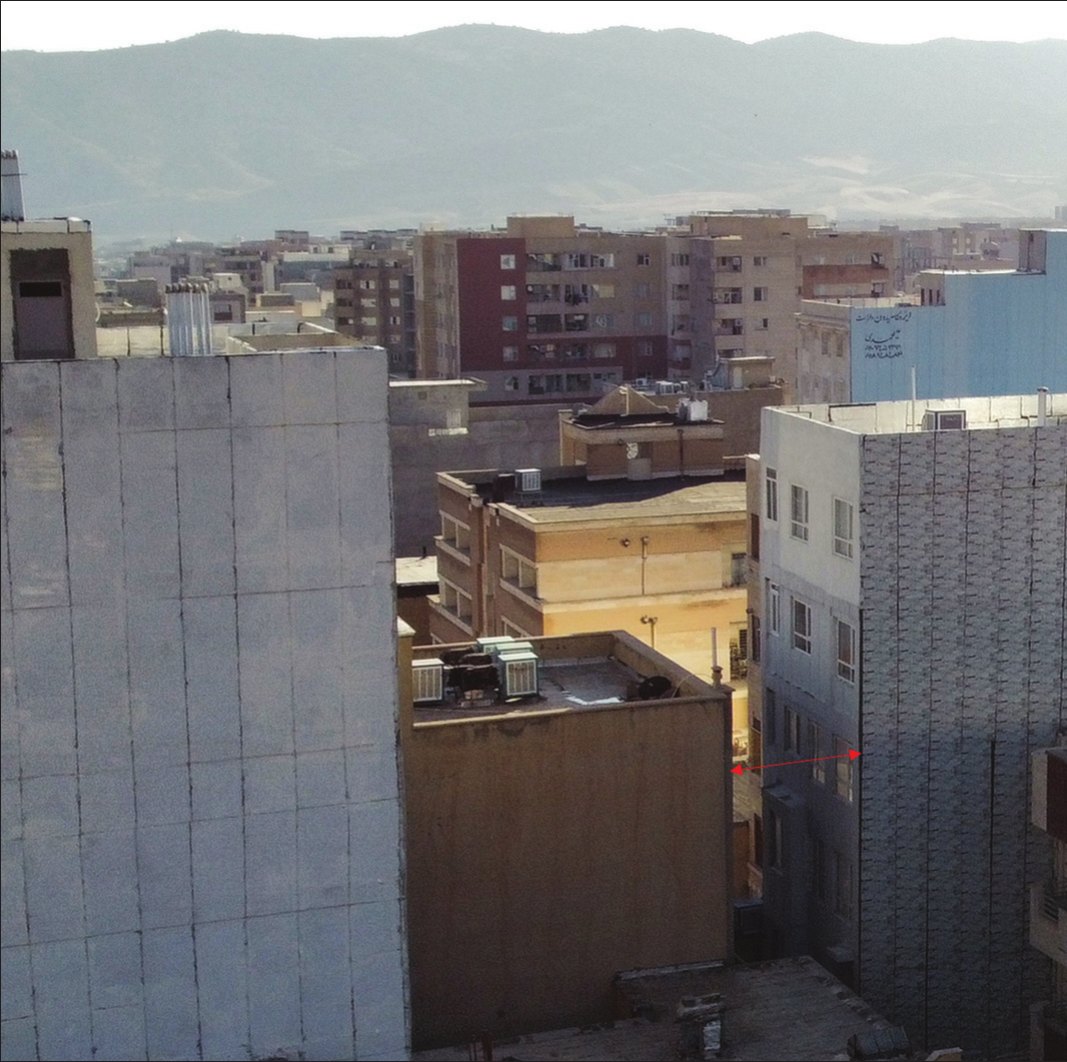
If architecture in the context of crisis is regarded as a conceptual instrument for critical thinking, the city of Ilam can be considered one of the clearest examples of this problematic condition; a city that lives in the condition of "the border" not merely geographically but on an epistemological level. Here the border is not a political line but a kind of ontological condition; a permanent threshold between centre and periphery, between visibility and erasure, between policy-making and planlessness. Ilam, in this analysis, is not merely a statistical or geographical unit but a representation of a layered socio-spatial condition; a condition in which components such as suspension, oblivion and refusal have settled into the body, the institutions and the psyche of its inhabitants. In such a context, the urban subject stands at a complex intersection of care and exclusion, control and abandonment, and presence and erasure; a contradictory combination that can be understood within the framework of concepts such as "symbolic violence",4 "the state of exception" and "bare life",5 as well as "the de-capitalization of space".6 Ilam, in this sense, faces not only a shortage of material resources but struggles with semantic erosion and the gradual emptying of social and spatial capacities; a city that lives on the edge of erasure without having been erased entirely.
In such a condition, crisis is not a passing event but a chronic structure that has become fixed in the physical fabric, the collective memory and the lived experience of the inhabitants. The consequence of this crisis is not the production of a "city" as a socio-spatial order, but the formation of a kind of "anti-city"; a detached, discontinuous and rootless body which, instead of creating a sense of belonging, fuels individual isolation and collective anxiety.
In addition, Ilam lives in a condition steeped in "development-strickenness"; a kind of imitation of the urban models of the centre, without the local cultural, economic or spatial grounds for it being in place. This process can be analysed within the framework of the concept of "imposed modernity"; a process in which urban planning has taken shape not in line with internal needs but under the pressure of technocratic logics and from above.7 The result of this logic is the production of spaces that are based not on living but follow formal planning, unaware of the local context.
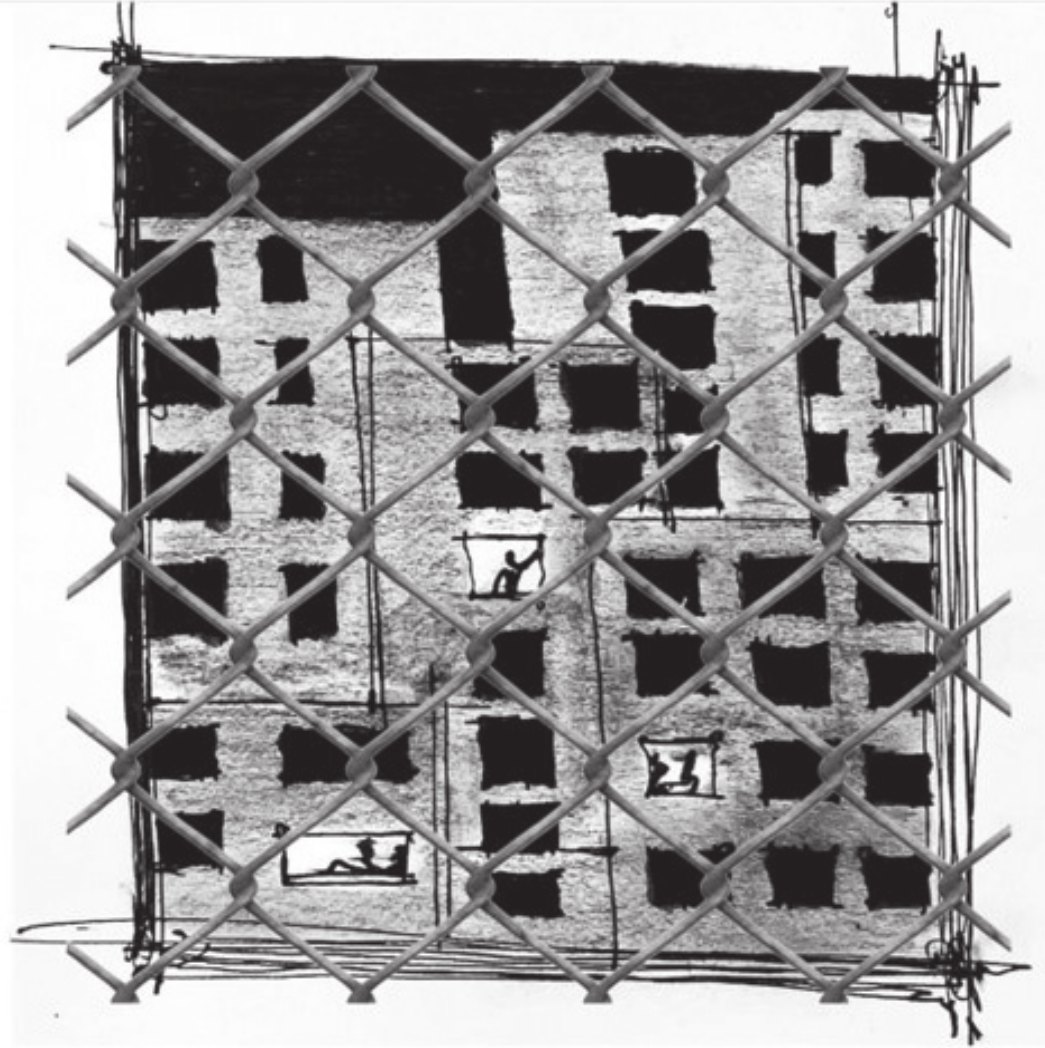
On a more hidden layer, the physical crisis is intertwined with a psycho-spatial crisis. A kind of psychological closure, structural anxiety and an inability to imagine the future, which gains meaning alongside concepts such as "the psychogeography of space"8 and "the right to the city".9 Signs such as the rising suicide rate (the highest suicide rate in Iran), domestic violence and the breakdown of social bonds, as traceable in Ilam, are not merely sociological data; they are concrete manifestations of a disorder in the relation of human beings to space and to the possibility of living. In a city where buildings have taken shape with one hundred percent site coverage, high density, and small, covered windows - which often stem not from material poverty but from the cultural constraints of preserving visual privacy - crisis has penetrated not the margins but the heart of everyday life. Here, space is no longer a ground for living but the scene of life's contraction; a place where architecture, instead of fostering liveability, has turned into its denial. In such coordinates, architecture cannot refuse to enter the fields of politics and the psychology of space. Every physical intervention, willingly or not, carries a political and psychological charge: either in the direction of reproducing the orders of domination, or on the path of opening ruptures that make possible the recovery of meaning, participation and hope.
Two Projects, One Question
Architecture as Intellectual Action in the Context of Crisis
In the context of Ilam - a city understood not as an established form but as a chronic and structural condition of crisis - architecture cannot define itself as a technical, neutral or merely aesthetic action. In such a space, architectural intervention always carries social, psychological and political charges; whether in the direction of perpetuating dominant orders, or toward opening a possibility for rethinking and resistance.
Within this framework, the Hambud and Bonlad projects are formulated not as examples of successful design at the architectural scale, but as theoretical and critical actions. These two projects seek to raise architecture from the passive role of responding to needs to an active and questioning position; they move the architect from the role of a mere technocrat to the position of an analyst of crisis. Here, architecture is not only a response to a problem but an instrument for posing the problem. The central question these two projects raise is directly linked to the idea of "critical architecture": can architecture, in the midst of a space that has itself become a reflection of crisis, remain neutral, functional and in the service of the logic of consumerism? Or must it redefine its role as a revealing, intervening and analytical medium? This question is an echo of concepts such as "design as resistance"10 and "architecture as political action",11 which emphasize the critical and rupture-generating capacities of space.
The common feature of Hambud and Bonlad is that both projects use architecture not on the horizon of producing physical form, but as a language for representing a condition designed against thought. In this sense, architecture takes shape not to end the crisis but to reveal it, and not to stabilize the existing situation but to create a critical distance from it. It is in this distance that the possibility of thinking about alternatives, and of imagining the possible, begins.
For this reason, Ilam is not merely a setting for realizing these projects but their main subject and problem; a city in which architecture becomes an instrument for the genealogy of crisis and a test of the possibility of resistance. In the absence of effective planning, and in conditions where space has become an instrument of exclusion and erasure, these projects try, relying on the possibilities of architecture, to preserve the possibility of action and rethinking.
And perhaps it is here that that fundamental proposition gains meaning: "Architecture is born not in freedom from crisis, but in its midst." When policy-making is blocked, institutions are worn out and the possibility of collective imagination is suspended, architecture can, like another language, serve thought; a thought that, in the midst of crisis, seeks new horizons of living and agency.
Hambud: Architecture as Action in the Midst of the Commodified Economy of Space
The Hambud project took shape within an order in which housing has been reduced from the status of a human right to the level of an economic commodity; a commodity whose value is measured not by the quality of living but by its capacity to reproduce capital and its ease of resale. In such a constellation, financial constraints are not merely a matter of execution; they are logical agents that remove every incalculable and unprofitable element from the living space - from privacy and pause to sociability and a sense of belonging.
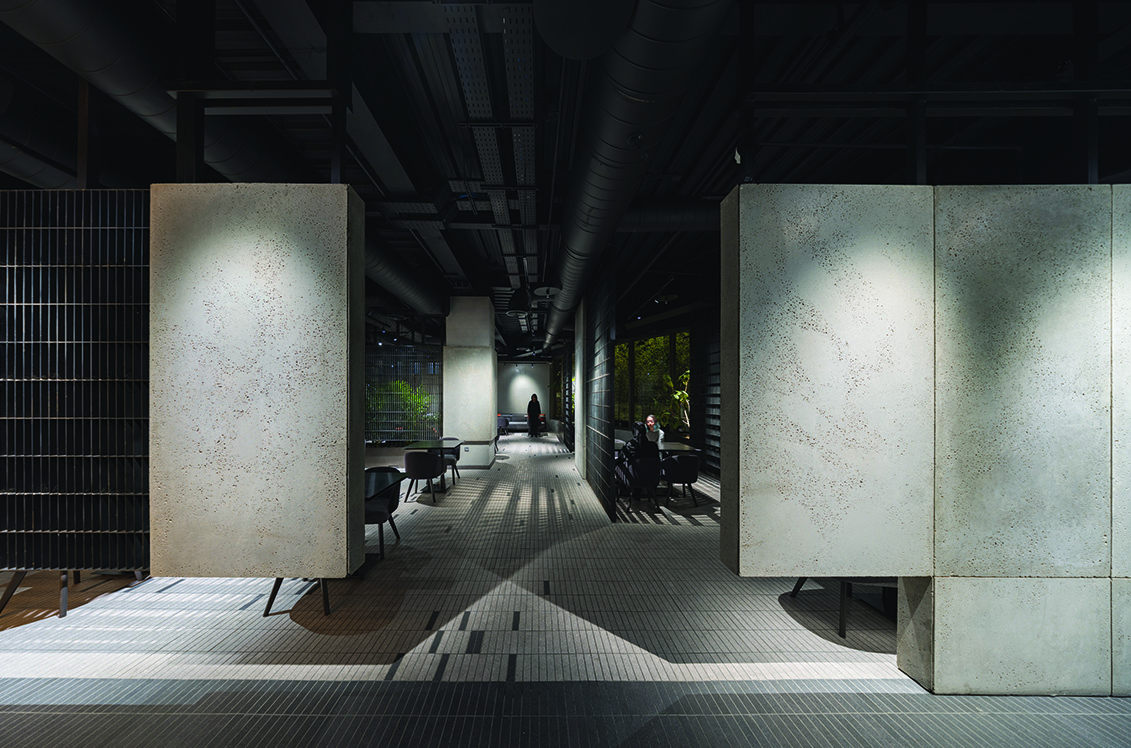
Faced with this condition, Hambud acts not as a passive response to existing conditions but as a theoretical and spatial intervention; an attempt to revive the qualities that have been suppressed by the commodifying view of space. This project embodies its resistance not at the level of statements or idealistic slogans, but in recreating in-between and everyday spaces; small but vital spaces that preserve the possibility of connection, conversation, pause and social participation.
Using simple elements such as semi-open spaces, breathing corridors, permeable boundaries and overlooking but not intrusive surfaces, Hambud tries to build, out of the logic of erasure, a new language of dwelling in Ilam; a language in which the possibility of living depends not on formal and economic pressures but arises from the experience of the body, the gaze and interaction. Against the prevailing model of accumulation and reduction, this project creates an alternative model of dwelling based on the complexity of living, the variety of spatial experiences and respect for everyday life.
Space in Hambud is not only seen but felt. Boundaries are not merely physical elements but "sensory devices"; as Pallasmaa emphasizes, architecture at its most elementary levels must speak to the skin, to sound, to weight and to the time of the human body. In this project, distances are designed; gaps are the language of silence; and passage itself has become a meaningful action. Here, design is not the creation of space but the creation of a sensory condition.
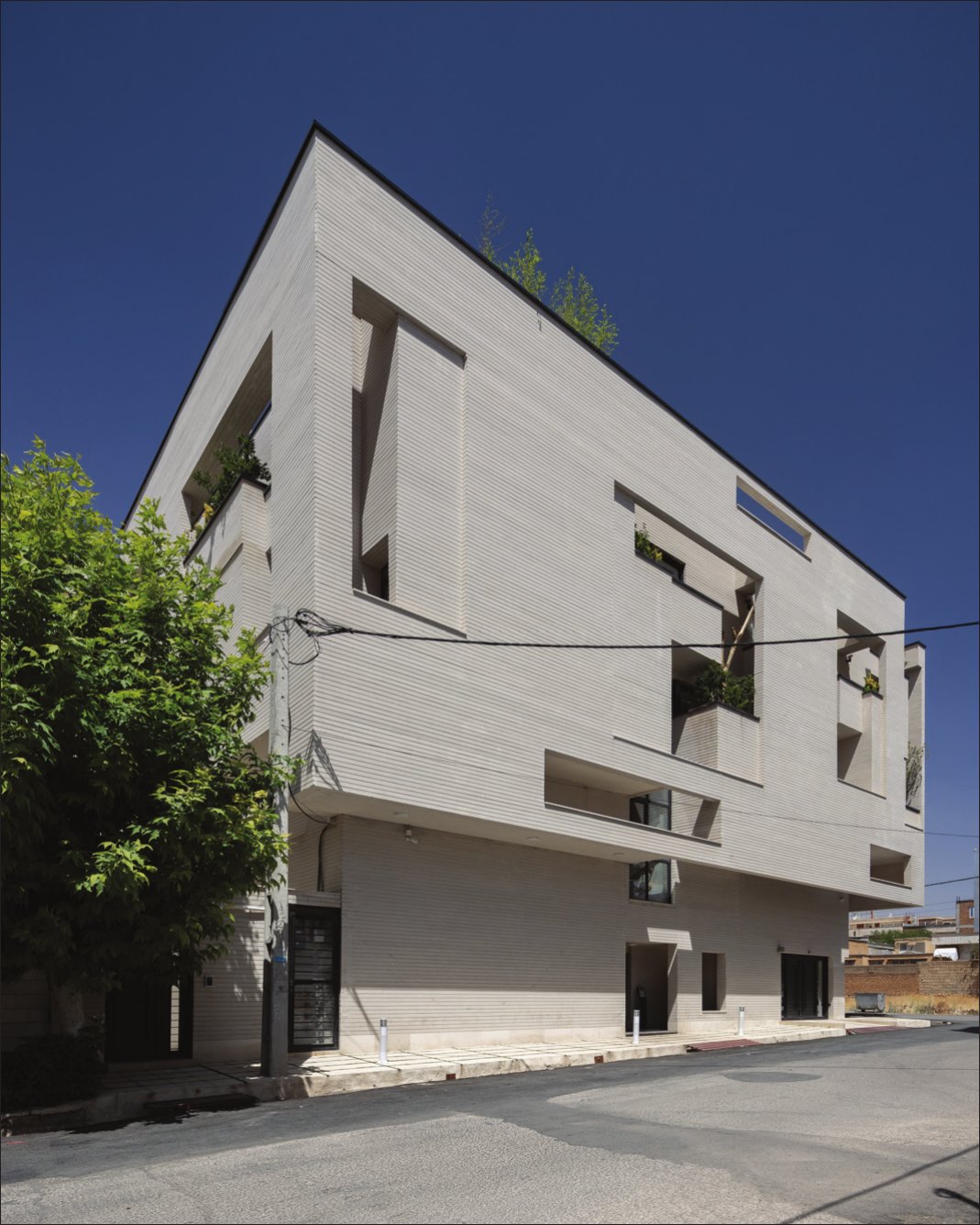
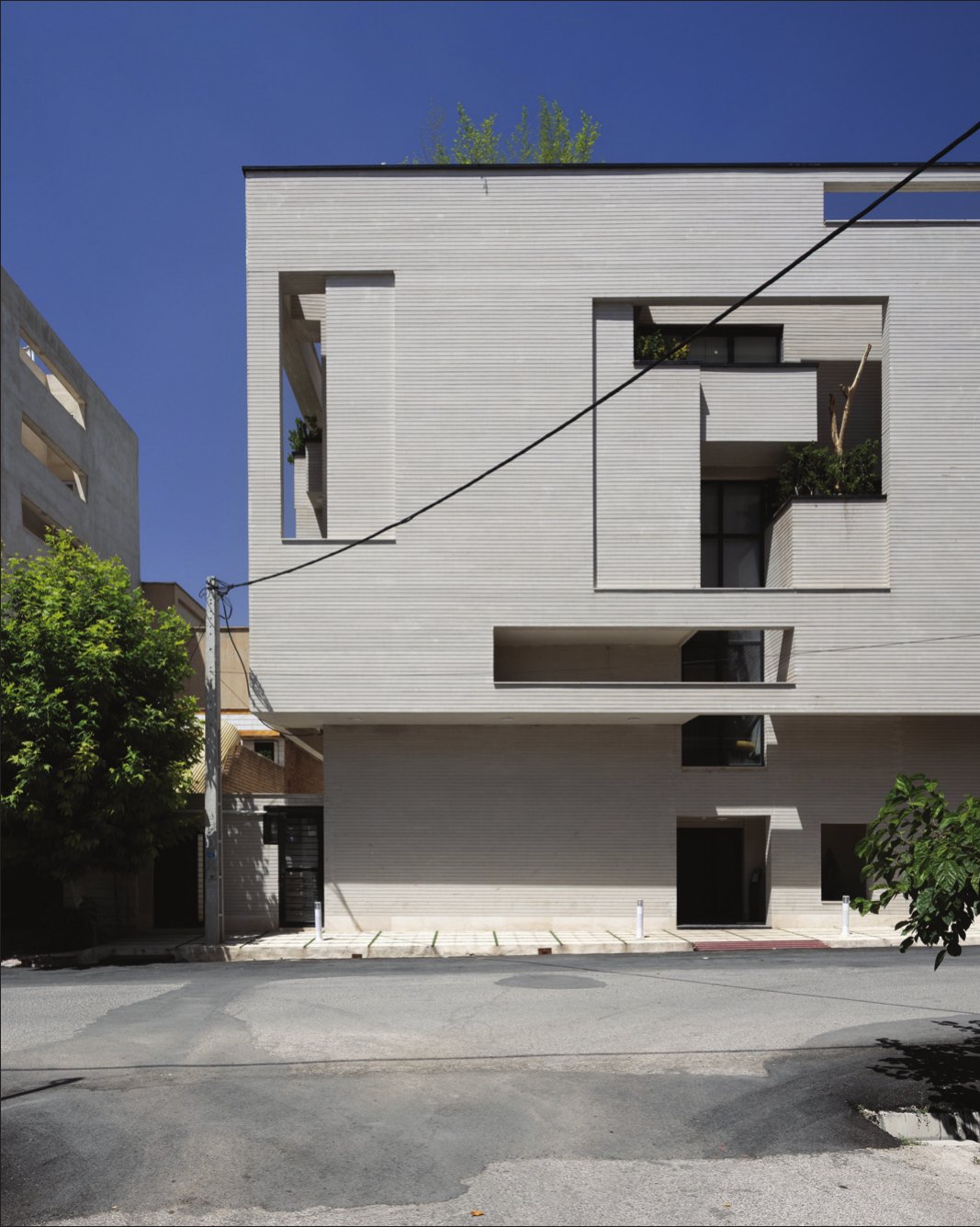
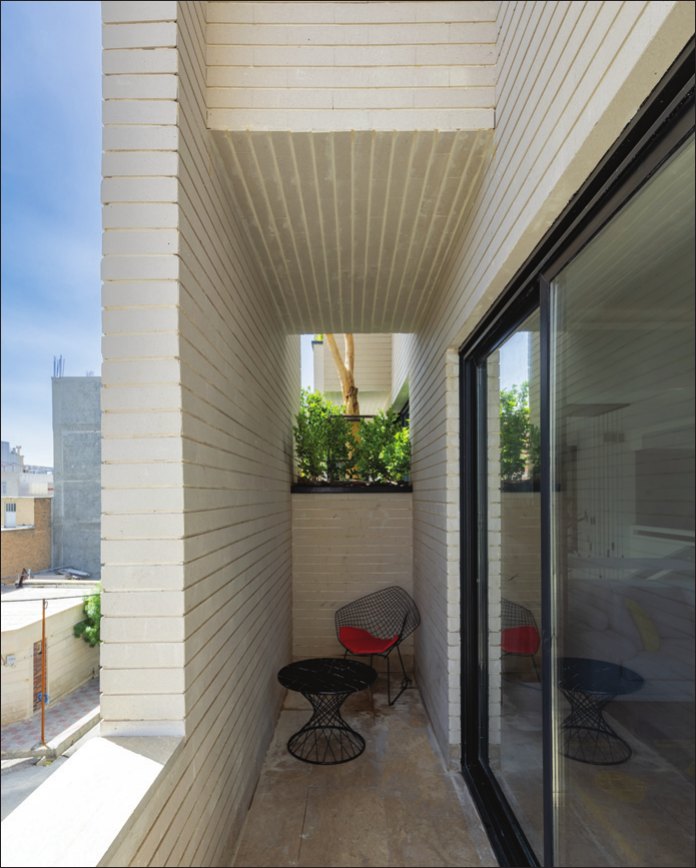
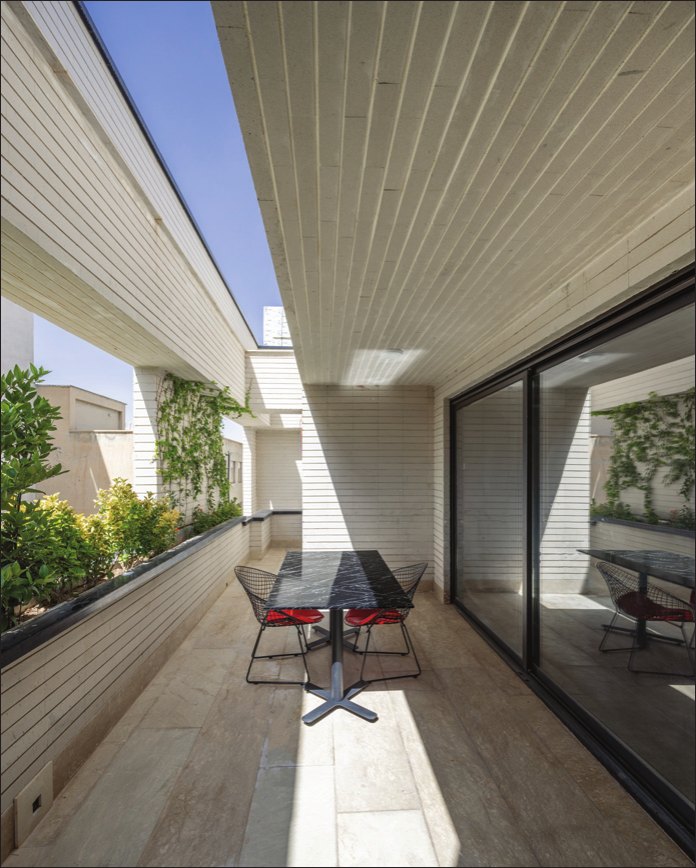
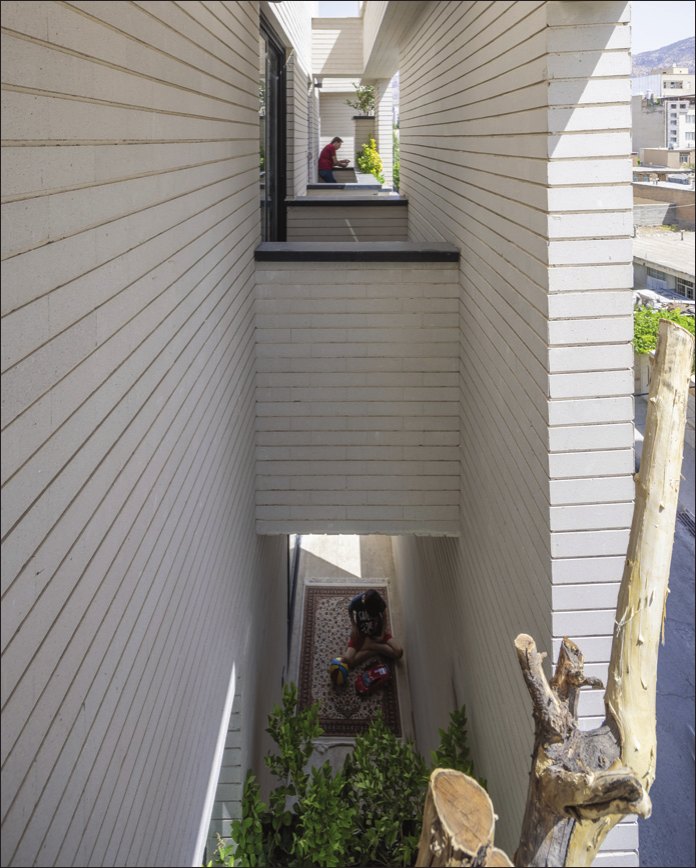
From this perspective, Hambud is not only a reaction to physical poverty; it is defined as a theoretical encounter with the semantic poverty of residential spaces in the city of Ilam. In the tradition of critical design, this project commits itself to representing the problem, not necessarily to solving it. The aim of Hambud, as Dunne and Raby put it, is not to offer an answer but to pose a question and open the possibility of thinking about alternatives.12
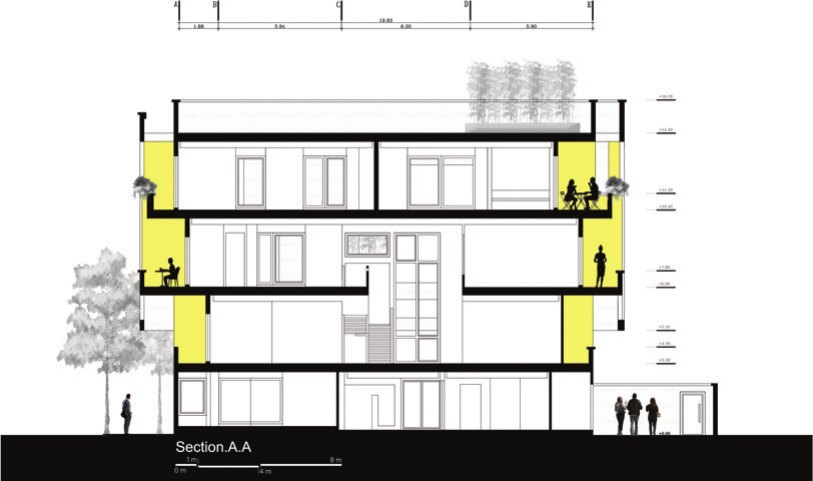
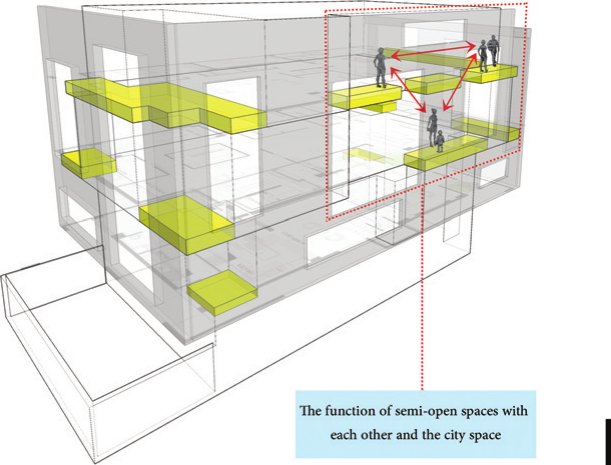
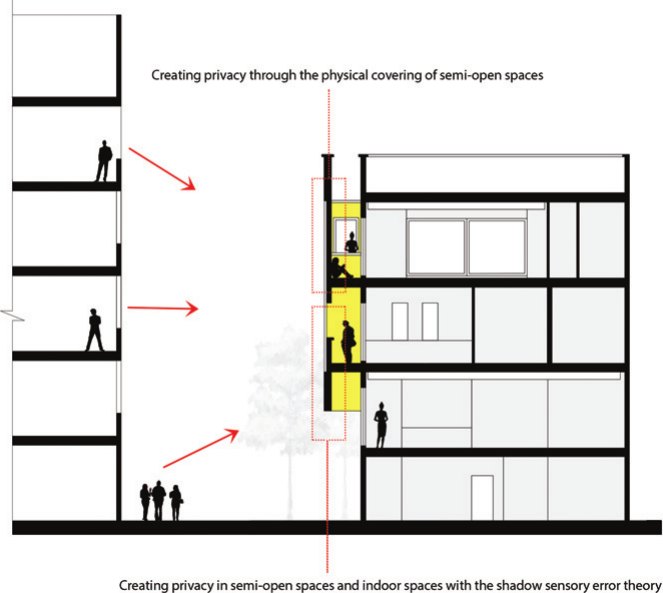
Ultimately, what happens in Hambud is the transformation of crisis into a language: a physical language that, instead of concealing the crisis, brings it to the surface, makes it visible and open to debate, and thereby makes possible the imagination of another way of living.
Bonlad: Architecture as Spatial Disruption in the Context of Urban Turmoil
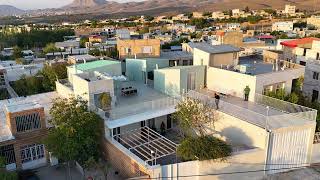
Continuing the path that began with Hambud, the Bonlad project marks another level of engagement with crisis: an engagement that is not defensive but offensive and interventionist. If Hambud revived the quality of living under economic constraint, Bonlad, with relative access to material resources, enters from a more critical position. This project thinks not of repairing the worn-out structure of the city but of disrupting it; of creating purposeful ruptures, as a spatial action that challenges the existing situation and opens the possibility of thinking about alternatives.
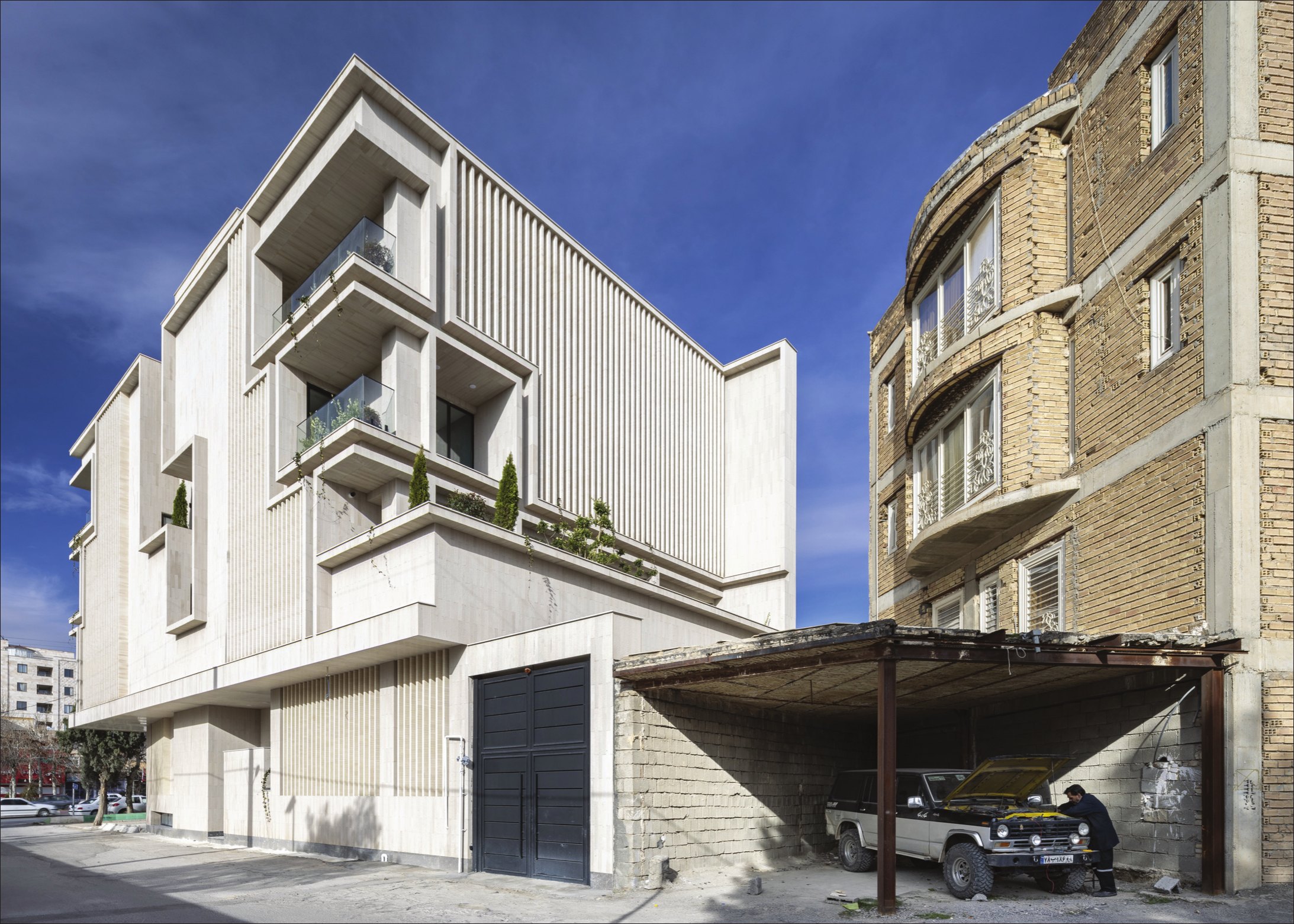
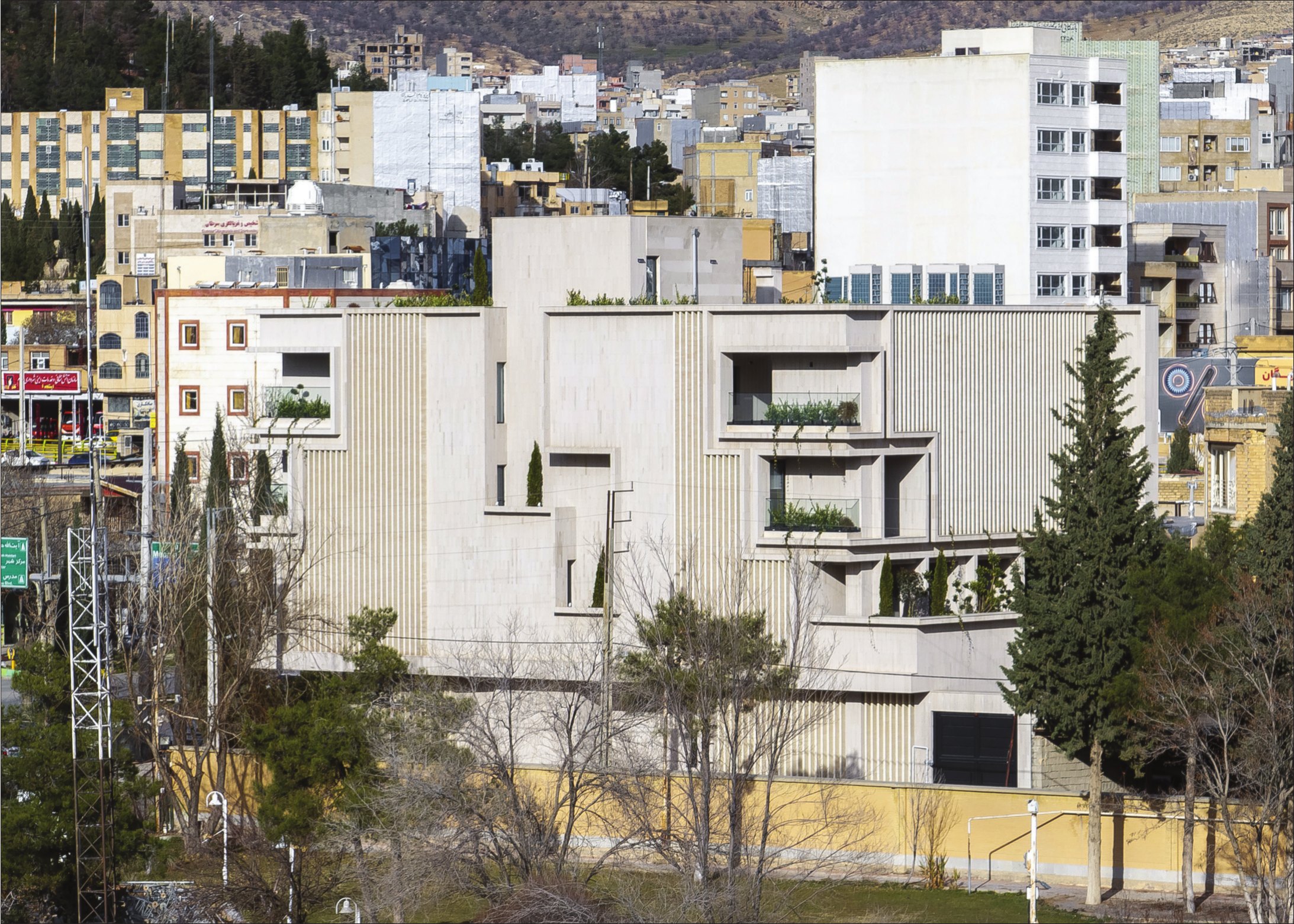
The project site is itself a symbol of this crisis: an incoherent, fragmented and suspended plot, located in an unfinished and torn fabric - neither entirely private nor public; rather, a concrete image of the structural suspension that hangs over many of today's urban spaces. In such a context, Bonlad neither reproduces nor embellishes the prevailing language of construction; it actually calls it into question. Design here becomes a disruptive action; a form of creation that, drawing on the concept of the "spatial border" and relying on the grid as a spatial device, produces a constructive disruption.
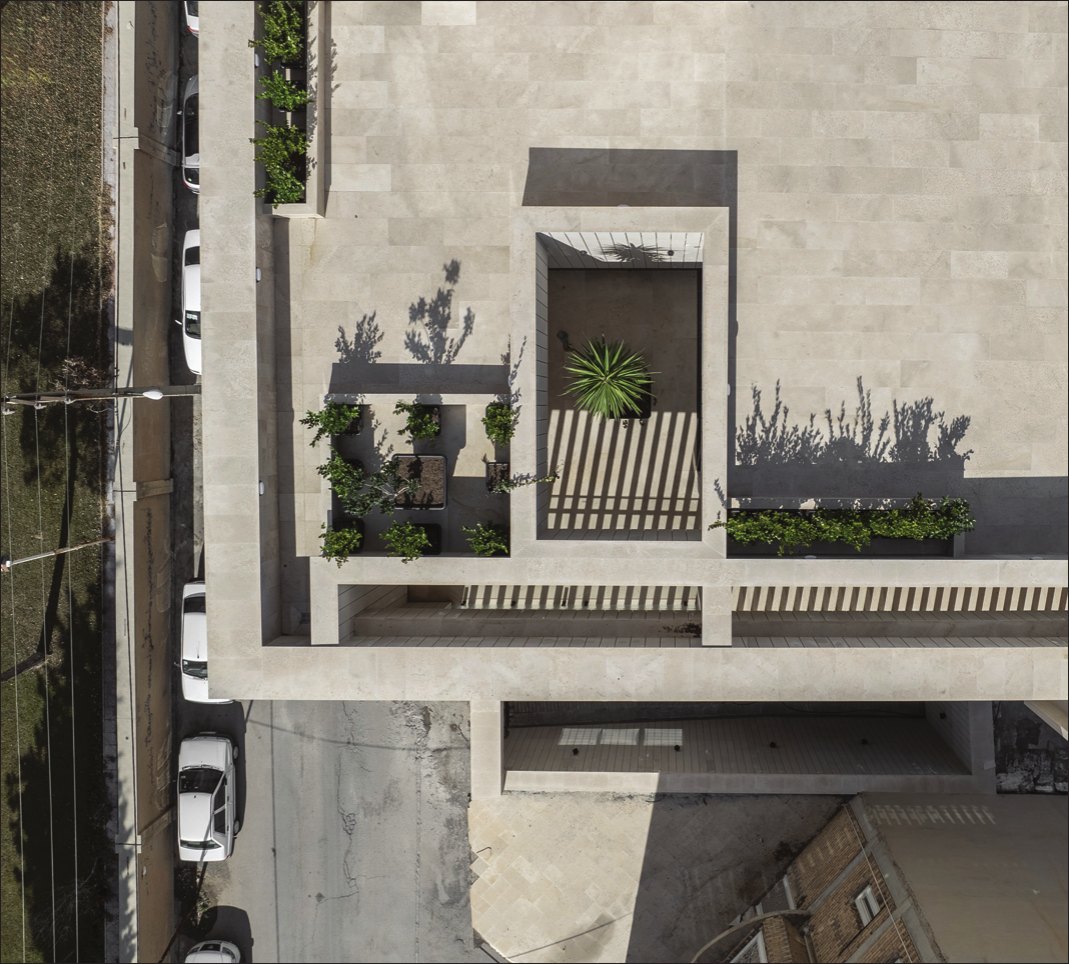
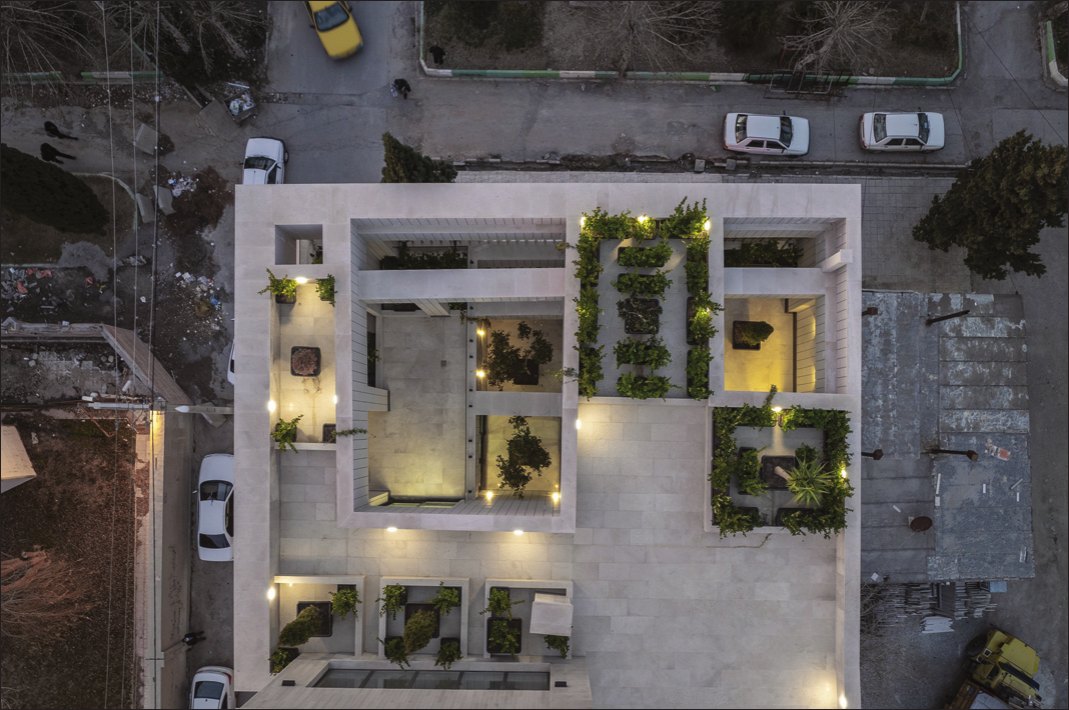
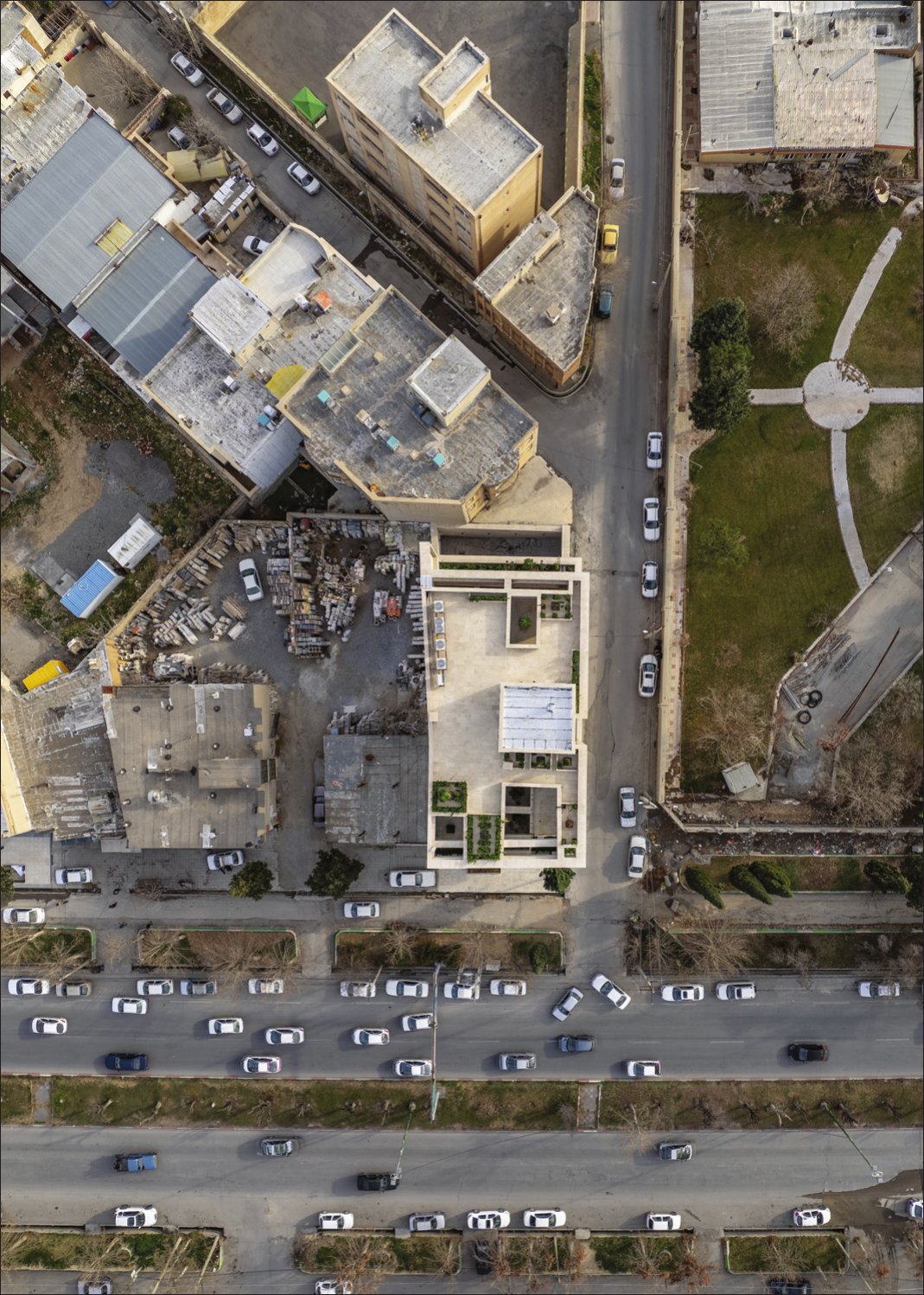
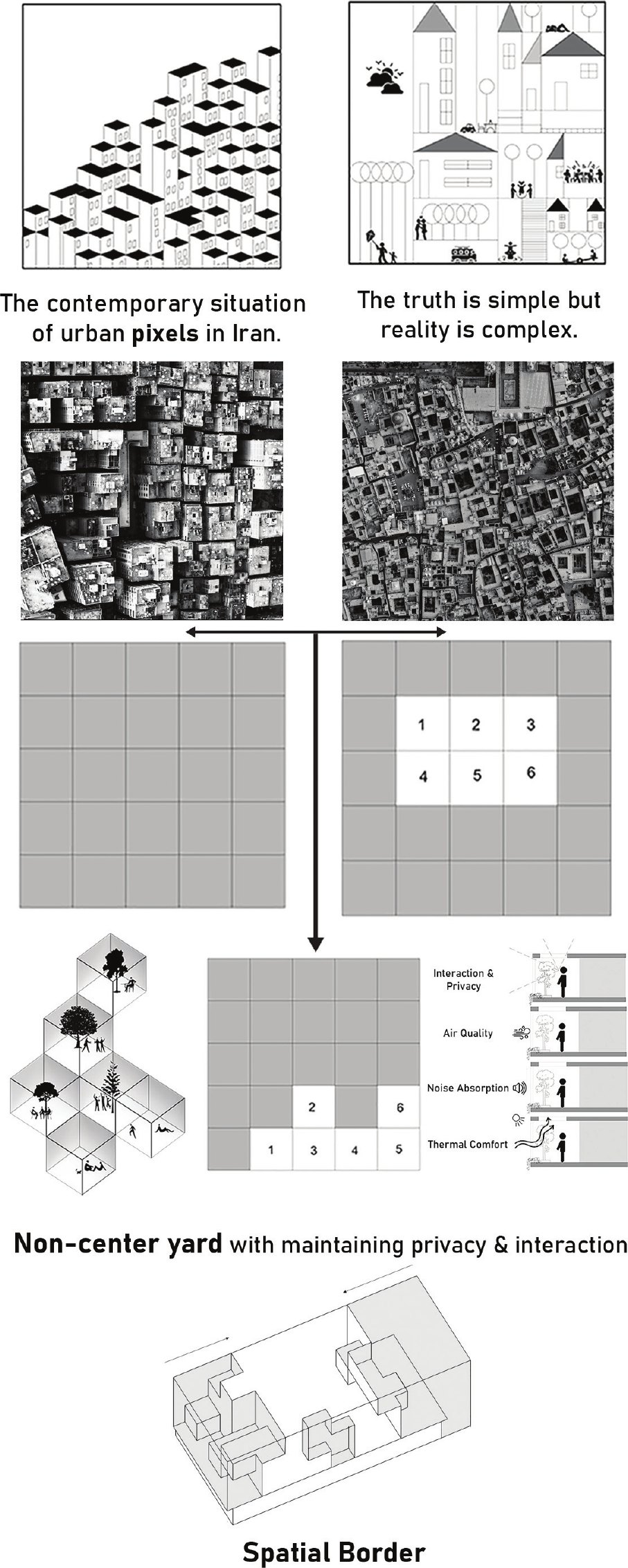
In this project, the concept of the "courtyard" changes from a central and ordering form into a corrosive element (the concept of corrosion), penetrating and corroded, that gnaws at the physical order from within.
These courtyards, or active semi-open spaces, split the space from within, break it into pieces and join it again; so that they wear away fixed boundaries and create a rhizomatic, multilayered and centreless structure. Here the project acts from the edges, breaks, voids and discontinuities - not from the centre. As Deleuze and Guattari propose in the concept of the "rhizome", such a structure is not hierarchical but extended, multi-path and resistant to fixation.13
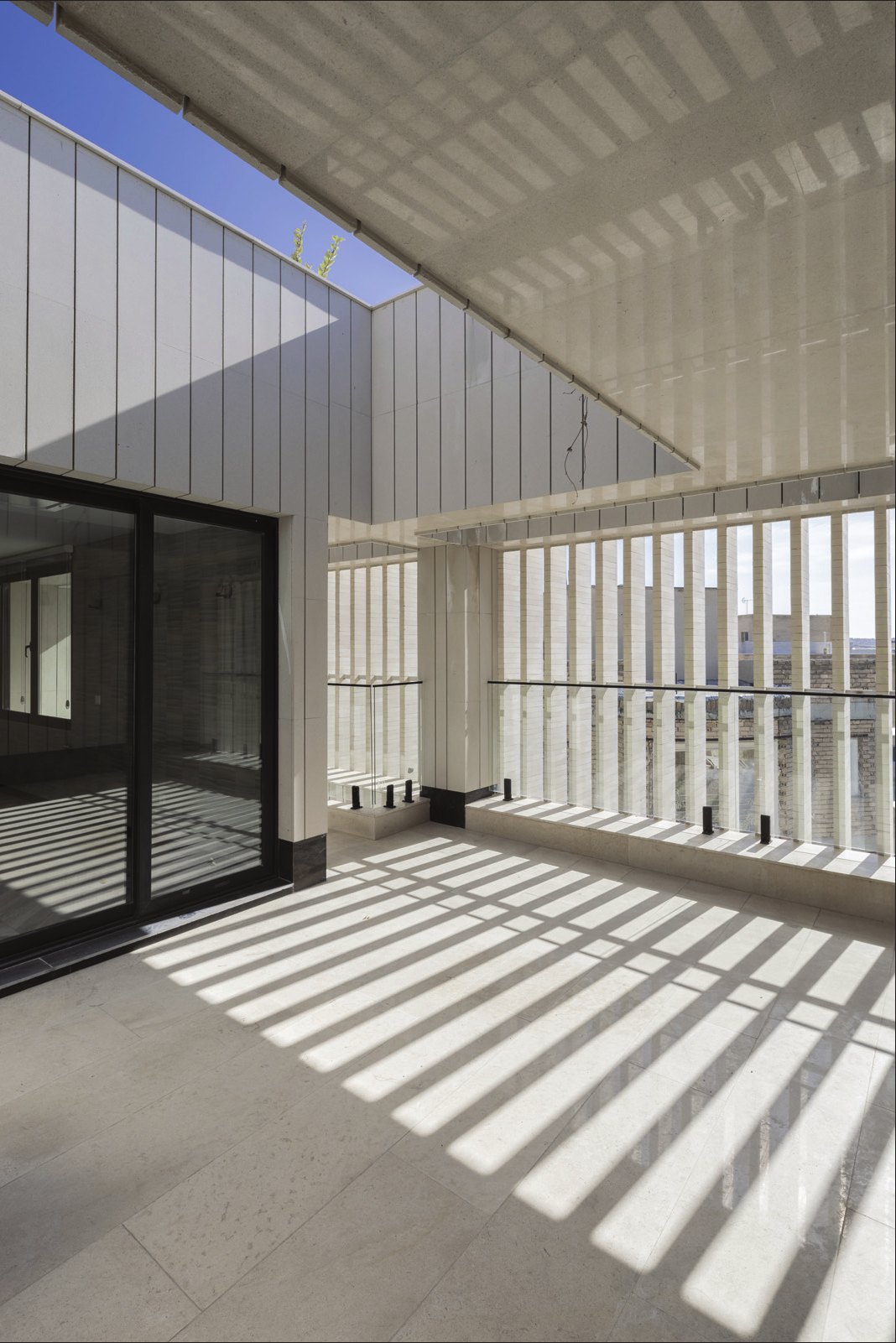
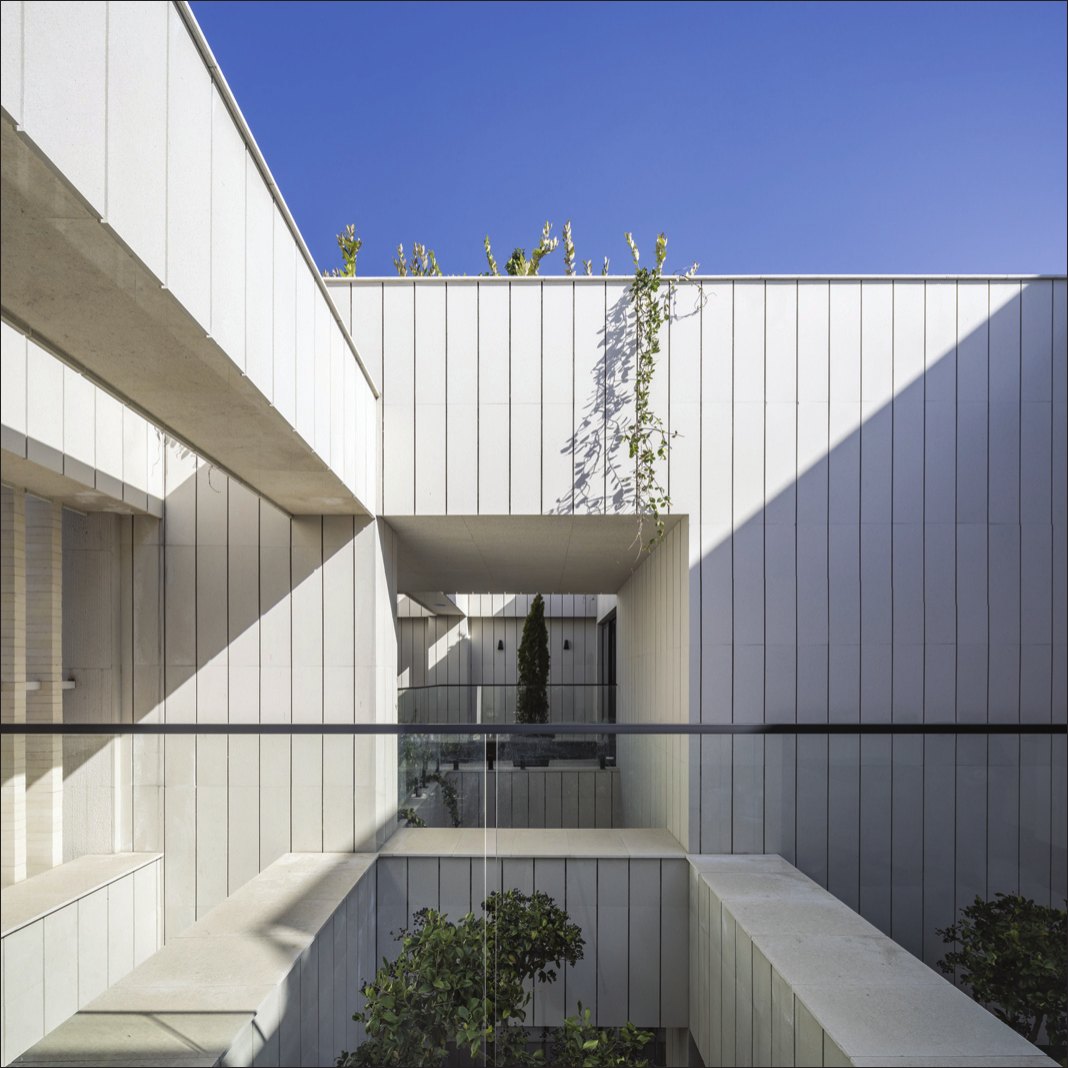
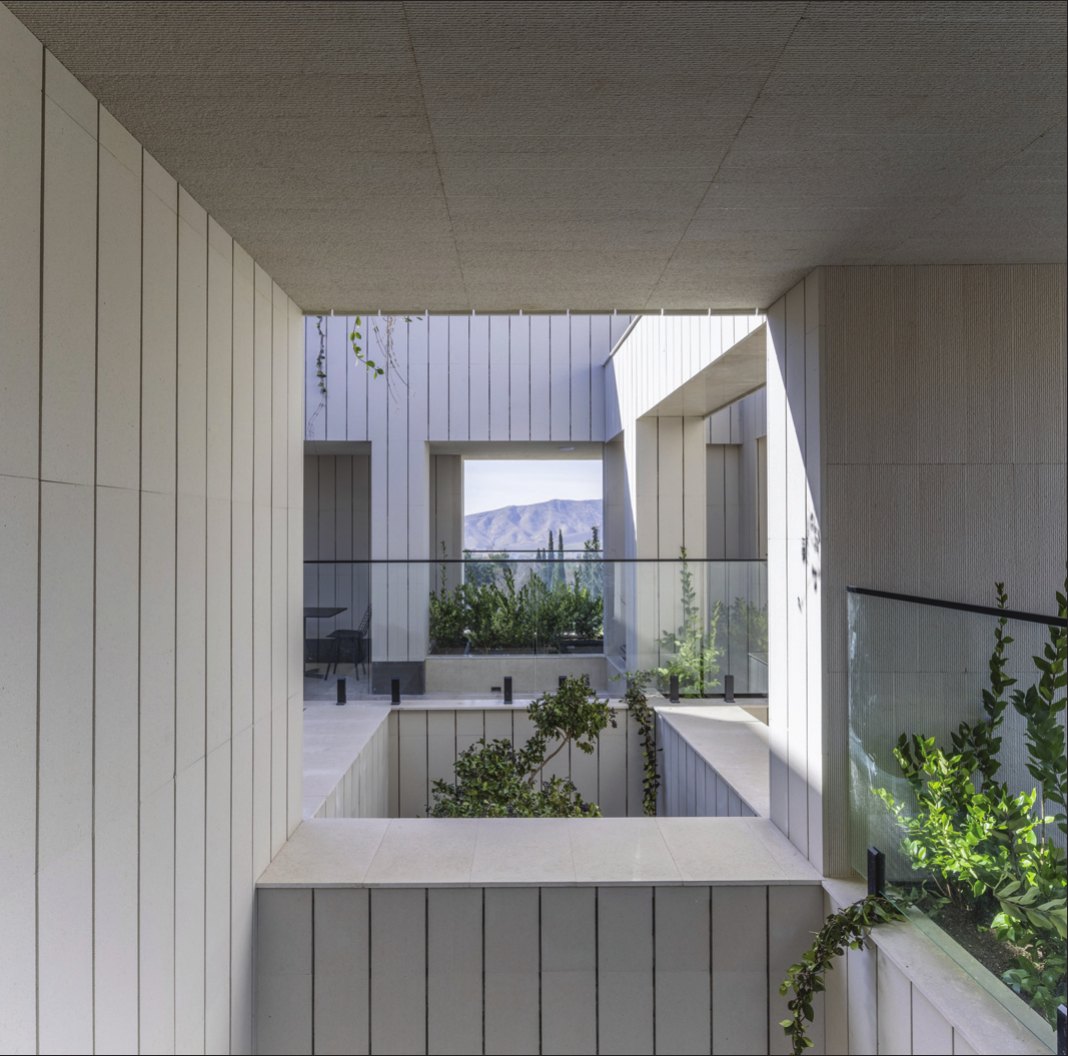
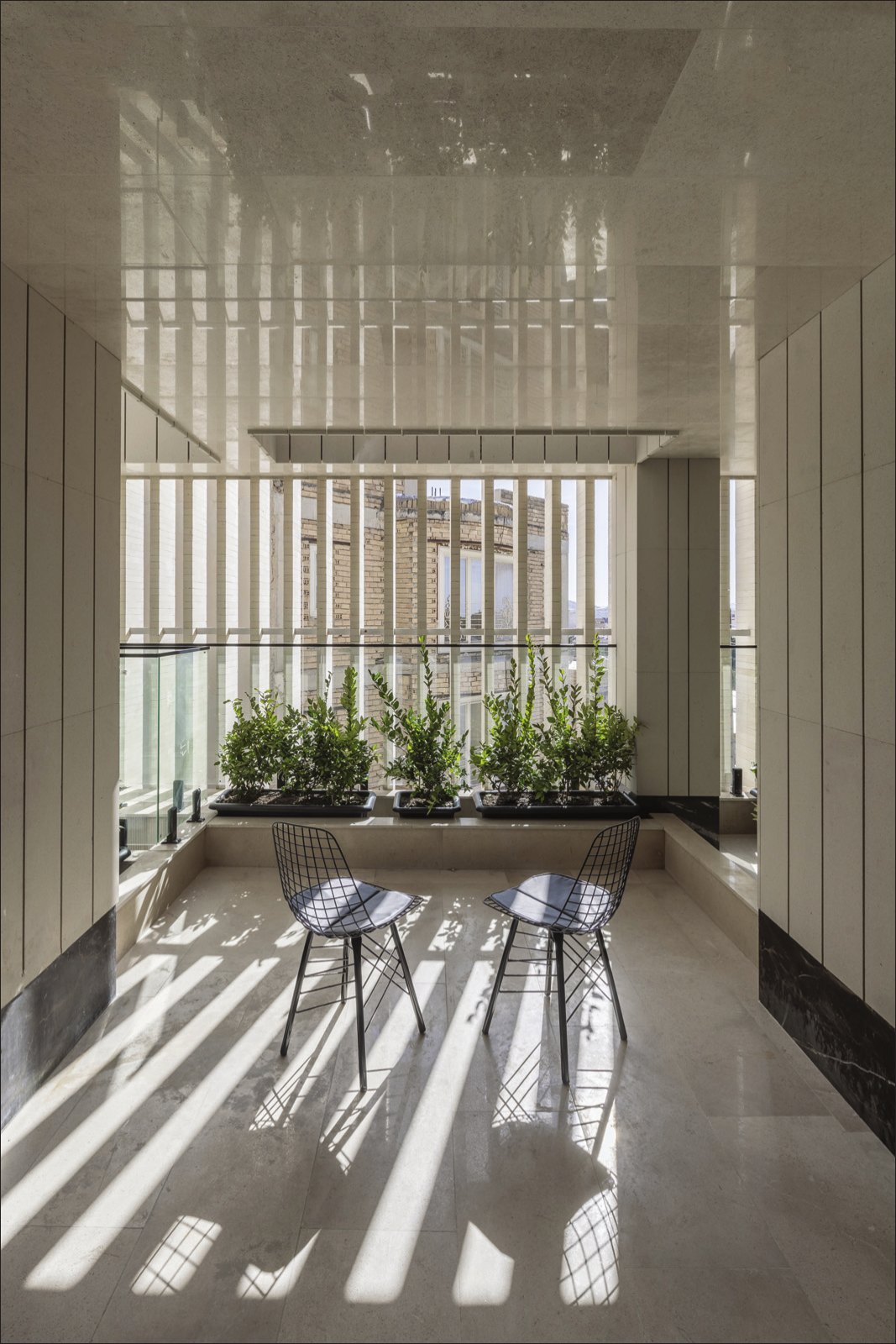
Inspired by this logic, Bonlad redefines the boundary between inside and outside: the boundary is no longer a line between two territories, but itself becomes a stage for the event; a place where space is not merely definable but experienceable. As Tschumi also says, architecture becomes an event when the rupture within it becomes constructive and generative.14
The structure of the Bonlad project is a concrete representation of a spatial rhizome: not a unity based on centrality, nor a hierarchical order, but a network of boundaries and courtyards that themselves produce the boundary anew. This logic, as Deleuze and Guattari describe it, serves not coherence but proliferation and connection; instead of reducing space to a container for consumption, Bonlad turns it into a ground for tension, generation and re-creation. This project is a multilayered articulation of spatial multiplicity. In this sense, Bonlad acts beyond representing crisis; the project itself becomes an action within crisis, in the language of critique, disruption and imagination. Penetrating courtyards, voids, fluid boundaries and unfinished sections all serve to disrupt the dominant order; an order that has turned space into a fixed commodity. In contrast, Bonlad tries to draw new possibilities for living out of instability, turmoil and fluidity. Architecture here is not merely the design of form but the building of a field of thought and body - an embodied, social architecture engaged with power. From this perspective, Bonlad is not just a residential project; it is a theoretical intervention in the relation between space and power, order and disruption, centre and margin.
What links it to Hambud is not similarities of form or materials, but a shared understanding of architecture as a language of questioning. In both projects, a final answer is avoided and in its place a fundamental question is posed: how can space be built not only for dwelling but for thinking, resistance and hope? How can the boundary be made not an obstacle but a stage for the emergence of meaning? A boundary in which human relations take shape, conflicts become visible and the possibility of an alternative life emerges.
Conclusion
In a condition where space itself has become a heterogeneous battlefield of economic forces, dominant discourses and social tensions, architecture can no longer remain in the role of a passive intermediary or an instrument for producing form. What appears as crisis in such a context is not merely the collapse of infrastructure or physical poverty, but a rupture in the language of space; a language that has been emptied of expressing the experience of living and distorted within market, bureaucratic and established discourses. Here, crisis is not just a condition that has occurred, but a produced condition; a crisis in which space has become not only a reflection of the structure of power but its functional instrument.
From this perspective, rethinking architecture means rethinking the relation between space and power; a relation that must be pursued not with the aim of "restoring order" but with the intention of disrupting the simultaneities of domination and de-imagining established realities. Architecture, in this role, gains meaning not as a means of providing answers but as a language-bearing system for opening up conflicts and possibilities. What matters in crisis is not restoring a lost order, but creating a kind of "productive disorder"; a disorder that, like the structure of the Deleuzian rhizome, brings forth possibilities for living otherwise out of branching, heterogeneous connections and penetration into the grey layers of established order.15
On such a horizon, space is no longer a neutral container but the text of a meeting place of forces, conflicts and unseen struggles: and architecture is not a skill for solving problems but a way of thinking within the problem. This architecture, unlike meta-technical yet still conservative approaches, places itself not in the service of order or beauty, but in the service of the possibility of dialogue with what has been erased, what has been repressed, and what has been emptied of the possibility of living.
Such an architecture sees its mission in returning the question in place of the answer; in suspending certainties and revealing complexities. Here, the architect is no longer the designer of a project but the author of a situation; an author who focuses not on form but on producing seeing, feeling and thinking within space.16
In this reading, architecture itself becomes a kind of writing; not the writing of an answer but the text of a question. As Derrida states, rupture occurs when writing distances itself from presence; and space, in these projects, is a distance that opens the possibility of thinking. Hambud and Bonlad are both texts that rise from the heart of crisis, yet do not themselves carry the logic of domination; they are anti-logic, a secondary language, and instead of rebuilding power, they suspend it.
Notes:
1-Lefebvre, H. (1991). The Production of Space (D. Nicholson-Smith, Trans.). Blackwell. (Original work published 1974); Rendell, 2006.
2-Vidler, A. (1992). The Architectural Uncanny: Essays in the Modern Unhomely. MIT Press.
3-Jones, A. (2012). Performance. Routledge.
4-Bourdieu, P. (1991). Language and Symbolic Power (J. B. Thompson, Ed.; G. Raymond & M. Adamson, Trans.). Harvard University Press.
5-Agamben, G. (1998). Homo Sacer: Sovereign Power and Bare Life. Stanford University Press.
6-Harvey, D. (1989). The Condition of Postmodernity: An Enquiry into the Origins of Cultural Change. Blackwell.
7-Escobar, A. (1995). Encountering Development: The Making and Unmaking of the Third World. Princeton University Press.
8-Pile, S. (2005). Real Cities: Modernity, Space and the Phantasmagorias of City Life. Sage Publications.
9-Lefebvre, 1974
10-Till, J. (2009). Architecture Depends. MIT Press.
11-Lepik, A. (2010). Small Scale, Big Change: New Architectures of Social Engagement. Museum of Modern Art.
12-Dunne, A., & Raby, F. (2013). Speculative Everything: Design, Fiction, and Social Dreaming. MIT Press.
13-Deleuze, G., & Guattari, F. (1987). A Thousand Plateaus: Capitalism and Schizophrenia. University of Minnesota Press.
14-Tschumi, B. (1996). Architecture and Disjunction. MIT Press.
15- Deleuze & Guattari, 1987
16-Derrida, J. (1997). Of Grammatology. Johns Hopkins University Press.