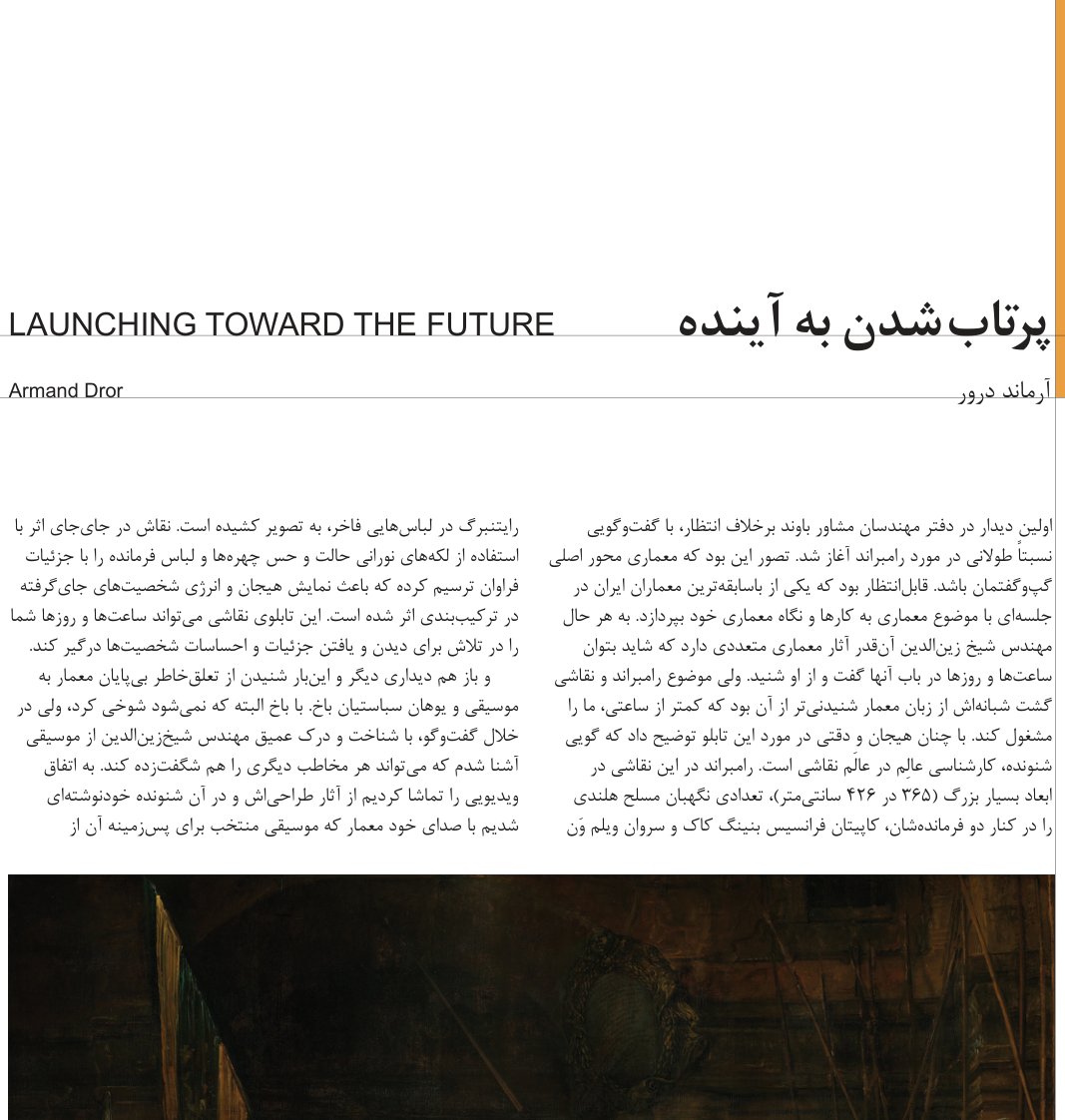
The first meeting at the office of Bavand Consulting Engineers began, contrary to expectations, with a rather lengthy conversation about Rembrandt. The assumption had been that architecture would be the main subject of discussion. It was to be expected that one of Iran most experienced architects, in a meeting on the topic of architecture, would address his works and architectural outlook. After all, Engineer Sheikh Zeineddin has so many architectural works to his name that one could spend hours and days discussing them and listening to him. But the topic of Rembrandt and his painting The Night Watch was more captivating coming from the architect than it would have been if it had occupied us for less than an hour. He explained this painting with such excitement and precision that one would think the listener was an erudite expert in the world of painting. In this painting, of very large dimensions (365 by 426 centimeters), Rembrandt has depicted a number of armed Dutch guardsmen alongside their two commanders, Captain Frans Banning Cocq and Lieutenant Willem van
Ruytenburgh, in splendid attire. Throughout the work, the painter has used luminous patches to render the mood and feeling of the faces and the commander clothing with abundant detail, generating a sense of excitement and energy in the characters placed within the composition. This painting can engage you for hours and days in the effort to see and discover the details and emotions of its characters. And then another visit, this time hearing of the architect boundless devotion to music and Johann Sebastian Bach. One cannot, of course, trifle with Bach, but in the course of conversation, I became acquainted with Engineer Sheikh Zeineddin deep knowledge and understanding of music, which could astonish any listener. Together we watched a video of his design works, and in it we became listeners to a self-written text in the architect own voice, with the background music selected from
Editorial Notes
his favorite musical pieces, Bach St. Matthew Passion. He says he has been a listener of Western music, especially classical music, since the age of thirteen, and upon entering the Faculty of Fine Arts, the ground was laid for his acquaintance with Western art, which drew his attention to the depths of Western civilization. Perhaps by the third visit, it would have been the turn to hear about architecture. That day, John Stuart Mill and Einstein also came up in conversation, and in the end, he spoke of the importance of modernism and its irreplaceability despite all the deficiencies that contemporaries enumerate. He spoke of the legacy of modernism and its influence on his own architecture and cited examples, though the architecture and works of Engineer Sheikh Zeineddin would have to wait for a later visit. It appears that the mental world of Engineer Sheikh Zeineddin is a world in motion, where stasis and immobility have no place. You can find in his words a firm belief in changeability and transformation, which may at first seem somewhat unexpected. Conventionally, architects build that which is static and permanent, and time stops upon it once it is built. Perhaps for this reason, making changes to a completed building is not well tolerated among architects, and they often express it with terms such as tampering, while in its more respectable form, they refer to it as renovation, perhaps to lighten the burden of guilt for the act of tampering. We are not speaking of restoration, however, which is the act of undoing the destructive effects of time -- something akin to stem cell therapy for treating injury in humans. What is intriguing in the course of Engineer Sheikh Zeineddin remarks about his built works is the loss of a building allure over time, for him. Thought and creativity, in his view, belong to the moment of creation. From his perspective, the outlook and form of creativity are constantly changing. Despite all the respect he holds for Rembrandt and Bach and their masterpieces, and though he always speaks of them with admiration, he
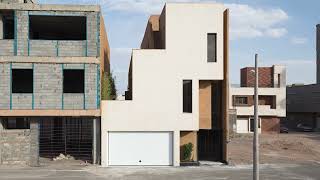
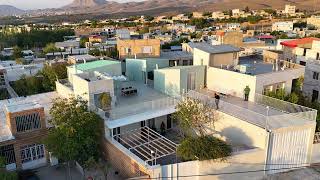
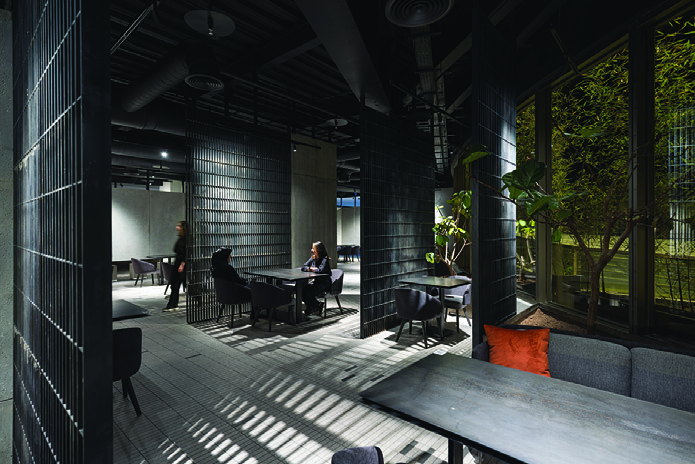
believes that with the aim of launching oneself toward the future, one merely learns from the past. He believes that creative people are generally dreamers, and that dreaming is a launching pad for propelling oneself into the future. He says dreaming is humanity most important asset, and he is certain that the day dreaming comes to an end, the human species will swiftly become extinct. In Iran architecture of recent decades, very few architects, alongside Engineer Hossein Sheikh Zeineddin and Bavand Consulting Engineers, of which he is a founding member, have managed to design and execute such a volume of architectural projects related to public buildings. Buildings that are mostly different from one another, whose architectural language has been constantly changing and evolving over time. Over the years, from the building of the parliamentary representatives offices to the Pasargad Insurance Building, a long and winding path has been traversed. The architect believes that he himself is also continuously changing, the subjects of his projects are changing too, and therefore a change in outlook is unavoidable for him. He believes that when an architect is drawing a project, he is not asking what the style or architectural language is. He is only seeking the project requirements and providing the right answer for them. Of course, he cannot deny that some architects have produced clean, polished works that have been repeated for years -- like Richard Neutra, who built similar villas for several decades. Here we encounter an architect who, over six decades of professional work, has practiced architecture without being particularly concerned about maintaining a relationship with his past works. The past, for Engineer Sheikh Zeineddin, conveys only a connection to the self. He sees no desire in himself to remain in the atmosphere and time of those works. He is not a person captivated by nostalgia. He considers himself profoundly a dreamer and says: I always have small answers for big questions. It may not be enough, but it gets the job done. Future answers are always open to discussion, but past answers are merely describable. One cannot extract creativity from the past.