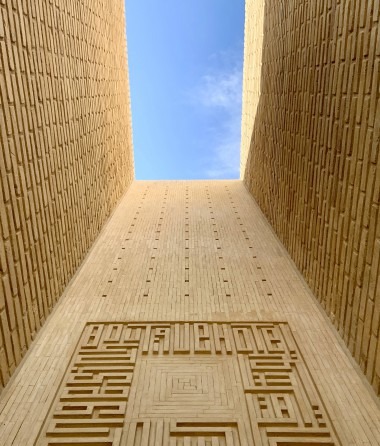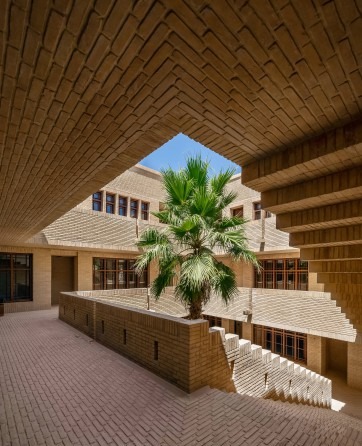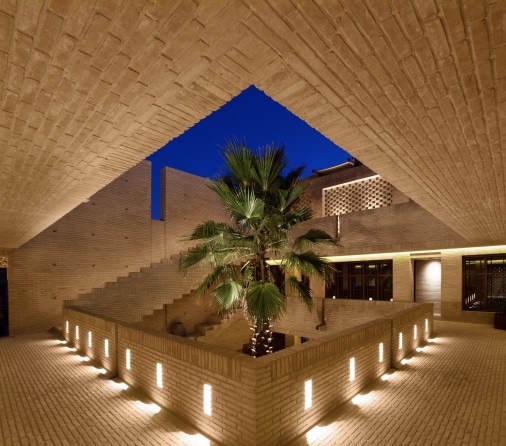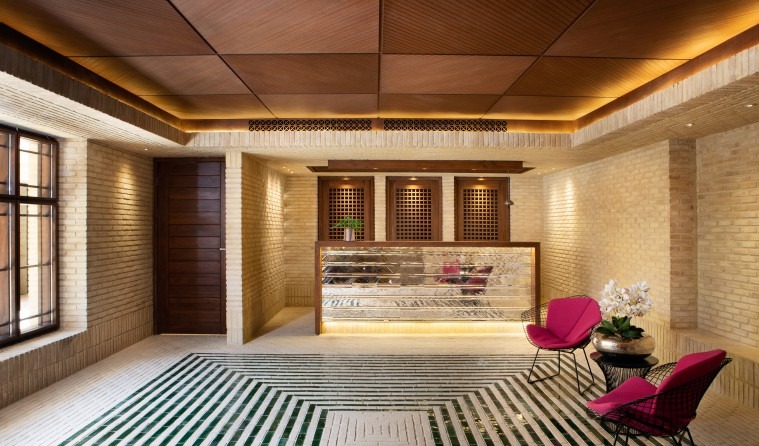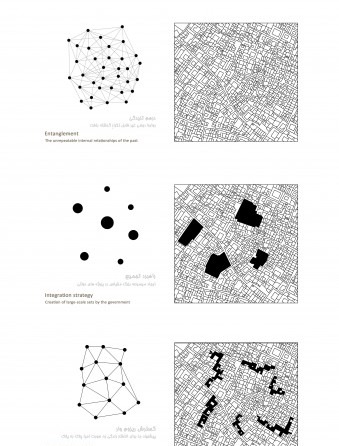
The brief was the construction of a traditional retreat within the historic fabric of Shiraz in the Sang-e Siah neighbourhood, between and adjacent to five nationally registered buildings from the Ilkhanid, Zand, Qajar and Pahlavi periods. In recent years, projects aimed at reviving the fabric have followed a strategy of demolition and consolidation — by removing fine-grain buildings, removing the alleys, defining large-scale projects and cutting streets through, they have gradually undone the proportions of solid and void, the geometric and connective order of the passages, and the structure of a significant part of the historic fabric.
This project is an attempt to test renewal and to offer a way of extending that renewal through the fabric, in such a way that it brings about a change in the social and cultural structure and generates life anew. But the principal problem in the renewal of the fabric is the contest with the pseudo-historical patterns sought by the deciding bodies — who, with familiar codes and ornaments, are looking to build a fake in the image of the original. We tried to keep the project free of the common codes and motifs, and on the path of revitalising the fabric to put forward a plot-by-plot (rhizomatic) strategy for the spread of life through the body of the fabric.
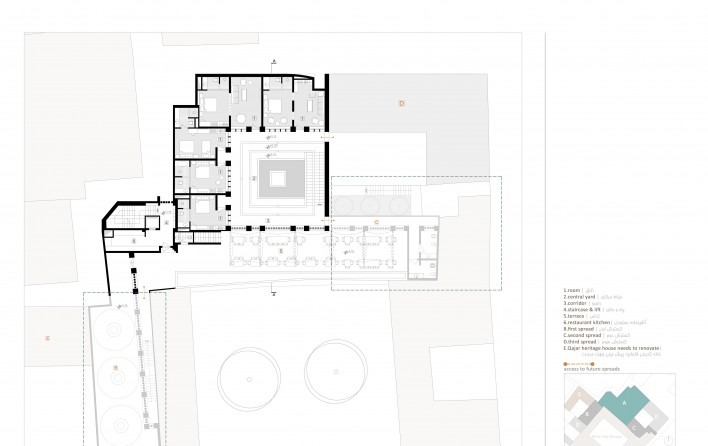
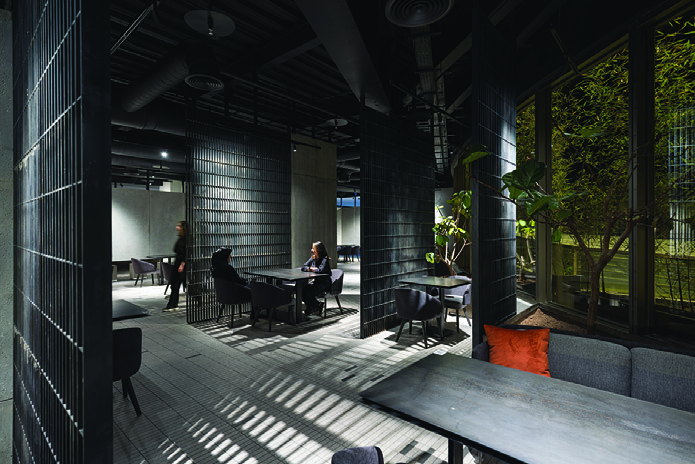
Instead of consolidating plots and defining one large-scale complex, we thought in terms of the future annexation of buildings; with limited financial resources and no possibility of buying everything at once, we began the design with an initial nucleus, and planned for its expansion into adjacent plots and ultimately its spread through the fabric. During the construction of the initial nucleus, two adjacent plots were acquired according to the early projections and are currently under construction, with several further plots in the acquisition and design stage. The choice of annexation rather than consolidation keeps the project always alive: the fine grains, in their existing positions and proportions, are linked into larger sets for different functions, and passages at varying levels reproduce the external connective network within the building.
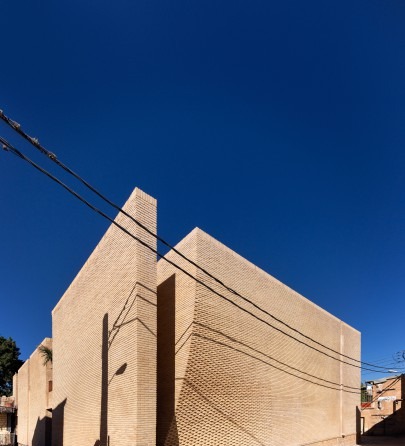
Plot-by-plot transmission of life is one proposed approach for the revival of the historic fabric — but it will always remain unfinished. Unfinished, with a hidden and continuing desire to grow. In the course of its rhizomatic spread, wherever the project finds a valuable building it restores and revives it; and wherever it finds a building that does not warrant preservation, or finds a piece of empty land, it will design and build a building in dialogue with the fabric — grasping the proportions, the geometry and the solid-and-void of the massings — and try, like the historic buildings around it which were emblems of their own technology and needs, to be — in connection with its setting — a representative of its own time.