“Unlike the architecture of the past, contemporary architecture must be able to respond to the changing needs of the present age.”
Kiyonori Kikutake
Sky House: A Symbol of Kiyonori Kikutake’s Innovative Architecture
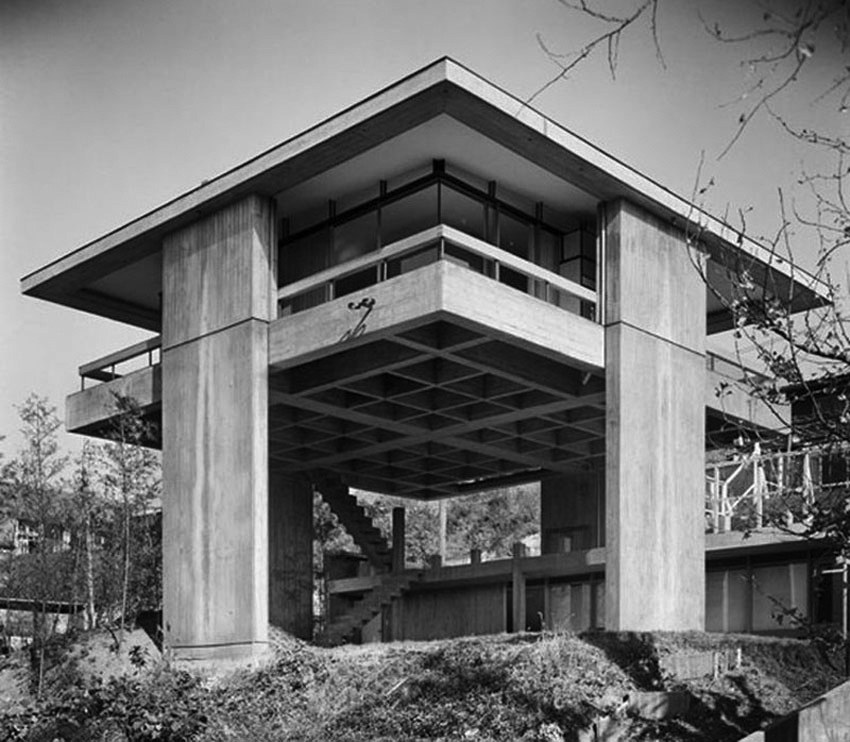
The Japanese architect Kiyonori Kikutake (1928–2011) designed and built the Sky House in 1958 for his own use. The project stands out as a symbol of his long-held architectural beliefs. As one of the founders of the Metabolist2 movement, Kikutake created a framework for structural planning and new models for urban communities. His Sky House is a single, raised volume that displays both of these fundamental criteria at a domestic scale.
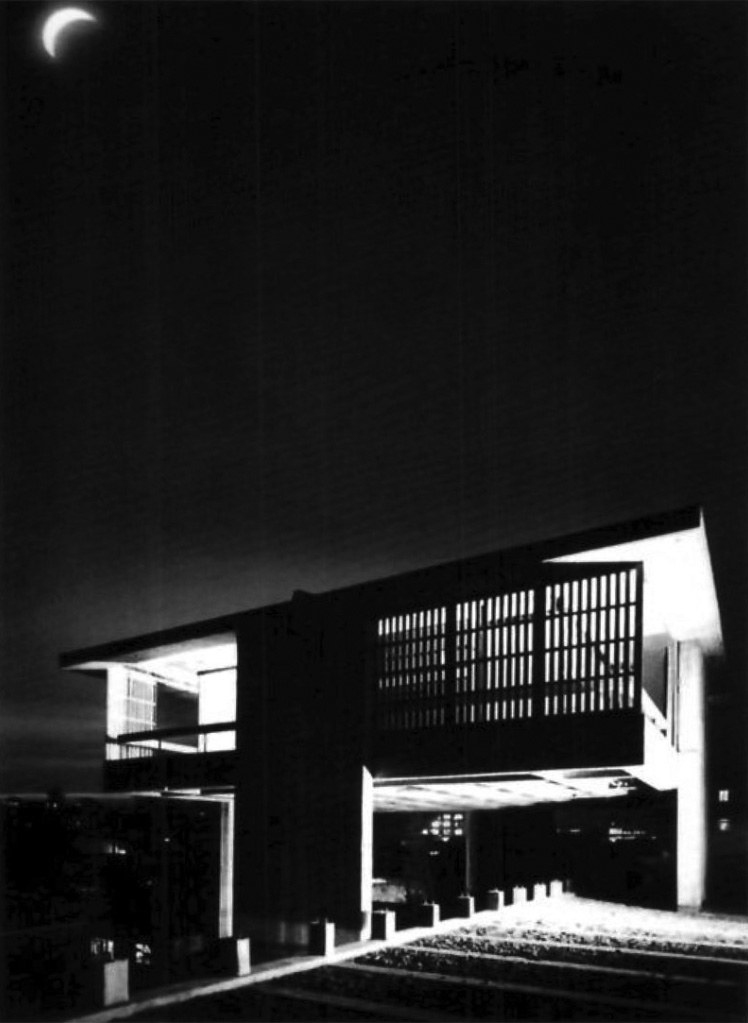
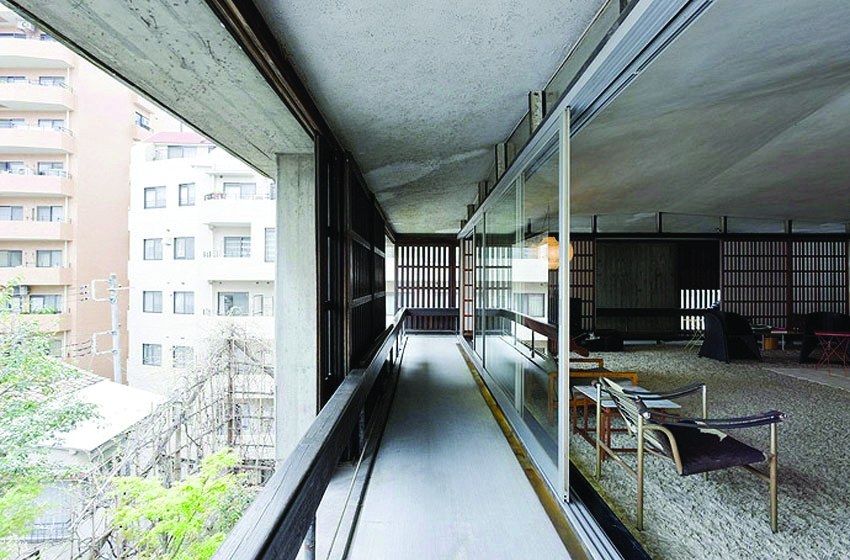
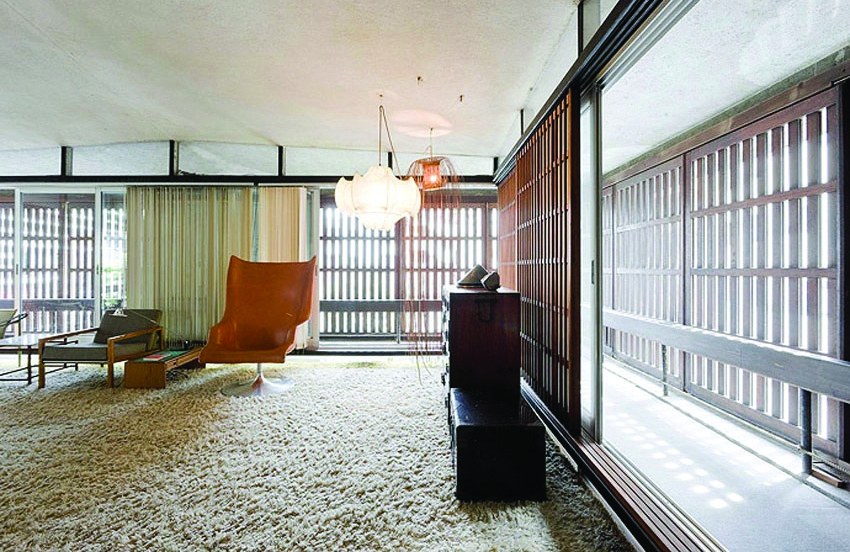
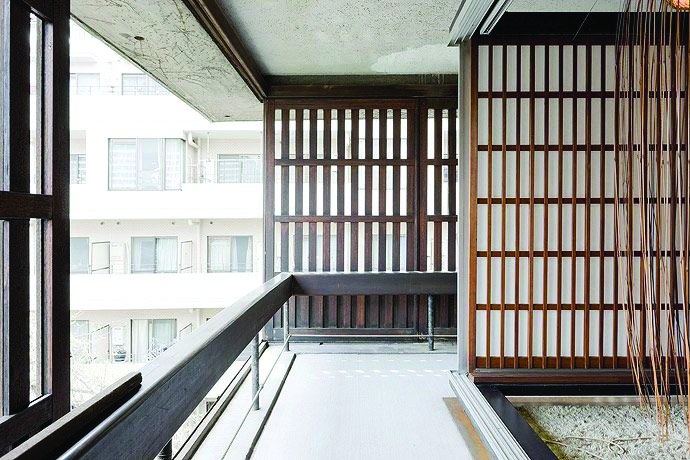
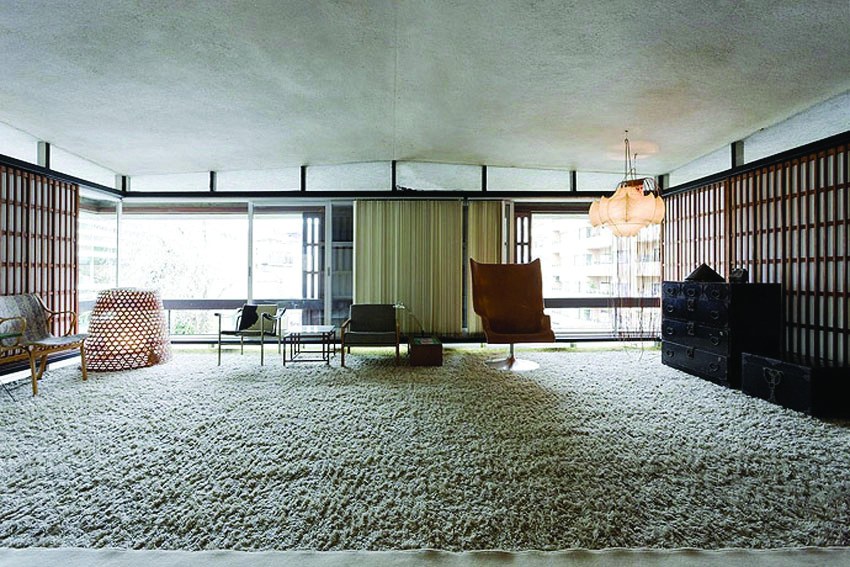
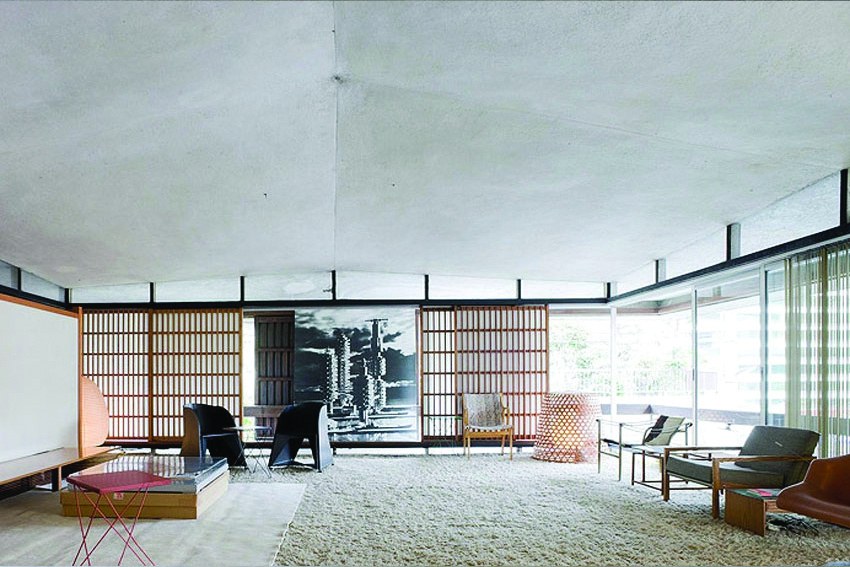
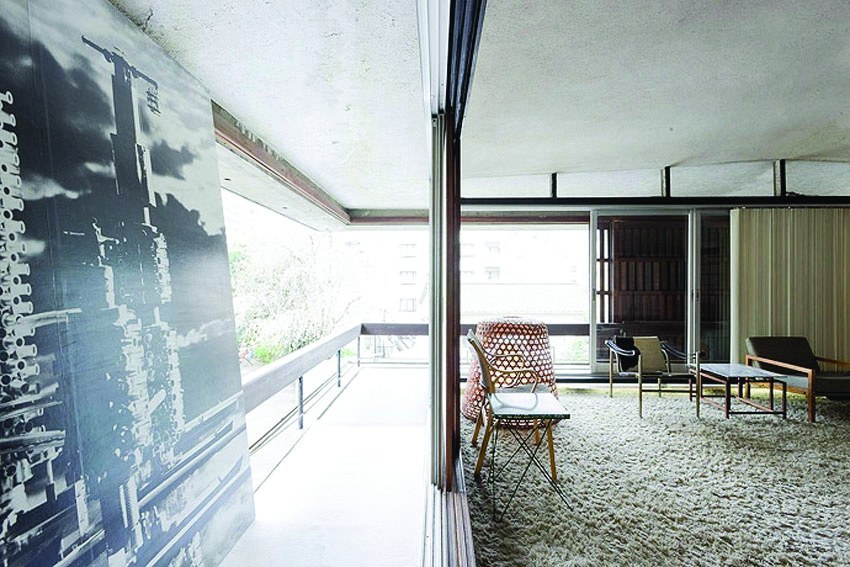
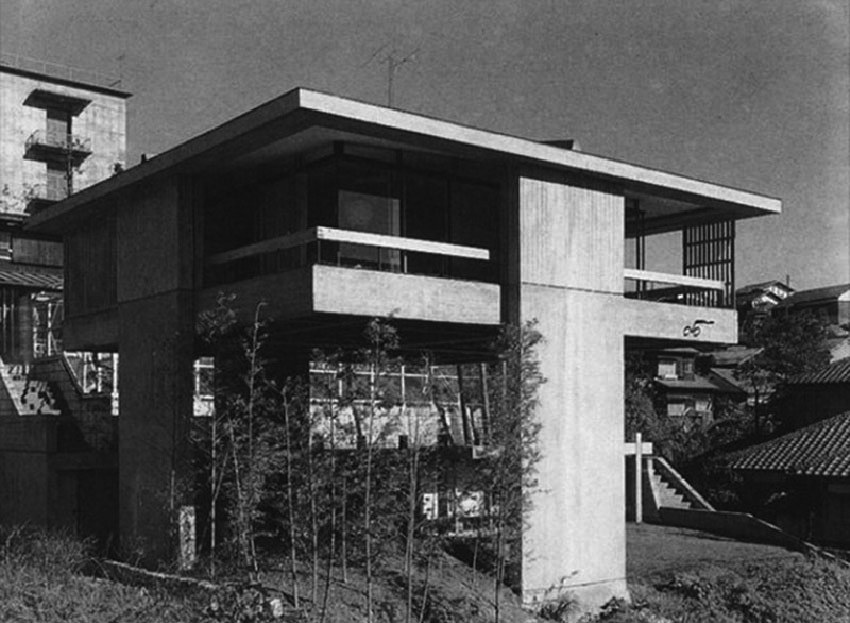
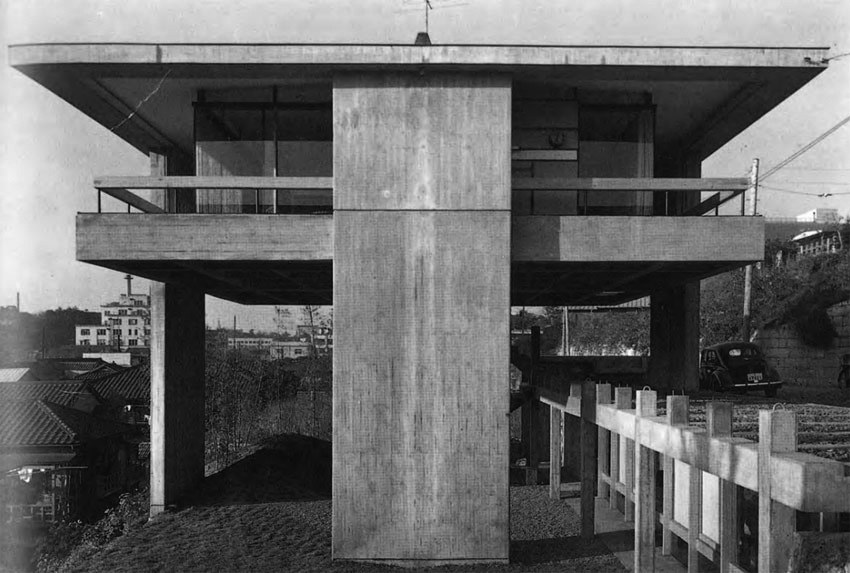
With a raised concrete platform and a cantilevered roof, the house challenges traditional notions of interior architecture and blurs the boundaries between inside and outside.
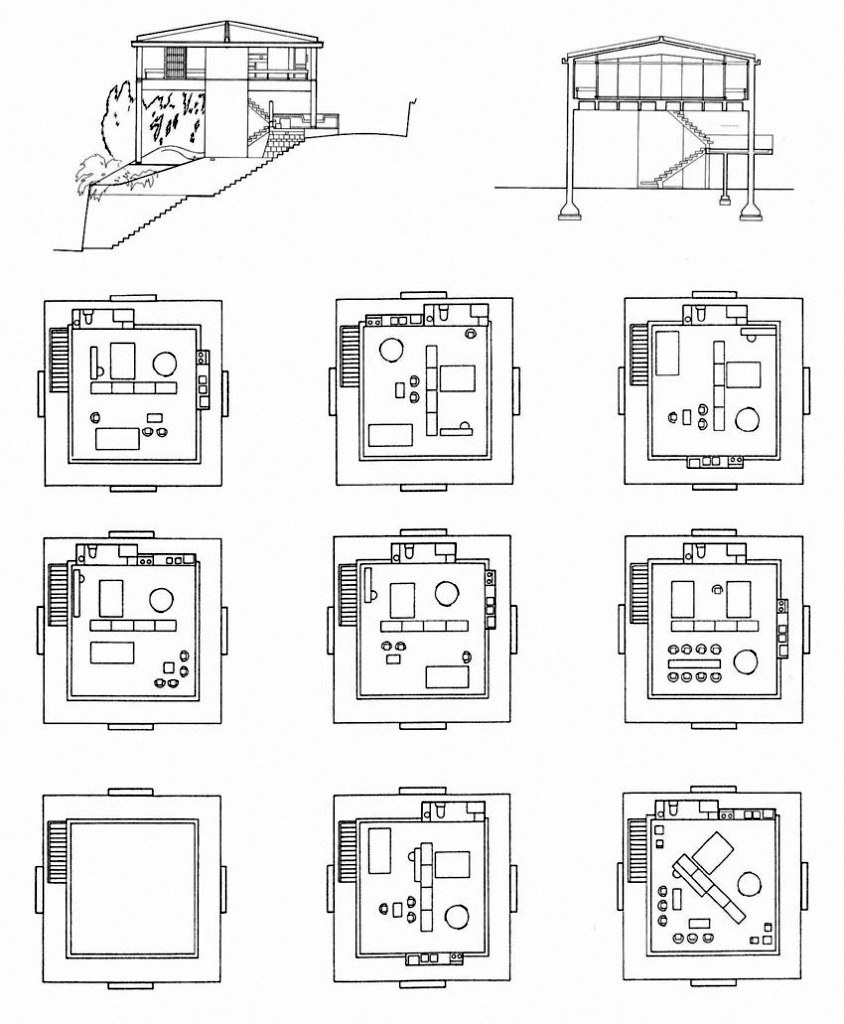
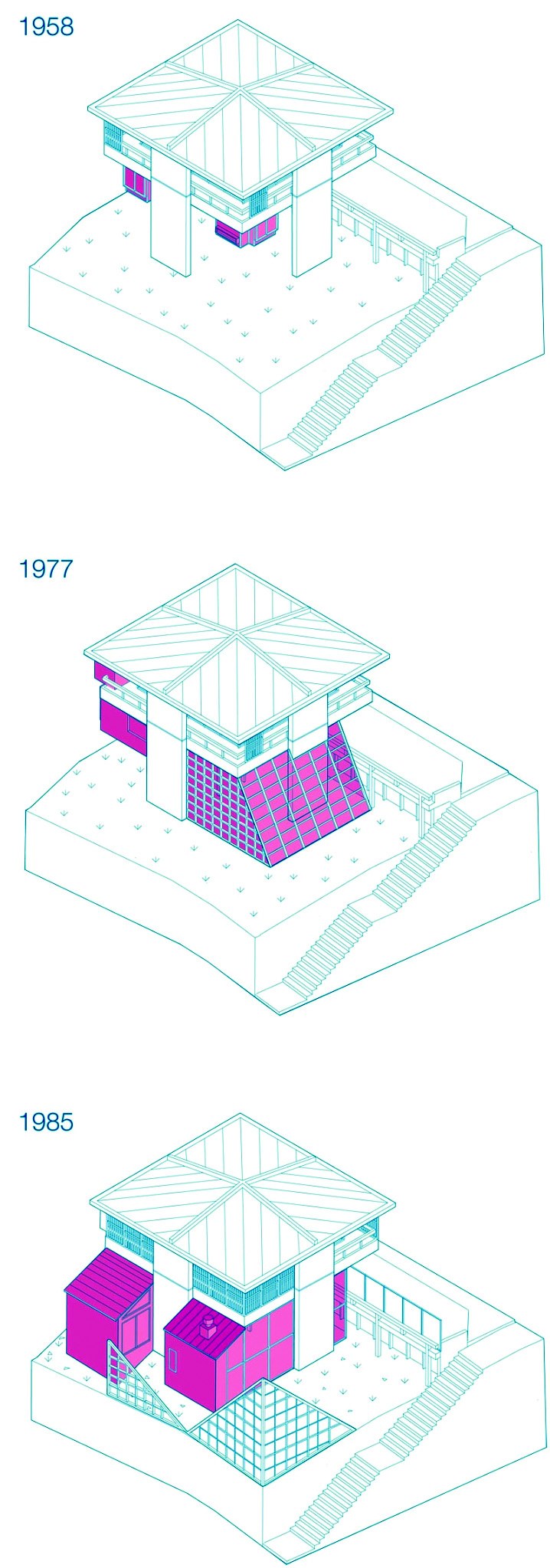
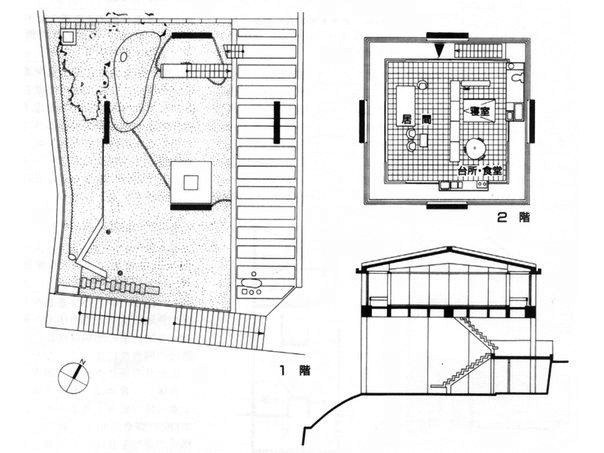
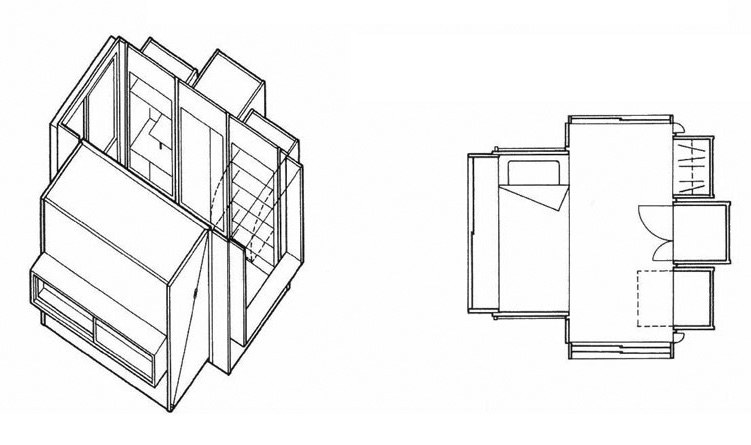
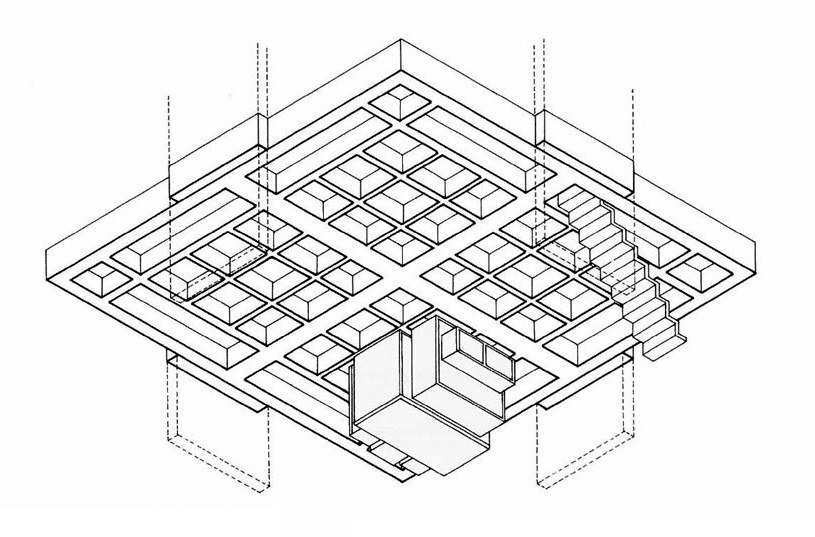
The 55-square-metre house consists of a 10 × 10 metre concrete slab on piers 4.5 metres high. The piers stand on the central axis of each side so that the corners are left free; they also support the concrete roof. This flexibility in the open layout, with a central living space and service zones along the sides that recall the traditional Japanese interior, shows the architect’s opposition to functionalism3.
Kikutake always referred to his own life story, bound up with the history of Japan, to explain the Metabolist criteria. He was the son of a wealthy landowning family that, by the time he was 17, had become poor with the end of the war and the upheavals that followed. After the war the Metabolists gradually put forward flexible structures for the new cultural situation, which entailed structures adapting to changeability.
The Sky House applies this principle at a small scale and addresses the inherent changeability of a single family. The first addition to the main volume, the children’s room, was a small space fitted beneath the floor (what the designer called a “movenet”) and was removed after the children grew up and left. Over more than 50 years changes were made to the Sky House; some added to the building and some altered the basis of the house irreversibly.
Notes:
1- Kiyonori Kikutake was put forward in the 1960s in response to the rapid urbanisation and industrialisation of post-war Japan. His best-known works are the Sky House, Marine City and the Tokonin House. Kikutake’s legacy as an architect and teacher continues to inspire and influence generations of architects and designers around the world. He was the teacher and employer of several leading Japanese architects, including Toyo Ito, Shozo Uchii and Itsuko Hasegawa.
2- Metabolist
3- functicnalism
https://archeyes.com/
Photographs: Kiyonori Kikutake Archive, Iwan Baan