Tohid Ahadi
Born 1335 SH (1956). Graduated from the Faculty of Architecture and Urbanism, Shahid Beheshti University (1365 / 1986). Worked with Tarh Consulting Engineers (1359-72 / 1980-93) and Kushk Consulting Engineers (1372-75 / 1993-96); in partnership with Bernard Derow from 1375 / 1996.
Bernard Derow
Born 1338 SH (1959). Graduated from the Faculty of Architecture and Urbanism, Shahid Beheshti University (1370 / 1991). Worked with consulting engineers, among them Tajir and Bavand, during his studies; ran his own private office from 1363 / 1984; in partnership with Tohid Ahadi from 1375 / 1996.
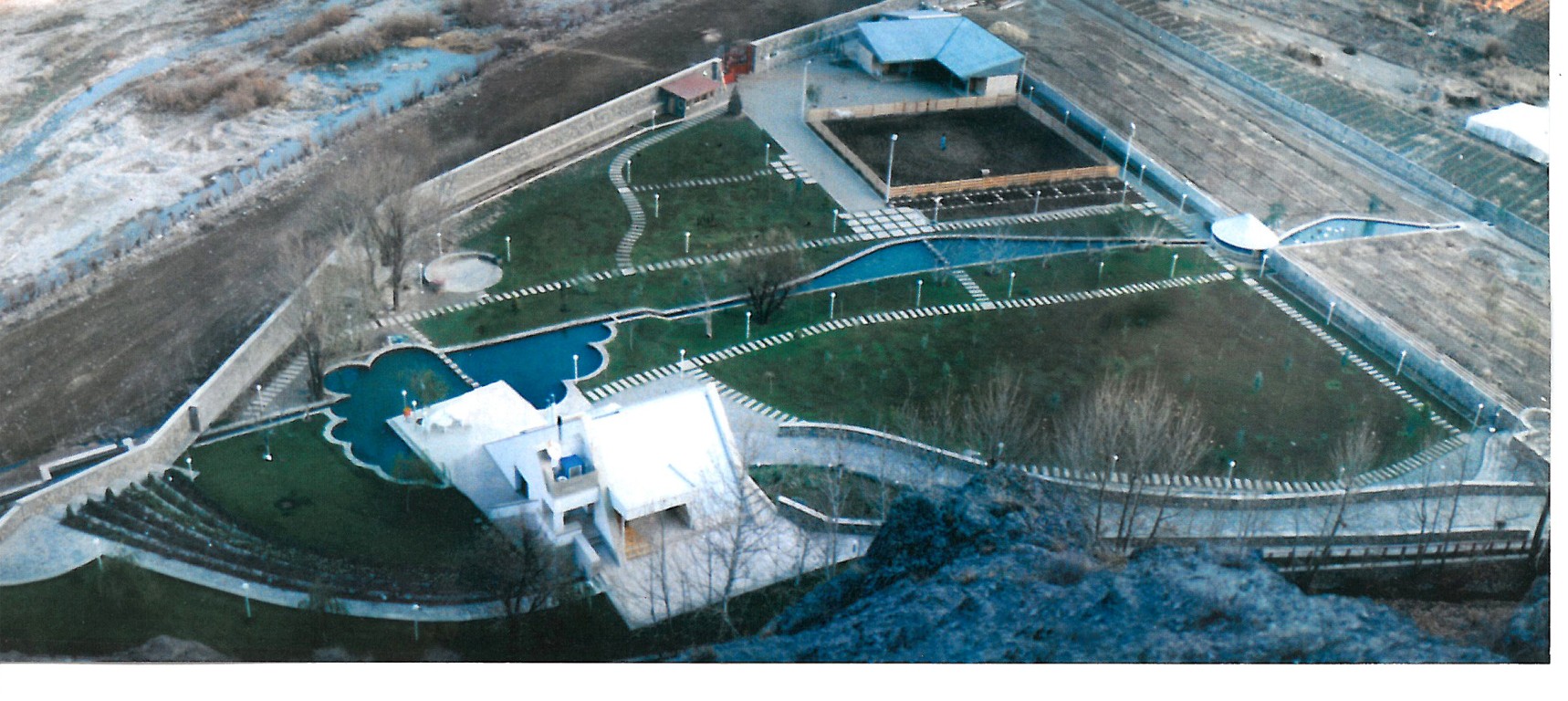
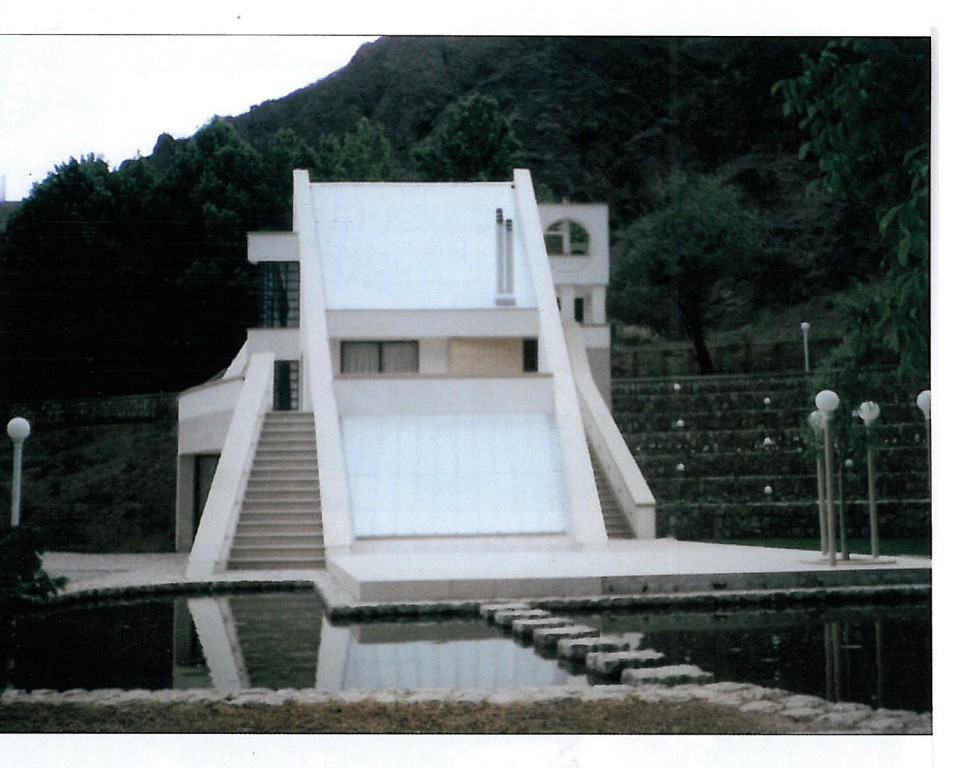
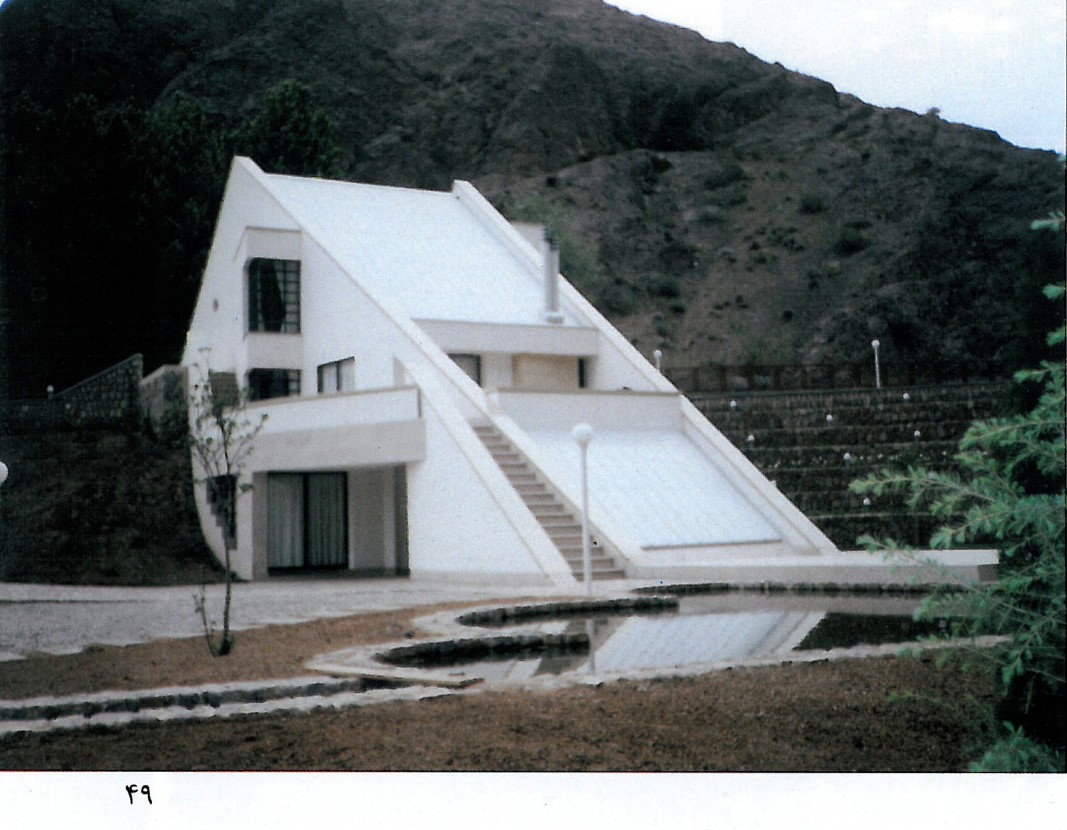
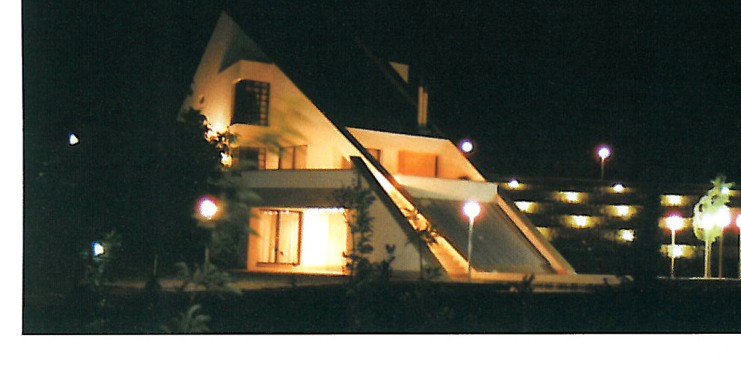
Villa in Khojir
Client: Bakhtiari, engineer. Design: Bernard Derow, Tohid Ahadi. Structure: Mohammad-Reza Ameri. Constructor: Ashkan Sadri. Interior design: Rajab Habibollahi. Site: 15 km east of Tehran, on the bank of the Jajrood River, Khojir region.
The Geometric Concept
In two-dimensional space, two rectangles are overlaid on one another, one of them turned a few degrees against the other; from the area of difference between the two overlaid rectangles, the place where the three-dimensional volume sits has been arrived at.
In three-dimensional space, a rectangular, cube-like volume, aligned with the slope of the land, is set on the foothold obtained from the rotation of the two rectangles in the two-dimensional plane — virtually a portion of it sunk into the ground.
Result: a residential space for vacations, on three levels, with a hierarchy from top to bottom:
Top level: entrance, services, and bedroom.
Middle level: living and kitchen.
Lower level: sleeping and accommodation for guests, parking, and workshop.
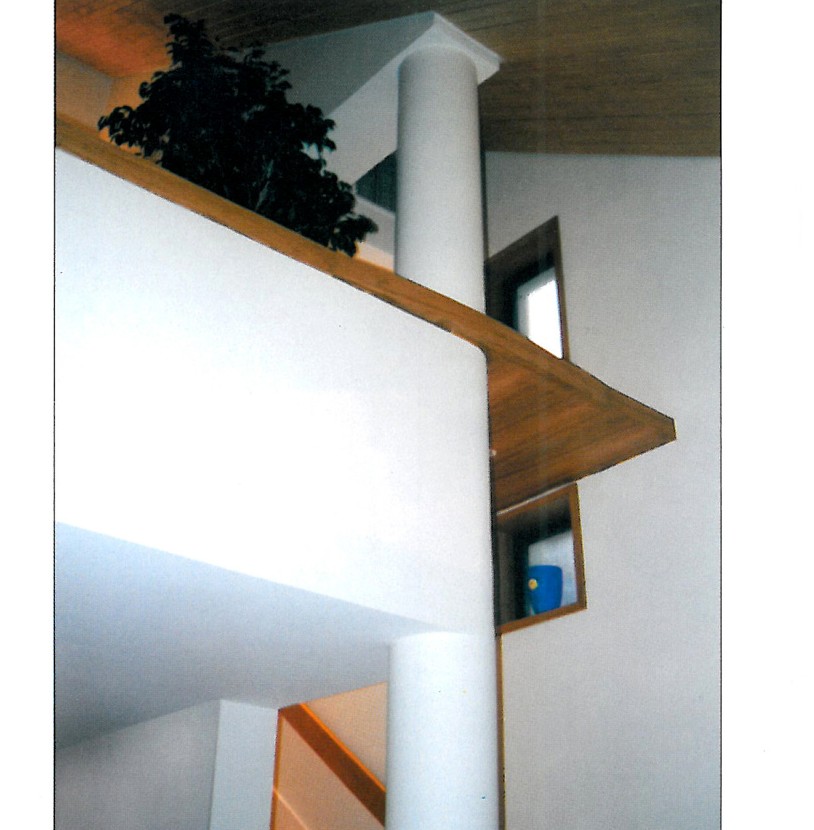
Vizheh-Graphic Building, Tehran
Client: Vizhehgraphic Company. Design and construction: Tohid Ahadi, Bernard Derow. Structure: Mohammad-Reza Ameri. Site: Tehran, Khorramshahr Street, Niloofar Street, Third Alley, Plot 19. Year built: 1378 / 1999.
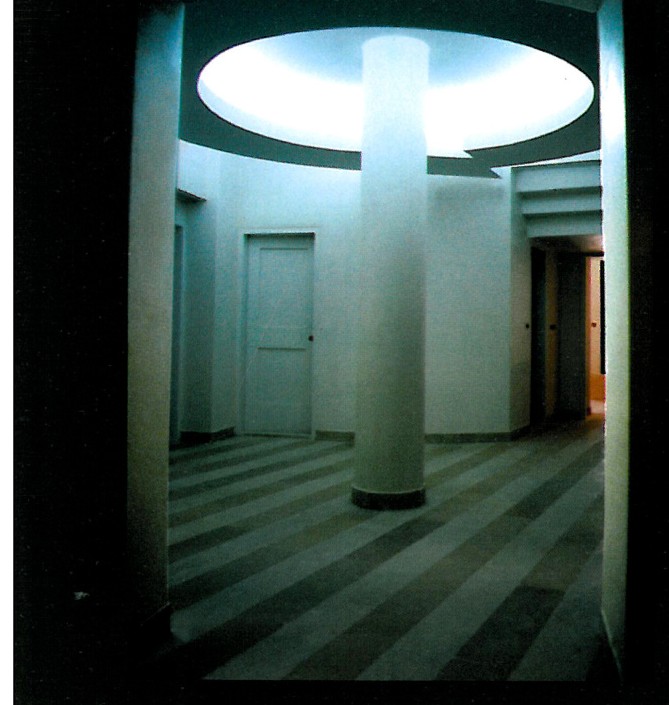
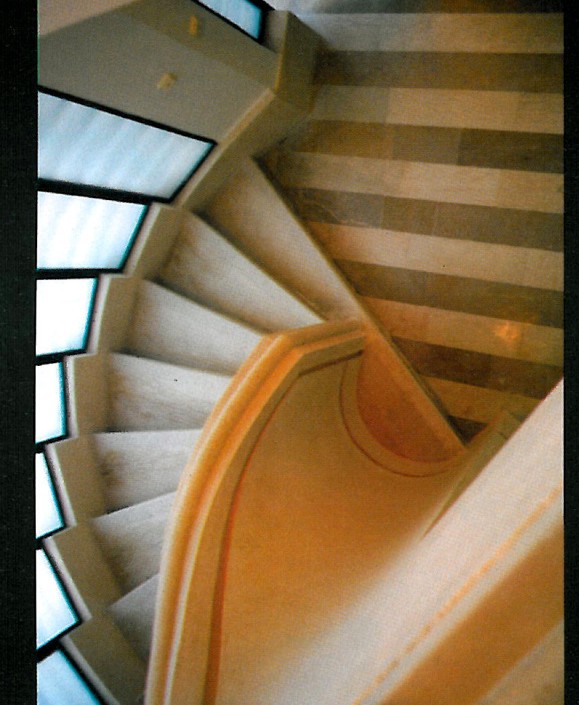
Aims: taking full advantage of the site's capacity according to the client's needs and the project's physical brief, and finding a way to set the vertical circulation so that the user takes the first floor as the starting point of his or her use of the spaces, with two further floors stretched ahead — these were the main aims of the design.
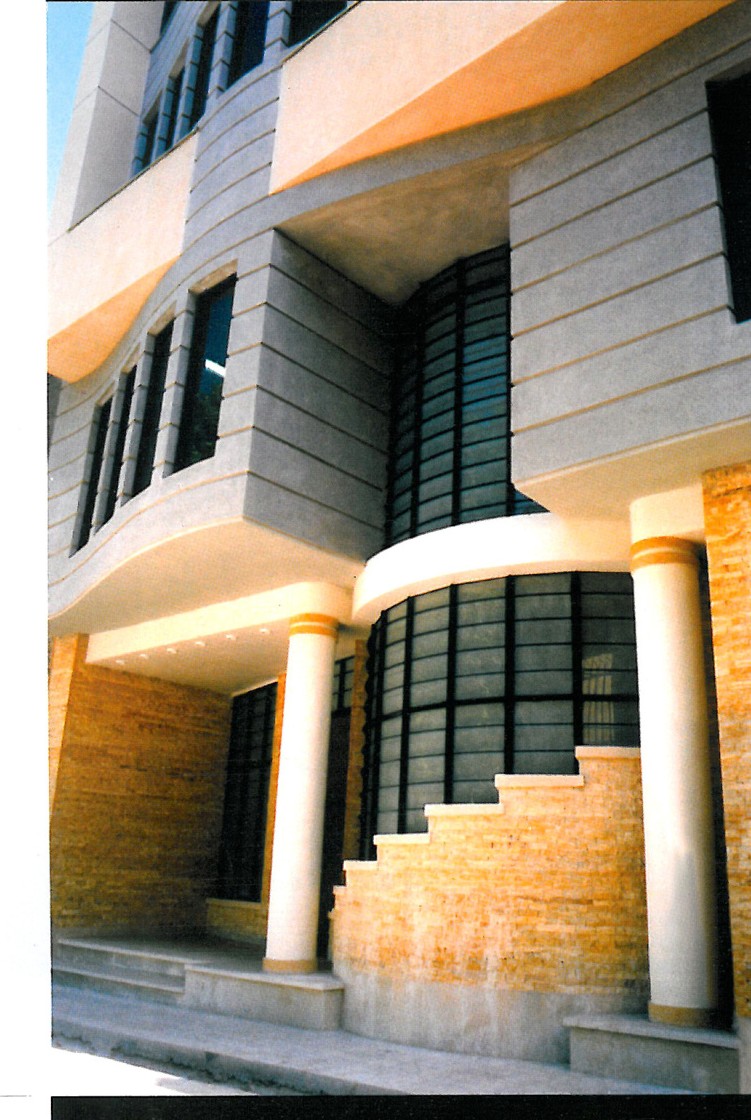
The particular position of the site within the neighbourhood is among the points by which the external elevations of the scheme have been shaped. On the northern flank — adjoining the inner neighbourhood pocket-park (a 'neighbourhood-unit centre') — the dual use of an interior and exterior view, and an attempt at harmony and accommodation with the park, suggested the use of soft curved surfaces beside hard orthogonal ones.
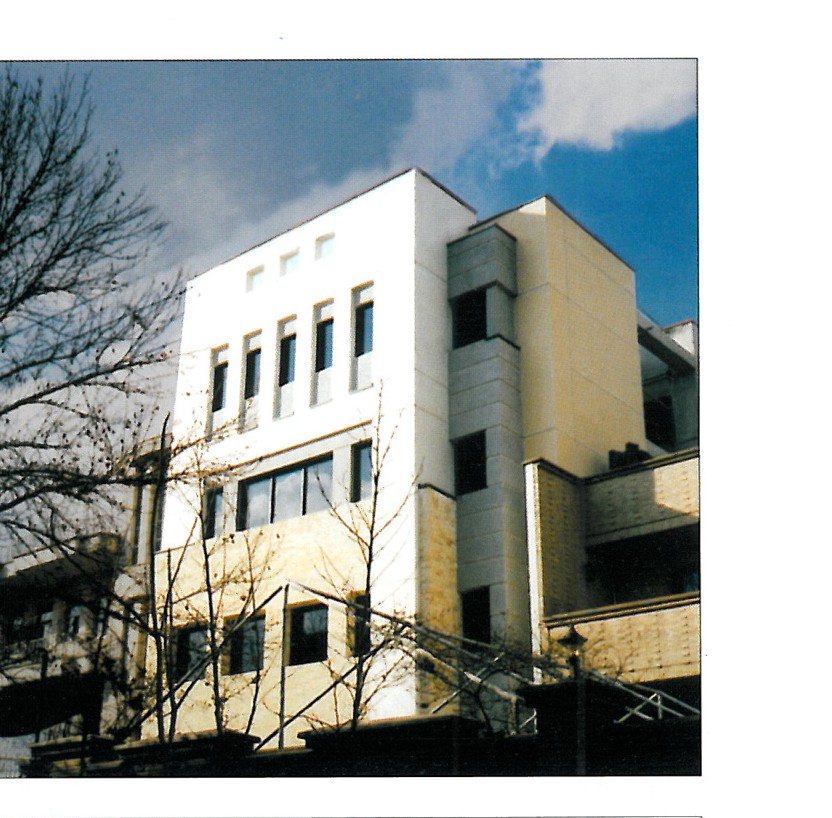
On the southern flank, the immediate adjacency of standard residential units of the neighbourhood made unity in the elevation and order in the fenestration necessary.