
Let us begin the conversation with a question about years further back. Is the profession of architecture, and learning it, hard work?
Yes, it is hard. Very hard. I remember that in my university days, in the rush of project submissions, I would stay at the university until morning. I wanted my work to be finished, and finished with good quality. Seyhoun himself was there too and really helped the students a great deal. He loved architecture. Seyhoun loved teaching architecture, and the most important role he played as a teacher was teaching the way to learn architecture. In other words, Seyhoun did not teach us architecture; he taught the method of learning architecture. The architectural profession needs effort, perseverance and great passion, and without that passion one cannot bear the effort of learning architecture.
In the years when you were a student, was the atmosphere of the architecture school of the Faculty of Fine Arts one of competition?
No, in fact a good atmosphere of cooperation prevailed in the faculty and among the students. Let me tell you a memory. Since the years before entering university I had a great love of cars, and a hand and skill for drawing cars. At that time, in the days before project submissions, I would sometimes draw up to 200 car drawings for the other friends' sheets. But I remember that while working on my own final project I did not want to use help from other students. My aim was to do the project from zero to a hundred myself. Only for writing the titles at the bottom of the project sheets did I use the help of my friend the late Iraj Kalantari.
What was the subject of your diploma project?
My diploma project was the design of a National Library building. I had prepared the project's programme with the help of my cousin, who was a professor of library science in America. He had given me a programme that had been prepared for a library in Libya, whose components matched and closely resembled my project for the National Library; I took ideas from that programme and completed it with Seyhoun's help. An interesting point about my project was its resemblance to the design of the Central Library building of the University of Tehran, which was built at the University of Tehran in the years after my graduation. There was only one minor difference between the two projects. Although both designs were based on a square plan with a central courtyard in which the book stack was placed, in my design the axis of the courtyard was shifted relative to the axis of the building, and I do not remember the reason for that decision of mine. Perhaps if I were to draw the same project again today, I would design the book stack, like Paknia's design, on the same axis as the central courtyard.
Most of the successful architects of your cohort at the Faculty of Fine Arts show a high understanding of aesthetics in their works. What factor do you think played a part in this understanding?
I think that in general people who had such a background and talent came to study at the faculty, and if not, they went into other professions. In the year I entered the faculty, 15 people in all took the entrance examination; Manoushan Zangeneh came first and I came second. Of that group of 15, 3 or 4 of us entered the profession of architecture and design; the rest were absorbed into the municipality and other organisations, or went into building and contracting. The truth is that no one gets rich from architecture. One may make a good and decent life, but one will not get rich.
In the late 30s and through the 40s, was there that much demand for the work of a graduate architect? Or did people meet their building needs with traditional, non-graduate builders?
Let me answer you like this. I have always told the young architects who come to my office that if you can do one good piece of architecture as your first project, regardless of expecting a large financial profit, you will certainly succeed in entering the architecture market. What I say applies to those architects who truly love architecture and do it properly.
For my own early working years too, I have to answer yes - though they were mostly relatives and acquaintances; after I built good houses for them, other people, seeing the good work, referred the building of their houses to me.
In your practice, how much has a good client played a part in shaping a successful project?
A great deal. Years ago I built a building for the Amiri family; during the architectural design of that project, Mr and Mrs Amiri led me to learn many things, and that experience resulted in my designing and building a very good building for them. Of course there are also some clients with whom working is very hard. In general I can say that there are two kinds of ideal client for me. Either they know what they want and, by interacting with the architect during the design process, bring about an excellent work; or they have no idea at all of what they want and leave the work entirely to the architect - and working in such conditions is of course much harder. Because the architect must single-handedly carry the burden of all the decisions in the design of the project so that he can carry out the best work for the client, win his complete satisfaction and also hold his head high before his own professional conscience.
What has the situation been like with government clients?
To a very great extent it has been hard. In the period when I practised within the framework of Artiman consulting engineers, we also had government projects, some of which went easily and some extremely hard. During the last project at Artiman consulting engineers, a housing project for the gas company in Kangan, I fell ill, and after that I left work at the consulting engineers and continued working in my own office. It was at this time that I reached a stage in my professional work at which, if there was no rapport and shared understanding with the client, I could - and can - withdraw from the project. A very important point for an architect is that he cannot, and is not permitted to, do whatever he wishes in a project and expect his client to accept it in any case and adapt himself to the result. This is an entirely wrong practice, and these days we are seeing more and more cases of it in architects' work. The late Seyhoun repeatedly reminded students of a sentence to the effect that "the duty of an architect is to carry out the client's wishes and demands in the best engineering way". It must be borne in mind that what an architect can picture of the finished work, the client will not necessarily have that understanding and ability. You must move step by step with him and respect his wishes; of course the architect's worry about losing the project must not lead either to complying one hundred percent with the client's unconventional wishes that go against the principles of architecture.
In your body of work you have designed and built a number of the best residential projects in Iran. Recently, in a video talk on one of the social media, I heard one well-known architect say that designing a house is a very easy task in the architectural profession. Do you agree with this view?
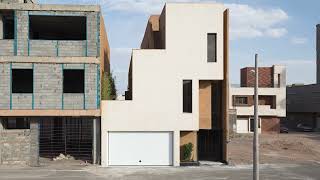
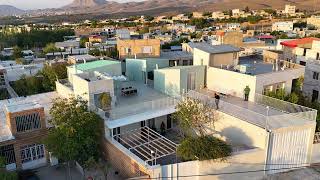
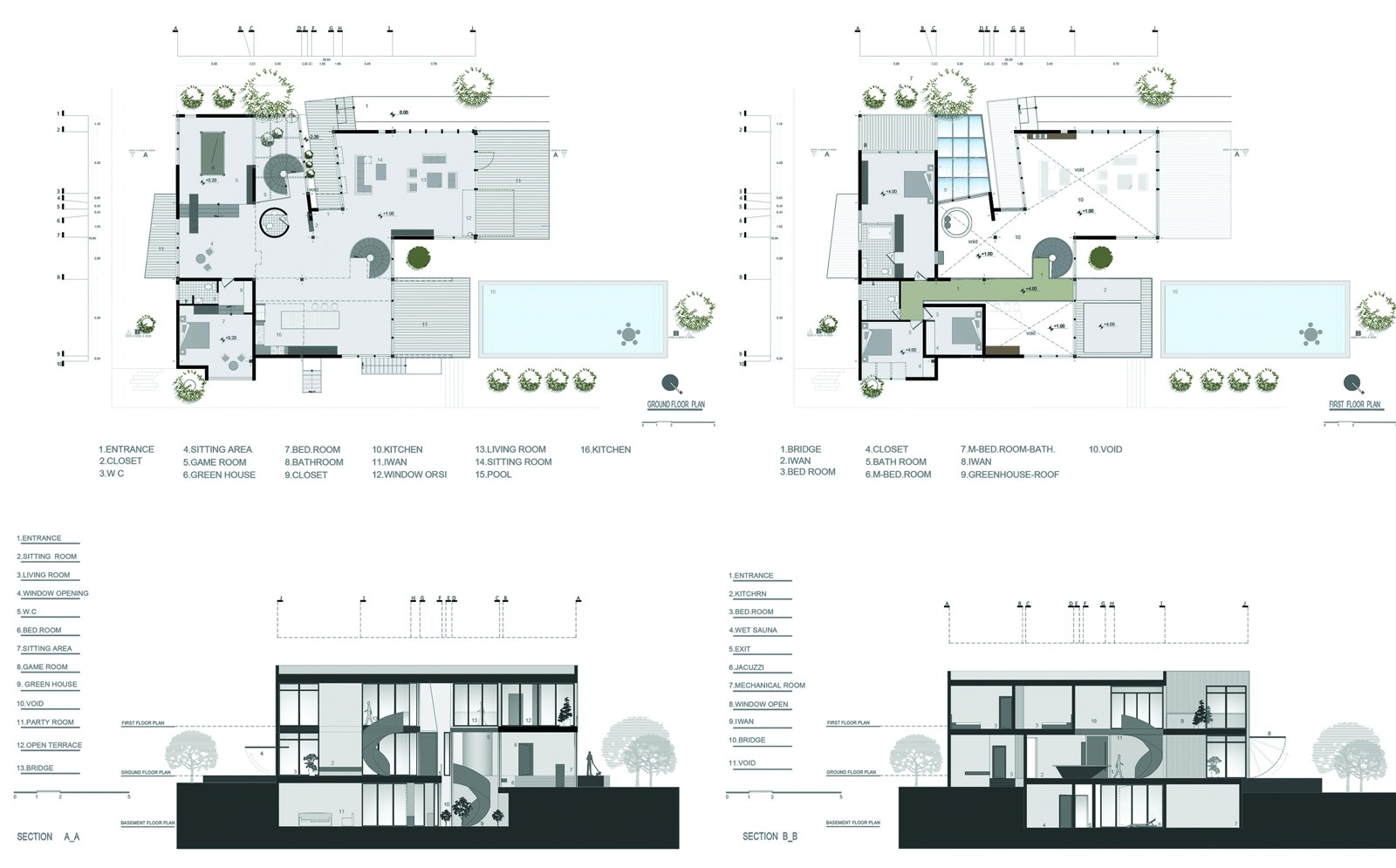
In my view designing a house and residential space is one of the hardest forms of architecture, because you have to build a dwelling specifically for particular people. Designing a house is different from an apartment and is also harder than designing an apartment. At present I am working on a project that is an apartment complex; after it is built, different people with various wishes and expectations will live in it, and the architect designing an apartment complex cannot go that deeply into the wishes and expectations of residents he does not know. But in designing a house for a particular client the story is entirely different: the architect must spend a great deal of time and live with the client in order to incorporate his way of life into the design of the house. For me personally, many of the good friends and old companions of my life are among the clients for whom I have built houses. Perhaps that is why the houses I have built have not come out all alike, because each was for a particular family.
In your architectural works there are pure, recognisable geometry and forms. The plans too are mostly simple and understandable. But in the architecture of the many houses you have built, one cannot see a distinctive, recurring idea. It seems that for each client you have worked out an architecture suited to him.
Yes, that is really so. Because in my view the value of a building's architecture is determined by the client's satisfaction with the final result. But still, if you see the body of work I have built, you will realise that it is Faramarz Sharifi's work. In each project the condition of the site, the materials used and other things differ, but the architecture as a whole does not change.
In terms of your respect for the professional ethics of architecture, do you believe that responding to the client's request is the architect's duty (within the framework already discussed, of course), or should the architect impose on the project what he himself thinks right and the optimal choice from his own point of view?
What is right from my point of view is crystallised in responding to the client's request and his needs in the architecture of his project. The space of the finished work belongs to the client. Unfortunately today we see that many architects have no respect for the client's wishes. They impose their own view and preference on the project even if it is not in line with the client's wishes, or even if the client does not understand the result of the finished work. I believe that simplicity and honesty in an architect's professional ethics show exactly in his work. I like whatever is, and that it is what it is. The architecture that results from any project is in the end a shape and form, and in each project the architect creates a new shape and form.
Many of my clients have had the buildings I built for them for several decades and live in them. This is a sign that they have been, and are, satisfied with the result.
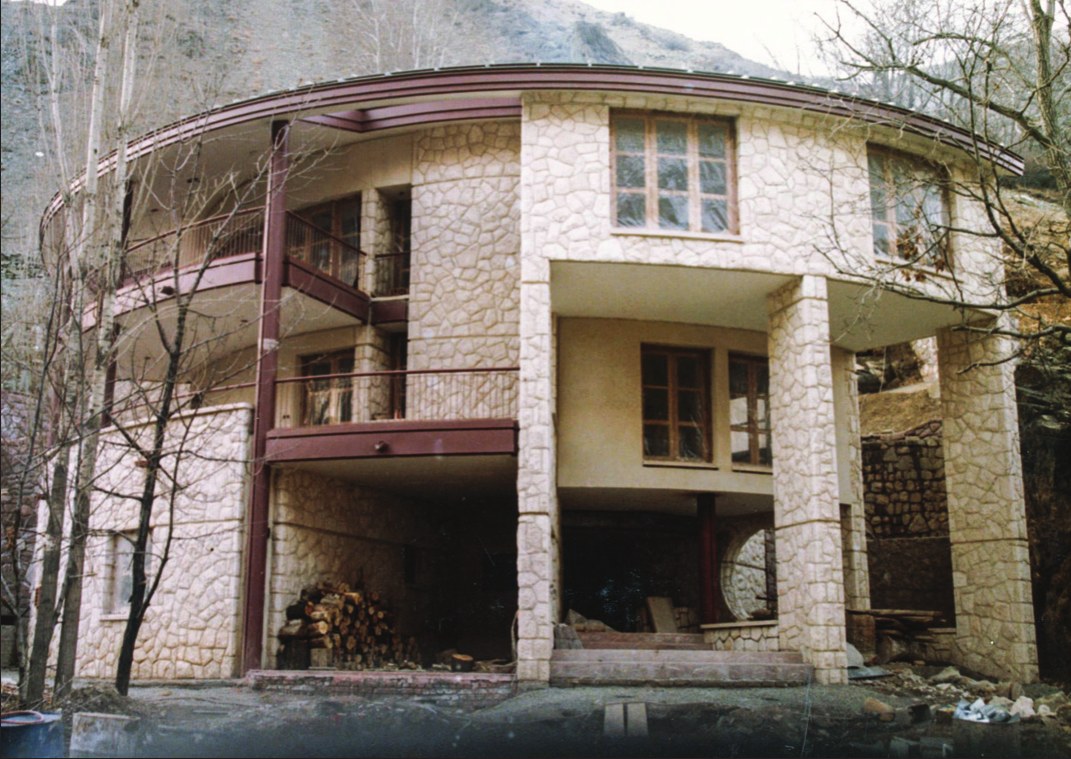
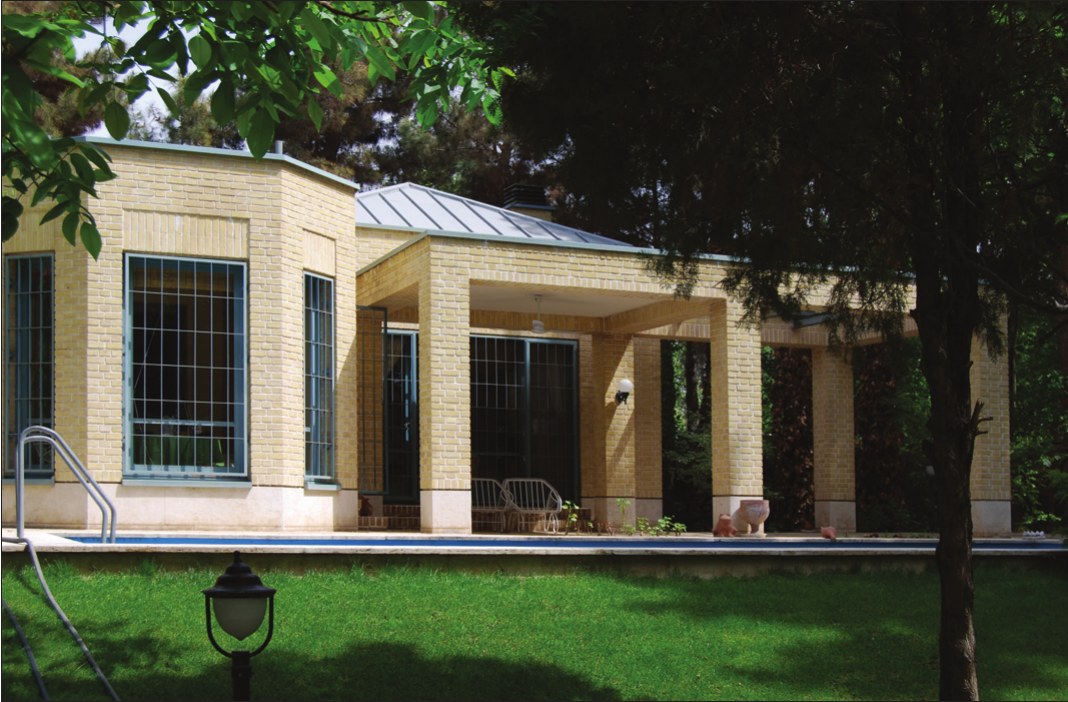
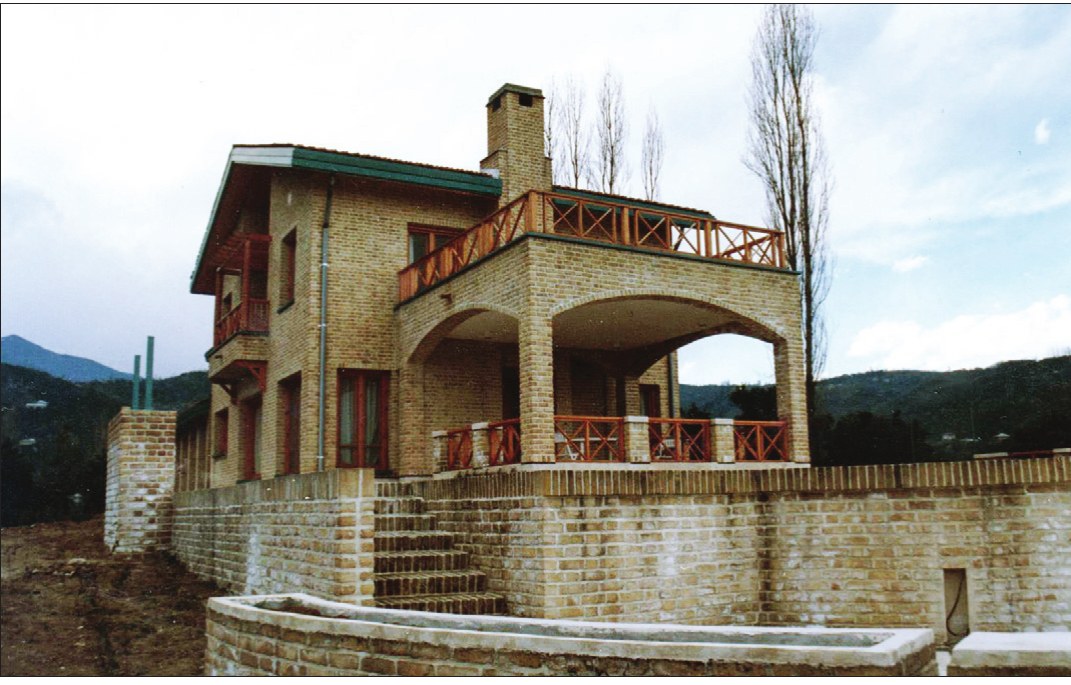
Has it ever happened to you that a client came back to you several years after the end of a project and asked for changes to the completed building?
No, I do not remember anything like that.
Isn't this the hard part of the architectural profession? Perhaps building a building that springs from an idea and a thought is not that difficult, but building a structure that is also desirable to someone else and keeps this desirability over the years is certainly hard work.
In my view execution is also hard, difficult work. For an architect, the builder of his project plays a very important and influential role. I have had the good fortune to work with very good builders throughout my professional career, and at present I work with the best of them, Tajeddin. The important point in such a collaboration is that Tajeddin is himself an architect, and as a result his view of execution is very different from that of an engineer from the technical disciplines.
Over the course of your career, has the state of execution in architectural projects improved or got worse?
In my belief it has become much better. For example, we worked very hard to prepare more suitable details for doors and windows in the stages of construction and installation. I myself like wooden windows very much, but issues such as preserving the quality of the wood over time, for which conditions in the country are not technically suitable, cause problems.
Where does our architecture stand in your view?
Unfortunately the main problem in our architecture is education. Newly graduated architects, after leaving university, have to start learning what should have been taught to them at university. Perhaps they are deprived of good teachers. In my student days too, the teachers did not teach anything in particular directly, but they taught us the way to learn. Unfortunately today universities are unable even to teach students the way and method of learning, and the result is the very pain our architecture is caught up in. Architecture today no longer has the standing and respect it had in society in the past.
In your projects, structural and mechanical matters are resolved in the architecture in a very satisfactory way - something that in the professional world is an unattainable result for the projects of many architects.
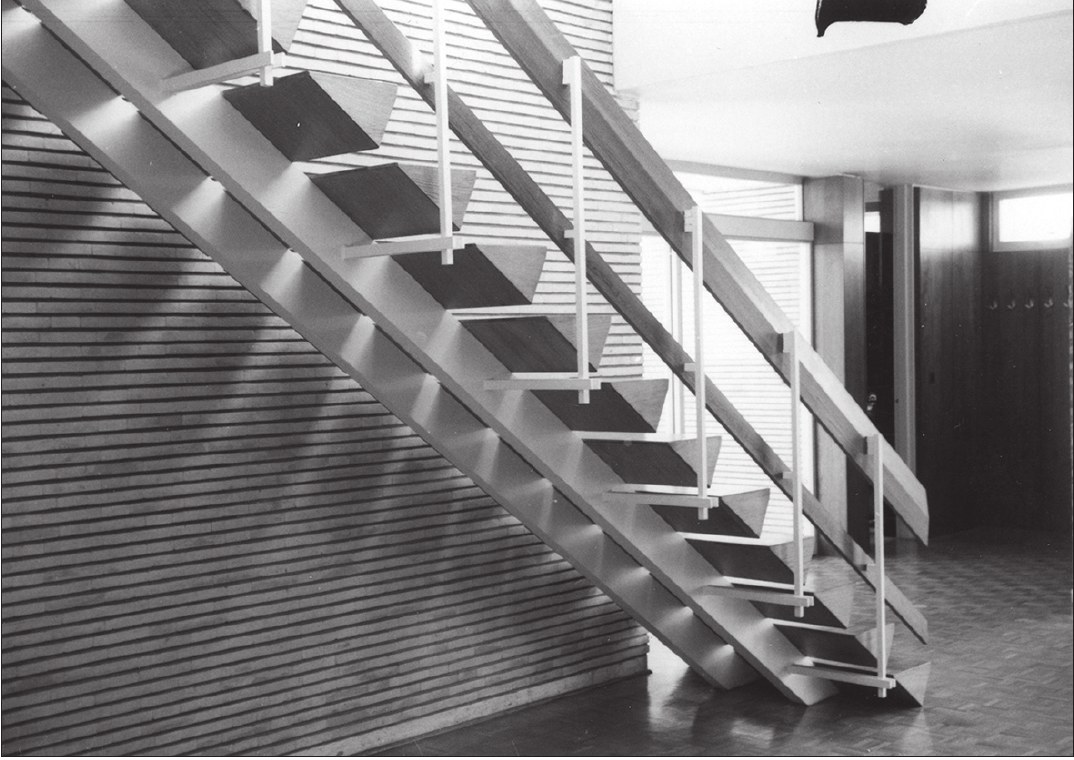
The first thing Seyhoun taught us in architectural projects was that you must think about the structure and have an idea for it. In each project I present the structural modulation to the structural engineer - or perhaps impose it. I determine how the system of columns and beams must be. Throughout my professional career I have not had many problems with structural engineers, but with the services side, unfortunately, many problems have arisen, both in the Artiman consulting engineers period and in my own office. But in any case, in our office's architectural projects we always supervise both parts very closely, and this is a trait that comes from Seyhoun's teaching. Construction details are of very great importance in raising the architectural quality of a building. I believe an ordinary building with correct details and execution is certainly worth more than a good design built with poor quality and incomplete details.
In earlier years I was myself occupied in my office with designing and presenting details, but today, as I mentioned, my colleague Tajeddin accomplishes this important task and the result is excellent. But the regrettable part of the story is that if one day he no longer plays such a role, no one from the younger generation of architects can take it on, and that is very bad.
The collaborators on this interview were Arash Tabibzadeh Nuri and Keyvan Salimi.