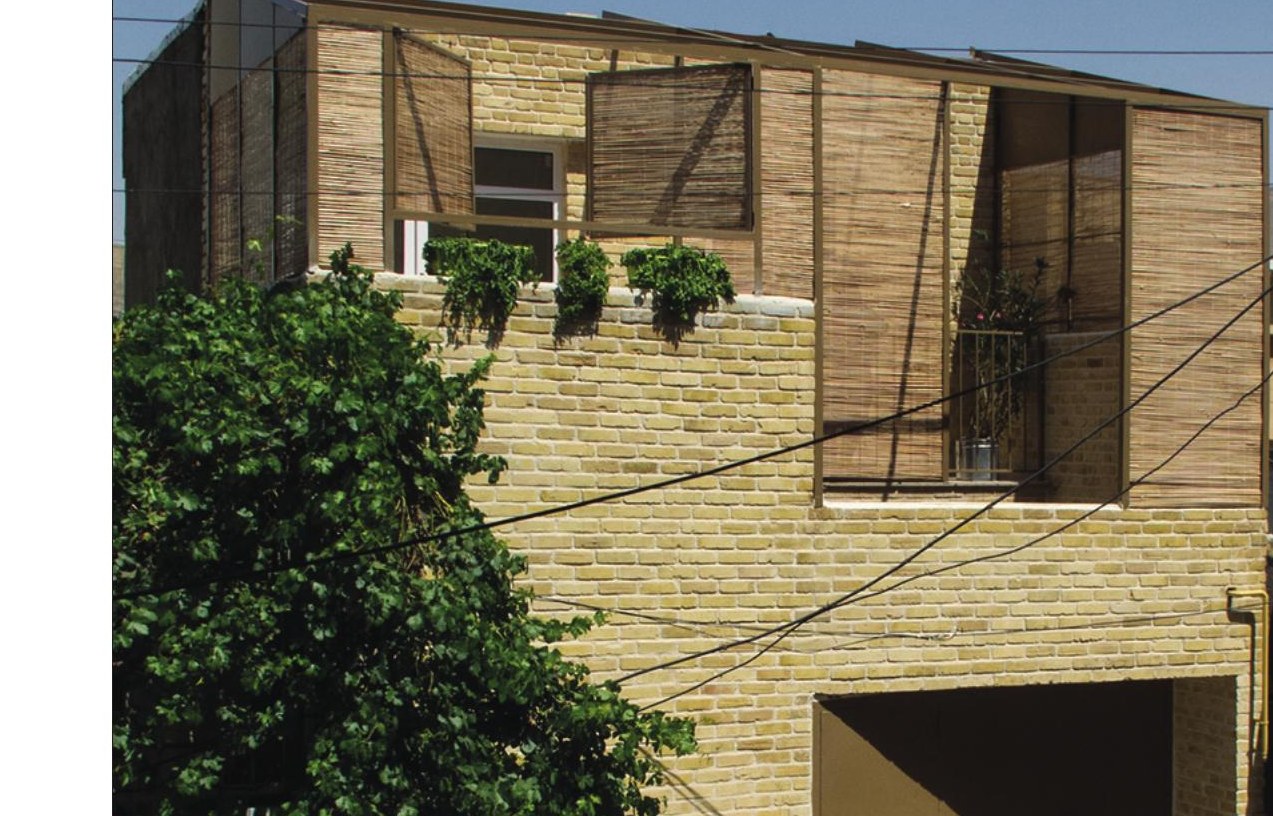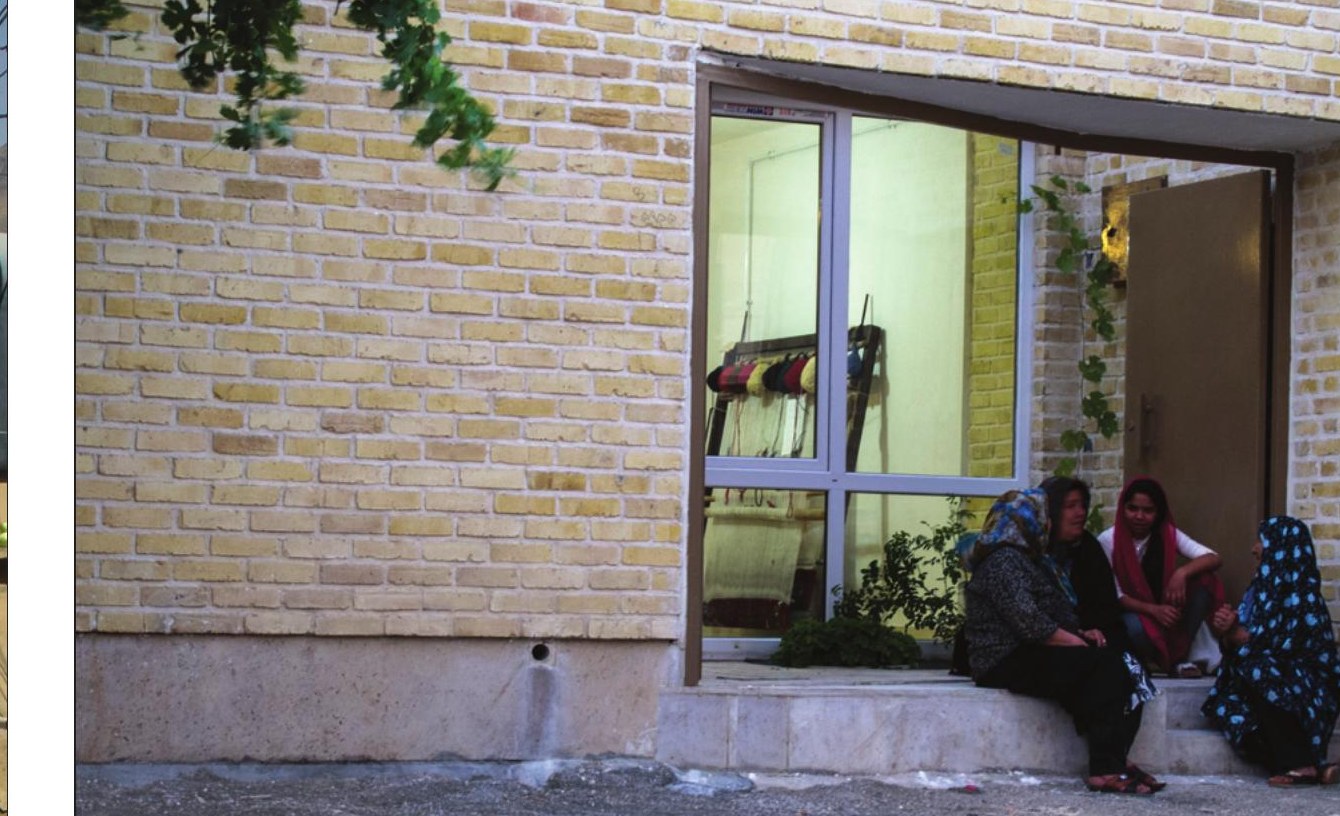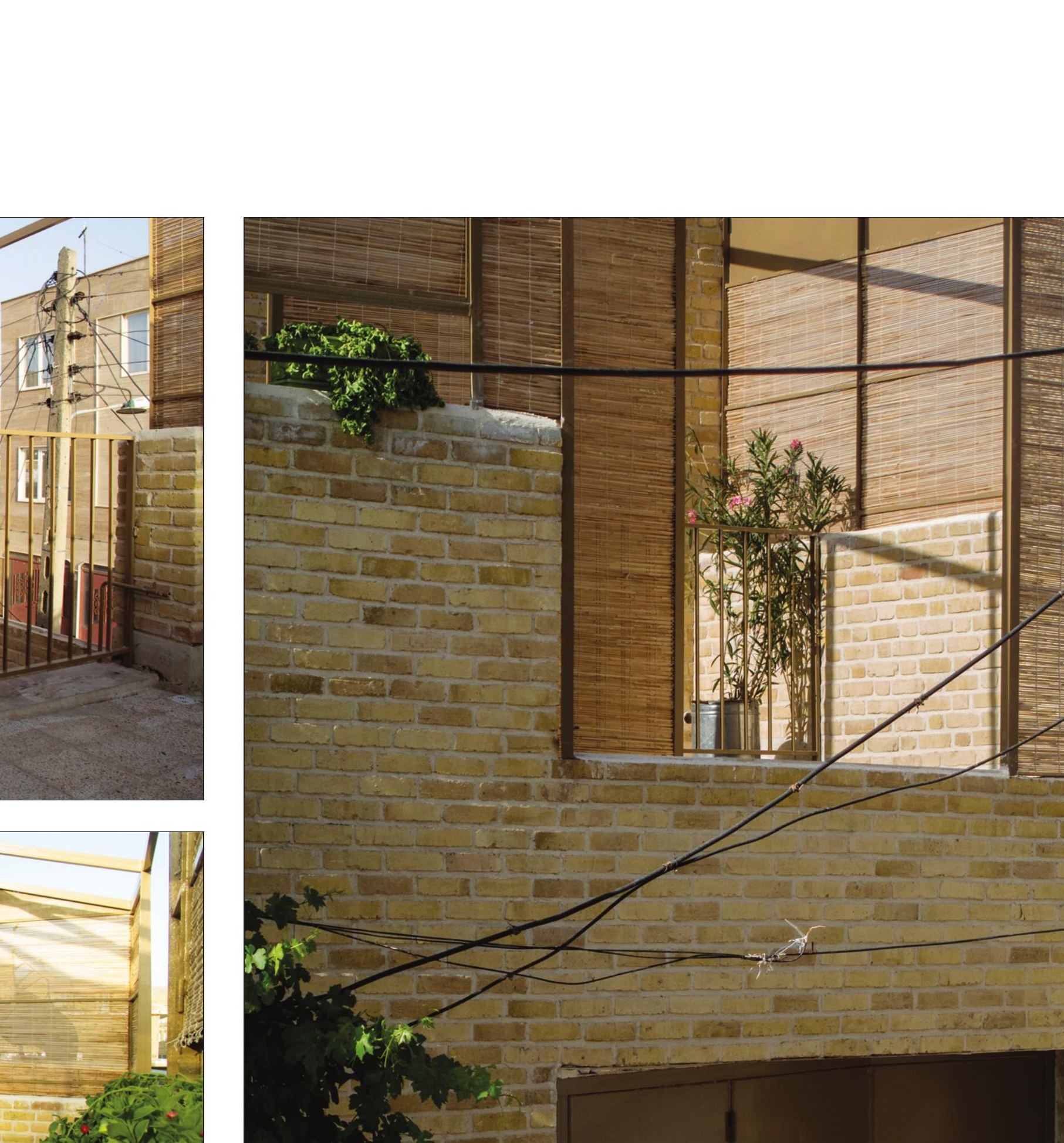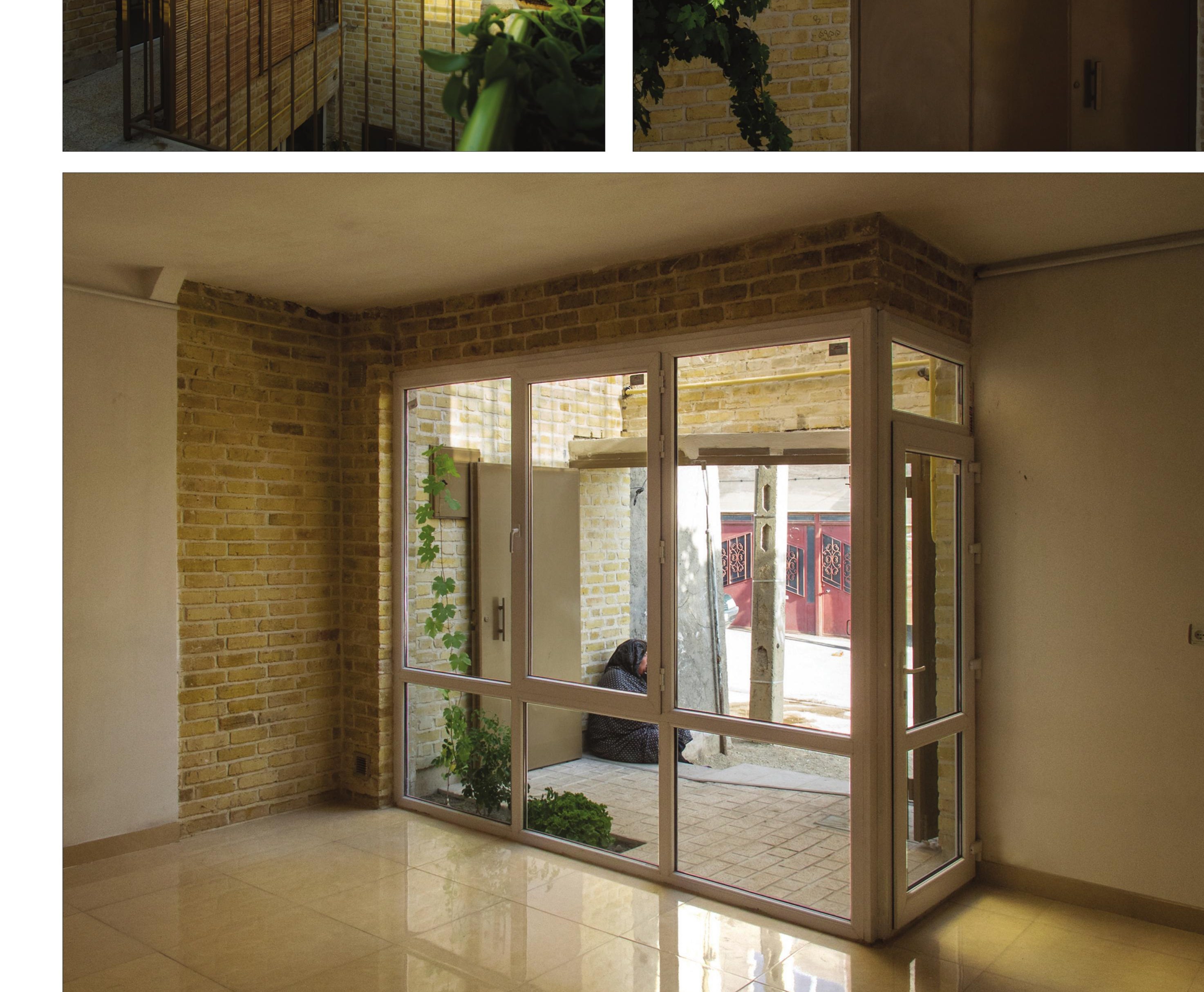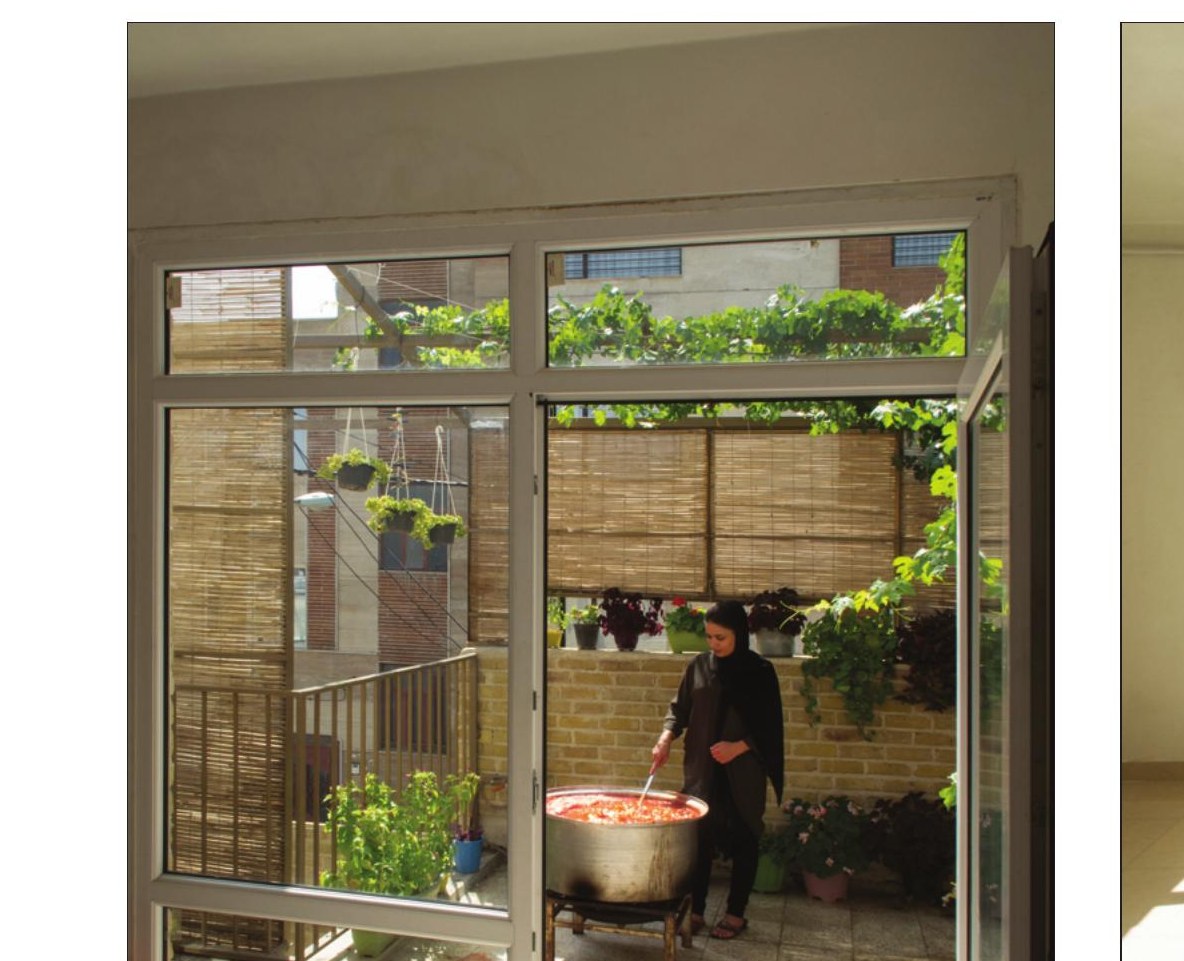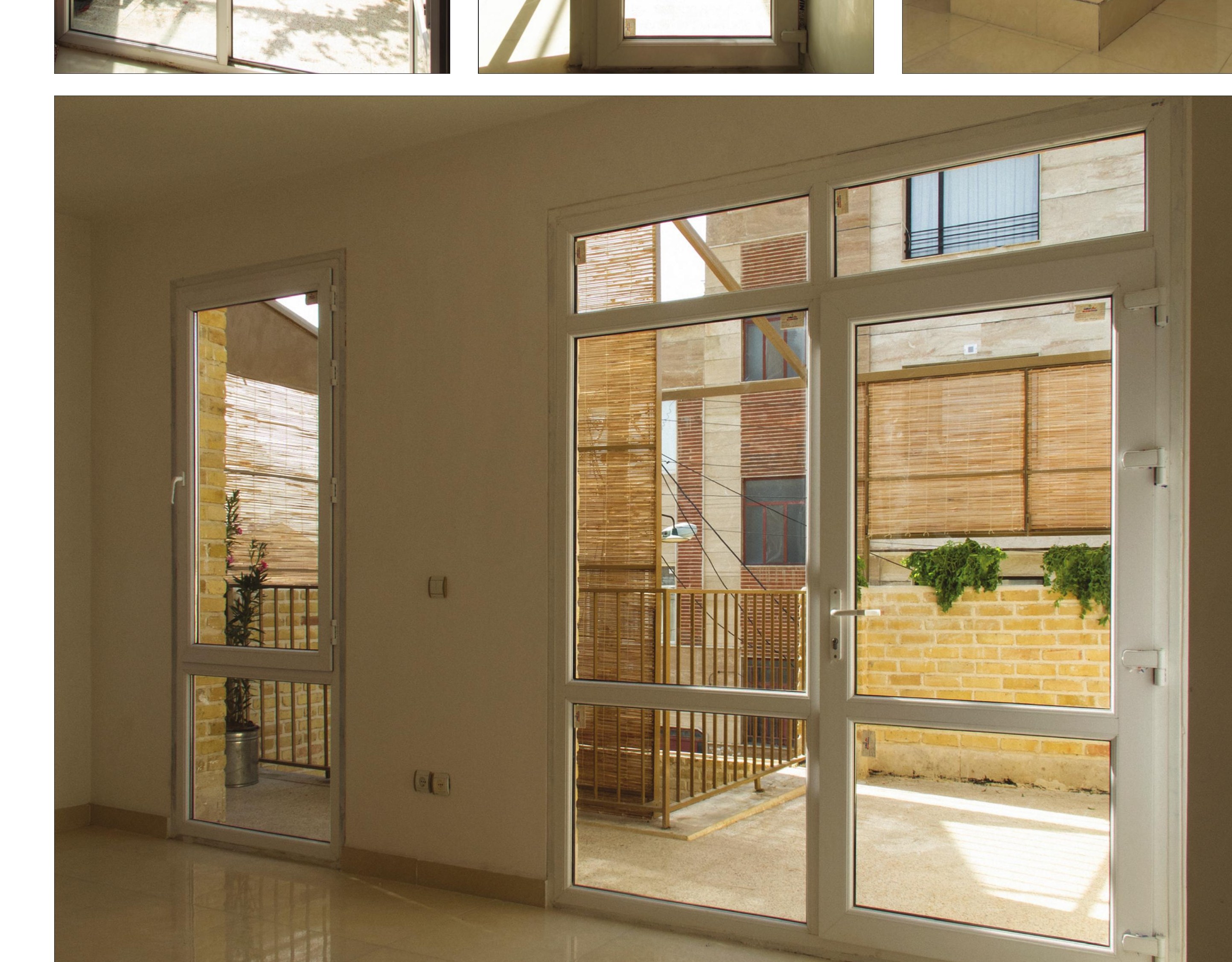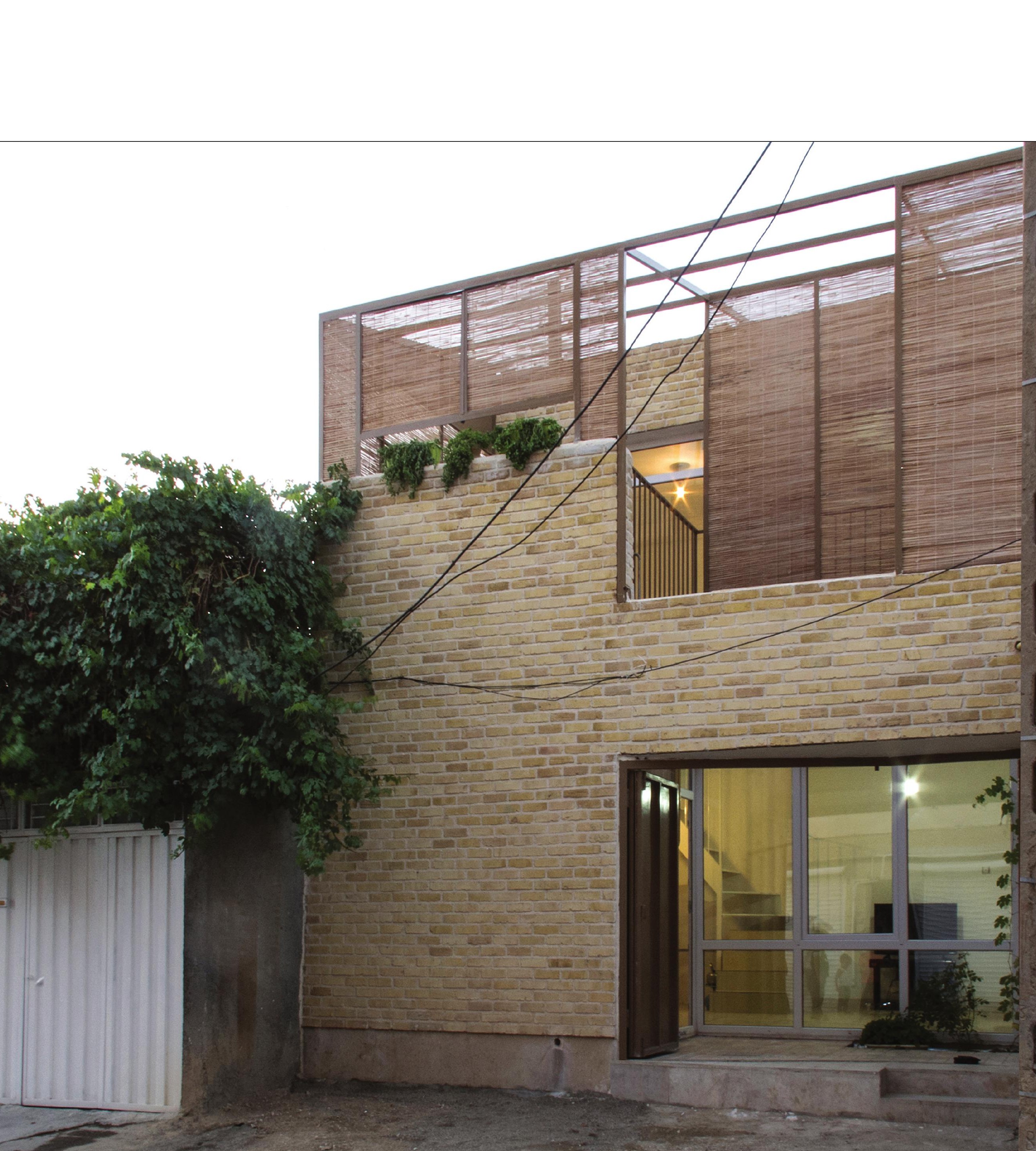
This house was offered to us by the Imam Khomeini Relief Committee for a three-person family (a mother and two children) on a 45-square-metre plot. Because the project's budget was limited, the client decided that the house should be built in a single storey, as a full-footprint structure.
The project's land lies within the city's deteriorated urban fabric, which took shape in the 1340s—50s with the subdivision of agricultural land at the city's edge and the building of houses on those plots. Population growth in subsequent years drove surface construction density up and house sizes down, so that today most house plots are smaller than 100 m². Under municipality rules, these parcels can be built at one hundred percent without any open space. As a result, the dominant pattern of construction is the raising of a volume that fits the dimensions of the plot, pursuing maximum quantity without regard to qualitative dimensions.
In this project we have tried to lift the quality of dwelling by designing in keeping with the unique features of the way of life present in the fabric. Among the factors that shaped the design are these: a direct connection between the house and an open, green space and attention to outdoor life; sustaining the residents' social interactions alongside the public spaces; privacy and the control of sight into the home; and the home-based production of various food products for consumption and livelihood.
The design idea took shape around redefining the relationship between inside and outside. The aim was that the boundary between these two spaces — which in recent construction is reduced to a semi-hollow envelope only a few centimetres thick — should become a fluid zone between inside and outside, capable of working with both spaces and serving as a stage for the activities tied to them.
Given the project's financial limits there was no possibility of increasing cost, and any change had to be made within the original budget. We therefore proposed measures such as drawing the family and their circle into the construction process, using inexpensive, accessible and recycled materials (brick from the city's brick kilns, reed-mat, second-hand ironwork and so on), and the appropriate application of construction techniques (omitting external cladding), in order to alter the project's original brief — to enlarge the built area while also adding open spaces to the project.
A courtyard on the ground floor and a terrace on the first floor were placed as the threshold between inside and outside; their connection with the interior through a glass envelope keeps the space from being visually limited and makes them feel like an extension of the indoors. The exterior envelope was designed in a way that, while preserving privacy and controlling light, also allows openings toward the alley. Above these spaces a structure was placed to serve as a trellis for the grapevine planted in the house's courtyard, so that with time a green cover would clothe the structure.