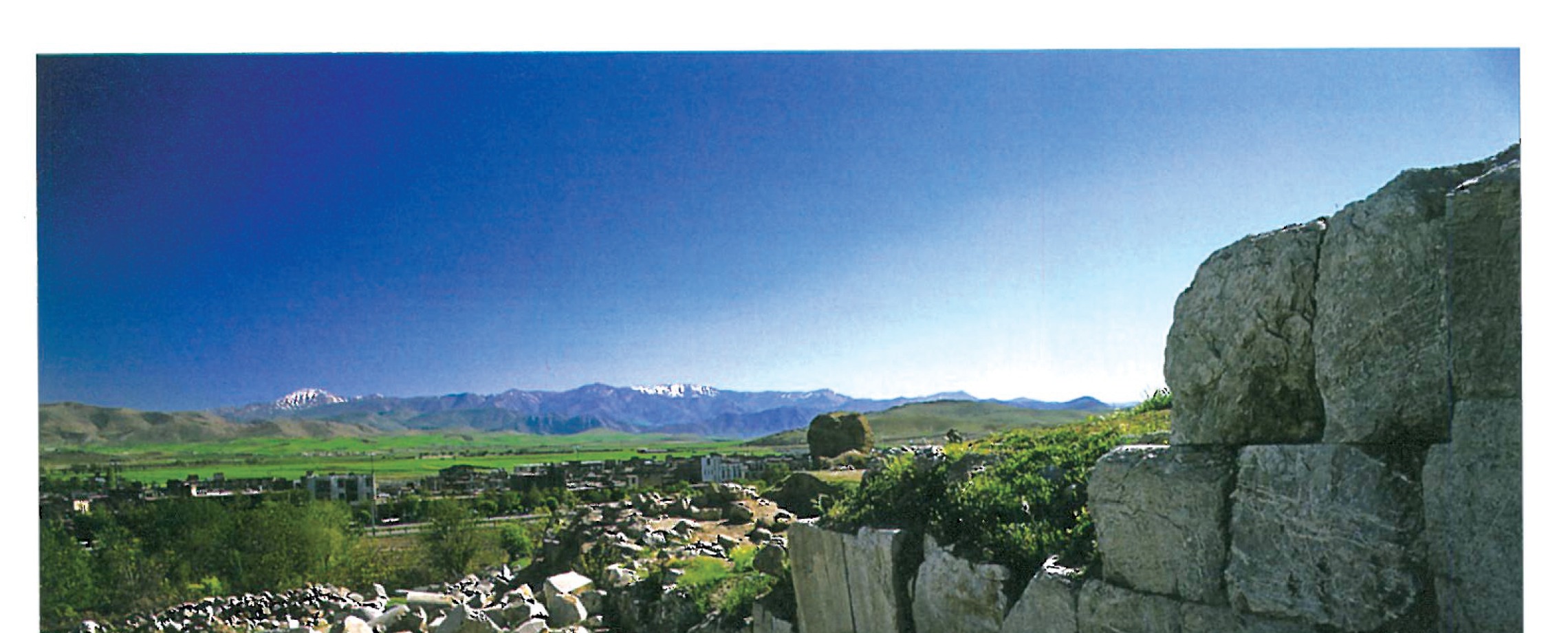
Dating back to pre-Islamic era, Anahita's Temple overlooks a scenic plateau in Kermanshah province, west Iran. The 46,000 square meter site, Iran's largest ancient stone construction, comprises covered long porticoes on the four sides of a triangular courtyard. Rows of rather thick and short columns along either side of each portico make it a unique edifice.
The Anahita Temple is the largest stone structure in Iran, and the method of its construction, consisting of long covered porticoes around all four sides of a vast rectangular courtyard, numerous short and rather thick columns on both sides of the porticoes, and a small rectangular space in the eastern part of the great courtyard, place it among the country's most unique historic and commemorative monuments. The remains of this great temple, covering an area of approximately 46,000 square meters, sit atop a low-elevation rocky outcrop of schist in the city of Kangavar in Kermanshah province.
Like other monuments built on elevated terrain, the Anahita Temple was constructed upon a platform. The technique of platform building was common on the ancient Iranian plateau, and in subsequent periods important religious and some governmental buildings were also erected on platforms. The earliest reference to Anahita can be found in the writings of Isidore of Charax, the Greek geographer, who in the first century BCE passed through Kangavar and referred to it by the name Concobar. Researchers such as Herzfeld, Ghirshman, Godard, Schmidt, and Arthur Upham Pope declared it a Seleucid-Parthian temple in the Greek architectural style.
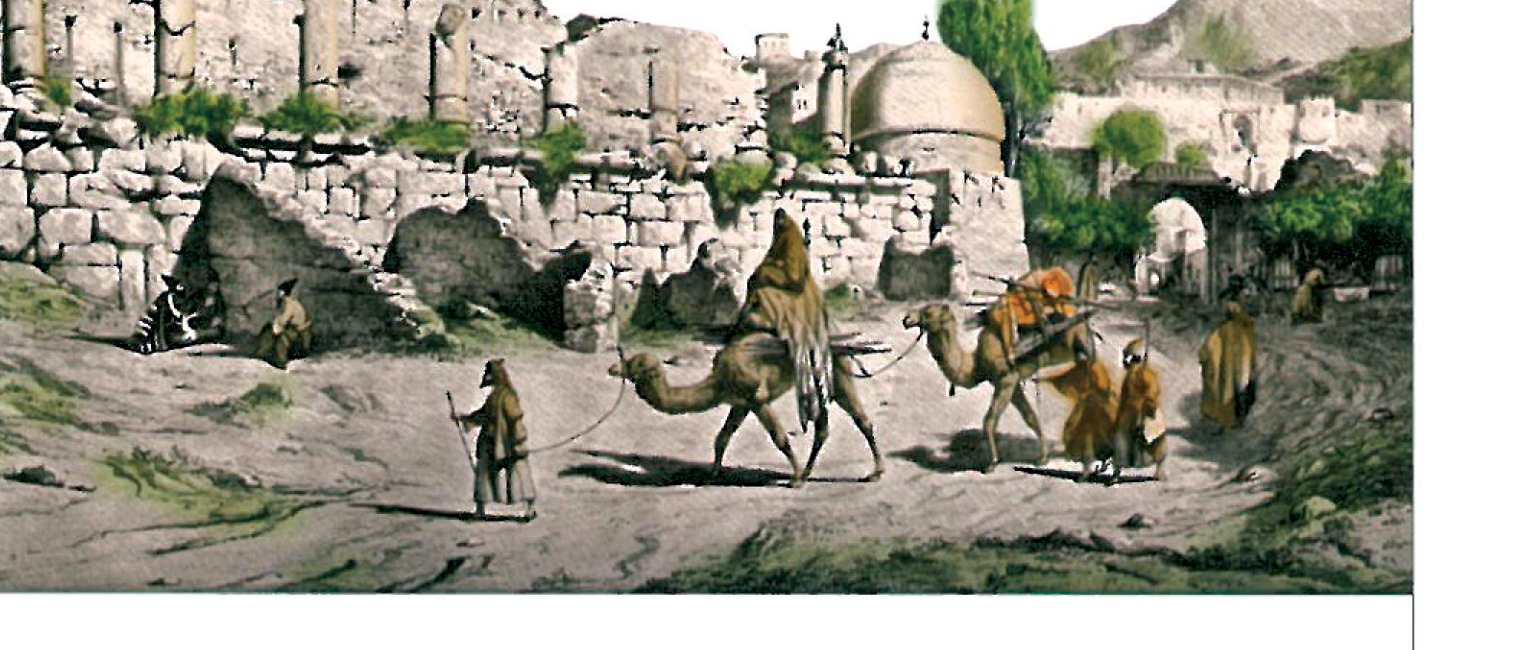
The first archaeological excavation was carried out between 1968 and 1975 by an Iranian team led by Seifollah Kambakhsh Fard. In subsequent years, archaeological surveys continued until 1998, following the registration of the site as a national monument.
Current State of the Structure
The remains of the Anahita Temple form a rectangular compound measuring approximately 224 by 209 meters. The walls reach a height of approximately 7.85 meters. The columns of the temple, numbering 134, are arranged in rows with approximately 80 centimeters in diameter. Unlike the apadanas of Darius and Pasargadae, these columns are simple and unadorned — short and thick.
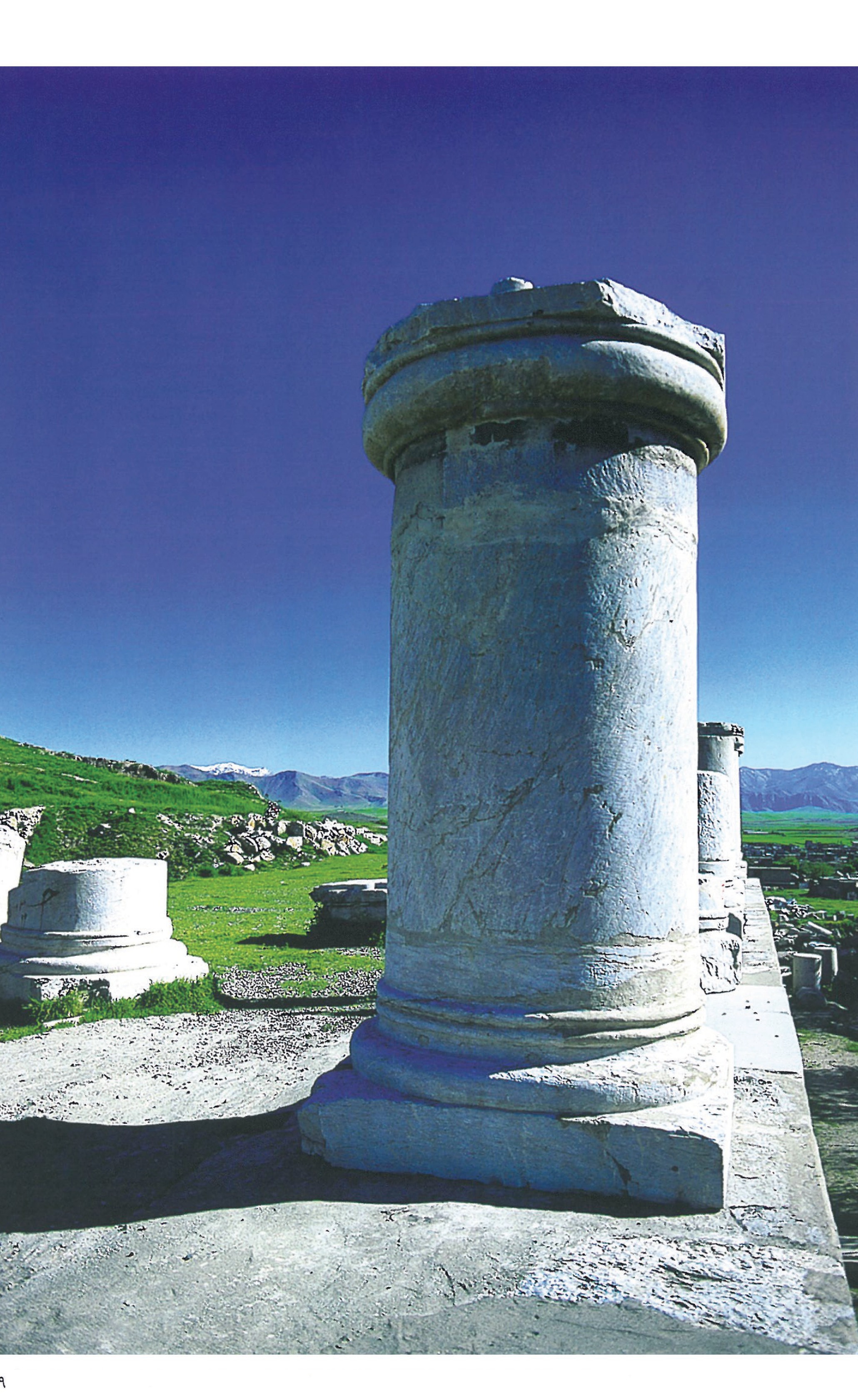
Despite the incomparable value of the Anahita complex, the greatest damage in recent times has come from the local population. Through ignorance, they have removed finely cut stones for lime kilns. Even now, one can sense the mythological spirit of the goddess of ancient Iran among the thick remaining columns at twilight.