Art is act, not potential. What has not yet been realized is not art. The realization of art is in the work, and the primary signification of the concept of art refers to the realized work. The essence of art, too, seeps only from the work, and is transmitted and disseminated from it. The weakness of architectural education today stems from this apparently self-evident matter.
The seepage of art from works reaches discourse. But no discourse surpasses the works themselves. Some believe that the description of art, or art criticism, or art theory, might attain such a degree that it could convey to the listener's awareness or feeling an essence even higher than what is found in the work itself. The current state of architectural education arises from precisely such a misconception. Not only architecture, whose material is stone and earth, but even literature, whose material is language, first brings its true essence into being through works, and from there it pervades the realm of criticism, theory, and education. Criticism, theory, and education can never offer an essence or thought or feeling that surpasses the work. Nothing beyond the transmission of concepts that have a tangible and perceptible presence in the work can be expected of them. In praise of a poet's verse, or in its evaluation and criticism, whatever is said, in terms of transmitting artistic essence, falls beneath the poem itself—not above it, and not even at its level. In relation to a poem not yet composed, no poetic feeling can be transmitted at all. By the same reasoning, about architecture too, nothing can be said that in conveying awareness or artistic feeling surpasses the built work. The best books written about architectural values derive their authority from the very works from which those principles and values were drawn—and go no further.
Moreover, theory and education are analytical, while art is synthetic. The work of art is a creative act, while theory and education are retellings of what has already been realized. The learner draws upon theory and education to perceive the art embodied in the artistic work, or to take it as a model. The education of art is nothing other than the education of the work. Historical continuity and mental abstraction cause the oversight that there supposedly exists a mentality and subjectivity independent of the works—one that can be taught—and that this teaching can once again become the means of creating new works. The greatest obstacle to proper architectural education is our failure to attend to this apparently self-evident truth: that architectural education is preceded by architecture itself, and architecture itself is nothing other than the architectural work. That is, until works exist, there is nothing to be taught.
It may well be that the works of a later period are superior to those preceding them, yet even so, the principle that education is preceded by works is not negated. The student may surpass the master, but even then, the student began their work with the perception and learning of works that came before. The work itself is what is perceived or learned. Concepts, in and of themselves, are not learnable, and possess no identity independent of their object, which is the work.
Now, if we accept that architectural education is preceded by the architectural work, we must ask: which works are the ones that precede our education? One might say that architectural education cannot be limited to a particular period or specific works—rather, the entire history of architecture must be kept in view. But the history of architecture is only one part of architectural education, whose aim should be to enrich architectural theory through the examination of past developments. A history devoid of theory is nothing more than general information and does not aid in understanding the nature of architecture. Moreover, even this history is almost entirely absent from our educational resources. Apart from two or three translations and one recently published work (Time and Architecture by Manouchehr Mozayeni, 1376/1997), regarding the history of modern Western architecture, the history of architecture, the history of Iranian architecture and especially contemporary Iranian architecture, no book has yet been written.
Another matter of great importance is that the history and geography of architecture, along with all the educational principles and foundations, are horizons that must be viewed from the platform of contemporary architecture. By contemporary architecture, I mean architecture currently being practiced and accessible—where the various parts of architectural education converge. The interconnections of architectural history, architectural theory, design principles, and building construction techniques meet in the contemporary architecture that the student sees around them. Without such a convergence, the various teachings of architecture become abstract courses, and this abstraction makes them so superficial and ceremonial that every newcomer is appointed to teach them. The tools of education are means and prerequisites for entering the realm of realizing the work. These tools, in the absence of the work itself, become abstract, and since they find no path to the realization of the work, they substitute themselves for it.
The lines that many young architects draw on paper, instead of being translations of the material existence of a building and using drawing as a tool for representing the spatial and physical reality of architecture, are transformed into codes—each one in some abstract manner, independent of the others, explained through superficial references, metaphors, and quotations found in the discourses of historians, critics, and theorists. And from the sum of these, no synthesis is perceived. To learn synthesis, and the sense of synthesis, one can only turn to the works themselves.
Like it or not, the product of our last century of experience in architecture and sixty years of modern architectural education is a body of works that, from among all that has been built in this hundred years, we approve of and say: if only all were like them, or better. If someone were to say that one could set these works aside and begin education from the superior works of world masters, they would clearly not be attending to the real conditions of education. This is the starting phase that we have—successfully or not—already passed through. The first teachers of the architecture school were either foreigners or Iranians who had learned modern architecture by being present in foreign environments and studying under foreign masters. One cannot repeat this path anew. Of course, whenever necessary, foreign instructors can be hired for specific courses. What matters is that the young architecture student and apprentice must see the actual works and become intimately acquainted with them, making this the principal means of their own perception of architecture. Drawing and representation on paper, with all their value as tools, must not become ends in themselves, replacing architecture itself.
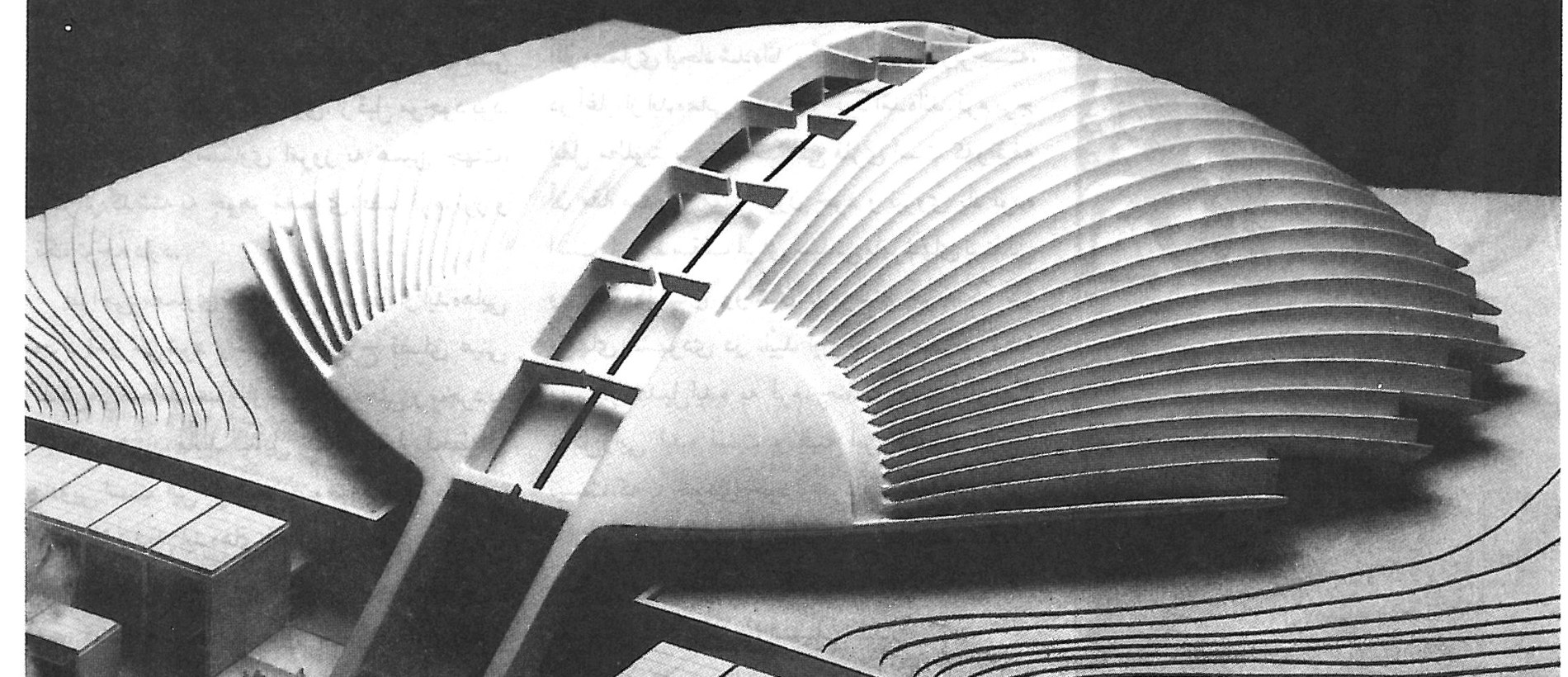
The first step toward entering this path is to compile the good works of this past century—works built in response to the needs of contemporary life—organized by history and function, into a book. And to have experts write their opinions about the values of these works, so that students may know where Iranian architecture of today began, where it has arrived, and what path it is traveling. This is but one part of the work. The next step is that, as far as possible, the creators of these works themselves become the axis of education. Then, naturally, all ancillary teachings and educational tools related to them will be placed in the service of the central teaching, which is the transmission of the essence of art—the art of synthesis—from master to student. The necessary changes in the organization and space of education will not be so difficult.