Book: The Architecture of the Jumping Universe
Author: Charles Jencks
Published: Academy Editions, London, 1995
Reviewed & Translated by: Ali Akbar Saremi
Translator’s Introduction
The book is composed of three parts. In the first part, the new state of the world and a new perspective on it are examined. The second part is devoted to explaining the concept of complexity and its reflection in fold architecture, along with a new architecture that serves as a mirror of society. The third part addresses creative culture, the complex and ever-changing nature of the universe, and new architecture.
The appeal of this book to me as an architect interested in the evolution of architectural forms prompted me to introduce it to architecture students. In three lectures held at Azad University, I presented the core ideas of this book in summary form. The text below, prepared for Memar magazine, is a condensed account of the key points from the book Architecture in a World in Flux.
But before addressing the contents of the book, perhaps a brief preface on Jencks’ views would not be amiss.
In the history of world architecture, three distinct periods can be identified, in each of which the syntax of combining the elements of a work has differed. Before the Renaissance, Western architecture operated within the framework of traditional culture, dealing with known and established elements and familiar compositions. One could liken architecture in that era to craftsmanship based on recognized patterns. But after the Renaissance, a new kind of awareness emerged for architectural composition, and in Tafuri’s words, the architect set out to find a new language of architecture—though its alphabet was inherited from the previous period. The act of selecting letters took place within a broad field encompassing the East, China, and Arab countries, and continued until the nineteenth century.
In the third period—the era of modern architecture—not only the mode of combining elements but the very alphabet of architectural language was transformed. Architecture of the modern era and the twentieth-century world was reliant on the use of science and other arts in architecture and was considered anti-historical. It was in reaction to this spirit that, in the postmodern period, a kind of historicist return to the past occurred—not unlike the eclectic tendencies of the nineteenth century, though the selection of elements from past architecture carried an ironic and humorous air. From the late 1980s, when the philosophical debates of postmodernism and deconstruction expanded, modern architecture—this time accepting fundamental changes—opened new horizons inspired by the worldviews of new cosmology, ecology, complexity science, and chaos and entropy. Thus we now stand at the end of the third period of architecture, and the twenty-first century will open new horizons. This time Jencks has gone out to meet them, and in Peter Eisenman’s words, he who always had his eyes on the past has in this book turned to the future.
Jencks strives in this book to answer the question: “What is that overarching quality, that shared content which, despite the profusion of appearances and the multiplicity of opinions, truly exists—and what might an architecture founded on this quality look like?” His conviction: “Form follows the universal mind of the world.”
This world has a symbolic and coded language of its own that has been very delicately inscribed, and according to Peter Fuller, the art critic, it gives rise to a new spirituality and aesthetics. Quantum physics and the sciences of complexity, by discovering the spiritual beauty hidden in nature, have come to the aid of deciphering values such as truth, morality, and beauty—values that will construct the spirituality of the new world. This is a spirituality standing in opposition to the extreme relativism that remains, to nihilistic thinking based on the equivalence of all values—a thinking that has unfortunately become universal.
Part One: Simplicity and Complexity
The topics addressed by Charles Jencks in the first part of the book can be summarized as follows:
In recent years, fleeting news items have been published in the mass media, rapidly replacing one another. But beyond these superficial appearances, a kind of awareness has gradually been transmitted to public consciousness—an awareness of the story of the world and its creation. We are the first generation that comprehends our position in a universe that is fifteen billion years old and stands in awe of its newly discovered wonders.
This awareness will surely affect our view of life, politics, religion, the environment, art, and architecture. The messages transmitted from every direction have given rise to a new kind of world spirit that warns us we must look at the world anew. In the fifteen billion years of the universe’s existence, four fundamental transformations have occurred: the first leap produced “energy”; in the second leap, “matter” came into being; in the third leap, “life” emerged; and in the fourth leap, “thought”—or “mind.” And now it appears that the cosmos is destined to unveil its secrets before human thought.
— Charles Jencks
In this world, a new beauty is coming into being—inspired by the spiraling, rolling, wave-like nature of things, the vibrations of molecules, and the geometry of genes. Its reflection in the realm of architecture is the replacement of new forms in place of the static forms of the classical world, in which everything—including architecture—functioned as a machine in service of the primary goal of economic efficiency. This mechanistic worldview was reductionist and could not see all that truly exists. But the world has shown another face: a creative, self-organizing, self-transforming world that is unpredictable and in a perpetual state of becoming.
Part Two: What Language Should Architecture Speak?
Charles Jencks in the second part of his book lays the groundwork for a discussion of several new architectural languages that have taken shape in light of complexity theories. In his view, the defining characteristic of classical, modern, and even organic architectural compositions has been their lack of flexibility—a rigidity that stemmed from the linear thinking of modernism and the belief in orderly systems. Yet according to the teachings of today’s physics, the world is not a defined system but a combination of order and disorder. Jencks argues that non-linear, undulating, warped, twisted, and curvilinear architecture that is now developing and growing is influenced by the perspectives of contemporary physics, which understands the world through waves, particles, and sub-particles. In his view, architecture is inevitably compelled to experiment in this domain—not merely because of the beauty of forms produced by this type of composition, but because it stands at the forefront of new knowledge and science. In this section, Jencks primarily describes two new architectural languages that have formed on this basis.
Fold Architecture
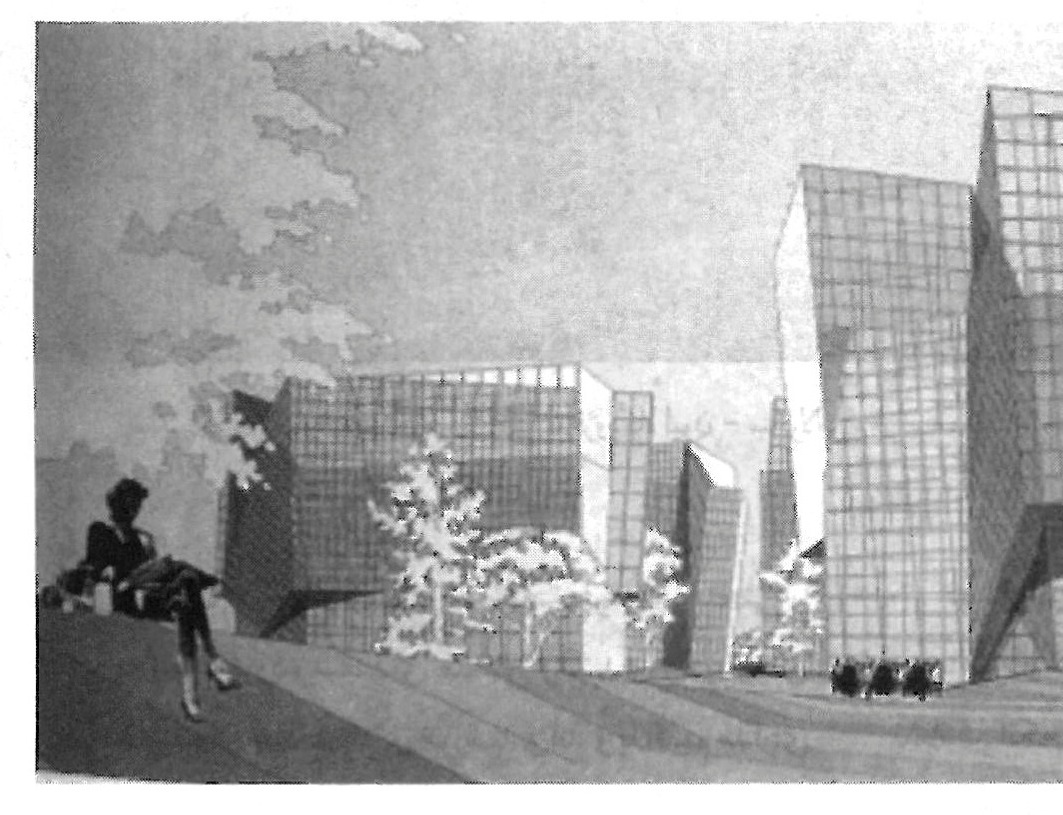
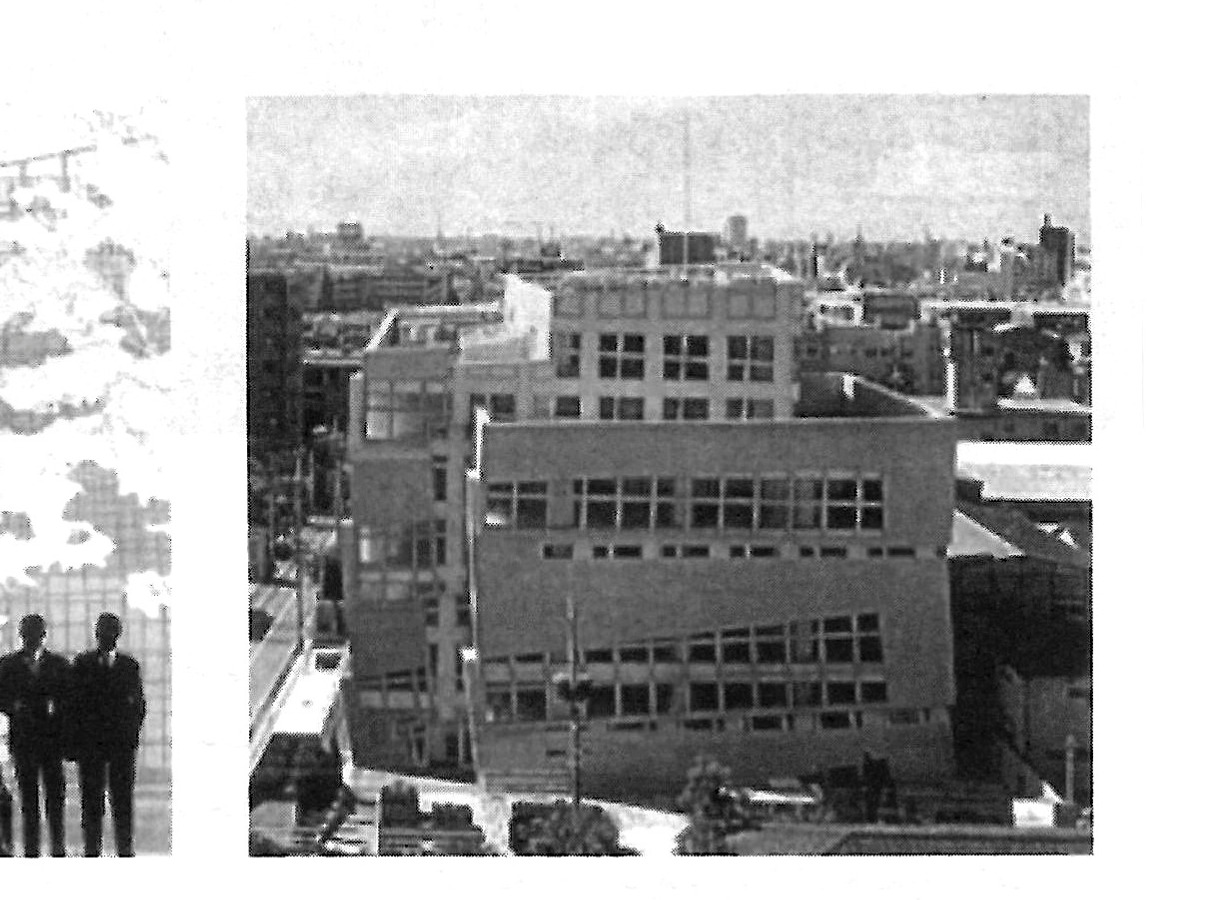
The language of fold architecture derives from catastrophe and continuity theories. Catastrophe—or collapse—manifests in the rapid transformation from one state to another, like water turning to ice or steam. Catastrophe leads either to bifurcation or to complication—folding into itself, intertwining—which is the essence of fold architecture. A type of architecture that appears to be collapsing and tilting: the combination of plan, elevation, and section together creates ambiguous, crystal-like forms.
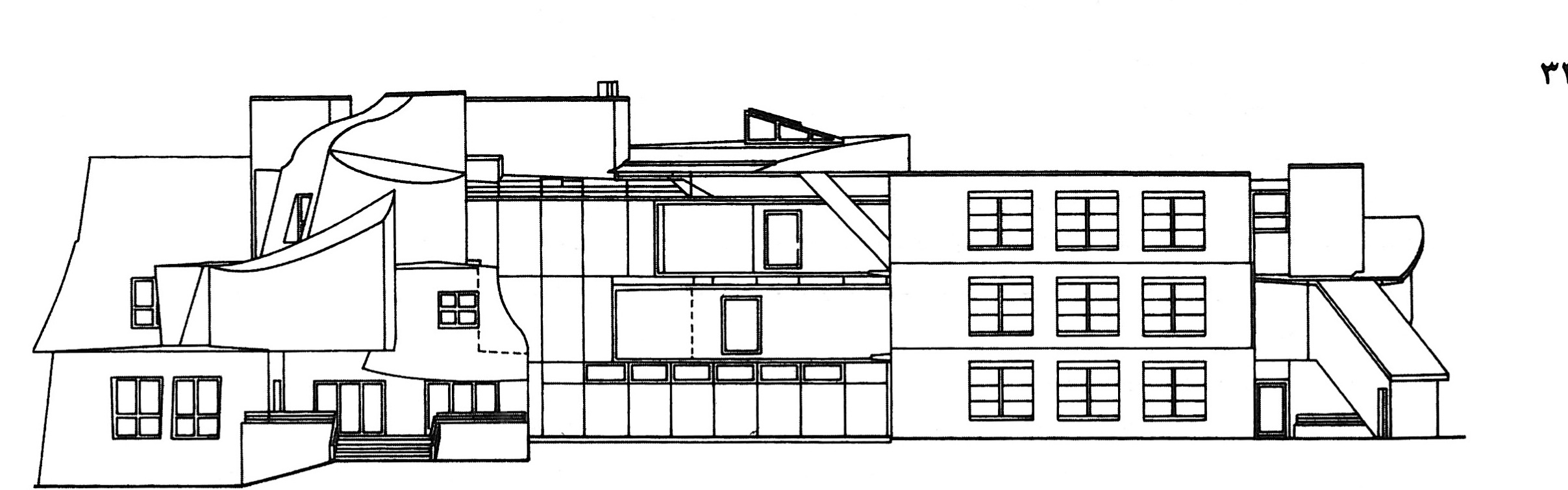
Frank Gehry initiated this play by scrambling diverse architectural languages and combining them. In the Vitra Museum building in Weil am Rhein, Germany—which influenced Eisenman’s work—the architectural elements are deformed cubes, warped and intertwined. For this reason, some have called his architecture animal-like and worm-like. In Gehry’s works, the idea of assembling disparate forms within a single complex—like a city—has been employed. For example, in the Vitra office complex in Switzerland, one part resembles a villa designed for formal and special occasions, while the cubic section is the office wing. These two buildings are attached to each other like urban buildings.
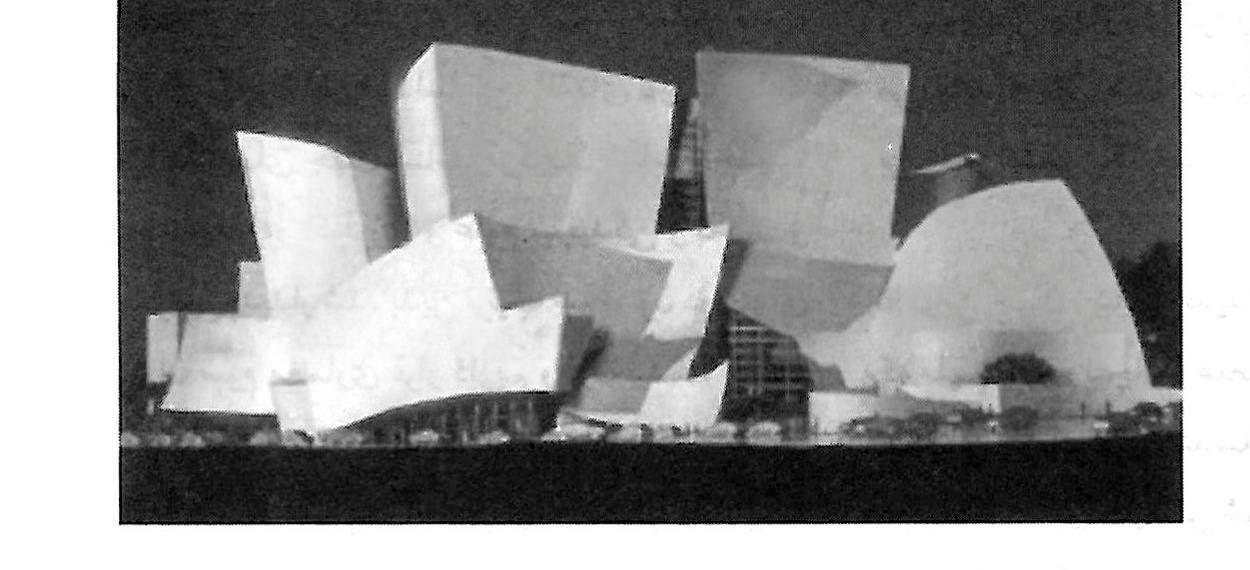
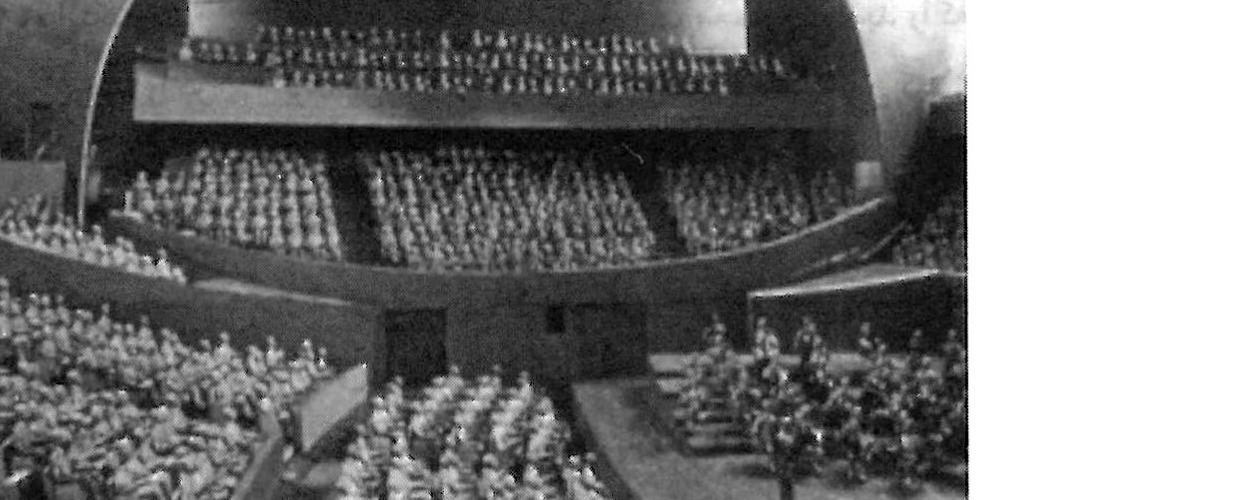
Martin Pawley, in his book Design and Technology in the Second Machine Age, criticizing Gehry’s work on the Vitra office building, describes it thus: “Architectural madness. Deformed. A metal turtle, extremely vulgar, with cheap materials—a worthless, wretched building that has been extremely expensive.” He also considers the undulating and curvilinear forms reflected in the exterior of the Disney Concert Hall in Los Angeles to be “deconstructive garbage” or “earthquake architecture” and “shattered architecture.”
Apart from Frank Gehry, Bernard Tschumi also, by employing the idea of “superimposition,” sought to create depth in his architecture. In his wake, Peter Eisenman took the act of setting aside all preferences and even the existing conditions further still. He strove to build a composition with diverse elements, without any hierarchy of preference, so that—in his own words—by layering them upon one another, a surprising coincidence would arise.
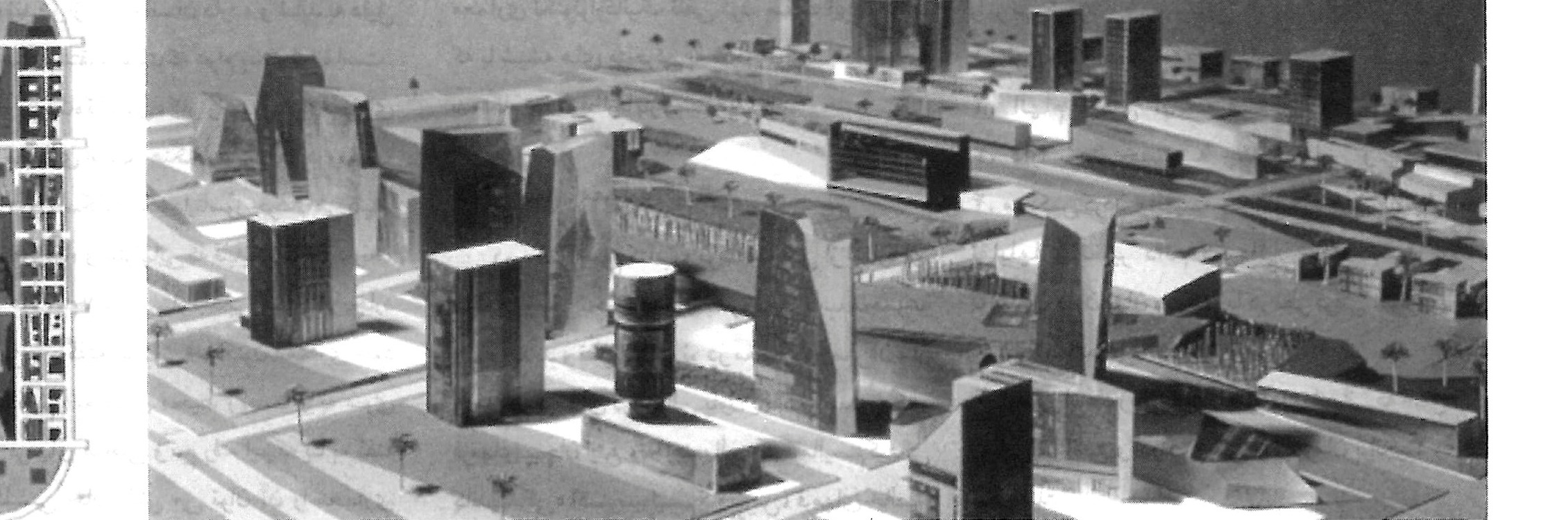
Rem Koolhaas, too, in his design for Parc de la Villette, superimposed five different components—park furniture, paths, activities, and the existing situation—so that they would develop in equilibrium with one another. His anti-hierarchical works have had a significant influence on urban theories. Eisenman defended him as well, dismissing the hierarchy of priorities, the distinction between important and unimportant, as the remnant of patriarchal, master-servant architecture. His idea of superimposition is also a protest against the one-sided zoning of functionalist architecture and the zoned modern city. In the Haiku City project in China, Bahram Shirdel and Jeffrey Kipnis placed four complexes on top of one another: a sub-oceanic urban grid, land fragments, and a road network. The city plan resembles the floor of an ocean, packed with everything. The placement of functional elements across the whole city has made the map resemble the pointillist paintings of Georges Seurat. Shirdel and Kipnis’s effort has been directed toward showing, instead of a designed city, a city in the process of being built and becoming visible.
Green Architecture
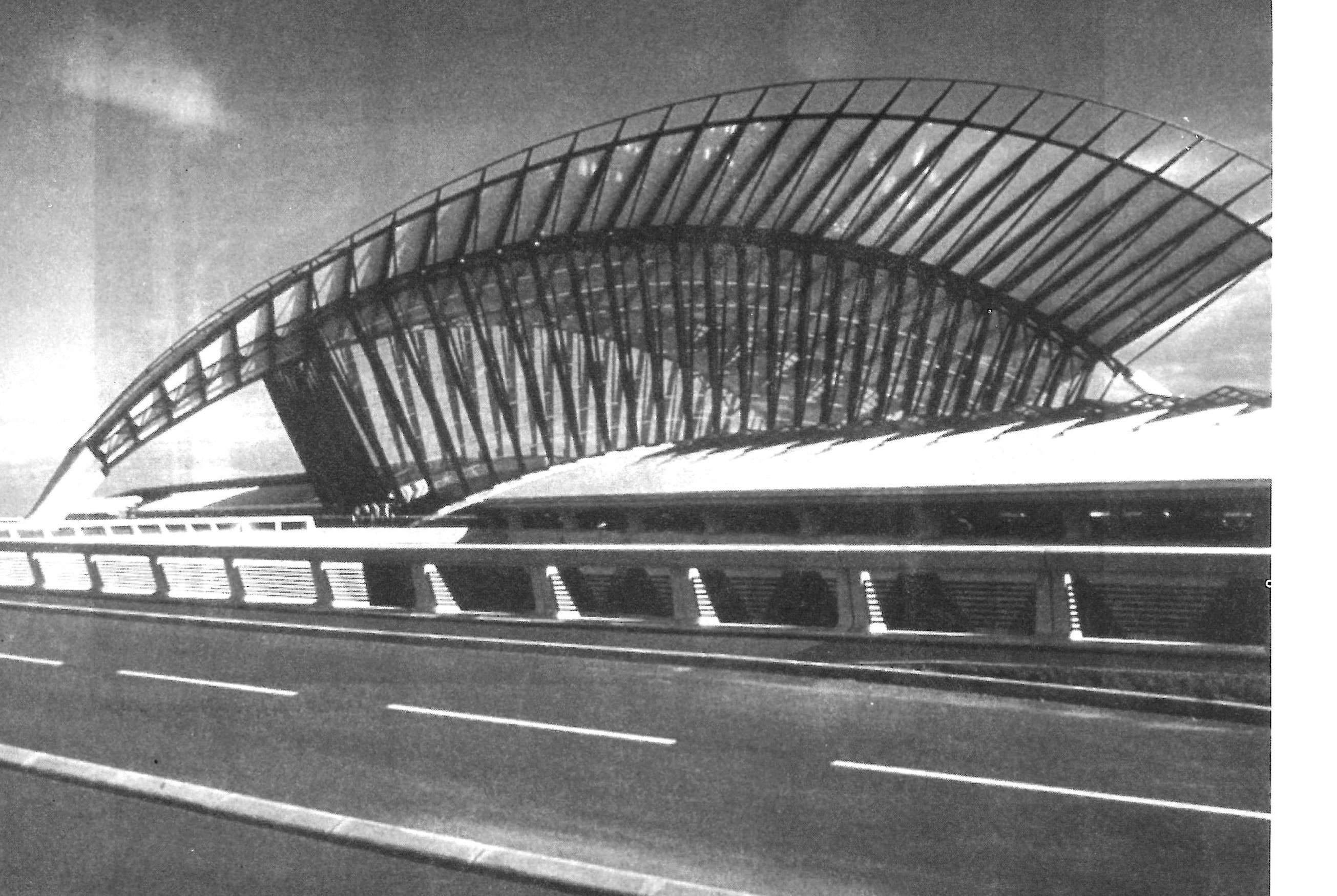
Green architecture is another new language of world architecture. The tradition of organic architecture, from Antonio Gaudi to William Morris and Frank Lloyd Wright, has been grounded in resolving the conflict between culture and nature, at times turning its attention to ecology and the environment by looking back at the architecture of cultures in harmony with their surroundings. Today, with ecology as the pressing issue of the age and technology having reached the point where it can bring about all manner of forms—particularly curved forms—curved ceilings, domes, and curved walls that absorb solar energy and are more responsive to climate have received special attention.
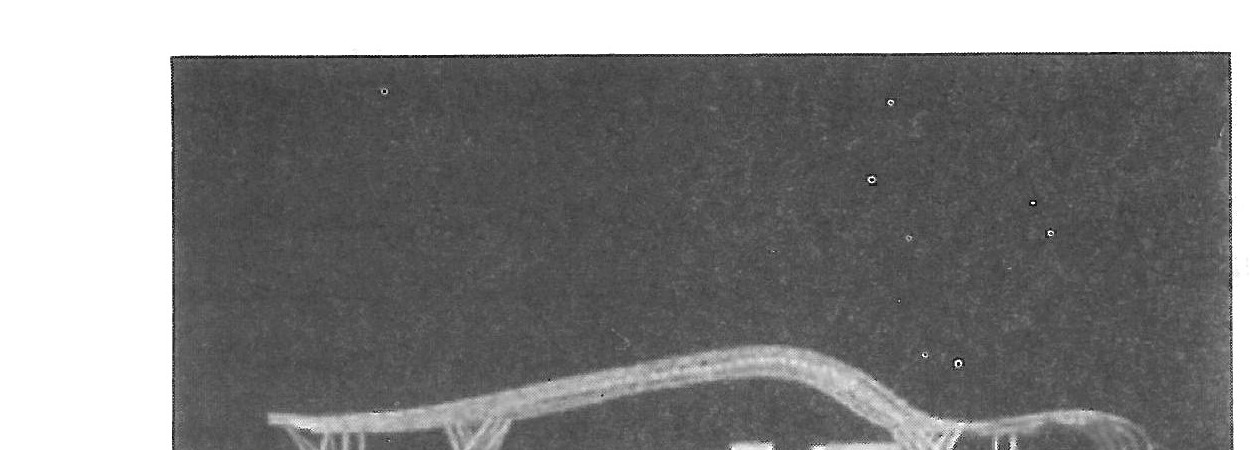
Architects including the Spanish engineer Santiago Calatrava use curved lines and surfaces extensively in their architecture. This type of architecture bears a strong resemblance to the bodies of living creatures, including the human form, and perhaps it is this direct resemblance that has made it popular. The undulating roof of Kansai Airport by Renzo Piano is an example of this type of architecture. When moving through its interior, it is as if one is moving inside the skeleton of a dinosaur. The grounds of this airport and its adjustable columns are all highly attractive engineering innovations. Richard Rogers has said of this: “We have now changed our architecture, moving toward the environment and toward the use of curved and soft forms, which, in the words of the English critic John Welsh, can be called techno-organic architecture.”
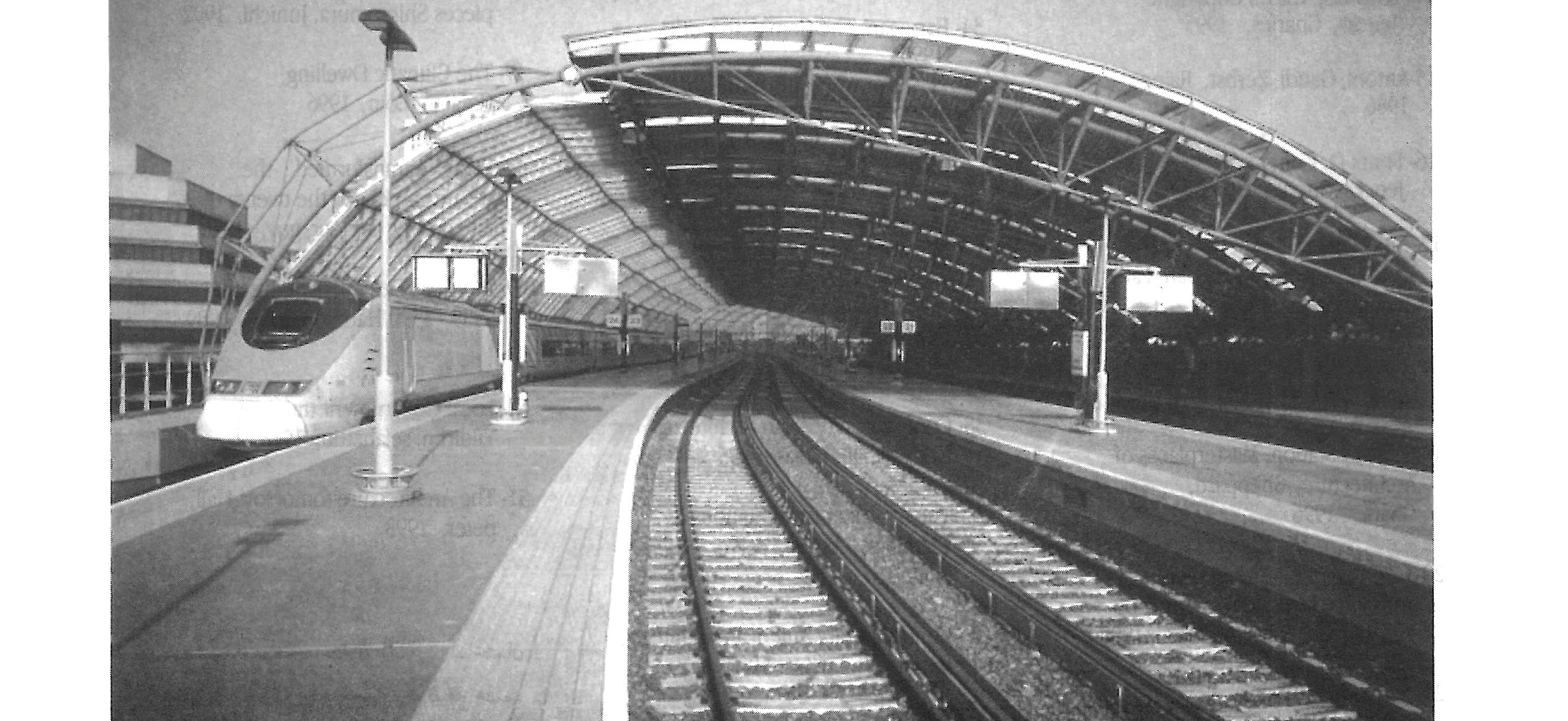
In Rogers’ recent works, attention to natural forces—natural cooling and heating—is fully evident, indicating that the technological aspect of his work has diminished while the natural and organic quality has been intensified. The works of Nicholas Grimshaw are also a combination of curved forms and creative technology that produce a poetic atmosphere. His Waterloo Terminal in London can be considered a form of techno-organic architecture. The roof of this terminal, made of mobile glass panels shaped like strips, opens and closes as trains move through it.
Part Three: Cosmic Architecture
In the third part of the book, the author, after a renewed reference to the evolution of human thought, returns to the reflection of new science and new theories in architecture and its trajectory—from the crystalline forms of the Czech architect Paul Bonatz, the spiraling forms of Étienne, Malevich’s abstraction, Kandinsky’s formalism, the expressionism of Gropius, to the pure forms of Le Corbusier. He argues that this movement, halfway through its course, was overwhelmed by mass production, materialism, the political and economic currents of Europe, war, and ultimately a materialism that defeated the spirituality of architectural art. At the same time, after explaining the Bauhaus experience and describing how the ideas of new sciences and theories were reflected in the work of architects such as Peter Eisenman and Frank Gehry, at the conclusion of the book he enumerates several guiding categories for understanding today’s world architecture:
- Proximity to nature and knowledge of the language of nature.
- Drawing inspiration from truth and the world spirit.
- Possessing multi-layered meaning and depth.
- Reflecting the reality of multiplicities, differences, oppositions, and perpetual change that are inherent to the world.
- Demonstrating time and place while taking into account ecology and social, political, and local conditions.
- The ability to create a language for human environments that simultaneously arouses aesthetic sensibility and cognitive perception, and satisfies them.
- An emphatic attention to the new sciences.
1 Charles Jencks, The Architecture of the Jumping Universe: A Polemic — How Complexity Science Is Changing Architecture and Culture, Academy Editions, London, 1995.
2 Ali Akbar Saremi (1939–2022) was an Iranian architect, author, and architectural critic. He served as a professor at Azad University and was a prominent voice in contemporary Iranian architecture. This review was based on a series of lectures he delivered on Jencks’ book.



