Arup, which was originally founded by Ove Arup, is a multidisciplinary consultancy of architects, engineers, designers, planners, project managers, technical specialists and consultants in every field of the built environment. The Arup Group, with offices in seventy-three cities of thirty-three countries, has played a part in the design and execution of countless buildings, bridges and infrastructure works around the world.
More than 7,000 staff are employed by the group worldwide. To support and supplement work in offices and on sites the group also has multidisciplinary advisers, technical specialists and many associated firms. Among Arup's projects of recent years, attention may be drawn especially to the Sydney Opera House, the Centre Pompidou, the Millennium Bridge in London (Foster & Partners), the Atocha-Sants Interchange in Bilbao (Calatrava + Michael Wilford and Partners), and the City of Manchester Stadium for the 2002 Commonwealth Games.
Group structure
The Arup Group is in fact made up of several constituent companies, each operating in its own field but in close cooperation with the others. The group's principal subsidiaries include Ove Arup & Partners (the structural-engineering arm), Arup Acoustics, Arup Communications, Arup Economics & Planning, Arup Façade Engineering, Arup Fire, Arup Geotechnics, Arup Lighting, Arup Project Management, Arup Research & Development, Arup Security Consulting, Arup Transportation Planning, and Arup Energy. The interlocking arrangement enables a "Total Design" approach in which the work of every specialist consultant is integrated from the earliest stages of the project.
Trust ownership
In 1946 Ove Arup founded a structural-engineering practice in London which, by 1950, had taken on a multidisciplinary character. Throughout the 1950s and 1960s, with the firm's growing involvement in landmark public projects (most famously the Sydney Opera House, on which work continued from 1957 to 1973), Arup established a model in which engineering and architecture worked side by side from concept design onward. In 1970, in his "Key Speech", Ove Arup laid out the philosophy of the firm: total architecture, the quality of human work, sufficient profit, social usefulness, and respect for the people who work within. Today Arup Group Limited (AGL) is owned by trusts on behalf of its employees; this ensures that the firm cannot be sold and that its profits are reinvested in its work and people.
Ove Arup — a brief life
Ove Arup was born in Newcastle in 1895. He studied philosophy at the University of Copenhagen and engineering at the Royal Technical College in Copenhagen, graduating in 1922. He gained experience with Christiani & Nielsen, working on early reinforced-concrete structures. In the late 1930s he formed a partnership with the émigré architect Berthold Lubetkin and Tecton, on works such as the Highpoint flats and the Penguin Pool at the London Zoo, in which his structural inventiveness gave architects new freedoms.
In 1946 he founded the firm in London. Through the 1950s and 1960s the practice grew into a multinational and multidisciplinary house. Ove Arup was knighted in 1971; he died in 1988, but the company that bears his name continues to follow the principles of his "Key Speech" and to celebrate his memory each year on his birthday.
Sydney Opera House
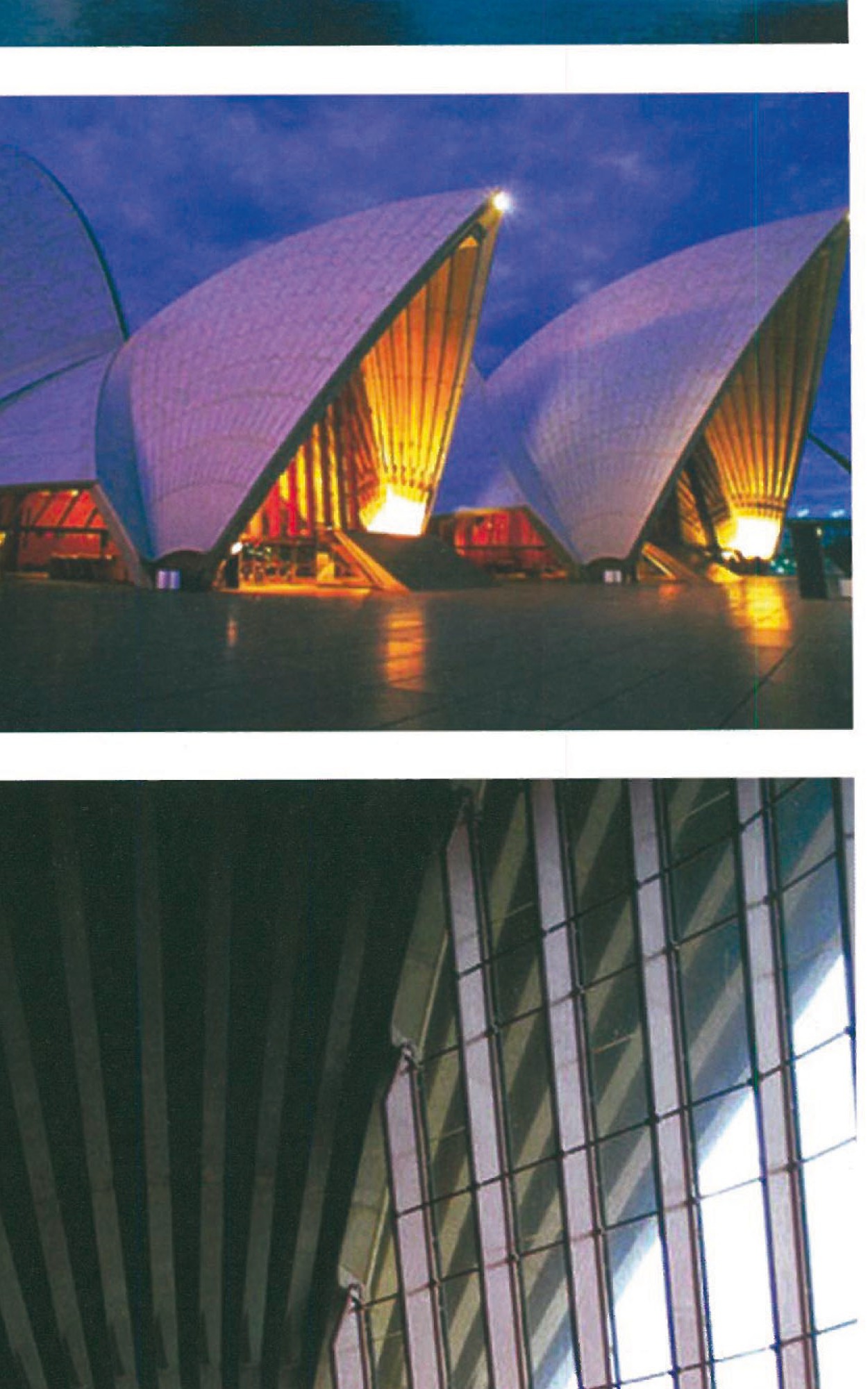
The Sydney Opera House (Jørn Utzon, architect; Ove Arup & Partners, structural engineers, 1957-73) was the project that brought the firm to global prominence. Utzon's competition-winning sketches showed a series of free-form vaulted "shells" rising from a granite-faced podium, but the geometry of the shells could not be built as drawn. Arup, working with Utzon, recast the shells as sections of a single sphere, allowing the precast concrete ribs to be cast from a small number of moulds. The result is one of the iconic buildings of the twentieth century, and a textbook study in the power of structural reasoning to find architectural form.
Centre Pompidou — Paris
The Centre Pompidou (Renzo Piano & Richard Rogers; Arup engineers, 1971-77) extended the firm's reach into the architecture of "served and servant" spaces. The exposed structural and mechanical systems of the building made the engineering legible from the street. Peter Rice, the brilliant young engineer at Arup, played a leading role in the design of the cast steel "gerberettes" that carry the long-span trusses, demonstrating once more the firm's capacity to invent structural solutions tightly integrated with architectural form.
Millennium Bridge — London
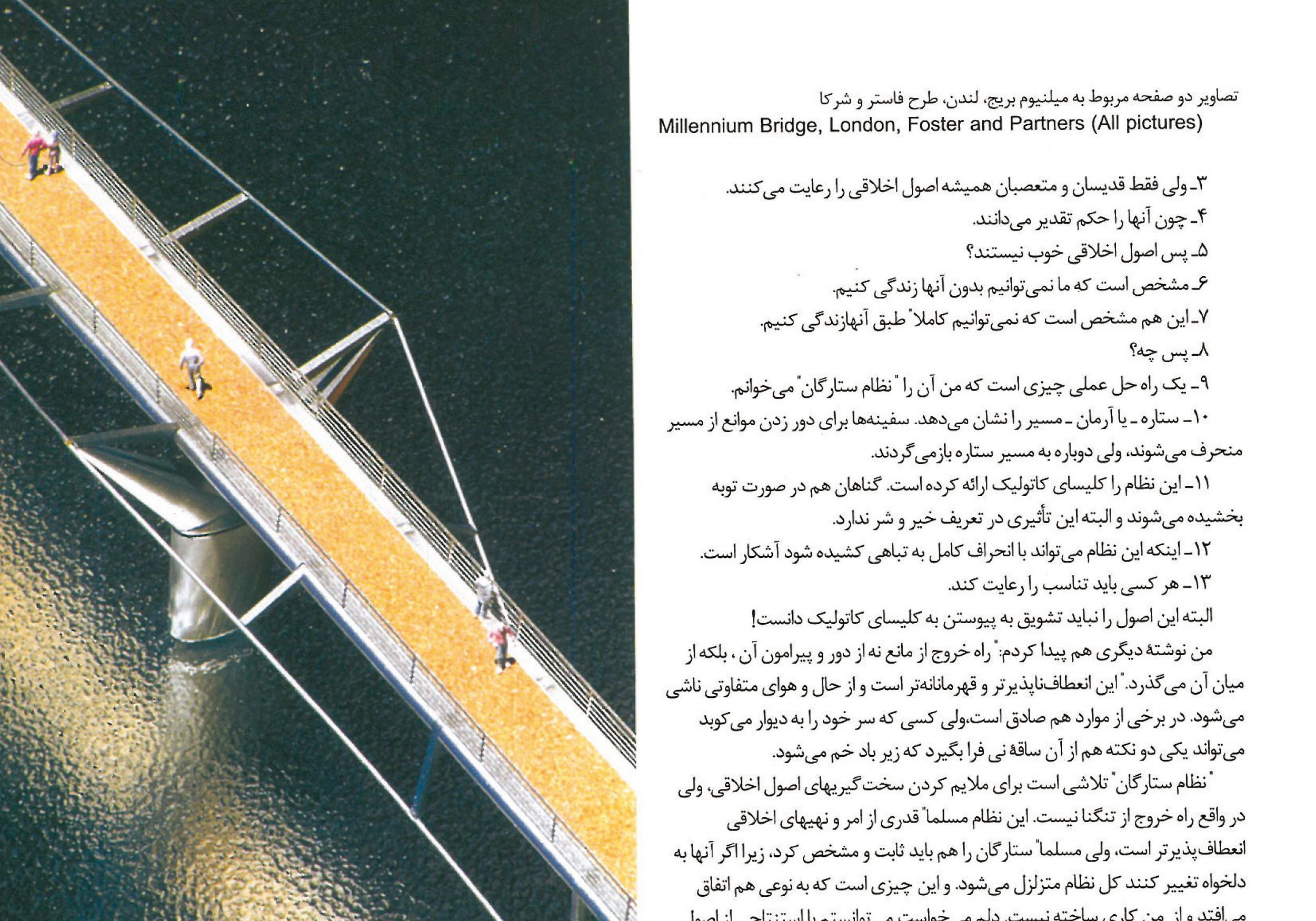
The Millennium Bridge across the Thames (Foster & Partners with Anthony Caro and Arup, opened June 2000) is a long-span pedestrian bridge celebrated for the slenderness of its profile and its visual link from St Paul's Cathedral to the Tate Modern. Arup were structural and movement-control engineers. After the bridge's first opening, an unforeseen lateral oscillation appeared under crowd loading; Arup carried out the research that led to the installation of fluid dampers, and the bridge reopened in February 2002, serving today as one of London's principal pedestrian routes.
Atocha-Sants Interchange — Bilbao
The Atocha-Sants Interchange (designed by Calatrava with Michael Wilford & Partners) covers a multimodal transport hub at the heart of Bilbao with a single great glazed canopy. Arup were the structural engineers responsible for the geometry, fabrication and erection sequence of the curved steel diagrid, working in close coordination with the architects from concept stage onward. The completed project unites high-speed rail, regional rail and metro under one roof and connects directly to the urban fabric.
City of Manchester Stadium
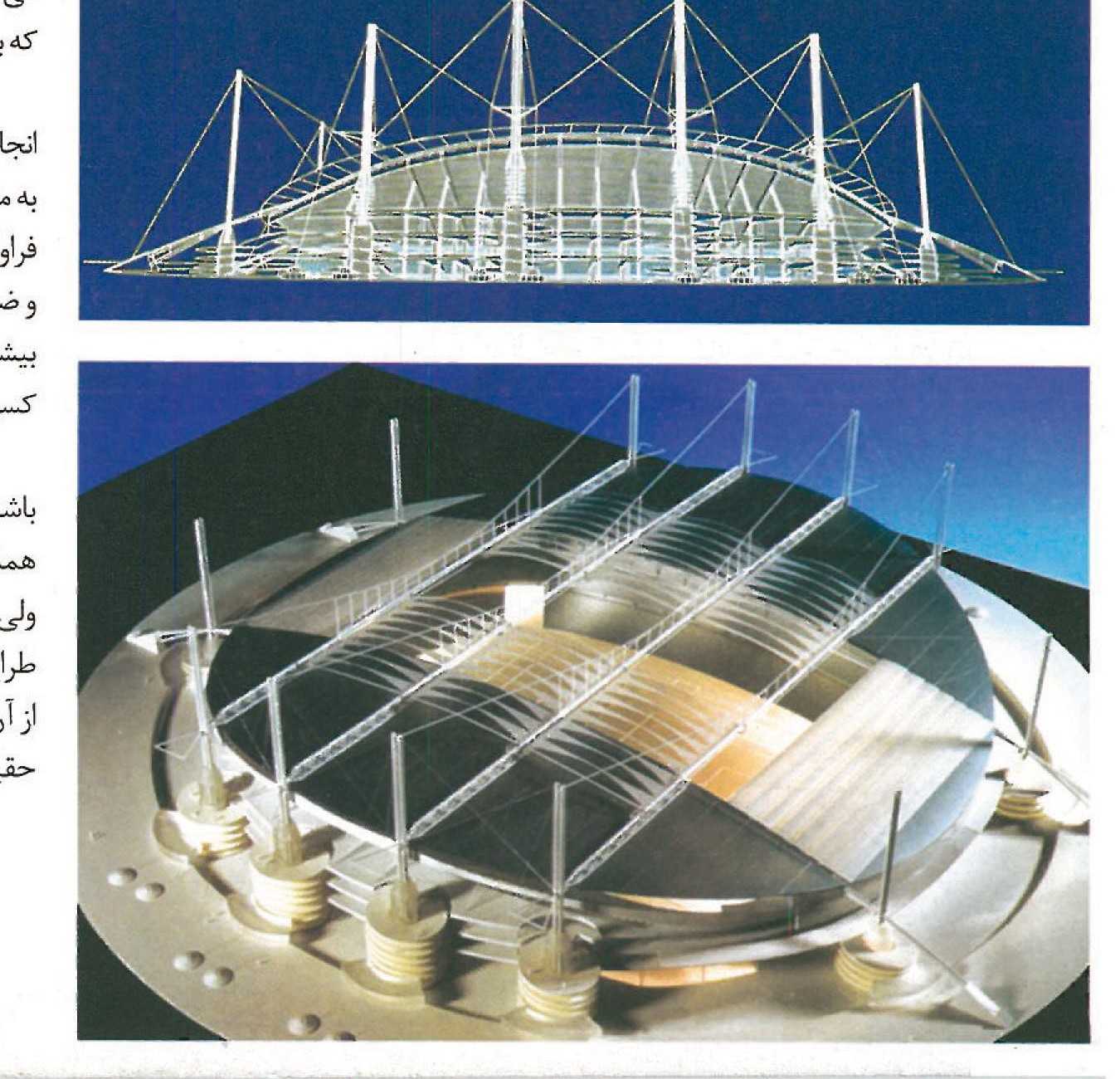
The City of Manchester Stadium (2002), designed for the Commonwealth Games and later converted to the home ground of Manchester City Football Club, brought Arup Associates (architecture) and Ove Arup & Partners (engineering) together on the same project. The cable-suspended roof, hanging from leaning masts, gives the stadium a strong silhouette and produced one of the iconic British stadium designs of the early twenty-first century.
Quality of Life
Arup's mission statement — "shape a better world" — is not a marketing slogan; it derives directly from the principles set out in the Key Speech. The firm operates a research and development arm that addresses long-term questions about cities, climate, materials and energy. The "Quality of Life" capital, an internal investment programme, supports projects whose social or environmental return is greater than their financial return. Together with the trust-ownership structure, this gives Arup an unusual ability to take a long view of the work it carries out.
Recent activity in the Iranian region and a closing note
Arup has worked, in some capacity, on a wide range of projects in the Middle East and Central Asia, often through joint ventures with local consultants. The article notes — without singling out specific Iranian projects — that the firm is active in this geography and that local engagement of the kind exemplified by Arup's worldwide trust-ownership and multidisciplinary collaboration is among the conditions that make works of the technical and architectural complexity of the Sydney Opera House, the Pompidou, the Millennium Bridge, Atocha and Manchester Stadium possible. The closing line of the original article restates Arup's ambition: to be — wherever it works — a partner not only of the architect, but of the city, the region, and the people in whose midst its buildings stand.



