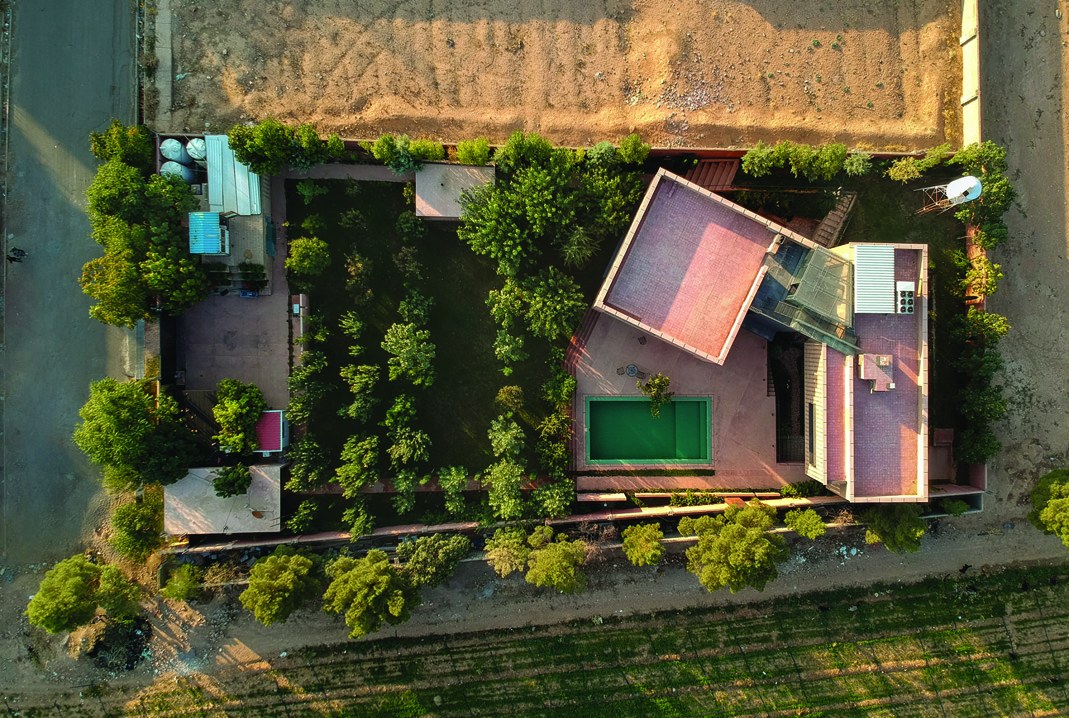
In Shiraz, in common parlance, a "villa" is called a "garden"!
They invite you to their garden.
The existence of a large number of gardens, within and on the edge of Shiraz, has made this type of urban living a pattern inseparable from the habits and life of its people. These customs of use, and the closeness to urban space, are such that they justify its future use as a "home".
But the initial question was how, in a "villa brief" and with the limited economy of land, one could
- not as the residual space of the villa or a subject to be looked at
- and not as landscaping (a combination of grounds and trees),
- but as an independent subject, define the problem and the identity of the "garden"?
But the objective independence of the garden lay in the independence of the building, and the answer too in the give-and-take between them.
Strategy
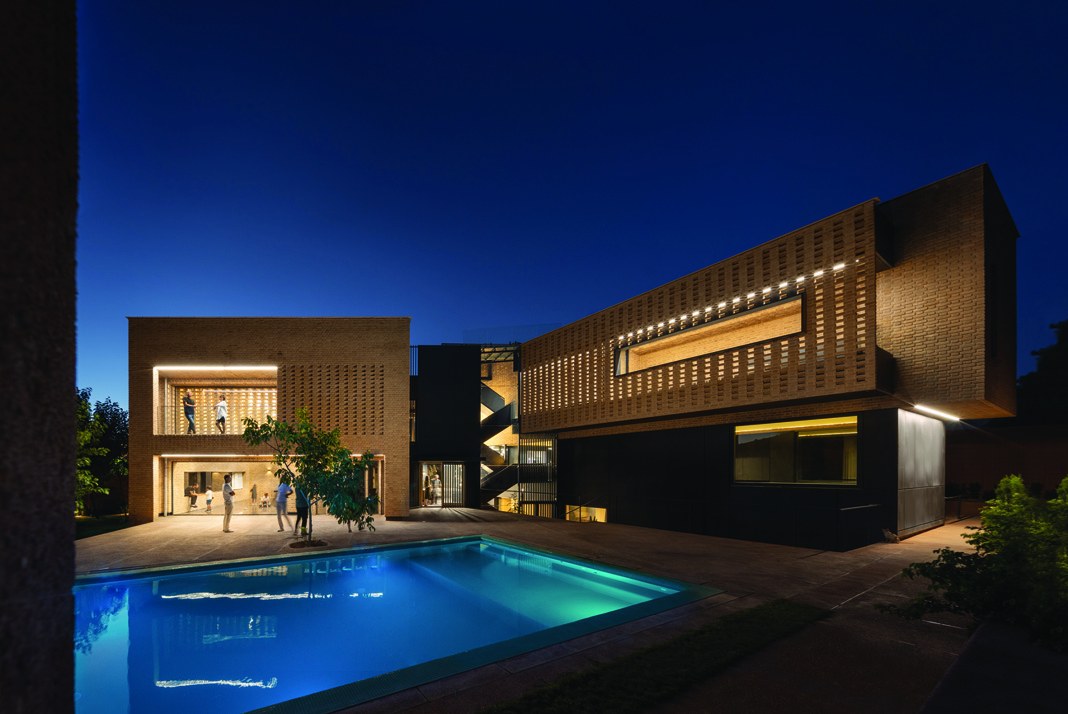
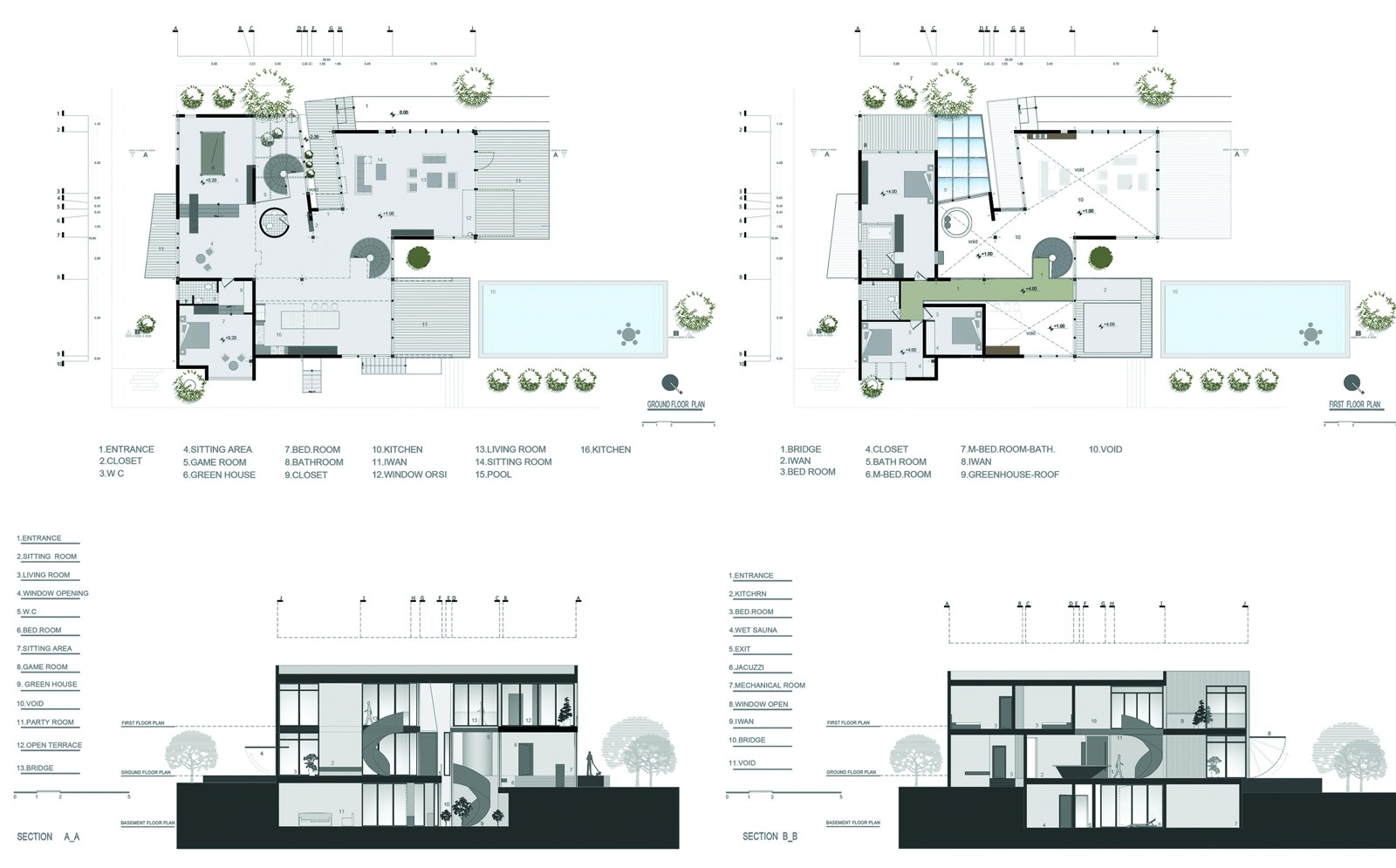
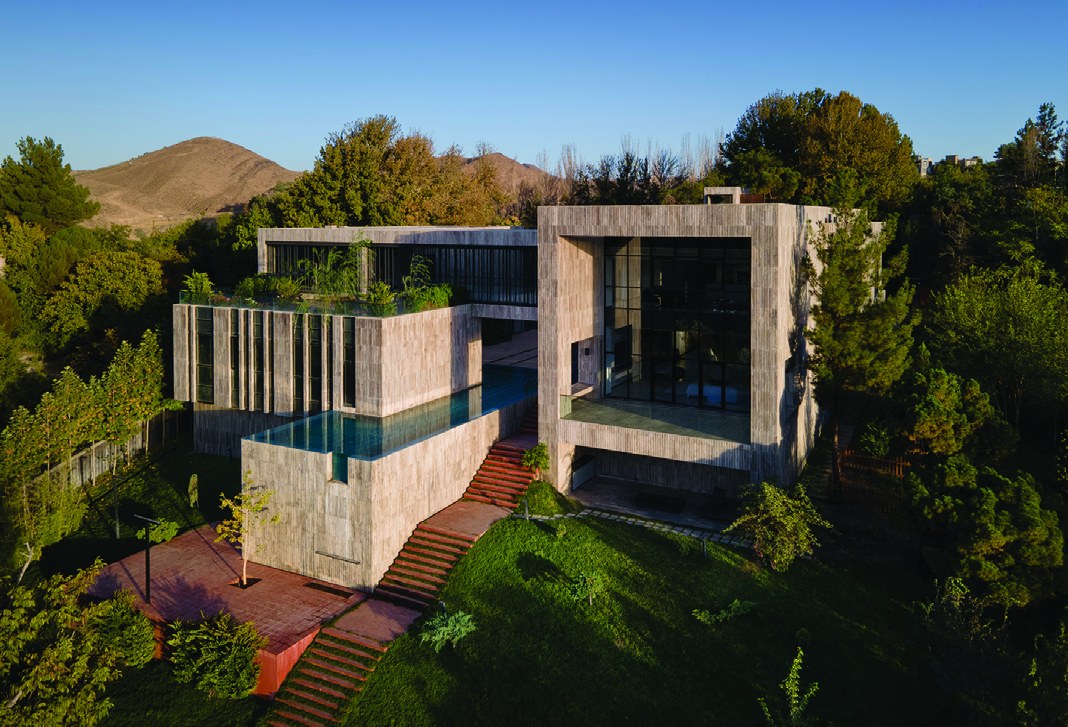
In this exercise, the organisation of the grounds scattered among the trees is handed over to the building, and with this refinement it gives a more "extensive" and "continuous" surface to the land and the trees, so as to bring to mind the landscape image of the "garden", and the building/villa also tries to recover it in the concept of the "courtyard".
This strategy, by giving quality to the inside-outside relationship, makes possible the building's landscape image of itself, and consequently helps its objective independence in the concept of "home". The building (the house) hides behind the dense mass of trees (the garden), and an economical demarcation makes possible the companionship and direct encounter of garden and house.
With the relationship of figure and ground fixed, the relationships of mass and void were also arranged in such a way as to help the extension of the courtyard into the interior view of the building and to strengthen the inside-outside relationships. The static brick masses, in contrast with the light and transparent surfaces that marked the circulation elements, also helped to define one another further and to create spatial contraction and expansion.
Although this question and its exploration led us towards creating two independent subjects, that is, "garden and house", and its consequences, among them turning away from creating wide windows towards the "garden", "creating degrees of enclosure" and "concentrating the grounds in the courtyard", can be questioned, it led us to a rereading of spatial geography, in this subject, and to a landscape image simpler, more legible and more in keeping with the familiar habits of life in the gardens of Shiraz.