Foreword
Hamid Anbarani, born in Sabzevar in 1959, graduated from Tehran University Arts Faculty in 1991. Since then he has had different experiences in fields of designing and constructing residential, administrative, cultural, and industrial complexes. He had begun his professional work before the formal end of his studies, in 1986, as the head of the survey-and-design team in the old fabric of Bushehr port at the Ministry of Housing and Urban Planning. In this issue, Bahadori's Tomb (2000), one of his latest works, is introduced.
The scheme
The late Bahadori was an elder of the Bakhtiari tribe, a keeper of the tribe's traditions, and a learned, hospitable, and serving figure. On the basis of descriptions by his survivors, a study of his letters, writings, and book of poems, and the tribal ethos and the climatic conditions, the architect set out to build a tomb worthy of Bahadori, his tribe, the climate, and the land. Drawing on the form of the Bakhtiari black tent, the Choghazanbil ziggurat, and the Bakhtiari decorative motifs, he produced a wholly novel and innovative design and built it by industrial means. The twelve columns around the tomb refer to Bahadori's twelve children; the nine merlons of the building, to the nine planets of the solar system.
Light and air
The tomb, like the black tent, opens from one of its long sides — along the gravestone — to the open space around. The opening is set so that, towards sunset (when visits to the cemetery take place), the troublesome sun has passed across in front of it. Two narrower entrances on the other two sides are provided for crowded occasions.
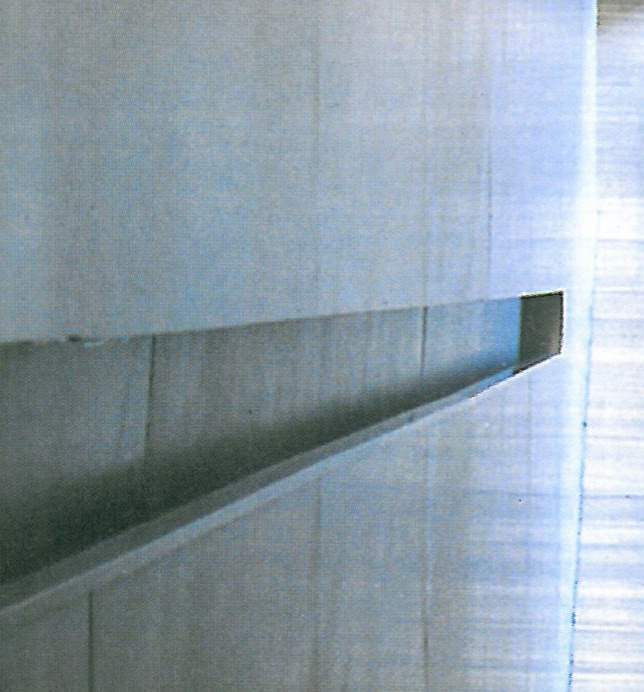
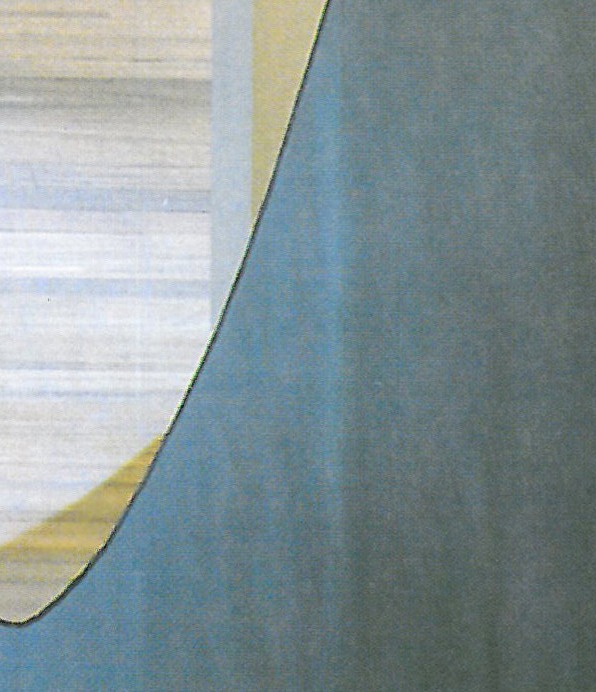
To allow the most friction and the greatest air-flow, all the walls of the tomb, from floor to ceiling, are half-open with narrow, deep slits. The shaping of one of the concrete beams of the western face as a curve, and the placing of a perforated screen below it (not yet executed), break the regularity of the design and add to its softness and grace.
The lighting scheme of the building from the side of the twelve perimeter columns has not yet been executed. In an interpretive approach to the tent, recalling the role of the pegs and the ropes that hold it up, the twelve short columns around the tomb are set so that, at night, their light cast on the body of the building gives a fresh, mystical reading of these elements: the ropes are strands of light woven together, recalling the tent's rising.
Structure and execution
The bringing together of ziggurat and tent in a wholly symbolic, contemporary work called for the unity of structure and design. For this reason, the prefabrication of the elements in Tehran and their transport to site was used. All the concrete units were formed and cast under the architect's supervision and erected on the prepared foundation in four days. Holes were cast into the units; with reinforcement bars and concrete poured into them, all the units were tied together and made monolithic. The pre-cast units are reinforced concrete with white aggregates, sandblasted on the surface to give a textured finish.
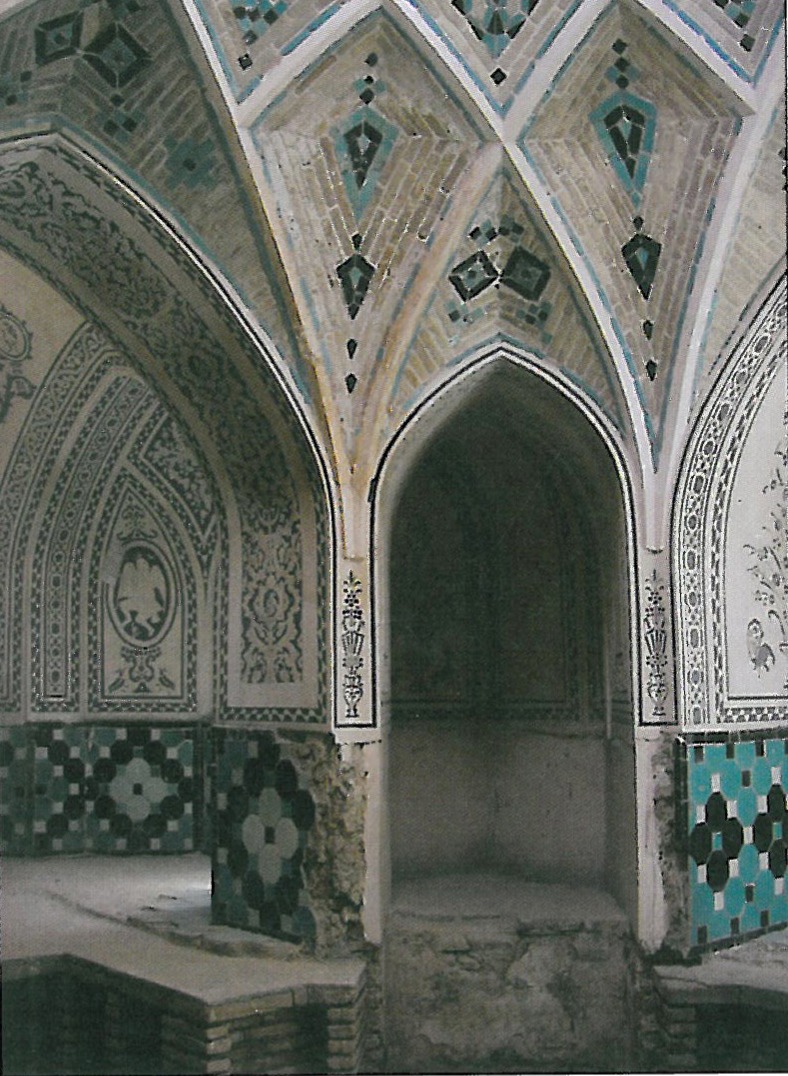
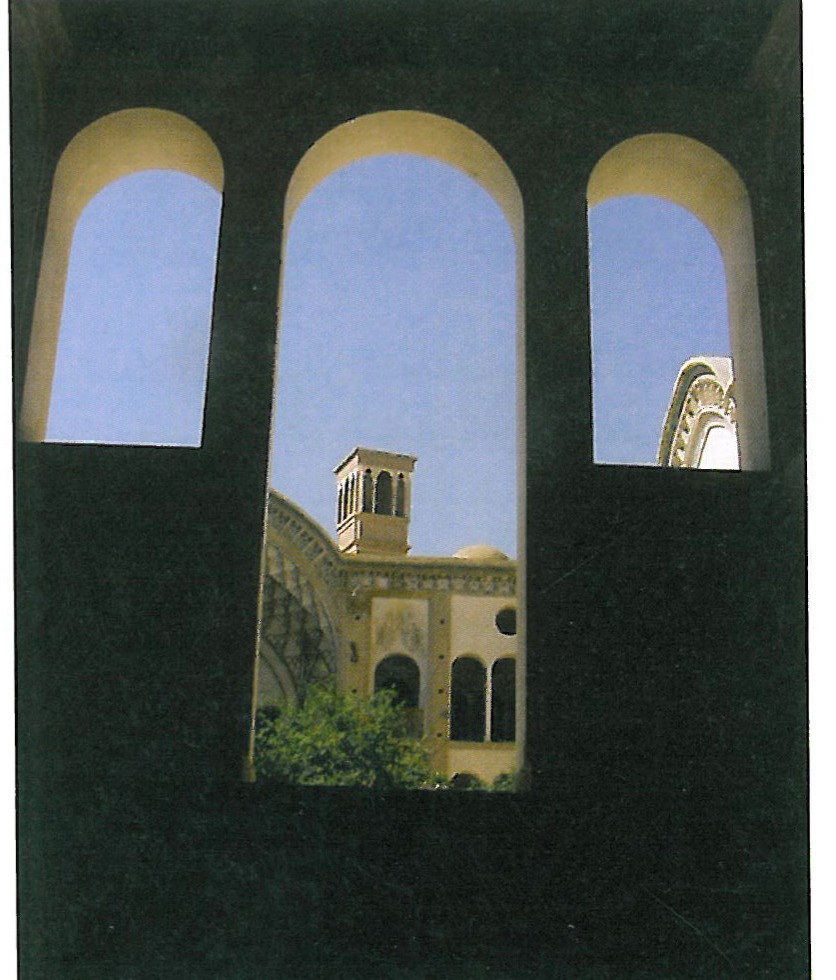
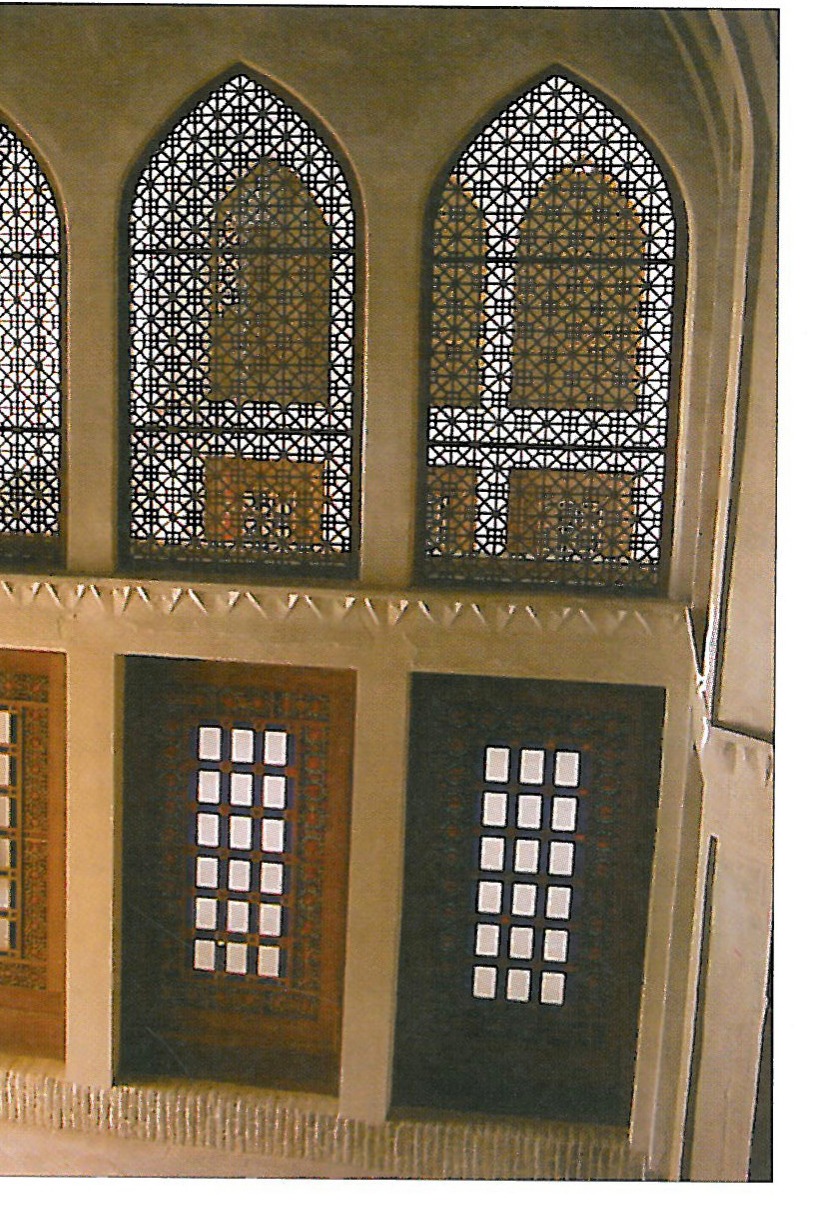
The construction of the light-columns around the tomb, the perforated concrete screen (fakhr-e madin) on the western face, the bench inside the tomb, and the fitting of additions such as the building's identity-inscription and the ornamental motifs have not yet been carried out.
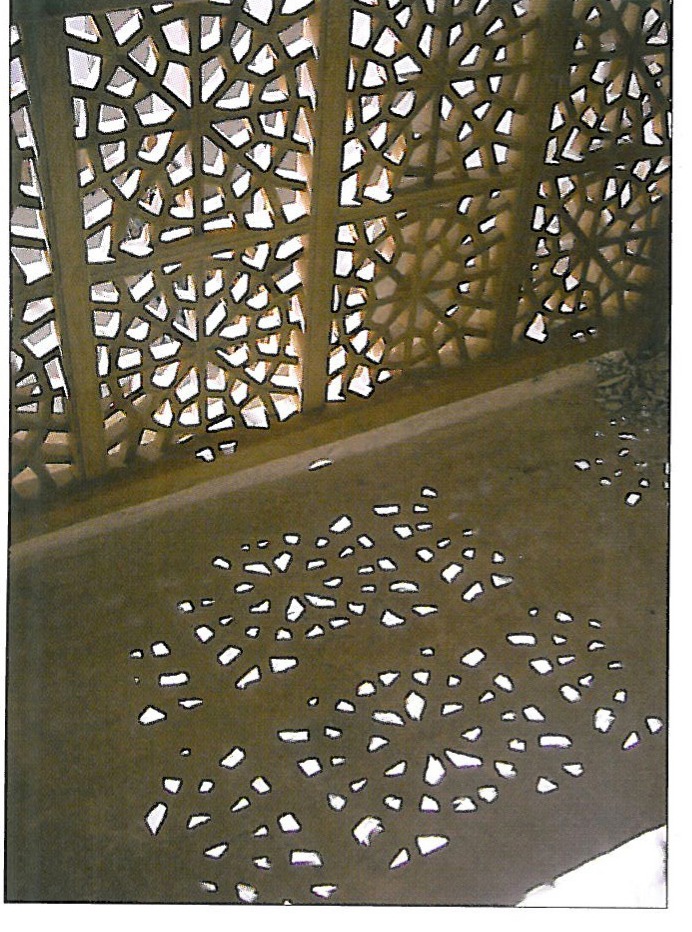
A stone wall on the western face beside the seasonal stream has been built to prevent gradual erosion of the bed and the western edge of the cemetery.
Project credits
Design and supervision: Hamid Anbarani. Structural calculations: Ehsanollah Dehghan. Computer modelling: Siamak Marzooghi. Pre-cast concrete units: Tehran Prefab Factory. Built area: 106 m². Height: 6.5 m. Platform area: 235 m².



