Understanding Architecture, Robert McCarter, Juhani Pallasmaa.
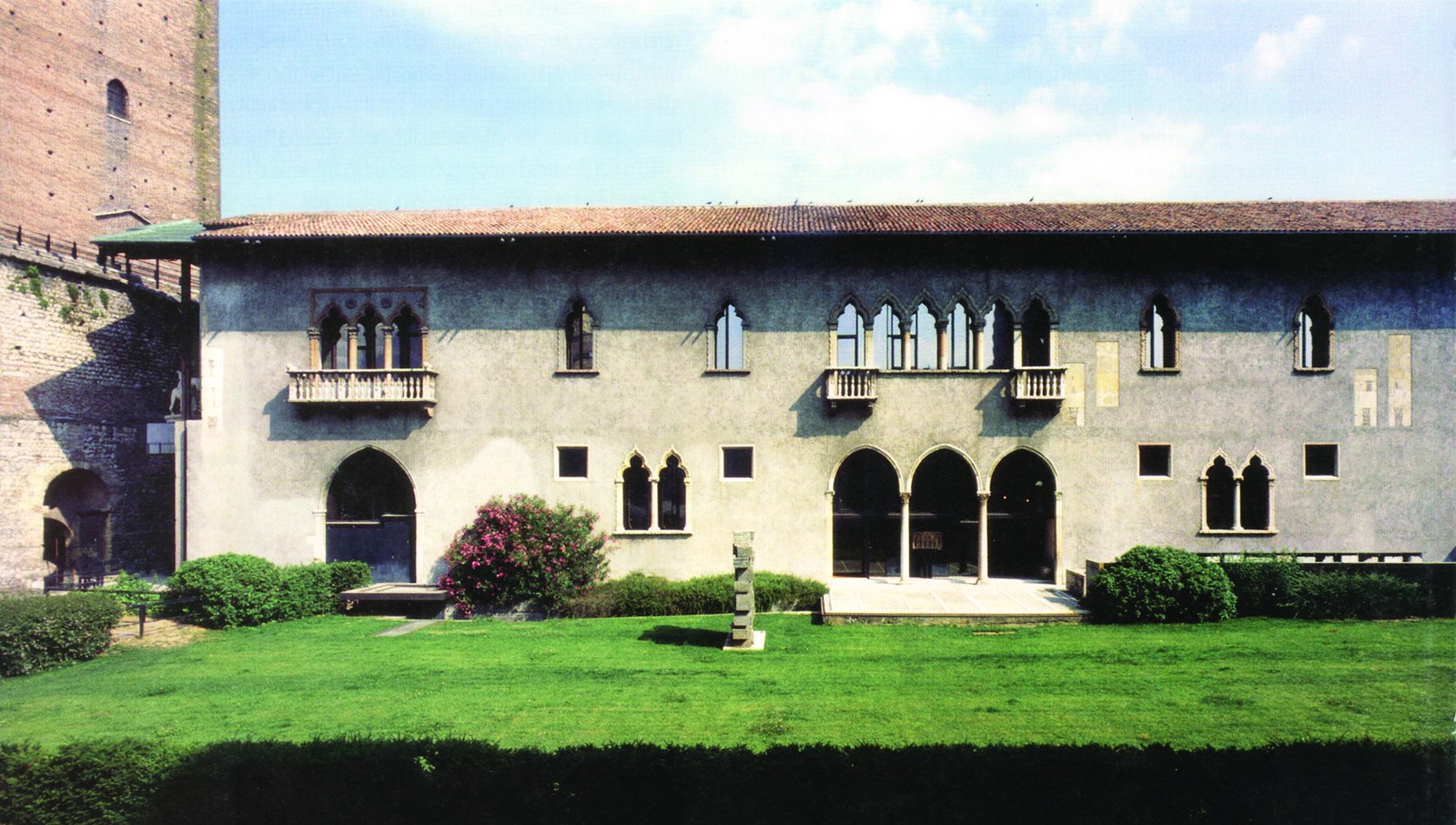
Castelvecchio, the ancient fortress of Verona, beside the Adige River1, was built on Roman ruins and, after successive destructions over the years, was also seriously damaged in the Second World War. Scarpa worked from 1956 until his death on converting this fortress into the city's museum, and instead of privileging one particular historical period over the others, he celebrated the continuity of habitation and the complex temporal layering of this place – from antiquity to the modern – which are simultaneously embodied in this historic building.
Passing over the old drawbridge and through the gate of the fortress, we enter Castelvecchio and step onto the gravelled ground of a carefully designed garden courtyard. On our left is the stone and brick wall of the medieval bridge, with small crenellations along its top; to the right and in front of us is a wall of white hand-trowelled plaster in which stone-framed Gothic windows are set in an irregular pattern. That these windows are not old but were in fact transferred to this wall from other buildings in Verona during a 1920s renovation is revealed by the metal-framed glass volumes that project from both sides of them. Looking across the garden, we see that the walls do not meet in the farthest corner, and a statue appears among the shadows above the irregular gap between the walls. This is the Cangrande2, the most important work of art in the museum.
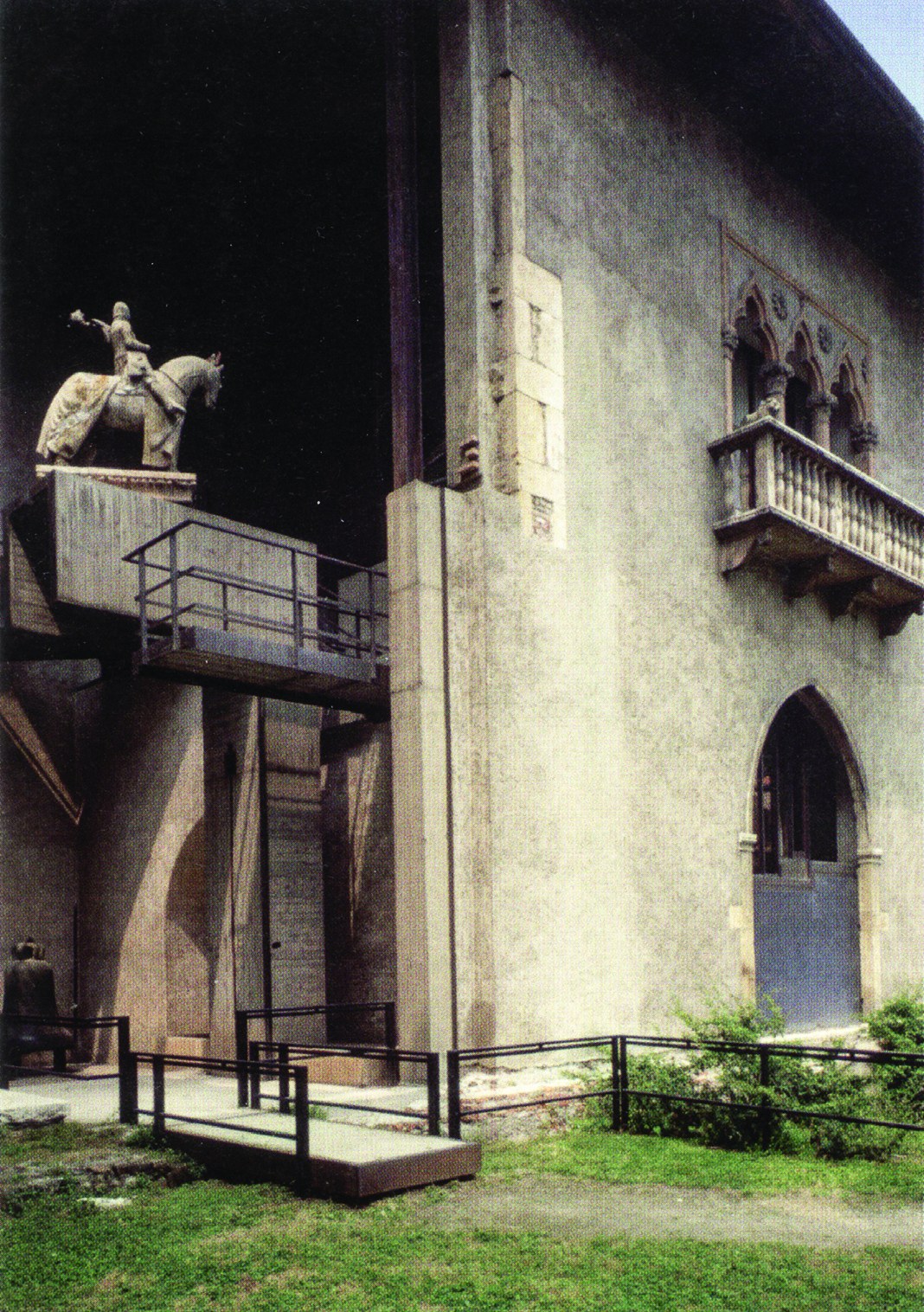
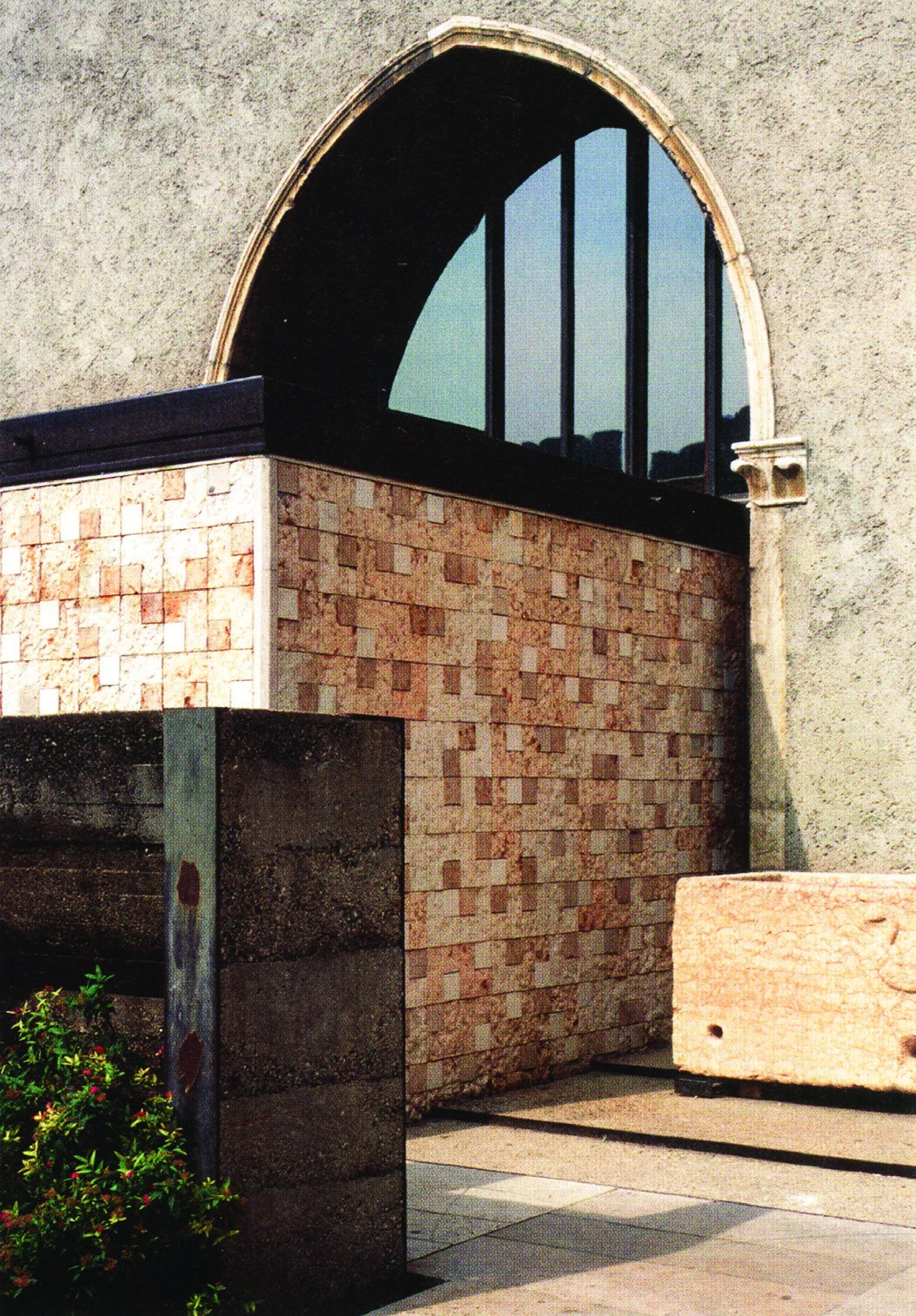
The entrance to the building is in the near corner, but to reach it we must pass across a series of changing surfaces of stone paving, grass and shallow pools, in which works of art are interwoven with new structures. As we walk, scattered views of the sunlit facade of the building are reflected in the rippling surfaces of the pools, reminding us that the facade itself has been newly composed over time. Beside the entrance, a cube-shaped mass with a metal cap projects on the left into the entrance path, its walls clad in a non-repeating pattern of squares of the local Prun3 stone – white and pink limestone – whose surfaces are alternately hammered or completely smooth and polished. We are encouraged to run our fingers over these soft, warm stone patterns, and to touch the completely worn surface of the old stone sarcophagus carved from a single block of Prun stone, as well as the old circular sundial with numerals of Prun stone set into a slab of grey stone.
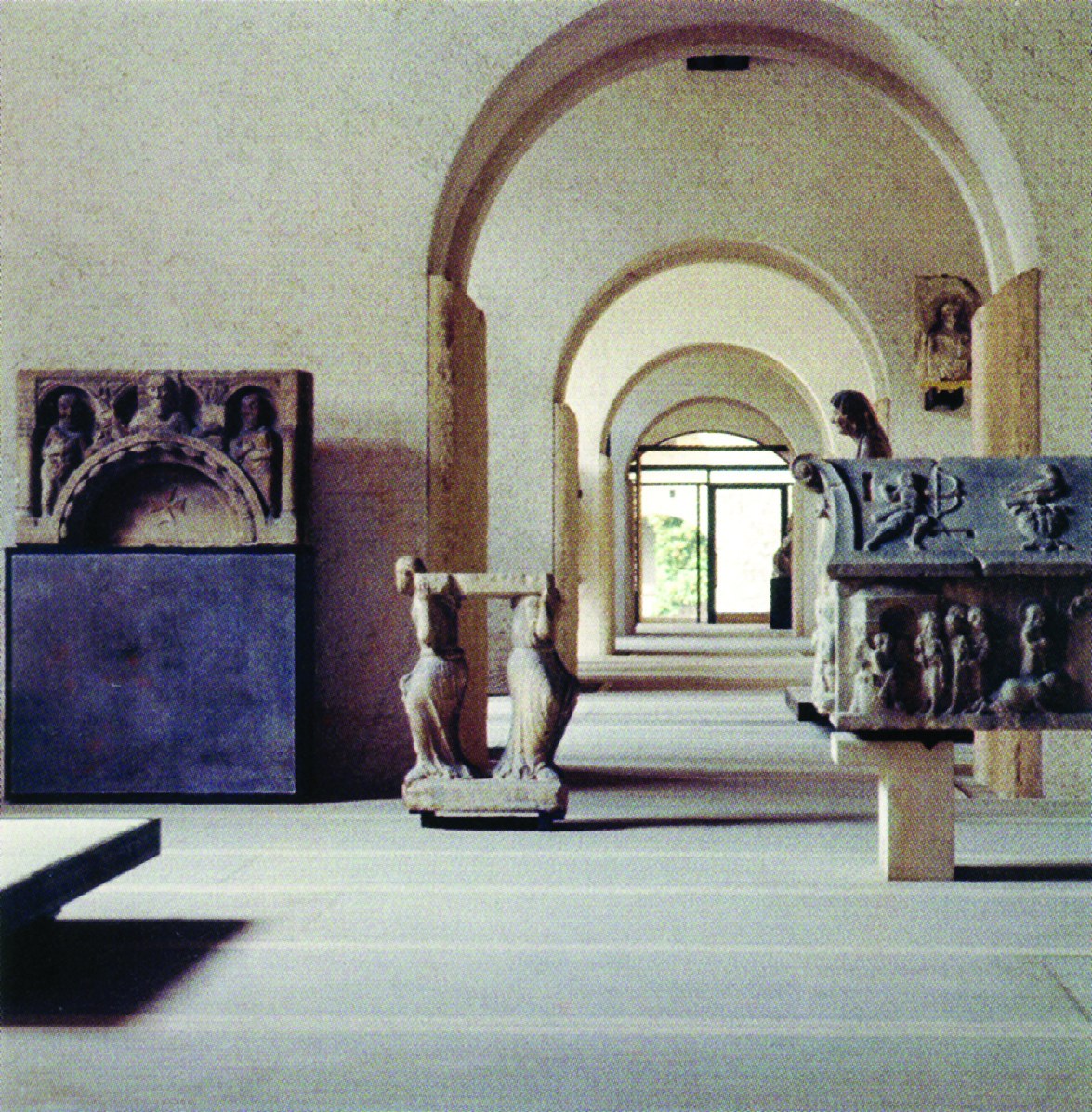
Entering the museum, we first walk through five square rooms with thick walls, which open regularly to the garden courtyard through large south-facing windows with Gothic frames. The multi-layered floor spreads before us like a polished plane, made of dark grey cast concrete and hammered to create a slightly reflective, textured surface. Set into it are strips of smooth white Prun stone that run along our whole path and also around the outer edge of the floor, which lies 15 centimetres from the base of the white plastered walls. Each of the rooms has a unique collection of works of art, from large statues to architectural fragments to small medallions and artworks. Each object sits precisely, particularly and differently from the rest, on its own base or niche. The statues are arranged in irregular groups and carefully placed to benefit from the natural light that gives them life, so that when we enter the room, we seem to have interrupted the conversation going on among them.
In the last room we find a glass window in the floor, surrounded by wooden railings that sway at the touch of our hand, through which we can see the Roman ruins beneath the building that were uncovered during construction. We pass through a large metal grille gate and a pivoting glass door, and then descend a spiral stair made of interlocking stone slabs to reach the covered outdoor space between the main building and the bridge. Above our heads is the statue of Cangrande, which acts as the spatial pivot of the whole museum. Walking beneath the roadway of the bridge, we find a stair set in a tower, its new steps resting on the brick front, which bring us to the painting galleries on the other side of the bridge.
Here the floor is wooden and creaks beneath our feet, the walls are of white plaster and the ceilings are made of old carved and painted wooden beams. The paintings are mounted either on custom-made metal and wooden frames, each complementing the historic frame of the painting, or on finely detailed wooden and copper easels, as if the artist had left the room just before we entered.
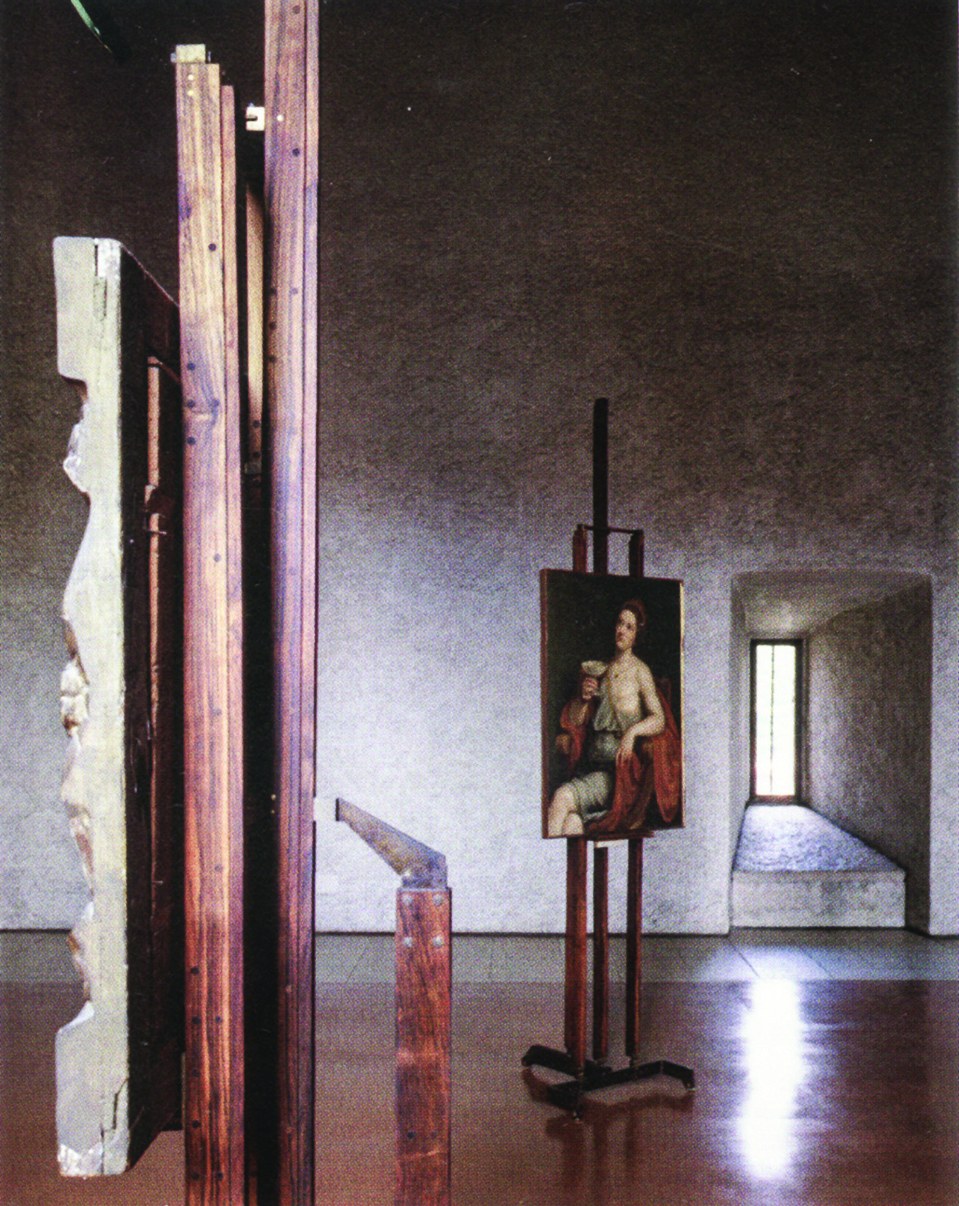
Returning from the bridge, this time above the street, we reach a suspended walkway made of blackened wood and black steel that crosses the gap between the museum and the bridge. Here, as we move towards the upper galleries facing the garden courtyard, we see the statue of Cangrande again, now in our line of sight. The floors of the seven long painting galleries are made of smooth, polished red clay tiles, pressed so closely together that they create a continuous and slightly reflective surface. The galleries are separated by thick transverse walls that stand free, without touching the walls of the bridge and the garden courtyard, and are connected by a narrow stone-paved corridor along the river wall. Large Gothic windows open to the south and narrow windows with splayed reveals to the north, so that the sound of the rushing river is constantly heard. The ceiling overhead consists of smooth, coloured plaster panels, in the manner of old Venetian buildings, with latticed wooden ventilators. The ceilings of the first six rooms are olive – grey, but the last room – above the entrance hall – has a brilliant blue ceiling that highlights the blue dominant in the paintings of this section.
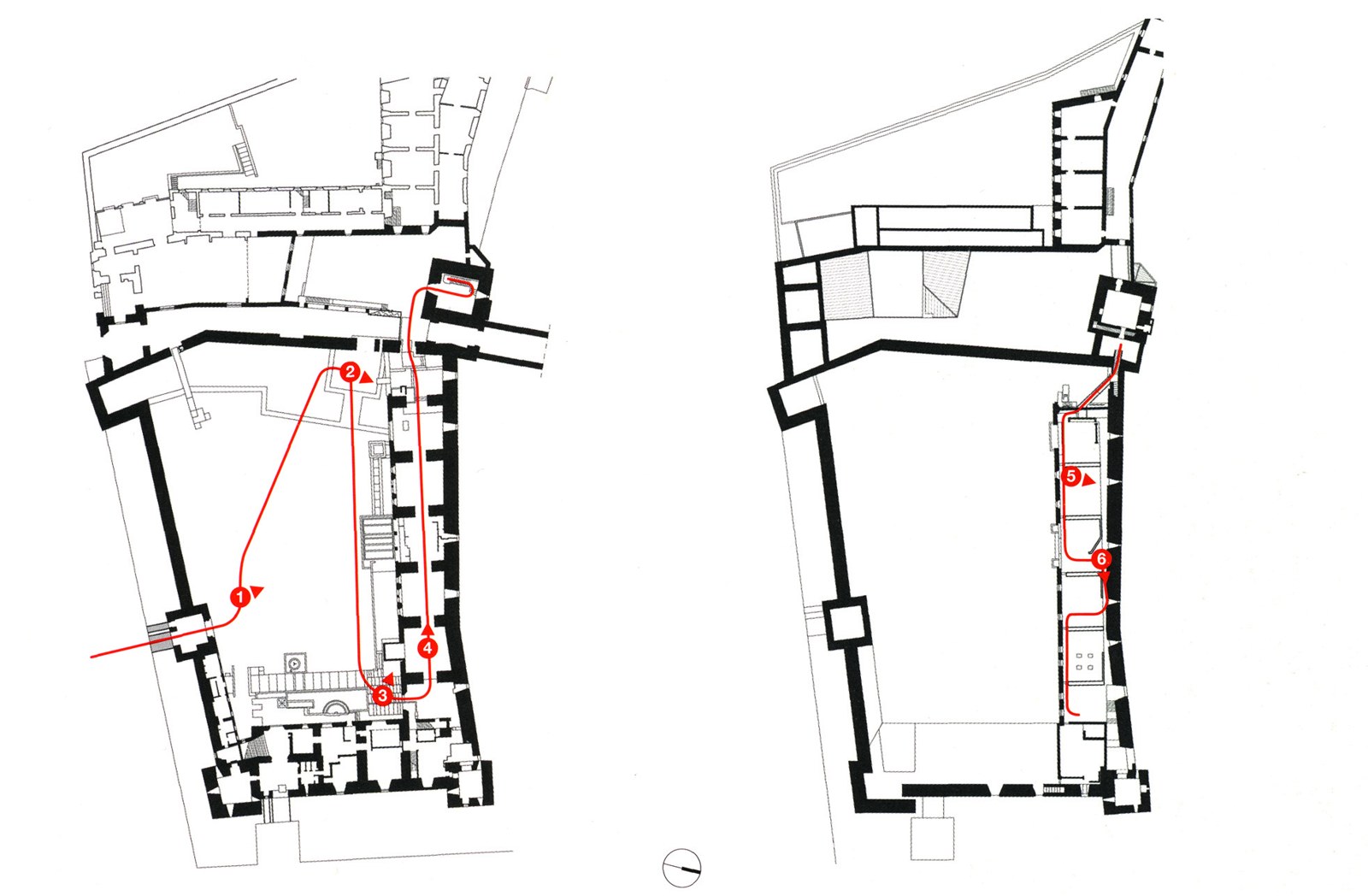
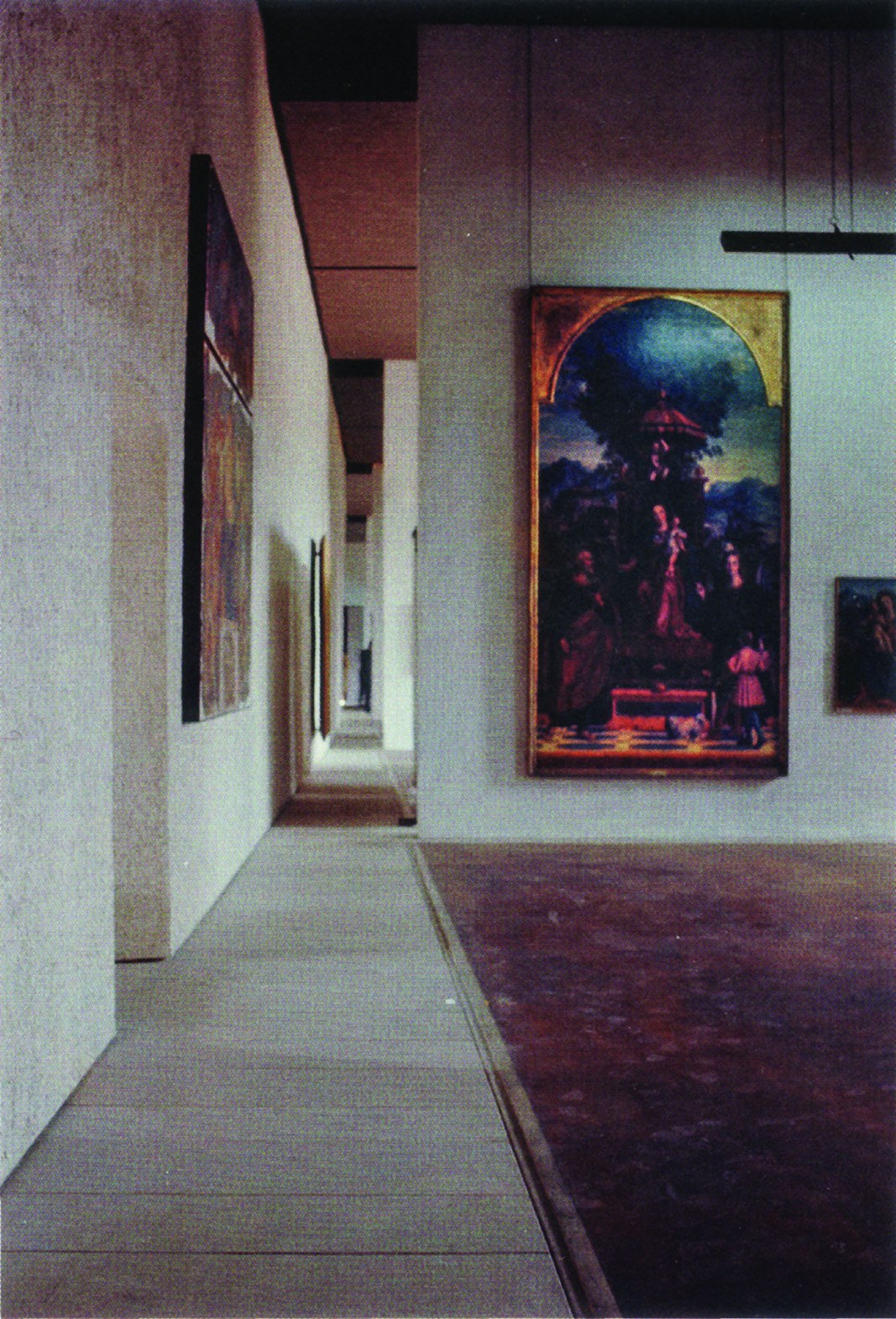
Throughout the museum, countless constructional details reveal the simultaneous presence of historical layers and cause the building to be experienced as a chain of spatial and temporal connections, new and old at once, linking history to the present moment. The building and the collection of works of art, fully integrated into it, together form a tangible fabric that invites the hand, the foot and the eye to discover the marks of skill in making, the pattern and traces of human use, and the slow, successive layering of historical periods. As Kenneth Frampton4 wrote: "Castelvecchio is above all a study of time, of the paradoxical permanence and fragility of things", based on the belief that "architecture has the capacity to transcend the ravages of time".
Notes:
1- Adige River
2- Cangrande
3- Prun
4- Kenneth Frampton
*For the authors' general view on time, see Memar 126.