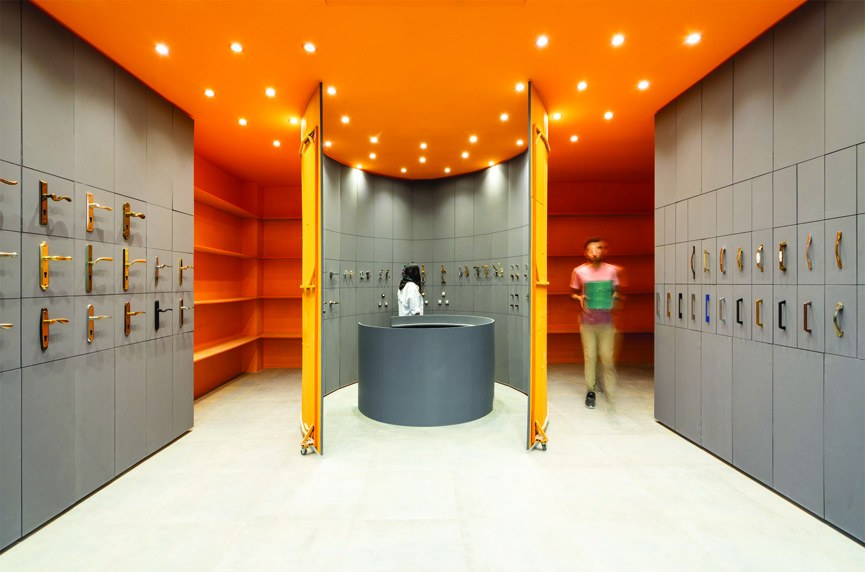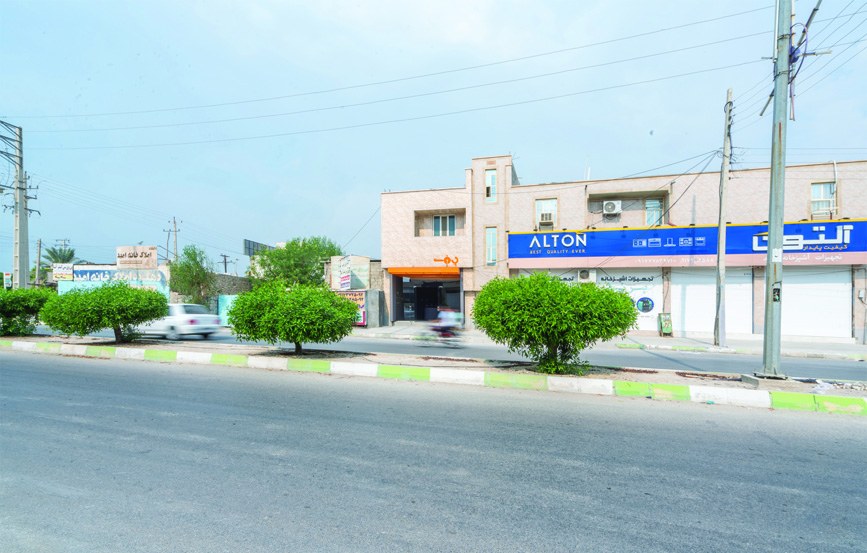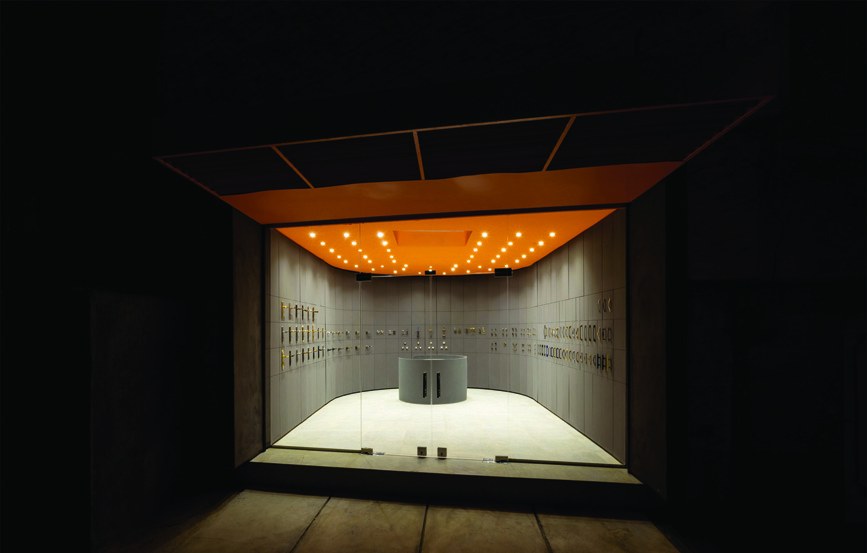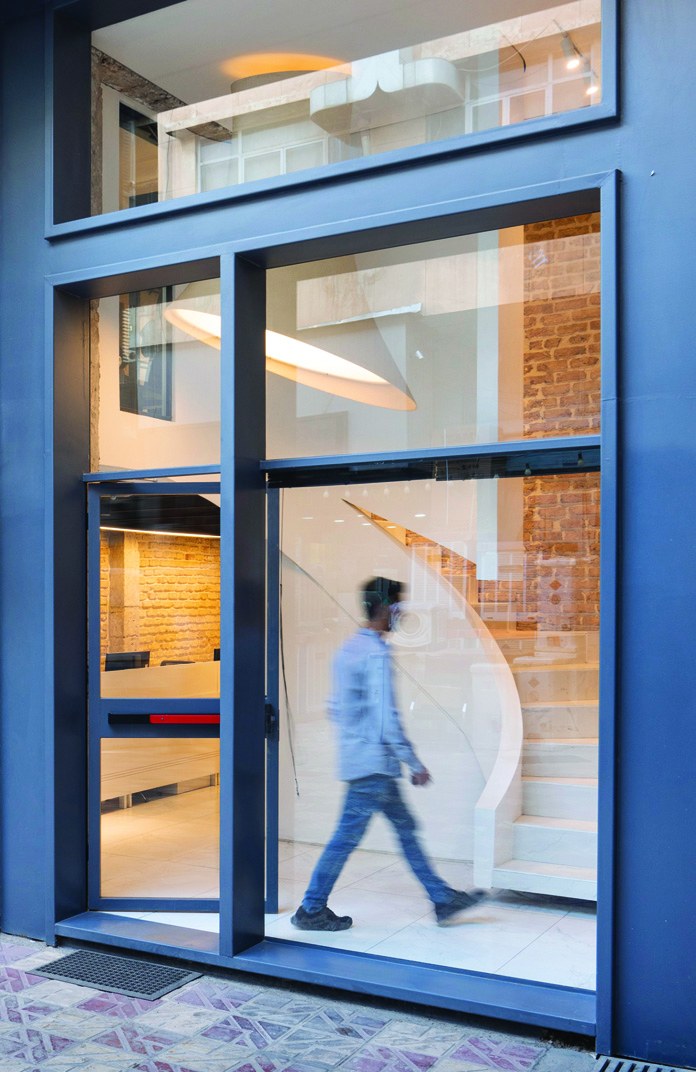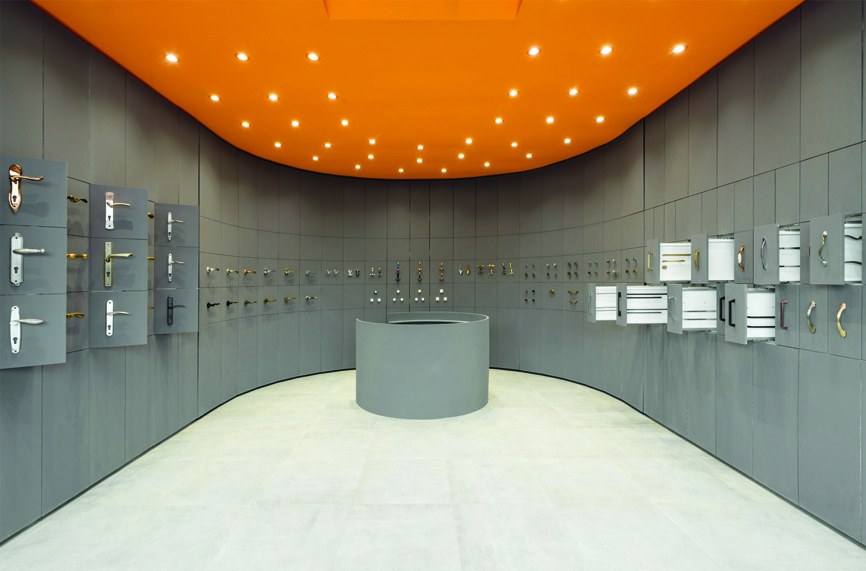
"Cheft", a showroom of handles and fittings with a budget of 92 million tomans, tries, given its spatial, economic and constructional capacities, to pose questions and then to experiment in facing the issues and requirements of the project's programme. How can one attract attention in facing the urban frontage without much fuss? How can one, in facing the question of the shop window (showing), distance oneself from the common clichés? How can one face the question of choice (selection) in a space that is by its nature prone to clutter? The question of being seen from outside can be considered one of the important challenges of shops that stand on the urban frontage. The usual answer to this question can be considered maximum presence and attracting attention with various means (colour, light, sound and ...). It seems that the city and its frontages are the last element thought of in this process, or for which an answer is considered. "Cheft" tries to be a moment of pause in the clutter around it, among the coloured lights and giant signboards, and, by challenging the usual clichés, to communicate with its audience through architecture's formal abilities in dealing with the question of the shop window and the project's programme, and to be a pretext for trade. Usually the shop window can be considered an element that sits at the common boundary of the interior and exterior space, on the inner edge of the shop, and tries to attract the attention of the audience outside the shop. "Cheft" tries, by upsetting this cliché and bending it, to activate its middle space and, instead of putting things in a window, to approach the space's becoming a window, and, by thickening parts of it, to inject different layers into the window. The space's becoming a window makes possible the audience's free circulation in the space and maximum interaction with the products. At the same time, behind and within itself it provides the storage space, and in the corners it turns into a door for maximum use of the storage space. The thickening of the window at the same time also activates the possibility of a different approach to the way the handles are shown, according to their different characteristics. A handle showroom is a space full of elements in different sizes and colours whose juxtaposition has a latent potential for clutter and crowding in the space. Making the space become a window and thickening it creates the opportunity that, in presenting cabinet handles, only one specific size of each model is mounted on the window, and the audience, if they wish, can examine its different sizes by pulling the handle. The variable thickness of the window also makes it possible to show handles of larger sizes. The space's becoming a window, through its unity and continuity, has a considerable effect on the ease of comparison and decision-making for the audience.