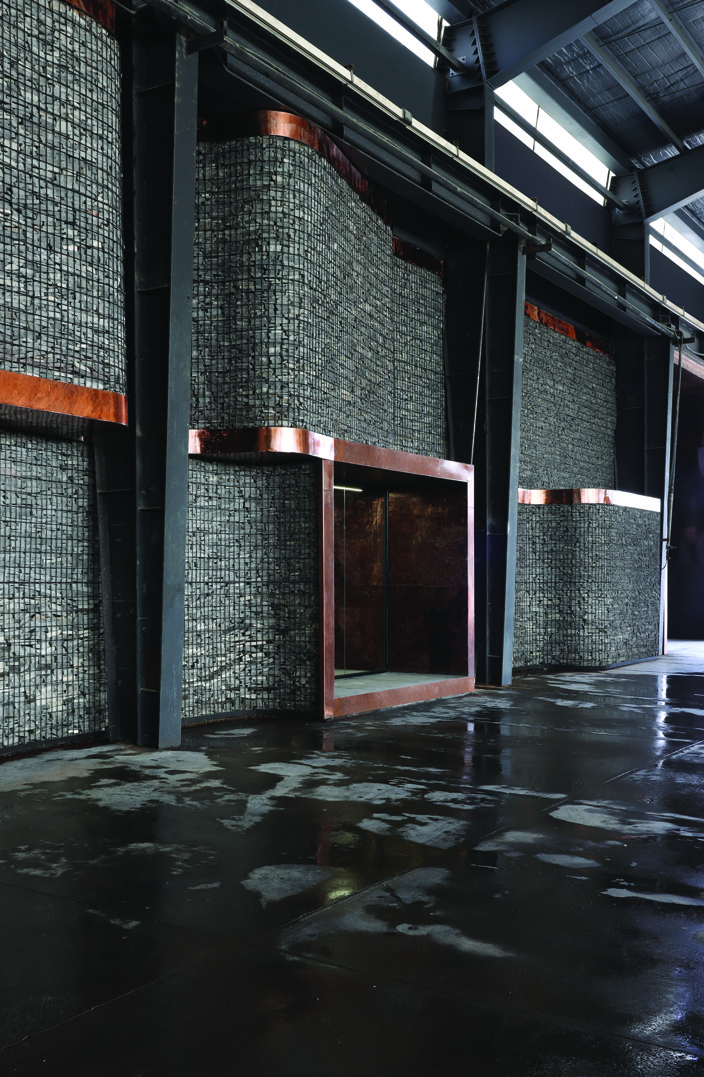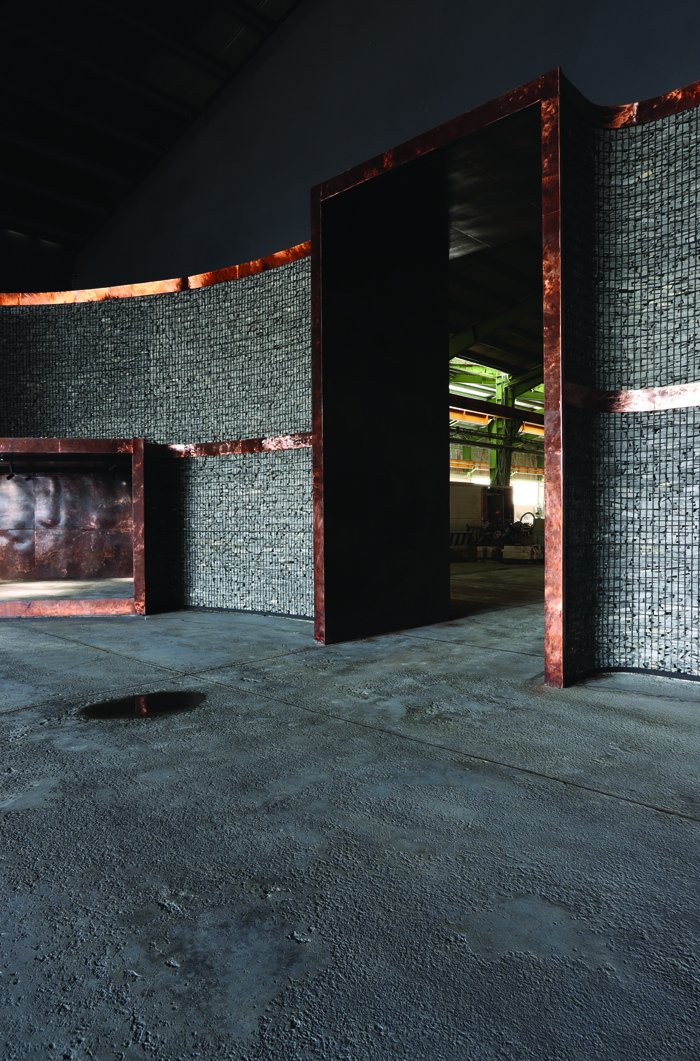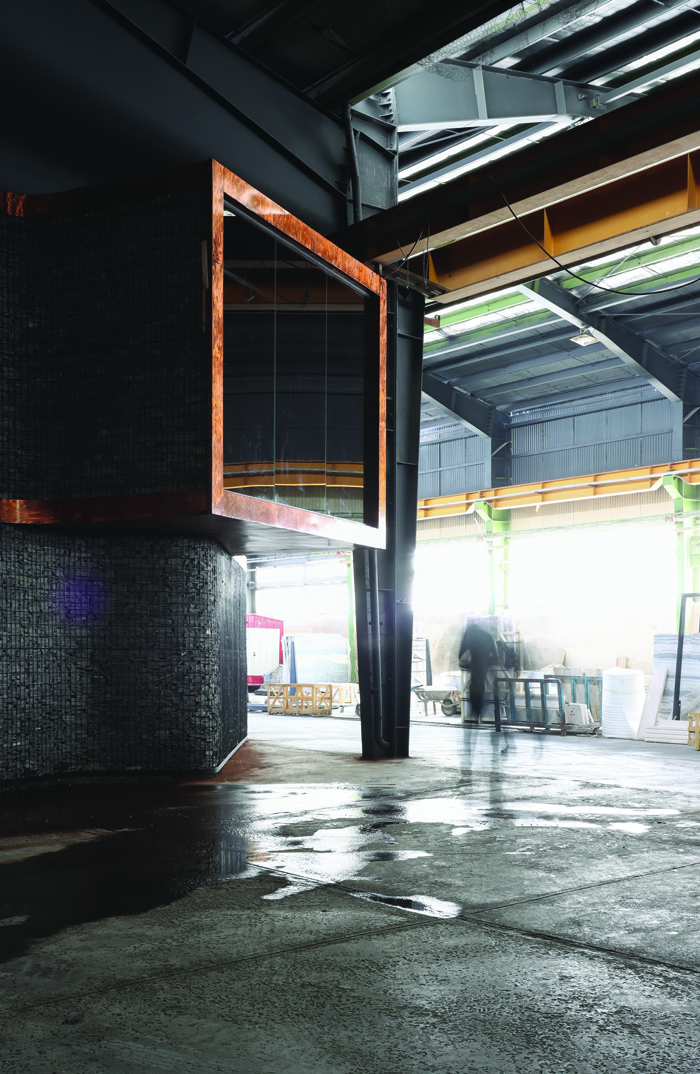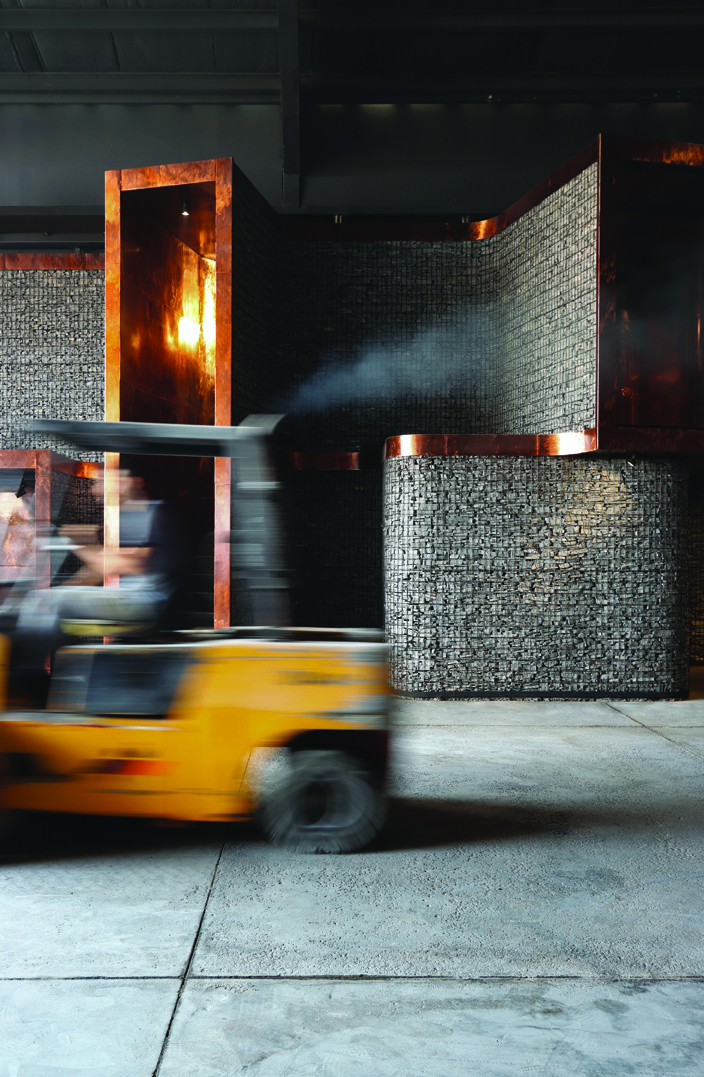
The project took shape at the heart of the Mahmoudabad industrial zone, inside a stone-cutting factory: a space brimming with noise, dust, and an endless variety of slabs and carved artefacts. The design brief had two parts: first, to create a dividing wall that would convert a section of the shed into an independent showroom, insulated against sound and dust; and second, to design an administrative building on the land opposite the shed to serve the needs of both factory and showroom.
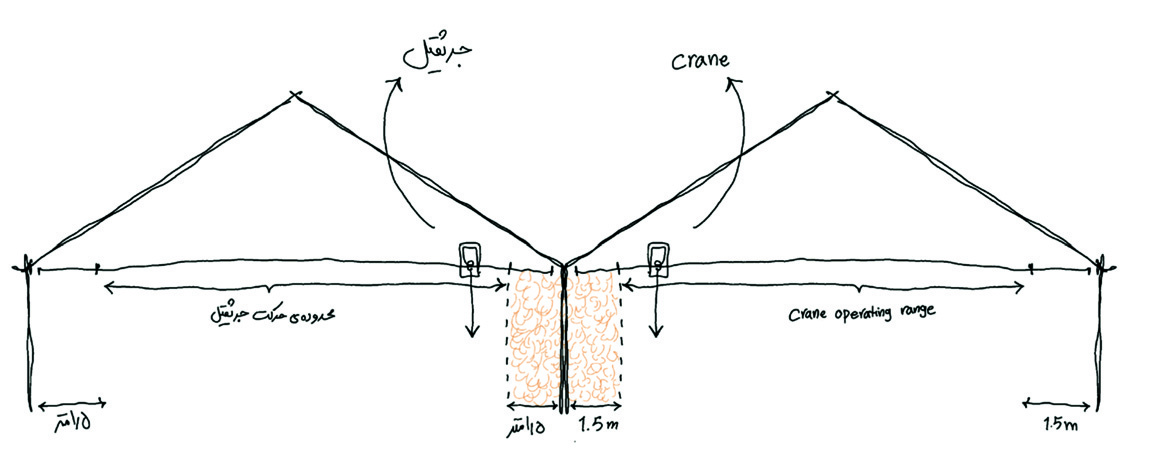
But the central question was this: could a wall be imagined as something more than a mere boundary? The answer lay hidden within the factory itself — in a silent, unseen space among columns and beams, and especially in the three-metre strip where the cranes of the two sheds could not reach. This forgotten space became the starting point of the idea.
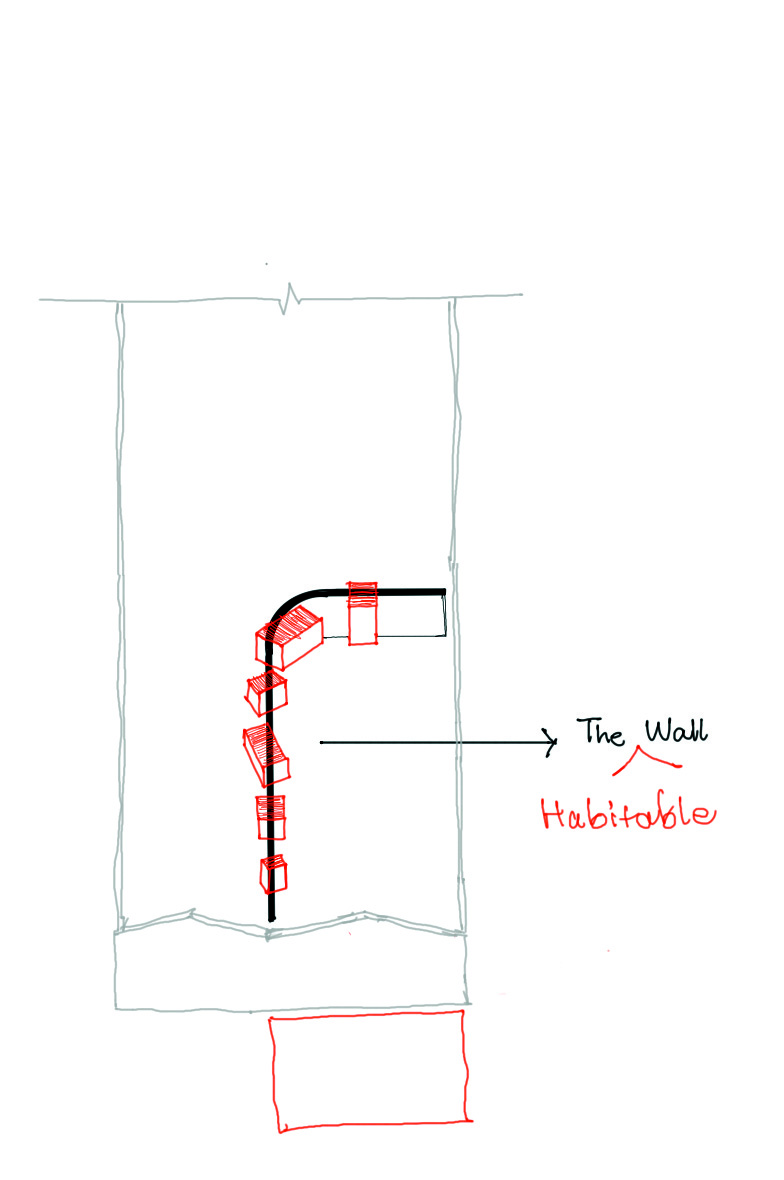
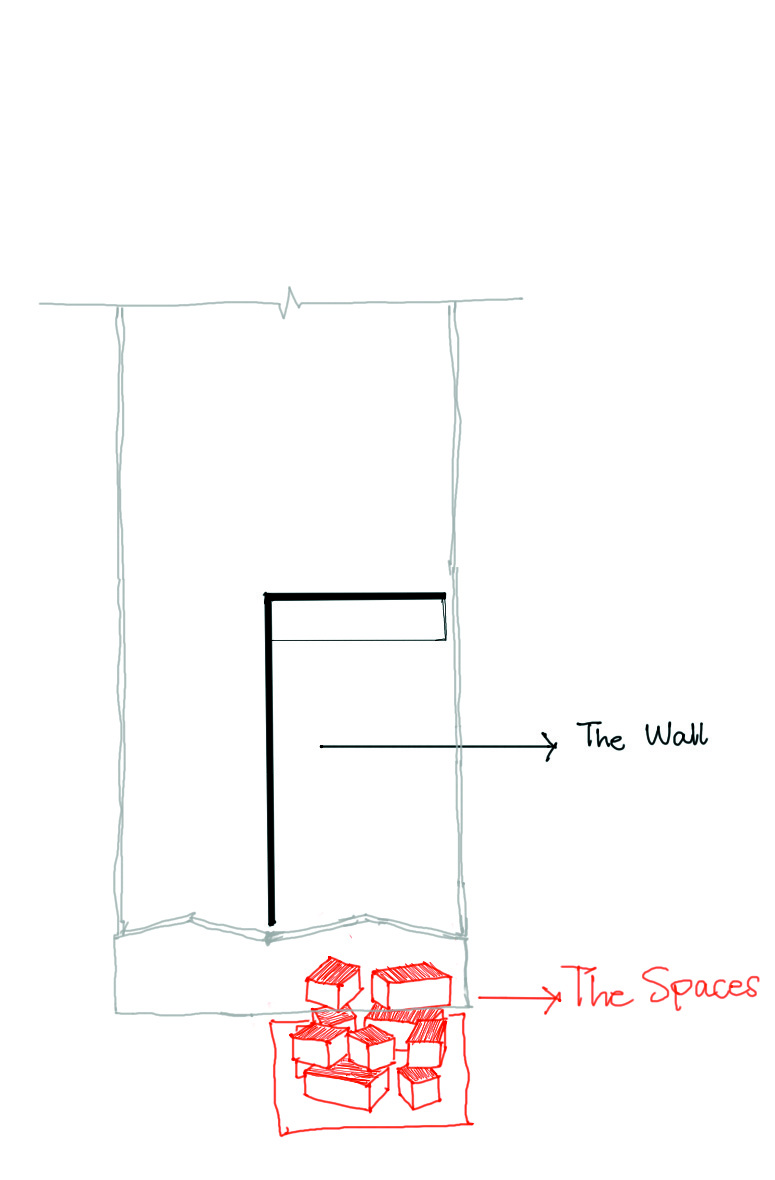
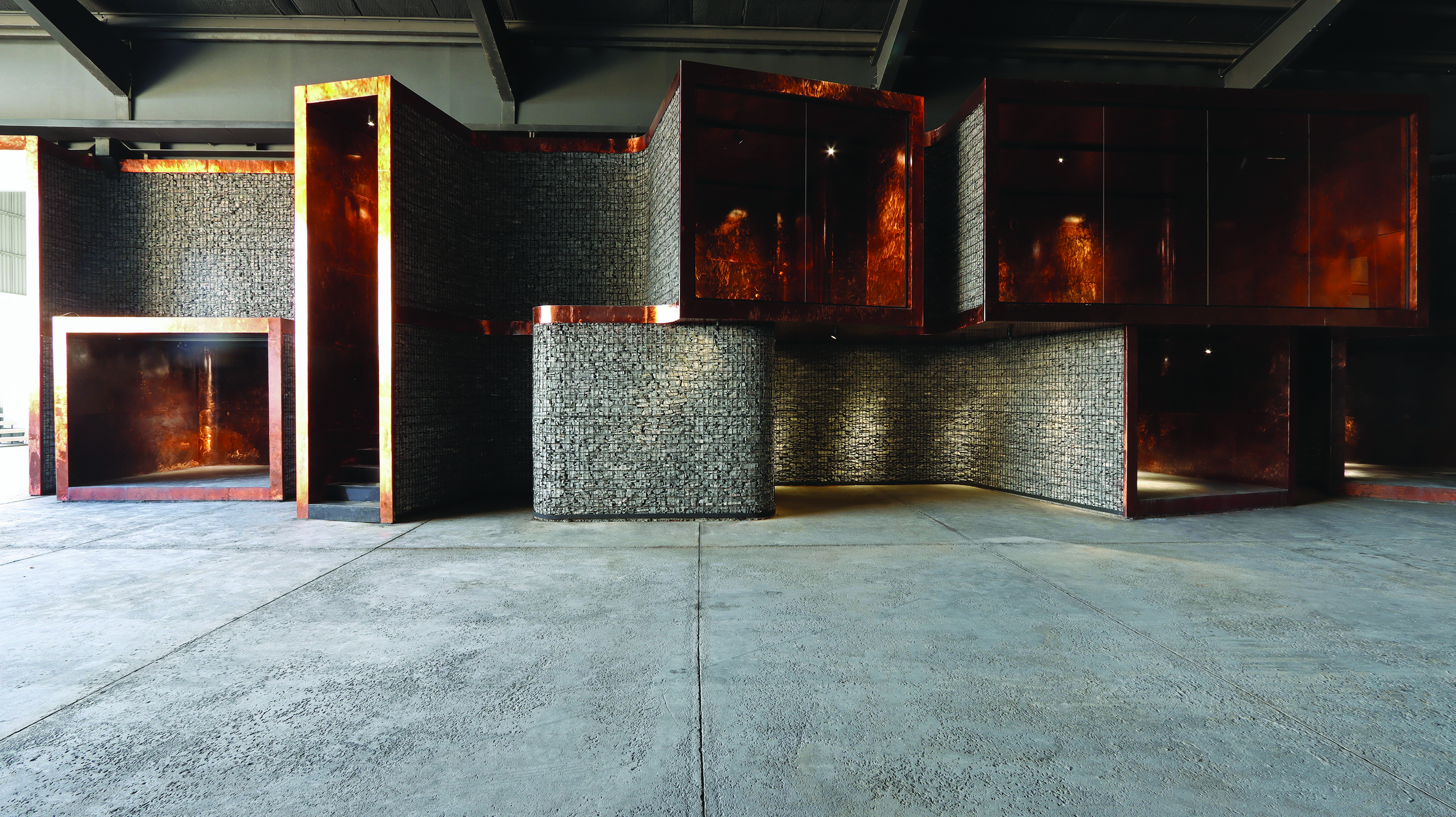
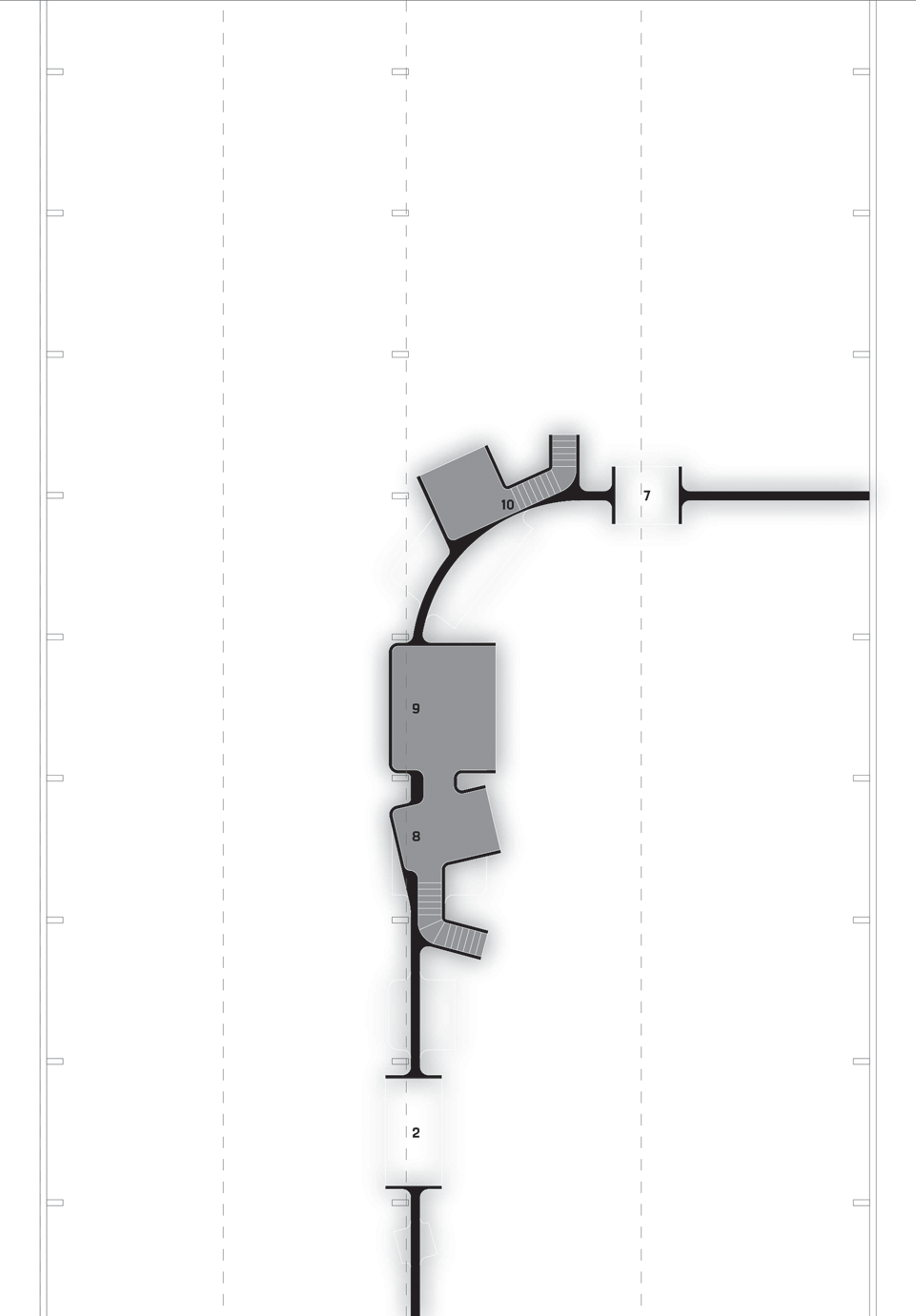
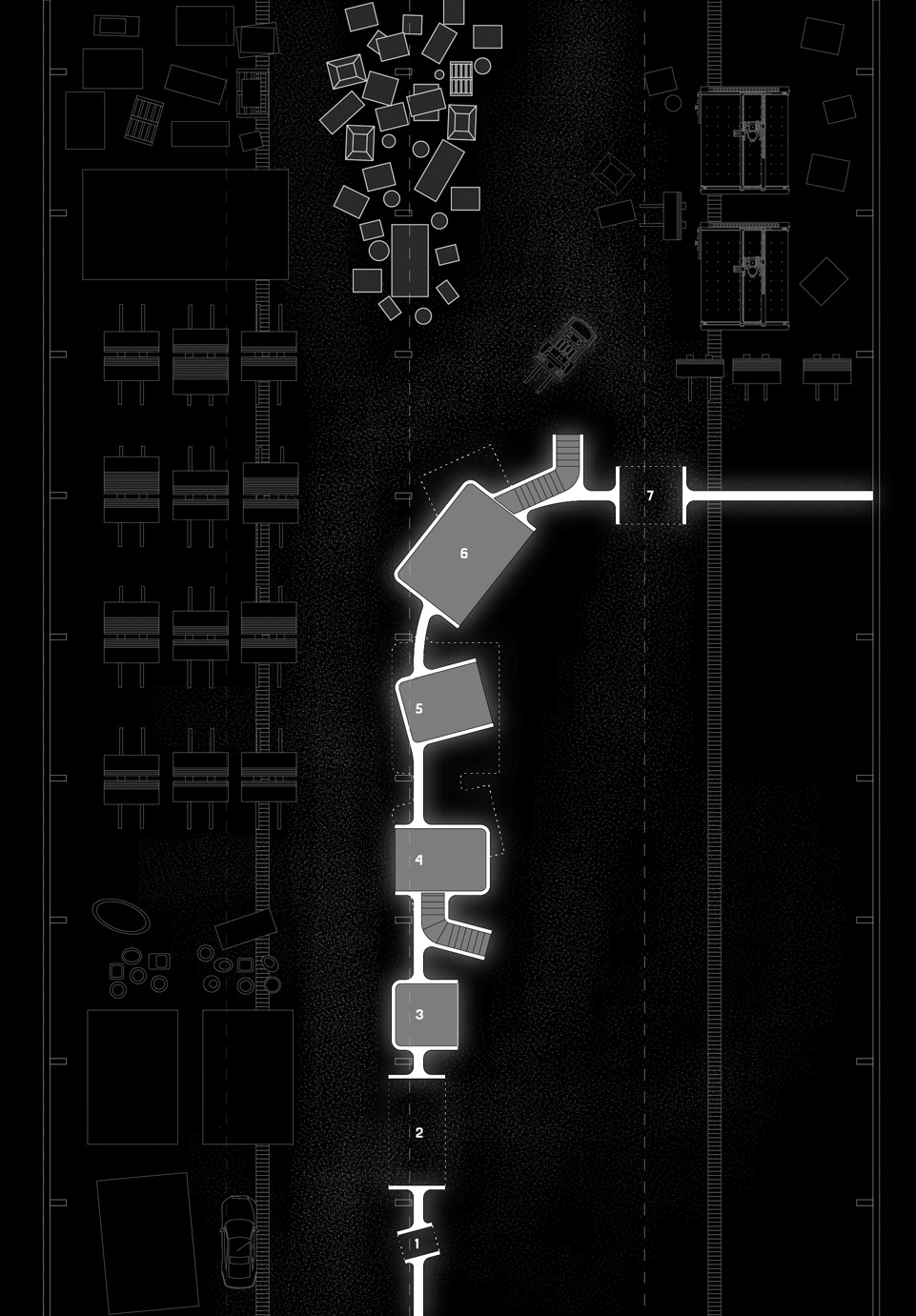
From this observation, the concept of a “habitable wall” was born: a wall that is at once the boundary between showroom and factory and a platform for inhabitation, display, and spatial experience. The office and gallery spaces that were to be built on the opposite plot were instead placed within this very wall. In this way, the client’s needs were met within a single new structure.
The Habitable Wall
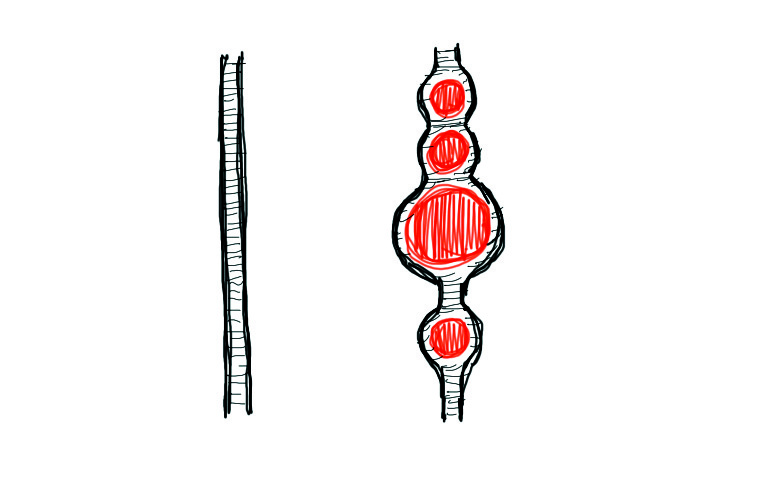
With the invention of the “habitable wall” structure, spaces no longer occupied the ground plane but were housed within the cranes’ unused zone. This structure functions as a kind of architectural grammar — an expandable capability for responding to future needs.
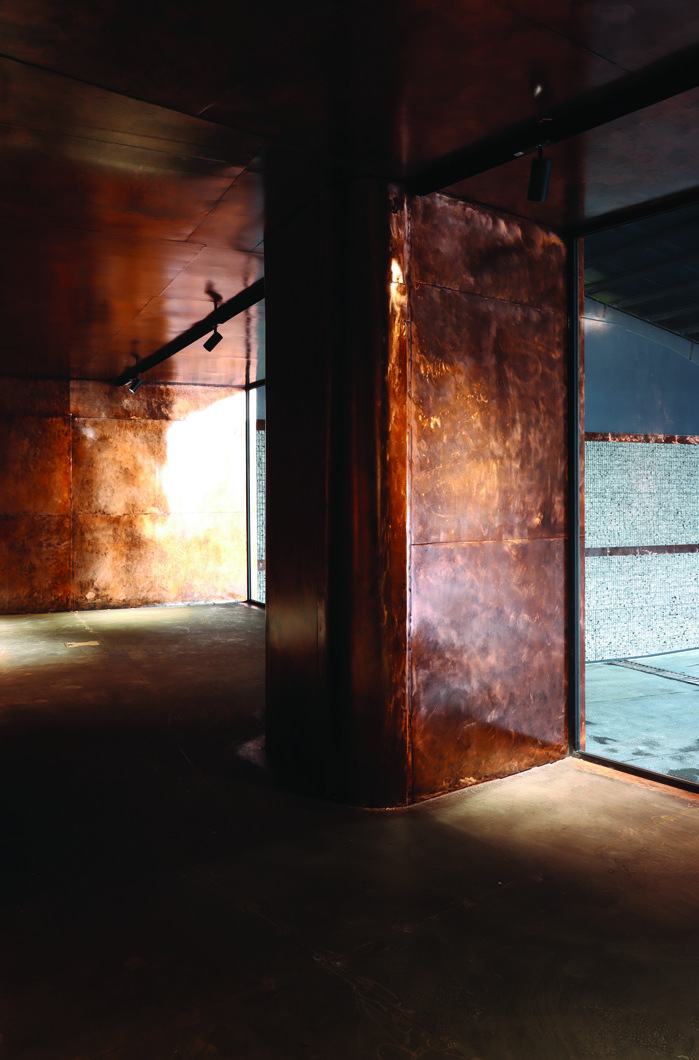
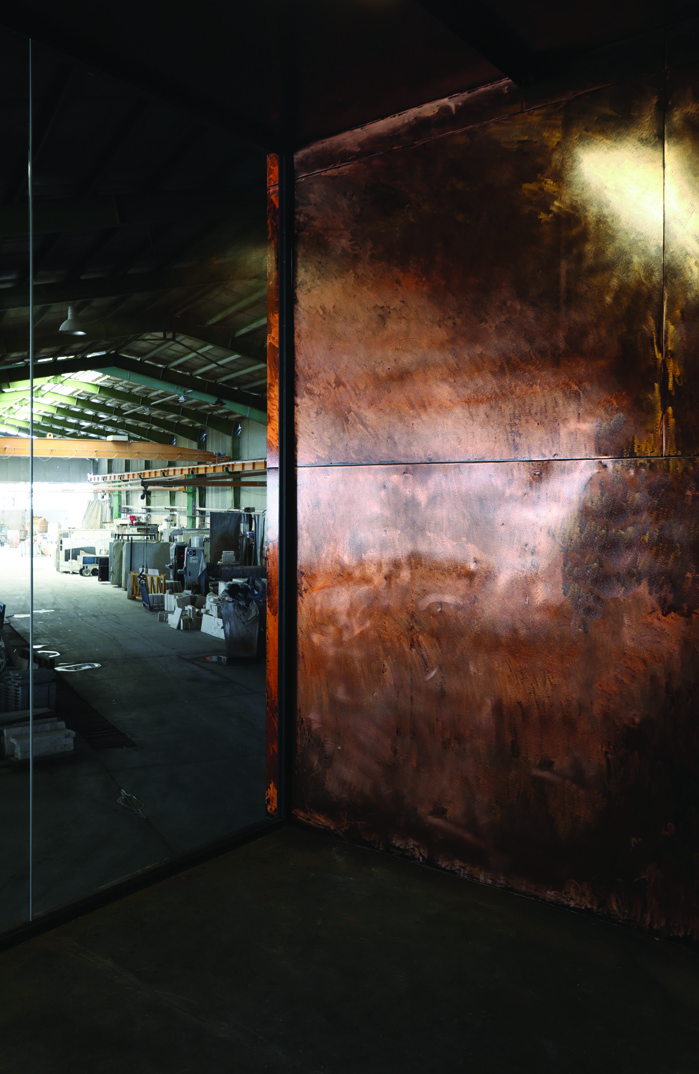
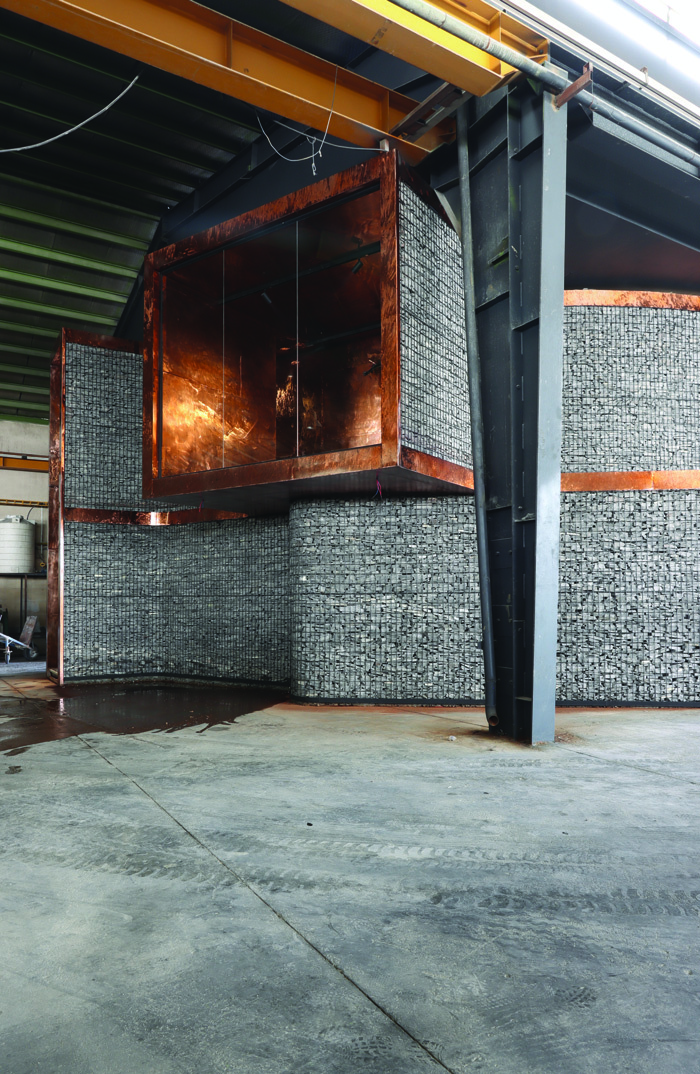
In redefining the wall, waste stone from the factory itself was used. The stones were dry-stacked within gabion meshes, with insulation placed between them: an economical and resilient combination. The gabion shell was then sliced open, and metal modules were embedded within it — volumes like cuts from the heart of stone, organised according to the factory’s operations and the customer’s path. These protruding volumes, beyond their function, are a metaphor for the process of stone itself: cutting, finishing, and creating anew.
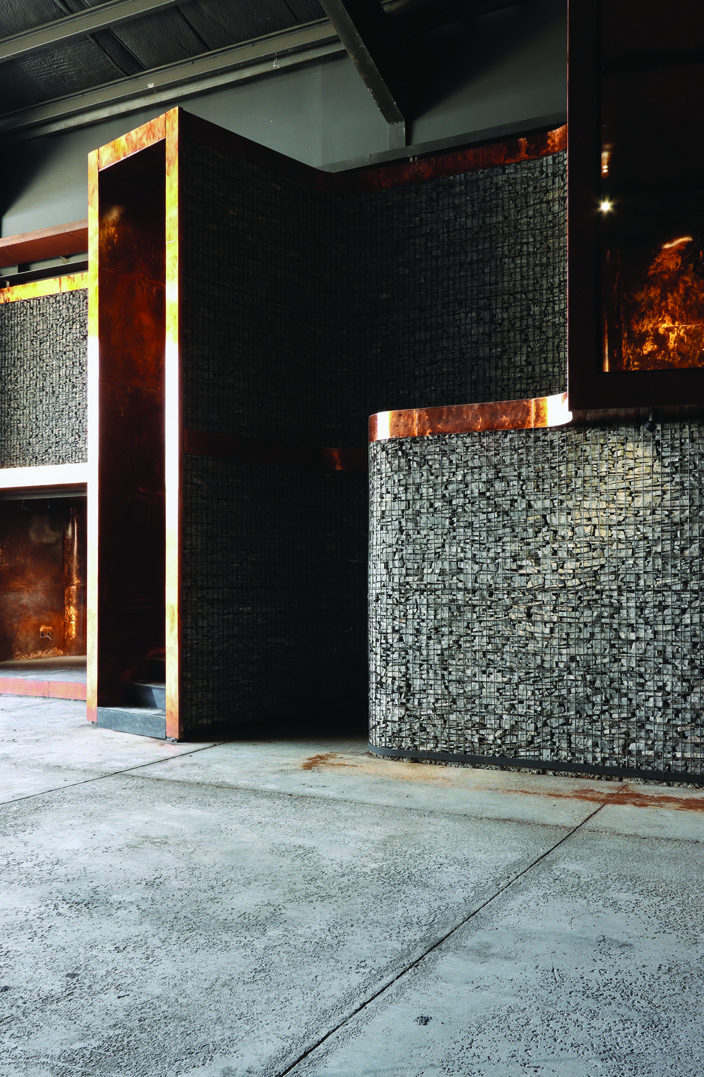
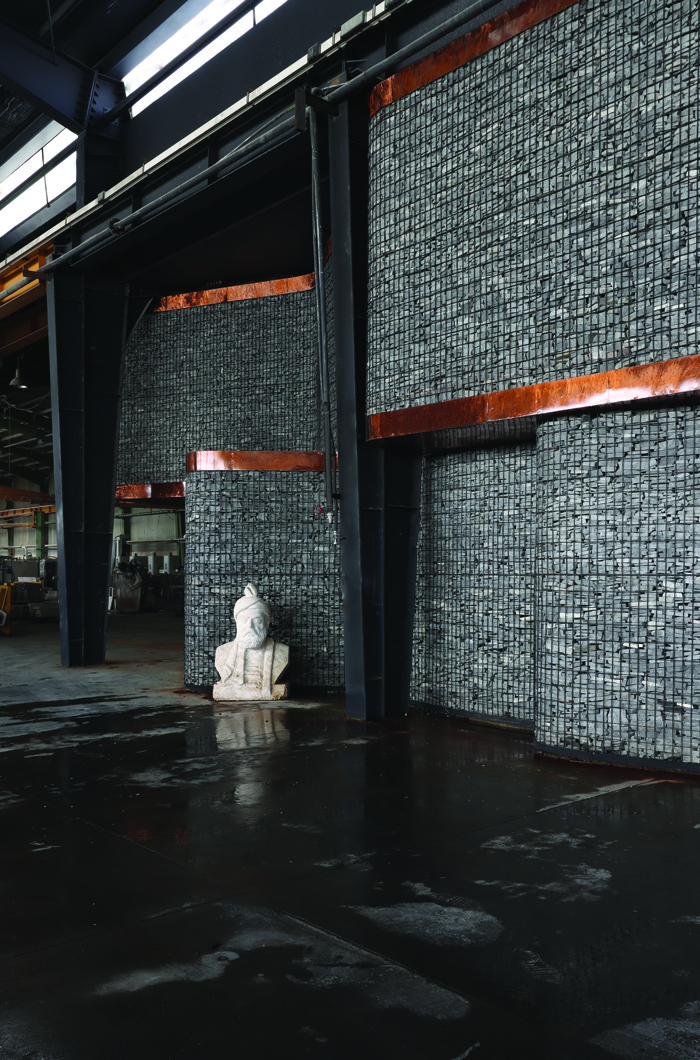
In this way, the wall was transformed from a rigid line into a dynamic surface — a surface that is split open, that gives birth to space, and where plan and elevation are interwoven and spatial organisation is redefined.
Drawings
Stone, Copper, Light