
For thousands of years every building or product was designed to fulfil a particular goal. Today our goals are gradually becoming more complex. We have come to need the design of compound environments that bring together — at one and the same place — space, place, time and social interactions. Beyond the natural systems already in place, and the social-cultural systems that have evolved over thousands of years, we have piled on yet other complex systems. These systems are by their very nature invisible, and so the need is felt for clear, lucid logical models with which one can grasp a picture of the larger whole. At the same time a fresh transformation is in hand: pervasive computing. Pervasive computing has many different names — ubiquitous computing, ambient intelligence, the disappearing computer, things that think, things that link, smartifacts. From these mouth-filling names one can begin to grasp how we are starting to fill the world with sensors, and likewise with responsive smart materials and actuators. There are already, on average, hundreds of microchips on the planet for every man, woman and child, and in the near future some of these microchips will speak to one another in languages such as "Bluetooth". No-one knows where this will end, but it is clear that these chips will find their way into more and more of the things around us — into buildings, aeroplanes, doors, door-handles, clothing, even our bodies.
For example the United States Army is one of the largest spenders in the field of wearable processors. The military, too, is pushing developments toward the application of sensors, tags and remote monitoring in physical environments. John Gage, an executive at Sun Microsystems, predicts that in the future a kind of "smart dust" will be sown over battlefields — drifts of fine wireless sensors, thermometers, miniature microphones, electronic noses and tiny cameras that will pass information about the outer world and the people moving in it back to commanders. Researchers funded by the army are designing an operating system for autonomous, self-organising sensor-and-actuator dust. These tiny components can take initiative themselves and form a network needing no human intervention. Commercial firms are likewise busy connecting digital nervous systems that link every aspect of a company's activity: IT systems, factories and staff, and likewise investors, customers and products. Their aim is moment-by-moment monitoring of every matter that concerns them. These firms are designing and building "dashboards" that measure key indicators, show how performance relates to objectives, and alert managers to deviations beyond a defined limit. Firms that focus on the issue of control (General Electric is the largest such company in the world) want to recast their information flows into great tables — what Ludwig Pgcgckd, an Economist editor, called not a "new economy" but a "now economy" (a play on the homophony of "new" and "now").
The force of this new wave of technology entangles us in a tight spot: the design of large technical systems, of pervasive software, and of what has been somewhat awkwardly named "ambient intelligence", is unimaginably complex. Design, in order to be effective in such a context, must be reconsidered and changed. But how?
"Unmanageable" is a state of mind
In the 1990s it used to be said that complexity is uncontrollable and "unmanageable" — too complex for us to understand, let alone to alter or repurpose. But "unmanageable" is a mental concept, not a fact: flows can be designed. Designing for flow has two sides: one is designing the way through which flows can be understood, and the other is redesigning the design process itself. To do things differently we must first see things differently. We know, for example, that buildings consume a great deal of energy — but we cannot see the heat that escapes through the windows. If we could see it, our behaviour would change rapidly. Therefore not only firms but also buildings and cities need dashboards. We must experience the systems and processes we depend on if we are to manage them. Designing such experiences will not be easy. Yet recently many complex phenomena have been effectively represented: physicists have visualised quarks, biologists have mapped chromosomes, doctors have rendered the immune system, and network designers map crowd-flows in buildings. As Malcolm McCullough has noted, the geodata industries are also expanding rapidly. The aim of using systems-knowledge in design is not to stand outside the field and watch — it is to create the capacity for action. The second issue in design-aided-by-systems is therefore the move from designing objects to designing systems, and from a project-based model to one in which the design process is continuous. Systems and processes never stop changing, and so design cannot stop either. The continuous-design model is increasingly becoming standard in IT and management consulting; architecture as a kind of service, or a form of...
UN Studio
Many of these tendencies are visible in the way UN Studio works. The principals, Ben van Berkel and Caroline Bos, have a particular specialisation in the design of "transit interchanges" — projects that may last for years. It is at these interchanges that the excessive complexity of the design processes for buildings and space reveals itself more clearly than anywhere else. Computer simulations of physical structure are reciprocally and increasingly applied to the design of these complex many-time-frame places — a place where, since the mid-1990s, van Berkel and Bos have been "designing inside diagrams". Van Berkel says: "The diagram acts as a mediator. We see it as an external element between object and subject, which we use to bring themes and organisations into the project without falling into the trap of pre-defined typologies." UN Studio currently uses diagrams in two ways: first for what they call "the proportioning of information" — the visual representation of phenomena pertaining to a place, as instantaneously as possible: weather, the budget of construction processes, the orientation of the building and the patterns of activity. Bos says: "The aim is to have a creative, accumulating, revealing effect on the project — not only during design at the office, but also after the design's completion when the public is using it." Projects such as Arnhem Central are an example of this complex method of building public buildings. The project is a dense, 160,000 m² hybrid (transport hall, underground parking for 1,000 cars and 5,000 bicycles, tunnel, shops and offices) on a 40,000 m² site.
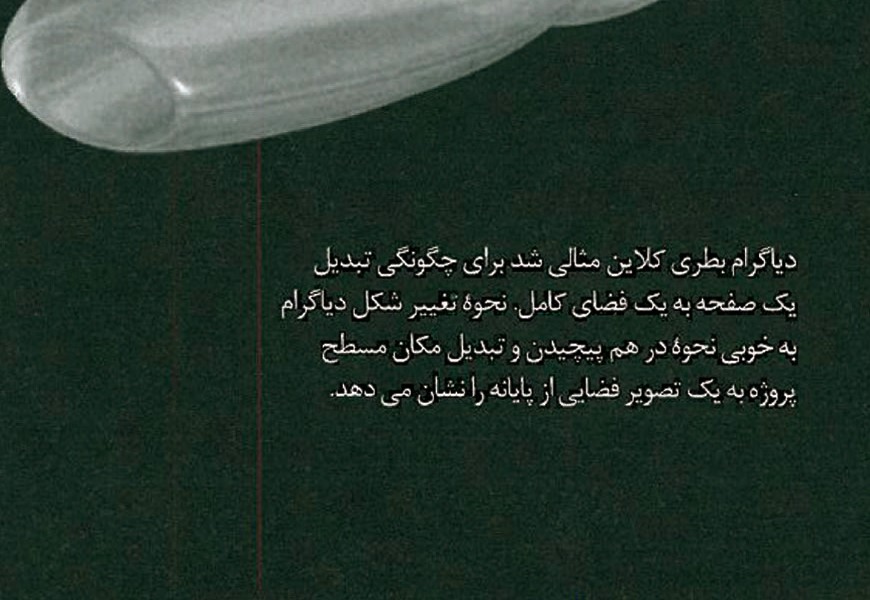
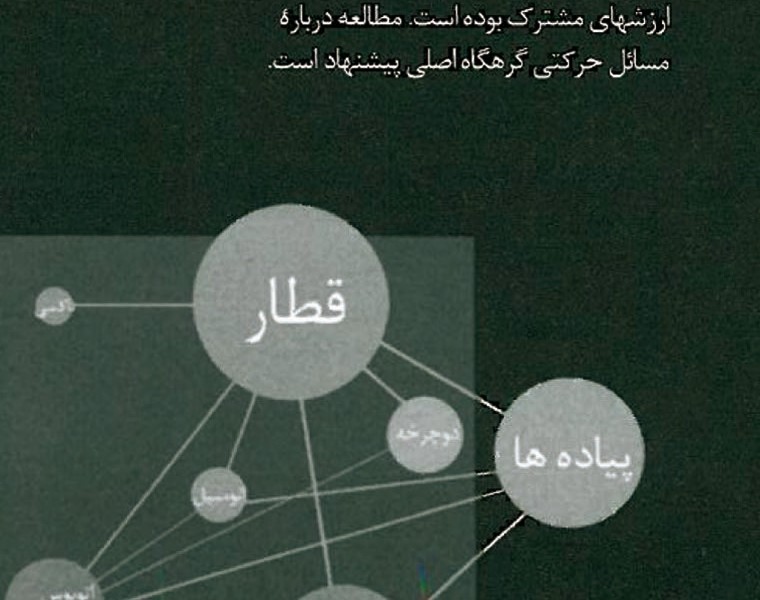
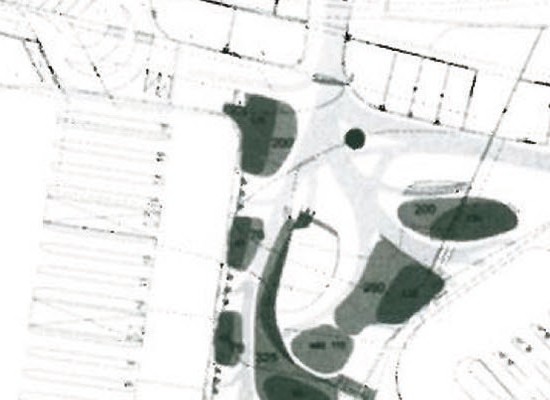
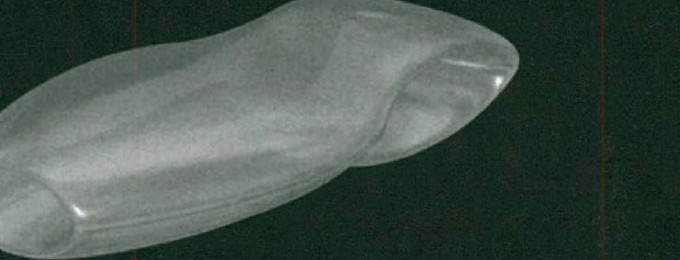
Six different transport systems converge on the station site at one point. On every weekday 55,000 passengers pass through this place and move from one system to another. The main axis of UN Studio's proposals is the study of how these transitions occur: an analysis of the kinds of movement at a particular point — the directions of paths, their importance relative to other forms of transport on the site, their persistence, and likewise the irregular and intermittent connection of programmes and links. The "Klein bottle" became a reference point for transforming a surface into a single spatial whole. Van Berkel and Bos call the process of investigating a site's flow-structure "deep planning". Van Berkel says: "This operation reveals the central problem and the latent capacities of a site, and shows the physical movement of people and goods, the relationships between durations of use and the zones of use." The result of deep planning is usually a "state": a dynamic, definite map of structural organisation that, through scenarios, diagrams, indices, formulas and themes, depicts the planning, political, managerial, social and private relationships in pictorial form.
Van Berkel and Bos have lately been searching outside the architectural domain for inspiring images and diagrams. Van Berkel notes that Francis Bacon called his paintings "diagrams" and adds that Gilles Deleuze marvelled at the way Bacon transformed the human figure into abstract forms. Berkel insists: "Diagrams are tools. They always point to something. They are a kind of map. Maps look abstract, but they always show something. Diagrams are maps that point to organisations. This organisation may concern space, time, movement, or anything else. Clients themselves can take part in the design process and in determining how the building is to be used over time."
Bos says: "When we design for people in these environments of constant motion, the matter is not enough: we must anticipate the spaces, activities and intersections at which people leave the flow. Pure straight-line movement is particularly unfortunate for commercial areas. I recall an interesting story Jan Benthem, the chief architect of Schiphol Airport, used to tell. The commercial managers of that project insisted he remove the seating in an area dedicated to sitting, in order to make room for a row of shops. The result was the opposite of what they wanted: in practice the income per square metre dropped both in the new shops and in the old shops adjacent to them. The new layout had created a deep canyon along which travellers, like a roaring river, were swept rapidly back to their previous course." UN Studio is interested in what they call "kaleidoscope moments" — the inflection points of flow, where movement narrows, intensifies, or collides with other flows. Van Berkel says: "We are gradually realising that we have traffic and infrastructure; they usually carry deep awareness of both the possibilities and the limits of shaping crowd-flows." Bos recalls a particular example: the heat that 5,000 people generate in an art exhibition can damage the paintings. UN Studio's project for the Eitiki Pier in Tokyo (38,000 m²) deliberately turned this challenge into a three-dimensional plaza. Each of the four main areas of the plaza has a different theme: leisure, well-being, technology and commerce. The design uses time-based programming, presented as a circular diagram of activities. In this plaza, programmes are organised around the clockwise activities and grouped according to the view, the hour of the day and the season of the year: coffee in the morning sun with a sea view; midday shopping in shadow; the evening given over to watching the sunset.
Footnotes: 1. Pervasive Computing. 2. Ubiquitous Computing. 3. Ambient intelligence. 4. Disappearing computer. 5. Things that think. 6. Things that link. 7. Smartifacts. 8. Sensors. 9. Responsive and smart materials. 10. Actuators. 11. Bluetooth. 12. Tags. 13. Remote monitoring. 14. John Gage. 15. IT systems. 16. Dashboards. 17. Ludwig Pgcgckd. 18. The translator notes the homophony of "new economy" and "now economy". 19. Large Technical Systems. 20. Malcolm McCullough. 21. Geodata industries. 22. UN Studio. 23. Designing inside diagrams. 24. Object. 25. Subject. 26. Proportioning of information. 27. Klein bottle (Felix Klein, 1925, German mathematician — a volume whose inside and outside are formed by a single surface). 28. Francis Bacon (1909-1992), Irish-born English painter. 29. Gilles Deleuze. 30. Jan Benthem. 31. Schiphol. 32. Kaleidoscope moments.