Will architecture, in some year to come, turn into fashion — I do not say decline? Giedion raised this question many years ago and answered it himself, in the place where he distinguishes the "transitory facts" from the "constituent elements" in architecture; or take Mies van der Rohe, who always insisted that architecture is not a "wedding cake" that one might bring out, every day, in a new shape.
There is no doubt that the inventive confectioner deserves praise for decorating wedding cakes well and beautifully and for shaping them as he likes; but confectionery and architecture, like fashion and architecture, are two separate categories: one edible and consumed, the other lasting and original, bringing into being a great part of the environment that man builds and forms. Even architecture and sculpture, which share certain features, cannot be taken as one. Each of these crafts or human activities has its own sanctuary and dignity, and in relation to our argument the supporters and inflamers of the sanctuary of each have their own particular features; and dignity granted to inventiveness within that sanctuary — however the unworthy works that may arise — may become current and find supporters. People love what they understand more easily and quickly, and to fight against what people want is both useless and unsuccessful. Several years must pass before the bond between popularity and originality breaks, and the perception of originality becomes easier. This, of course, by historical evidence, is possible only with the elevation of culture: by the rise of the music of Elvis Presley and the Beatles or pop music (short for popular), not a particle of the importance of the music of Beethoven and Mozart was lost — far from that, its supporters have grown.
As we have said, fashion cannot take the place of architecture. Never. But the wave of fashion, like a bubble, can hold the eyes — those very eyes that, as Le Corbusier said, do not see (les yeux qui ne voient pas). One should not look upon these waves with hostility. Public taste must be elevated, and we should not forget that the boldness of certain fashions has been a warning to the worshippers of the old, or has raised the question, in Hemingway's phrase, "For Whom the Bell Tolls."
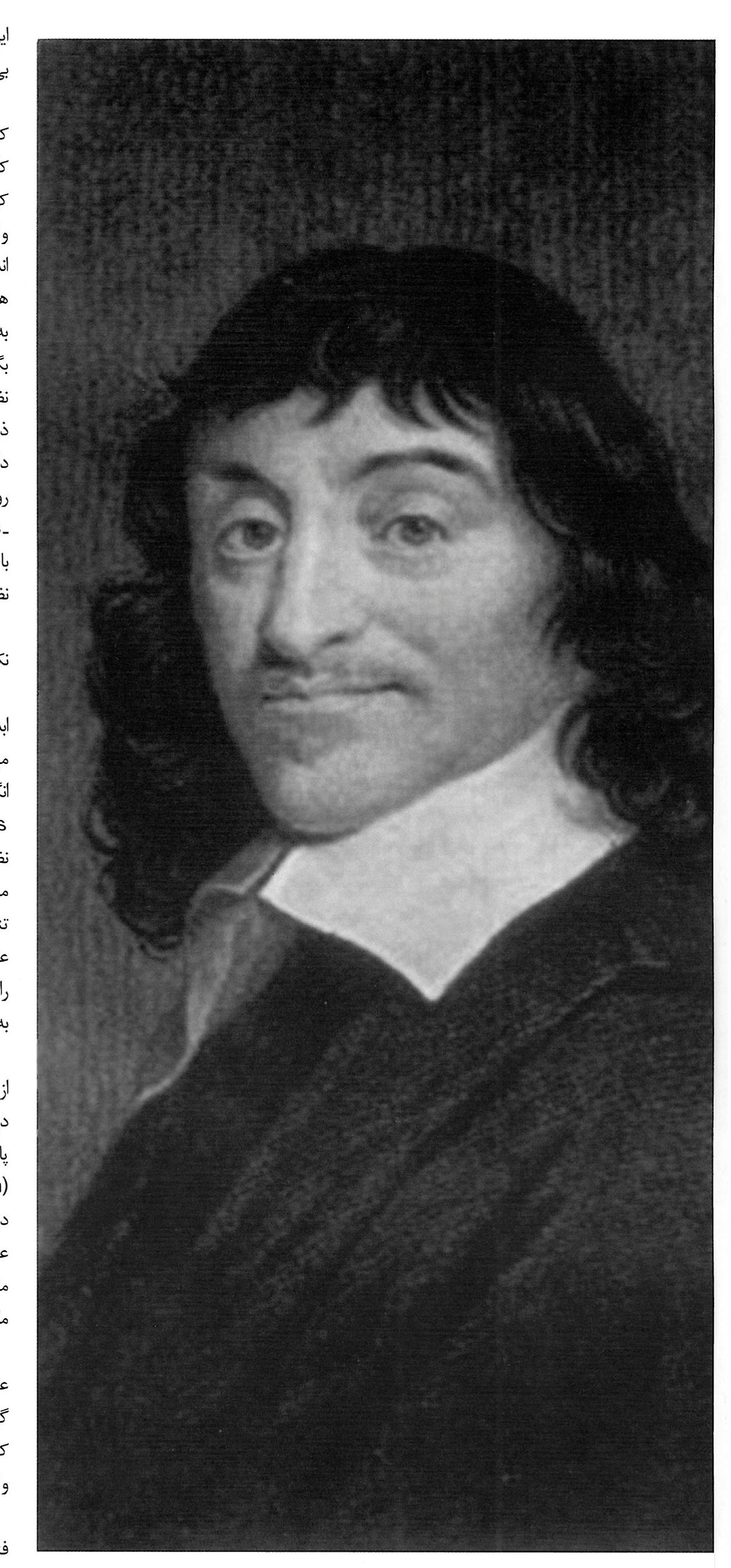
Now one of the fashions of our age is the attack on modernism, the rejection of modernism in architecture, the attribution of the sin of modernism to the rationalists, and the condemnation of the founder of rationalism, René Descartes — and all this under the influence of fashions current in Europe or the New World. In several PhD defences in architecture and urban planning at which I was present last year, the subject of rationalism was raised without reason or relevance, and in the course of these defences René Descartes was condemned and even the great historical crimes were imputed to this tendency: from the fascism of Adolf Hitler to the dropping of the atomic bomb on the people of Hiroshima and Nagasaki at the end of the Second World War. In the oral examination of an architecture doctorate at one of the universities, a candidate spoke chidingly of "Cartesian architecture" — to the end of the patience of one of the interviewing professors. With further questions it became clear that the candidate did not know Descartes properly, was not familiar with his philosophy, and had not learned the alphabet of philosophy.
These things, in truth, brought forth the motive for writing this article. The doctoral candidate in architecture and his "Cartesian architecture" — which he had most likely heard from his learned teachers — is not alone. Many eyes are fixed upon this passing fashion.
It is true that the experts have called Descartes the father of modern philosophy. But he did not invent modernity — never; for the very reason that modernity is not a thing to be invented, certainly not by one person, just as the calendar cannot be invented. The Renaissance, which itself for a long time was called the modern age, prepared the ground of the new age (modernity) by drawing upon the culture of the East; and in the seventeenth century, with the flowering of scientific knowledge, modernity bore its fruit. That is, it was impossible in this century for a philosopher to speak and for his ideas to be necessarily the same as those of the philosophers before him. Descartes was born in 1596 and died in 1650 — that is, his whole short and fertile life passed in the seventeenth century.
Before him Copernicus (1473-1543) had given to the dwellers of earth the first announcement of the new age — and that with great caution and fear: caution because what he had discovered (the diurnal and orbital motion of the Earth) was not in the books or words of any astronomer before him; fear lest his words should be interpreted as standing in opposition to the holy writings of the Christians and the Jews. For this reason his book, named De Revolutionibus Orbium Caelestium (which one may translate into Persian as "On the Revolution of the Orbits of the Planets"), was published. Providence had ordained that Copernicus should not see the faces of his accusers — those few of his unwise contemporaries. Cartesian doubt is well known by name; but the founder and instigator of this doubt is to be sought in Copernicus, who doubted the accepted Ptolemaic theory and understood that the Earth is by no means the centre of the world, but is itself one of the planets and satellites of the Sun, and that it turns both around the Sun (once a year) and around itself (every 24 hours). Today this matter is among the obvious things that every child learns at primary school; but in the time of Copernicus and for years after, it was so astonishing and unbelievable, and was even taken for blasphemy, that Copernicus, with full caution, expressed it as a hypothesis only to his close students and equals.
Theories that run counter to common opinion, in many cases, find no taker at first: people often prefer their famous mistaken opinions to the obvious and demonstrated facts. After Copernicus, other scientists — the most famous of whom are Kepler (1571-1630), Galileo (1564-1642) and Newton (1642-1727) — took up his work, and what was first put forward as a hypothesis came, little by little, to be a theory and finally an established principle. Beside this, in this same period the means of research and discovery also made considerable progress: the microscope, first in a primitive form and then more complete; the telescope; and other instruments — about whose inventors the histories of science can find no name — are among the discoveries of the seventeenth century. In this same period Harvey (1578-1657) discovered that the blood circulates in the bodies of living things, and Antonie van Leeuwenhoek (1632-1723) discovered the existence of spermatozoa and then of the protozoa, the single-celled creatures. In mathematics, the logarithm was invented by Napier in 1604, and to this day it has its use in the solving of complex mathematical problems.
These are only passing references to dozens and hundreds of inventions and discoveries and the overcoming of unknowns that man succeeded in understanding and recognising in the seventeenth century — that is, the century of Descartes. What I mean by these references is that at the root of all these advances, reason and thoughtfulness stood and stand. Without reason and logic, man remains blind, ignorant and uninformed.
Descartes, who was himself a scientist — the founder of the x,y coordinate system (the definition of every point by means of coordinate axes, and the finding of algebraic solutions to geometric problems, with which we Iranians become familiar in our secondary school classes) — truly explained his own time in a philosophical language, and became the guide of hundreds of thousands of scientists and thinkers after him. Just as the range of inventions and discoveries after him did not stop and does not seem ever likely to stop, no end is to be conceived to the importance of his thought. The matter is not the rightness or wrongness of Descartes's ideas. Each period has its own reason, which with the passing of time may stay the same, or change, or be interpreted in another way. From the great discovery of Copernicus (if we take 1543, the date of the publication of his book, as the starting point) it has been exactly 458 years and no one has been able to shake his views from the ground. But contrary to Newton, who in opposition to his predecessors held that light is a wave and not a particle, scientists at present hold that light is both wave and particle. So the scientists before Newton, and Newton himself, and the scientists of today, all spoke according to the reason that seemed acceptable in their own time.
We said that Descartes was both a scientist and a philosopher. We — the school-trained — are more or less acquainted with his mathematical inventions. As to his philosophical views, in Russell's opinion two of Descartes's books — which up to a great extent are similar to one another — are of first importance. The first of these two books is in English Discourse on Method (Bahs darbāre-ye ravesh, 1637); the second, Meditations (Tafakkorāt, 1642). In both books Descartes set the foundation of his work upon doubt of the prevailing views — the same doubt that is now well known as "Cartesian doubt". The meaning of this doubt was that Descartes accepted no view or thought — and not even theory or principle — merely on the ground that all (or most experts in science) had accepted it; rather, he tested it himself against the touchstone of his own reason. I write "his own reason" — and bring as witness his famous saying "I think, therefore I am" — that is, he did not accept even the reality of his own being until his reason and thought told him: you exist, for if you did not exist you could not think.
Descartes's doubt was a search for the certainty he wished to find in things, and above all in truths, by himself — not, like the rest, to follow the herd. Without doubt, in some respects and cases his search was successful; but only as far as possible. Had he lived, perhaps the best and bitterest answer he would find in his search would lie in The Age of Uncertainty by John Kenneth Galbraith, who, four centuries after Descartes, treats reality as an old reality. Without doubt one may guess intelligently that, in Descartes's age too, uncertainty existed — even, in many of its views, more than today — and that despite Descartes's efforts, certainty was not gained except in particular cases, and most often in a relative form.
Descartes's second great share in the elevation of human knowledge was the belief in [systematic] method — by which I mean that if a thought or an act has no order or arrangement, it reaches nowhere. He compared scientists who search without a particular order to those who go searching for treasure in every alley, hoping that perhaps a passer-by will drop a coin and they will become rich. Today the method of scientific research, in every inquiry — whether the exact sciences and the engineering and technology disciplines, or the human sciences, and even literature and poetry — is so well known that researchers in different fields are aware of it, and there is no need for our description.
What remains is that few people are aware of its measure, of its importance and of its attribution to Descartes — or, in the case of the shallow agitators and their small imitators, are willing to be aware. But after Descartes, hundreds and thousands of researchers, small and great, took up his work and benefitted from the points he had made about methods. We see daily progress in every branch of the sciences and technologies, with no end to be conceived; and all of it — I dare say — is possible only by reasoned and ordered methods.
Now, on the part of the agitators (the very ones who accused Mies van der Rohe of fascism and Le Corbusier of collaboration with the Vichy regime) and their small imitators, great architects such as Mies, Le Corbusier and Gropius are accused of being mere followers of Descartes's views. On this several points must be said: first, as we have tried to make clear in this article, what Descartes said was not an overnight invention, but the fruit of much of the thinking of the thinkers and authorities of his time; he was the true son of his age, and if the agitators are looking for an authoritative figure to attack, Copernicus — who created a great doubt in the prevailing image of the world — is a more fitting precursor. Other great architects whom we have named, and dozens of other great architects, were and are the true sons of their time. Second, every progress that is apparent in their works comes from their deep understanding of the possibilities of the time, and not from worn-out solutions of the old age; and, in my firm belief, they chose the best possible road in their own time, and for this very reason gained their value and their authority. Third, many of the solutions they offered are valid even today, and in every corner of the notable works after the 1960s the influence of these great men is visible — from the most cautious to the most daring of new works.
Up to here, what we have said is in praise of the radiant thoughts of Descartes, of which he is worthy. The point of this rightful praise is to recall the great place of Descartes in the world of thought, knowledge and philosophy, and to say that this is not a weakly attached and unauthenticated branch that any newly grown child can undertake to deny and reject. But our praise should not raise the illusion that we have, without raising any question, accepted and approved all the views and opinions of Descartes for our own time — this very lesson Descartes himself taught us.
Descartes's views, particularly if they are extended to all things and all times, may lead to an excess that has its instances in architecture in several cases. Reason or thought — which Descartes promoted — must be joined with feeling and insight; both (reason and feeling) are among the noble characteristics of man, and both must find an opportunity to come forth. In some cases, as repeated experience has shown and shows, even insight is the precursor of reason and mathematical logic.
Of contemporary architects, probably before all others Christopher Alexander has tried to bring analysis and mathematical logic into the field of architecture. This analysis is without doubt necessary for one aspect of architecture, and can enrich architecture from that very aspect, or be a way and rule that distinguishes the young newcomers to the field of architecture — or, higher than that, distinguishes architecture itself — from the whim and the light play that has now somewhat spread. But Alexander carried the work to a place where, leaning on the saying of Eric Gill, he wrote that if architecture is functionally correct and considered, "beauty will take care of itself." Alexander and Eric Gill seem to forget that what they say can apply only or mainly to the functional side of architecture — the right relation of the parts or various uses of a building (the relation of bedroom to bathroom and toilet, or of kitchen to dining room and pantry, for instance) — that is, in arranging the right relation of these parts, exact logic and mathematical method come into use. But where invention and imagination come into architecture, or, to put it more clearly, where the artistic and beautiful side of architecture is at stake, to the extent that human knowledge at present allows, this method has no efficacy. It may be that, a hundred years hence, man will be equipped with means and information that make logical and mathematical analysis of feeling, emotion and beauty possible; but at present such information and means are not at hand.
A truthful witness to this point is the effort that Alexander has made in this matter. As we know, in his book Community and Privacy he subjects, with mathematical exactness, the forces effective on the uses of a residential dwelling to analysis, and through a process the discussion of which lies beyond the scope of this article, finally concludes that 32 forces (constraints) are effective in determining the relations of the parts of a residential house, and that any architectural design must be cast in respect of the right relation of these forces. He gives in the end a diagram that remains only at the level of a diagram, and reaches no truly architectural design that could give a fine example. In the project of Das Café Lintz — the work of Alexander and a number of his students, of which there is no further room for discussion in this article — too, Alexander's mathematical analyses have reached nowhere.
The point of citing these examples as evidence in the section in which we mentioned Descartes's thoughts is that his measure may be known, and that one may not imagine that Descartes's views are so light and worthless that any newly grown child can undertake to reject and refute them; nor that Descartes's views and the belief in mathematical logic are an unequalled elixir that has its application in every field and every case, and is the master key to the solution of every problem and puzzle.
It is clear that the tremor that Copernicus brought into the thought of the West, and which had a meaning first in the realm of meaning and then made its impact on half the fields of the sciences and technology, gradually spread throughout Europe and reached architecture and, after that, even urban planning. So one may guess intelligently that in the course of three hundred years — from the middle of the sixteenth century to the late nineteenth century — almost everyone became aware of this great tremor, except that the first modern architects — among them Behrens, Gropius, Mies and Le Corbusier — heard it with the ear of intelligence and saw its effects with open eyes; while the others — the worshippers of the old — did not take the matter seriously and did not rise from their heavy sleep. To put it more exactly, this strong tremor produced different effects on the experts of that time. Some, as has passed, remained in their heavy sleep — like most of the masters of the Beaux-Arts, who only after the Second World War, with long yawns, opened their eyes from this sleep. Some feared it, like John Ruskin and William Morris, who with all their goodwill and love of the people could not understand the possible — or, better, the popular — meaning of this tremor. Others, like Marinetti and Sant'Elia, ran ahead of themselves and of their own time and reached nowhere. Some, like Muthesius and Behrens in the Werkbund, tried to bring the views close to one another and to remove the fears. Le Corbusier was so affected that he opened the book Vers une Architecture with "a new age has been born." Mies, from the start of his youth, believed in technology in architecture, until in the end he turned the name of Armour Institute, which had been an ordinary school of slight standing, into Illinois Institute of Technology, and himself became the head of its school of architecture and was engaged in teaching there to the end of his life.
The effects of the earthquake that came into the thought of men — first in the West, and then throughout the world — can be seen in the works of the great masters of architecture; but the interpretation of this change and of the originality of reason — of which the most likely promoter was Descartes — by these architects was not rigid and unchanging.
One of the most important works of van der Rohe that finely shows his deep understanding of the changes and possibilities of the time is the designs that he produced for a glass skyscraper in 1922. The importance of these designs in our discussion lies in the fact that to bring them into being requires both the use of the latest materials of the time and the new building techniques, and that the designer and the architect did not stay content with and limited to the direct logic of simple geometric forms.
Dozens of examples of such architecture can be given; but Le Corbusier, in the late years of his life, with the design of the Ronchamp Chapel, gave the clearest expression of the change of the new age.



