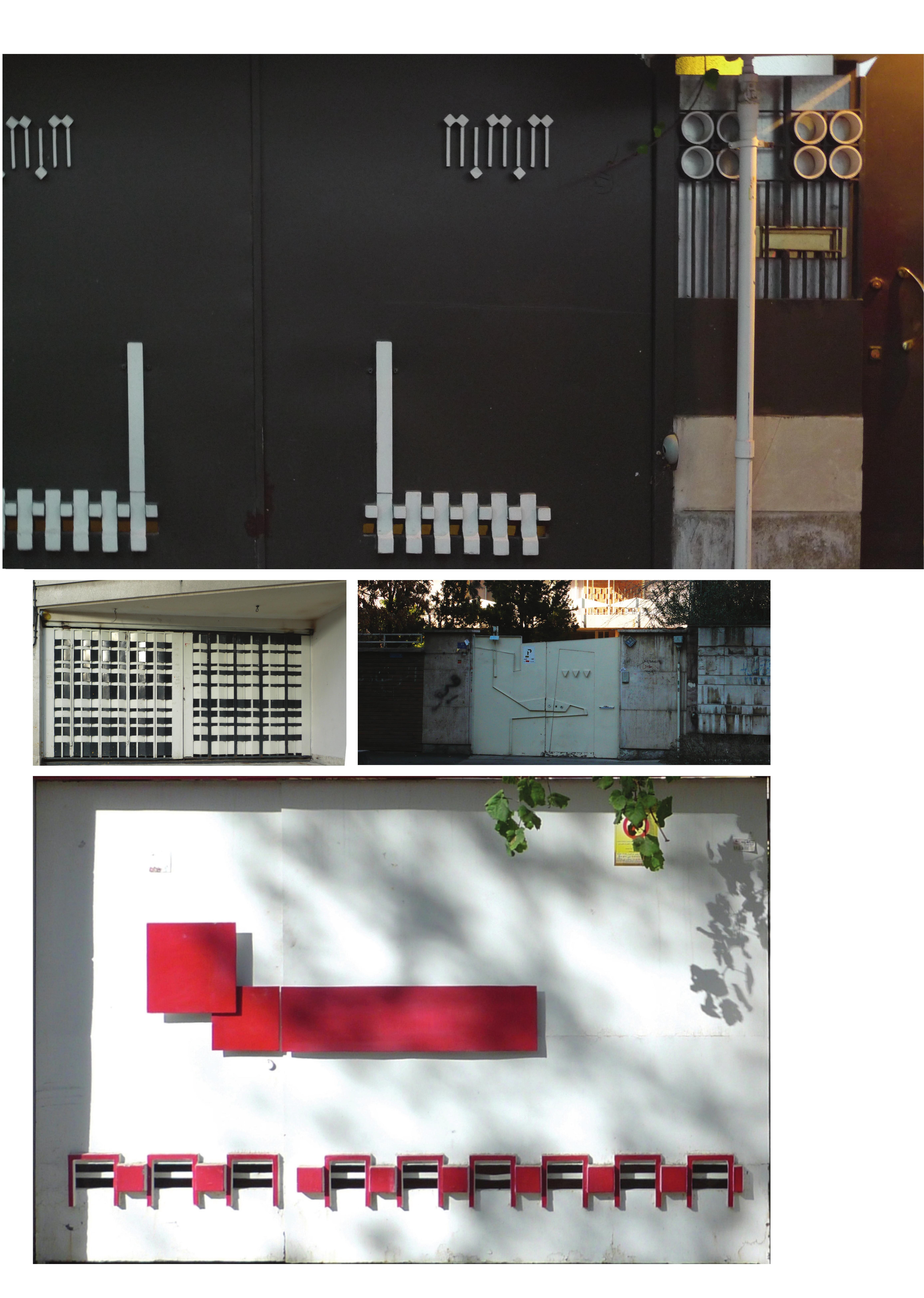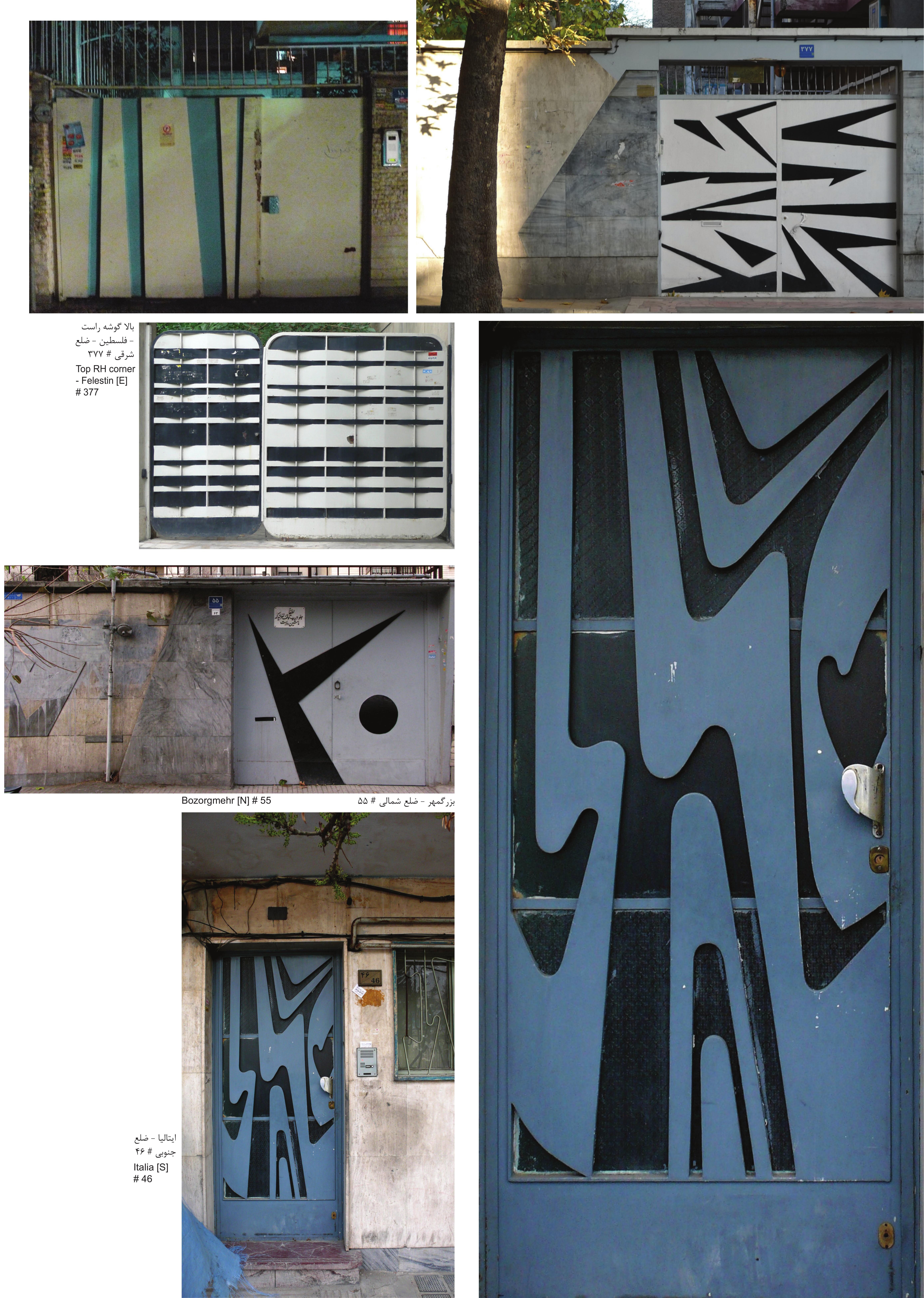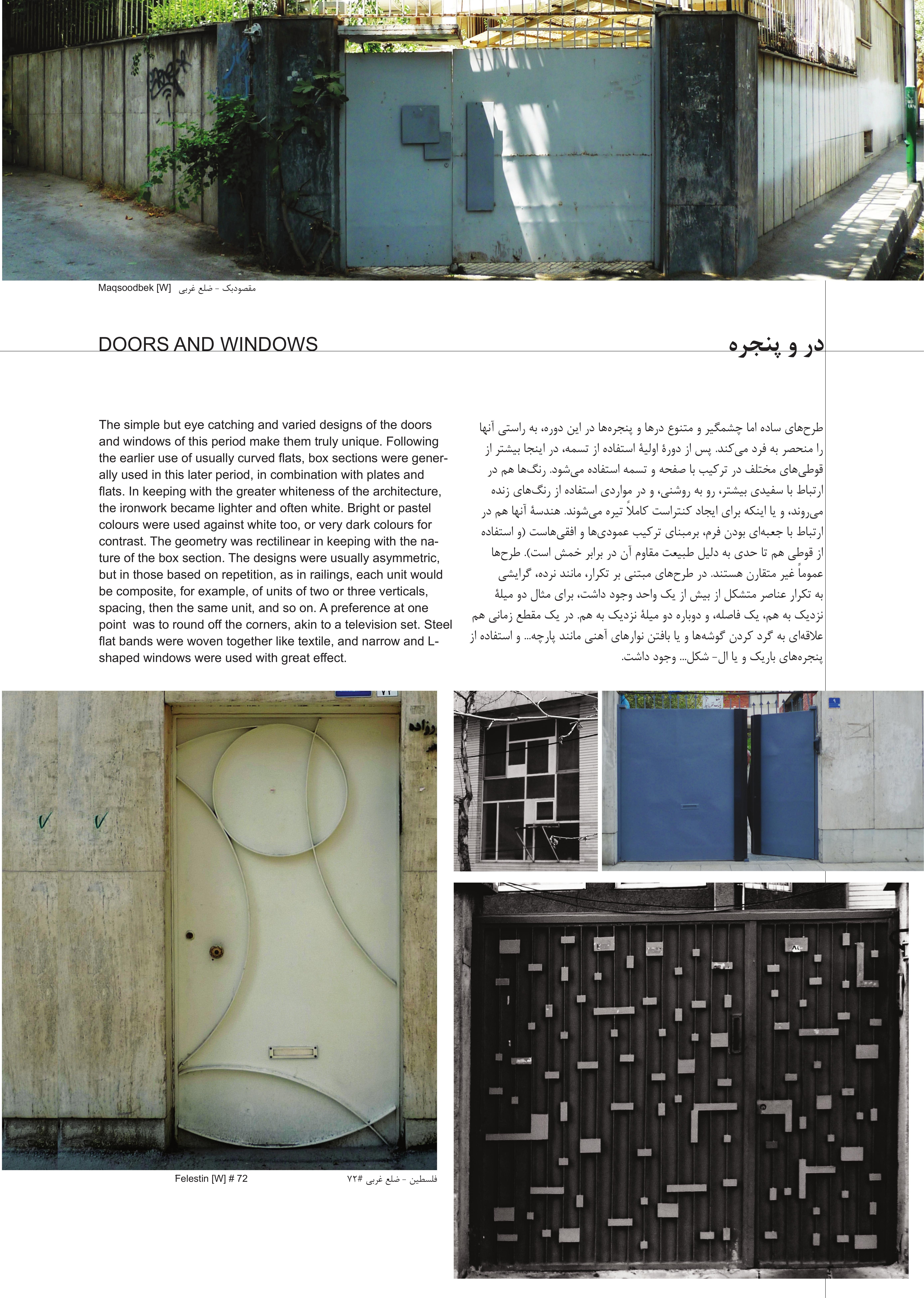
The simple but eye catching and varied designs of the doors and windows of this period make them truly unique. Following the earlier use of usually curved flats, box sections were gener- ally used in this later period, in combination with plates and flats. In keeping with the greater whiteness of the architecture, the ironwork became lighter and often white. Bright or pastel colours were used against white too, or very dark colours for contrast. The geometry was rectilinear in keeping with the na- ture of the box section. The designs were usually asymmetric, but in those based on repetition, as in railings, each unit would be composite, for example, of units of two or three verticals, spacing, then the same unit, and so on. A preference at one point was to round off the corners, akin to a television set. Steel flat bands were woven together like textile, and narrow and L- shaped windows were used with great effect.
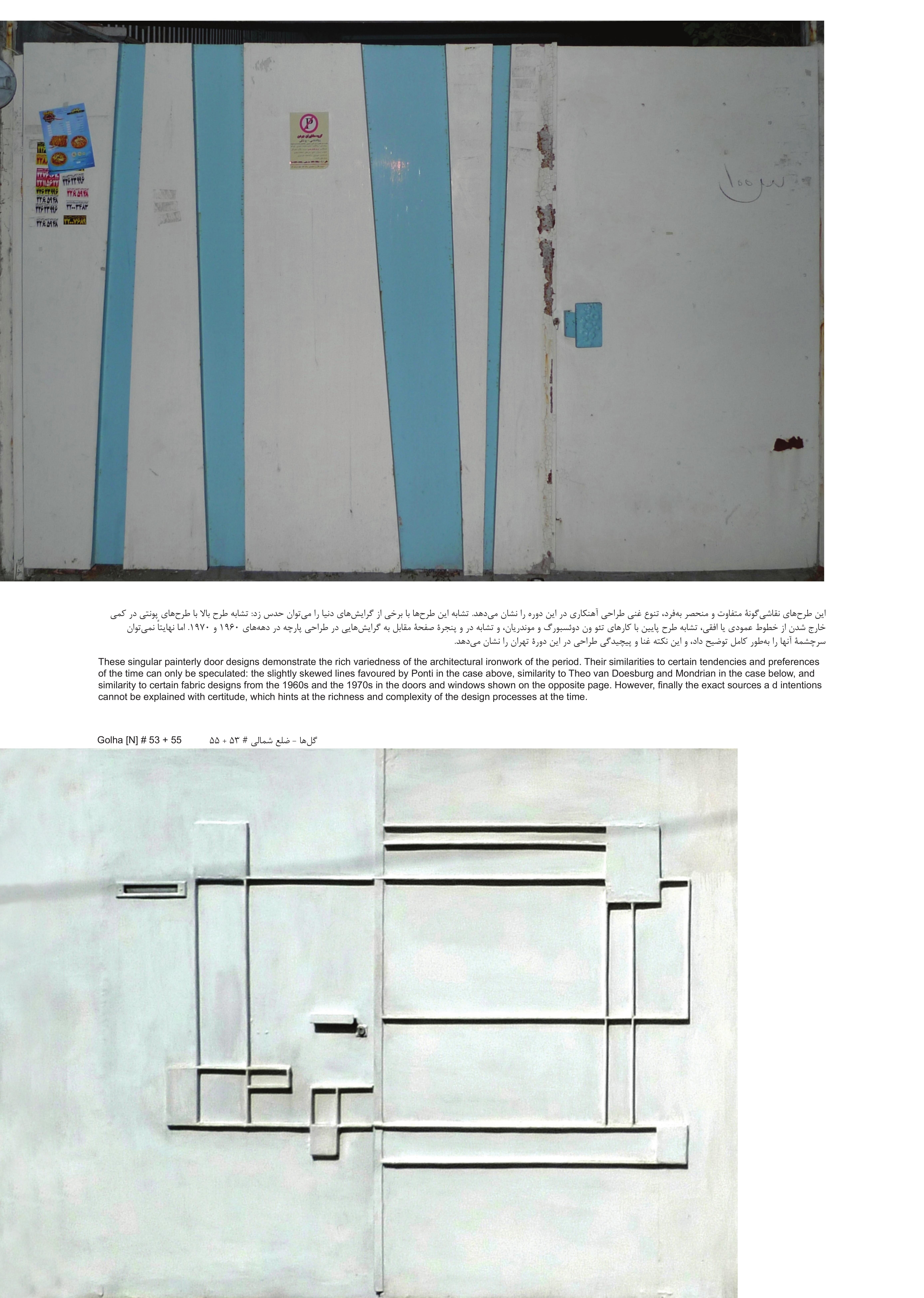
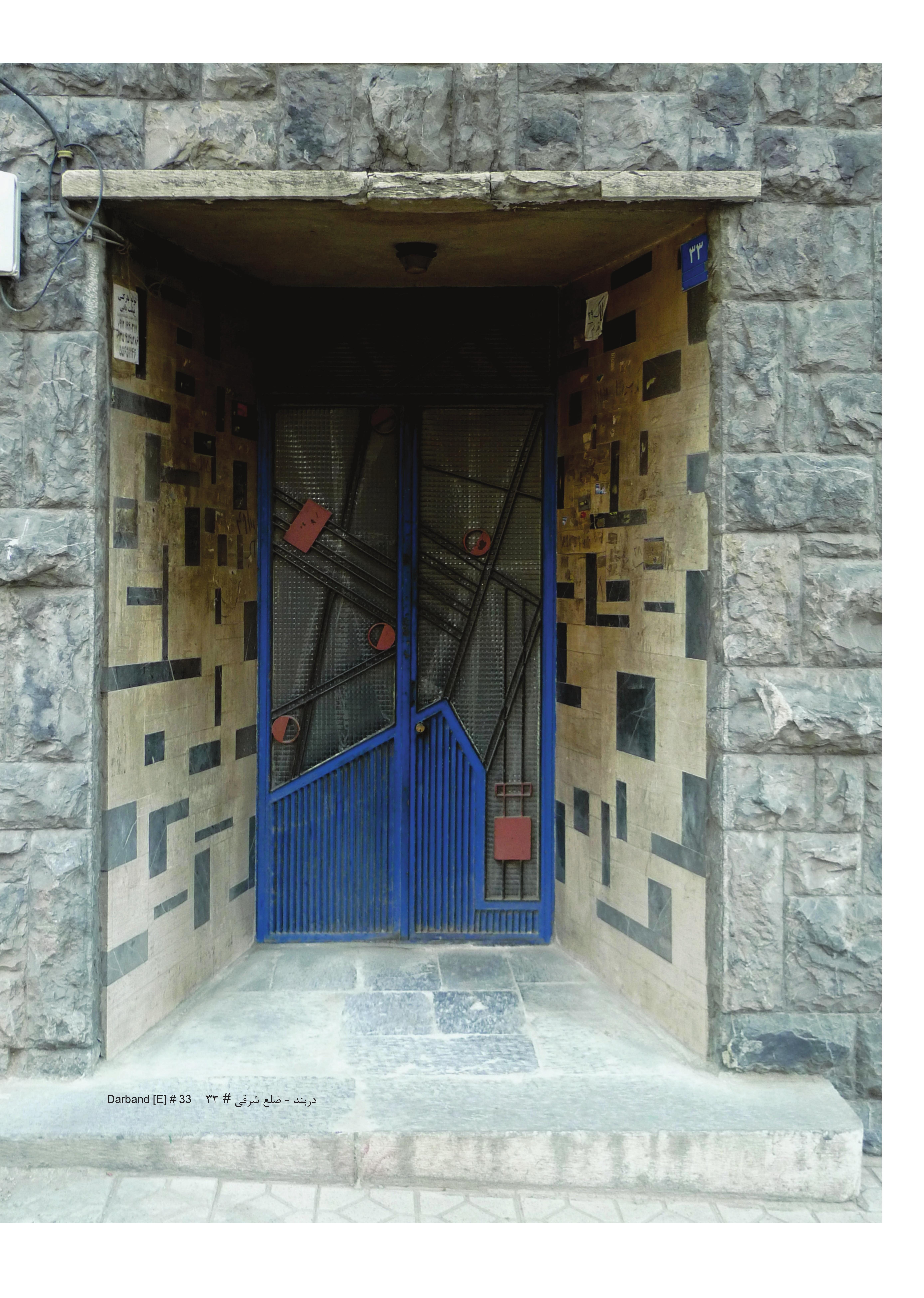
These singular painterly door designs demonstrate the rich variedness of the architectural ironwork of the period. Their similarities to certain tendencies and preferences of the time can only be speculated: the slightly skewed lines favoured by Ponti in the case above, similarity to Theo van Doesburg and Mondrian in the case below, and similarity to certain fabric designs from the 1960s and the 1970s in the doors and windows shown on the opposite page. However, finally the exact sources and intentions cannot be explained with certitude, which hints at the richness and complexity of the design processes at the time.
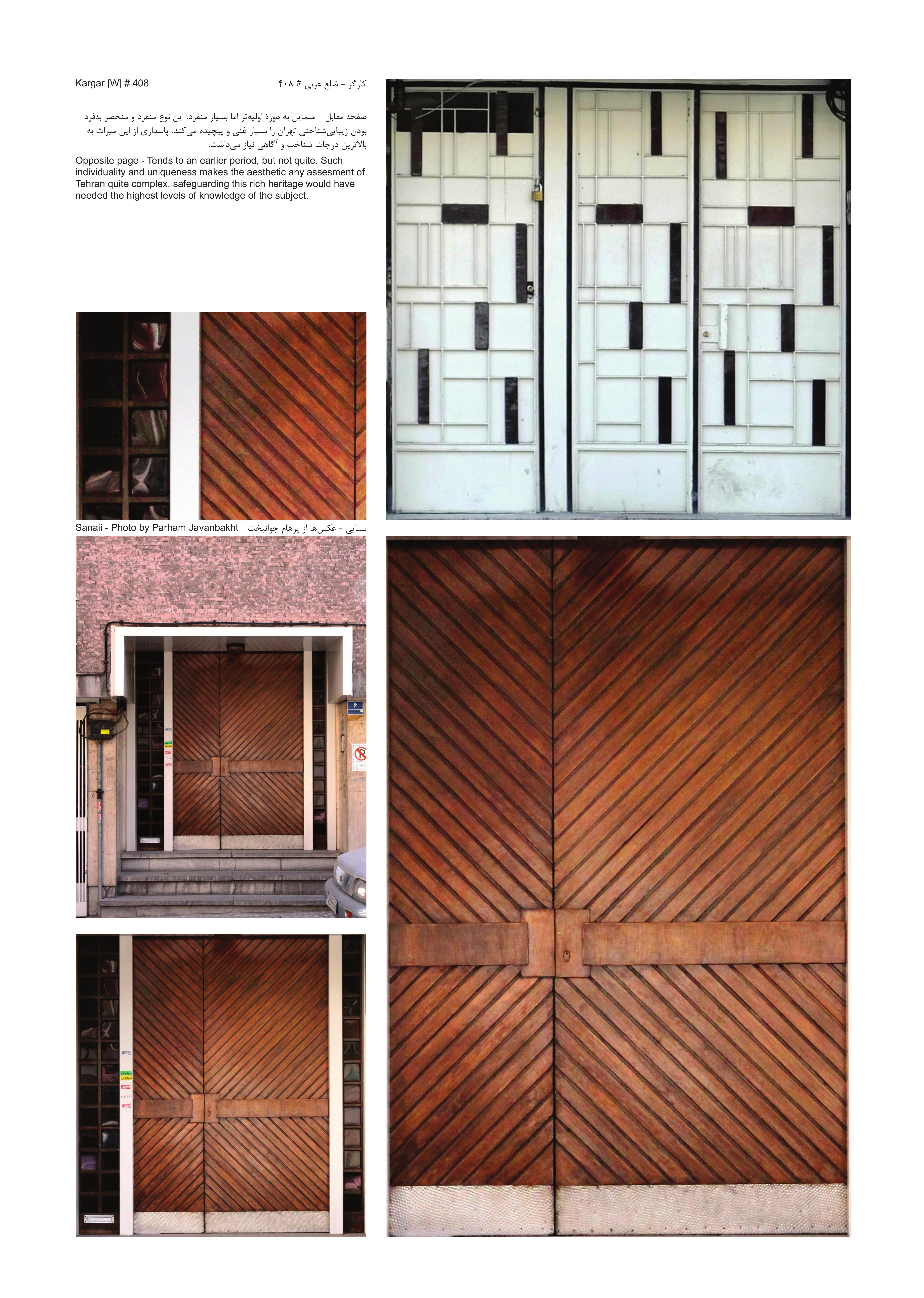
Opposite page – Tends to an earlier period, but not quite. Such individuality and uniqueness makes the aesthetic any assessment of Tehran quite complex. Safeguarding this rich heritage would have needed the highest levels of knowledge of the subject.