From Housing City to Demolition City: An Overview of the Economy of Urban Renewal in Iran
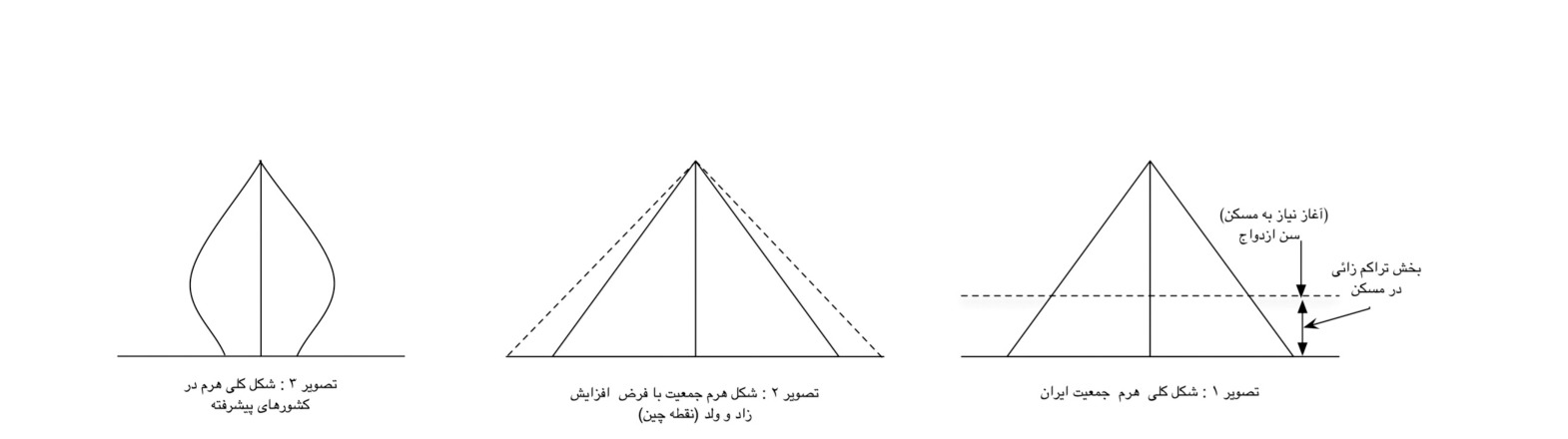
There is a general consensus among Iranian experts and authorities indicating that some 70 percent of the urban fabric of Iranian cities and 60 percent of the built-up rural area are dilapidated and vulnerable to major earthquakes. Multiplying these figures by the number of housing units in the two environments (8 million housing units in urban areas and 4 million in rural areas) one arrives at 8.8 million housing units in need of reinforcement or total renovation. To this, three more figures should be added in order to roughly estimate the housing needs of Iranian society: first, the existing housing shortage, which is estimated around 1.5 million units; second, some 1 million housing units are required to house the existing shantytown dwellers of approximately 4 million people. Third, a minimum of 500,000 units per year is needed for newly married couples, or about one million housing units for every 3 years. Add up all these, you will arrive at an astonishing figure of some 12 million units, representing the housing needs of Iranian society. On the other hand, the total production capacity of the housing industry in Iran is approximately 500,000 units; then it will take some 30 years to reconstruct or replace the existing units, be able to meet the demand for new housing due to population increase, new family formation, and to make up for the current existing housing stock. And this is a never-ending assignment.
Assuming a 75-square-meter floor space for each residential unit, the 12 million units could be translated into 850 million square meters to be constructed, not to take into account the required common and shared built-up spaces. Convert this figure into investment, material, engineering services and manpower requirements, and you arrive at the magnitude of the work to be performed.
Common Remedies and Their Limitations
The most frequently cited solutions for remedying the existing shortcomings of the dilapidated urban and rural fabrics include: (1) creating a safe room in every vulnerable existing housing unit so that residents can have a secured shelter; (2) reinforcing the existing structure instead of reconstructing the entire home; and (3) providing zero-cost land to builders and housing cooperatives along with longer and easy-term mortgages to home-builders and home-buyers aimed at boosting the housing industry. None of these solutions seems to be practicable in the short-to-medium range.
Apart from the psychological and behavioral concerns during the sudden incidence of a major earthquake, which can be devastating especially to young children, building 8.8 million safe, sound replacements of 5 million earthquake-resisting homes, which as a sole activity of the housing industry will take a minimum of ten to fifteen years to accomplish. This means that the risk of earthquake damage is reduced by only 7 percent a year. Therefore this is not a once-and-for-all solution to the present housing crisis in Iran.
Lessons from International Experience
The article cites the experience of European countries in solving their housing problems after World War II through a combination of measures, including financial incentives, technical assistance, and government supervision. Referring to the experience of other countries and by observation of the past 50-year performance of various sectors of Iran in housing, the author suggests reconsideration of certain aspects of the current housing policy. Among the more urgent measures proposed:
- The metal structure proposed by the Municipality of Tehran for insertion into existing buildings prone to earthquakes is not workable. A more simple and practicable solution in favor of buying a few minutes of time for earthquake-stricken people to escape to safety should be adopted.
- It seems more practical to initiate renewal programs on a complete neighborhood basis, instead of rehabilitating individual buildings. This would allow redesigning and providing a complete up-to-date infrastructure, utility and amenity systems including parks, neighborhood commercial and social centers, parking facilities, bicycle paths, walkways, and shopping buildings, as well as restoration of culturally or historically significant buildings.
- The current regulations governing parking requirements for residential buildings impose a heavy burden on people. Every single parking space consumes some 25 to 30 square meters, which is about a third of the net floor area of one small housing unit. Collective parking arrangements outside but in proximity of the residential building would have triple effects: reducing car interaction within the community, reducing air and noise pollution, and encouraging walking and use of public transit.
Renewal of Worn-Out Urban Fabrics
Regulations governing minimum lot size and its dimensions are discriminatory against lower-income families, given that the share of land cost to the total cost of a housing unit is disproportionately high, up to 70 percent of the total housing cost. It also contributes to the further development of informal settlements. Flexibility in lot sizes would encourage co-habitation of different interest groups.
Informal Settlements and Social Dimension
The emergence of informal settlements is a complex social and economic problem whose solution cannot be sought in short-sighted policies of providing free land to developers and housing cooperatives, or building homes free of cost for them. This policy, if adopted, would lead to further development of shanty towns and is discriminatory by its very nature.
Moreover, the article stresses the fact that renewal of urban and rural texture should go hand in hand with improvement in the life of its residents. These two should be seen as integral and inseparable elements of urban and rural social life.