By Mohammad Mohammadzadeh · Memar 22, mag pages 15-20 (view).
At the start of his lecture at the 21st World Congress of Architecture in Berlin, titled "Resource Architecture", Peter Eisenman, referring to his positive answer to a question raised by one of the participants, entered the second part of his talk and said: "What is considered a resource in architecture, that I might speak about — since I know little of technology, of building or of equipment, ecology, plumbing, and all those things being discussed?" He continued: "One of architecture's greatest resources is architectural ideas. The most important thing for me is to have an idea." He added: "The greatest architects of our profession's history have been remembered for their architectural ideas. For me the matter is that when we think of Bramante, Brunelleschi, Borromini and so on, we do not think about whether their buildings functioned correctly. We do not really care whether the church of San Carlo alle Quattro Fontane in Rome functioned correctly… No-one knows whether St Peter's worked as Bramante predicted, or whether the church was satisfied with his work and gave a fitting response to environmental issues… The thing architects do for people is something other than thinking about mere function — which we know we must do. It is something more than solving the problem of shelter and creating a place… We do these things, but we also do something else; and what makes a work into a great, historic work is precisely that 'something else'." Eisenman, framing this as the most difficult question in the world for architects — "what is it that turns a work into a work of architecture?" — entered the third part of his lecture, in which he raised important matters that can be addressed elsewhere.
In this article, the aim is to examine the second part of Eisenman's talk, briefly outlined above. To make clear the matters I will follow, I shall first prioritise the points and phrases of Eisenman's argument according to their importance for him in this discussion (and, where this is hard to judge, on the basis of context):
- The creation of an architectural work through architectural ideas — as the most difficult problem in the world for architects;
- Making history through the creation of great and lasting architectural works;
…and then as less-important matters:
- The making of shelter;
- The correct functioning of a building;
- The technology and engineering of the building;
- The response of the building to environmental issues.
Let us return to the main subject of the Congress — "Resource Architecture". Human society at the beginning of the third millennium faces two major problems and human risks arising from them (now and in the future): the increase in world population and the limitations of resources, and the trend of degradation of the biosphere and its resources. The contribution of different regions of the world to creating these kinds of problems is not the same; and the impact of the consequences of these two phenomena is also unequal across different parts of the world. The capacity of every region in confronting these issues will likewise differ.
In the phenomenon of population increase, the principal share belongs to the so-called developing countries, while the developed industrial countries are the principal agents of biosphere degradation. On one hand, a wide part of the world — chiefly the developing countries — seriously needs to provide shelter (in many cases in the most basic sense of the word) and the housing of an ever-increasing population. On the other, the whole world, with the developed industrial countries at its centre, is faced with environmental degradation and its consequences.
In such a situation, can one disregard the terrible imperative casting its shadow over the world? Can architecture, like many phenomena, be drawn into a corner of luxury commodity, dropped beyond architectural ideas, registered in the proud chest of historic great works in the names of their creators, kept for posterity (if posterity exists), spent in long disputes about the aesthetics of the work and the theoretical views embedded in it — while disclaiming responsibility for the rest? Eisenman, as we saw, speaks specifically of architectural ideas as the greatest resource for the creation of historic architectural works, and I do not think anyone seriously involved with architecture would disagree. But here a few questions remain: can we suppose that architectural ideas, divorced from the serious and vital issues of the time, are restricted only to the field of aesthetics or to the theoretical views of architects or architectural movements? Cannot the architecture of our age speak of a duty before the world and humanity? Does not a more difficult responsibility call architects to extend their ideas — into a wider field than aesthetics and theoretical debates whose validity is uncertain over time?
These are points I try to raise by examining a part of the achievements of the modern architectural movement.
02The achievements of the modern movement
A review of the works of the stars of modern architecture shows that, in addition to producing many of the great and lasting works of the twentieth century, these architects succeeded in fittingly carrying out their difficult responsibility before the world and the great human problems of those years — through the brilliant ideas and innovations they offered in the context of the new conditions and possibilities of that period. In the first half of the twentieth century, two world wars imposed special circumstances on the world. The number of those killed in the First World War in Germany, Austria, Hungary, Russia, France and Britain alone reached ten million; Germany, with 1.8 million, set a record. Berlin, like many other cities, lay in ruins, and great numbers were displaced and homeless. In the post-war years, rebuilding ruined cities, settling the displaced and answering the problem of the housing shortage in destroyed cities were among the basic problems. At the same time, the new phase of the industrial era at the start of the twentieth century — after the first round, that is, just after the Industrial Revolution — was approaching maturity, and so the ground was prepared for a new shift in the world. In these circumstances, the great responsibility that the architects and urbanists of the modern movement, alongside the responsible parties and planners of the day, undertook was the search for practical answers to the great problems facing the world and humanity — and it should be noted that this could not have been simply carried out without using the possibilities and conditions that the era of industry had provided.
There was another problem too (it still exists), which Gombrich described thus: "the principal feature of the twentieth century is the terrifying increase…" — and what part of what the stars of the modern movement tried to do was to seek an answer to this "what is to be done?" Soon time and the test of life lifted the curtain on serious limitations and shortcomings of this era. Even so, the value and importance of this responsible professional movement, and its social, ethical, human and humanitarian dimensions — built upon a commitment to the spirit of the time — should not be lost sight of.
04Climate, sun and modern architecture
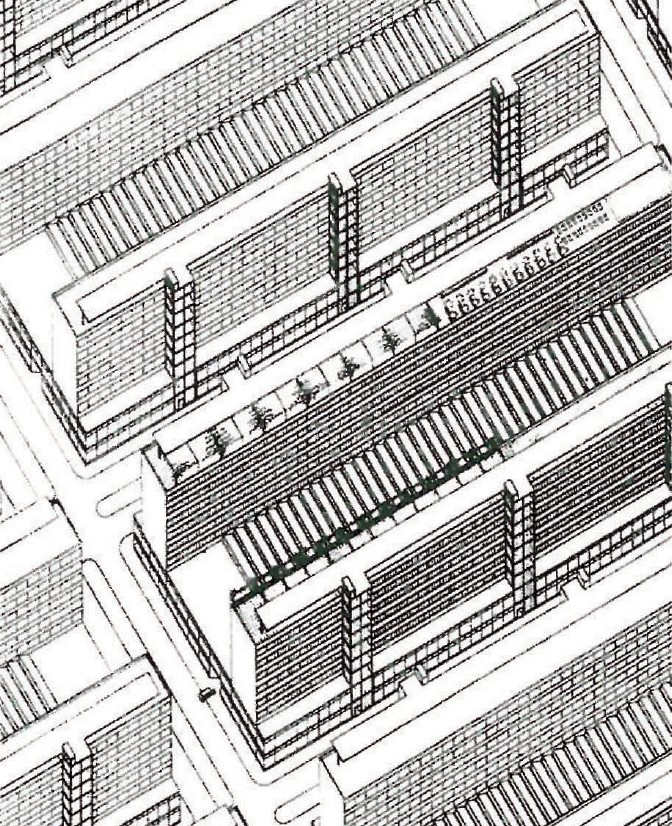
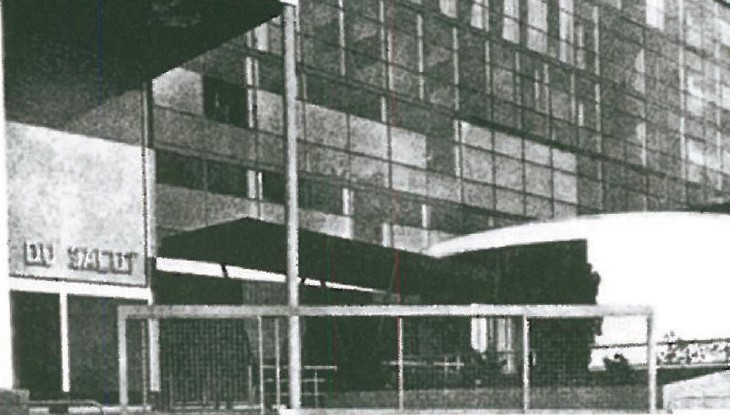
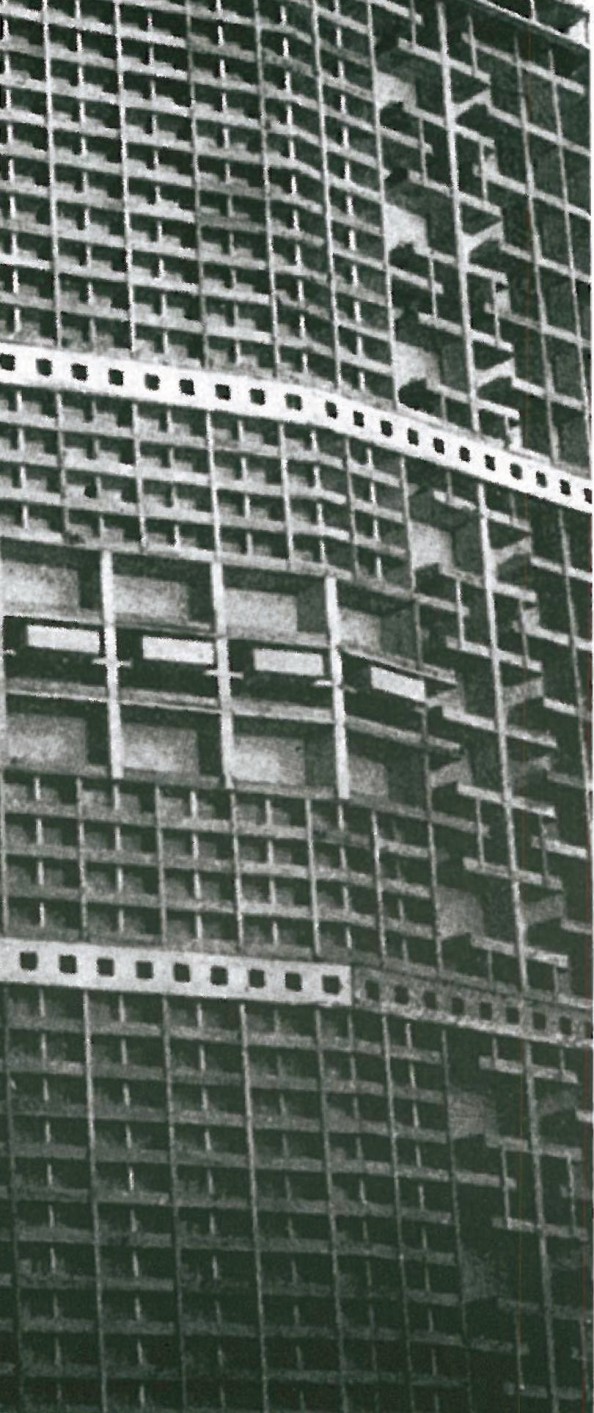
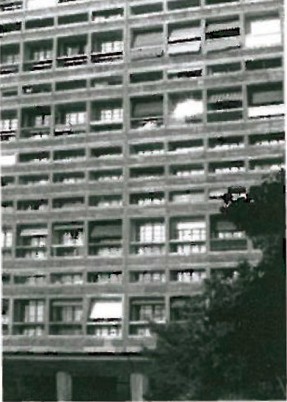
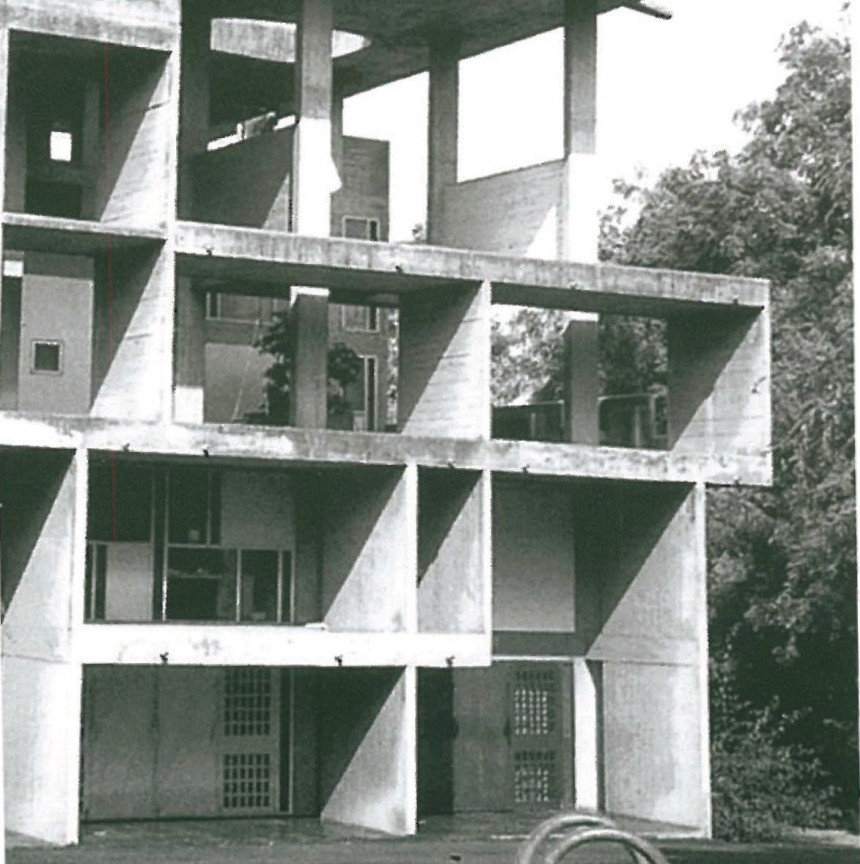
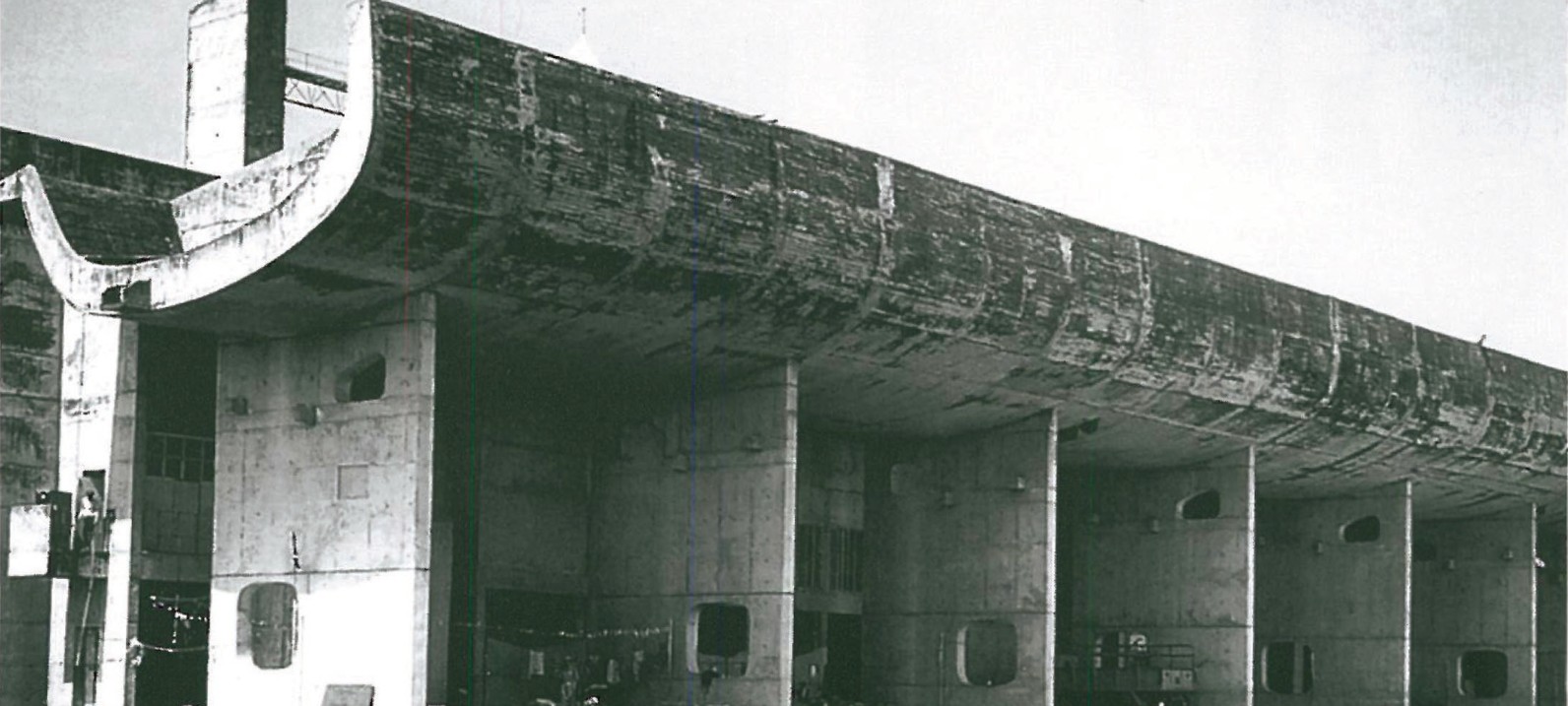
The architects of this period, with relatively different motives, also tested experiences with climate and with the sun. The projects Le Corbusier designed in different parts of the world, particularly his work in Africa and India, show very well his special attention to the question of climate and the brilliance of the sun in shaping the building's architecture. Some examples may be mentioned: the Carthage House in Tunisia (1928) — in which the principal issue was creating shade on the body of the building through external sunshades, and producing natural cross-ventilation in the unified interior space; the Ministry of Education building in Rio de Janeiro (1936) — designed by Oscar Niemeyer and his colleagues, with Le Corbusier as design consultant — in which external sunshades, as brise-soleils, gave a particular form to the building's outer skin; the high-rise building in Algiers (1938) — designed in the continuation of his investigations from 1930, and one of his earliest experiences of using brise-soleils on the external skin; the Marseille housing complex Unité (1946) — in which Le Corbusier sought to shade the body through brise-soleils with specific shapes designed for the purpose, although these did not perform appropriately on the east and west fronts; the Mill-owners' Association in Ahmedabad (1954) — the use of shade and the impact of local winds were among the matters of attention; the Sarabhai house in Ahmedabad (1955) — the appropriate use of natural cross-ventilation in the interior space and shading on the building were issues of this project; the Shodhan House in Ahmedabad (1956) — in which shading was again a principle the building's beautiful form followed; and finally the Chandigarh Parliament building (1961) — in this memorable building, the entrance porch on the south-east front, with its attractive form, in fact created a colossal sunshade.
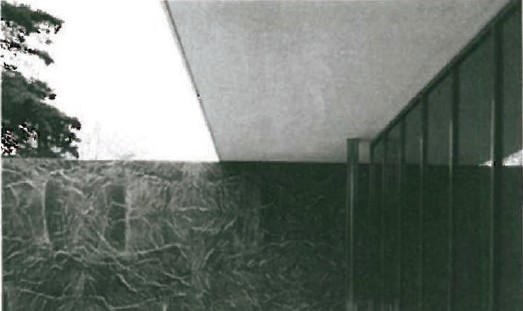
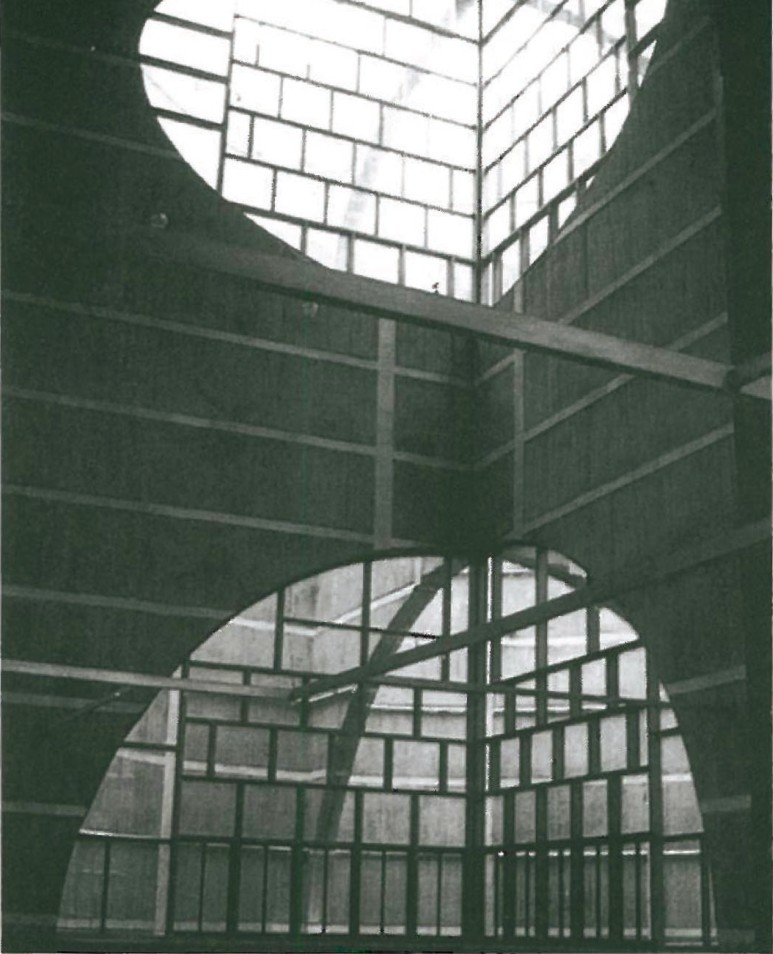
Of course in this regard one can also point to instances of Le Corbusier's failures: the refugee-housing complex in Paris (1929) is one such. In this building, the external skin was foreseen as a single large unopenable glazed surface, with mechanical systems for cooling and heating the interior — but since this last was never realised, the external skin was later replaced and brise-soleils were added to the new skin to solve the problem. Other architects too played interesting roles. In those years Walter Gropius, drawing on the principles of the Zeilenbau row-apartment pattern in Germany already mentioned, paid attention in his complexes to the elongation of the blocks east-west and to the relationship between height and the distance between two blocks for the optimal solar exposure. Mies van der Rohe, in the German pavilion at the Barcelona Exhibition (1929), whose aim was to be a sample of an ideal house, designed the cantilever roof so as to cast shade on the terrace and the building's wide glazed surface. Likewise in Frank Lloyd Wright's Kaufmann House — Falling Water — large concrete cantilevers were so designed as to cast shade on the terraces and glazed surfaces; cooling of the interior space was naturally provided through the cool air rising from the waterfall (although this brought certain problems for the building in winter). Louis Kahn's outstanding work, the Dacca Parliament building in Bangladesh (1962), was an unparalleled example of bioclimatic design. In this project, by creating an enclosed building focused inwardly, Kahn succeeded in providing natural light in the interior space in a special way and in establishing a pleasant cool environment in the very hot climate.
05Resource architecture: the question for our time
Let us return to Peter Eisenman's lecture at the World Congress. One of the issues from the second part of his talk, [is that] the architects of today's world have preferred to keep their work focused on the aspects of architecture that, according to Eisenman, are turned chiefly toward making history, the creation of unique and lasting architectural works, and theorising in this field. Despite the passing of two years since the events of 11 September, examples of proposals offered by famous architects — over 500 — for finding a suitable substitute for the World Trade Center towers, and the theoretical perspectives behind these proposals, are still being raised in the major architectural journals of the world. We hear of the seriousness of the responsible parties, and of the long debates of the trustees of the matter and the specialists about these projects — while we have perhaps not heard of even a single one of these renowned architects' serious projects offering a fundamental solution to the problem of housing in a problematic region of the world. Today, it seems, the globalisation of architecture and the universal theoretical views of architects manifests itself only through formal projects.
The questions of our time may be cast as: who, in the field of architecture, takes up the resolution of the major and vital global and human issues of our time? What share of the architectural activities of the world's architects can be devoted to the creation of architectural works and history-making? Architects of our time, by employing their ideas and innovations, against which subjects of today's world should they be able to accept responsibility? And finally — the field of architectural ideas, beyond aesthetics and theoretical disputes, can it extend to what other subjects?
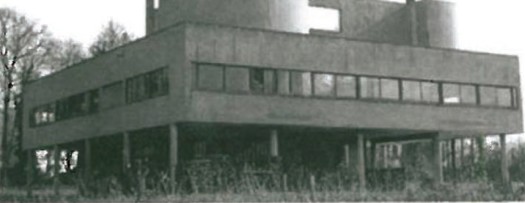
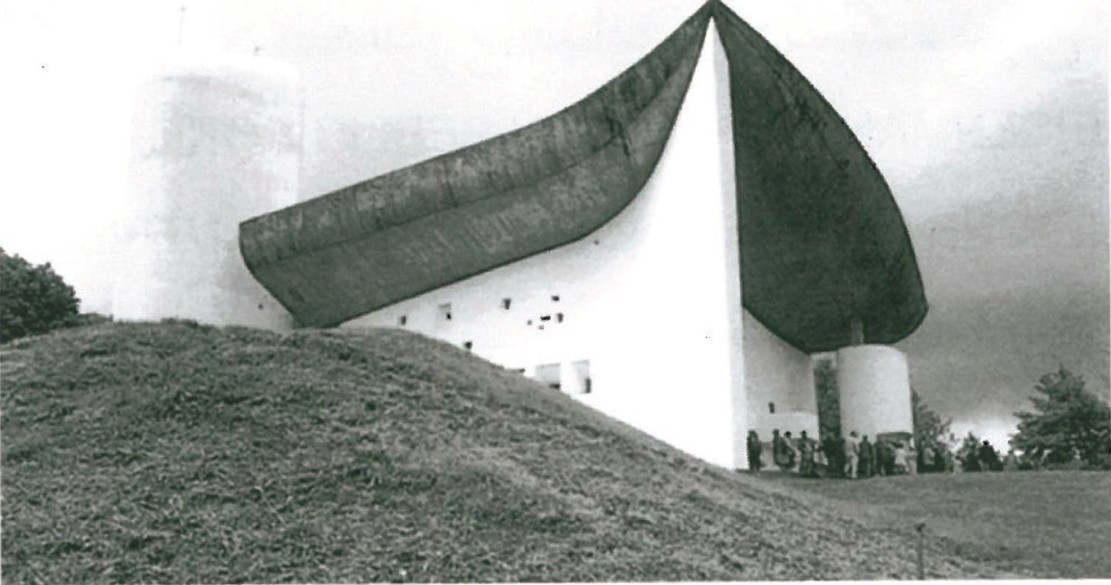
Notes: 1- Resource Architecture. The question raised was: "Or do you not think that the [architectural] stars are part of the resources?" For the full text of Peter Eisenman's lecture, see Memar magazine, no. 19, Winter 1381 SH, pp. 10-something; 2- Ernst Gombrich, English art-historian; 3- as Le Corbusier said, "It is life that is always right, and the architect who is always wrong." In any case, the fate of this global movement halted it in the middle stages of its movement; 4- it seems more appropriate to evaluate the ideals and goals of this movement separately from the fate that befell it; 5- the English equivalent of the Zeilenbau is "row building"; 6- the institutionalisation of the global approach to halting environmental degradation is barely a few decades old. The very industrialisation that, at the beginning of the twentieth century, was reckoned humanity's saviour has — by changing its face — been turned into a dangerous enemy. Industrialisation and the development of technology is, to use Heidegger's expression, an imperative we are committed to and from which we cannot escape; the only road remaining is to limit its negative consequences; 7- in those years the use of cooling installations was not at all common in India, so the question of climate, in the hot and burning Indian climate, imposed itself as a priority on design. Captions: Notre Dame du Haut, Ronchamp, Le Corbusier, 1950; The Villa Savoye, Le Corbusier, 1929; The Unité building in Marseille, Le Corbusier, 1946; Algiers high-rise, Le Corbusier, 1938; Parliament building for Dacca, Louis Kahn, 1962; Parliament building for Chandigarh, Le Corbusier, 1961.