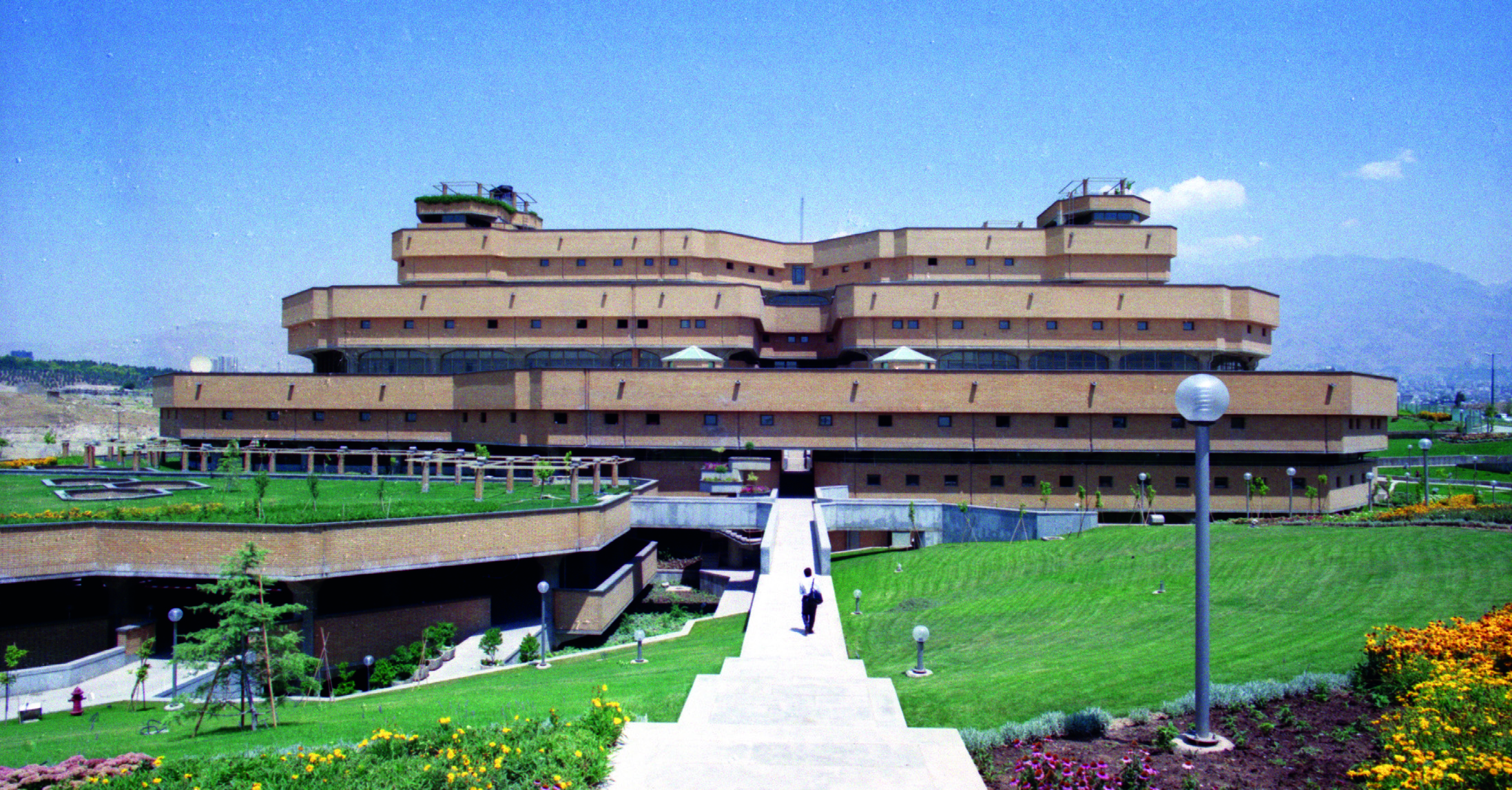
This discussion took place in 1376 [1997] over the course of several sessions with the participation of prominent architects at the office of Pirraz Consulting Engineers, with the purpose of exchanging views and receiving these architects' opinions regarding the design of the National Library of Iran by Shariatzadeh and his colleagues at Pirraz. The present text is from the last of these sessions, held on 26 Dey of that same year. The architects present at these sessions were: Seyedreza Hashemi, Hossein Sheikh Zeinoddin, Momeni, Tehrani, Hadi Mirmiran, Mohammadreza Joudat, Nosratollah Majlesi, Jazani, and the representatives of Pirraz Consulting Engineers, Yousef Shariatzadeh and Mohsen Mirheidar.
Mirheidar: We have gained many results from these sessions thus far. I would ask that you not regard this project merely as the work of Pirraz Consulting Engineers, but rather critique it as an architectural work that will endure after us. We would like to ask Sheikh Zeinoddin to summarize his views.
Sheikh Zeinoddin: Given the precision of this work and the considerations relating to the site conditions and other matters at hand, I believe that approaching this design through a focus on details is meaningless, and the issue is not about rearranging components of the project or finding shortcomings in it. The general discussion is that this library is like a factory whose function is of great importance, and much work has already gone into the design, and it has found its own distinct relationships. In the previous session, the main concern was about the overall volume of the building and its placement on the site. Mirmiran noted that if there were a platform upon which the library building could sit, the entire complex and the appearance seen from outside would transcend the current state, in which the building appears as one with distinct floors, and through this, a certain character would emerge.
The part of the design that has taken on a simple square form caught the attention of Engineer Mirmiran, who believed that if this square became the architectural foundation and sat upon a platform, it would be more appropriate than certain incidental details of the facade. Another point concerned the entry axis. The view was that this axis should become somewhat more orderly and more geometric, possessing a kind of mathematical geometry found in our traditional architecture. This section, which essentially serves as the public interface of the library and from which visitors are distributed to the essential parts of the library, should be strengthened as the entry axis of the design.
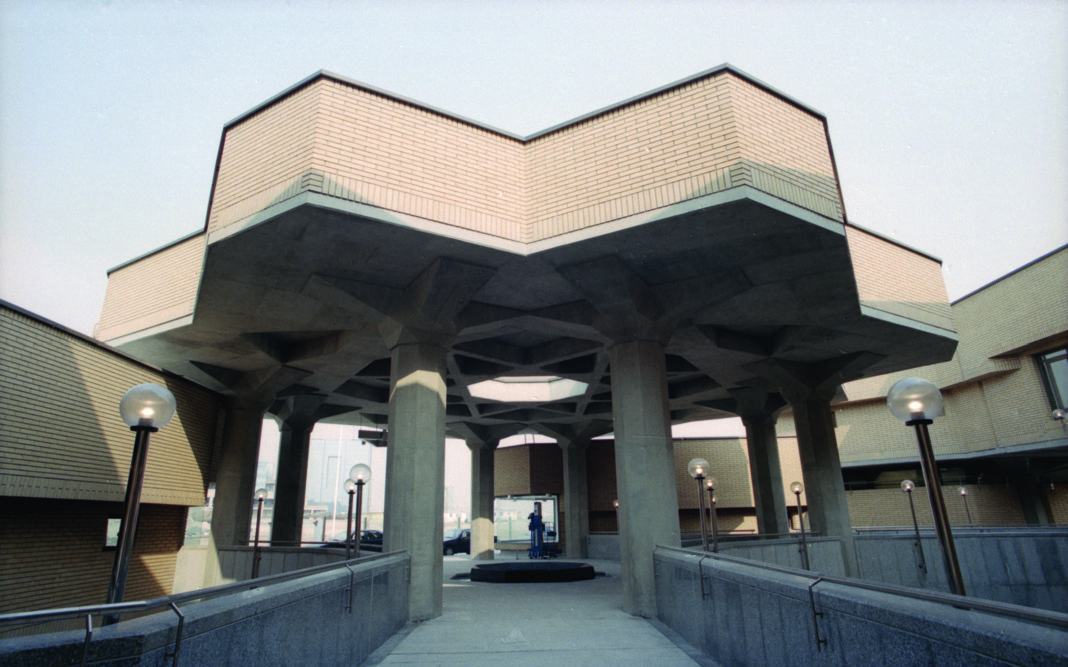
Mirmiran: Given that a seasoned architect like Shariatzadeh has worked on this design, the project is, in principle, a successful one. The discussion that Sheikh Zeinoddin and I had was from the perspective that this building has a distinguished design and will be one of the few buildings that defines an architectural era, and we thought it should possess a more symbolic quality. Shariatzadeh has pointed to something that could serve as the basis for this symbolism, and that is the horizontality and humility of the building, which is a characteristic of Iranian architecture.
In any case, if the idea of humility, horizontality, and simplicity of the structure is to serve as the guiding principle for the design, it must present a more defined and eloquent expression in its totality and constitute the architectural framework of the complex — one that contains a theoretical message and a distinct, memorable spatial form, which at the same time establishes a connection with forms seen throughout the history of architecture.
Joudat: Having known Shariatzadeh's work for over thirty years, even if I had not seen this project, it would have been conceivable to me how he works, and this design does not differ greatly from his other works. Relative to the subject matter of the design, the scale of the work varies, but otherwise it is the same approach and method he has maintained throughout this period. Some of the gentlemen were pleased that this project is in his hands, and I suggest we allow this design to take shape as he himself wishes, free from the guidance that any one of us might offer. After the session, I was looking at the works of Richard Meier and was reminded of Shariatzadeh's work. Meier too, since 1959, has remarkably not changed his work and has advanced along a particular line. Minor changes are seen in his works, and designs become fresher relative to their subject, and Shariatzadeh too has advanced in a particular direction from the very beginning. By way of conclusion, and in relation to the discussion about the identity of Iranian architecture, I believe one of the best approaches for achieving such a goal is to strengthen the work of architects so they can work however they wish — in other words, let us not insist that they work in an Iranian manner, or an Islamic-Iranian manner, or anything else.
Majlesi: In any case, because I was Shariatzadeh's student from long ago, it was difficult for me to speak freely. I recall that the problem we always had with him was that he would not talk, and I thought that if a question were posed, if he spoke more freely, the atmosphere would open up. Based on previous experience, I must say that many aspects of the design exist in his works that he himself must explain. In the previous session, the subject related to the breaks in the building's perimeter, which prevent the design from having a monumental quality. Whether these breaks are deliberate or follow from the vision embedded in the design, in my view they trace back to the very nature of the building. What we say are our own opinions, and as Joudat noted, in the work of established architects one can follow a particular line. In Shariatzadeh's work, those who have known him from the old days can witness this line.
This building is in fact a national building and is presented as a special structure, and given the precedent we have from similar buildings, it should possess grandeur and majesty and calls for simple geometric forms. In this regard, they themselves have noted that these are plans upon which the functional program of the design can be traced, and apart from a small sketch, no model yet exists upon which the volume could be commented — this interpretation is purely based on the forms.
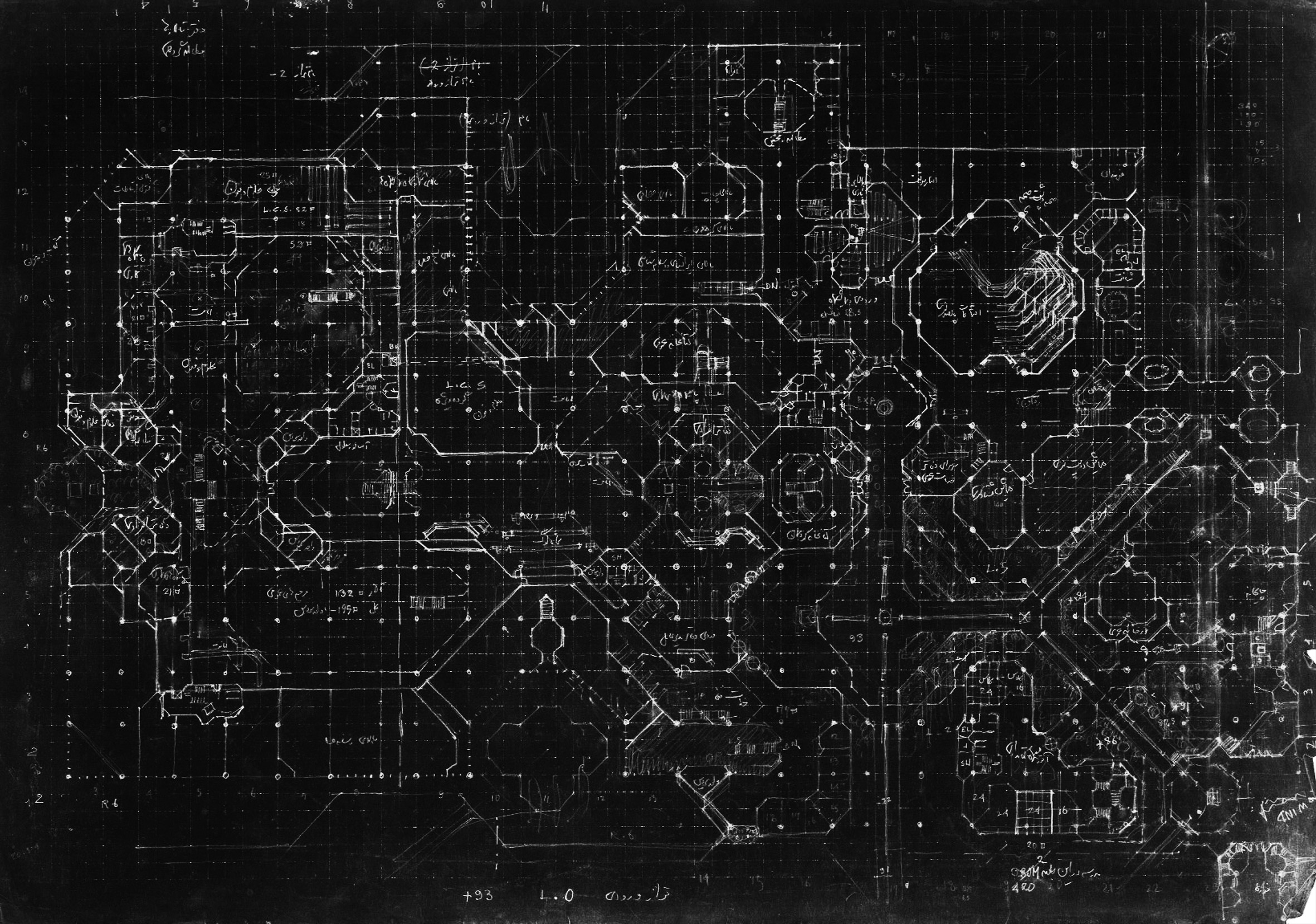
Mirheidar: The matter under discussion is having relatively regular surfaces with fewer breaks. The plan of the library is approximately square — meaning the library fits better in a square form than in other geometric shapes — hence simplicity of volume exists. In the previous session, there was much discussion about these breaks. We would like to ask Tehrani to express his views on the breaks, the intervals, their dimensions, and the views from different vantage points.
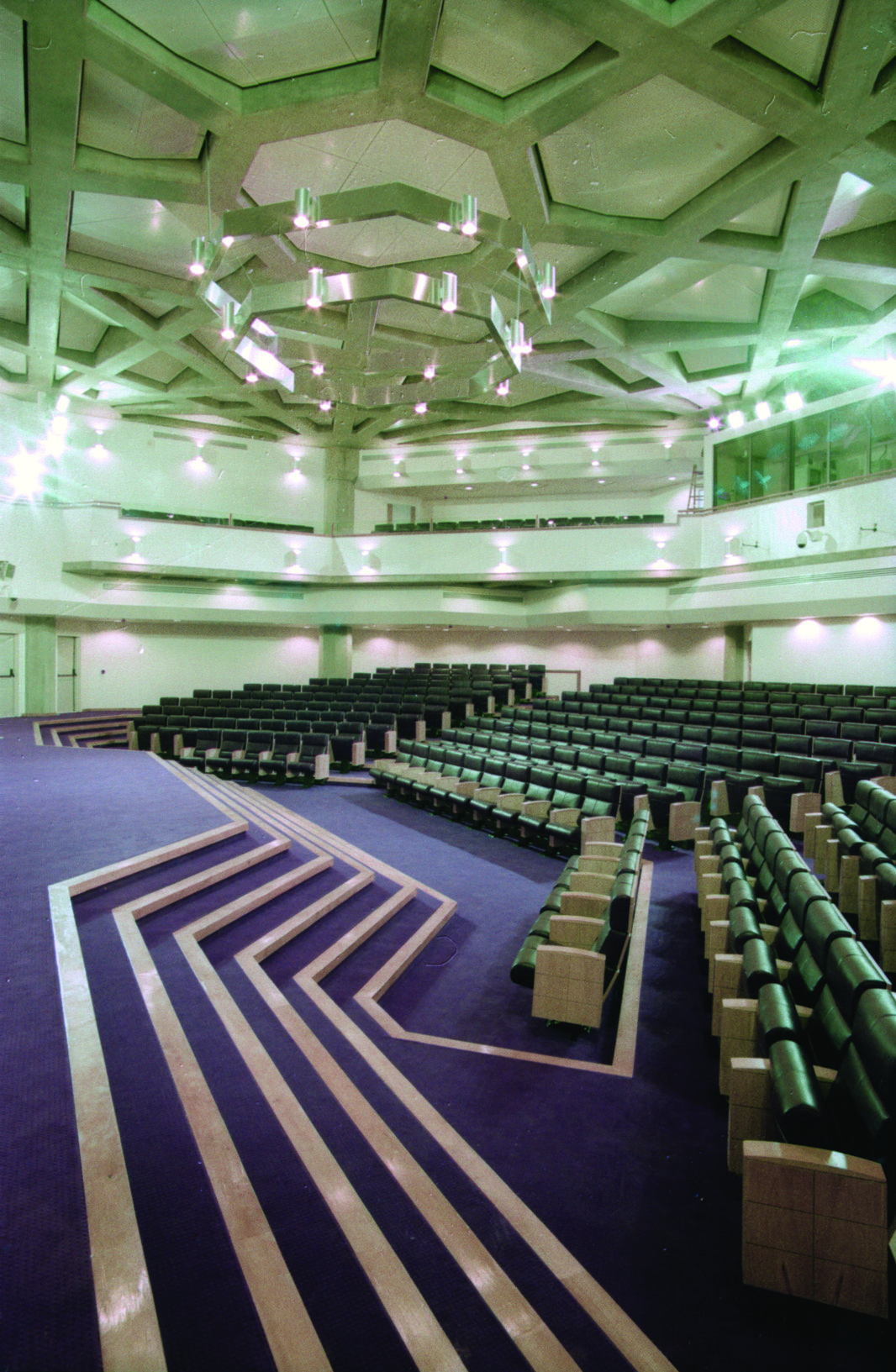
Tehrani: My question to Shariatzadeh was whether he arrived at this form through function, or whether, after seeing the function, he defined it, departed from it, and moved toward architecture. Usually architecture works in this way — that is, function is important, but architecture is judged beyond function, beyond structure and mechanical systems and so forth. A structural element may also be an architectural element, but judgment of an architecture becomes possible only after seeing all these aspects. We discussed this matter with Shariatzadeh in the previous session. But the vast composition of the work is something that inspires apprehension. When a work becomes vast, it has its own composition, and if we intensify these compositions, we have complicated the architect's task. Furthermore, regarding Islamic architecture, I said that if it were up to me, I would transform the section of the library relating to Islam into an interesting focal point, creating a movement within it so that it becomes a focal and noteworthy point, and ultimately such elements are necessary for the architect to draw upon.
Here I wish to state my definitive opinion, with all due apologies to my dear elder Engineer Shariatzadeh: I see this building in a state of decomposition rather than composition. I would by no means have the courage to design such a vast building, and I cannot envision such a volume in architecture. It would have been better if this architecture were divided into multiple libraries with a center, and the other parts surrounded this central element like gems. The other parts, if they are not superfluous additions, are, so to speak, complementary to the ensemble. In general, I have never seen such a vast building volume in a unified composition — though of course they do exist in Iran. The matter that Shariatzadeh has very intelligently raised is the Jame Mosque, but the Jame Mosque is a work with a history of two to three hundred years and has witnessed different architectural periods. In different periods, sections were added to it, and one can see an evolution in the work and the perspectives of its various architects — that is how we observe such a vast area under columns: works of the Seljuk period, the Safavid period, and so on. When Shariatzadeh brought up this example, I understood that he has seen and grasped these matters, that he knows what he is doing. But I cannot digest this work — from the perspective that the entire library building goes under one volume.
I see this building in decomposition, meaning its different sections should be separated and distinguished, and if this separation is not to be volumetric and discrete, it could be composed in some manner so that the whole appears more orderly. But I have not yet seen a work in Iran upon which I could base my judgment. Now, the judgment of the rest lies with the client, the state, its funds, and the design consultant — to build it and see the result. In general, let me make a final point: every work has an outcome, and the outcome of the work is the question of into whose hands it will fall.
Every good architect pays attention neither to the client, nor to the budget, nor to the economic conditions, nor to the political conditions. He thinks about the outcome of the work — who will use that work, who they are, and what we must give them, what scenes of life we should provide for them. We have arrived at the fundamental intellectual essence that consoles us in every era, and this becomes the outcome of the work. Now we must see, in this era in which we live and with the characteristics we consider, with this budget and this investment with which we are building the library, into whose hands it will be entrusted — and it is they we must think about.
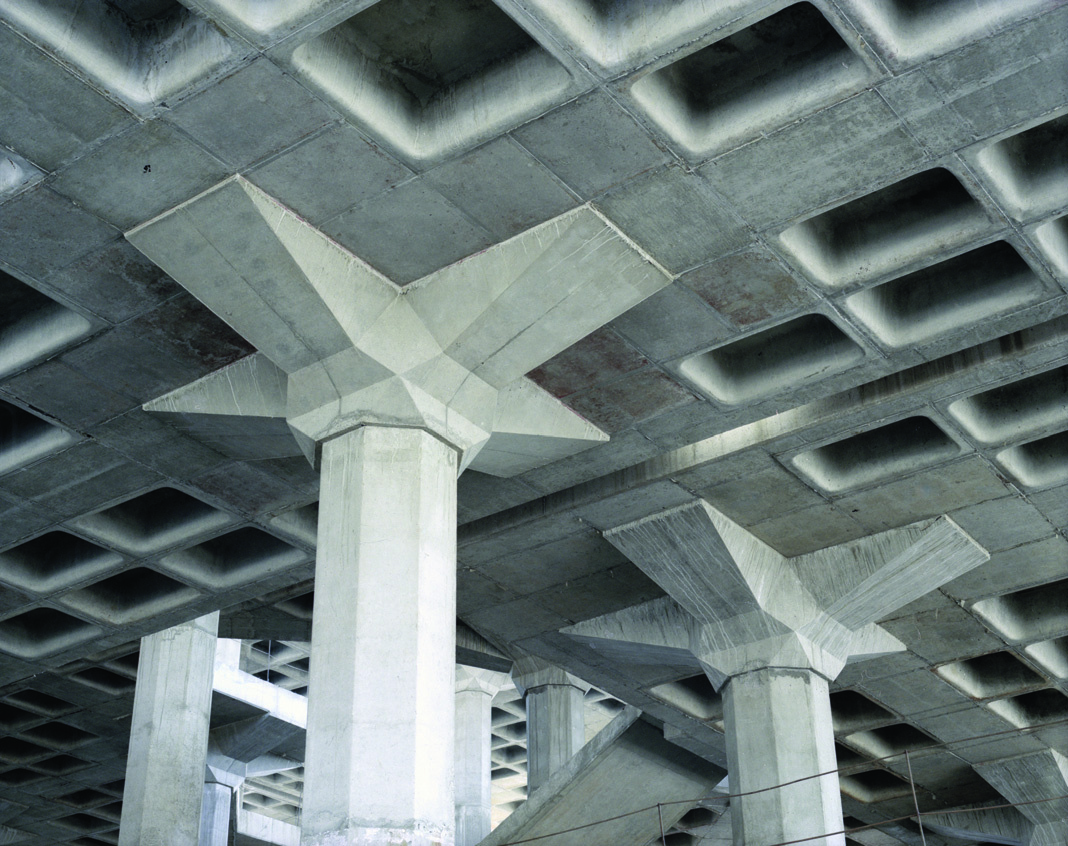
Sheikh Zeinoddin: The point you had been thinking about, which I forgot, is the regular column grid of the design. This design embodies the fundamental idea and thought of any architecture that consists of very simple elements placed beside each other as the principal components. The discipline that we were collectively thinking about is one step ahead of this design. The discipline under discussion is like the four-door hall of the Jame Mosque — it is these very modules. One step beyond this, it produces that volumetric discipline and the resolution of parts and whole. This is not a flaw of the design but rather a design preference. This work is a complete and good ensemble to which everyone is adding their own preferences.
For example, my personal preference would be this: when we have a disciplined intellectual foundation that stems from the discipline of technology and modern architecture, if we take one step further, we will arrive at a volumetric discipline that systematically defines the breaks and interior volumes. The preferences I venture to suggest are not related to the essence of this design, and I am merely expressing my own inclination — like Tehrani, who says he is expressing his own inclination. Tehrani made a statement that I greatly enjoyed, and the core of my thinking is constituted by that very statement. Many frameworks exist for the concept of architecture, but the framework that an architect prefers goes beyond function, beyond title. The framework that each architect constitutes contains his preferred elements — such as identity, such as seeing things large or small, such as decomposing or keeping the design elements together. My point is that Shariatzadeh's work is above such discussions as us wanting to debate its components. The entirety of this design is one step away from the preferences about which we speak. That one step is something that Shariatzadeh himself, who is the master of us all, will prefer. Our discussion is not about architecture. I am merely encouraging Mr. Shariatzadeh toward a kind of beauty that I myself find beautiful and admire.
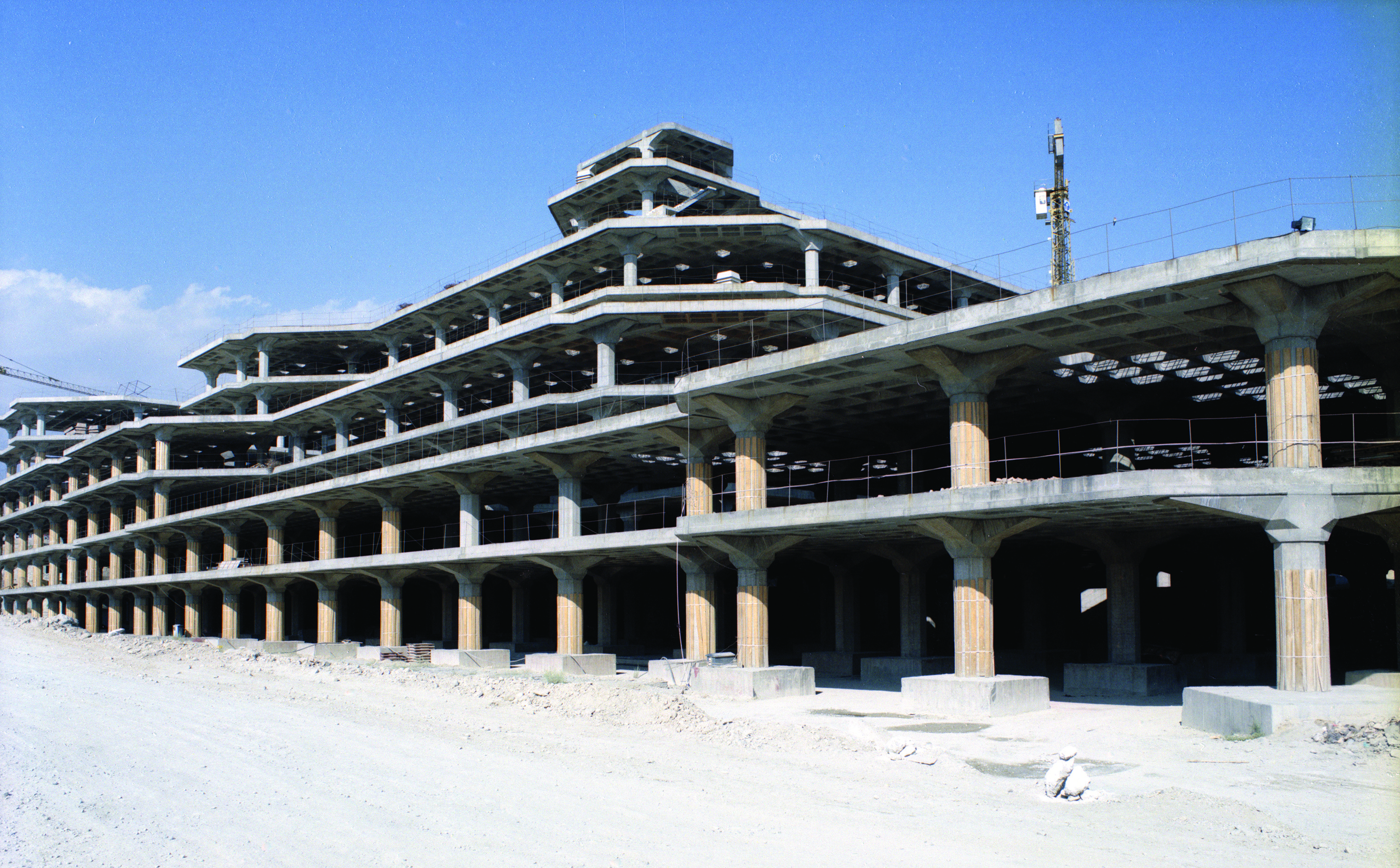
Majlesi: In fact, the question is whether the regular rhythm of the columns could easily have had a smooth facade and, with contemporary architectural techniques such as the works of Rogers, Foster, and others, perhaps moved toward the lightness and transparency that the gentlemen have in mind. But it has a completely different texture, and it is clear that this has been deliberately avoided, while the regular rhythm of the columns has been preserved. I wanted to ask Shariatzadeh: if there was an intentional effort to reduce the monumental aspects of the work, what were you seeking so that the outward expression of this volume would not be imposing and intimidating?
Shariatzadeh: Giving this building an imposing quality is problematic. If there is even a slight deviation, the building becomes forbidding. The volume of the building is very large, and one of my constant preoccupations has been that this building should not become frightening, but rather inviting. A very important point about the project, which Tehrani does not accept but upon which I insist, is that in today's world, you must put aside the notion of programmatic function, or what you yourselves have called circulation or function.
Given the changing values of today's world, we should not emphasize "Iranology" or the elements that were discussed, because these values are transient and in flux. Our world does not accept these matters — especially since the very nature of the library design dictates this, not that we choose not to express it. This very section of Iranology that was under discussion and should be given importance has had about a thousand square meters reduced from its area in the program and has now been placed under the research deputy, whereas previously it was an independent element. Incidents of this kind constantly happen in this library and in every large library, and no definitive or fixed boundary exists. Or, like the Bibliothèque de France with its six blocks — I would never do such a thing. I do not believe in that approach, and it is not the answer to today's architectural questions.
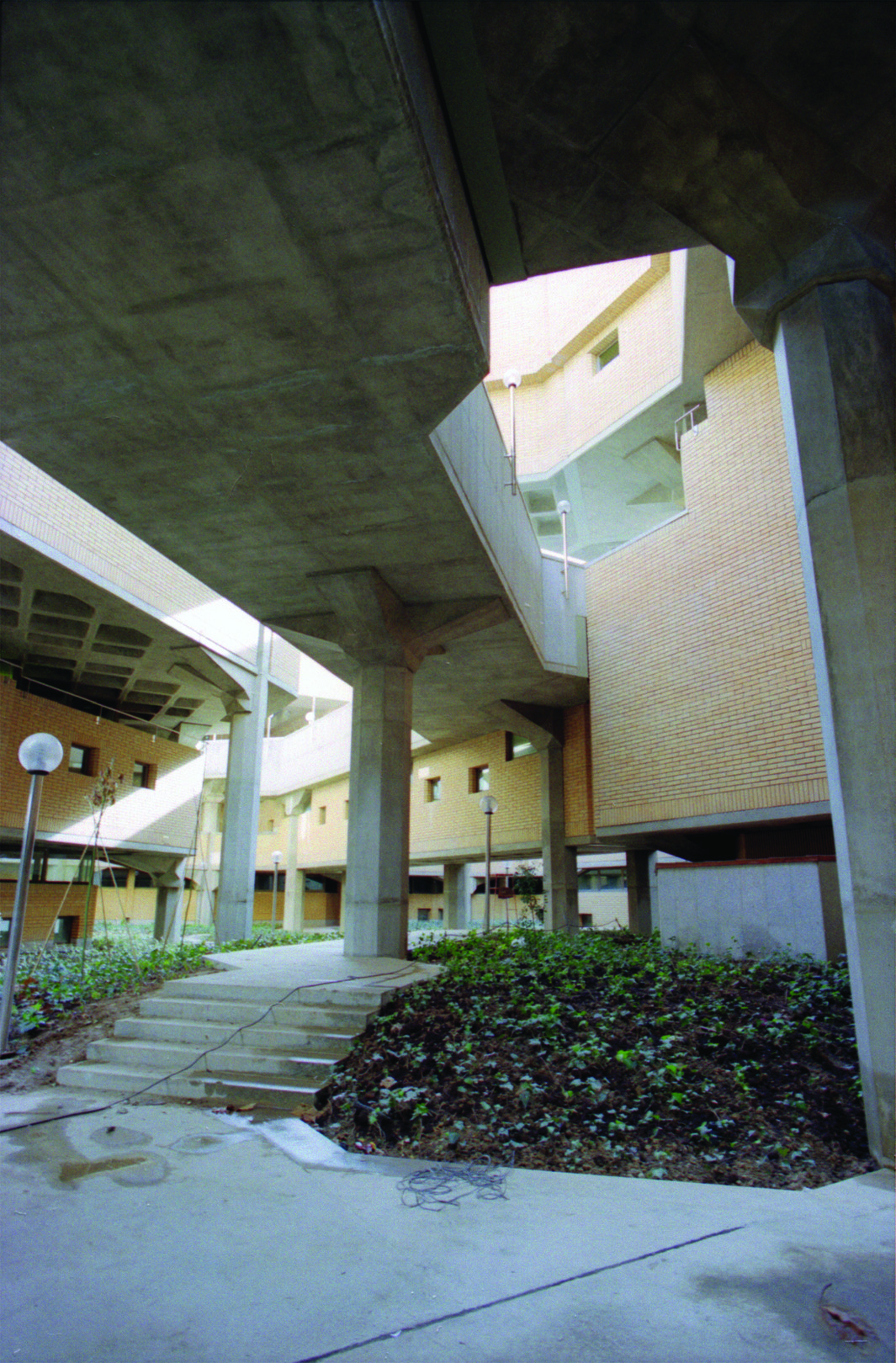
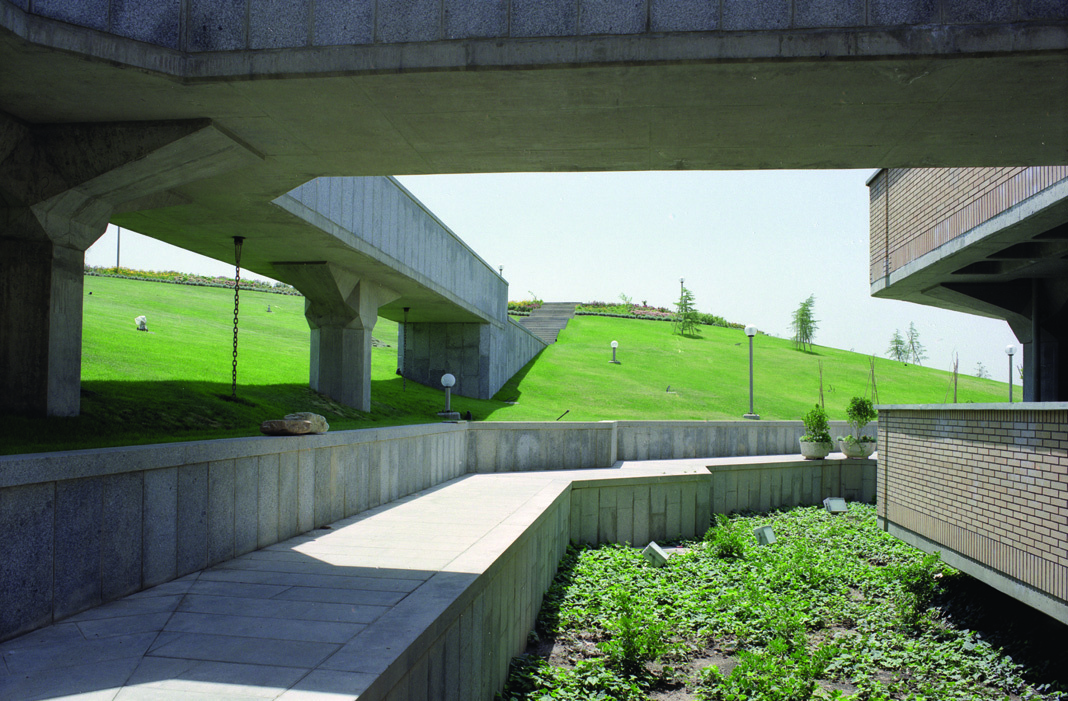
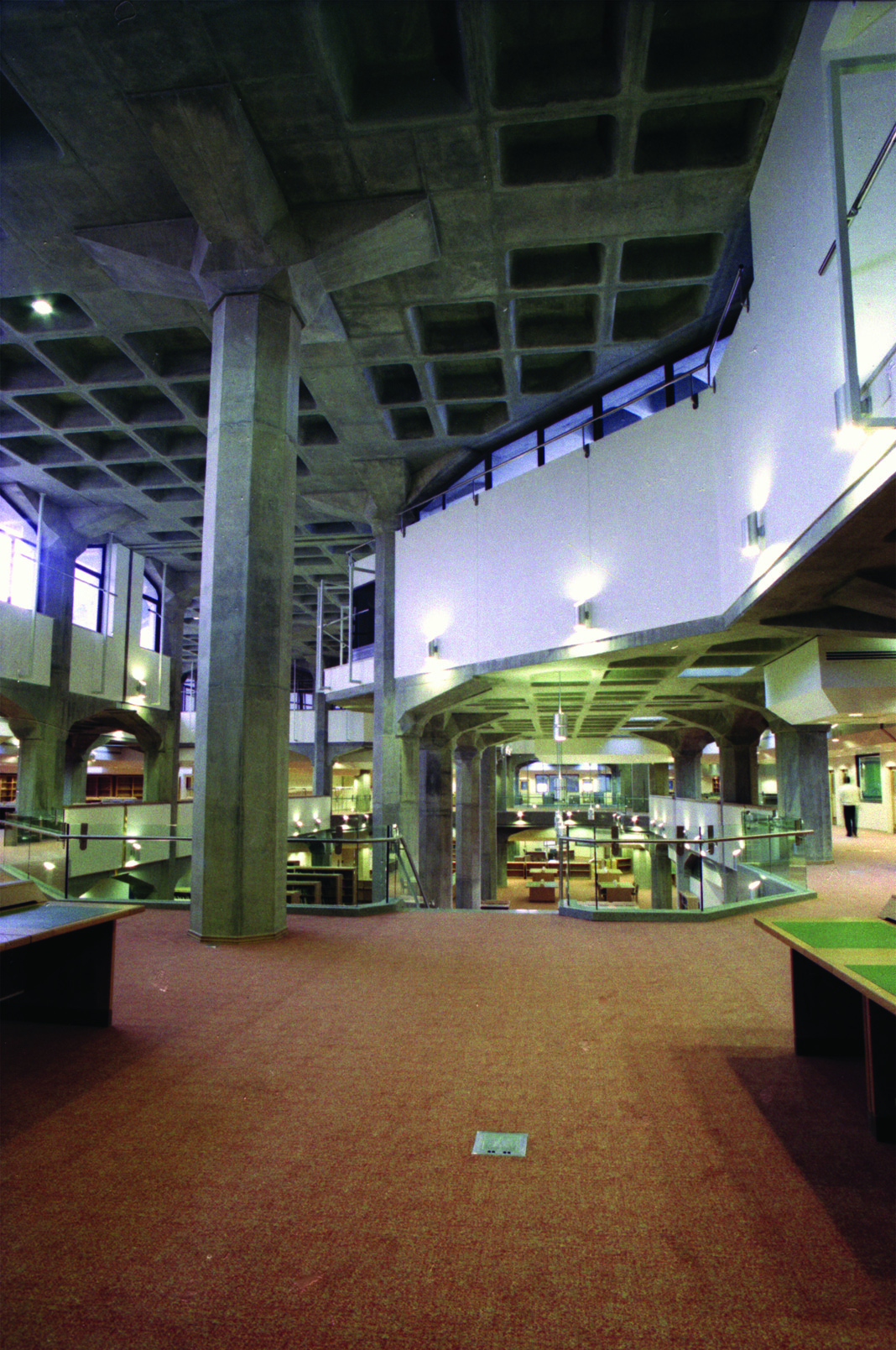
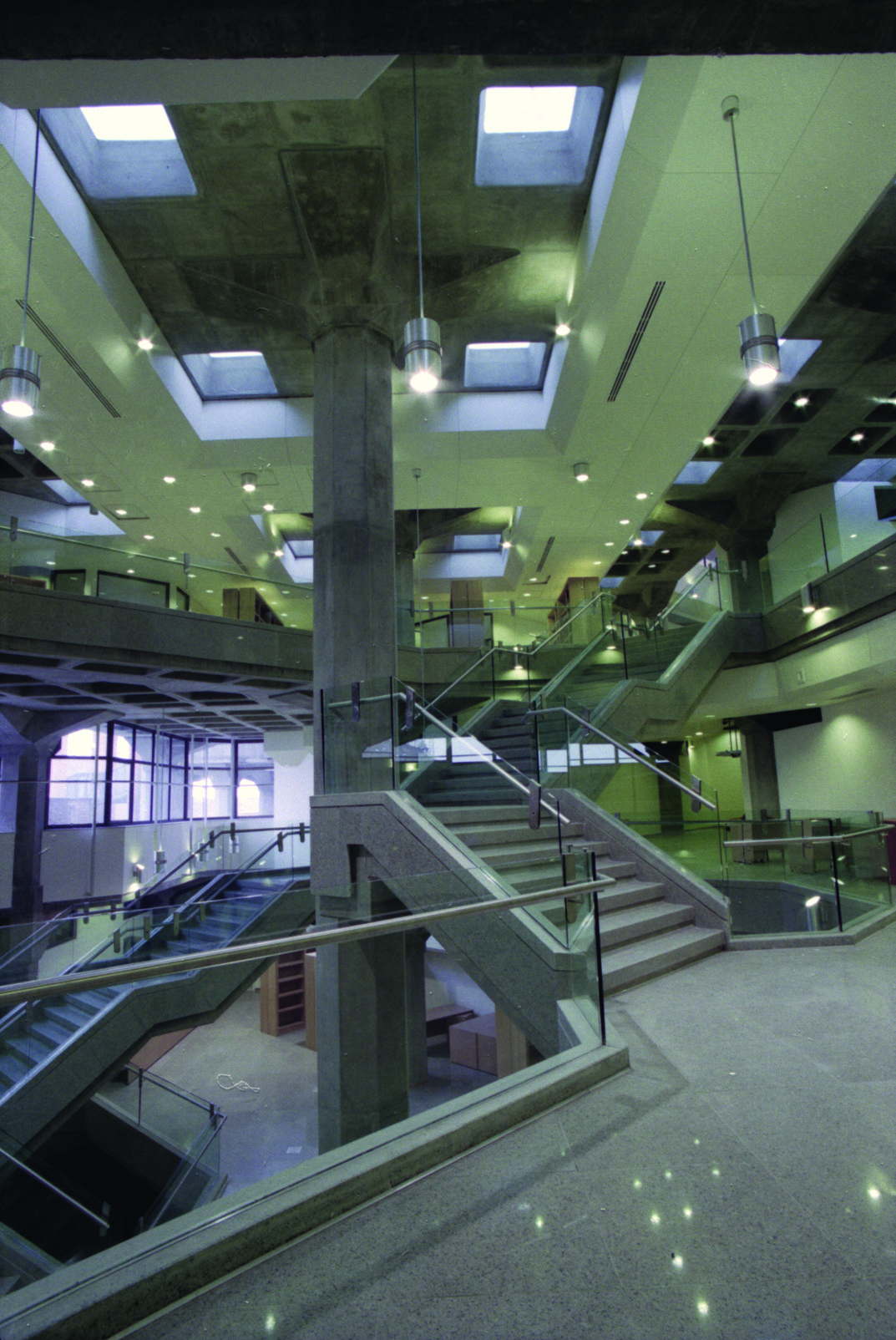
Now, if this building has an extraordinary expanse, it should not be intimidating, and this is a matter that must be confronted. If I previously cited the example of the Jame Mosque, it was not because these vast spaces — the reading halls — are as large as the Jame Mosque, but rather that they are experienced like the Forty-Column halls of the Jame Mosque. In these spaces, one senses the columns, the ceiling, and the light that penetrates from above and from the sides, without sensing the outer boundary of the space. Another matter that was much discussed is the breaks. Just as I believe the building must have a rapport with the earth, I think it must also have a rapport with the street and its surroundings. I want it so that whenever you pass by on the street, you cannot tell whether the street was laid out first or the building was built first, and it should not be apparent which one exists for the sake of the other.
Mr. Majlesi has described the building's footprint as irregular and says I should impose order on the building — which would mean the building quarrels with the ground and the streets. These breaks that you see have the effect that for a passerby approaching and moving around the building, the building either falls within his field of vision or within his cone of sight. The building's dimensions are approximately 200 by 200 meters. The breaks that are visible on the plan, when looking at the drawing, are not the same as what the passerby sees from close proximity to the building. In the previous session, I was explaining to Tehrani that, apart from the irregular shape of the land, the surrounding streets also have unusual slopes and their elevation difference is more than twenty meters. If a passerby looks at the building from a height where the rooftops of certain sections fall within his line of sight, I have pulled those sections back from view; and when his viewing height falls below the roofline, at that point those sections of the building begin to reveal themselves. Such considerations exist in the design, which you might call organic or organismic architecture, or something else entirely.
In any case, in terms of the general idea, I am not one of those form-giving architects who would say I must give the building such and such a shape, like Platonic solids or any other form. On the contrary, I try to be a form-finder — that is, to see what shape and what form this building or this subject wants for itself, which it either discovers on its own or I try to discover for it.
Mirmiran: The point that Shariatzadeh raised is, in my view, the crux of the matter. I said this to make the point that when a work is entrusted to an architect, his hand must be left free, and I very much believe in this. As Shariatzadeh said, he is not a form-giving architect — unlike, say, the Palace of Justice at Chandigarh, where if it had not been a courthouse but a ministry of finance, it would have had the same form. As Le Corbusier said, he created vaults like airplane hangars mixed with Eastern architecture. Shariatzadeh has in fact extracted this form from within the subject itself, not by first conceiving a form in his mind and then forcing the subject into the mold of that form. It is the same view that I pursue, and I think that a definite form must emerge from a theoretical discussion and an architectural creativity, and the building should find its place within it.
I moderate the things I said in the previous session. Those remarks were based on a vision that says every building, before it performs a function, wants to have something to say for all time — like the Pyramids of Egypt or the Pantheon, or the Temple of Deir el-Bahari, or the Acropolis, which in fact, before they want to perform a function, possess something for the future. Or like Le Corbusier's works in Chandigarh. I think this fundamental discussion is at play here. This is the view of Engineer Shariatzadeh himself. Within that view, as he himself says, his work is successful. Now, whether this view is endorsed or another view is preferred is a matter that cannot be commissioned to an architect.
In the discussions of the previous session with Sheikh Zeinoddin, I believe the shared view we had was that this design should have a memorable form, such that if I show this building to my young child and then ask him, "What was the library like?" — just as he could draw the Pyramids of Egypt or the Pantheon for me — he could draw this building for me too. A form that endures for thousands of years and has its own discourse — like Naqsh-e Jahan Square, which possesses a magnificent clarity in its form, or the Jame Mosque, or the dome that is always an eloquent element of mosques.
A point that Shariatzadeh raised very well: I think the existing design has advanced with this vision and is successful.
Sheikh Zeinoddin: I too see this design as successful, but I am trying to tempt Shariatzadeh and add that other idea as well — meaning, beyond the library, another preference that could be considered significant or, as Mirmiran says, memorable, should be added to it. It is not important to me that the design be monumental. I would like it to be disciplined — not monumental — like the courtyard of a Jame Mosque or the courtyard of a mosque. Rather, it should have an important element around which these axes grow. What I am saying is an imposition upon this work, and I am not saying Shariatzadeh should do this, but rather I am expressing my own aspirations. I would like this architecture, beyond its function and whatever form it ultimately takes, to leave a pattern of its own behind. This pattern is so simple and so universal that one cannot say it is being imposed on this design. In 1,400 years of Iranian architecture, we see that a particular pattern is present — like the central courtyard or the four-iwan discipline that exists in caravanserais, mosques, and elsewhere. I have tried to impress this subject upon Shariatzadeh and to ask him and say that this is a worthwhile point. Otherwise, Mirmiran's point is correct: this work, with this system, is a mature and solid piece of architecture.
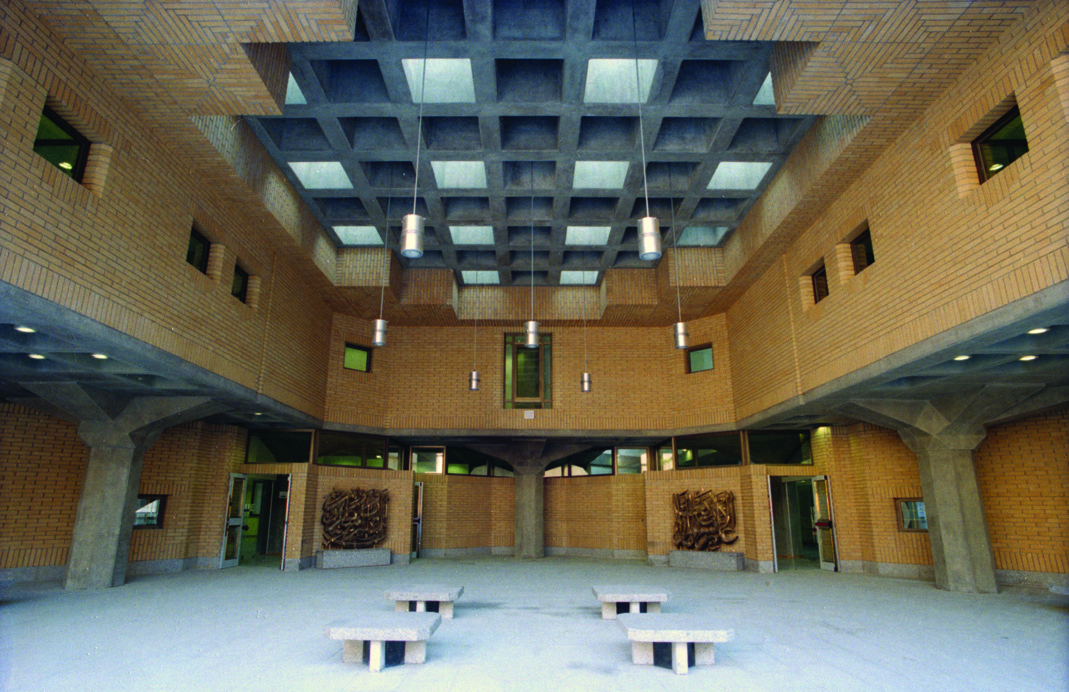
Shariatzadeh: Let me explain this matter: this building is monumental from the inside — perhaps not so much from the outside. That is, these tall ceilings and the entry of light from above, much like the Apadana Palace. But from the outside, it is not so, and perhaps this was my fear — that I did not want it to become imposing. It is a monumental building whose monumentality has been broken and softened from the outside.
Tehrani: Do you think that with this arrangement, the building will not become imposing?
Shariatzadeh: Yes, it will not acquire that unpleasant imposingness. For example, in some sections that have three stories of height, with the mezzanine levels, with the zenithal light and the light from the foreheads, which in your terms are very monumental, these are not expressed on the outside. Because the edges of the building are occupied by offices or small study spaces, whatever monumentality occurs takes place in the heart of the building. And there is also an escape from this monumentality: if you do not like it, you can take refuge in the low spaces beside the windows — much like the composition of tall halls with alcoves.
Majlesi: This matter of form-finding and form-giving that you refer to — is it possible that they meet at some point?
Shariatzadeh: Yes, certainly. These two events cannot be separated, and in any case, both are present, though the weight of one may be greater than the other.
* The text of this discussion was prepared by Engineer Mahmoudreza Mohajerani.
For more information about the National Library of Iran project, refer to Memar Magazine, Issue 29 (2004).



