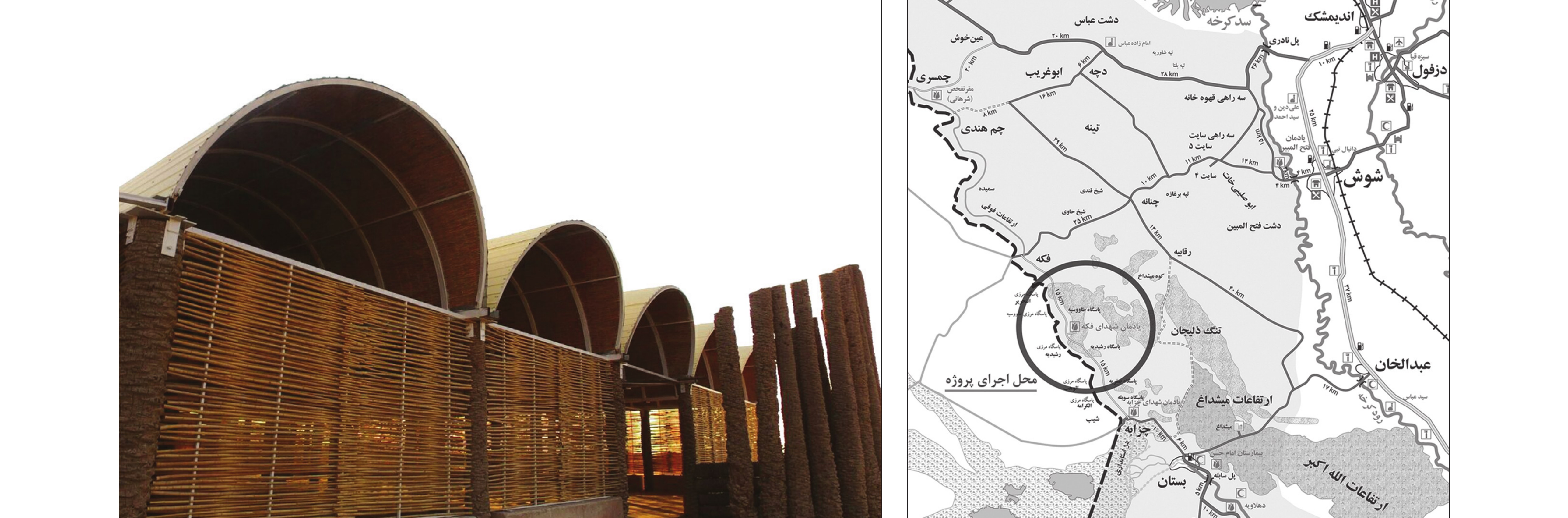
The Fakkeh Martyrs Memorial is located in the general Fakkeh area between the cities of Shush and Bostan — one of the sites visited by Rahian-e Noor pilgrimage caravans and the location of Martyr Avini's death — in a region remote from urban infrastructure and amenities, whose pristine terrain of shifting sands — known locally as "raml" — sets it apart from the other fertile zones of Khuzestan Province.
Given the intensity of the sunlight and heat even during Nowruz, there was a need for a covered space for prayer and temporary rest for visitors.
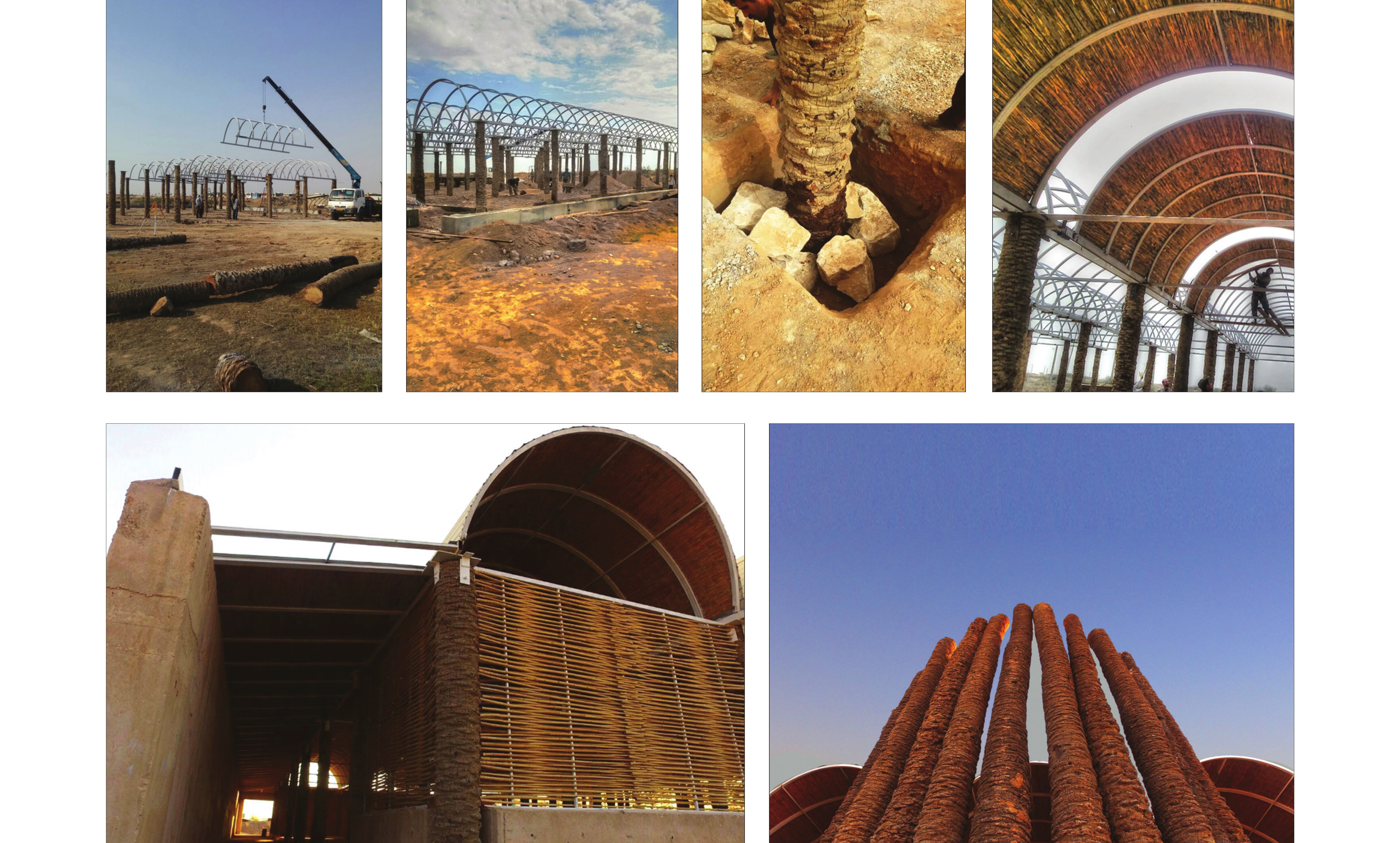
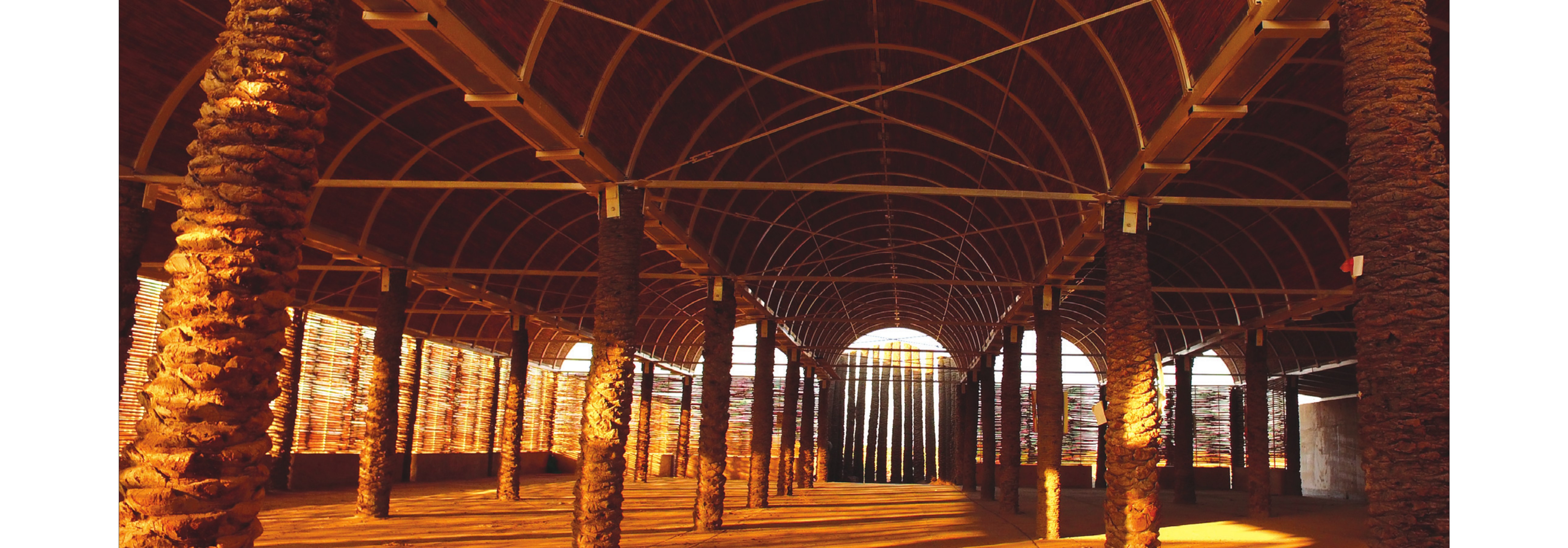
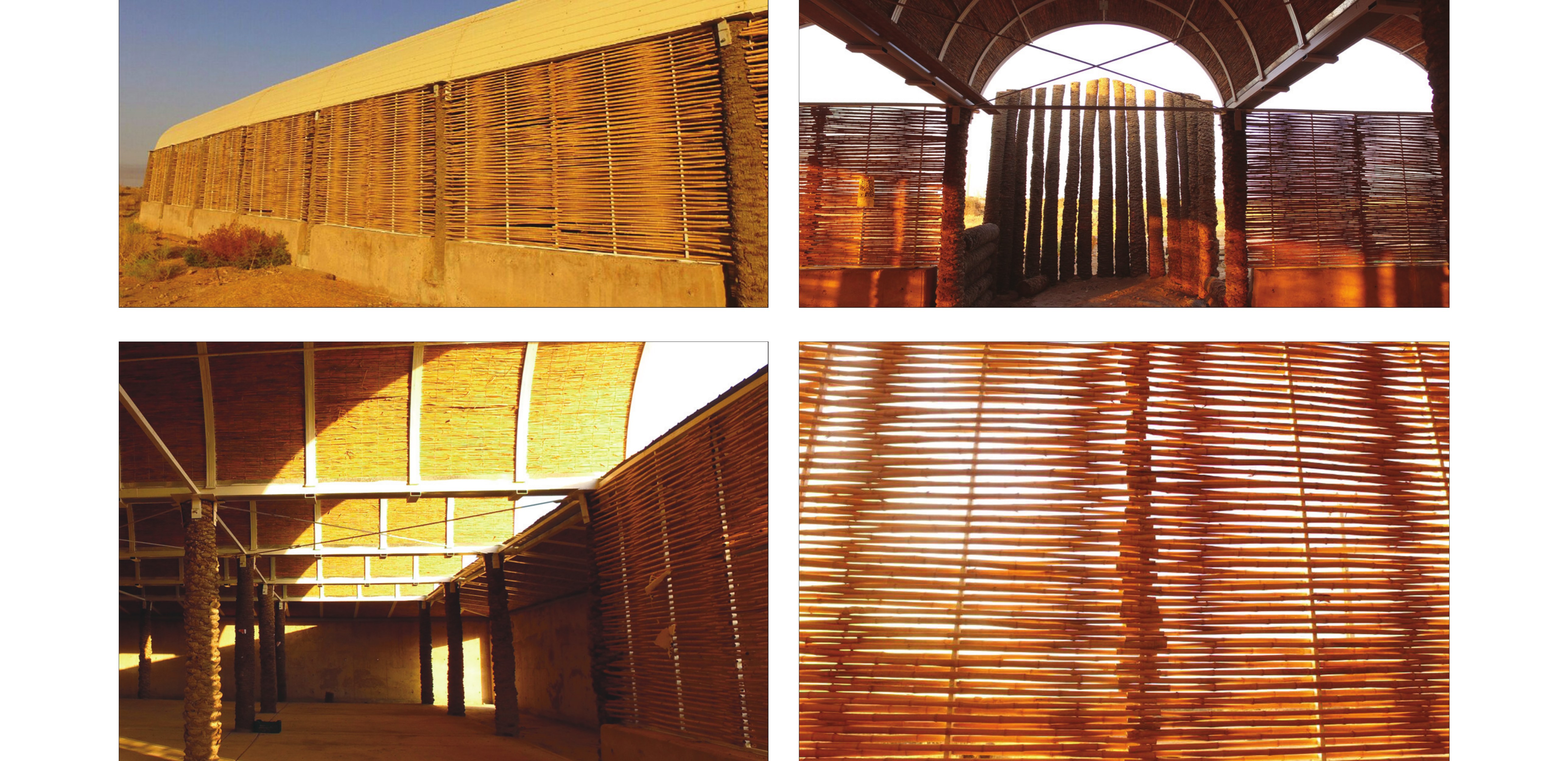
Among the initial patterns and ideas was the construction of a building harmonious with the region's native architecture and materials: the area's ecological structure comprising sand dunes and scattered solitary palm trees, drawing inspiration from the archetype of the Prophet's Mosque, and an ecological and sustainable design utilizing local and indigenous materials — entirely natural and recyclable — including palm tree trunks, clay, and woven reed mats.
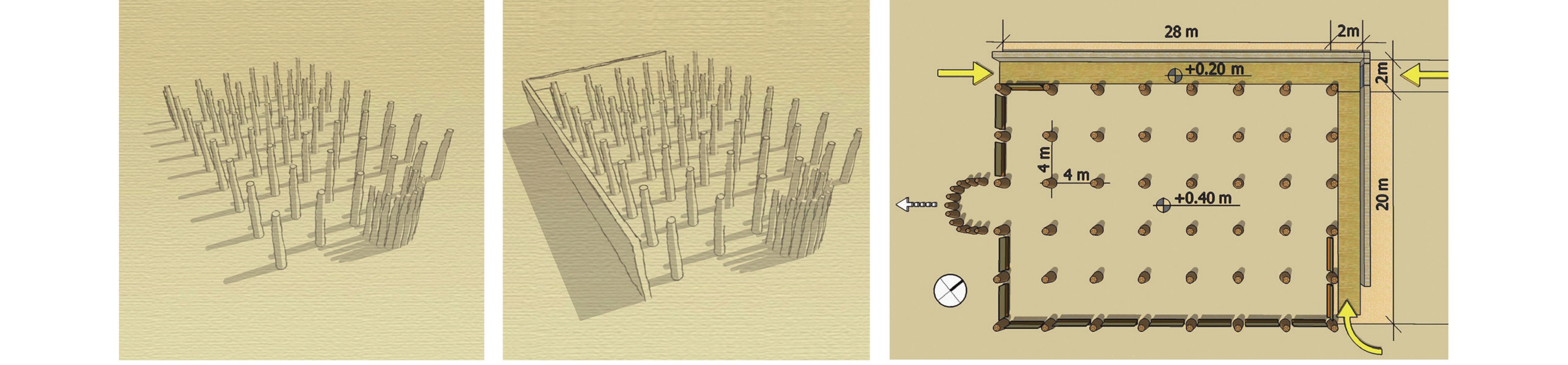
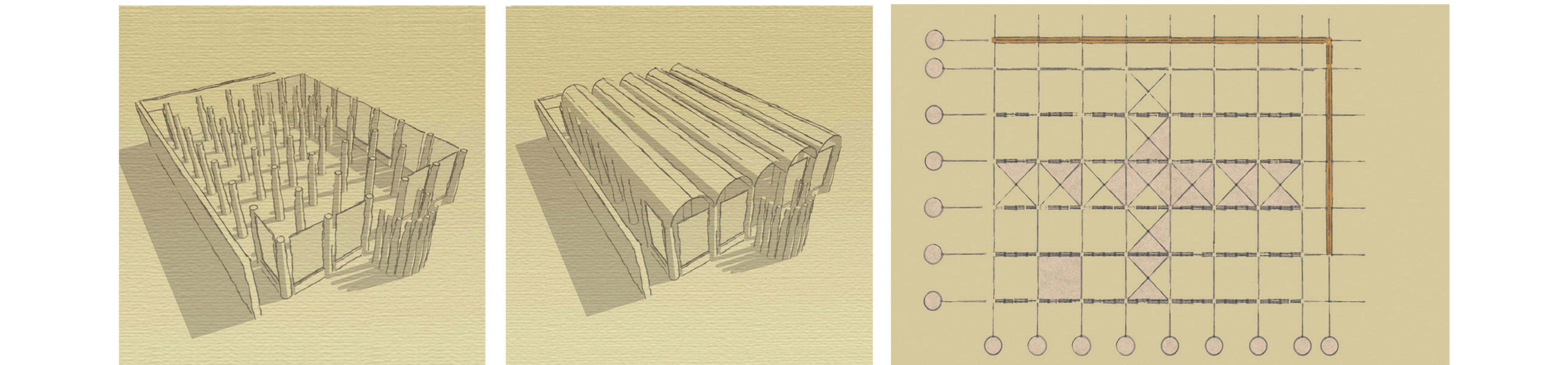
The main nave was constructed using 48 palm trees across 5 carpet-width bays aligned with the qibla (the central bay aligned with the mihrab and two bays on each side symmetrically) and 7 spans per row perpendicular to the qibla, with 4-by-4-meter bays.
A combination of galvanized sheeting matching the environment and industrially woven reed (mat) beneath the roof, using a metal chassis of cold-rolled steel tubes, provides the barrel vault and resists applied loads. Braces or tie rods at column-cap level create a rigid diaphragm to resist lateral loads from the region's severe storms. All loads are transferred to the ground through palm tree trunks serving as load-bearing columns.
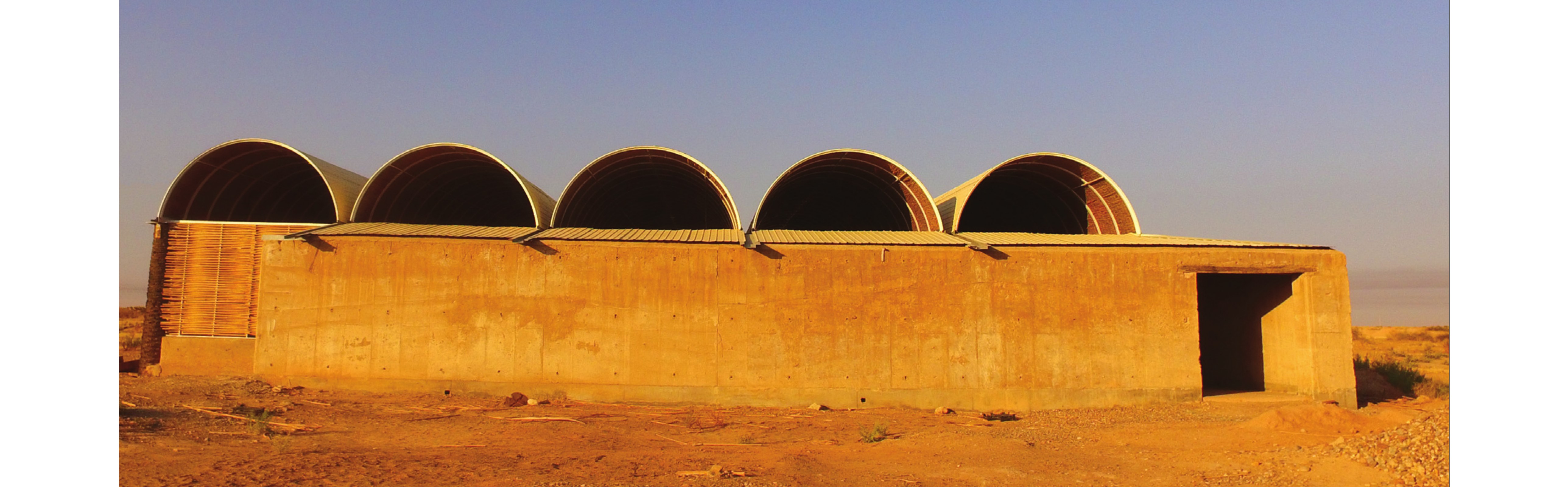
The barrel vaults, in addition to providing better resistance against regional winds, create a visually pleasing beauty and symmetry in the external volume as well as spatial quality within the nave's interior.
The building has a rectangular plan oriented toward the qibla, and two continuous earthen walls built with the rammed-earth technique protect it from disturbing winds (from the west and north). Monolithic earthen walls using the rammed-earth technique had previously been executed only experimentally in Iran, but for the first time in this building they were implemented as part of an actual project. Using earth as the most affordable material and leaving it unfired as brick, in addition to reducing energy consumption in building material production, allows for easy recycling of the spent materials, and its return to nature causes less damage to the environment.
The emphasis on quality and precision in the formwork of this project allowed the wall surfaces to remain exposed.
The barrel vaults of the roof are open at both ends, allowing natural light to illuminate the prayer hall's interior, while wind movement through the vaults provides natural ventilation. Accordingly, no mechanical ventilation systems were planned, which, given the area's remoteness, renders the building independent of external energy supply.