IN THE EMBRACE OF HISTORY
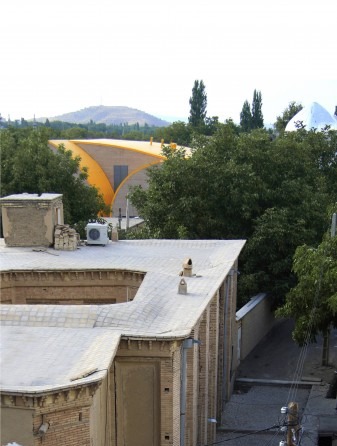
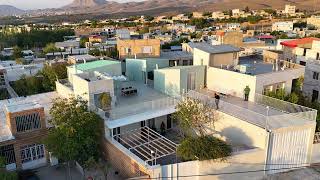
The fact that the habitat sits precisely in a triangle formed by the Timcheh, Reisan Mosque, and Abhari House in Khansar was not the designer's choice, but it was an opportunity that bestowed upon the project and its residents the experience of living within an aged historic fabric. If we consider orphan girls among the most vulnerable segments of society, history becomes their family — it provides their security, becomes their past, and connects them to ancestors they never had. All of this, however, happens only when we do not force their minority status into the eyes of the old physical fabric.
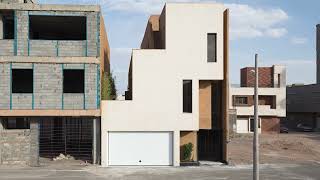
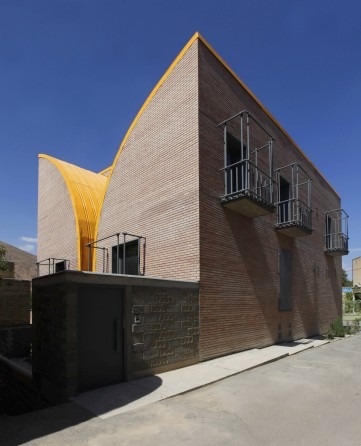
The brick facade was mandated, but the building's appearance is designed not to stand out. A calm, catholic approach, so that the opportunity and grounds for gradually implementing today's principles are provided. So that a passerby does not quicken their step from the shock of difference. The mere fact that the house is a home for orphan girls is apparently enough for neighbors to take a stance; let us not sharpen the angle with architecture. Rather, the habitat building, when approached and when glimpsed from within the fabric, evokes vitality and abstraction in the complicated and conservative minds of the small town.
WRESTLING WITH SMALL-TOWN IDEOLOGICAL COMPLEXITIES
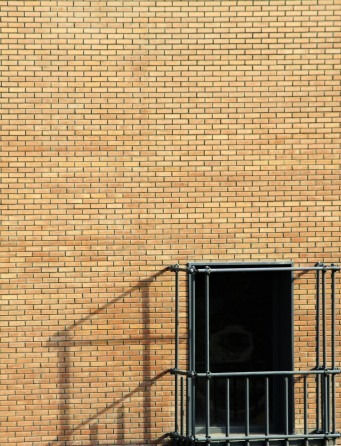
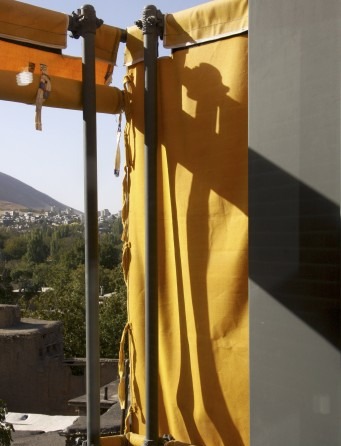
They say the foundation of Aikido martial art is not based on attack, but on using the opponent's energy and movement, inspired by the nature of things and their means of confrontation — which is neither forceful, nor aggressive, nor humiliating. It is about turning threats into opportunities. The physical and compulsory introversion stemming not only from the project context but from the nature of the habitat's users has been turned into an opportunity in this project. The building's protruding balconies, which synchronize with the town's calendar and religious rituals, are also an exercise in voluntary modesty. Their presence or absence is at the girls' will. In a humanistic way, attuned to her understanding of herself and her surrounding world. It is also a dialogue for modernizing tradition and the project context — to show people to be current with the calendar, like a clock. An example of respectful and moderate engagement with everything that cannot be changed by a single project, but where one can adopt a gradual strategy and open apertures. Apertures from the introverted and complex world of the context and nature of the project, to the outside world — to where the orphan girls are slowly learning how to live, to honor and be honored.
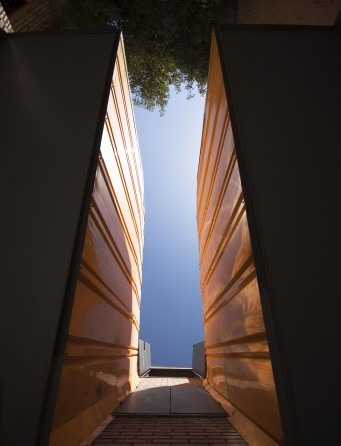
This is how the balcony coverings calibrate themselves with the town's religious timeline: during mourning periods they turn black, during religious festivals they become joyful, orange, and cheerful; during New Year house-cleaning, they become carpet-drying racks; and if the girls wish, instead of curtains during celebrations, they become festooned with string lights — why not?
SINCERITY IN EXECUTION
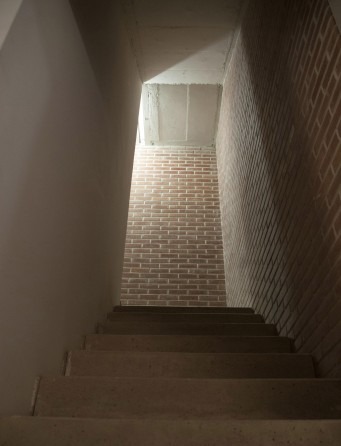
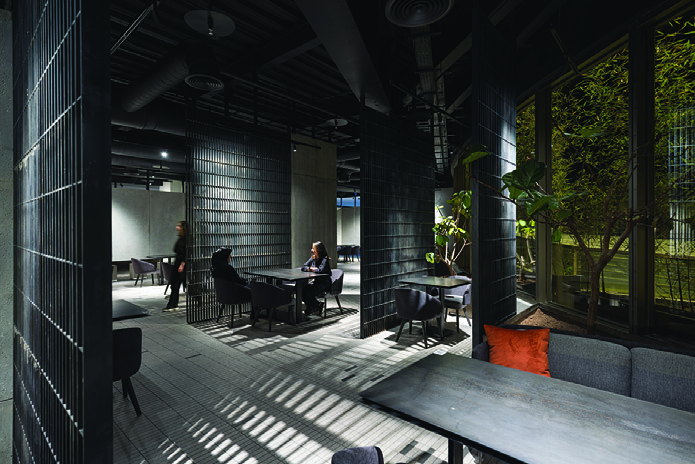
One of the betrayals of our historical introversion is that our exterior and interior differ. We leave the outer facade with the same brick, even unpointed, and adorn the interior with plaster and paint and ornament. In this project, the principle was avoiding hypocrisy in execution. The client wanted fast execution at low cost. We were compelled to make changes in construction technology. We eliminated finishing work — the final floor covering was the same concrete that had built the floor. The baseboards were the same stone upon which the wall stood, and the final wall covering, inside and out, was the same brick that had built the wall.
The designer's share in the project's charitable nature was meticulous selection of construction technology so that not only was the project executed at a dramatically lower cost than comparable projects, but maintenance costs were also minimized. For this reason, all ceilings became suspended and organized wall ducts were planned throughout the spaces so that electrical and mechanical systems within them would be easily accessible.
HOUSE AND IMAGINATION
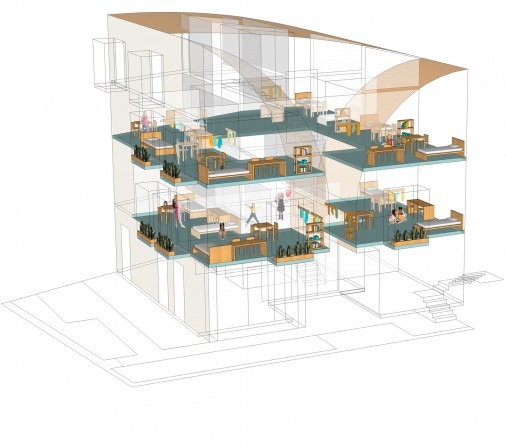
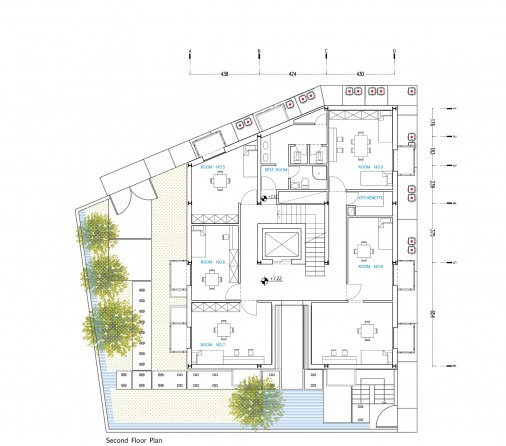
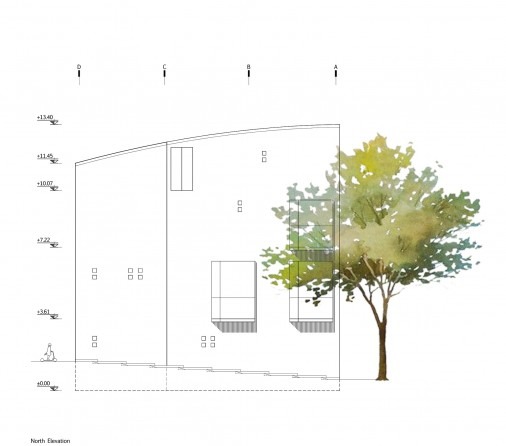
The residents of the girls' habitat are deprived of many ordinary things city dwellers have. We tried to establish a balance between what they have and what they lack. We made the interior architecture of the complex imaginative. We incorporated arches and open sky and courtyards — small but not humble — into the design. An arrangement of light and shadow and water and details and brick and imagination. We gradually steered the dormitory toward becoming a home. We respected each individual, their personal space and solitude. We arranged their communal spaces across different height levels, from bottom to top: public to private. We dedicated the building's central core to the communication hub at two levels: the building's communication center and the residents' communication center. We harmonized the rise and geometry of the arches with the project site's hillside topography.