Contemporary Architecture

Hanna House, Tehran

Navid Nasrollahzadeh·Photos: Ashkan Yadolahi, Leili Amooshahi·Memar 142 — 23rd Memar Award
Hanna House, Tehran

Project Information

Location: Dolat Street, Ne'mati Street, Mehrizi Dead-End, No. 9, Tehran

Client: Amir Mirshemirani

Design & Supervision: Navid Nasrollahzadeh

Construction: Amir Mirshemirani

Structure: Hamid Hoseini

Electrical: Mehrdad Hamidian · Mechanical: Ali Agheli

Graphic Design: Leili Amooshahi

Photography: Ashkan Yadolahi, Leili Amooshahi

Total Built Area: 248 m² · Land Area: 101 m²

◆ ◆ ◆

Today, urban life has drifted toward dwelling in apartments severed from nature — units that have sacrificed many of the qualities of a living space. Hanna House is an experiment in creating a home in dialogue with light and nature, one that, despite occupying a small plot, can offer its residents a pleasant living experience.

Initially, the client intended, with an economic motive, to build a two- or three-unit apartment on a one-hundred-square-meter lot measuring 5 by 20 meters, within the dense historic subdivisions of the Dolat Street neighborhood in Tehran. After surveying the site and the project's context, the idea of building an independent house — one that, through the vertical stacking of its sections, could generate a dynamic spatial and visual variety — was proposed to the client. Ultimately, with the client's agreement, the design of a house for his own residence was set in motion. In the end, the house even borrowed its name from one of its smallest inhabitants! A name that also bore an affinity with the color of the house.
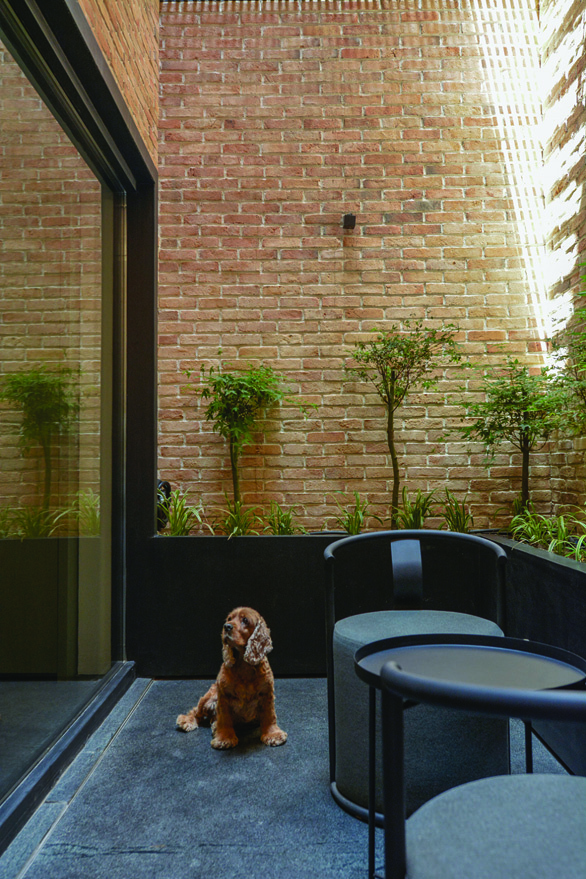
A cocker spaniel dog named Hanna sits in the brick-walled courtyard lightwell, surrounded by green plants and modern furniture
Hanna — the house's namesake — in the brick-clad courtyard lightwell

The elongated shape and narrow width of the lot, enclosed on three sides, led the house to pull away from its northern neighbor, allowing light and fresh air to reach a greater number of spaces. By incorporating the vertical circulation at its center, the arrangement of spaces was strengthened to achieve the best possible access to light.
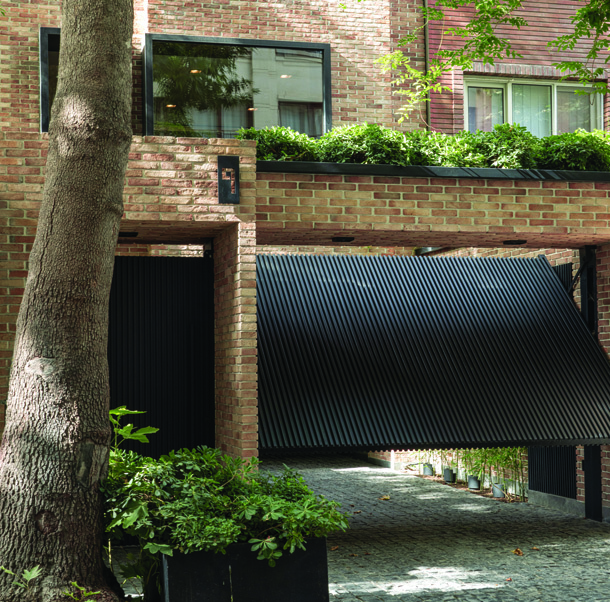
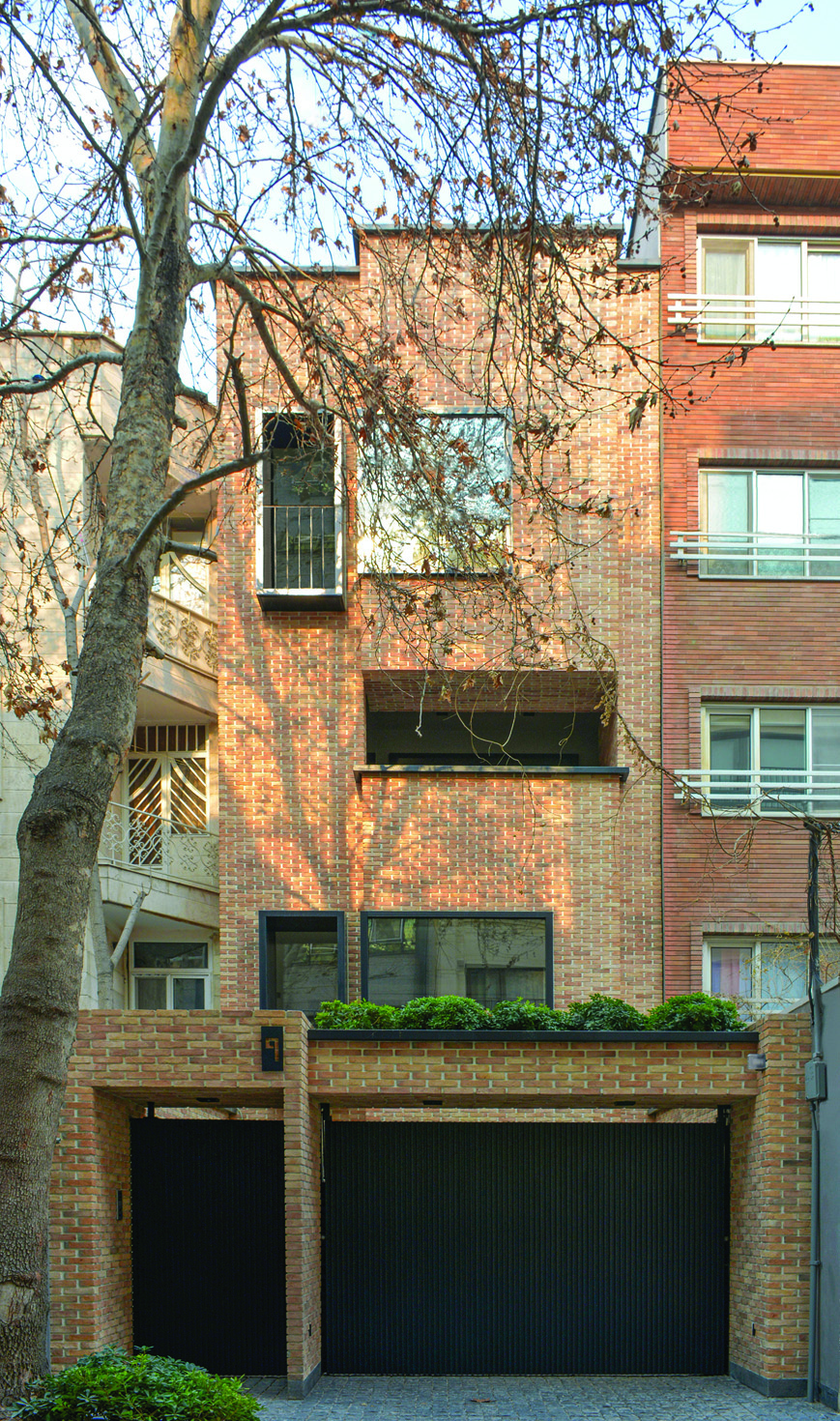
Street-level view of Hanna House showing the brick facade, metal parking gate, green planter above, and protruding window bays on upper floors
The street-level entrance with parking gate and the green planter band above
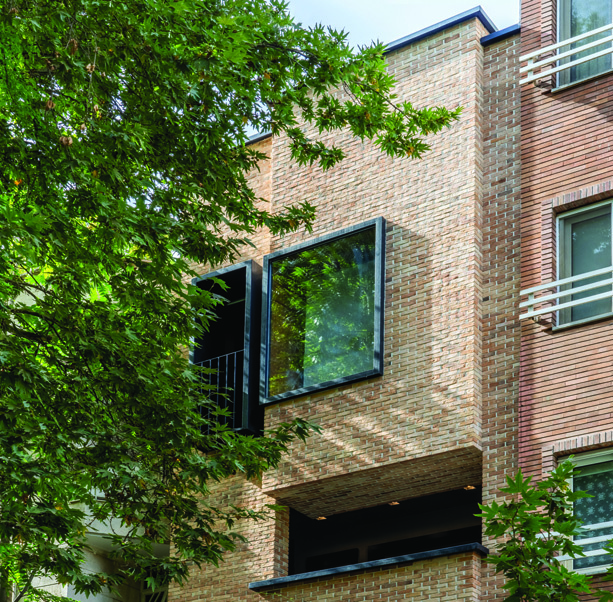
Close-up of the upper facade showing a protruding glass window bay framed in dark metal against the warm brick wall, with tree foliage in foreground
Protruding window bay — glass framed in dark metal against warm brick

Upon encountering the house, the combination of brick's warm temperament with the building's simple volumes promises a warm and intimate environment. The windows appear on the exterior structure with simplicity alongside the brick, allowing the primary material to assert itself. The house also employs small, handmade colored ceramic tiles and wood to reinforce the sense of dwelling and its bond with memories.
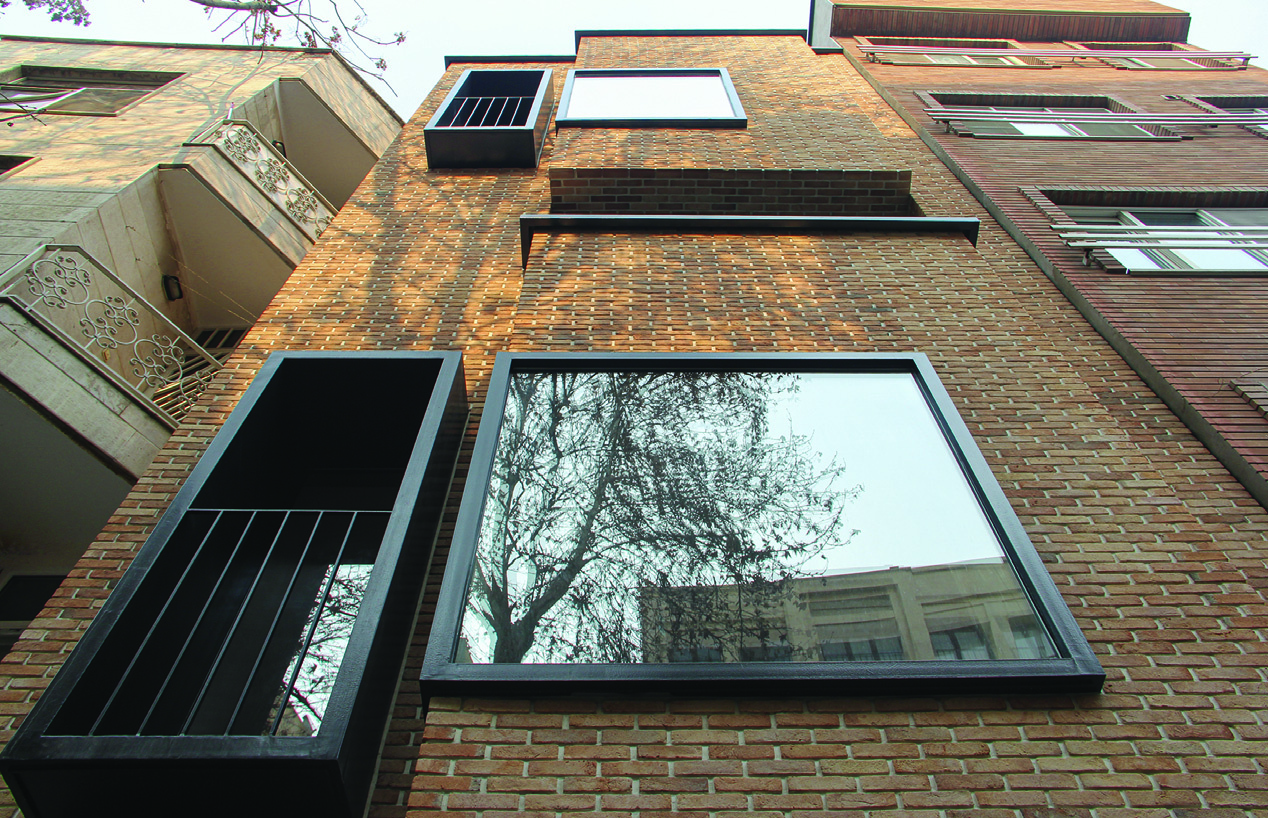
Low-angle view looking up at the brick facade showing asymmetric window openings, a protruding glass bay, and metal balcony railings against an overcast sky
Looking up at the facade — asymmetric openings and protruding volumes animate the brick surface
Light and Vertical Circulation

A brick wall that extends from the lowest level of the house to the brick parapets of the roof — making the connection between the project's exterior and interior more pronounced — has become the backdrop for the staircase. The light that falls through the glass ceiling of the stairwell onto this wall adds the play of light and time to the space.
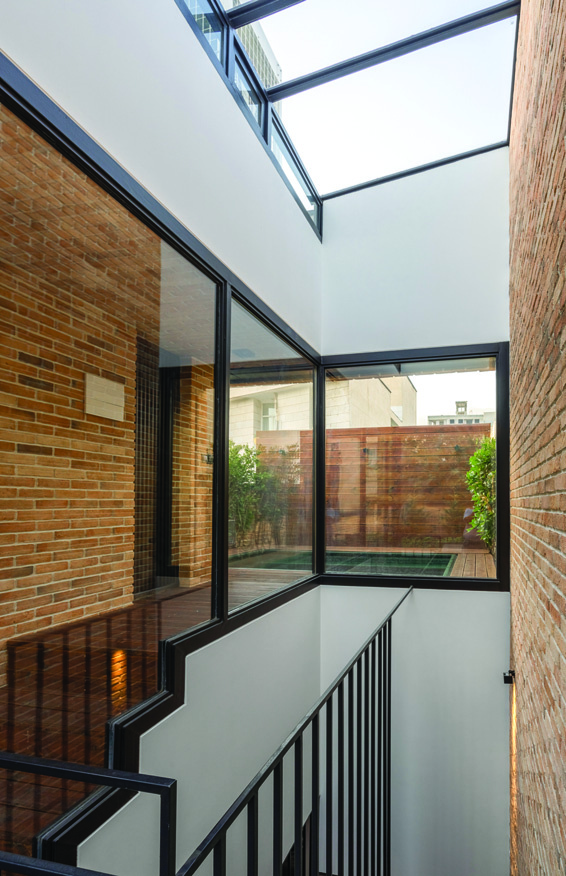
Interior view of the stairwell with a glass ceiling skylight flooding light onto brick walls, metal railings, and a view through to the backyard garden
The stairwell — glass ceiling bathes the continuous brick wall in natural light, connecting all levels vertically
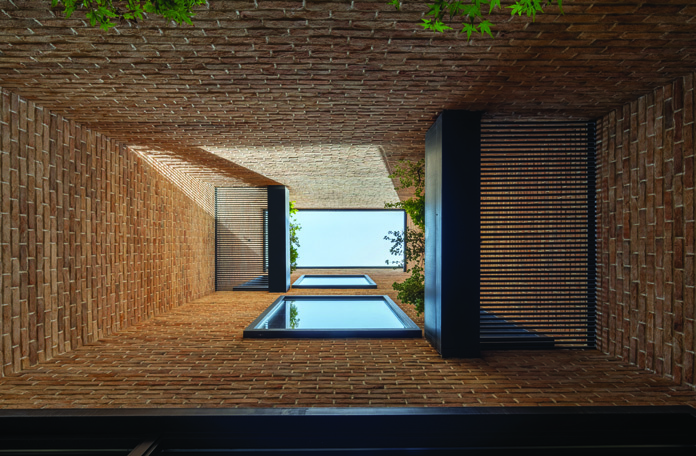
View looking up through the brick-clad lightwell showing a vaulted brick ceiling, glass floor panels, and wooden privacy screens admitting dappled light
Looking up through the lightwell — brick vault, glass floor panels, and wooden screens filter light into the depths of the house

The lightwell of the house, also clad in brick, accommodates two terraces and a suspended metal planter box, which, while permitting light to pass through, provide an opportunity for dialogue between the interior and exterior spaces of the home. The terraces take other forms in the facade as well. Two metal frames offer small spaces for the residents to connect with the outside environment, while a more expansive terrace links the living room with the large plane tree adjacent to the house.

◆ ◆ ◆
Interior Spaces

The kitchen, to accommodate the dining space within itself, conceals its cabinetry behind seamless doors whose green color keeps company with the plants of the courtyard.
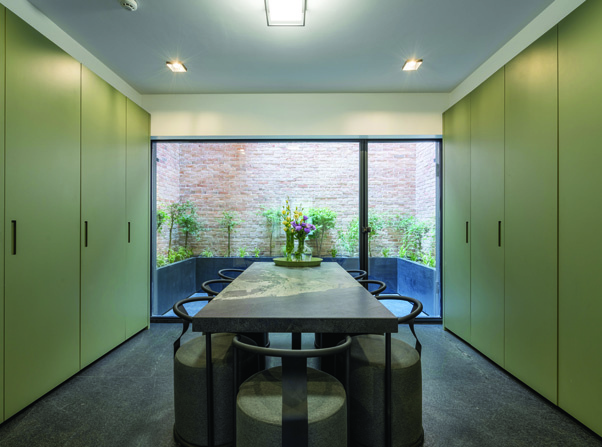
The kitchen-dining room with sage green seamless cabinet doors, a dark marble dining table, and a large window opening to the planted courtyard with brick walls
The kitchen-dining room — sage green cabinets echo the courtyard greenery glimpsed through the full-width window
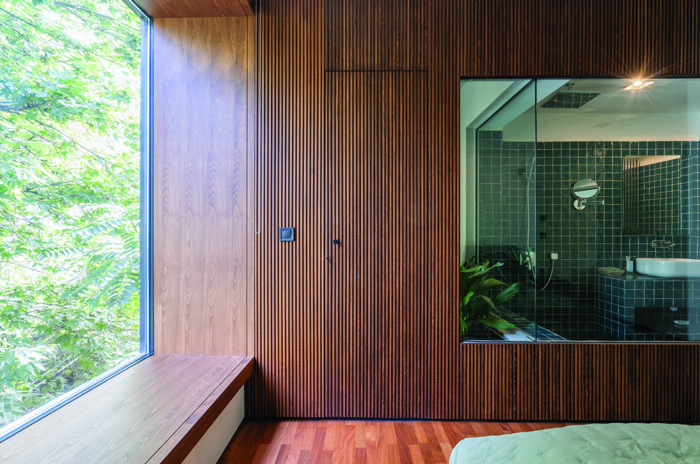
The master bedroom featuring warm wood slat wall paneling, a large window overlooking tree canopy, and a glass partition revealing the green-tiled bathroom beyond
Master bedroom — wood paneling, tree-canopy view, and glass partition to the bathroom
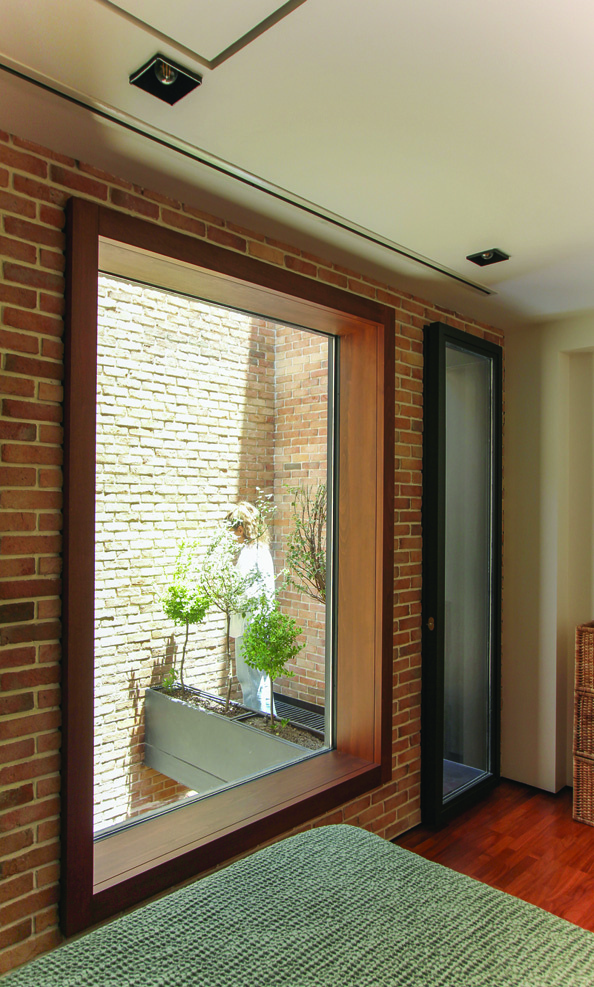
A bedroom with a large wood-framed window looking into the brick lightwell with planted greenery, beside a glass door to adjacent space
Bedroom opening onto the lightwell — brick and greenery frame the view
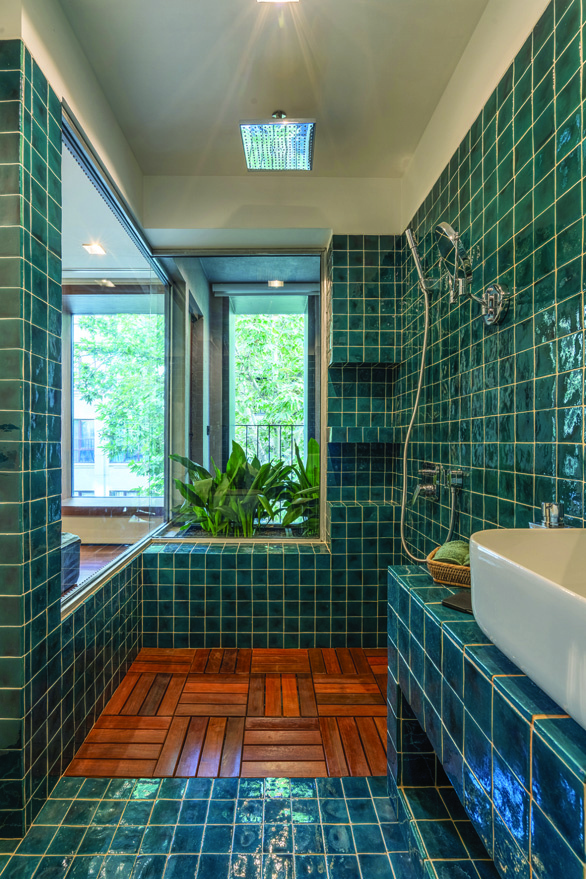
Bathroom clad in deep green handmade ceramic tiles with warm wood plank flooring, a rain shower, and a window opening to lush garden greenery
The bathroom — handmade green ceramic tiles, wooden floor, and an opening to garden greenery
Roof and Outdoor Spaces

On its roof and in its yard, the house forms a composition of open, closed, and semi-open intermediary spaces so that — particularly on the roof — moving between these sections enables the residents to experience a variety of sensations. The brick cladding of surfaces preserves the house's coherence throughout this movement, and the transparent ceiling and walls of the stairwell connect the interior space to the outside.
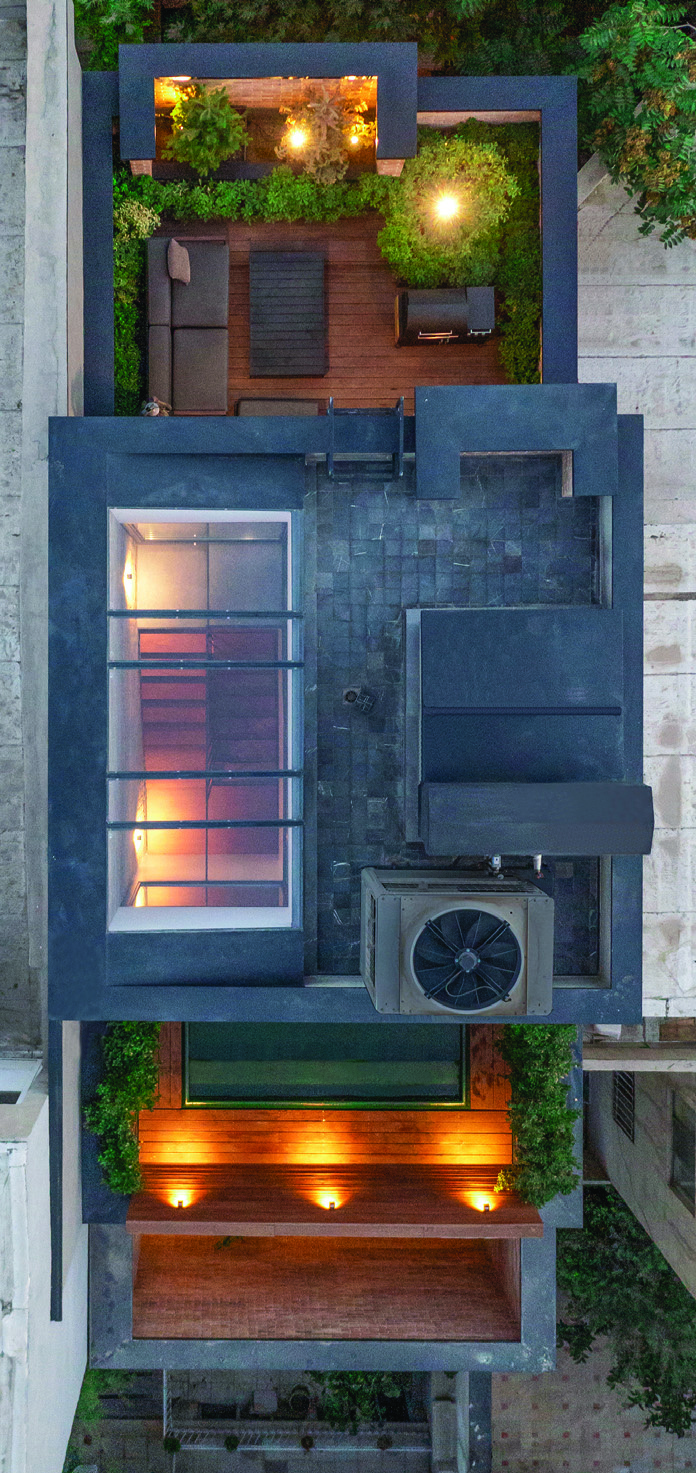
Aerial night view of the rooftop showing a wooden-deck terrace with lounge seating, a large skylight glowing warmly, and planted greenery along the edges
Aerial night view of the rooftop — lounge terrace, glowing skylight, and green edges
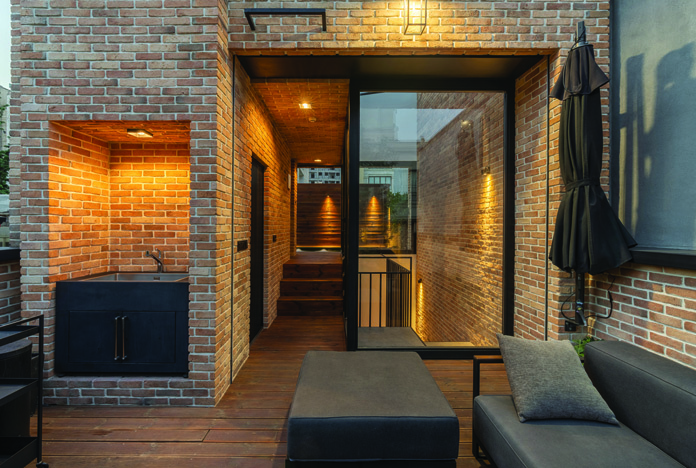
The roof terrace at dusk with warm lighting, a built-in BBQ area recessed into brick wall, outdoor sofa, and a glass door leading to the stairwell
Roof terrace at dusk — brick BBQ niche, seating area, and the stairwell beyond
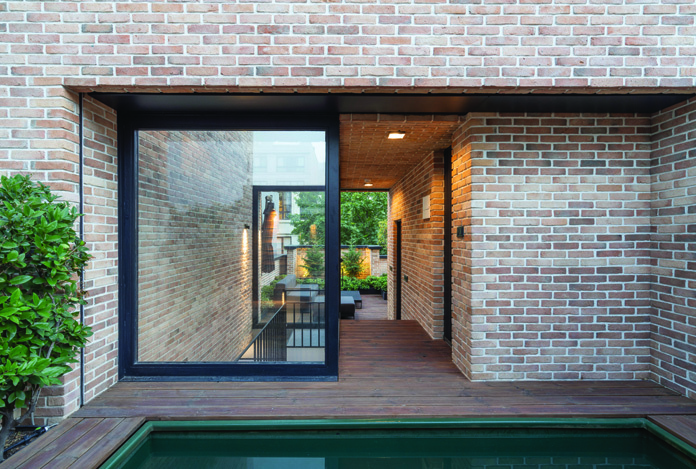
The rooftop pool area with a small green-tiled pool beside a wooden deck, a large glass sliding door revealing the interior, and brick walls surrounding
Rooftop pool and deck — brick, wood, and water in a private enclosure

In the northern part of the roof, a small pool and jacuzzi are situated, which, with plant cover and a wooden screen wall, secure their own privacy. In its openness toward light, the house extends its arms generously, and the proportions of the windows are shaped so that the building's limited spaces, in conjunction with expansive single-pane glass, extend into the outdoor spaces, while simultaneously creating a substrate for the exchange of greenery between inside and out. These large windows make use of small terraces beside them for cleaning access, and furthermore, with parapets of appropriate height, they enable the formation of seating ledges alongside.
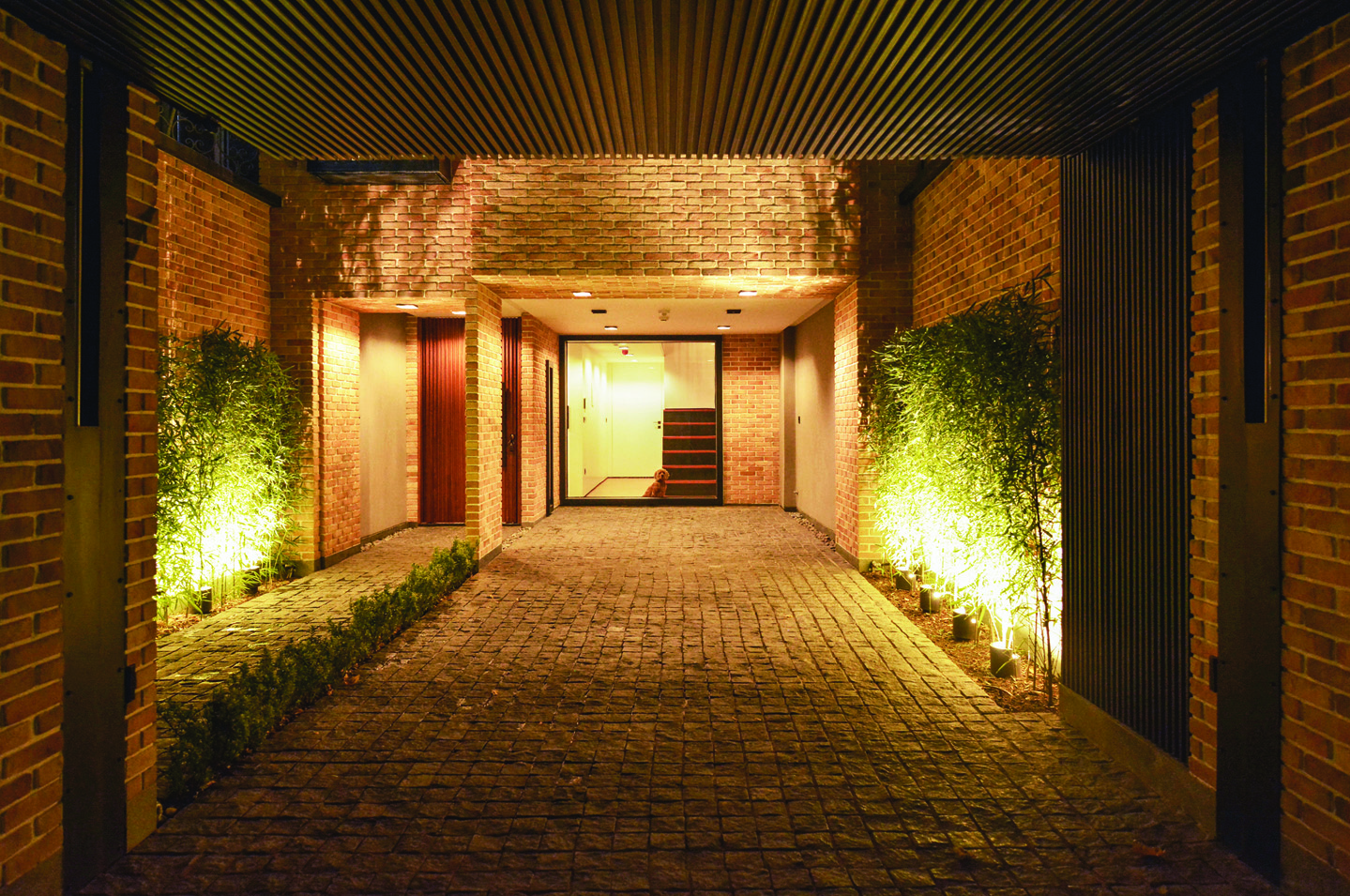
Night view of the entrance walkway — warm uplighting on brick walls, cobblestone path, and bamboo plants leading to the illuminated glass front door
The entrance at night — brick, cobblestone, and bamboo under warm light
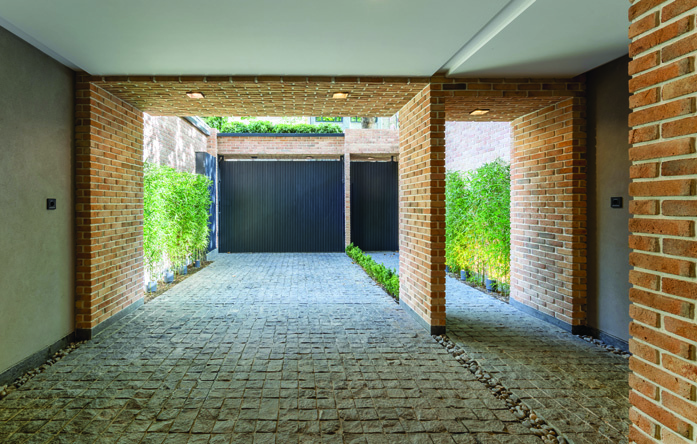
The ground-level parking corridor with brick column piers, cobblestone floor, greenery on both sides, and the metal gate at the far end
Parking corridor — brick piers and cobblestone under a low ceiling
◆ ◆ ◆
Architectural Drawings
Five axonometric diagrams showing the design concept progression — from initial massing to carved volumes, terraces, lightwell, and final facade articulation
Design concept — five steps from initial massing to the final articulated volume with lightwell, terraces, and facade openings
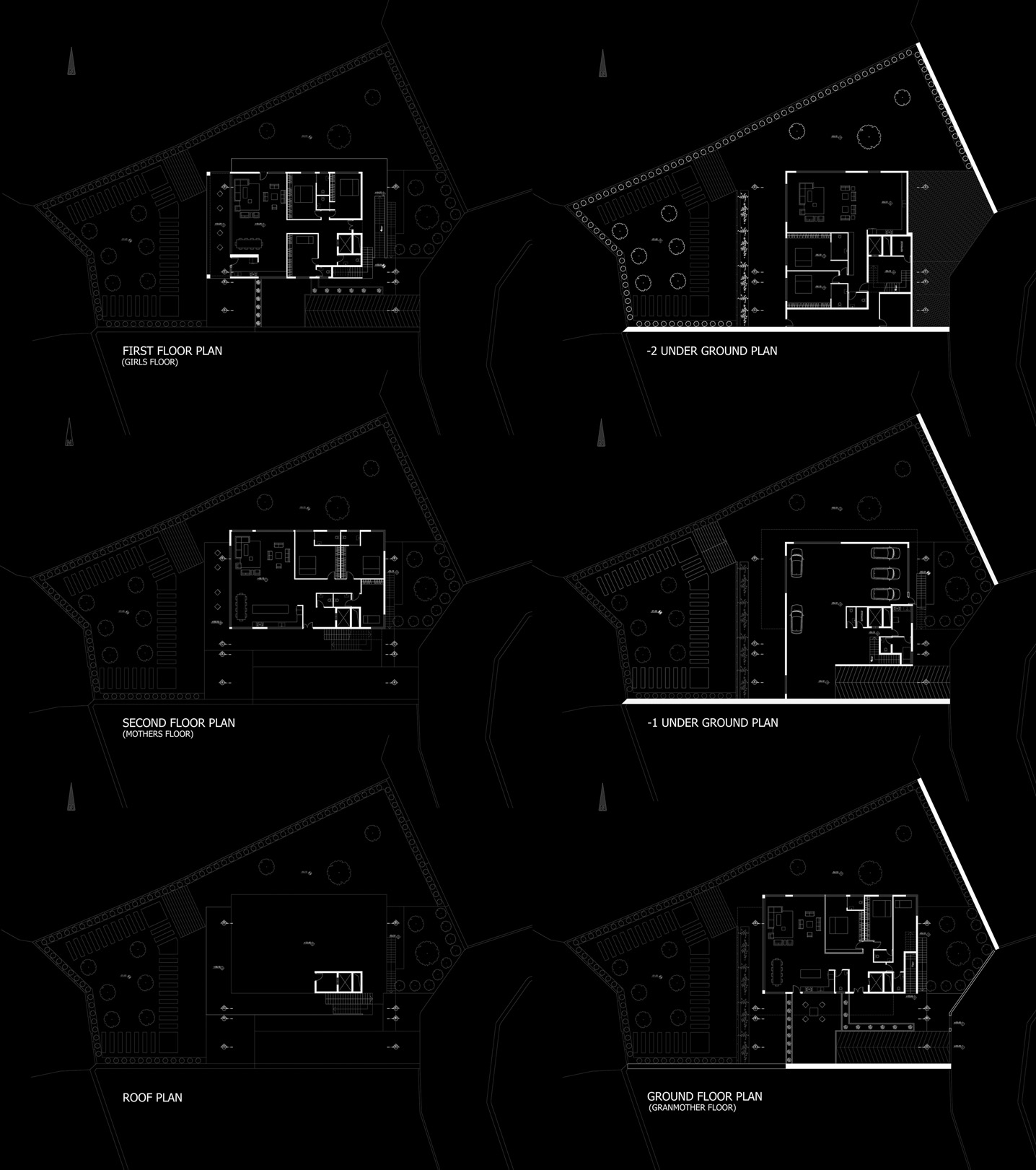
Floor plans of all six levels: ground floor with parking and entrance, first floor with kitchen and living, second floor with bedrooms, third floor with master suite, roof terrace, and roof plan with jacuzzi
Floor plans — ground floor through roof level, showing the vertical progression of spaces on a 5 × 20-meter footprint
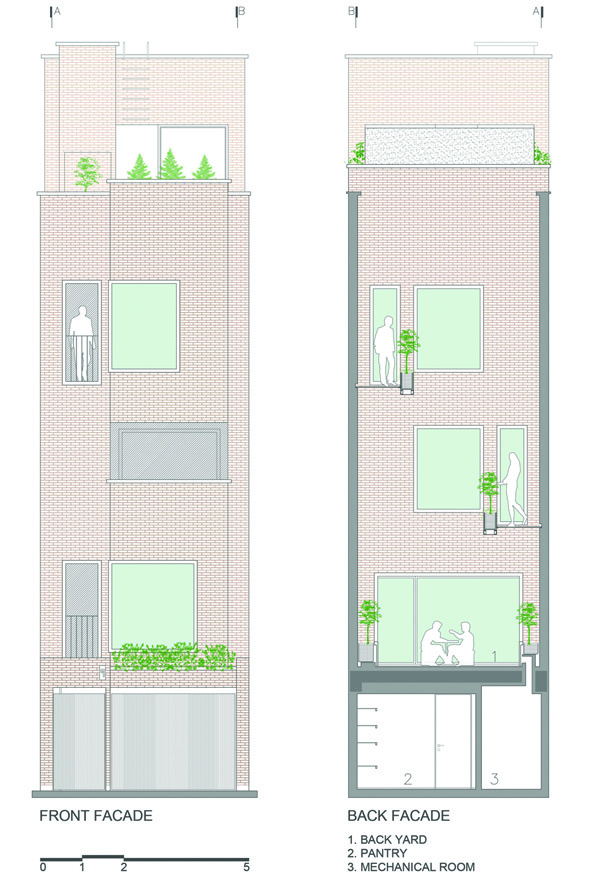
Architectural elevation drawings showing the front facade with brick, windows, and green planter, and the back facade with terraces, backyard, pantry, and mechanical room
Front and back elevations
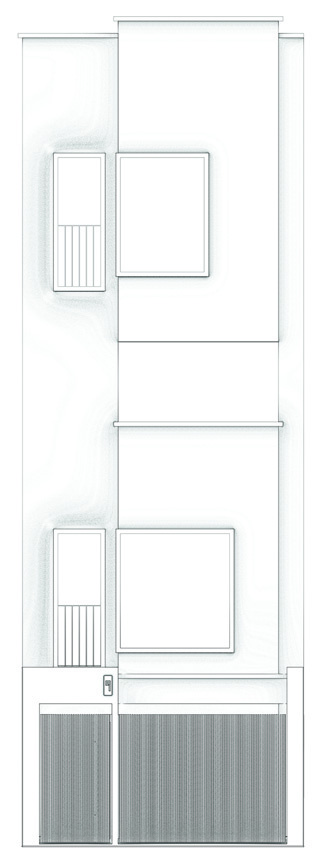
Narrow front elevation drawing showing the full height of the house with its window openings and planter at the first-floor level
Front elevation — the narrow 5-meter width
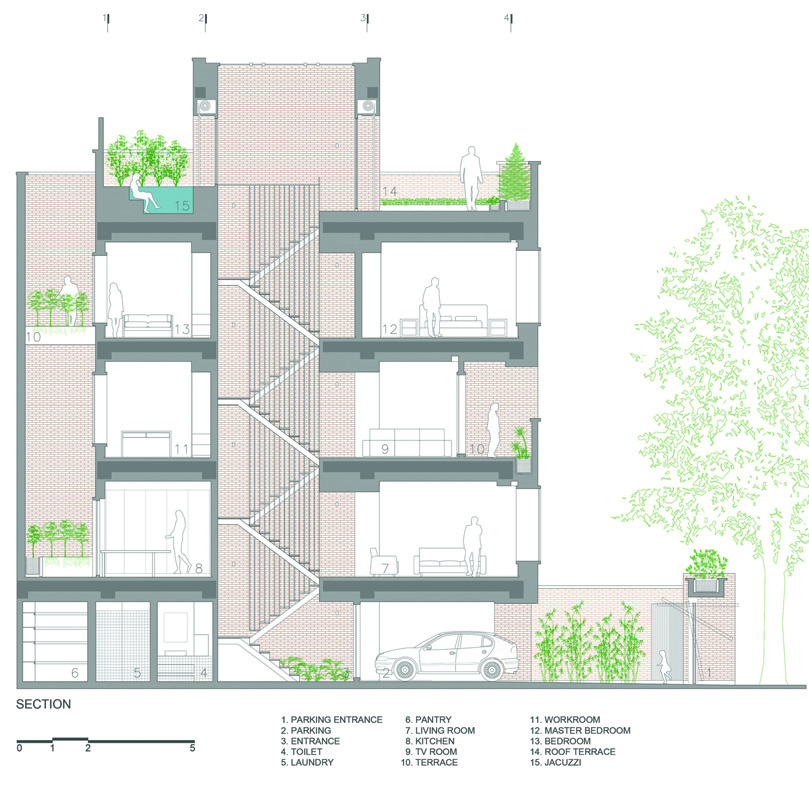
Building section drawing showing all levels from parking to rooftop jacuzzi, with labeled spaces including entrance, living room, kitchen, bedrooms, workroom, and terraces
Cross-section — all levels from parking to rooftop pool
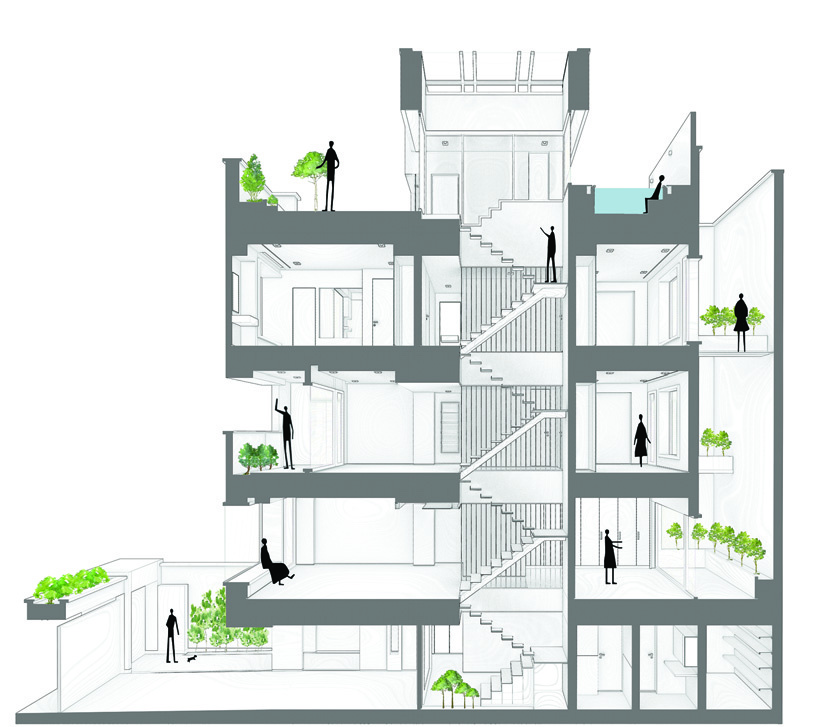
Conceptual section perspective with human figures showing the spatial relationships between levels, the central staircase, terraces, and double-height spaces
Conceptual section — spatial relationships and human scale
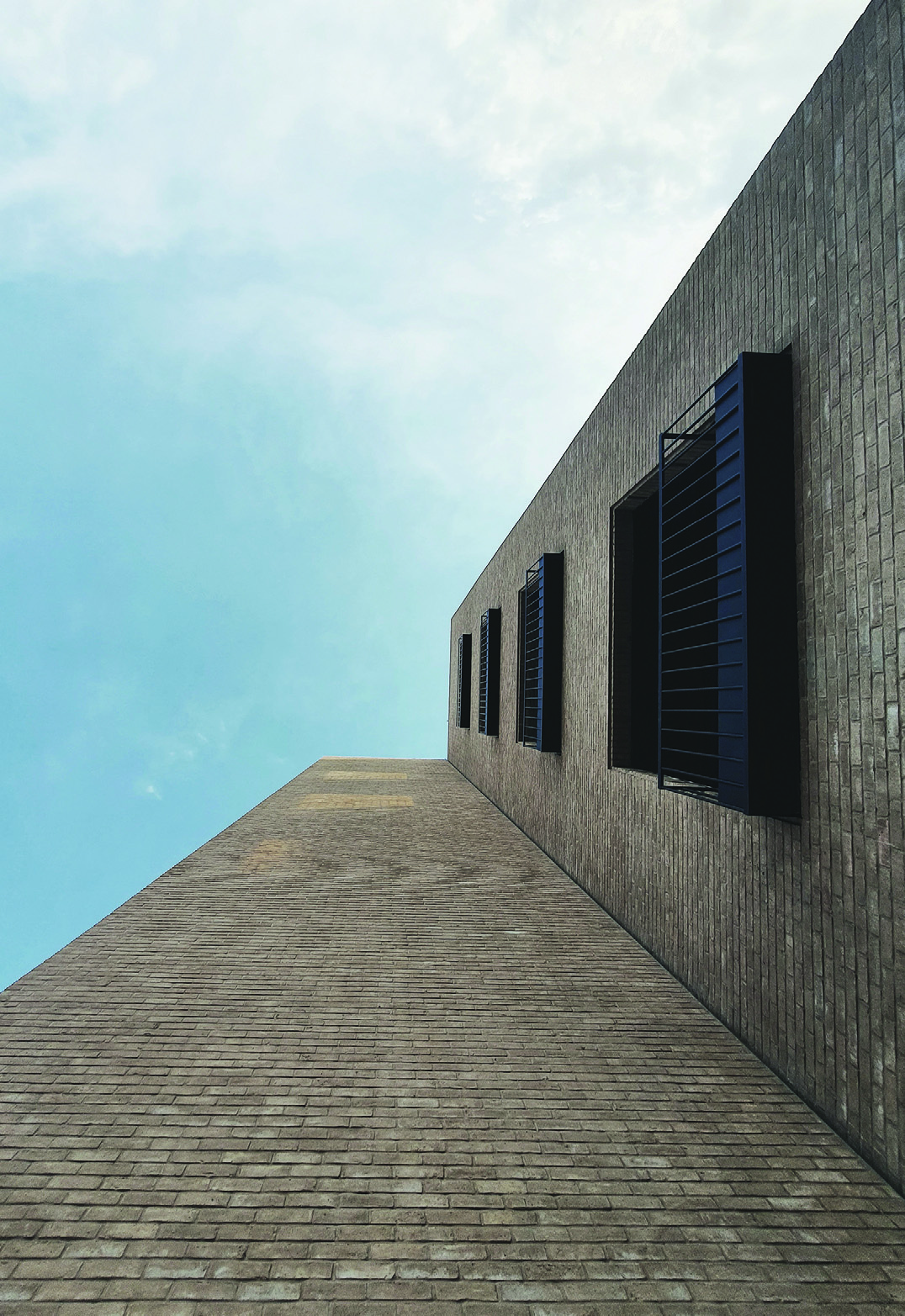
Dramatic low-angle view of the side facade rising against the sky, showing dark brick texture and horizontal window openings with metal louvers
The side facade rising skyward — brick and metal against the open sky
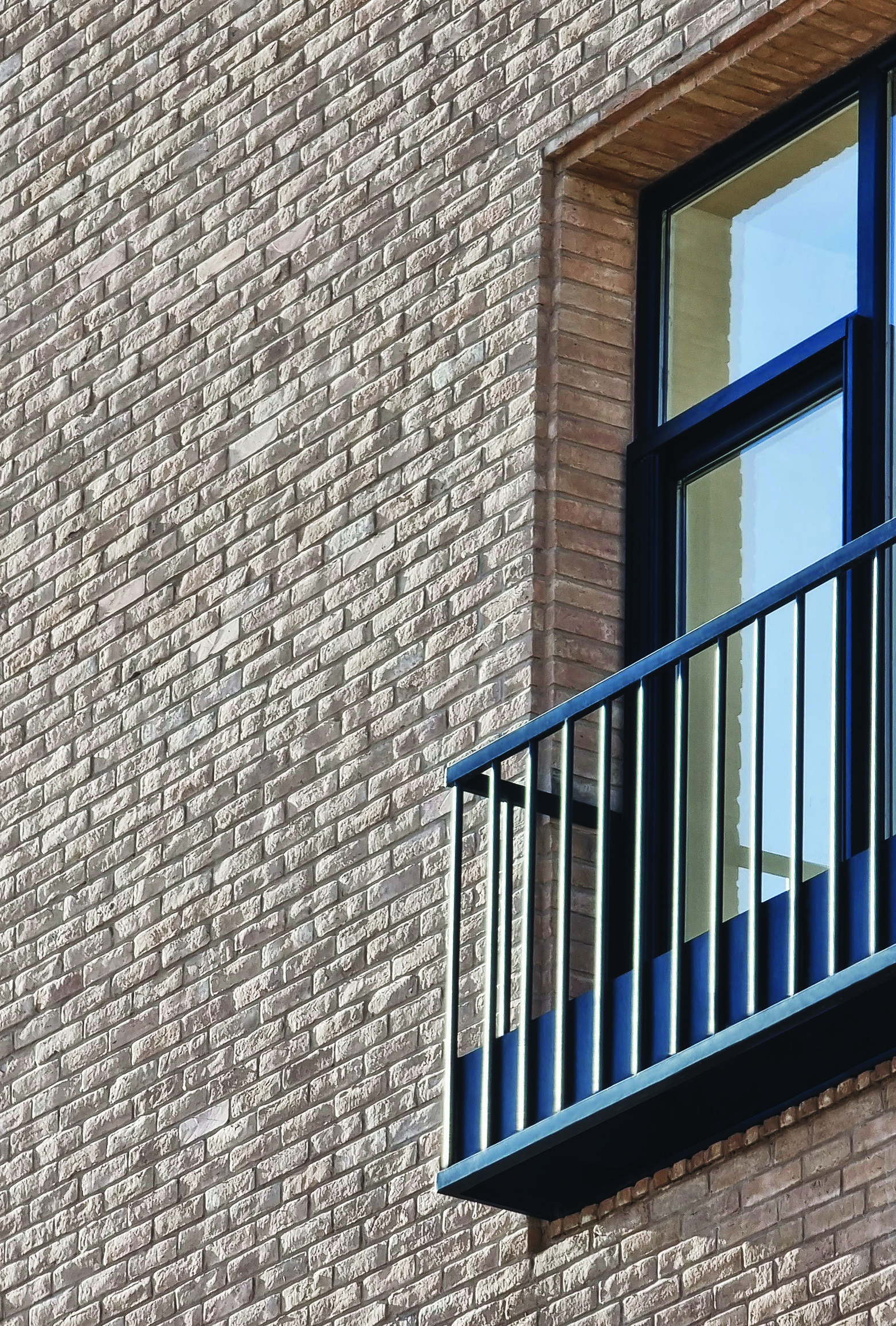
Detail of the building corner showing light-colored brick texture meeting a dark metal Juliet balcony with vertical railings and a glass window
Corner detail — brick texture and metal balcony railing
Memar Magazine
Issue 142 · December 2023 – January 2024

Related in Architecture Database